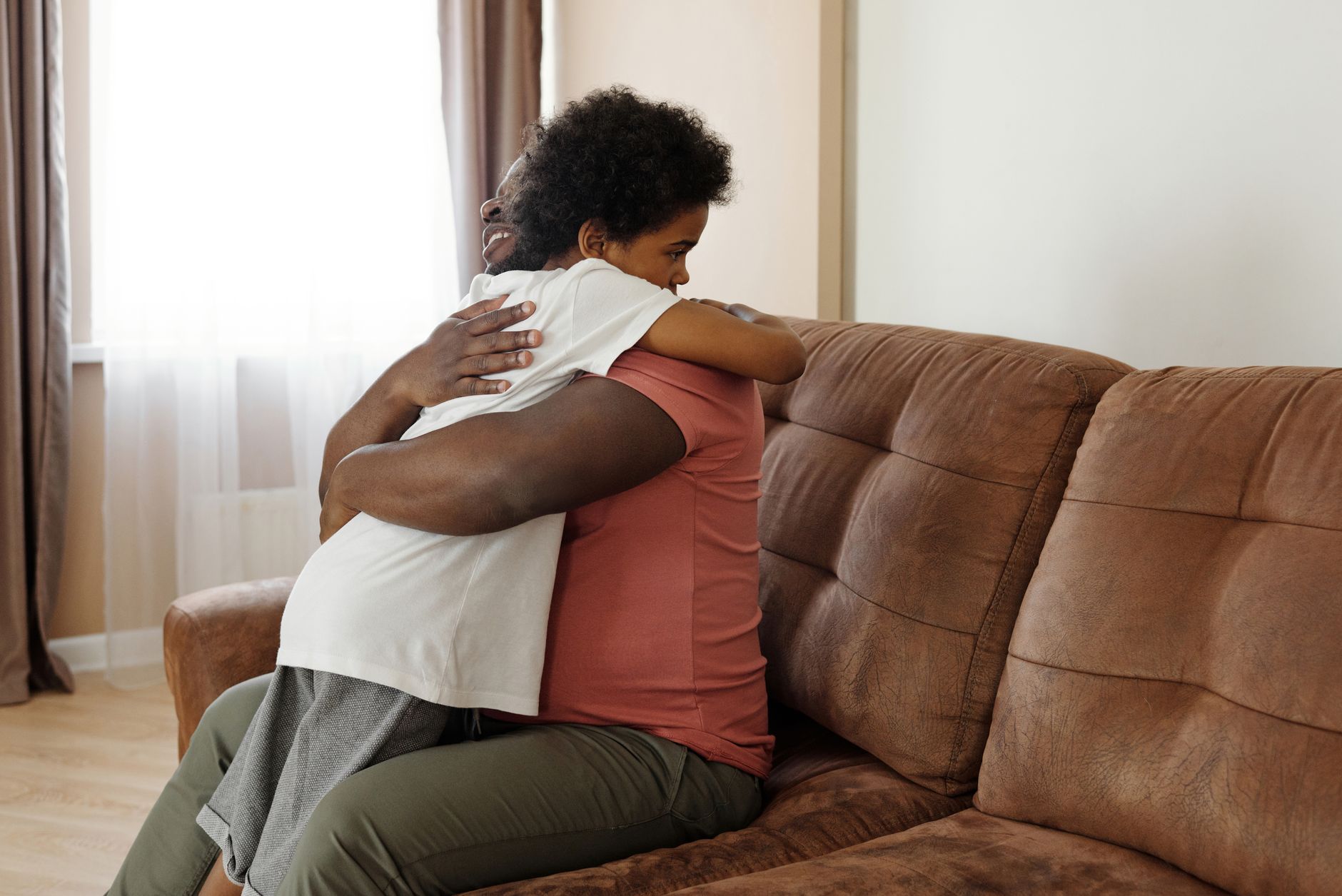
The Toy Stroller My Son Pushed
I have replayed that afternoon at the park so many times that I could draw it from memory. The exact color of the sky, a flat gray that could not decide whether to rain. The way the grass had gone crunchy at the edges from a dry August. The particular squeak of the little pink stroller wheels that my son refused to leave at home. I thought I knew how the day was going to end, and I was wrong about almost every part of it. I want to tell you the whole thing, from the beginning, because for a long time I did not understand my own child, and the day I finally did was the day two other little boys tried to shame him.
My name does not matter much for this story. What matters is that I am Micah’s mother. Micah is six, and he has been six with the kind of enthusiasm most people cannot maintain for anything past a Tuesday. He is the boy who gets attached. When he was four it was a plastic dinosaur named Buttons that he carried until the tail wore smooth. When he was five it was a library book about deep-sea fish that we renewed so many times the librarian finally just gave it to him. My husband, Danny, used to joke that Micah does not have hobbies, he has relationships. Whatever caught our boy’s heart got all of it, no half measures, no embarrassment.
We live on the kind of street where everybody knows whose dog got loose. It is a small town, the sort with one stoplight that people still complain about, a feed store on the corner that also sells ice cream in the summer, and a park two blocks from our front porch that the whole neighborhood treats like a shared backyard. Our house is the pale yellow one with the sagging gutter Danny keeps meaning to fix. This is the world Micah grew up in, and it is a good world, mostly. But small towns have long memories and short patience for anything that looks different, and I would learn that lesson through my son before the summer was over.
The yard sale
It started on a Saturday, at a yard sale three streets over.
We were walking, not driving, because Micah likes to walk and point at things, and Danny had the morning off, which happens about as often as a blue moon. The people having the sale had spread their whole life out on folding tables and a bedsheet on the lawn. Old lamps. A bread machine. A box of paperback westerns going soft at the spines. Micah walked past all of it like it was invisible, and then he stopped so suddenly that I nearly walked into the back of him.
There, tucked between a crate of records and a busted lawn chair, was a toy stroller. It was small, plastic, the pink faded almost to white on the sunny side, with one wheel that did not quite match the other three. Sitting inside it, buckled in with a little cloth strap, was a baby doll. The doll had a chipped painted smile and a knit cap somebody had made by hand a long time ago. It was, by any honest measure, a homely little thing.
Micah looked at it the way I have seen grown men look at a truck they cannot afford.
“Can I have it,” he said. Not really a question. More like a prayer he was hoping I would answer.
Danny crouched down next to him. “Buddy, you have a whole closet of toys at home. You have that dinosaur, you have the fish book, you have about nine hundred cars.”
“I know,” Micah said. He did not argue. He just kept looking at the stroller.
The woman running the sale said it was two dollars. Two dollars. Danny gave me a look, the one that means your call, and I looked at my son’s face, and I did what any of you would have done. I dug two crumpled bills out of my jeans and handed them over. Micah took the stroller handle in both hands like I had given him the keys to something. He pushed it the whole way home, careful over every crack in the sidewalk, slowing down at the curbs the way you would with something that could break.
I did not think much of it. Two dollars, a passing fascination, another Buttons, another fish book. I figured it would be under his bed by Thursday.
I could not have been more wrong.
Everywhere
That stroller went everywhere.
He pushed it around the house first. Up and down the hallway, into the kitchen while I made dinner, parked neatly by his chair at the table like the doll might want to watch him eat. He pushed it down the driveway and back, down the driveway and back, wearing a little path in the gravel. When we went to the grocery store, he insisted on bringing it, and he pushed his stroller down the cereal aisle right alongside my cart while other shoppers smiled or did not smile, and I felt that first small prickle of something I am not proud of. Self-consciousness. A mother’s instinct to smooth things over, to explain, to make my son a little less noticeable so nobody would look too long.
I did not say anything to him. But I felt it, and I am telling you now because I want to be honest about where I started.
Danny noticed it too. One evening after Micah was in bed, he sat down heavy on the couch and rubbed his face and said, “He’s really into that thing, huh.” It was not a criticism. Danny is a good man and he loves that boy more than his own breath. But there was a question underneath it, the same question I had been carrying around all week and had not said out loud. Is this normal. Should we be worried. What do the other dads think. I hated that the question was even in my head, and I hated more that I could not make it leave.
“He gets attached,” I said. “You know how he is.”
“I know how he is,” Danny agreed. And we left it there, the way you leave a thing you are afraid to pick up.
What I did not do, in that whole first week, was the one thing I should have done at the very start. I did not ask my son why. I assumed. I assumed it was just another Micah obsession, harmless and temporary, a plastic stroller instead of a plastic dinosaur. I was so busy being a little embarrassed and a little worried that I never once got down on his level and asked him what the doll meant to him. Remember that. It is the part I am most ashamed of, and it is the reason the ending hit me the way it did.
The name
The doll had a name. I found that out by accident.
I was folding laundry in the living room, Micah on the floor with the stroller, and I heard him talking, low and steady, the way kids do when they think nobody is listening. I stopped folding and I listened.
“It’s okay,” he was saying to the doll. “I got you. We’re gonna go slow so you don’t get scared. You want to see the fish book? I’ll show you the fish book.”
Then he called the doll by a name. He said it plainly, the way you say a name you have said a thousand times. He called her Ruthie.
I put down the shirt I was holding and I sat very still, because Ruthie was not a name Micah could have pulled out of the air. Ruthie was my grandmother’s name. Micah’s great-grandmother. She had died two years before, when Micah was four, and we did not talk about her often because it still put a stone in my chest to do it. But Micah had known her. He had sat in her lap and eaten the butterscotch candies she kept in a dish, and she had called him her little man, and when she passed he had asked me for weeks where she went, questions I did not have good answers for.
I did not say anything about it. I told myself it was a coincidence, or that he had heard the name somewhere and liked the sound of it. I did not want to open a door I was not ready to walk through. So I folded the rest of the laundry and I said nothing, and that was another thing I got wrong.
But I started watching him differently after that. And the more I watched, the more I saw that he was not playing with the doll the way kids play. He was taking care of it. There is a difference, and once I saw it I could not unsee it. He checked the strap before every trip. He talked to it in a low, reassuring voice. He tucked a dish towel around it when the evenings got cool. He was not pretending to be a driver or a superhero or a dad. He was practicing something. I just did not know what yet.
The park
Then came the afternoon at the park.
It was a Sunday, that flat gray sky I told you about, the air thick and still like the whole town was holding its breath before a storm that never came. Danny was at work. I decided Micah and I would walk to the park to burn off some of the six-year-old energy that builds up in a boy by late Sunday afternoon. Micah, of course, brought the stroller. He pushed it the two blocks with Ruthie buckled in and her knit cap on, and I walked beside him with my hands in my pockets, and I remember thinking it was a nice, ordinary, unremarkable day.
There were already kids at the park when we got there. A cluster of boys, four or five of them, over by the little soccer goal that the town put in last spring. I recognized two of them from Micah’s kindergarten class. One was a boy named Tyler, loud, always had been, the kind of kid who narrates his own life at top volume. The other I did not know as well. There were a couple of parents on the far bench, scrolling their phones, half watching.
I sat down on the bench near the swings. Micah pushed his stroller across the grass toward the other boys, because that is who Micah is, he walks toward people, he does not wait to be invited. I watched him go and I felt that prickle again, that low hum of a mother bracing for something.
The boys saw the stroller. And they stopped.
Tyler pointed. I could see the exact moment it registered on his face, that flash of delight kids get when they find something to make fun of. “Why are you pushing a baby around,” he called out, loud enough that the parents on the far bench looked up. “That’s for girls.”
The boy next to him laughed, an ugly, copying laugh, the kind of laugh that is really just fear of being on the wrong side of the joke. “Are you a mommy now,” he said. “Are you a little mommy.”
The other boys laughed too. Not all of them meant it. I could see one hanging back, uncertain, the way kids do when they know something is wrong but do not have the courage to be the only one not laughing. But the sound of it carried across the grass and hit me square in the chest, and I was up off that bench before I had decided to stand.
I have thought a hundred times about what I was going to do. Scoop him up. Take the stroller. Tell those boys to knock it off, tell him it did not matter what they thought, walk him home the long way so he would not have to pass them. I was already moving, already halfway across the grass, already rehearsing the soft things a mother says to a child whose feelings have just been stepped on.
I was so sure he was about to cry. I was so sure he would drop the handle and run to me and I would have to carry the both of them, my boy and his broken little pride, all the way home.
What he said
He did not run.
Micah stopped pushing. He set the stroller carefully so it would not roll. And then he turned and looked at those boys, all of them, one at a time, with a steadiness that stopped me flat in the middle of that field. He was not shaking. He was not red-faced. He looked at them the way you look at somebody when you have decided to tell them the truth and let them do with it what they want.
He put one hand on the stroller. He pointed at the doll with the other.
“Her name is Ruthie,” he said. His voice was clear and it carried. “She’s named after my great-grandma. My great-grandma died and she used to hold me when I was little. So now I hold Ruthie. I’m practicing.”
The laughing stopped. Not all at once, but fast, the way a room goes quiet when somebody says a thing that is too real for the moment.
“My mom’s going to have a baby,” Micah went on, and I felt the ground tilt under me, because I had not told a soul, I had barely let myself believe it, I was eight weeks along and I had not said a word to my own son. “In the spring. And my mom said when the baby comes I have to be gentle and go slow and remember they get scared easy. So I’m practicing on Ruthie. I push her slow so she doesn’t get scared. I check her strap. I’m getting good at it so when my real baby sister comes I’ll already know how to take care of her.”
He looked down at the doll, and then back up at the boys, and he said the thing I will hear in my head until the day I die.
“I’m not being a girl,” he said. “I’m being a big brother. That’s a whole different thing.”
I stood in the middle of that field and I could not breathe. He had heard me. Weeks ago, on the phone with my sister, in the kitchen, thinking he was in the other room, I had said the word gentle. I had said the word scared. I had said something about hoping Micah would be a good big brother when the time came, that he had never had a baby around, that I worried. He had heard all of it. And instead of asking me, instead of making a fuss, he had gone quiet and he had gone and gotten himself a stroller for two dollars at a yard sale, and he had named the doll after the great-grandmother who used to hold him, and he had been practicing. For weeks. While I was busy being embarrassed in the cereal aisle.
The turn
Tyler did not have anything to say. None of them did, for a long few seconds. The loud boy was not loud anymore. He was just a five-year-old looking at a doll in a stroller and realizing he had gotten something badly wrong.
Then the boy who had been hanging back, the uncertain one, stepped forward. He was small, with a cowlick that stuck straight up, and he said, quietly, “I have a baby sister. She’s one.”
“Is she scared of stuff,” Micah asked, like it was the most natural question in the world.
“She cries when the vacuum’s on,” the boy said.
“Ruthie doesn’t like loud stuff either,” Micah said, and he crouched down and tucked the little towel a bit tighter around the doll, and the boy crouched down next to him to look, and just like that the two of them were talking about baby sisters in the middle of a soccer field, and the laughing might as well have happened to somebody else in some other year.
Tyler shuffled his feet. Kids do not know how to apologize, not really, but they know how to change the subject in a way that is almost the same thing. “You want to play soccer,” he said to Micah. “You can put the, um. You can put the stroller by the goal. It’ll be safe there.”
And I watched my son consider this offer with total seriousness, the way he considers everything. “Okay,” he said. “But I’m going to check on her at halftime.”
“Okay,” Tyler said, and he meant it.
Micah parked the stroller carefully by the goalpost, in the shade, where he could see it. He put Ruthie’s cap back on straight. And then he ran off to play soccer with the same boys who, ninety seconds earlier, had tried to make him feel small, and he was laughing, my boy, out loud, his whole face open. The cowlick boy stayed near him. Every few minutes Micah would glance over at the stroller to make sure it had not rolled, and it never had, and he would go back to the game.
I sat back down on the bench because my legs would not hold me anymore. One of the parents on the far bench, a woman I knew a little from church, had watched the whole thing. She caught my eye across the park and she pressed her hand flat against her chest and mouthed something at me. I think it was oh my goodness. I could only nod. I did not trust my voice.
The walk home
We walked home the way we always did, Micah pushing the stroller over the cracks, slowing down at the curbs. The gray sky had not broken. The feed store on the corner had its ice cream sign out and I bought us two cones even though it was almost dinner, because some afternoons earn an ice cream cone and this was the most earned afternoon of my life.
Micah ate his fast, the way he does, chocolate down his wrist. I held his cone while he re-buckled Ruthie’s strap, which had come a little loose during the soccer game.
“Baby,” I said, and my voice did the thing where it goes thin. “How did you know.”
He looked up at me. “Know what.”
“About the baby. Your baby sister. How did you know.”
He shrugged the enormous shrug of a six-year-old who cannot understand why the grown-up is being slow. “You said it on the phone. You said you hoped I’d be gentle. And you kept getting sick in the mornings.” He said this last part matter-of-factly, and I felt my face go hot, because I had been so careful, I had thought I had been so careful, and my son had been reading me like a book the whole time. “And Great-Grandma Ruthie always went slow with me. She never rushed. So I named the baby Ruthie for practicing. Not the real baby. The real baby you and Daddy get to name. Ruthie’s just for practicing.”
I had to stop walking. I crouched down right there on the sidewalk in front of the Hendersons’ house and I pulled my son into me, stroller and doll and dripping ice cream and all, and I held on to him until he squirmed and said, “Mom, you’re squishing Ruthie.”
“Sorry,” I said, into his hair. “Sorry, sorry.”
I was not sorry to Ruthie. I was sorry to him, and to myself, for the whole week I had spent being embarrassed by the most tender thing I have ever watched a person do. My six-year-old had understood something about love that I, at thirty-four, had let a couple of little boys at a park make me forget for a moment. That taking care of someone is not for girls or for boys. That it is just for people who have decided to be the kind of person who takes care of someone.
Telling Danny
I told Danny that night, after Micah was asleep with the stroller parked next to his bed and Ruthie tucked in with her knit cap on.
I told him all of it. The yard sale. The name. The boys at the park. What Micah said, word for word, because I had already memorized it. And then I told Danny the part he did not know, the part Micah had announced to a field full of kindergarteners before I ever got to say it to my own husband, that I was eight weeks along, that there was a baby coming in the spring.
Danny is not a man who cries easy. He cried. He sat on the edge of our bed with his work shirt still on and he put his face in his hands and his shoulders went, and I sat down next to him and put my arm around him, and we stayed like that for a while, two people who had made a boy who understood things we were still learning.
“He named her after your grandmother,” Danny said finally, wiping his face with the heel of his hand.
“Ruthie’s just for practicing,” I said. “He wanted me to be clear about that. The real baby we get to name.”
Danny laughed, this wet, cracked laugh. “That kid,” he said. “That kid.”
“That kid,” I agreed.
We did not sleep much that night. We lay in the dark and talked about the spring, about names, about whether the sagging gutter needed to be fixed before there was a baby in the house, about how we had gotten so lucky and had not even known to be grateful for the specific shape of the luck we had. And down the hall, our son slept next to a two-dollar stroller, practicing in his dreams for a job he had already decided he was going to be good at.
What the neighborhood learned
The story got around, the way stories do in a town with one stoplight.
The woman from church who had watched it happen told somebody, who told somebody, and by the end of the week people I barely knew were stopping me at the feed store to say they had heard about my Micah and the stroller. Tyler’s mother called me. I braced for it to be awkward, and it was, a little, but she was kind about it. She said Tyler had come home from the park quiet, which was not like him, and at dinner he had announced out of nowhere that he wanted to be nice to babies, and she had not known what to make of it until she heard the story. She said she was sorry for what her boy had said. I told her that her boy had also been the one to invite mine to play, and that both of those things were true, and that five is young, and that we were all just teaching them as fast as we could.
She said she thought Micah had taught them more in one afternoon than she had managed in a year. I said I knew the feeling.
Here is the part that surprised me most. It was not just that the mockery stopped. It was that something shifted. The cowlick boy, the one with the one-year-old sister, started coming around. His name was Sam. He and Micah became the kind of friends that six-year-olds become, which is to say instantly and completely. Sam’s mom told me that Sam had started being gentler with his baby sister, going slow, checking on her, because Micah had told him that is what you do. A six-year-old had started a small quiet revolution in the way a couple of little boys in our town thought about taking care of people, and he had done it with a doll named after a woman who used to hold him.
I thought about my grandmother a lot that week. Ruthie. How she never rushed. How she would set aside whatever she was doing to hold a child, how she made you feel, when you were in her lap, like there was nowhere else in the world she needed to be. She had been gone two years and I had let myself stop talking about her because it hurt, and my son, who was four when she died, had kept her alive in the most literal way a person can. He had made her name into a lesson about tenderness and he was teaching it to the whole neighborhood.
The spring
The baby came in the spring, right on time, which is the only thing in this story that went according to plan.
It was a girl. We had known for a few months by then, and Micah had taken the news of a sister with the deep satisfaction of a man whose long-shot bet has come in. We did not name her Ruthie. Micah was firm about that from the beginning. Ruthie is for practicing, he kept saying, the real baby gets her own name. We named her Nora, and Micah approved of the name after careful consideration, and then he asked, very seriously, when he would be allowed to push her in a stroller.
The first time we let him, he was so careful I could barely stand to watch. Danny walked on one side and I walked on the other and Micah pushed his baby sister down the sidewalk past the Hendersons’ house, going slow over every crack, slowing down even more at the curbs, glancing down at her every few steps to make sure she was not scared. She was not scared. She was asleep, the way newborns are, fists up by her ears. But Micah checked anyway, because that is what you do.
He had practiced for this. For months, with a two-dollar doll named after his great-grandmother, while other people laughed. And now here he was, six years old, going on seven, pushing the real thing, and he had already known how, because he had decided a long time ago on a gray afternoon at the park that he was going to be good at loving her before she ever arrived.
He kept the toy stroller. It is under his bed now, Ruthie still buckled in, cap still on. Every so often I catch him taking her out, checking her strap, telling her it is okay, he has got her, they are going to go slow. And then he goes and checks on his real sister, and I stand in the hallway where he cannot see me and I hold on to the doorframe, and I think about how close I came to teaching him to be embarrassed about the best thing in him.
What I know now
I have told you this story because I got it wrong at the start, and I do not want you to get it wrong the way I did.
When your child loves something you do not understand, ask why before you decide how to feel about it. I spent a whole week a little embarrassed by my son in the cereal aisle, worried about what the other dads thought, bracing myself at that park, when the entire time my boy was doing something so far past my understanding of him that it rearranged the way I see him. He was not being strange. He was being ready. He was taking a loss he was too little to have words for, a great-grandmother who used to hold him, and he was turning it into a way to hold someone else.
Those boys at the park thought a stroller was a thing to laugh at. My son looked them in the eye and told them, in the plainest words a six-year-old has, that taking care of a person is not a girl thing or a boy thing, it is a big brother thing, and it is a whole different thing than they thought it was. He was right. He was more right than most grown people ever manage to be.
I keep the two crumpled dollar bills story in my head as the best money I ever spent. I did not know, handing them over at that yard sale, that I was buying my son a way to grieve and a way to get ready and a way to teach an entire neighborhood something about tenderness. I thought I was buying a toy that would be under the bed by Thursday. It is under the bed now, but not because it was forgotten. It is under the bed because its work is done, and my son knows exactly where it is, and every so often he takes it out to remember how to go slow.
Nora is almost six months old as I write this. She lights up when Micah walks into the room. He is her favorite person in the world, and he earned it before she was born, on a gray afternoon, in front of a crowd of laughing boys, when he pointed at a doll named after my grandmother and told the truth about who it was for.
I am not being a girl, he said. I am being a big brother. That is a whole different thing.
It is, baby. It is a whole different thing. And I am the luckiest mother alive that I get to watch you be it.