The Groom Who Said My Name
The slap turned my face toward the champagne tower.
For one strange second, all I saw was light. Hundreds of coupe glasses stacked into a glittering pyramid, the crystal chandeliers burning above them, and the gold trim of the Hartwell Hotel ballroom throwing all of it back at me at once. My cheek went hot. My ear rang. Somewhere behind me a woman gasped, and somewhere else, closer, someone laughed. A short, ugly little laugh, the kind people let out when they are not sure yet whether they are allowed to.
Then the laughter spread, because someone in charge had made it acceptable.
Brittany stood in front of me in a fitted white gown that probably cost more than I had made my first two years out of that house. Her hand was still half-raised, her rings catching the light. She did not look sorry. She looked pleased, the way she used to look when she was fifteen and had just gotten me sent to my room for something she broke.
“You don’t belong here,” she said.
I did not touch my face. I did not step back. I did not give her the thing she wanted.
The invitation I should have burned
You have to understand what I had walked into to understand why I did not run.
The Hartwell is the kind of hotel where the doormen wear gloves and the lobby smells like white lilies and money. Five hundred guests. A string quartet by the windows. Waiters moving through the crowd with trays of little things on toast that I could not have named. I had ridden the train in, changed into my one good dress in a gas station bathroom two blocks away because a hotel room there ran more than my car payment, and walked in under a ceiling painted with gold clouds.
I had grown up in a two-bedroom house with a furnace that knocked all winter. My mother hung sheets on a line in the yard because the dryer had died and we could not replace it, and she used to say the sheets smelled like the sky. That was the world I came from. This ballroom was Diane’s world, the world my father married into after my mother was gone, and standing in it I felt exactly the size they had always wanted me to feel.
The invitation had come four months earlier. Heavy cream paper, gold lettering, Brittany’s name printed beside Daniel’s. There was no note inside. No line in anyone’s handwriting. No “we hope you’ll come,” no “it’s been too long,” and certainly no apology for any of it. Just the details of a party, mailed to the girl they had put out on the curb sixteen years before like she was a piece of furniture that no longer matched.
I knew what it was. It was not an olive branch. It was a photograph they wanted to be able to take. See, she came, we are one big family, aren’t we generous. I knew it, and I bought a train ticket anyway, and I have asked myself a hundred times why.
The honest answer is small and a little pathetic. I did not go to be forgiven. I went to see if they had changed. I was thirty-two years old and some sixteen-year-old part of me still needed to check, one more time, whether the people who were supposed to love me had become people who could.
They had not. I found that out inside the first hour.
What a dinner in the rain took from me
My mother died when I was fifteen. Ovarian cancer, diagnosed in the spring, gone by the leaves turning. I remember the smell of the hospital more than I remember the funeral, that mix of bleach and something sweeter underneath it that I could not place then and can place now, because I spent my whole adult life in buildings that smell like that.
By Christmas my father was not sad anymore, or he had learned to put the sad somewhere I could not see. By the next fall Diane and Brittany had moved into our knocking little house, and then, when Diane’s money started flowing, into a bigger one, and I had started to disappear from my own life one small subtraction at a time.
It was never one big thing. That is what people never understand. It was that when the milk was left out, it was me. When Brittany’s bracelet went missing, it was me, until it turned up in her own coat pocket, and even then somehow it was still me for having made everyone look. If Brittany cried, the room believed her before I had finished my first sentence. I learned to stop starting sentences.
Then came the dinner. I was sixteen. It was raining hard enough that you could hear it hammering the windows over the sound of the television in the other room. Diane had a client coming, someone she wanted to impress, and she had put on a pale silk dress the color of the inside of a shell. There was gravy on the table, and a moment where two of us reached at once, and then the front of that dress had a long brown stain running down it like a wound.
I did not do it. I have gone back to that table in my mind more times than I can count, and I did not do it. Brittany’s arm was closer. Brittany’s face did the thing it always did, the quick flat second of calculation before the tears. She pointed at me and she cried, and she cried harder when I said it was not me, and the harder she cried the more true it became to everyone in that room.
My father stood up. Rain on the glass. His napkin still in his hand. And he told me to leave.
Not to my room. To leave.
I packed one bag. I did not even take everything I owned, because I was sure, the way a child is sure, that he would come out to the driveway before I got to the end of it. I stood at the end of that driveway in the rain with water running off my hair and into my collar, and I waited for the porch light, and I waited for the door, and I waited for my father.
He never came.
I was sixteen, in the rain, with one bag, and the last thing my family gave me was the sound of a deadbolt turning.
So no. Brittany raising her hand to me in a five-hundred-guest ballroom was not new. It was the same thing it had always been. It was just louder now. More expensive. Set to a string quartet.
The second slap
She looked me over again, slow, from my department-store shoes up to my face, and I watched her decide she was not finished.
“What did you think this was?” she said, loud enough now to carry, loud enough to be a performance. “Some kind of pity invitation?”
The guests nearest us leaned in the way people do when they want the story but not the responsibility of having watched it. A man in a gray suit lifted his phone a few inches, then thought better of it, then lifted it again. My father was somewhere across the room, and I did not look for him, because I already knew he would be finding something on the far wall very interesting.
I said nothing. Silence was the only thing I had ever owned in that family that they could not take, break, or blame on me.
That was what undid her. If I had cried she would have relaxed, because tears were a script she knew. If I had argued she would have grown, fed on it, played the wounded bride to a sympathetic crowd. But I just stood there with my burning cheek and my steady eyes, and Brittany had never in her life known what to do with a person she could not make flinch.
Her smile sharpened into something meaner. “Did you honestly think,” she said, “that anyone in this room would mistake you for family?”
There it was. Public. Clean. On purpose. The thing she had been circling since I walked in.
She stepped closer, and I could smell her, the champagne under the perfume, the hairspray, the hot nearness of her. “You always did have a way,” she said, “of showing up wherever there was something to take.”
Same sentence she had used at sixteen. Sixteen years and she had not even bothered to write new material.
And then, because the room had gone quiet enough to hear a fork touch a plate, because she had them and she knew she had them, she raised her hand again.
“This is my wedding,” she said. “You are not going to stand here pretending you are one of us.”
The second slap cracked louder than the first. My head turned. My eyes watered from the sting, not from crying, and I hated that they could not tell the difference. The room drew in its breath and leaned toward us, hungry, and I understood something with a terrible clarity right there under the gold clouds.
Humiliation has a sound and a smell and a rhythm all its own. And people will lean into it, and enjoy it, for exactly as long as someone powerful enough tells them it is allowed.
I still did not move. Brittany’s face flickered, and for the first time all night the confidence underneath it slipped, because she had hit me twice now and gotten nothing back, and a bully with nothing coming back is just a person standing in front of a crowd with her hand out.
Then a voice cut clean across the whole room.
“Do you even know who she is?”
Do you even know who she is
Real silence this time. Not the theatrical hush of a crowd waiting for a show. The other kind, the kind that falls when people realize the show is not the one they thought they bought a ticket to.
Brittany turned first. I turned slower.
Daniel had been across the room a moment before, near the head table, doing the thing grooms do, shaking hands, accepting the little congratulations. Now he was walking toward us, and his face had changed so completely that for a second I did not recognize the polished man from the invitation. The easy wedding-day smile was gone. Something underneath it had come up to the surface, something that looked almost like grief.
I want to tell you what everyone in that room believed about Daniel, because it matters. They believed he was one of them. He wore the suit like he was born to it. He had built some kind of logistics company, the guests whispered, sold most of it young, the perfect match for Diane’s daughter, old money marrying new success. He belonged in that ballroom the way I did not. That was the story, and everyone had agreed to it, including Brittany’s family, who had been telling everyone for a year how well their girl had done.
He stopped a few feet from us. He looked at me, and I watched recognition move across his face like a light coming on in a house you thought was empty.
“Rachel,” he said. Quiet. Almost careful. “Rachel Turner.”
My knees nearly went out from under me.
Nobody in that room knew that name. Nobody in that family had said my name in years, not the whole thing, not out loud. To them I had been “her” and “the stepsister” and, when they were feeling generous, nothing at all. I had taken my mother’s maiden name the year I turned eighteen, shed my father’s name like a coat that never fit, and I had built an entire life under it that not one person in this ballroom knew existed.
And Daniel had said all of it. First name, last name, like he had been carrying it a long time.
Brittany let out a laugh, but it came out thin. “What are you doing?” she said. “Daniel. What are you doing?”
He did not look at her. He was still looking at me, and his eyes had gone bright and wet at the edges.
“It’s really you,” he said.
“Daniel.” Brittany’s voice climbed. “She is my stepsister. That is all she is.”
“No.” He said it gently, which was somehow worse for her than if he had shouted. “That is not who she is. You have no idea who she is.”
The room shifted around us. Not amused anymore. Watching. Doing math. I could feel five hundred people quietly recalculating the value of everything they had been laughing at ninety seconds before.
“Daniel,” Brittany said, and the crack in her was wide open now, “what are you talking about?”
He turned to face her then, fully, and when he spoke it was not to her alone. It was to the whole ballroom, to the quartet with their bows frozen, to Diane going white by the cake, to my father wherever he had hidden himself.
“The woman you just slapped,” Daniel said, “kept me alive when I had nothing. And I mean nothing.”
The night the diner stayed open
I knew, before he told it, what he was going to say. Because the second he said my name, I saw him too. Not the man in the tailored suit. The boy.
It was eleven years ago. I was twenty-one and working the overnight shift at a diner called Ruby’s, a chrome-and-vinyl place that sat on a corner two blocks from Mercy General and never closed. I was three semesters into a nursing degree I was paying for one shift at a time, and I took the graveyard hours because they paid a little more and because nobody who mattered ever saw you cry at three in the morning over a chemistry grade. The place smelled like burnt coffee and griddle grease and the particular loneliness of a room that is bright at an hour when everything else is dark.
He started coming in that winter. A kid about my age in a canvas jacket too thin for the weather, who would order the cheapest thing on the menu, a cup of coffee and toast, and make it last three hours. I knew what that meant. You learn to read it fast in a place like that. He was not there for the food. He was there because it was warm, and it was open, and it was somewhere to be that was not a car.
His mother was across the street, dying, in a bed at Mercy that his family could not really pay for. I got that out of him a little at a time over a lot of nights. He had dropped out of school to be near her. He was sleeping in a hatchback in the hospital lot because he would not leave and could not afford anywhere else. He had a way of holding his coffee cup with both hands like it was the only warm thing he had, and I suppose most nights it was.
I did the small things you do. I stopped writing up his toast. I would set down a full plate and say the kitchen made it wrong and it was going in the trash otherwise, which was a lie, and he knew it was a lie, and he ate it anyway because you do not have the luxury of pride at nineteen with fourteen dollars to your name. On the coldest night of that January I gave him the spare coat I kept in the back for the walk to my bus, and I took the bus in a sweater and did not die of it. It was nothing. It cost me nothing I could not spare. That is what I believed at the time.
Then came the night his mother died.
He came in a little after two, and I knew before he sat down. You can see it on a person, that new hollow behind the eyes. He sat at the counter and did not order anything, and he did not cry, he just sat there holding a cup I had not filled yet, both hands around cold ceramic, staring at nothing.
My shift ended at six. At six I did not clock out and go home. I flipped the little sign so the last hour was ours, and I made a pot of coffee, and I sat down on the customer side of the counter next to him, and I stayed. I did not have wise things to say. I was twenty-one. I did not say much of anything. I just did not leave. When the sun came up gray over the parking lot I was still there, and he was still there, and at some point in the night he had told me his whole name and I had told him mine, and then the day shift came in and the world started up again and he thanked me and walked out into it.
I never saw him again after that winter. Ruby’s closed the following year when the block got bought up. I finished my degree. I became a hospice nurse, of all things, which my mother would have found either fitting or unbearable, I am still not sure which. I spent eleven years sitting with people in the last rooms of their lives, holding cold hands, staying past the end of my shift, and I never once connected the shape of that work to a boy in a diner. It was just who I had turned out to be.
Daniel had spent those same eleven years, it turned out, trying to find me.
He said all of this to the ballroom. Not fast, not for effect. He told them about the coat, and the toast that was going in the trash anyway, and the night his mother died and the girl at the diner who flipped the sign and stayed until sunrise. He told them he had built everything he built partly to be the kind of man who could someday find her and thank her properly. That he had looked for Ruby’s and found a parking garage. That he had a first name and a face and no way to close the distance, and that he had, if he was being honest, half stopped believing he ever would.
“And tonight,” he said, and his voice finally broke on it, “she walked into my wedding, and the woman I was about to marry slapped her across the face and called her nothing. Twice. And all of you laughed.”
Nobody was laughing now.
What my father finally said
I would like to tell you I felt triumphant. I did not, not the way you would think. What I felt, standing there with my cheek still stinging and five hundred strangers now looking at me like I had turned into someone else in front of them, was mostly tired. A deep, old tiredness, the kind you carry so long you stop feeling it as weight and just feel it as who you are.
Brittany was crying now, real tears, though even then some cold part of me noted how easily they came. “Daniel, I didn’t know,” she said. “How could I have known? She never said anything. She never said a word.”
“You slapped a stranger at your own wedding,” he said, “for standing in a corner. It would not have mattered who she was.”
That was the sentence that ended it. I saw it land on him even as he said it, saw him understand it about the woman he had almost married, and I saw Diane understand it too, from where she stood by the cake with both hands pressed to her mouth. It had never been about me. It had never been about who I was or was not. Brittany hurt me because she could, and because a room full of people had shown her she would be applauded for it, and the only thing that had stopped the applause was learning I was valuable to a man they respected. That was the whole rotten machine, laid open on the ballroom floor for anyone honest enough to look.
Daniel turned to me. He did not ask me to save his wedding. He did not, thank God, do anything so cheap as offer himself to me, or fall to a knee, or turn this into some other story where the woman gets rescued at the end by the right man. He was smarter than that, and kinder.
“I’m sorry,” he said, low, just to me now. “For all of it. For not finding you sooner. For where you had to be standing when I finally did.” He glanced back at Brittany, at the family, at the cake and the tower of glasses and the frozen quartet. “I can’t do this,” he said, to the room. “I’m sorry to the people who came for a good day. But I can’t marry someone who could do that, and mean it, and only stop because it turned out to cost her something.”
He walked out. Not toward me. Just out, through the gold doors, and a wedding coordinator went hurrying after him, and the room dissolved into the particular chaos of five hundred people all deciding at once that they should be somewhere else.
And in the middle of it my father came to me.
He was older than the picture I had kept of him in my head. That is the thing no one tells you. In my memory he was a big man standing in a doorway with a napkin in his hand, and the man in front of me was gray and soft in the jaw and his hands were shaking. He stopped a few feet away, the exact distance Daniel had, and he could not seem to find my eyes.
“I didn’t know it got that bad tonight,” he said. “I would have.”
“You would have what,” I said. My voice came out flat and even and I was proud of it. “You didn’t come to the driveway, Dad. It was raining. I waited.”
He flinched like I had been the one to raise a hand. “I know,” he said. “I know you did.”
“For an hour,” I said. “I was sixteen.”
“I know.”
We stood there in the wreckage of Brittany’s perfect day, my father and I, and for a long moment neither of us said anything at all. The quartet had packed up. A busboy was quietly disassembling the champagne tower, lifting the glasses off one at a time so they would not fall. That small careful sound, glass set gently on glass, is what I remember most about the end of that night.
“I told myself she needed me more,” he finally said. “Diane. Brittany. I told myself a girl your age was strong, that you’d land, that you were more like your mother than like me and your mother could survive anything.” His voice cracked on the word mother, and I hated that it made something in my chest crack with it. “I told myself a lot of things so I wouldn’t have to feel like the man who locked the door. I’ve been telling them for sixteen years.”
“They weren’t true,” I said.
“No,” he said. “They weren’t.”
He did not ask me to forgive him. That is the one thing he did right that night. He did not put that weight on me on top of everything else, did not make my absolution the thing that would let him feel better. He just said it was not true, and that he knew it, and that he was sorry, and he let those words sit there without asking me to do anything with them.
The name I kept
I left before the cake was fully taken apart. I did not say goodbye to Diane, who never came near me, or to Brittany, who I have not seen since and expect I never will. I walked out under the gold clouds and through the lobby that smelled like lilies and money, and the gloved doorman held the door, and I stepped out into a warm city night that felt like the first clean air I had breathed in years.
I did not go home with anyone. I did not ride off into an ending. I took the last train, in my one good dress, with a cheek that would show a faint mark for two days, and I watched the city lights smear past the window, and somewhere out past the river I started, very quietly, to laugh. Not a bitter laugh. Something lighter than that. The laugh of a person setting down a bag she has carried so long she forgot it was optional.
Because here is the thing I understood on that train, the thing sixteen years of waiting for a porch light never taught me.
I had spent my whole life believing I was nothing because the people who were supposed to name me had refused to. I let their silence be the truth about me. And it took a man I fed eleven years ago, a boy in a thin coat holding a cold cup with both hands, saying my full name out loud in a room of five hundred strangers, to show me a truth that had been mine the entire time. The name they would not say was never worth less because they would not say it. It was worth exactly what I had made it worth, one graveyard shift and one held hand and one flipped sign at a time. I had been building a person they could not see, and she was good, and she was mine, and she had a name.
Daniel wrote to me a few weeks later. A real letter, on paper, which I appreciated. He did not ask for anything. He thanked me again, properly this time, the way he said he always meant to. He told me his mother’s name had been Ruth and that she would have liked me. He said he had gone back to therapy and back to work and that he was doing all right, and that he hoped I was too. I wrote back, once, and told him he owed me nothing, that he never had, that the toast really was going in the trash. We are not in each other’s lives. That is not that kind of story. But there is one person in the world besides me who knows what happened in that diner, and some nights that is a comfort I did not know I was missing.
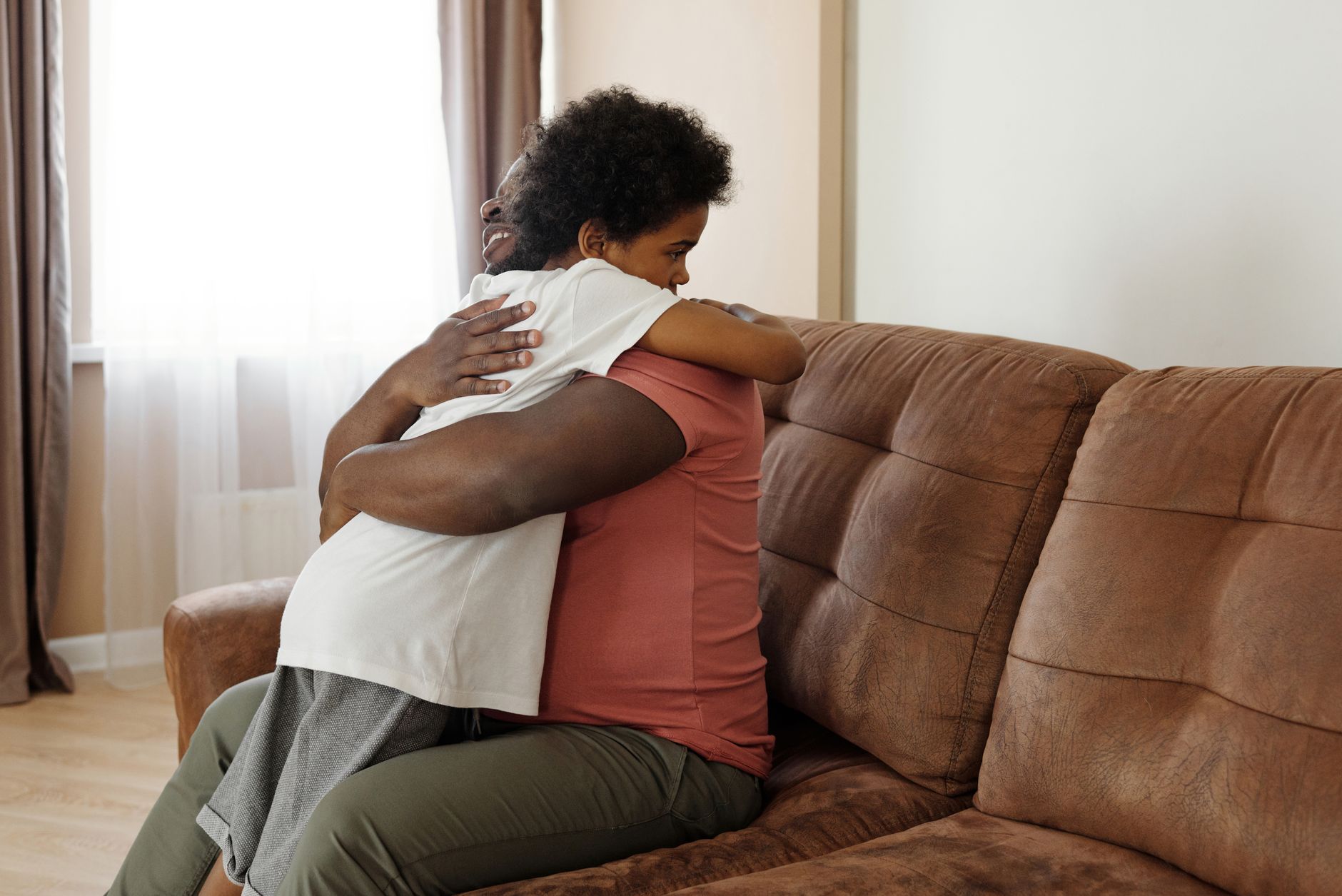
My father calls now. The first few times I did not answer. Then I answered, and we talked about nothing, the weather, his back, a show he was watching, the careful nothing of two people learning a language they never taught each other. I have not moved back into being his daughter, exactly, and I am not sure I ever will. But last month he drove three hours to sit in my small kitchen and drink my bad coffee, and before he left he stood in my doorway, and this time he did not lock it behind him. This time he hugged me, and he said my name, my whole name, my mother’s name, and he said it like it was worth something.
It is. It always was.
I am thirty-two years old. I sit with the dying for a living, and I stay past the end of my shift, and I hold cold hands until the sun comes up, because a long time ago I learned that the whole of love can sometimes fit into the simple decision not to leave. I came from a knocking little furnace and sheets that smelled like the sky. I was put out in the rain with one bag at sixteen. And I walked into the most expensive room I have ever stood in, got slapped twice in front of five hundred people, and walked out of it more myself than I have ever been.
They wanted a photograph of a family that had never existed. What they got instead was the truth, said out loud, in a name I earned.
My name is Rachel Turner. Somebody finally said it. But the thing I want you to know, the thing that took me sixteen years and one terrible wedding to learn, is that it was always mine to say first.