The Granddaughter They Left Behind
I had been asleep for maybe forty minutes when the phone lit up the nightstand like a small fire in the dark.
At sixty-six, sleep does not come the way it used to. It arrives late and leaves early, and it comes in pieces, like something borrowed that has to be given back before you are ready. That night I had finally slipped all the way under, the deep kind of rest that only shows up after a week that has scraped you hollow. So when the screen flared white against the ceiling, my body reacted before my mind did. My hand was already reaching. My heart was already climbing.
I have never trusted a phone that rings after midnight. Nothing kind travels at that hour. I fumbled for my glasses, knocked over the water glass, and did not care. The name on the screen made the whole room go still.
Mia.
My granddaughter. Eight years old. And it was two in the morning.
I answered before the second ring finished.
“Mia, sweetheart. I’m here. What’s wrong?”
For a moment there was only breathing. Not crying, which would have been easier to understand. It was the sound that comes after the crying, when the tears have run out but the hurt has not. Small, uneven breaths, the kind a child takes when she is trying very hard to be brave and failing at it in the dark.
Then, in a voice so thin it barely held together, she said one word.
“Grandma.”
I was already sitting up. My feet were already on the cold floor. “I’m right here, baby. Tell me what happened. Take your time.”
She took another shaky breath. “They left.”
I thought I had misheard her. I pressed the phone harder to my ear, as if that could change the words. “Who left, honey?”
“Daddy. And Rachel. And Ethan.”
The two in the morning phone call
I stood up. The room tilted, or maybe I did. Kevin. His wife, Rachel. And Ethan, their little boy, five years old, all cheeks and dimples and everybody’s favorite. Her father, her stepmother, and her half brother. I said her name again so I could hear my own voice stay steady.
“Say that one more time for me, Mia.”
“They went on a trip.” Her voice cracked in the middle of the sentence, the way a floorboard cracks when you least expect it. “They went to the beach. Daddy said it’s really far. They took the big suitcase.”
For a few seconds I could not make my lungs work. I remember standing barefoot in my kitchen in my nightgown. I remember the little clock on the stove reading 2:04. I remember the way the cold came into my chest and settled there like water finding the lowest place in a room.
Shock comes first. I have learned that. The anger waits its turn. The anger is patient.
I lowered myself onto the kitchen chair very slowly, the way you do when you are afraid your knees will not hold. “Who is with you right now, Mia? Who’s in the house?”
“Nobody.”
That word went through me like a nail.
“Nobody, sweetheart? There’s no grown-up there at all?”
“Mrs. Alvarez next door said I can knock if I really need something. But her lights are off. I didn’t want to wake her up.” A pause. A wet, ragged breath. “They left after I was supposed to be asleep. I heard the car. I looked out the window and I saw the taillights go around the corner.”
I closed my eyes and held them shut. “And Ethan. Ethan went with them.”
“Yeah.” The word was almost nothing. “Daddy said it didn’t make sense to take me because I have school on Monday. He said the tickets were expensive and there wasn’t room.”
“And Ethan doesn’t have school Monday?”
“He’s only in kindergarten,” she whispered. “Grandma?”
“Yes, baby. I’m listening. I’m not going anywhere.”
And then the tears came all the way back, and she asked me the question I will hear for the rest of my life.
“Why didn’t they take me too?”
I have raised children. I have buried my husband. I have sat with friends in hospital hallways and held their hands while the worst news of their lives came through a set of double doors. I thought I knew every way a heart could break. I did not know this one. Hearing that question, in that voice, at that hour, from a little girl sitting alone in a dark house, took something in my chest and simply folded it in half.
I pressed my free hand flat against my mouth so she would not hear me lose it. Because that was not what she needed. She needed the one steady thing left in her whole world, and at two in the morning, that steady thing was going to have to be me.
“You listen to me, Mia,” I said, and I made my voice as calm and as sure as anything I have ever said. “You did not do one single thing wrong. Not one. Do you hear me? This is not about you being bad, or being less, or being any kind of extra. You are not extra. You never were.”
“Then why?” she asked.
“I don’t know yet,” I told her honestly. “But I promise you, I am going to find out. And I promise you something else. You are not going to be alone tonight, or any other night, ever again. Now go get the little quilt off your bed, the yellow one, and bring the phone with you, and we’re going to stay on the line together until the sun comes up.”
I did not know it then, but that was the most important promise I would ever make. And I meant to keep every word of it.
What I did before the sun came up
I stayed on the phone with her while she gathered her quilt and her stuffed rabbit and the flashlight from her bottom drawer. I talked her through checking that the front door was locked, then the back door, then the little window over the sink that never latched right. I told her a story about the summer her daddy was six and got his head stuck in the porch railing and how the fire department had to come and how they gave him a plastic badge afterward and he wore it for a month. She laughed once. It was small and it was watery, but it was a laugh, and I held onto it like a rope.
Somewhere around three in the morning her breathing finally evened out. I heard the phone shift against her pillow. I heard her whisper, “Are you still there, Grandma?”
“I’m still here. I’ll be here the whole time. Close your eyes.”
I did not close mine. I sat at my kitchen table in the dark with the phone against my ear and listened to my granddaughter sleep from four hundred miles away, and I began, very quietly, to make a plan.
By the time the sky outside my window turned from black to the color of weak coffee, I had already worked out most of it. I called my neighbor Frank first. Frank is seventy-two, a retired mail carrier, the kind of man who has answered his phone on the first ring for thirty years and never once acted surprised to be needed.
“It’s early,” he said, which from Frank is a warm greeting.
“I need you to feed the cat and get my mail,” I said. “I don’t know for how long. A few days. Maybe more.”
“Mia?” he asked. Just that. Just her name.
“Mia,” I said.
He did not ask a single other thing. “Go,” he said. “I’ve got the house. Bring that little girl home if that’s what it takes.”
I booked the earliest flight I could find, a 7:40 out of the regional airport, aisle seat because I knew I would need to stand up and move around or I would come apart. Then I did something I had not planned on doing. I went into the spare room that used to be my husband’s office and I opened the bottom drawer of his old desk.
Inside was a leather folder. It held things I had not looked at in years. Mia’s adoption papers, the copies my son had asked me to keep in a safe place back when he still asked me for things. Her medical records. A guardianship form my husband, who had been a paralegal for thirty years and never stopped thinking like one, had insisted we fill out and file the year before he passed, “just in case,” he had said, “just so somebody who loves her always has the standing to step in.” I had thought he was being morbid. I had signed it to make him happy. I put the folder in my bag.
I told myself I was only being careful. That sometimes the truth needs to be written down and kept somewhere safe before feelings get their hands on it and bend it into a shape that is easier to live with. But underneath that, in the honest part of me that does not lie even at four in the morning, I already knew. I was not bringing that folder in case I needed to remember what had happened. I was bringing it in case I needed to prove it.
By five I was showered and dressed and standing by my front door with a small bag and a large purse and a heart that was somewhere between grief and fury and had not decided which way to fall. Frank came over in his robe with a travel mug of coffee and pressed it into my hands.
“You look like you slept in a ditch,” he said.
“You look like the ditch,” I said, and he almost smiled.
Then he got serious in the way that old friends do, all at once and completely. “Whatever you find down there,” he said, “you are not eight years old and you are not alone in that house. You’ve got standing, you’ve got that folder, and you’ve got me on the phone the second you need me. Now go get her.”
The house that had a room for everyone but her
I want to tell you about Mia, because if I don’t, none of the rest of this will land the way it should.
My son and his first wife could not have children. They tried for years. And then, through a road I will not lay out in detail because it is Mia’s story to tell someday and not mine, a little girl came into their lives at eleven months old, and they adopted her, and for a while it was the happiest I had ever seen my son. He sent me a video the day the adoption was final. He was crying. He held her up to the camera and said, “Mom, meet your granddaughter.” I watched that video so many times the first month that I wore it out in my memory.
Mia was mine from that second. Not “adopted granddaughter.” Not “the little girl Kevin took in.” Granddaughter. Full stop. I have never once in eight years put an asterisk next to that word, and I never will.
Then Kevin’s first marriage ended, quietly and sadly, the way a lot of them do, and a couple of years later he met Rachel, and Rachel was pregnant within the year, and Ethan was born. And I watched, slowly, the way you watch a season change, as something shifted in that house.
It was never one big cruel thing. That is the part that is hardest to explain to people who were not there. It was a thousand small ones. It was Ethan’s bedroom getting painted and decorated like a page out of a magazine while Mia’s stayed the beige it had been when they moved in. It was the framed photos on the mantel, five of them, four of Ethan and one of the whole family from before Ethan was born, and not a single one of Mia by herself. It was the way “the kids” somehow always meant Ethan when there was something fun, and always meant both of them when there was a chore. It was Mia learning, without anyone ever saying it out loud, to make herself small. To not ask. To be grateful for less so that no one would notice how much less it was.
I saw it on my visits and I said something, more than once. I told Kevin, gently at first and then not so gently, that a child keeps a running tally even when the grown-ups think she can’t count. He told me I was reading too much into things. He told me every family plays favorites a little and it evens out. He told me, the last time, that it was his house and his children and he would thank me to remember that one of those children was not, technically, mine to worry about.
Technically. My own son used that word to me about my own granddaughter. I did not speak to him for a month after that. I called Mia every Sunday during that month anyway. She never knew there was a fight. That was the one thing her father and I still agreed on, that she should never be a rope in a tug of war between the adults who were supposed to be holding her up.
So when I got on that plane, I was not walking into a mystery. I was walking into the ending of a story I had watched being written for two years and had not been able to stop. The vacation was not the wound. The vacation was just the moment the wound finally showed on the outside where everyone could see it.
The flight, and the plan I made at thirty thousand feet
I do not remember much about the airport. I remember the coffee going cold in my hand at the gate because I forgot to drink it. I remember a young mother across from me with a baby on her hip and a toddler pulling at her sleeve, and I remember thinking, that woman is tired to the bone and she still would not leave one of them home alone in the dark, because that is what the tired ones understand that the selfish ones never will. Being tired is not an excuse. It is the whole job.
On the plane I took out a small notebook and I made a list, the way my husband taught me, because a list is a handrail when the stairs are dark.
First. Get to Mia. Everything else is second.
Second. Do not make her watch me be angry. She has watched enough grown-ups fail her in her own living room. She does not need to add me to that list, even for a good reason.
Third. Find out exactly what happened, in order, from the people who did it, in their own words, before they have time to smooth it into something they can live with.
Fourth. Decide, with a clear head and not a hot one, what the fair thing is. Not the satisfying thing. The fair thing. There is a difference, and thirty years of watching families tear each other apart taught me that the people who chase the satisfying thing usually end up with neither.
I underlined the fourth one twice. Then I closed the notebook, and I looked out the window at the clouds, and I let myself cry for exactly as long as it took to cross one state line, and then I put it away and I got ready.
Mia had gone to school that morning. I want you to sit with that for a second, the way I had to. An eight year old spent the night alone in a dark house, cried herself to sleep on the phone with her grandmother, woke up to an empty kitchen, made herself a bowl of cereal, packed her own backpack, and walked herself to the bus stop, because she had been told the whole reason she was left behind was that she could not be allowed to miss a Monday of school. So she did not miss it. She went. She sat in her little chair and did her worksheets while her family splashed in the ocean four states away. I have thought about that a hundred times since, and it never gets easier. She was that determined to be good. She was that determined to prove she was not the problem.
I landed a little after ten. I did not go to the house. I went to the school.
I signed in at the front office. This is where I want you to understand why my husband’s caution mattered. When I gave my name, the woman at the desk started to give me the speech about how they can only release a child to people on the approved pickup list, and I set the guardianship form on the counter, the one my husband had made us file, and her whole manner changed. Emergency guardianship, properly executed, on file with the county. I was not a worried grandmother hoping to be believed. I was, on paper, exactly who I said I was, and I had the standing to be there. Frank was right. I was not eight years old and I was not alone.
They walked me down to the classroom. The teacher, a kind young woman named Miss Dunn, met me at the door, and when I told her, quietly, that Mia had been home alone since the night before, her face did something I have only seen on the faces of good people who have just understood that a child in their care has been badly let down. She looked, for a second, like she might cry. Then she looked like she might do something a good deal less gentle than cry, and she got herself back under control and she went and got Mia.
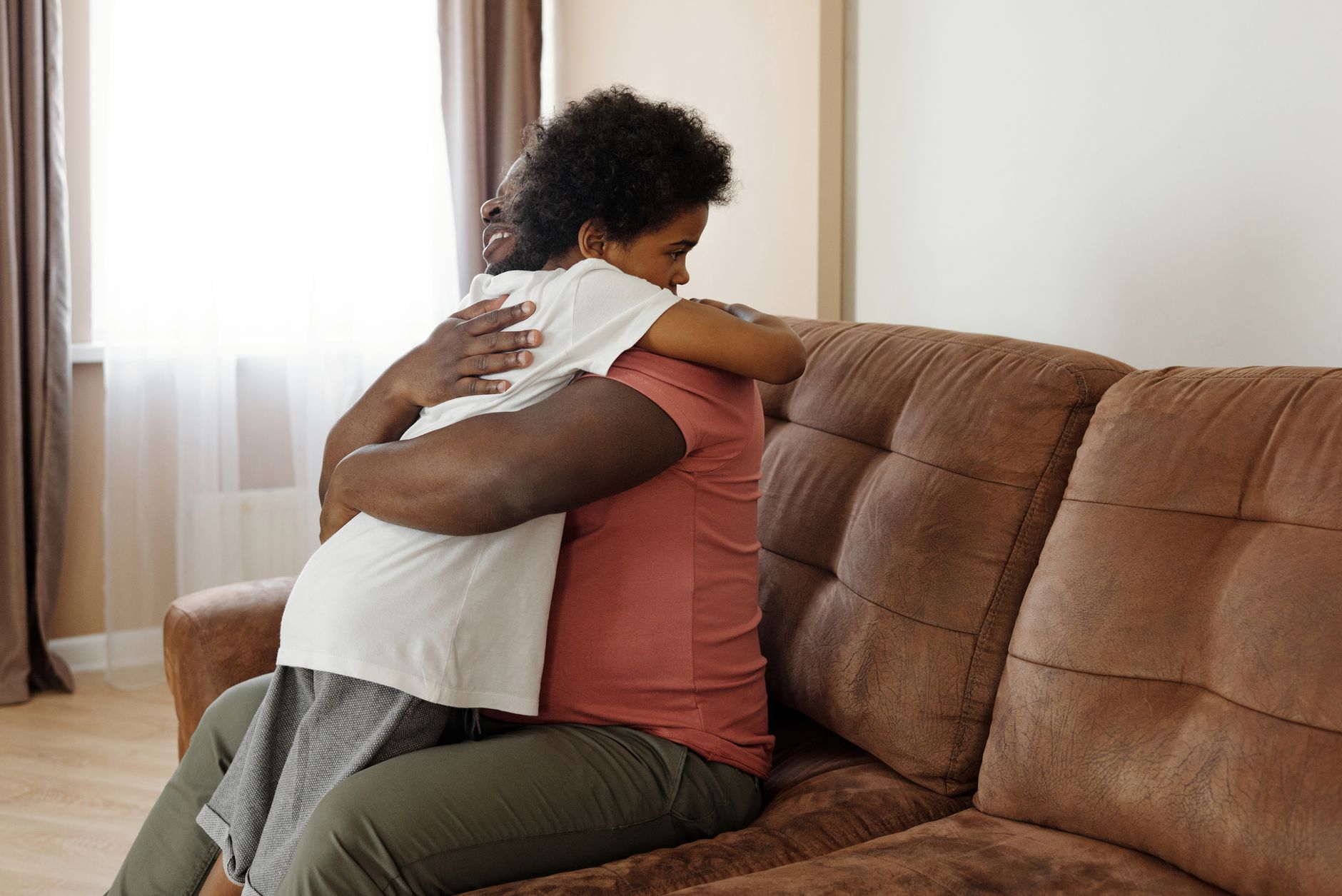
I was standing in the hallway. Mia came around the corner with her little backpack, and she saw me, and I watched it happen in real time. First the confusion, because I was not supposed to be there, I was hundreds of miles away, I existed on the other end of a phone. Then the recognition. And then her whole face just came apart, and she dropped the backpack and ran, and I got down on my knees on that hallway floor, my sixty-six year old knees, and I caught her, and she hit me so hard she nearly knocked me over, and she buried her face in my neck and she did not say anything at all. She just held on.
“I told you,” I whispered into her hair. “I told you I’d come. Didn’t I tell you?”
She nodded against my shoulder, still not able to talk.
“I’m here now,” I said. “And I’m not leaving without you. Not this time. Not ever again.”
We sat on that floor for a long time. Miss Dunn brought me a chair and I did not take it. I was exactly where I needed to be. And when Mia finally lifted her head, the first thing she said was not about her father or the trip or the empty house. The first thing she said was, “Did you bring your quilt too? Or just yours?” Because we had talked on the phone about my quilt at home, the one that matched hers, and in her mind, in the middle of everything, the important thing was whether the two of us would match. That is the child they left behind. That is who did not make the cut for the vacation.
I took her out of that school and I took her to get pancakes, because there is very little in this world that a short stack cannot begin to help, and I let her eat two of them and talk about nothing at all, her friend’s guinea pig and a book she was reading and a song she liked, and I did not ask her one single question about that night, because she had already lived it once and I was not going to make her narrate it for my benefit. I already knew what I needed to know.
When they came home
They were due back on a Thursday evening. I had four days. I used them well.
I did not sit in that house and wait like a storm cloud. I took Mia to the zoo. I took her to the little town pool. I bought her a new bathing suit, a bright one, the kind you buy a child you want the whole world to be able to find in a crowd, and I taught her a card game my mother taught me, and I let her stay up too late two nights in a row, and I slept in the guest bed with her both nights because she asked me to, and I did not once let her see me on the phone in the other room with Frank, and with the family lawyer Frank helped me find, quietly getting my ducks in a row.
Because here is what I had decided at thirty thousand feet, and what those four days only confirmed. This was not going to be a screaming match. Screaming is what you do when you have no other move. I had other moves. I had a folder. I had standing. I had four days of documentation, and a teacher who had written down what she saw, and a next door neighbor, Mrs. Alvarez, who told me, with her hand over her heart, that she had had no idea the child was alone and that if she had known she would have brought her right into her own home. I had, in other words, everything I needed to be calm.
Kevin’s car pulled into the driveway a little after six on Thursday. I watched from the front window with Mia’s hand in mine. I felt her go stiff when she saw the headlights, and I crouched down and I looked her in the eye.
“You do not have to say anything,” I told her. “You do not have to perform. You do not have to make anybody feel better about what they did. Your only job tonight is to stand next to me and be eight. I will handle the rest. Do you trust me?”
She nodded.
“Then let’s go say hello to your father.”
They came in the door sun pink and loud, Ethan first, running, a plastic sword in his hand, and then Rachel with her arms full of shopping bags, and then Kevin, carrying the big suitcase, laughing at something, and the laugh died on his face the moment he saw me standing in his living room.
“Mom,” he said. “What are you doing here?”
“Waiting for you,” I said. “Come in. Sit down. Rachel, you too. Ethan, sweetheart, why don’t you take your sword and go show Mia your new toys, the grown ups need to talk.” I said it warm, because Ethan had done nothing wrong, Ethan was five and adored, and none of this was his fault, and I was not about to make one child pay for the way the other one had been treated. Two little wrongs do not make a right. They just make two hurt children instead of one. Ethan grabbed Mia’s hand, thrilled to have an audience, and the two of them went off down the hall, and I heard Mia, that generous, unbreakable little girl, say, “Show me the sword one, I love sword ones,” and my heart both broke and swelled at the same time.
Then it was the three of us.
The reckoning, done quietly
“I’m not going to raise my voice,” I said, and I sat down in the good chair, the one facing the couch, and I folded my hands. “So you can both take a breath. This is not going to be that kind of conversation.”
Kevin tried to get ahead of it. “Mom, I know how this looks.”
“You do not,” I said, still calm, “know how this looks. Because you were not on the phone with her at two in the morning. I was. So let me tell you how it looks, and then you can tell me if I have any of it wrong.”
And I did. I laid it out, plainly, in order, the way I had laid out my notebook on the plane. The taillights going around the corner. The empty house. The cereal she poured for herself. The bus she caught alone. The worksheet she filled out while they were on a beach. The two in the morning phone call and the question, the one question, that I then repeated to my son word for word.
“Why didn’t they take me too, Grandma.”
The room was very quiet. Rachel was looking at her hands. Kevin’s jaw was tight.
“It was a money thing,” he started. “The tickets were already”
“Stop,” I said, not unkindly. “Do not finish that sentence. Because if the next words out of your mouth are about the price of an airline ticket, I am going to lose the last little bit of hope I am holding onto for you, and I do not want to lose it. So think, Kevin. Think before you answer me. Was it about money?”
He did not answer.
“It was not about money,” I said. “You could have found the money. People find the money for the things that matter to them. It was about the fact that somewhere along the way you started keeping two different sets of books. One child who is really yours, and one child who is yours when it’s convenient. And you left the second child home alone in the dark to prove to yourself which was which. And she got the message, Kevin. Loud and clear. She is eight years old and she has already learned to be grateful for less. Do you understand what that does to a person? Do you understand what it did to me, to hear my granddaughter thank me for a bathing suit like I had handed her the moon?”
Rachel started to cry then. Quietly. I did not comfort her and I did not attack her. I let her cry. Some tears a person has earned the right to sit inside for a while.
“I am not here to scream at you,” I said. “I am here to tell you what is going to happen, because it is already decided, and because I have the standing to decide it, and because for once in that little girl’s life somebody who loves her is going to use their power on her behalf instead of against her.”
Kevin looked up. “What do you mean, standing.”
I put my husband’s leather folder on the coffee table. I did not open it with a flourish. I just set it down, and he saw what it was, and something in his face changed. He is not a stupid man. He knew what his father had filed.
“Here is what is going to happen,” I said. “And I want you to hear that none of it is punishment. Every bit of it is repair. There is a difference, and I need you to understand the difference, or none of this will work.”
I told them Mia would be coming home with me. Not forever, and not as a threat, but for the rest of the school term, starting now, with the school already notified and the paperwork already in order. I told them she needed a stretch of time in a place where she was the whole point and not the afterthought, and that they needed a stretch of time to sit in the quiet of what they had done without her small, forgiving face in the room letting them off the hook every day.
I told them there would be family counseling. All of them. Kevin and Rachel first, on their own, to look hard at how two decent people had let this happen one small choice at a time. And then, only when the counselor said they were ready and not one day before, sessions with Mia, at her pace, on her terms, in a room with a person trained to make sure a child’s voice is the loudest one there.
I told them the mantel was going to change. I did not care about a lot of things in that house, but I cared about that mantel, because a child learns where she stands by looking at the walls, and Mia had grown up looking at a wall that did not have her on it. I said I wanted a photo of Mia, by herself, front and center, before I got on my plane, and I wanted it to stay there, and I would be checking.
And I told Kevin the last thing last, and I told it to him alone, my voice low so Rachel would not have to carry it.
“You are going to earn her back,” I said. “Not with a trip. Not with a toy. Not with a big apology speech that makes you feel forgiven and puts the weight back on her to say it’s okay. You are going to earn her back the slow way, the boring way, the Tuesday afternoon way. You are going to show up to the small things nobody claps for. And someday, years from now, if you do it right, she is going to trust you again, and she is not going to remember this as the time her father left her behind. She is going to remember it as the time everything started to get better. That is the only ending worth working for. And I am going to be alive and watching to make sure you work for it.”
He put his face in his hands and he wept like the boy who got his head stuck in the porch railing, and for the first time all week I let myself feel something other than fury toward my son. I felt sorrow for him. Because he had almost thrown away the best thing in his house, and he was only now, too late but not entirely too late, beginning to see it.
What matching quilts are for
Mia came home with me that spring. My little house that had been too quiet for three years was suddenly full of the sound of an eight year old, cartoons in the morning and questions at dinner and small bare feet on the hardwood. Frank taught her to play checkers and she beat him inside a week and he pretended to be devastated and she pretended to believe him. Mrs. Alvarez, back home, mailed her a card every single week, because that woman never forgave herself for sleeping through the night it happened and she was determined that Mia would never again go a week without hearing from a grown-up who was glad she existed.
The counseling was hard. I will not pretend otherwise. There were setbacks. There was one bad night, a few weeks in, when Mia woke up crying and asked me if I was going to leave her too, if she was too much trouble, if she should try to be smaller, and I held her and I told her the truest thing I know, which is that the people who are worth having in your life do not love you less when you take up space, they love you more, because there is more of you to love. She fell asleep holding my hand. I did not sleep at all. I sat up in the dark, again, but this time it was a good dark, because she was under my roof and safe and the worst was behind her.
Kevin did the work. I will give him that, and I do not give it lightly. He came to every session. He drove the four hours some weekends just to take Mia to the park for an afternoon and drive home again, no fanfare, no photos, no announcement, just a father showing up on a Tuesday because his daughter deserved a father who showed up on Tuesdays. It took most of a year. But I watched it happen, the same way I had watched it fall apart, one small moment at a time. I watched her stop flinching when the phone rang. I watched her start saving up her small news to tell him. I watched, one Sunday, as she signed a card to him and drew a picture on it without being asked, and I had to leave the room.
There is a photo on my mantel now, and one on his, and they match, because I made sure of it. It is a picture of Mia at the town pool in that bright bathing suit, mid laugh, arms up, the whole of her taking up as much space in the frame as a person possibly can. You cannot look at that little girl and think for one second that she is anybody’s afterthought. That was the point. That was always the point.
She is nine now. She lives with her father again, because a counselor we all trust said she was ready and, more importantly, said he was, and because the goal was never to take her from her family. The goal was to fix the family she was in. She comes to me for a long stretch every summer, and we have our own quilts, and we have our card game, and she has learned, finally, all the way down in the place where a person keeps the truth about themselves, that she is loved completely and permanently and without any asterisk at all.
I am sixty-six years old. I have buried a husband and raised a son and made every mistake a person can make and a few that are all my own. But if you ask me what my life was for, I will tell you it was for the night the phone rang at two in the morning and a little girl asked me why nobody took her too, and I got to be the one who said, “I don’t know yet, but I’m going to find out,” and then went and made sure the answer, for the rest of her life, was that somebody always would.
She called me last week. Not crying this time. She called to tell me she made the honor roll and that her daddy put it on the refrigerator with a magnet shaped like a starfish. She called to tell me good news, at a normal hour, because that is what children do when they finally believe, all the way, that the adults who love them will pick up the phone for the small things and not only the terrible ones.
I picked up on the first ring. I will always pick up on the first ring. That is the whole promise, and I intend to keep it until the day I cannot lift the phone. And when that day comes, she will know, without a single doubt, exactly how much she was loved, and exactly how much she was worth, which was everything, which was the moon, which was the whole entire sky.