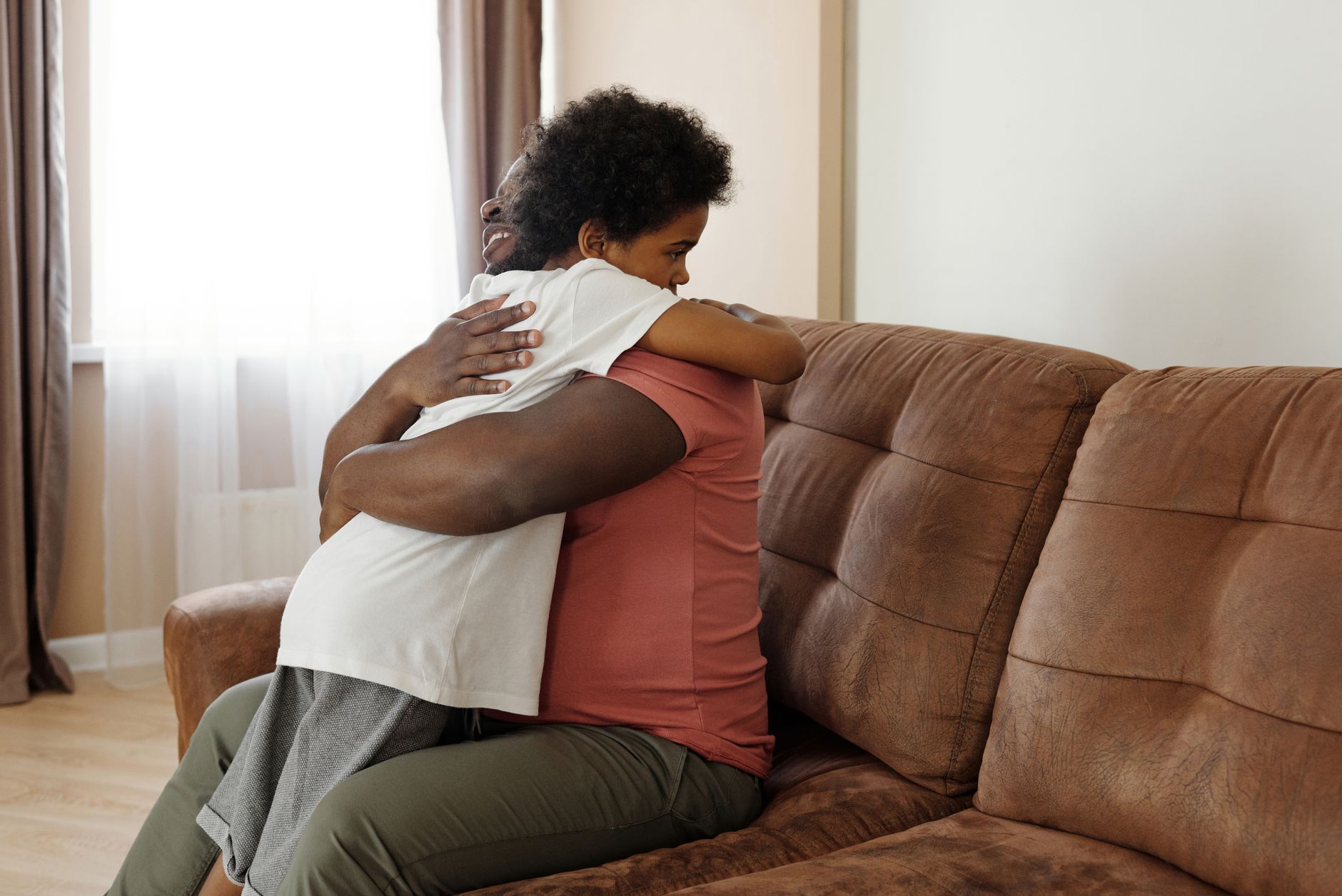
The Sugar She Never Needed
The first time she knocked on my door, I was annoyed.
I had been sitting at my little kitchen table with a mug of coffee gone lukewarm, the radio playing low, enjoying the kind of quiet that a woman only learns to love after she has lived alone long enough to stop being afraid of it. My husband, David, had been gone almost four years by then. The apartment on Birch Street had finally started to feel like mine and not like the place we did not get to grow old in together. Mornings were the best part. Mornings were mine.
So when the knock came at a quarter past eight, I set my mug down harder than I meant to.
I opened the door in my robe, my hair still flat on one side, not trying to look welcoming. I did not know who I expected. A delivery man. A kid selling something for school. What I got was the new woman from the apartment at the end of the hall, the one whose name I did not know yet, holding a sleeping baby against her chest like the baby was the only thing keeping her upright.
She was thin. Too thin. Pale in a way that did not look like winter, more like something being slowly used up. Her hair was pulled back so tight it looked like it hurt.
“I’m so sorry to bother you,” she said. “Do you happen to have a little sugar? Just a little. I ran out.”
I did not invite her in. I told her to hold on, went to the cabinet, and poured about half a cup into a plastic container we both knew she would never bring back. I handed it over. She thanked me three times in the space of a breath and went back down the hall, and I shut my door and I remember thinking, uncharitably, that young people these days could not even keep a kitchen stocked. That was the whole of my opinion of her. A careless girl who forgot the sugar.
The routine
She came back the next morning.
And the morning after that.
And the one after that.
Always the same. Always the same time, near enough that I started to notice. Around 8:17, give or take a minute. Always after I heard the man from her apartment go clumping down the stairwell and out to the lot, where a motorcycle would cough and catch and then fade off down Birch toward the highway. Always with the baby. Always with an empty cup or a little bowl held out in both hands, like an offering.
And always, right before she knocked, a small sound in the hall. A pause. I figured out later she was looking back over her shoulder at the stairs.
By the end of the first week I was less annoyed and more puzzled. Nobody needs sugar every single day. I have gone through a five pound bag over the course of a season. This woman was going through it like she was feeding an army, and yet she never looked like she was baking anything, and the baby only got thinner, and so did she.
“Sugar again?” I asked her one Thursday. I did not hide the sharpness in my voice. I was fifty-one years old and I had run out of patience for a lot of things, and I thought this was one of them.
She tried to smile. That was the moment something in me shifted, because the smile did not finish. It started at her mouth and then just stopped, like a light that flickers and gives up. And in the stopping, I finally looked at her instead of at the interruption she represented.
Her eyes were swollen. Not tired. Not allergies. Swollen the specific way a face gets swollen from crying for a long time and then trying to fix it before you go out in public.
The baby was in the same yellow onesie he had been wearing for three days.
She had no phone in her hand. No purse over her shoulder. No keys. Women my age keep our keys on us like a nervous habit, and I noticed she had none, not on a lanyard, not in a pocket, nowhere.
And when a door slammed somewhere on the floor below us, her whole body went rigid. Not a flinch. A freeze. The kind of stillness a rabbit has in an open field.
I have to tell you a little about me so the rest makes sense.
My name is Grace. Grace Lin. My parents came over from Taiwan before I was born and settled, of all places, in a town of nine thousand people in the middle of Iowa, because my father got work at the seed plant and my mother said the sky reminded her of home even if nothing else did. I grew up the only Asian family for three counties, learned to make hotdish for the church potluck and dumplings for the new year, and married a farm boy named David who thought I hung the moon. We never had children. We tried. It did not happen for us, and after a while we stopped grieving it out loud and just loved each other instead. Then he got sick, and then he was gone, and then it was just me and the radio and the good quiet.
I say all that so you understand: I am not a soft woman, and I am not a naive one. I have buried a husband and both my parents. I sat with my mother through the last bad winter of her life. When you have done those things, you learn to read a face. You learn what fear looks like even when it is dressed up in politeness and a borrowed cup.
That Thursday, looking at that girl, I stopped seeing a nuisance.
I started seeing a hostage.
Come in
The next Monday she knocked at 8:17, and I did not hand her sugar.
I stepped back and opened the door wider.
“Come in,” I said.
She froze on the mat. Her eyes went to the stairwell.
“I can’t stay long.”
“Then come in quick,” I said, “and I’ll pour it fast, and you’ll be back down the hall before anybody’s the wiser.”
I do not know what did it. Maybe it was that I gave her a reason that protected her secret. Maybe she was just too tired to keep standing in the hall. She stepped inside with the baby pressed against her, and I shut the door behind her, quiet, and turned the deadbolt without making a show of it.
She smelled like sour milk and cheap soap and something underneath both that I can only call fear. It has a smell. Anybody who has worked in a hospital or a nursing home will tell you the same.
I sat her at my kitchen table. I put a cup of coffee in front of her, cream and sugar already in it, and when she wrapped her hands around the mug they were shaking so hard the coffee shivered.
“What’s your name, honey?” I asked. Soft as I had it in me.
“Lucy,” she said.
“And the little one?”
“Danny.” She looked down at him. “Daniel.”
The baby opened his eyes and looked at me. I have never in my life seen a baby look so tired. Like he already knew that the world was a place you had to hold your breath in.
I lowered my voice.
“Lucy,” I said. “Do you really need all that sugar?”
And that was the thread. That one question. She had been holding herself together with it, the sugar, the errand, the reason, and I pulled it, and the whole thing came apart in my kitchen.
Her eyes filled before she even opened her mouth.
“No,” she whispered. “I’m not really coming for sugar.”
I did not move. I did not want to spook her.
She looked at the door. Then she leaned across the table toward me, so close I had to bend to hear her, and she said it so quietly I have never forgotten the exact shape of the words.
“It’s the only excuse I have to leave the apartment. He lets me come here because he says you’re just a lonely widow and you’re no danger to anybody. It’s the only reason I get to walk out that door and still come back alive.”
What a lonely widow is worth
A lonely widow.
I almost laughed. Not because it was funny. Because I felt something come up in me that I had not felt since I was a much younger woman, and it was not sadness, and it was not fear. It was rage, clean and cold, the kind that does not shake your hands, the kind that steadies them.
That man had no idea what a lonely widow can be. He thought the words meant harmless. He thought a woman with no husband and no children and gray coming in at her temples was a woman with nothing left, and therefore nothing to fight with. He had it exactly backward. A woman who has already lost the things she was most afraid of losing is the most dangerous person you can put in a hallway, because there is nothing left to hold over her. You cannot threaten what I love. I already buried him.
But I did not say any of that to Lucy. She did not need my rage. She needed my kitchen table and my quiet and somebody who would not tell her she was imagining it.
So I let her talk.
His name was Aaron. They had met three years back, when she was twenty-two and waiting tables at a supper club two towns over. He came in on a Friday, tipped big, told her she was too pretty to be carrying plates. She thought that was romance. She was young and her own father had left when she was small and she did not have a template for the difference between a man who wants to take care of you and a man who wants to take you over.
In the beginning, she said, he was wonderful. He wanted to know everything about her. He wanted to be with her every minute. She mistook the surveillance for devotion, the way a lot of us have, at least once, when we were young enough to.
Then came the comments. Small at first.
“I don’t love the way that guy at the counter looked at you.”
Then: “You don’t need to keep that job. Let me take care of you. Isn’t that what you want, to be taken care of?”
Then: “Your mother has too much to say about our business.”
And then the keys were gone. Just misplaced, he said, and then never found, and then it was easier if he just drove her where she needed to go. Then the bank account had his name and not hers. Then her phone was a phone he paid for and therefore a phone he checked, every night, scrolling her messages while she pretended to be asleep. Then came the first time he grabbed her arm hard enough to leave a mark, and the long apology after, and the grocery store flowers, and the promise, and then a stretch of the good Aaron, the one she had married. And then it all came around again.
“I’m ashamed,” she said to me, weeks later, on an afternoon when Danny was asleep on a blanket on my floor. “I used to be the girl who said this could never happen to me. I judged women like me. I really did.”
I reached across and held her hand.
“That’s what everybody thinks,” I told her, “right up until they meet a monster who wears the face of somebody who loves them. It doesn’t come at you looking like a monster. If it did, no one would ever get caught.”
What I hid in the sugar
After that, my apartment stopped being just the place I lived alone.
It became a station on a railroad. A safe stop. A place with the light left on.
Lucy came every morning with her empty cup, and every morning I poured sugar on top so that if he ever inspected it, it would look like what he expected. But underneath the sugar, I started hiding other things.
A folded slip of paper with the number for the domestic violence hotline, and the number for the county shelter over in the next town, and, in my own careful printing, the words: You are not crazy and you are not alone.
A clean blouse, folded small.
A twenty dollar bill, then another the next week, then another.
An old cell phone my nephew had left behind two Christmases ago when he upgraded. I charged it, I put a prepaid SIM in it that I drove forty minutes to buy with cash so it would not show up on any account.
“Do not turn this on inside your apartment,” I told her. “Not once. He’ll find a way to see it. Only turn it on here, in my kitchen, and only when you need it.”
She nodded like a child being told something that would save her life, because it was.
And here is the thing nobody warns you about, the thing that surprised me: my kitchen started to sound alive again.
Danny learned to crawl on my floor, between the chair legs, chasing a wooden spoon I gave him. Lucy started to laugh. At first her laugh came out like a question, like she was asking permission to make the sound. Then, one morning, something struck her funny and she laughed for real, a whole laugh, before she could catch it, and then she looked scared, and then she saw me smiling, and she let herself keep laughing.
I had not heard another human being laugh in my kitchen since David.
I want to be honest that I was afraid the whole time. I was fifty-one and my knees were bad and I did not have any illusion that I could physically stop a young man who rode a motorcycle and grabbed his wife hard enough to bruise. My weapon was not my body. My weapon was that I was patient, and I was invisible to him, and I had a plan.
We built it slow. You cannot rush these things. The most dangerous time for a woman in Lucy’s shoes is the moment she tries to leave, and I knew that, because I read everything I could get from the library computer, printing pages in the afternoon and reading them at night. Leaving is when they get killed. So we did not leave. We prepared, and we waited for the safe window, and we let him keep believing that his wife’s whole world was one hallway wide.
Three months, it took us. Three months of me putting one small thing at a time into an old cookie tin on top of my refrigerator, where he would never look because he would never be in my apartment. Danny’s birth certificate, which she managed to slip out of the file box while Aaron was in the shower. Her ID, which she had hidden inside a box of maxi pads because she had learned, correctly, that it was the one thing he would never open. A month of Danny’s medicine. A stack of the twenties. Her sister’s address and phone number in Chicago, written on an index card. Her sister, Maggie, whom Aaron had cut her off from two years before, and who cried on my nephew’s old phone the first time Lucy called her from my kitchen and said only, “Mag, it’s me, don’t say anything, just listen.”
“When you’re ready,” I told her, “you come here. Any hour. You knock on my door at three in the morning if you have to. You don’t wait for a good moment. There is no good moment. You just come.”
She looked at me the way you look at somebody who has handed you back a life you thought was already spent.
“What if he comes after me?” she asked.
I looked over at my front door, where David’s old cane leaned in the corner. I had kept it for no good reason except that it was his.
“Then,” I said, “he is going to be very sorry he underestimated a lonely widow.”
The morning it changed
I felt it before she said a word.
That morning she was late. Not 8:17. It got to be 8:30 and I was standing at my window with my coffee going cold in my hand, watching the lot. The motorcycle was gone. He had left. So where was she.
At 8:41 the knock came, and it was wrong. It was too fast, too light, the knock of somebody who is trying to be quiet and trying to hurry, which are two things that fight each other.
I had the door open before she finished.
She was not carrying a cup.
Her bottom lip was split open, fresh, still shining. Danny was screaming against her chest, that raw newborn scream that goes straight through you, and she had a canvas bag over her shoulder that I had never seen before, stuffed full.
“He found out,” she said.
I pulled her inside by the arm and shut the door and turned the deadbolt and, for good measure, slid the chain, which I never used.
“Found out what?”
She was shaking too hard to answer at first. She got out pieces. He had gone into the closet for something and found the box of maxi pads knocked over and her ID had slid out onto the floor and he had known, in an instant, the way they always seem to know, that she was getting ready to run. He had grabbed her. She had lied, said it was old, said she just kept it there. He had half believed her, or wanted to, and he had left for work, but he had said something on his way out the door that turned her blood to ice water.
He had said: “I’ll be back at lunch. Don’t go anywhere.”
Aaron never came home at lunch. His shift did not allow it. Which meant he did not mean lunch. He meant he was going to circle back and catch her, and she knew it, and the second that motorcycle was out of sight she had thrown what she could into a bag and grabbed the baby and run down the hall to me.
And that was when we heard it.
Footsteps in the stairwell.
Slow. Heavy. Sure of themselves. Coming up.
Lucy made a sound I hope to never hear another person make. She pressed her back to my kitchen wall with Danny crushed against her and she stopped breathing.
He had come back early. He had not even bothered to hide the motorcycle, I realized, because I had not been watching the far end of the lot. He had parked around the side and come up quiet, and now the footsteps reached our floor, and they did not go to the end of the hall, to his own door.
They came to mine.
And then three knocks. Not fast. Not light. Three slow, heavy, confident knocks, the knocks of a man who has never once in his life been told no by a woman and meant it.
The lonely widow answers the door
I put my hand flat on Lucy’s shoulder. I made her look at me. I mouthed one word: bedroom. I pointed. Take the baby, go, lock it. She went. I heard the little click of the bedroom lock, and then I heard, muffled through the door, her trying to hush Danny, and I sent up something like a prayer that he would quiet.
Then I did the thing I had been rehearsing in my head for three months without ever telling Lucy I was rehearsing it.
I put on the lonely widow.
I unlocked my own deadbolt, and I opened the door on the chain, just a few inches, and I looked out with the mild, slightly deaf, slightly confused face of exactly the harmless old woman he believed lived here.
“Yes? Can I help you, young man?”
He was better looking than I wanted him to be. That is a thing nobody tells you either. They are so often handsome, so often clean cut and polite in public, which is how they get away with it for years. He had a nice jacket. He smiled at me. His eyes did not.
“Morning, ma’am. Sorry to bother you.” Smooth. Practiced. “I’m looking for my wife. Little thing, dark hair, she’d have the baby with her. I think she might have stopped by. She, uh.” He did a rueful little laugh, man to elderly neighbor. “She gets confused sometimes, forgets to tell me where she’s going. I worry about her.”
I have raised money for the church and haggled at the seed store and sat across from insurance men trying to cheat a widow, and I can act when I need to. I let my face go soft and sorry.
“Oh, the young mother from down the hall? Such a sweet girl. She does come borrow sugar.” I nodded like a foolish old woman glad to be helpful. “But not today, dear. I haven’t seen her since, oh, yesterday? Have you tried the laundry in the basement? Or the little park by the water tower, she likes to take the baby there, I’ve seen her.” I had never seen her do any such thing. I was giving him places to be that were not my apartment. “Would you like me to tell her you’re looking, if she comes by?”
Something moved behind his eyes. He was not sure. He tilted his head, trying to see past me into the apartment.
And right then, from the bedroom, Danny cried out. One sharp little wail before Lucy could smother it.
His whole face changed. The polite mask dropped and I saw the real Aaron, the one Lucy saw, and it was ugly, and his hand came up and hit the door, hard, so the chain snapped tight.
“Open the door,” he said. Low. “I know she’s in there. Open the door right now, you old bi…”
I did not open the door.
I want to tell you I said something cutting. The truth is I said nothing at all to him. What I did was reach my free hand over to the little table by my door where I keep my things, and I picked up my phone, which was already dialed, which had been dialed since the moment I heard those slow footsteps in the stairwell, because I am a lonely widow and lonely widows are not stupid, and I had 911 ringing before he ever knocked.
I lifted it to my ear and I said, loud enough for him to hear every word through the gap in the door, “Yes, this is Grace Lin at 412 Birch Street, apartment 4, and there is a man trying to break into my home. He’s hitting my door. He has assaulted a woman who’s hiding in here with a baby. Her name is Lucy and she has a split lip and I need police right now.”
I watched it hit him. I watched him understand, in real time, that the lonely widow was not confused, was not deaf, had not been fooled for one single morning of those three months. That she had been counting his footsteps this whole time.
He looked at the door. He looked down the hall toward the stairs. Somewhere in the distance, faint, but coming, there was a siren, because in a town of nine thousand the police station is four minutes from Birch Street, and I knew that, and he did not.
He ran.
I heard him go down that stairwell three at a time, and I heard the motorcycle scream out of the lot, and I stood there with my back against my own door and my heart going like a hammer and I said into the phone, “He’s leaving. He’s on a motorcycle, gray and black, heading north on Birch toward the highway. Please hurry.”
After the door
The rest happened fast, the way these things do once they finally break loose.
They caught Aaron that same afternoon, forty miles up the interstate, because a small town cop had gotten the plate from my description and radioed it ahead. He had a history he had kept hidden, a restraining order from a girlfriend three states back that Lucy had never known about. He did not fight the arrest. They almost never do, once there is a badge in front of them instead of a ninety pound woman.
There was a night in my apartment first, though, before any of that was sure. Lucy sat at my kitchen table with an ice pack on her lip that I made her hold there even though she said it did not hurt, and Danny finally, finally slept, worn out from all that screaming, in a laundry basket I lined with blankets because I did not own a crib. A police officer, a woman about Lucy’s age, sat with us and wrote everything down and was gentle about it, and told Lucy about the shelter and the advocate and the order of protection, and I made the three of us grilled cheese sandwiches at eleven at night because nobody had eaten and I did not know what else to do with my hands.
Her sister Maggie drove down from Chicago through the dark and got to Birch Street at four in the morning, and I will never forget the sound those two women made when the door opened, the sound of a family being sewn back together after somebody had spent two years cutting the thread. Maggie hugged me so hard she lifted me off my feet, which is not easy, I am not a small woman, and she cried into my shoulder and kept saying thank you, thank you, thank you, and I kept saying it was nothing, and she pulled back and looked at me with her sister’s exact same tired eyes and said, “It was not nothing. It was everything. You are the reason she’s alive.”
What the sugar was really for
Lucy and Danny went to Chicago with Maggie. That was the right thing. A woman starting over needs family around her, and she needed to be somewhere Aaron’s memory did not live in every hallway.
But she did not disappear out of my life. She calls me. She calls me every Sunday, has for two years now, and she sends me photographs, and Danny, who is a stout, laughing, healthy little boy now, with none of that terrible tiredness left in his eyes, calls me Grandma Grace. I have no children of my own and never will, and now, at the far end of my life, I have a grandson in Chicago who draws me pictures of my apartment building with a big yellow sun over it, and mails them to me, and I have every single one taped to my refrigerator, next to where the cookie tin used to sit.
She got her divorce. She got full custody. She went back to school, of all things, to be a social worker, because she says she wants to be for some other frightened girl what I was for her. She is going to be very good at it. She already knows the most important thing, which is that you do not save a person by dragging them out. You save them by leaving your light on and being patient and letting them find the door themselves, and being ready when they finally walk through it.
I have thought a great deal, these two years, about the word Aaron used. Lonely. A lonely widow. He said it like it was the same as harmless. He said it like a woman alone is a woman with nothing.
He was wrong about that in a way I hope he has a long time in a cell to think about.
I was alone, yes. But alone is not the same as empty. In all that quiet I had been so proud of, all those mornings that were mine, I had been sitting on more than I knew: patience, and a paid off apartment, and a spare bedroom, and forty years of learning how to read a human face, and a husband’s cane by the door, and no one left in this world who could be used to make me afraid. He looked at all of that and saw a lonely old woman.
I looked at a girl holding a baby and asking for sugar she did not need, and I saw the truth, and I opened my door.
That is what the sugar was for. It was never sugar. It was a woman, drowning, knocking on the one door in the building where somebody might finally look at her long enough to see it.
I am so glad I stopped being annoyed long enough to look.
My name is Grace Lin. I am fifty-three years old now. I live alone on Birch Street in a small town in Iowa, and my mornings are quiet again, and I love them again, and every single one of them, when I pour the sugar into my coffee, I say a little thank you that once, when it counted, I had enough to share.