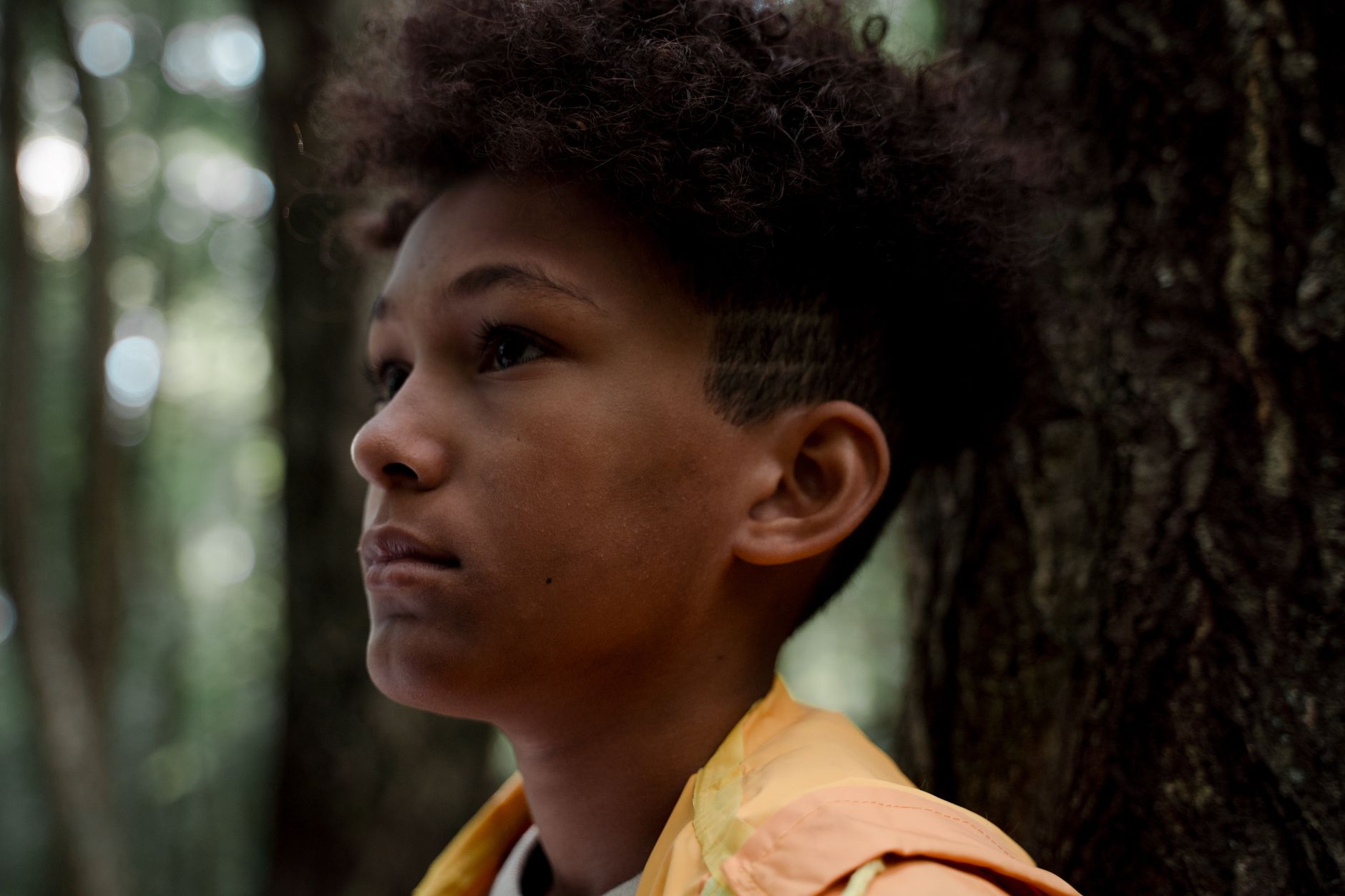
The Boy Who Kept His Promise
In Millhaven, Ohio, a town small enough that the diner on Main Street still kept a coffee pot warm for regulars who didn’t need to order out loud, Rachel Doyle had learned to read her mother-in-law’s silences the way other people read weather. A long pause before a compliment meant one was coming eventually, grudgingly, wrapped in a complaint. A short pause meant Carol had already decided what she thought and was only waiting for someone to ask so she could say it.
The subject Carol never let rest was Eli’s hair.
Eli was five, all elbows and energy, with a head of golden curls that caught the light when he ran across the backyard and made strangers in the grocery store stop and say something about how they didn’t make hair like that anymore. Rachel loved those curls with a fierceness she didn’t examine too closely, because examining it meant admitting how much of that love was tangled up in something that had nothing to do with hair at all.
Carol didn’t know the real reason. Or she did, and had decided it didn’t matter as much as her own opinion. Either way, she said the same things every time she saw him.
“He looks like a little girl.”
“Boys shouldn’t have hair like that, Nathan. You didn’t have hair like that.”
Nathan, Rachel’s husband, had spent two years shutting the conversation down the same way every time, patient at first, then flatter and more final as the years wore on. “Eli’s hair is not up for discussion, Mom.” Carol would give that tight, closed-lip smile she used when she’d lost an argument and hadn’t accepted it, and she would change the subject to something safer, the church potluck, a neighbor’s yard sale, anything. Rachel had come to recognize that smile as a kind of promise of its own. It meant Carol was waiting. Filing the disagreement away for later, for a moment when nobody would be able to stop her.
Nobody knew when that moment would come. It came on a Thursday that started like every other Thursday.
Rachel dropped Eli off at Millhaven Elementary’s kindergarten wing at eight fifteen, the same as always, kissed the crown of his curls the way she did every morning, and drove home to the kitchen table where her laptop sat open next to a mug of coffee that would go cold before she remembered to drink it. Her daughter, Lila, not yet three, was asleep in the next room, worn out from a checkup that had gone, for once, exactly the way they’d hoped it would.
At noon, the phone rang. Millhaven Elementary’s front office number.
“Hi, ma’am, this is the front office. I just wanted to check in. Eli’s grandmother picked him up about an hour ago. She said there was a family emergency. Everything all right on your end?”
Rachel felt the temperature drop in the room, though nothing around her had changed.
“I’m sorry, what emergency?”
“She didn’t say exactly, just that it was urgent. She’s listed as an approved pickup, so we let her take him. I hope everything’s okay.”
There was no emergency. Rachel knew it the way you know a step is missing before your foot finds the empty air. She thanked the secretary, hung up, and called Carol. Straight to voicemail. She called again. Nothing. She texted. No reply. She called Nathan at work and got his voicemail too, because he was in a meeting he couldn’t step out of, and for two hours Rachel sat by the front window with her phone in her lap, watching the empty driveway until her eyes ached from not blinking.
When Carol’s sedan finally turned in, Rachel was already outside, barefoot on the porch steps, before the engine had fully stopped.
Eli climbed out of the back seat crying, the kind of crying that comes from somewhere deeper than a scraped knee. His small fist was closed around something. When Rachel knelt and gently opened his fingers, she found a single golden curl, cut clean at the root, damp from where he’d been holding it too tight for too long.
The rest of his hair was gone. What remained was a rough, uneven buzz cut, cut close in some places and gouged too close in others, the kind of haircut that looks like it was performed with more feeling than skill.
Rachel didn’t have words for a moment. She just stared at her son’s bare, nicked scalp like it belonged to someone else’s child.
“Eli, sweetheart. What happened to your hair?”
He looked up at her, his eyes swollen and red, his voice small. “Grandma cut it, Mommy.”
Carol stepped out of the car unhurried, brushing invisible dust from her slacks like she’d just finished a chore that had needed doing for a long time.
“There,” she said. “Now he looks like a real boy.”
What Rachel said next, she would not fully remember later, only that her voice had gone somewhere she didn’t recognize, low and shaking, and that Carol had folded her arms and told her she was overreacting, that it was just hair, that Rachel had always coddled the boy. Rachel remembered Eli flinching every time Carol’s voice rose. She remembered scooping him up, carrying him inside past the woman who had done this, and sitting with him on the couch while he cried into her shoulder, the curl still crushed in his small fist like something he was afraid to let die.
Nathan came home two hours later to find his son on the couch, hair butchered, eyes swollen shut from crying. He stopped in the doorway of the living room and didn’t move for a long moment, like a man absorbing news from a doctor. Then he crossed the room, knelt in front of Eli, and touched the ragged patches on his head as carefully as if his fingers might reopen a wound.
“Dad,” Eli said, his voice cracking, “why did Grandma cut my promise?”
Nathan’s eyes shot to Rachel’s over the top of their son’s head, and something passed between them that made her stomach drop, because she understood, in that instant, exactly what their son meant, and exactly how much it was going to cost Carol to have not understood it too.
Nathan pulled Eli into his arms and closed his eyes.
“Hey. Hey, champ. I’ve got you,” he said, low and even. “I’ll take care of this.”
The promise went back fourteen months, to the week Lila was diagnosed. She’d been not quite two, and what had looked like a stubborn flu had turned, after a blood test nobody wanted to think too hard about, into a name none of them had wanted to hear attached to a toddler: acute lymphoblastic leukemia. What followed was a blur of a season that Rachel still could not walk through in her memory without her hands going cold. Port placement. Induction chemo. A hospital room on the pediatric oncology floor at Nationwide Children’s with a window that looked out over a parking garage, which had somehow become the single most important view in the world because it was the view Lila had while she got better.
Lila’s hair had come out in the third week, in the shower, in fistfuls on her pillow, until Rachel had sat her on the closed toilet lid one night and shaved the rest of it off herself, gently, so it wouldn’t feel like it was being taken from her, so it would feel instead like something she chose.
Eli had been visiting that week, sitting on the little vinyl bench in the corner of the hospital room with a coloring book he wasn’t really coloring in, watching his baby sister’s head go from bald patches to smooth and shining under the fluorescent lights. He hadn’t cried. He had gone very quiet, the way he did when he was working something out, and then he had climbed up next to Lila on the hospital bed and put his head against hers.
“When your hair grows back,” he told her, “mine’s gonna match. I’m not cutting mine until yours is all the way grown, and that’s a promise. Then we’ll be hair twins again.”
Nobody had told him to say it. He was four years old, and he had decided it on his own, the way kids sometimes land on exactly the right thing without anyone teaching them how. Every hospital visit after that, he would tilt his head next to hers on a video call from home so she could see her brother’s curls were still there, still growing, still waiting for her. It became a kind of ritual between them, a countdown they were both trying to reach the end of together. Lila was in remission now, fourteen months and a hard road later, her hair coming back in soft dark wisps that were finally, finally past the point of looking fragile. She still had another six weeks of maintenance visits before her oncologist would use the word finished, but for the first time the end of the road was visible.
Eli’s curls were not vanity. They were a countdown clock his sister could see every time she looked at him. And Carol, without asking a single question about why the boy she’d been criticizing for a year refused to get a haircut, had cut the clock down to nothing in an act she called fixing him.
Rachel had told Carol about the promise months earlier, in passing, thinking it might soften her. Carol had waved a hand and said something about how children say all sorts of things and it didn’t mean the hair had to look like that forever. She had heard it and decided it changed nothing about her opinion. That was the part Nathan couldn’t get past sitting at the kitchen table that night with his legal pad, writing down dates and names and the exact wording of the school’s authorized pickup policy. Not that Carol had done something thoughtless. That she had been told, plainly, what the curls meant, and had cut them off anyway.
Two days later, Carol called the house as though nothing at all had happened, her voice bright in the particular way it got when she had decided a disagreement was over because she was tired of having it. She invited the whole family to Sunday dinner, her famous oven roast, everybody welcome, Nathan’s brother and his wife, Nathan’s father, the whole table.
Rachel opened her mouth to say there was no chance of that, not this Sunday, maybe not any Sunday, but Nathan reached over and took the phone from her hand.
“We’ll be there, Mom,” he said, his voice perfectly level. “Wouldn’t miss it.”
When he hung up, the calm on his face was more unsettling to Rachel than any anger could have been.
“Trust me, Rachel,” he said.
On Saturday afternoon he asked her for one thing. Could she put together a short video. Lila’s hospital visits. Her hair, gone and then growing back. Eli’s promise, the ritual of the video calls, all of it, everything they had on their phones from the last fourteen months.
Rachel understood exactly what her husband intended to serve his mother at Sunday dinner, and for the first time since the driveway, since the golden curl crushed in her son’s small fist, she felt something other than grief. She felt the particular, focused calm of a woman about to help her husband do something necessary.
Sunday came clear and warm, the kind of early autumn day Millhaven did well, and the whole family gathered around Carol’s dining room table under the chandelier she was so proud of, the roast at the center of the table filling the house with rosemary and butter. Carol had put out her good china. She hugged Eli when he came in, either not noticing or choosing not to notice how he leaned away from her touch, how his hand went up self-consciously to the uneven stubble on his head before he caught himself and put it back down.
Dinner went the way Carol liked dinners to go, full of her own stories, her own opinions, comments about the neighbors and the church board and how young people didn’t know how to run a household anymore. Nathan let her talk. He was patient in a way that Rachel recognized now as strategic, a man letting a room settle before he moved.
When the plates were mostly empty and Carol’s father-in-law was leaning back with his coffee, Nathan stood up.
“Before dessert,” he said, “I want to show everyone something. It won’t take long.”
He set his laptop on the sideboard, angled the screen toward the table, and pressed play.
The video opened on Lila, eighteen months old, bald and small in a hospital bed too big for her, an IV pole taller than she was standing sentry beside the pillow. It cut to Eli on the vinyl bench with his coloring book, to the moment, caught on Rachel’s phone almost by accident, when he climbed up next to his sister and pressed his head to hers and made his promise in his small, serious four-year-old voice. When your hair grows back, mine’s gonna match. That’s a promise. It moved through months of video calls, Eli tilting his curls toward the camera for Lila to see, birthday parties where he’d worn a hat so a barber wouldn’t be suggested, a photo from three weeks ago of brother and sister side by side, her hair a soft new fuzz, his curls still long and full, both of them grinning the exact same gap toothed grin. It ended on the two of them from that same week, Lila pointing at Eli’s hair and saying, in her small determined voice, mine’s gonna be that long too, and Eli answering, I know, that’s the plan.
Nathan closed the laptop.
The dining room was silent in a way it had never been silent before, the kind of silence that has weight to it, that presses on the ears.
“That’s what Mom cut off Thursday afternoon,” Nathan said, his voice steady but not gentle anymore. “Not just hair. He made that promise to his sister the week we found out she had cancer, and he has kept it every single day since, through fourteen months of chemo, so that every time she looked at him she’d have proof that this was going to end, that hair grows back, that things get better. Rachel told you what it meant months ago. You knew. And you took him out of school without telling us and cut it off anyway, because you decided your opinion about how a five-year-old boy should look mattered more than a promise he made to his little sister while she was bald in a hospital bed.”
Carol’s face had gone through several colors in the space of that video, and by the end of it, when Nathan finished speaking, she was white and still, her hand pressed flat against the tablecloth as though she needed it to keep from shaking. For the first time in the years Rachel had known her, Carol Doyle had absolutely nothing to say. Nathan’s brother had gone quiet, his fork set down. Nathan’s father was looking at his wife the way a man looks at someone he is realizing he doesn’t fully know.
It was Lila, nearly three, oblivious to the gravity settled over the table, who broke the silence, tugging at Eli’s sleeve from her booster seat. “Show Grandma your promise hair,” she said, patting her own soft new growth.
Eli looked at his grandmother, his ruined haircut on full display under the chandelier, and said nothing cruel, nothing dramatic, only the plain truth of a five-year-old. “It’ll grow back. But you should’ve asked me first. It wasn’t just hair.”
Carol’s eyes filled, and for once the tears looked like they belonged to her rather than to a performance of being wronged. “I didn’t know,” she said, quiet. “Nobody explained it like that.”
“I did explain it,” Rachel said, gently but without backing down. “You just didn’t think it mattered enough to listen.”
They didn’t fix everything that night. Rachel had read enough, and lived through enough, to know that a single dinner does not undo years of a person believing her opinions outrank everyone else’s, and she wasn’t interested in a tidy movie ending where Carol became a different woman by dessert. What actually happened was smaller and more durable than that. Carol apologized, haltingly, first to Eli and then, days later, in a phone call to Rachel that she clearly found difficult to make, admitting that she had let her own ideas about boys and hair matter more than her grandson’s feelings, and that she was ashamed of the school pickup most of all, of how she’d used trust the family had given her to do something behind their backs.
Nathan set the terms plainly, the way he’d been writing them out on that legal pad the night it happened. Carol was removed from the school’s authorized pickup list, permanently, no exceptions, a form Nathan filed with the front office himself that Monday morning. Any time with the kids from then on would happen with a parent present, not as a punishment forever, Nathan told her, but as a rebuilding of something she had broken and would need to earn back with time, not words. Carol, to her credit, didn’t argue the point. Something about seeing that video, about hearing her own opinions repeated back to her against the backdrop of her granddaughter’s hospital bed, had cracked something open in her that a hundred arguments about hairstyles never could.
Eli’s hair grew back slowly over the following months, first in soft new fuzz and then, by winter, in loose waves that were on their way to curls again. Lila’s maintenance treatment ended in November, the oncologist finally saying the word they’d waited fourteen months to hear, and the family marked it the way they’d marked everything that year, with a video call between brother and sister, Eli tilting his head next to hers on the couch so she could compare, both of them laughing at how close they were to matching again.
Carol came to that call too, this time invited, this time watching quietly from the doorway instead of offering an opinion, and when Eli glanced over at her, unprompted, he patted the cushion next to him.
“You can watch, Grandma. Just watch, though.”
It wasn’t forgiveness handed over all at once, and Rachel didn’t expect it to be. But it was a door left open a crack, which was more than Carol had earned in the driveway that Thursday, and more, Rachel thought, than most people get after a mistake that size. Carol took the seat on the couch, hands folded carefully in her lap, and watched her grandchildren compare hair growth on a video call like it was the most important news in the world, because for a fourteen month stretch of their lives, it had been exactly that.
By spring, Eli’s curls had come all the way back, catching the light again when he ran across the backyard, and Lila’s had grown long enough for two small pigtails that she wore with the particular pride of a girl who had earned every inch of them. Carol still had opinions, because that never fully went away, but she kept most of them to herself now, and the ones she voiced came with a question first. She had started, slowly, to ask instead of decide.
At Eli’s sixth birthday party that June, Carol brought him a card instead of a comment about his hair. Inside, in her careful handwriting, she’d written only one line: Your promise looks good on you. Eli read it twice, then ran outside to keep playing, the way six year olds do with things that matter to them, tucking it away rather than making a show of it. Rachel watched her mother-in-law watch him go, and thought that maybe that was what real change looked like in a family, not a single dramatic dinner, but a hundred small corrections after it, each one a little quieter than the last, until one day the silence between them meant something entirely different than it used to.