
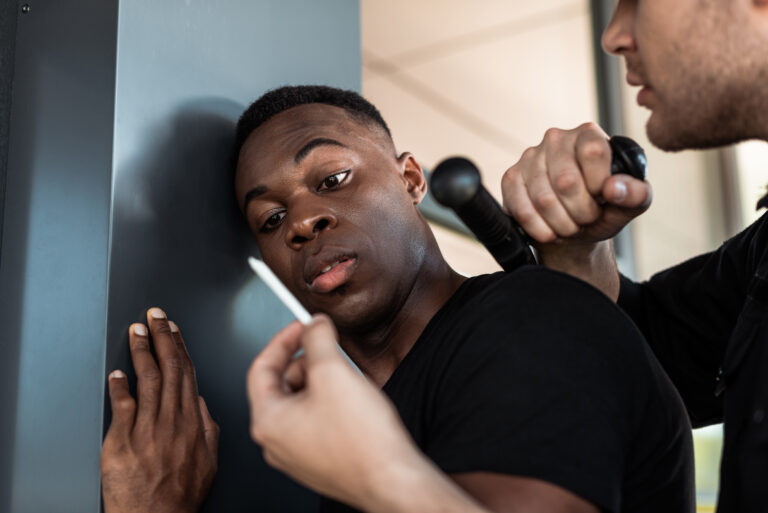
The first time Officer Daniel Price saw Dr. Nathaniel Carter, he decided he already knew what kind of man he was.
Expensive coat.
Polished shoes.
Black sedan parked halfway over the curb.
A calm face that looked, to Price, like arrogance.
The doctor stood beside his car under the flashing red lights of an ambulance entrance, one hand raised slightly, trying to explain himself while two patrol cars blocked the hospital drive behind him.
“Officer,” Dr. Carter said, keeping his voice steady, “I am the trauma surgeon on call. There is a woman inside that operating room who needs me right now.”
Price looked him up and down.
“You should have thought about that before running a red light.”
“I did not run it for fun,” Carter said. “I was called in for an emergency surgery.”
“Everybody’s got an emergency when they get caught.”
Dr. Carter took one breath.
Slow.
Controlled.
Behind him, the automatic doors of Mercy General Hospital slid open.
A nurse in blue scrubs rushed out into the cold night air.
“Dr. Carter!” she shouted. “They’re prepping her now. We need you upstairs.”
Price turned sharply.
“Stay back.”
The nurse stopped, stunned.
“Officer, that’s our surgeon.”
“I said stay back.”
Dr. Carter’s phone buzzed again in his coat pocket.
He did not reach for it.
He had learned long ago that sudden movements around angry men with badges could turn a misunderstanding into a tragedy.
“Officer Price,” he said, reading the name tag, “you can write the ticket. You can follow me inside. You can stand outside the operating room if you need to. But I have to go.”
Price’s jaw tightened.
Nobody told him what options he had.
Not in his town.
Not at his hospital.
Not in front of two younger officers and a crowd of nurses watching through the glass doors.
“You’re not going anywhere,” Price said.
Then he grabbed Dr. Carter’s wrist and twisted his arm behind his back.
The nurse gasped.
“Are you serious?” she cried. “He’s the only one who can perform this surgery tonight!”
Dr. Carter did not resist.
He only closed his eyes for half a second.
Inside Mercy General, a woman was bleeding into her abdomen after a terrible car crash on Route 16.
She had a torn spleen, internal injuries, and minutes that were becoming more expensive with every breath.
Dr. Carter knew only what dispatch had told him.
Female patient.
Critical condition.
Multiple trauma.
Emergency surgery required immediately.
He did not know her name.
He did not know her husband was already speeding toward the hospital in an unmarked black SUV.
And he did not know that the man who had just ordered him into handcuffs had arrested the only surgeon capable of saving the police chief’s wife.
Twenty-two minutes earlier, Nathaniel Carter had been standing in his kitchen in a quiet neighborhood just outside Atlanta, staring at a mug of tea he had not touched.
It was nearly midnight.
The house was dark except for the light above the stove and the small lamp in the hallway.
A stack of medical journals sat unopened on the table.
His reading glasses rested on top of them.
His white coat hung neatly near the door, still carrying the faint smell of antiseptic and long hours.
Nathaniel had been a surgeon for seventeen years.
He had built his career on steady hands, brutal focus, and an ability to stay calm while everyone around him lost the luxury of calmness.
But that night, he was tired.
Not ordinary tired.
Soul tired.
The kind that settled into a man after too many years of being needed only when something had already gone terribly wrong.
His daughter, Elise, had called earlier from college.
She had asked if he was eating properly.
He had lied and said yes.
She had asked if he was sleeping.
He had lied again.
Then she had said, “Dad, you always save everybody else. Who saves you?”
He had laughed because that was easier than answering.
Now the house was quiet, and the question remained.
His phone rang.
Mercy General.
Nathaniel picked it up on the first ring.
“This is Carter.”
The voice on the other end belonged to Dr. Patel, the emergency physician on duty.
Usually calm.
Never dramatic.
Tonight, he sounded sharp.
“Nathaniel, I need you here now. Female trauma patient, mid-forties, severe abdominal bleeding, unstable pressure. We think splenic rupture and possible liver involvement. Airlift unavailable because of weather. You’re the closest surgeon qualified for the repair.”
Nathaniel was already moving.
“How long?”
“Ten minutes before she crashes. Maybe less.”
“I’m twelve minutes out.”
“Make it eight.”
Nathaniel ended the call, grabbed his coat, his keys, and his hospital badge.
He left the tea cooling on the counter.
Rain had started earlier and left the streets slick under the glow of traffic lights.
He drove fast, but not recklessly.
He knew the route to Mercy General like muscle memory.
Left at Glenwood.
Straight past the closed pharmacy.
Right near the fire station.
Then the hill down to the hospital entrance.
At 11:47 p.m., he reached the intersection at Marlow and 8th.
The light turned yellow.
He could have stopped.
But his phone had just buzzed with a message from the ER.
BP dropping. Need OR now.
Nathaniel checked the empty intersection and continued through as the light turned red.
A police cruiser appeared from the side street almost immediately.
Lights flashed.
Sirens chirped.
Nathaniel cursed under his breath, not because he feared a ticket, but because every second now belonged to a woman on an operating table.
He pulled over near the hospital’s emergency entrance, rolled down the window, and had his badge ready before Officer Daniel Price reached the driver’s side.
“License and registration.”
“Officer, I’m Dr. Nathaniel Carter. I’m a trauma surgeon at Mercy General. I was called in for emergency surgery.”
Price shined the flashlight directly into his face.
“License and registration.”
Nathaniel handed them over with his hospital ID.
Price looked at the ID.
Then at Nathaniel.
Then back at the ID.
“You ran a red light.”
“I understand. I was responding to a surgical emergency.”
“You’re not an ambulance.”
“No, but the patient cannot be operated on by an ambulance.”
Price’s eyes narrowed.
It was the wrong thing to say.
Nathaniel knew it as soon as the words left his mouth.
He had not meant it as disrespect.
He had meant it as fact.
But men like Price heard tone before they heard truth.
“Step out of the vehicle.”
Nathaniel looked toward the emergency doors.
“Officer, please. Call the hospital. They’ll confirm everything.”
“Step out.”
The doors opened, and Nurse Amelia Ross rushed outside.
That was when everything got worse.
By the time the cuffs clicked around Nathaniel’s wrists, three nurses were watching from the entrance, and Dr. Patel was on the phone with hospital administration.
“Officer Price,” Nathaniel said, still calm though his pulse had climbed, “you are interfering with emergency medical care.”
Get a new story in your inbox every morning.
Facebook doesn’t show you every story we post. Our free newsletter does. Join 2,500+ readers.
Price leaned close enough that Nathaniel could smell coffee on his breath.
“And you’re interfering with a lawful arrest.”
“For what?”
“Reckless driving. Failure to obey. Resisting.”
“I have not resisted.”
Price looked at the younger officer beside him.
“Did he resist?”
The younger officer, Martin, hesitated.
“Sir, he didn’t exactly—”
“Did he refuse to follow instructions?”
Martin looked at Nathaniel, then at Price.
“Yes, sir.”
Nathaniel said nothing.
He had seen this before.
The moment the truth became negotiable because power needed a story to protect itself.
Nurse Ross stepped forward again.
“Officer, listen to me. The patient is crashing. If he doesn’t get upstairs, she may die.”
Price pointed at her.
“One more step, and I’ll arrest you too.”
Her face went pale.
Nathaniel turned his head slightly.
“Amelia. Go inside. Tell Patel to open. Tell him to control bleeding until I get there.”
“Nathaniel—”
“Go.”
She obeyed, tears of frustration in her eyes.
Price pushed Nathaniel toward the patrol car.
At that exact moment, six miles away, Chief Robert Callahan was driving faster than he had driven in twenty years.
His wife, Margaret, had called him at 11:28 p.m.
She had been on her way home from visiting their daughter.
Her voice had been shaken but alive.
“Rob,” she had said. “There’s been an accident.”
Then a man’s voice in the background shouted for someone to cut the battery cable.
Then Margaret screamed.
Then the line went dead.
The next call came from Mercy General.
Chief Callahan had spent thirty-two years in law enforcement.
He had heard death in voices before.
He heard it in the ER doctor’s careful tone.
“Chief, your wife is alive, but she is in critical condition. We need to operate immediately.”
“I’m on my way.”
Now his black SUV tore through wet streets, siren dashboard light flashing, his knuckles white on the steering wheel.
He was not thinking like a chief.
He was thinking like a husband.
He remembered Margaret at twenty-three, dancing barefoot in the kitchen of their first apartment.
Margaret laughing in the passenger seat during their honeymoon drive to Savannah.
Margaret leaving sticky notes on his coffee mug when his shifts ran long.
He had spent years believing danger was something he met outside the house.
Now it had found her on a dark road.
His radio crackled.
“Chief, be advised, there’s a disturbance at Mercy General emergency entrance. Officer Price has detained a physician.”
Callahan’s eyes sharpened.
“What physician?”
A pause.
“Name appears to be Dr. Nathaniel Carter.”
The chief’s breath stopped.
Mercy General’s surgical director had spoken that name five minutes earlier.
Dr. Carter is our best chance.
Callahan grabbed the radio.
“Repeat that.”
“Officer Price has Dr. Carter in custody at the ambulance entrance. Claims reckless driving and resisting.”
The SUV surged forward.
Callahan’s voice dropped into something his officers rarely heard.
“Tell Price to release him now.”
“Chief, Price says the suspect is being transported.”
Callahan nearly crushed the radio in his fist.
“That doctor is on his way to operate on my wife.”
Silence.
Then the dispatcher whispered, “Understood.”
At Mercy General, Dr. Patel stood over Margaret Callahan’s open abdomen, sweat gathering under his surgical cap.
He was an emergency physician, not a trauma surgeon.
He could stabilize.
He could improvise.
He could buy time.
But buying time was not the same as saving a life.
“Suction,” he said.
A nurse moved quickly.
“Pressure’s dropping.”
“I know.”
“Blood bank says two more units coming up.”
“I need them now.”
The anesthesiologist looked over the drape.
“She’s unstable.”
Patel did not look up.
“Keep her with me.”
He pressed packing against the bleeding and felt the sickening truth of it.
This was beyond him.
He needed Carter.
Everyone in that room needed Carter.
And somewhere outside, a police officer had decided his authority mattered more than a dying woman’s clock.
In the patrol car, Nathaniel sat with his hands cuffed behind him, shoulders pressed awkwardly against the seat.
Price drove.
Martin sat in the passenger seat, silent and visibly uncomfortable.
The hospital disappeared behind them.
Nathaniel watched it through the rear window until the building slipped out of sight.
His phone, badge, and wallet were in a plastic bag on the front seat.
Then the radio exploded.
“All units, be advised. Chief orders immediate release of Dr. Nathaniel Carter. Repeat, immediate release. Officer Price, acknowledge.”
Price’s jaw tightened.
He did not respond.
The dispatcher tried again.
“Officer Price, Chief Callahan orders immediate release. The detained doctor is required for emergency surgery on the chief’s wife.”
Martin turned slowly.
“Sir.”
Price kept driving.
“Sir, we need to turn around.”
Price’s face flushed.
“I heard.”
“Then—”
“I said I heard.”
The radio crackled again, this time with Chief Callahan’s voice.
“Price, this is Callahan. You turn that car around right now.”
Price picked up the radio.
“Chief, the suspect was noncompliant and—”
“He is not a suspect,” Callahan snapped. “He is my wife’s surgeon.”
The words filled the car like a physical force.
Nathaniel closed his eyes.
Not in relief.
In anger.
Because now the truth mattered.
Now that the dying patient had a name connected to power, the situation was suddenly urgent.
Five minutes ago, when she was just “a woman upstairs,” his words had meant nothing.
Price made a hard turn.
The patrol car sped back toward Mercy General.
No one spoke.
When they reached the hospital entrance, Chief Callahan’s SUV was already there.
He stood in the rain without a coat, face pale, eyes burning.
Price stepped out.
“Chief, I was following procedure.”
Callahan walked past him as if he had not spoken.
He opened the back door himself.
Nathaniel looked up.
For one brief second, the two men saw each other clearly.
One husband terrified.
One doctor furious.
Both trapped in the same terrible race against time.
“Dr. Carter,” Callahan said, his voice rough, “my wife is Margaret Callahan. Please.”
Nathaniel held his gaze.
Then he turned slightly, showing the cuffs.
Callahan’s face changed.
“Unlock him.”
Price fumbled with the keys.
His hands shook.
The cuffs came off.
Nathaniel’s wrists were marked red, the skin raw where metal had cut into him.
He stepped out of the car, rolled his shoulders once, and picked up his hospital badge from the property bag.
Then he looked at Price.
Not shouting.
Not threatening.
Just looking.
“You delayed me twenty-two minutes.”
Price opened his mouth.
Nathaniel cut him off.
“If she dies, those minutes die with her.”
Then he ran inside.
The hospital moved around him like a storm.
Nurse Ross met him at the door with surgical clogs and a sterile cap.
“OR Three. Patel has her open. Pressure unstable.”
“CT?”
“No time.”
“Blood?”
“Six units in, two coming.”
“Family?”
“Chief is downstairs.”
Nathaniel stripped off his coat while walking, scrubbed fast, and entered the operating room less than three minutes after leaving the patrol car.
The room shifted when he walked in.
Not because the crisis ended.
Because the person trained for the crisis had arrived.
“Report,” he said.
Patel moved without ego.
“Blunt abdominal trauma. Splenic rupture confirmed. Suspected liver laceration. I packed and held pressure. She’s dropping every time we move.”
Nathaniel stepped into position.
“Good work. I’ve got it.”
For the next two hours, the world narrowed to blood, tissue, instruments, and decisions.
Clamp.
Suction.
Pack.
Hold.
Again.
Nathaniel’s hands did not shake.
His wrists burned beneath the sterile gloves, but pain belonged outside the work.
Fear belonged outside the work.
Officer Price, the cuffs, the red lights, the humiliation — all of it stayed beyond the edge of the sterile field.
Inside the field, there was only Margaret Callahan’s body and the fragile fact that she was still alive.
At 2:31 a.m., Nathaniel tied off the final bleed.
At 2:46, her pressure stabilized.
At 3:04, he stepped back.
“She’s alive,” he said.
No one cheered.
Operating rooms did not celebrate too early.
But several people exhaled at once.
Dr. Patel leaned against the wall for half a second.
Nurse Ross wiped her eyes with her shoulder.
Nathaniel closed the incision with care.
Not speed.
Care.
Because Margaret Callahan was no longer just an emergency.
She was a person who had almost been taken by injury, delay, and arrogance.
When Nathaniel finally walked into the family waiting room, Chief Callahan stood so fast his chair hit the wall behind him.
His uniform was damp from rain.
His eyes were red.
Nathaniel stopped in front of him.
“Your wife survived surgery.”
Callahan’s face crumpled.
He covered his mouth with one hand and turned away, fighting for control.
Nathaniel continued.
“She is still critical. The next twenty-four hours matter. But the bleeding is controlled. Her chances are much better now.”
Callahan nodded, unable to speak.
Then he looked at Nathaniel’s wrists.
The red cuff marks were still visible.
Something dark moved through the chief’s expression.
“Doctor,” he said quietly, “I am sorry.”
Nathaniel was too tired to accept an apology that did not yet have weight behind it.
“Your wife is alive because your ER team bought time,” he said. “Not because your officer gave it to us.”
Callahan swallowed.
“I understand.”
“No,” Nathaniel said. “I don’t think you do. Not yet.”
Then he walked away.
By morning, Mercy General was whispering.
Nurses whispered in hallways.
Residents whispered in stairwells.
Security guards whispered near the coffee machine.
By eight o’clock, half the hospital knew that Dr. Carter had been arrested outside the emergency entrance on his way to surgery.
By nine, someone had leaked a cellphone video.
It showed Price twisting Nathaniel’s arm behind his back while Nurse Ross pleaded with him to stop.
By ten, the video had reached local news.
By eleven, it was on every phone in the police department.
Officer Daniel Price sat in the break room, watching himself on mute.
He had told the story differently in his head.
In his version, he was firm.
Controlled.
Disrespected by a man who thought a medical badge placed him above the law.
On video, he looked exactly like what he was.
Angry.
Small.
Determined to win a confrontation he had created.
Officer Martin stood near the doorway, pale and silent.
“You need to back me up,” Price said.
Martin looked at him.
“I already wrote my report.”
Price’s eyes narrowed.
“And?”
“And I wrote what happened.”
Price stood slowly.
“You calling me a liar?”
Martin’s voice trembled, but he did not look away.
“I’m saying Dr. Carter identified himself. I’m saying Nurse Ross confirmed he was needed. I’m saying you ignored the chief’s order the first time dispatch gave it.”
Price stared at him as if betrayal had walked into the room wearing a uniform.
“You better be careful.”
Martin shook his head.
“No. I think I should’ve been careful last night. Before I let you put cuffs on him.”
At noon, Chief Callahan called Price into his office.
The chief had not slept.
His wife was alive but sedated in the ICU.
Machines breathed rhythmically around her.
Tubes ran from her arms.
Her face was bruised, her skin pale, but her heart still beat.
Every beat was a fact.
Every beat was a reminder.
Price entered the office with forced confidence.
“Chief, I know the optics are bad, but—”
“Sit down.”
Price sat.
Callahan placed a printed report on the desk.
Officer Martin’s statement.
Then another.
Nurse Ross’s statement.
Then another.
The ER time log.
Then another.
Dispatch transcript.
Then the video still of Nathaniel Carter standing calmly with his badge visible while Price reached for the cuffs.
Callahan leaned forward.
“You arrested the surgeon who was called to save my wife.”
Price’s mouth tightened.
“I didn’t know it was your wife.”
The room went silent.
Callahan stared at him.
Price realized too late what he had said.
Callahan’s voice dropped.
“That is the problem.”
Price looked away.
“If I had known—”
“If you had known she mattered to me, you would have listened?”
“That’s not what I meant.”
“It is exactly what you meant.”
Callahan stood.
For thirty-two years, he had worn a badge.
He had believed in chain of command, discipline, procedure, and loyalty.
He had also believed, in the quiet hidden places of his mind, that the worst abuses happened somewhere else.
In other departments.
Other towns.
Other men’s houses.
Now it had happened at his hospital, under his command, in front of his wife’s operating room.
And the man responsible was sitting across from him saying the truth out loud without understanding how ugly it was.
“You are suspended pending investigation,” Callahan said.
Price stood.
“Chief, you can’t be serious.”
“Badge and weapon.”
“After all my years—”
“Badge and weapon.”
Price’s face reddened.
“You’re doing this because it was your wife.”
Callahan walked around the desk.
“No,” he said. “I’m doing this because last night proved I should have done it before it reached my wife.”
Price’s eyes flickered.
Callahan saw it.
Not shock.
Not confusion.
Recognition.
He stepped closer.
“How many times, Price?”
Price said nothing.
“How many people tried to tell me about you before last night?”
“I want my union rep.”
Callahan nodded.
“You’ll get one.”
Price placed his badge and weapon on the desk with shaking hands.
The investigation began that afternoon.
At first, Chief Callahan expected one incident.
A serious one.
A career-ending one, maybe.
But one.
He was wrong.
Internal Affairs pulled traffic stops from the past eighteen months.
Then complaints.
Then bodycam footage.
Then hospital security reports.
Then courthouse records.
Patterns appeared.
Drivers stopped near Mercy General and accused of “attitude” when they questioned citations.
Black professionals detained longer than white drivers for the same violations.
Medical staff ignored when they tried to verify emergencies.
Complaints marked unfounded without interviews.
Bodycam footage missing from the exact minutes when force was used.
Officer Daniel Price had not become dangerous overnight.
He had been dangerous for years.
The department had simply taught him that consequences were unlikely.
On the third day, Nathaniel Carter sat in a conference room at the hospital with Chief Callahan, the city attorney, a union representative, and two Internal Affairs investigators.
He had been asked to give a formal statement.
He arrived in a dark suit, not scrubs.
His wrists had healed enough that the marks were faint, but he noticed Callahan glance at them anyway.
The recorder clicked on.
Nathaniel told the story from the beginning.
The call from Patel.
The red light.
The stop.
The badge.
The nurse.
The cuffs.
The delay.
He spoke calmly, precisely, without exaggeration.
When he finished, the city attorney cleared his throat.
“Dr. Carter, would you describe Officer Price’s demeanor as confused, aggressive, or simply firm?”
Nathaniel looked at him.
“That is a lawyer’s question.”
The attorney blinked.
Nathaniel continued.
“Officer Price was not confused. Confusion asks questions. He did not ask questions. He was not simply firm. Firmness listens to facts and adjusts when reality becomes clear. He did not adjust.”
Callahan’s jaw tightened.
Nathaniel said, “He was aggressive because he believed his authority was more important than the life I was trying to save.”
The room went silent.
The union representative shifted.
The attorney looked down.
Callahan did not.
He looked directly at Nathaniel.
“Doctor,” the chief asked, voice quiet, “what should I have done before this?”
The city attorney lifted his head quickly.
“Chief, I don’t think—”
Callahan raised one hand.
Nathaniel studied him.
It would have been easy to be cruel.
Part of him wanted to be.
But he had spent a lifetime cutting carefully, even when the wound was ugly.
“You should have believed the first person who told you he was a problem,” Nathaniel said. “Not the first person whose pain finally touched your life.”
Callahan closed his eyes for one second.
Then he nodded.
Margaret Callahan woke up on the fifth day.
Her first clear memory was the sound of machines.
Then pain.
Then her husband’s hand wrapped around hers.
“Rob?” she whispered.
Callahan leaned forward.
“I’m here.”
She blinked slowly.
“What happened?”
“There was an accident.”
She tried to move and winced.
“Bad?”
He laughed once, broken.
“Bad.”
Her eyes searched his face.
“You look terrible.”
“I know.”
“Did I scare you?”
“Yes.”
“Good,” she whispered. “Maybe now you’ll retire.”
He smiled, but it did not last.
There was too much in him.
Margaret knew her husband.
Better than his officers did.
Better than the mayor did.
Better than he knew himself sometimes.
“What else happened?”
Callahan looked toward the ICU window.
“The surgeon who saved you was arrested on his way here.”
Margaret stared at him.
“What?”
“One of my officers stopped him outside the hospital. He identified himself. Nurses confirmed it. The officer arrested him anyway.”
Margaret’s face changed.
Not with confusion.
With anger.
“Why?”
Callahan did not answer fast enough.
Margaret squeezed his hand weakly.
“Rob.”
He looked at her.
“Because the doctor was Black, driving fast, and Price decided he already knew the story.”
The machines continued their soft rhythm.
Margaret closed her eyes.
Then she opened them.
“And if I had died?”
Callahan’s face tightened.
“He would have killed you with arrogance.”
“No,” she said quietly. “You would have helped.”
He flinched.
She did not soften it.
Margaret Callahan had been married to a police chief for twenty-eight years.
She loved him.
She also knew the difference between a good man and a man who had allowed bad things to survive near him because confronting them was inconvenient.
“You’re the chief,” she whispered. “If men under you think they can do that, they learned something from what you allowed.”
Callahan’s eyes filled.
“I know.”
“Then unteach it.”
Two weeks later, the city held a public hearing.
It started as procedure.
It became confession.
People came forward who had never been called back after filing complaints.
A teacher who had been pulled from her car and searched in front of her students.
A pharmacist accused of stealing his own vehicle.
A nurse who had been ticketed while rushing to a hospice call, then mocked when she tried to explain.
Then Dr. Nathaniel Carter walked to the podium.
The room quieted before he spoke.
He looked out at the city council, the police command staff, the reporters, the citizens, and Chief Callahan seated in the front row beside Margaret, who was still pale but strong enough to attend.
Nathaniel adjusted the microphone.
“I was asked to come here and talk about what happened to me,” he began. “But what happened to me is not the entire story.”
He looked toward Price, who sat with his attorney near the side wall.
“Officer Price delayed emergency surgery. That is true. He handcuffed me after I identified myself. That is true. He ignored nurses, dispatch, and eventually his own chief. That is also true.”
Price stared at the floor.
“But the more important truth is this: he believed he could do it because nothing in his career had taught him otherwise.”
A murmur moved through the room.
Nathaniel continued.
“I have spent seventeen years as a surgeon. When a patient dies on my table, even when I did everything possible, I still have to review every decision. Every cut. Every delay. Every assumption. Medicine does not allow me to say, ‘I meant well,’ and move on.”
He looked at the police command staff.
“Power should require at least as much honesty as surgery.”
The room went still.
“In an operating room, arrogance kills quickly. In a police department, it may kill slowly — through fear, humiliation, silence, and the slow teaching of a community that their truth will not matter until someone powerful is hurt.”
His eyes moved to Callahan.
“That has to end.”
When he stepped back, no one clapped at first.
The silence was too heavy.
Then Margaret Callahan stood.
Slowly.
Painfully.
Her husband reached to help her, but she lifted a hand.
She stood on her own.
And she began clapping.
One person joined.
Then another.
Then the room rose.
Not for drama.
Not for a performance.
For the simple relief of hearing a truth spoken clearly in a room where too many people had avoided it for too long.
Officer Daniel Price was terminated the next morning.
Criminal charges followed after prosecutors reviewed the delay, the false statements, and the bodycam evidence.
Civil suits followed too.
Not only from Nathaniel Carter, though he filed one after pressure from colleagues who reminded him that accountability was not revenge.
Others came forward.
Old cases reopened.
Complaints once buried were reviewed by outside investigators.
Chief Callahan requested state oversight before the mayor could demand it.
He demoted two supervisors who had signed off on incomplete reviews.
He created a medical emergency verification policy that required officers to confirm hospital credentials immediately in emergency contexts.
He established an independent civilian review panel with real subpoena power.
Some officers hated him for it.
Some citizens said it was too late.
Callahan agreed with both.
Too late was not the same as useless.
Three months later, Margaret Callahan walked slowly into Mercy General’s surgical wing holding a cane in one hand and a white envelope in the other.
Nathaniel was finishing rounds when Nurse Ross found him.
“Dr. Carter,” she said, smiling slightly, “there’s someone here to see you.”
He entered the waiting area and saw Margaret standing beside her husband.
She looked thinner than she had before the accident.
Healing had left its marks.
But her eyes were sharp, and her posture carried the stubborn dignity of someone who had decided pain would not get the final word.
“Mrs. Callahan,” Nathaniel said.
“Margaret,” she corrected. “After what you saw inside me, I think we can use first names.”
For the first time in weeks, Nathaniel laughed.
Callahan looked embarrassed.
Margaret held out the envelope.
“I wrote this because I didn’t trust myself to say it without crying.”
Nathaniel accepted it with both hands.
“You don’t owe me anything.”
“Yes,” she said. “I do. Not because you saved me. That was your work. I owe you because after saving me, you still told the truth when silence would have been easier.”
Nathaniel looked at the envelope.
Callahan stepped forward.
“Dr. Carter, I know an apology cannot undo what happened.”
“No,” Nathaniel said. “It can’t.”
“I also know you should not have needed my wife’s name to be treated like a man telling the truth.”
Nathaniel held his gaze.
“No,” he said. “I should not have.”
Callahan nodded once.
“I’m trying to build a department where that never happens again.”
Nathaniel studied him for a long moment.
Then he said, “Trying is a beginning. Don’t confuse it with the finish.”
“I won’t.”
Margaret smiled faintly.
“I’ll make sure he doesn’t.”
Six months later, Nathaniel stood in an operating room with a new resident beside him.
The patient was a young man with a ruptured appendix that had turned dangerous.
Not famous.
Not connected.
No chief waiting outside.
No reporters.
No black SUV.
Just a scared mother in the waiting room and a life that mattered because every life mattered before someone important claimed it.
The resident’s hands trembled.
Nathaniel noticed.
“You’re rushing,” he said.
“Sorry.”
“Don’t apologize. Breathe.”
The resident took a breath.
Nathaniel guided him through the next step.
“Medicine will tempt you to feel powerful,” he said quietly. “Don’t believe it. We are not powerful. We are responsible. There’s a difference.”
The resident nodded.
Nathaniel glanced at the clock.
For a moment, he remembered the patrol car.
The cuffs.
The hospital disappearing behind rain-streaked glass.
He remembered the rage of being delayed while a woman bled because an officer had cared more about obedience than truth.
Then he looked back at the patient.
“Again,” he said. “Slowly.”
The surgery went well.
Outside, the young man’s mother cried when Nathaniel told her that her son would recover.
He accepted her thanks gently and moved on to the next patient.
That evening, as he left Mercy General, he paused near the ambulance entrance.
The curb had been repainted.
A new sign stood beside the drive.
Emergency Medical Access Zone — Do Not Obstruct.
Beneath it, smaller words had been added at Margaret Callahan’s insistence:
Verify First. Power Must Listen.
Nathaniel stood there for a moment, hands in his coat pockets.
The night air was cool.
Traffic moved through the intersection where he had run the red light months earlier.
Somewhere upstairs, monitors beeped.
Nurses moved.
Doctors answered calls.
Families waited for news that would change their lives forever.
A police cruiser turned into the hospital drive.
Nathaniel watched it slow near the entrance.
The officer inside saw an ambulance approaching and immediately moved aside.
A small thing.
A basic thing.
But sometimes change began with basic things done correctly.
Nathaniel walked to his car.
His phone buzzed before he opened the door.
A message from Elise.
Did you eat today?
He smiled.
Then he typed back:
Yes. And I’m going home early.
A few seconds later, she replied:
Miracles happen.
He laughed softly and looked back at the hospital.
He thought about Margaret Callahan, alive because a team had refused to give up.
He thought about Daniel Price, gone because the truth had finally reached daylight.
He thought about Robert Callahan, a chief who had learned too late but not too late to change.
And he thought about all the people whose names had never made headlines, whose pain had never been connected to power, whose stories still deserved to be believed the first time.
Nathaniel got into his car and sat for a moment before starting the engine.
The work was not finished.
It never was.
But somewhere in that city, a department had been forced to listen.
A hospital had been protected.
A woman had lived.
A doctor had refused to let humiliation turn him cruel.
And maybe, the next time someone stood under flashing lights with the truth in his hands, the person holding power would pause long enough to see him.
Not as a suspect.
Not as a threat.
Not as a story already written.
As a human being.
That, Nathaniel thought, was where saving lives really began.
Then he drove home through the quiet city, the road opening ahead of him, steady and clear beneath the lights.
Note: This story is a work of fiction inspired by real events. Names, characters, and details have been altered. Any resemblance is coincidental. The author and publisher disclaim accuracy, liability, and responsibility for interpretations or reliance. All images are for illustration purposes only.