
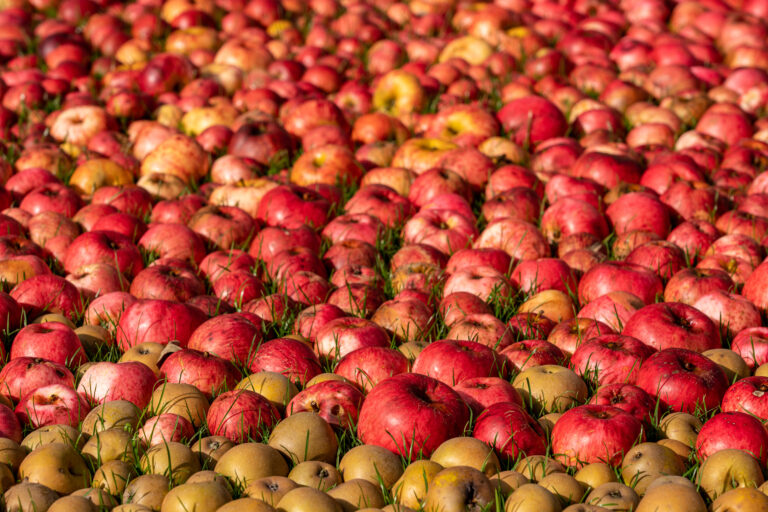
My Neighbor Wanted Me to Remove My Apple Tree — Then Something Unexpected Happened in My Yard
Dean planted the apple tree in our backyard in the spring of 2013, a few months before he died.
We chose it together on a Saturday that smelled like wet soil and gasoline from the mower. He dug the hole slower than he used to. I held the trunk straight while he packed the earth around the roots with the side of his boot. When he was finished he stood there with his hands on his hips, looking at that skinny stick as if it had already grown a canopy.
“Give it time,” he said, before he went inside to rest. “It’ll surprise you.”
I thought he meant the fruit.
For two years the tree gave me nothing. No blossoms. No apples. Just a few stubborn leaves and a trunk too thin to lean on. Neighbors asked, kindly at first, whether I was going to replace it with something that actually produced. I smiled and said I was waiting. What I meant was that cutting it down would have felt like losing him a second time, and I was not ready to do that in my own backyard.
I watered it. I talked to it, which I would not have admitted then. I sat on the back step in the evenings and looked at the empty branches the way you look at a chair that still holds the shape of someone.
Get a new story in your inbox every morning.
Facebook doesn’t show you every story we post. Our free newsletter does. Join 2,500+ readers.
The third spring, everything changed.
One morning the tree was white. Not a little white. Covered. Bees found it before I did. By the end of that season there were twelve apples. Twelve. I counted them twice because twelve felt like a message and I did not want to get the message wrong. They were small and a little tart and I ate the first one standing in the grass with juice on my wrist, crying in a way that would have embarrassed me if anyone had been watching.
It wasn’t much. It meant everything.
After that the tree grew the way living things do when you stop hovering. More fruit than I could bake, can, or give away to the same three people. I started leaving a basket by the side gate. Children from the block learned they could take one if they asked, and then they learned they could take one if they didn’t, as long as they didn’t shake the branches. An older woman two doors down made sauce and left a jar on my porch with no note. The tree became, without a meeting or a plan, something quietly shared.
Then Ryan moved in next door.
He was younger than most of us on the street, careful with his lawn in the way some people are careful with a reputation. New fence stain. New gravel. A hose coiled like it had been taught manners. Within a month he was at my door about the branches that crossed into his yard and the apples that fell on his side of the fence.
I did not argue. I offered to trim everything that reached over and to pick up whatever dropped. I said I would do it every week if that helped.
He wanted the tree gone.
“It’s a mess,” he said, looking past me into my yard as if the mess were a moral failing. “I didn’t buy this house to live under someone else’s fruit.”
I hired professionals. They came with poles and saws and cut the canopy back harder than I liked. The tree looked startled afterward, like a person after a bad haircut. I swept his side of the fence myself that first evening. I thought that would be the end of it.
The complaints did not end.
Fallen apples. Shade on his tomatoes. Bees. Leaves in his gutter. Each time I handled what I could. Each time he talked as if the only clean solution were an empty patch of dirt where Dean’s tree stood.
One morning I woke to a yard that did not look like mine.
Apples were everywhere—not fallen, scattered, as if someone had torn them down and thrown them. Two lower branches hung wrong, bark stripped, the breaks too sharp for weather. Ryan said it was the wind.
There had been no wind. I know my nights. The flag on the porch had not moved. The chimes had not made a sound.
I checked the security camera Dean had insisted we put above the back door the year the shed was broken into. I sat at the kitchen table with coffee gone cold and watched a figure come through the side gate after midnight, pause under the tree, and go to work with something long in his hands. He did not look up. He did not need to. I knew the set of those shoulders from every conversation on my front step.
I reported it. I turned over the footage. I did not make a speech. I did not need one. With proof, Ryan was held responsible. He paid for the damage. There was an official warning about entering my property. After that he stopped coming to the door. He stopped talking about the tree as if it were an insult aimed at him. The fence between us went quiet in a way that was not friendly and was, at least, finished.
I thought that would be the end of the story. A widow keeps a tree. A neighbor tries to erase it. The camera tells the truth. The tree survives.
Something else happened instead.
People who had only taken apples started staying for them. A boy who used to grab fruit and run asked if he could help pick the high ones. The woman with the sauce brought her granddaughter. Someone dragged a folding table into my yard one Saturday in September without asking me first, which would have annoyed Dean and would also have made him laugh. We ate what we could not store. We sent bags home. We talked about nothing important and a few things that were.
It was not a festival. It did not have a name the first year. By the third year the street called it apple day because streets will name a thing if you do it more than twice. I baked the ugly fruit into crisps. Someone brought cider that was too sweet. Kids sat in the grass with sticky hands. Ryan’s blinds stayed down, and I let them. The gathering was not for him.
I used to think Dean meant the tree would surprise me with apples.
He meant time.
Time for a stick in the dirt to become a place people stood under. Time for grief to stop being only absence and start being something you could pick up and hand to a child. Time for a man who wanted the tree gone to learn that wanting is not the same as being owed. Time for a yard that had felt too quiet to fill, once a year, with the ordinary noise of people who did not need an invitation written down.
The tree is older now. The trunk has the thickness Dean never got to see. In late summer the branches still lean a little toward Ryan’s fence, because that is what living branches do, and I still trim them. I still pick up what falls on his side. I do not ask him to like it. I do not need him to.
Some mornings I stand in the grass with a basket and think of Dean packing dirt around those roots with the side of his boot. Give it time, he said. It’ll surprise you.
He was not talking to the tree.
He was talking to me.
And every September, when the first apples come down into other people’s hands, I understand what he already knew: some things are not meant to be removed just because they take years to make sense. They are meant to stay in the yard until the yard learns how to hold them.