The Grandmother They Left Waiting
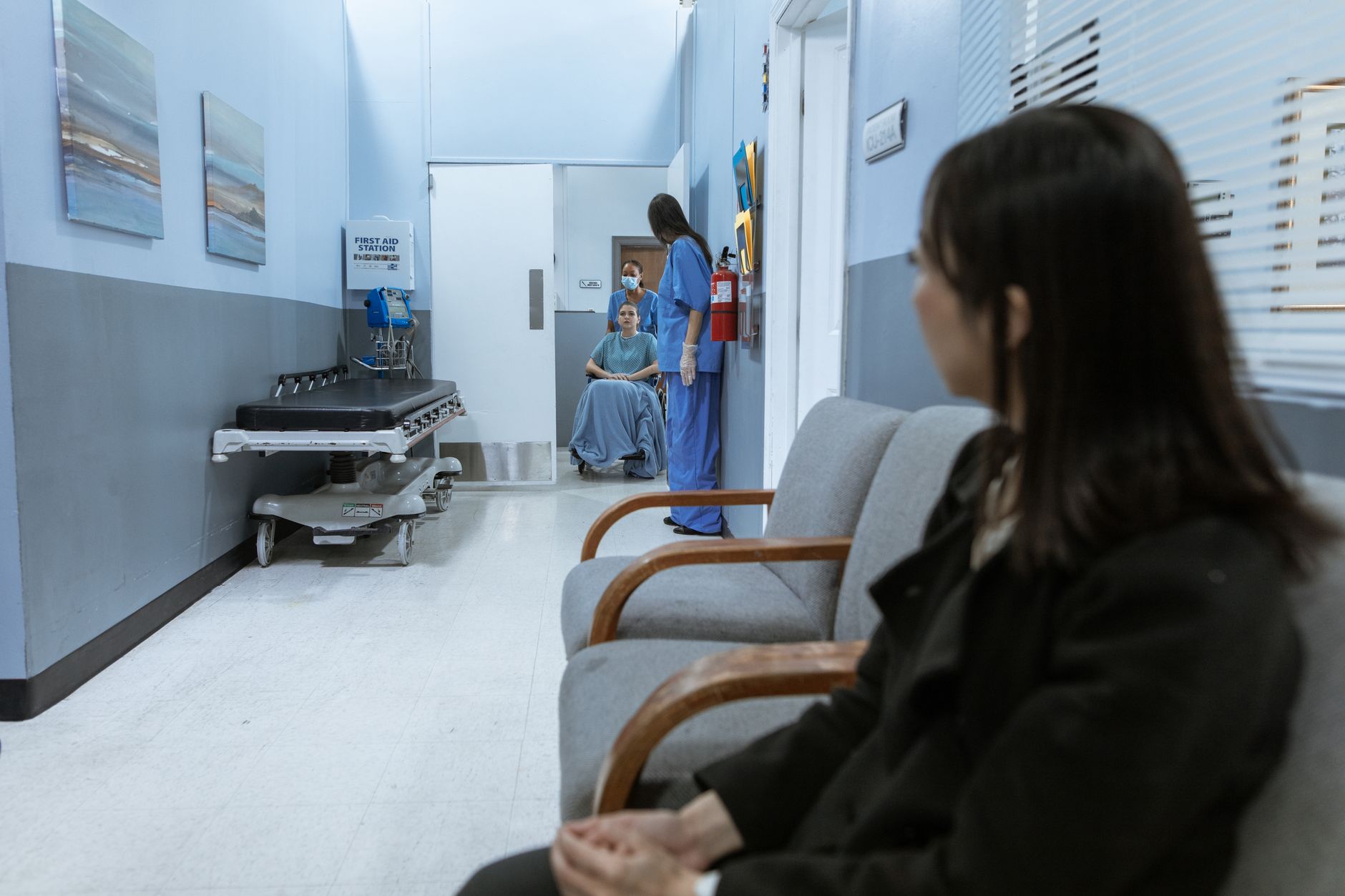
My daughter-in-law Kendra stood in the doorway of the maternity wing at Holmes County Memorial and told me, in front of the charge nurse and two strangers waiting on an elevator, that this was immediate family only time, while my son Trevor’s newborn daughter lay eleven feet away in a room I was not allowed to enter. I had been sitting in that waiting room for going on six hours already, in a green vinyl chair with a rip in the armrest, and I remember thinking, in the strange sideways way your mind works when it doesn’t want to believe what it just heard, that the rip in that armrest was the only thing in the room that still made sense to me.
“This is immediate family only time, Adele,” Kendra said, and her voice was pleasant, almost kind, the voice she uses at church potlucks when she’s telling someone their casserole dish is in the wrong pickup line. “You’ll have to wait out here with everyone else.”
I am sixty-six years old. I have lived within twelve miles of the Holmes County courthouse square my whole life, in a farmhouse on Bunker Hill Road that my husband Ray and I bought the year we married, back when a young couple could still do that on a hired man’s wage and a schoolteacher’s salary. I taught fourth grade in Millersburg for thirty-one years, retired six years ago, and I have never in my life been spoken to in a hospital hallway the way Kendra spoke to me that morning, gently, patiently, like she was explaining a rule to a child who kept forgetting it. I want you to understand that before I tell you anything else, because the cruelest things are almost never shouted. They are said softly, in a tone built to make you feel unreasonable for minding them.
I want to back up and tell this properly, because it did not start in that hallway, and by the grace of God and one nurse named Carla, it did not end there either.
Ray died when Trevor was nine. A heart attack, sudden, in the hayfield behind our place on a July afternoon so hot the cicadas had gone quiet, and I found him myself, walking out with a Thermos of ice water because he’d been baling since six that morning and I figured he was thirsty. We had been married fifteen years. I was thirty-seven years old with a nine-year-old boy and a hundred and ten acres of ground I did not know the first thing about running, and a mortgage that did not care that my husband was gone. I want to tell you I handled it with grace. I did not. I handled it the way most widows in Holmes County handle it, which is you get up the next morning because the boy still needs breakfast, and you keep getting up every morning after that until one day you notice you’ve done it for years.
I taught school by day and I kept books for the Millersburg Farmers’ Co-op three nights a week for eleven years to keep that farm, because Ray’s father had cleared that ground with a team of horses in 1938 and I was not going to be the one who let it go to a developer. I sat in the bleachers at every one of Trevor’s junior high wrestling matches, drove him forty-five minutes each way to a travel league in Wooster on Saturday mornings for two full seasons because the coach thought he had a shot at a scholarship, sewed his 4-H project ribbons onto a felt board that still hangs in the mudroom, and sat up with him the whole night before his father’s funeral because he was too scared to sleep alone and too proud at nine years old to say so out loud. He said it with his feet instead, padding down the hall to my room at two in the morning and just standing in the doorway until I lifted the covers. I do not say any of this to make myself out to be a martyr. Plenty of women in this county have done harder with less. I say it because it matters to what happened later, and because for twenty years, it was Trevor and me against whatever came next, and I never once thought a day would come where a hospital hallway would decide I wasn’t family enough to meet his daughter.
Trevor met Kendra at a Farm Bureau mixer in Wooster nine years ago, when he was twenty-six and working as a loan officer at the county bank, the kind of steady, sensible job I’d raised him to want. Kendra grew up in Canton, the only child of a man who left when she was small and a mother, Reba, who raised her alone on a school administrator’s salary and made sure Kendra never wanted for the things that show, piano lessons and a car at sixteen and a debutante cotillion that a good chunk of Holmes County would find funny if they knew about it. Reba is not a bad woman. I want to say that plainly, because this is not a story where every person on the other side of the doorway is a villain from the first page. Reba loves her daughter fiercely, in the particular way of a woman who raised a child alone and decided nobody would ever again get the chance to make that child feel small. I understand that impulse better than almost anyone alive, because I raised a child alone too. But there is a difference between protecting your child and building a wall around her, and Reba, I came to believe, never learned where that line sat.
Kendra was polite to me from the very first dinner Trevor brought her to, at my kitchen table on Bunker Hill Road, over pot roast and the green beans I’d put up myself that August. Polite, and careful, in a way that took me a full year to name correctly. She complimented the house. She asked about my years teaching. She never once, in nine years, called me anything but Adele, not Mom, not even as a joke, though she called Reba “Mom” in every sentence that had cause for it. Small thing. I told myself it was a small thing for the first three years.
They married four years ago at a vineyard outside Canton, a beautiful wedding, and I paid for Trevor’s suit and the rehearsal dinner because that is what I could give, since a vineyard wedding was not a thing my teacher’s pension was ever going to help fund and Reba made sure everyone at that reception understood exactly whose money had built the party. I did not mind that either. I minded, a little, when the seating chart put me at a table with Trevor’s college roommate’s parents, people I had never met, while Reba sat at the head table between the bride and groom in a chair that had a small printed card on it that said MOTHER OF THE BRIDE, and there was no card anywhere in that room that said anything about the mother of the groom. I noticed. I did not say anything. Ray’s mother taught me, God rest her, that you can notice a great deal in this life and still choose your battles, and I did not think a seating card was worth the peace of my son’s wedding day.
Over the four years since, the pattern held and thickened, the way patterns do when nobody names them. Christmas moved permanently to Canton, to Reba’s house, the year after the wedding, because Reba’s house was bigger and Reba’s tree was professionally decorated and Reba, Kendra explained, “just does the holidays so well.” I hosted Thanksgiving still, because Trevor insisted, but I noticed Kendra brought her own dishes in her own containers and took them home again rather than leaving so much as a casserole dish behind in my kitchen, the way you do at a house you plan on coming back to. I was not invited to the baby shower planning committee, though I was invited, generously, to attend the shower itself, seated again with strangers while Reba stood at the front of the room and gave a speech about the grandbaby she’d been dreaming of her whole life. I sat in a folding chair at the back of a rented event space in Canton and clapped along with everyone else and told myself, the whole drive home on 62, that a baby changes things. A baby brings people together. I had seen it happen in thirty-one years of watching families come through my classroom, watching hard mothers and distant grandmothers soften the minute a new baby landed in the family, and I believed, with the particular stubborn hope of a woman who has spent her whole life choosing to believe the best of people, that this baby would be the thing that finally let Kendra let me in.
Kendra went into labor on a Tuesday in late June, three days past her due date, at eleven at night. Trevor called me himself, his voice cracking with the particular joy and terror of a man about to become a father, and said, “Mom, we’re heading in, I’ll call you when there’s news,” and I sat up in my kitchen the rest of that night with the porch light on and a pot of coffee going, the way I used to sit up waiting on him to get home safe from a Friday night football game, because some habits a mother never outgrows no matter how old the child gets. He texted at six the next morning. She’s four centimeters. Long night ahead probably. I love you.
I did not go straight to the hospital. I want that understood, because I have turned this part over in my mind a thousand times since and it matters. I waited until nine, out of respect, out of not wanting to hover, out of thirty-one years of teaching me that people in a labor and delivery unit need room to work and a mother-in-law underfoot is not always a comfort. I drove the twenty-two minutes into Millersburg with a bag of clean burp cloths I’d sewn myself out of old flannel shirts of Ray’s, the same fabric I’d used for Trevor’s baby blankets twenty-nine years before, because I wanted his daughter to have something soft that had a piece of her grandfather in it even though she would never get to meet him.
I got to the fourth floor at nine-fifteen. Reba was already there, in the family waiting room, wearing what I can only describe as a labor and delivery outfit, soft cream cardigan, hair done, a canvas tote bag with a monogrammed onesie already tucked inside it. She hugged me. I want to be fair, she hugged me, and asked how the drive was, and we sat together for the first three hours making the kind of small talk two women make when they are both terrified for the same girl in the same room down the hall and do not know each other well enough to be terrified out loud together. I liked her better in those three hours than I had in the four years before them.
At half past noon, a nurse came out and told us both, together, that things were progressing, active labor now, could be a few more hours yet. Reba asked if she could go back and sit with Kendra a while, since Trevor had stepped out to grab coffee, and the nurse said of course, since the hospital’s actual posted policy, the one printed on a laminated card taped to the check-in desk, allows the laboring mother to name up to two support people at a time. Reba went back. I sat with the coffee cooling in my hands and told myself my turn would come.
My turn did not come. Not at one o’clock, when Reba came back out glowing and said Kendra was doing wonderfully and asked would I like a cup of the vending machine coffee, she was buying. Not at three, when Trevor came out looking gray and exhausted and hugged me hard and said, “Almost there, Mom, I think,” and went back in without seeming to notice I hadn’t been back there at all. Not at five, when the on-call OB came out to speak to the family and addressed her update to me and Reba both, standing side by side, and I let myself believe that meant something. Wren Reba Kendra were the words I heard in my head a hundred times that afternoon, family, family, family, and I sat in that green vinyl chair and told myself I was being silly, that this was just how modern hospitals worked, small rooms, limited space, everyone’s turn would come once the baby was here and settled and the room wasn’t full of doctors and machines.
At six-forty that evening, we heard the baby cry through the wall, a sound I will hear in my sleep until the day I die, and Reba and I both stood up out of our chairs at the same moment and gripped each other’s hands without either of us deciding to. Seven pounds three ounces, Trevor told us a few minutes later, standing in the doorway in a paper gown with tears running clean down into his stubble, a girl, they’re calling her Wren, everybody’s healthy, everybody’s perfect. He hugged Reba first. Then he hugged me, and he held on a beat longer, and he said, into my hair, “Mom, I’m a dad,” the same disbelieving wonder in his voice that I remembered from the night he made the varsity team, and for one full minute in that hallway I believed every hard year of the last four had just been washed away by a seven-pound baby girl.
Reba went back first. That was fair, I told myself, she’d been the one sitting with Kendra all day, she should see her daughter and her granddaughter first. I waited another twenty minutes, patient, still telling myself the story I needed to be true. Then Trevor came back out to get his own phone charger from his truck, and I stood up to walk with him, thinking I would simply follow him back in when he went, and that is when Kendra appeared in the doorway behind him, still in a hospital gown, hair pulled back, holding the door frame with one hand like she’d walked there specifically to stand in it.
“This is immediate family only time, Adele,” she said, gentle as anything, like she was reminding me of a rule I’d simply forgotten. “You’ll have to wait out here with everyone else.”
Trevor was already three steps down the hall toward the elevator, headphones half in, hadn’t heard a word of it. The charge nurse at the station six feet away heard every word, and I saw her look up from her charting, and I saw her not say anything, because it is not a nurse’s place to referee a family, and I understood that even in the moment, even as my whole chest went hollow and cold.
“I’ve been here since nine this morning, Kendra,” I said, and I kept my voice as level as I could, because I have never in my life given anyone the satisfaction of watching me come apart in public, not at Ray’s funeral, not once in thirty-one years of parent conferences with families who wanted to tell me my grading was unfair, not ever. “I’m his mother.”
“I know,” she said, and there was nothing in her face that looked like cruelty, which was somehow worse than if there had been. “But it’s just been such a long day for everyone, and my mom’s already back there, and we just want it to be quiet and immediate family for a little while. You understand.”
I did not understand. I stood there in that hallway with a bag of hand-sewn flannel burp cloths hanging off my wrist and I understood, for the first time in four years, with a clarity that felt like a physical blow, that I had spent four years being managed. Not disliked, exactly. Managed. Kept at a careful, pleasant distance, one polite excuse at a time, until the distance had become permanent enough that on the single most important day of my son’s life, on the day his daughter came into the world, a woman who had known me nine years could stand in a doorway and tell me I did not qualify as immediate family, and mean it, and expect me to simply go sit back down.
I went and sat back down. I am not proud of that. I have thought since about what I should have said, the sharp true things that came to me at eleven that night lying awake in my own bed, and I did not say a single one of them in the moment, because forty years of being a schoolteacher and a widow and a farmer’s daughter had trained something into me, some deep old habit of not making a scene, of swallowing the thing whole rather than letting it split the family in front of strangers. I sat in the green vinyl chair. I texted Trevor, Take your time honey, no rush, so happy for you both, and I meant every word of it, because none of what was happening to me was Trevor’s doing, or at least I believed that then. I did not tell him what his wife had just said. I told myself I would tell him later, privately, calmly, when the moment had passed and I could explain it without sounding like I was trying to ruin his happiest day.
Two more hours passed. I watched other families come and go through that waiting room, a young couple who left with balloons and a car seat still in its box, an older man who fell asleep sitting up with his ballcap over his eyes, a woman about my age who got to go back and hold her own new grandson for twenty minutes at a stretch, twice, and came out both times glowing, and I sat with my hands folded around a cardboard cup of coffee gone cold an hour before and I did the thing widows and mothers of a certain generation are trained from birth to do, which is I made myself small and quiet and useful-looking so that nobody would have to feel bad about me.
That is when Carla found me.
Carla had been the day-shift charge nurse on the maternity floor for eleven years, a broad, sturdy woman with reading glasses pushed up into gray hair and a voice like she’d spent a career talking people down from panic in the middle of the night, which she had. She had been at the desk since morning. She had watched the whole day unfold from six feet away, every trip Reba made in and out, every hour I sat without moving, and at half past eight that night she came and sat down in the chair next to mine, off the clock in her body language if not her badge, and set two fresh cups of coffee down on the little table between us.
“You’ve been out here since nine this morning,” she said. It was not a question.
I told her I had, and I tried to make it sound like a simple fact and not a complaint, because I did not know this woman and I did not want to be the difficult mother-in-law crying in a hospital hallway.
“There’s no hospital rule that says only two people can be back there at once past visiting hours for a healthy vaginal delivery,” Carla said, in the plain, unhurried way of a woman who has decided a thing needs saying and has stopped caring whether it is her place to say it. “That’s a rule for the delivery itself, when the room’s full of equipment and staff. Once mom and baby are settled in recovery, the room can hold a small crowd fine, we do it every day. I heard exactly what your daughter-in-law said to you at the door two hours ago. I was standing right at that desk. And I want you to know it wasn’t hospital policy. That was her policy.”
I did not say anything for a moment, because something in my chest that had been holding very still all day finally let go, just a little, just enough that my eyes filled before I could stop them.
“I’ve worked this floor eleven years,” Carla went on, quiet, so the two strangers by the elevator wouldn’t hear. “I’ve watched a lot of families in the best hour of their lives, and I’ve watched a lot of families in the worst. I don’t usually say anything. It’s not my place. But I watched your face when she said that to you, and I’ve been sitting with it for two hours, and I decided it was worth being wrong about my place, just this once.”
I want to tell you I felt vindicated in that moment. Mostly I just felt tired, and old, and small, sitting in a hospital hallway at half past eight at night being comforted by a stranger in scrubs because my own family had not thought to.
Trevor came looking for his phone charger again around nine, and this time Carla was still sitting with me, and this time, when he saw my face, actually saw it, he stopped.
“Mom? You okay?”
I have never lied to my son in his life, not about anything that mattered, and I was not going to start in a hospital hallway with a stranger’s kindness still warm in my chest, but I also was not going to be the one to hand him this particular grief on the best night of his life. I opened my mouth to say I was just tired, just emotional, a grandmother’s tears, nothing more.
Carla answered before I could.
“Trevor,” she said, “I don’t know you and it’s not my business, but I’ve been on this desk all day, and your mother has been sitting in this waiting room since nine o’clock this morning without going back once, and about two hours ago your wife came out and told her, word for word, that this was immediate family only time and she’d have to wait out here with everyone else. I want you to know that wasn’t our rule. That was hers.”
I have thought about my son’s face in that instant more times than I can count. It did not go angry first. It went confused, the particular confusion of a man trying to fit a new fact into a picture that had made perfect sense to him an hour before, because Kendra had told him, he said later, quietly, ashamed, that his mother had texted her that she was tired and wanted to head home and see the baby properly tomorrow when things were calmer. That she’d said it herself. That it had been my idea.
I had never sent any such text. I had sent Take your time honey, no rush, so happy for you both, three hours before, and nothing since, because I had not wanted to burden him.
Trevor did not say another word to either of us. He turned around and walked back down that hallway, past the nurses’ station, past the family waiting room, and I heard, faintly, through the door of the recovery room, his voice go up, not shouting, but hard and clear in a way I had not heard from my son since he was seventeen and caught a friend lying about something that mattered. I could not make out the words. I did not need to. Two minutes later he came back out through that door, and he did not stop at the desk, and he did not stop to explain himself to Reba, who I could see standing behind him in the doorway with her hand pressed flat against her own chest. He came straight to the green vinyl chair where I had been sitting for eleven hours, and he crouched down in front of me the way he used to when he was small and had done something wrong and needed me to look him in the eye, and he took both my hands in his.
“Mom,” he said, “I am so sorry. Come meet your granddaughter. Right now. Come on.”
He walked me back down that hallway himself, his hand at my elbow like I was made of something breakable, past the nurses’ station where Carla had gone back to her charting like nothing at all had happened, though I saw the corner of her mouth lift when we passed. Kendra was standing just inside the recovery room door when we came in, her face pale, her arms crossed over her chest in the exact posture Reba had described to me once, years ago, without meaning anything by it, as “how Kendra stands when she knows she’s wrong and isn’t ready to say so.” Reba stood a few feet behind her, silent, her monogrammed tote bag still hanging from her shoulder, and for the first time in four years I saw something on Reba’s face that looked less like protectiveness and more like recognition, like she was watching her own daughter do something Reba herself had maybe done once, to some other mother, in some other doorway, a long time ago.
Trevor walked me straight past both of them to the bassinet.
I am not going to try to describe holding that baby for the first time in a way that does justice to it, because I don’t believe words reach that particular place, not really, not even for a woman who spent thirty-one years teaching children to find the right ones. I will only tell you that she weighed seven pounds three ounces and had a full head of dark hair like her father did at birth, and that when I laid her against my shoulder wrapped in the flannel burp cloth I’d sewn from her grandfather’s old work shirt, she stopped fussing entirely and went still, the particular boneless stillness of a newborn who has decided, for reasons only newborns understand, that she is safe. I stood in that recovery room and cried the way I had not let myself cry in that waiting room for eleven hours, openly, without apology, while my son stood with his hand on my back and did not once look toward his wife.
What happened between Trevor and Kendra in the days after did not happen easily, and I am not going to pretend it did, because a story that wraps up too neatly is not one you’d trust, and I would not blame you for not trusting it. Trevor stayed at the hospital that night and the next, and from what he told me later, in pieces, over the weeks that followed, he and Kendra had the hardest conversation of their marriage sitting in that recovery room after I’d gone home to finally sleep, a conversation that started with him asking her, plainly, why she had told him I didn’t want to come back, and did not end for a long time after that. Kendra did not have a good answer, not that first night. What she had, eventually, over several harder conversations in the weeks after they brought Wren home, was something closer to the truth, which came out slowly and was not flattering to her and which I only share now because she gave me leave to, months later, sitting at my own kitchen table.
She told Trevor, and later told me herself, sitting across from me on a Sunday afternoon in August with Wren asleep in a bassinet between us, that she had grown up watching her own mother get pushed to the margins by her father’s family before he left for good, watching Reba sit at holiday tables the way a guest sits rather than the way family sits, and that somewhere in the years since, without ever deciding to on purpose, she had built her whole idea of protecting her own family around never letting that happen to her, which had curdled, slowly, into deciding who got to count as her family in the first place, and drawing that circle smaller and smaller until her own mother-in-law was standing outside it in a hospital hallway. She said it was easier to keep me at a polite distance than to risk loving me and being disappointed by me the way Reba had been disappointed by people who were supposed to be family and weren’t. She said the lie to Trevor, the fabricated text, the excuse about me wanting to wait, was the ugliest thing she’d ever done in her marriage, and she did not try to make it smaller than it was.
I will tell you I did not forgive her in that one conversation, and I did not pretend to, because thirty-one years in a classroom taught me that a real apology is not a performance you accept once and move past, it is a pattern you watch for afterward, over months, to see if it holds. It has held, so far. Reba and I have had our own harder conversation since, over coffee at the diner on the square, two grandmothers who both know something about being made to feel like a guest in their own family, and we did not solve everything in that one cup of coffee either, but we started.
Trevor set a boundary with his wife that week that has held every week since: whatever happens in that family from here forward, both of Wren’s grandmothers get equal footing, equal notice, equal time, no more managing, no more polite excuses, and he told Kendra plainly that he would not be raising his daughter to think love comes with a hierarchy based on whose house has the nicer tree. I did not ask him to say that. He came to that on his own, standing in a hospital hallway at nine o’clock at night, the same way he used to stand in my bedroom doorway at two in the morning when he was nine years old and needed his mother, except this time it was me who needed him, and he came.
Wren is five weeks old now. Her middle name is Rae, spelled that way on purpose, for her grandfather, a man she will never meet, who cleared no ground and drove no combine in this story but who is in it anyway, in the flannel of an old work shirt and in the son he and I raised together for nine years and I finished raising alone for twenty more. Kendra asked me, in that same August conversation at my kitchen table, whether I would mind if they used it. I told her I would be honored, and I meant it, and for the first time in four years, when she said it back to me, she called me something other than Adele. She called me Grandma Adele, and my throat closed up so fast I couldn’t answer her for a full minute, and she waited, patient, the way you wait for someone who has earned the right to take her time answering.
I still keep a bag of flannel burp cloths in the mudroom, next to the felt board with Trevor’s old 4-H ribbons on it, in case anyone else in this family ever needs reminding, on a hard day, what a grandmother’s hands are actually for.
This story is a dramatization. Names, characters, and details are invented, and any resemblance to real people or events is coincidental.
Great Story. So wonderful it has a complete story….not like the ones we see on FB currently.
Thank you, Bobbie! ❤️ We’re so glad you enjoyed it. And yes, we’ll always do our best to give you the complete story and the ending!