
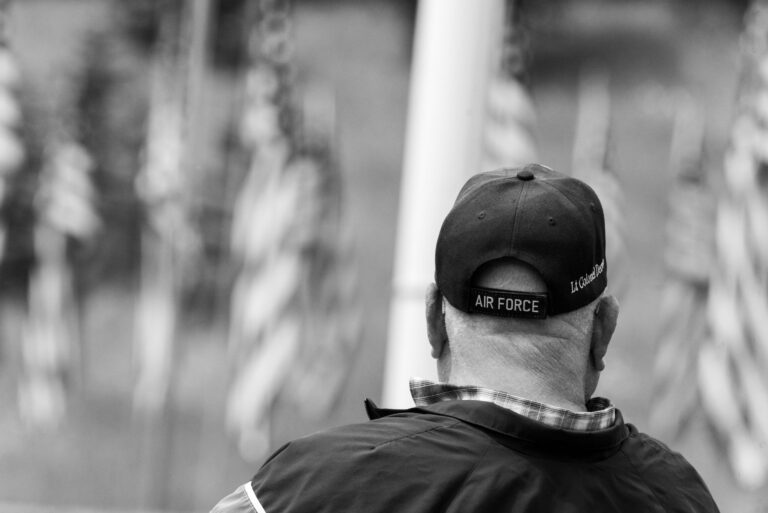
My grandson Eli came through the back porch screen door so fast it slapped the frame twice, and I knew before he said one word that something in this house had gone terribly wrong, because that boy does not run. Eli is sixteen and built like his grandfather was at that age, long and quiet and careful, the kind of boy who closes a door instead of letting it bang. He was holding both hands out in front of him like he was carrying water he didn’t want to spill, and it took me a full three seconds standing at my kitchen sink to understand that what he was carrying was smoke.
“Grandma,” he said, and his voice cracked in the middle of the word the way it hadn’t cracked in over a year. “Grandma, I got it. I got it out.”
I set down the paring knife I’d been using on a bowl of green beans and I looked past him through the screen door to the burn barrel out past the garden, the one Corwin uses every spring to clear the yard waste, and I saw the black smoke still curling up off it into a sky that was too blue and too ordinary for what I was about to understand. And then I looked down at what my grandson was holding, and the bottom fell out of my whole world in the space of one breath.
It was the flag. Walter’s flag. The one folded into that tight blue triangle with the stars showing, the one two young sailors had knelt down and placed into my hands at Riverside Cemetery three years ago this past March, the one I had kept in the cedar chest at the top of the hall closet every day since, wrapped first in the acid free tissue the funeral home had given me and then in an old pillowcase on top of that, because Walter always said a man ought to protect what matters most with two layers, never one. The edge of it was scorched. One whole corner had gone the color of a dropped biscuit left too long on a griddle, brown and curling, and there was a hole burned clean through near the fold where you could see straight through to Eli’s palm underneath, and his palm was red and starting to blister where he’d reached into that barrel bare handed to pull it out.
“It was on top of the pile,” Eli said. He was still catching his breath. “Uncle Corwin, he, Grandma, he threw it in there. I saw him do it. I was up at the tree line looking for that ball glove I lost and I saw him carry the whole chest out and just, he just pitched it in on top of the brush pile like it was, like it was nothing.”
I want to tell you I said something wise in that moment, something a woman of seventy two years and forty nine years of marriage to a career Navy man ought to have ready in her back pocket for exactly this kind of day. I did not. What came out of me was a sound I have not made since the morning I got the call that Walter’s heart had finally given out in that hospital bed in Nashville, a sound that was not a word at all, and I sat down hard in one of my own kitchen chairs because my legs simply stopped being willing to hold me up.
Let me back up, because you need to understand what that flag was before you can understand what it meant to see half of it burned through in my own grandson’s shaking sixteen year old hands.
The man who earned it
Walter Pruitt joined the United States Navy in the fall of 1966, the month he turned eighteen, out of a two stoplight town in Wayne County, Tennessee, where his own daddy farmed soybeans and where nobody in three generations of Pruitts had ever been further from home than Nashville. He did his boot camp at Great Lakes, Illinois, in weather so cold he used to say it was the first time in his life he understood what the word cold actually meant, and from there the Navy sent him to a destroyer, and for the better part of the next twenty four years that destroyer’s deck, and two others after it, was as much Walter’s home as this farmhouse ever was.
He made Boatswain’s Mate, then Petty Officer, then Chief Petty Officer by the time he was thirty one, and he wore that fouled anchor on his collar with more pride than I ever saw him show for anything else in his life except our daughter and, later, our grandchildren. He did two deployments off the coast of Vietnam before I ever met him, and when I did meet him, at a Fourth of July dance at the VFW hall in 1979 while he was home on leave, he did not talk about any of that. He asked me to dance twice and told me my dress was the color of a Tennessee sky in October, and I married him fourteen months later in the same little Baptist church my mother had married my father in.
Walter retired from active duty in 1990 as a Master Chief Petty Officer, the highest enlisted rank the Navy has, after twenty four years of service that took him to places I still could not find on a map without his help. He came home to Wayne County, to this same farmhouse his grandfather had built, and he ran the feed store in town for another nineteen years after that, and every single Memorial Day and every single Veterans Day for the rest of his life, he put on the one piece of his old uniform that still fit him, his ball cap with the ship’s name stitched across the front, and he stood at the county courthouse for the ceremony they held there, rain or shine, until his knees finally would not let him stand that long anymore.
He died three years ago this March, seventy eight years old, of a heart that had simply worked hard enough for long enough. He went in his sleep, in the bed we had shared for forty two years, and I did not find out until the coroner told me so that morning that a heart that size, as strong as his had been his whole life, does not usually just stop. His had.
His funeral had full military honors, the kind he had earned and the kind I would have moved heaven and earth to get him if the Navy had somehow tried to say he hadn’t. Two sailors drove up from the naval base at Millington, three hours from here, in their dress blues, and they folded that flag off his casket into thirteen precise folds, tight enough to bounce a coin off, until only the blue field and the white stars were showing. And then the older of the two, a young man who could not have been more than twenty five, knelt down in front of me on the wet grass of Riverside Cemetery and presented that flag into my two hands and said the words. On behalf of the President of the United States, and the United States Navy, and a grateful nation, please accept this flag as a symbol of our appreciation for your husband’s honorable and faithful service.
I have held that flag exactly the way he handed it to me every single time I have taken it out of the cedar chest since, both hands underneath it like it might break, because in every way that matters to me, it is the only remaining piece of forty two years of my husband’s life that I can actually hold.
Get a new story in your inbox every morning.
Facebook doesn’t show you every story we post. Our free newsletter does. Join 2,500+ readers.
The son in law
My daughter Odessa married Corwin Ashworth nine years ago, and I will be honest with you and tell you that I liked him fine at the wedding. He was funny in the easy way some men are funny, quick with a joke at the rehearsal dinner, good with Eli from the very first time he met him, back when Eli was seven and Corwin was dating Odessa and drove ninety minutes each way every other weekend just to take that boy fishing. Walter liked him too, in the cautious way Walter liked most men who married into this family, which is to say he reserved full judgment for about five years and then, somewhere around year four, started calling Corwin “son” without anybody having asked him to.
What changed, I think, is money, and what happens to a man’s pride when he does not have enough of it.
Corwin lost his job at the plant outside Waynesboro about fourteen months after Walter died, when the whole line got automated and two hundred and ten people got a letter in the mail on the same Tuesday. He has worked odd jobs since, some drywall, some landscaping, six months driving a delivery route that dried up when the company that hired him folded. Odessa works full time at the county clerk’s office and has carried more of that household than any wife should have to carry alone, and somewhere in that stretch of hard years, Corwin and Odessa and Eli moved into the little house on the back forty of my property, the one Walter’s own father built in 1958, so they could help me with the land and I could help them with the rent they no longer had to pay anywhere else.
I want to be fair to Corwin here, because fair is what Walter would have wanted from me, and because this is not a story about a man who was cruel to me every day of those nine years. He fixed my porch steps the winter they rotted through. He drove me to three different doctor’s appointments in Nashville when my hip first started acting up and Odessa couldn’t get the day off work. For a man carrying the particular kind of shame that comes with not being able to provide the way he thinks a man ought to provide, he was, most days, decent to me.
But somewhere in that same stretch of years, Corwin started talking about this house the way you talk about a problem you are waiting for permission to solve. He would walk through my front hall and look at the things on the walls, Walter’s photograph in his dress blues from 1968, the shadow box with his ribbons, the folded flag itself sitting in its cedar chest in the closet because I had never gotten around to having a proper display case built for it, and I would catch him doing a kind of silent arithmetic with his eyes, the way a man does when he is adding up what a thing is worth to him against what it is costing him to keep dusting around it.
“You ever think about downsizing, Miss Lorene,” he asked me more than once, always careful to smile when he said it. “This is an awful lot of house for one woman.”
I always told him the same thing. I told him I intended to die in this house the same way Walter had died in it, and that the day I couldn’t manage the stairs anymore was a decision I would make myself, in my own time, and not one I needed help arriving at any sooner. He always backed off when I said it that plainly. Until the second Saturday of this past April, he didn’t back off. He just stopped asking me, and started deciding for himself.
The morning of the burn pile
It was a bright, ordinary Saturday, the kind of April morning in Wayne County where the dogwoods are just starting to go and the air still has a little bite to it before ten o’clock. I had told Corwin the week before that I wanted to finally clean out that hall closet, the one that had become a catchall for winter coats nobody wore anymore and a box of Christmas decorations and, at the very top, behind all of it, the cedar chest with Walter’s flag. I told him I had been thinking, finally, about having that proper display case built, the kind of walnut and glass case I had seen at another veteran’s funeral two counties over, and that maybe it was time.
What I meant was that I wanted his help carrying the cedar chest down to the truck so we could drive it into town to the frame shop and get a quote. What Corwin apparently heard, or decided to hear, or simply chose not to ask me to clarify, was permission to clear the closet himself while I was at church with my sister that morning, and to make his own judgment call about what in that closet was worth keeping and what was not.
Eli told me later, once his hand was bandaged and his voice had settled back down into something closer to steady, exactly what he saw from the tree line where he’d gone looking for the baseball glove he’d lost back there in March. He saw Corwin carry the whole cedar chest out the back door and across the yard toward the burn barrel, where he already had a fire going from clearing brush along the fence line. He saw Corwin set the chest down, open the lid, take out the winter coats and toss those in a pile for the church donation bin, easy enough, nobody would argue with that. And then he saw Corwin lift out the flag itself, still folded in its triangle, still wrapped in that old pillowcase, and stand there holding it for a second like he was deciding something.
“He kind of shook his head,” Eli told me. “Like he was, I don’t know, Grandma, like he was annoyed at it just for existing. And then he unwrapped the pillowcase off it and looked at it for a second, and I heard him say it. I heard him say it wasn’t even folded up nice anymore, that it was old and it wasn’t worth doing anything with, and then he just, he just pitched it. Underhand. Right up onto the top of the brush pile, right into the fire.”
I know exactly what Corwin said, because Eli repeated it to me twice, once in the yard with his hand still bleeding and once again, more slowly, sitting across from me at this kitchen table two hours later when the VFW commander himself asked him to say it a third time for the record. Corwin looked at forty two years of my husband’s life folded into a triangle, and what he said out loud, to no one, standing over a burn barrel on my own property, was this.
“It’s just an old rag taking up the closet.”
An old rag. Twenty four years of Navy service. Two deployments off Vietnam. A Master Chief Petty Officer’s flag, presented by a young sailor kneeling on wet grass with words about a grateful nation. An old rag, taking up space Corwin apparently believed belonged to someone with better use for it than a dead man’s widow.
Eli did not think. He is sixteen, and thank God for exactly that, because a sixteen year old boy who loved his grandfather does not stop to calculate the cost of a burn before he acts, the way a grown man weighing his own pride might. He came down out of that tree line at a dead run, and by the time he reached the barrel the corner of that flag had already caught, a lick of flame working its way across the scorched blue field toward the stars, and he reached both bare hands into that fire and pulled it out and beat the flame against his own jeans until it went dark, and only after it was out did he look down and understand what the fire had already done to his own palm.
Corwin, Eli told me, stood there the whole time and did not move to help him. Not to pull him back from the fire. Not to help beat out the flame. He stood there with his arms crossed and said, and I am told this part was said flat, not shouted, “Eli, it’s just a piece of cloth, son. You’re going to burn your whole hand off over a piece of cloth.”
What I did that afternoon
I am not, by nature, a woman who raises her voice. Forty two years married to a Navy Chief will teach a woman that there is a kind of anger that is louder in its quiet than any shouting could ever be, because Walter never once shouted at me in our whole marriage and I never once doubted, in the moments he was truly angry, exactly how deep that anger ran. I found that same kind of quiet in myself that Saturday afternoon, sitting at my own kitchen table with my grandson’s burned hand wrapped in a wet dish towel and a scorched flag laid out across two placemats in front of me like a patient on an operating table.
I did not scream at Corwin when he came in from the yard an hour later, sunburned and unbothered, asking what was for supper. I looked at him, and I asked him to sit down, and I asked him to tell me himself what he had done, because I wanted to hear if the story he told me matched the one my grandson had already told me twice.
He told it almost exactly the same way, which told me he had not yet understood how much trouble he was in, because a man trying to hide something changes his story on the second telling. Corwin did not think he had anything to hide. He told me, plain as Sunday, that the closet needed clearing, that the flag was old and faded at one corner and had probably been in that chest longer than it should have been, and that he had made what he called a judgment call, the same kind of judgment call, he said, that any man managing a household has to make sometimes.
“It’s not like I meant anything by it, Miss Lorene,” he said. “I know it mattered to you. I just didn’t think a flag was, I don’t know, sacred. It’s fabric. Everybody’s got a box of stuff like that they never look at.”
I want you to understand what it cost me to sit at that table and not say the thing I wanted most to say, which was that a folded burial flag is not a box of stuff nobody looks at, that it is the last physical proof the United States government could offer me that my husband’s twenty four years actually meant something to somebody besides me, and that a man who cannot see the difference between that and an old coat has told me everything I need to know about how he sees this whole family. I did not say that, not yet, because I needed to think, and because I have learned in seventy two years that the things said in the first hour of hurt are rarely the things a person means to say for good.
What I did instead was call Odessa at work and ask her to come home. And then, because Eli’s hand had blistered badly enough by suppertime that I did not trust it to a jar of burn cream from under my sink, I drove him myself into Waynesboro to the urgent care, where a nurse cleaned two second degree burns across his right palm and three of his fingers and told him, kindly, that he had been very brave and very foolish in about equal measure, and that both of those things could be true of the same boy on the same afternoon.
What Eli told the man at urgent care
Here is the thing about a sixteen year old boy with a bandaged hand sitting in an urgent care waiting room on a Saturday evening. People ask him what happened. And Eli, who does not lie, and who was still running a little hot off the whole afternoon, told the nurse exactly what happened, start to finish, including the part where his uncle had thrown his great grandfather’s, he corrected himself, his grandfather’s burial flag onto a burn pile and called it an old rag.
I did not know until three days later that the man sitting two chairs down in that same waiting room, there with his own grandson for a fishhook caught in a thumb, was Harlan Voyles, the commander of VFW Post 4471 out of Waynesboro, and that he had heard every word of it.
Harlan called my house that Tuesday evening. I did not know him personally, though Walter had, the way most Navy and Army men of a certain age in this county eventually crossed paths at one fish fry or another. Harlan told me who he was, told me gently that he hoped I would forgive him for what might sound like eavesdropping, and told me that once he understood whose flag it was and whose grandson had pulled it out of that fire, he had not been able to stop thinking about it for three straight days.
“Mrs. Pruitt,” he said, “I knew your Walter. Not well, but I knew him. He used to run the equipment table at our Friday fish fry back before his knees went. I would consider it an honor, ma’am, if you would let this post do right by that flag, and by that boy.”
What the post did
What Harlan Voyles and eleven other members of VFW Post 4471 did over the following two weeks is the part of this story I still find myself crying about, even now, even telling it to you.
They could not undo the burn. Nobody can unburn a hole clean through a piece of fabric, and the honest truth is that flag will never again be whole in the way it was the morning two sailors knelt in front of me at Riverside Cemetery. But a flag that has flown, a flag that has been properly presented and properly earned, is retired with the same dignity it was given, not thrown out simply because it is damaged, and Harlan explained to me something I had never known in seventy two years of being married to a Navy man. There is a proper way to retire a flag that has reached the end of its service, whole or not, by fire, in a ceremony, with honor, rather than by accident, in shame, on a Saturday afternoon while its owner’s widow was at church.
Post 4471 held that ceremony on the last Sunday of April, out behind the post hall on a stretch of mowed grass with a flagpole at the center of it, and I want you to understand that I expected perhaps Harlan and two or three others and my own family. Sixty one people came. Sixty one, Harlan counted them himself and told me the number twice because he could see I didn’t quite believe it. Men Walter had served the fish fry alongside for twenty years. The pastor from our old church. Three sailors in dress uniform who drove up from Millington a second time, the same base that had sent the honor guard to his funeral, because Harlan had made one phone call and explained whose flag this was and what had happened to it.
They folded a brand new flag first, a whole one, purchased by the post itself, thirteen folds, tight enough to bounce a coin, and presented it to me all over again with the same words I had heard three years before at the graveside, on behalf of the President of the United States, and a grateful nation. And then, separately, with the same care and the same silence, they retired the scorched one, the one Eli had pulled out of the fire with his own bare hands, folding what was left of it and committing it properly to a small ceremonial flame built for exactly that purpose, the honorable way, the way Walter himself would have wanted it done if he had ever imagined this was how his flag would eventually need retiring.
They asked Eli to stand at the front for that part. His hand was still bandaged, three weeks out from the burn by then, and Harlan Voyles knelt down in front of that sixteen year old boy the same way that young sailor had knelt in front of me three years earlier, and he told the whole crowd what Eli had done, reaching bare handed into a fire for a piece of cloth a grown man had called worthless. And then Harlan took a small bronze medallion out of his coat pocket, a challenge coin the post keeps for exactly these occasions, and pressed it into Eli’s good hand and told him that a boy who understood what that flag was worth before half the grown men in this county ever stopped to think about it had earned the right to carry a piece of the post with him for the rest of his life.
I have never in my life seen my grandson cry the way he cried standing on that grass. I have never in my life been prouder of anyone, including, and I say this with love, including my own husband on the day he retired.
What happened with Corwin
I will not tell you Corwin was arrested, or sued, or run out of this county, because none of those things happened and none of those things would have been the right ending even if they had been available to me. What happened is harder to explain and, in its own way, harder on him.
Word travels in Wayne County the way it travels in every small county in this country, which is to say completely and without mercy. Sixty one people stood on that grass at Post 4471 and heard exactly what Corwin Ashworth had done and exactly what he had said while doing it, and every one of those sixty one people has a spouse, a coworker, a pew neighbor at church. Corwin did not come to that ceremony. He told Odessa he had a job interview that morning, in Columbia, and I have never asked whether that was true, because by that point it did not matter to me either way.
What mattered is what happened after. Odessa, my daughter, who I raised to know exactly what her father’s service meant in this family, sat her husband down the week after that ceremony and told him, in words I am told were considerably less gentle than the ones I had used at my own kitchen table, that he had a choice to make about what kind of man he intended to be in this family going forward. Not a choice about leaving. Odessa loves him, and I believe, even now, that most of what is good in Corwin is still there underneath the shame that drove him to that burn barrel in the first place. But a choice about earning back something he had burned through as surely as he’d burned through that flag, which is trust, in a house that had given him a roof for nine years without ever once asking for anything back.
Corwin came to me himself, three weeks after that, on a Tuesday evening while I was shelling peas on the porch, and he did not make excuses. He told me he had spent a lot of nights since that Saturday thinking about what kind of man throws away another man’s twenty four years because he is embarrassed about his own bad year, and he told me, and I believed him, that he was ashamed in a way he did not know how to say out loud in front of a crowd of veterans on a Sunday morning, which is part of why he stayed away.
I told him I forgave him. I want to be honest and tell you it took me longer to mean that than it took me to say it, but I did, eventually, mean it, because Walter himself was not a man who held grudges against people who were truly sorry, and I did not want to become the kind of widow who let one Saturday afternoon curdle the rest of whatever years I have left with my own daughter and grandson under the same roof, even if that roof now sits with a little more honest distance between the little house and the big one than it used to.
Where the flag rests now
I had that walnut and glass case built after all, the one I had originally been planning to ask Corwin to help me drive into town for a quote on. Harlan Voyles knew a man, a retired shipfitter from the Millington base who builds them on weekends for veterans’ families for whatever they can afford to pay, and he built me two. One holds the new flag, whole and unburned, the one Post 4471 presented to me on that Sunday in April. The other, smaller, holds what is left of the old one, the scorched corner and the small burned hole and all, because Harlan told me something I have not been able to stop thinking about since. A flag that was rescued out of a fire by a sixteen year old boy’s bare hands has its own kind of honor now, separate from and equal to the honor it carried the day it was first folded over my husband’s casket, and a family that hides that story does that boy a disservice.
Both cases hang in my front hallway now, side by side, exactly where Walter used to walk past every single morning of the years he lived in this house, and Eli’s challenge coin sits on a small stand between them, because I asked him if I could keep it there where I would see it every day, and he told me he would be honored, the same word Harlan had used to him.
Eli’s hand healed clean, though the burn care nurse tells me he will likely carry a faint scar across two fingers for the rest of his life. He does not mind it. He told me, the last time I asked him about it, that he thinks of it now the same way his grandfather used to think of the small crooked scar on his own forearm from a line that snapped loose on deck somewhere off the coast of Vietnam in 1968, a mark a man earns doing the right thing at the moment it actually mattered, rather than talking about doing the right thing after the moment has already passed him by.
I am seventy two years old, and I have buried a husband and I have very nearly lost, this past April, the last physical proof that his twenty four years in the United States Navy meant what I have always believed it meant. What I did not lose, what I will never lose now, is the knowledge of exactly what kind of man my grandson is growing into, and exactly what kind of family surrounded that boy the moment word got out about what he had done. Sixty one strangers and neighbors stood on a patch of mowed grass behind a VFW hall in Waynesboro, Tennessee, and made sure a seventy eight year old sailor’s honor did not end up as ash in a burn barrel on a bright Saturday morning, no matter what any one tired, ashamed man standing over that fire had decided it was worth.
That is not a story about Corwin, in the end, though he is part of it and always will be. It is a story about what a county full of strangers will do for one old woman and one brave boy, when the thing that needs protecting is worth protecting, and somebody finally says so out loud.
This story is a dramatization. Names, characters, and details are invented, and any resemblance to real people or events is coincidental.