The Tuesday Argument I Missed Most
My husband still shakes his head about it, all these years later. He’ll be sitting in his recliner watching the news, and I’ll be putting my shoes on at four o’clock on a Tuesday afternoon, and he’ll say, “You’re going to go fight with Gene now, aren’t you,” and I’ll say yes, obviously, and he’ll say, “You know that man has never once said a nice thing to you,” and I’ll say I know, and I’ll leave anyway, because he’s missing the point, the same way everybody misses the point at first.
I need to back up and explain how this whole thing started, because if you had told me eleven years ago that a cranky retired shop teacher named Gene would end up being one of the most important people in my life, purely by way of arguing with me over deli meat every Tuesday afternoon at Millport Foods, I would have laughed you out of the produce section.
I grew up in Millport, Ohio, a town small enough that everybody either went to school with your kids or taught them, and I have lived here my whole life except for two years in Columbus in my twenties that neither of us talk about much. I work part time at Dr. Pruitt’s dental office up on Main Street, answering phones and scheduling cleanings, and I have been married to my husband Dave for thirty-four years. We have one daughter, Katie, who moved to Columbus for work and gave us two grandbabies who I am told draw very nice pictures of flowers, although I have my doubts about the little one’s flower being a flower at all.
Every Tuesday, for longer than either of us can quite agree on, I have done my grocery shopping at Millport Foods, the one grocery store left in town after the bigger chain out on the highway ran the second one out of business a few years back. I go on Tuesdays because Tuesdays are the day Dr. Pruitt’s office closes at three, and because Tuesday is the day the deli counter runs their turkey special, and because, as it turns out, Tuesday is the day I get to see Gene.
Gene is not, on paper, someone I would ever have expected to build a decade-long tradition around. He taught shop class and driver’s education at Millport High for thirty-one years, and helped coach the JV wrestling team for about twenty of those, which is why half the men in this town still call him Coach even though most of them haven’t sat in his classroom since Clinton was in office. He is originally from Ann Arbor, Michigan, which he will tell you within about ninety seconds of meeting him, usually before he tells you his own last name. He moved down here at twenty-four for a job at the bearing plant that used to sit at the edge of town, met a Millport girl named June at a dance at the Grange hall, married her within the year, and never left, which he insists to this day was a mistake, a joke he has been telling for six decades to a woman who, until eight years ago, laughed at it every single time.
June passed eight years ago. Cancer, quick once it finally showed itself, though slow and cruel in all the ways that led up to that. Gene does not talk about it much, and I have never pushed him to, because some things are not any of my business even after a decade of standing across a deli counter from a man twice a week arguing about condiments.
Here is the thing you need to understand about Gene and me before I tell you what started this whole ridiculous, wonderful tradition. We do not agree on anything. I do not mean that as a figure of speech. I mean it as a documented, eleven-year record of fact.
He is a Michigan man living in the state of Ohio, which he considers a personal sacrifice and I consider a moral failing. I bleed scarlet and gray. I have an Ohio State flag on my porch and an Ohio State blanket in my car and, according to my daughter, an Ohio State attitude problem that flares up specifically every year in late November. Gene owns exactly one piece of maize and blue clothing, a faded ballcap he wears to that deli counter on purpose, every single week, like a man carrying a small flag into enemy territory on principle alone.
He thinks ham is the superior lunch meat. I think turkey is, and I have told him so, weekly, for eleven years. He thinks the deli slices everything too thin. I think he wouldn’t know a properly cut sandwich if it introduced itself. He votes one way on every single school levy this town has put on a ballot in a decade, and I vote the other, and we have had entire, extended, deeply committed arguments about property taxes and road repaving standing in that deli line with our numbers clutched in our hands, holding up the whole works while Patty waits, tongs in hand, for either one of us to actually order something.
We agree on exactly one thing, and it took me most of eleven years to understand that it was the only thing that ever mattered. We both show up. Every Tuesday. Same time, same spot in that line, without fail, for eleven straight years, through snow and through summer and through every single disagreement we have ever manufactured between us.
It started, as far as I can trace it back, over sliced turkey.
I remember the day almost exactly. I had just started coming to Millport Foods on Tuesdays instead of Fridays because of a change in my work schedule, and I was standing at the deli counter waiting on my usual half pound of turkey, sliced thin, when a man I did not yet know as Gene leaned over from the next spot in line, looked at my order ticket, and said, with no introduction whatsoever, “That’s a mistake. Turkey’s a lesser meat. Ham’s the one you want.”
I told him nobody asked him. He told me somebody should have, for my own good. I told him a man wearing a Michigan ballcap in the state of Ohio had no business handing out advice about anything, food or otherwise. He told me that was, and I remember his exact words because I have repeated them to my husband roughly four hundred times since, “the single most Ohio thing anybody has ever said to me, and I have lived here forty years.”
We argued the entire time it took Patty, who was newer to the deli counter back then herself, to slice my turkey. We argued while she bagged it. We argued walking in opposite directions toward the registers, both of us still shouting good-natured nonsense over our shoulders about ham and turkey and Michigan and Ohio, and I remember thinking, driving home that day, that it was the most fun I had had at a grocery store in years, which says something either wonderful or a little sad about my life at the time, and possibly both.
The next Tuesday, I found myself looking for him.
I did not admit that to anyone, including myself, for a long while. But I remember standing in that deli line the following week, scanning for a Michigan ballcap, and feeling something small and unexpected drop in my chest when I spotted him already there, three people ahead of me, and feeling something else entirely, warmer, when he caught my eye and immediately said, loud enough for the whole line to hear, “Here she comes. Wrong about lunch meat again, I’d bet.”
That was Tuesday two. There have been, by my rough count, somewhere around five hundred and seventy Tuesdays since. We have missed exactly none of them, not one, not for weather, not for holidays that fell on a Tuesday, not for my hip surgery three years ago that I insisted on attending anyway on crutches, against my husband’s very vocal objections, because I was not about to let Gene win an argument by forfeit.
Over the years, the arguments widened out well past turkey and ham. We have argued about Michigan and Ohio State every single week of football season without exception, regardless of who won that particular Saturday, though I will admit the arguments carry a different flavor depending on the score. We have argued about the correct thickness of a proper sandwich slice, a debate Patty has been dragged into as an unwilling and increasingly exhausted referee more times than she would probably like to count. We have argued about the school levy, the county commissioners, whether the new stoplight on Route 9 was a good idea or a waste of taxpayer money, whether his dog Rusty or my late dog Sadie was the better behaved animal, a debate that got surprisingly heated for two dogs who never once met each other. We have argued about nearly everything a person could argue about in a small town, and agreed on almost none of it, and shown up to do it again the following week like clockwork, like church, like something neither of us would ever admit out loud we depended on.
Patty started keeping what she calls, with a completely straight face, “the weekly scorecard,” a tally in her head of who got the better of the argument that Tuesday, which she will occasionally announce to the line like a sportscaster, “Gene takes it this week, three to one, on the strength of that levy point,” which makes Gene insufferable for approximately one week and makes me insufferable in retaliation the week after. Other regulars started timing their own Tuesday trips around ours, standing a little longer in the cereal aisle so they could catch the tail end of whatever we were fighting about that day. New employees at Millport Foods get told about “Susan and Gene” within their first week on the job, the way you’d get told about a landmark or a local legend, which I suppose, at this point, is exactly what we are.
I want to be honest about something, because this whole story only makes sense if I am. For a long time, I thought this was just a funny little bit. A running joke. A thing I told people about at dinner parties, “oh, you have to hear about my grocery store nemesis,” a story with a punchline and nothing underneath it. I did not understand, not really, not down in the part of me that actually knows things, how much that ten minutes on a Tuesday afternoon had come to matter, until the week I very nearly lost the chance to have it again.
It was a Tuesday morning, of course it was a Tuesday, when the pain started. Low on my right side, dull at first, the kind of thing you tell yourself is nothing, maybe something you ate, maybe a pulled muscle from moving boxes in the garage the day before. I took some antacids. I went about my morning. By noon the pain had sharpened into something I could not talk myself out of anymore, and by two o’clock I was doubled over at my own kitchen counter, unable to stand up straight, calling for my husband in a voice that did not sound like mine.
Dave called 911 before I even finished the sentence. I remember the ambulance ride in pieces, the fluorescent light in the ceiling, a paramedic named Ronnie asking me questions I could not fully answer, and Dave’s truck somewhere behind us the whole way, going faster than I have ever in thirty-four years of marriage seen that man drive.
My appendix had already ruptured by the time they got me into surgery. The surgeon told my husband afterward, in the hallway, in words he later repeated to me once I was well enough to hear them without panicking, that another few hours and it could have gone very differently. As it was, the rupture had spread infection through my abdomen, and what should have been a clean, straightforward surgery and a few days of recovery turned into two surgeries, a course of IV antibiotics that did not want to cooperate, a fever that spiked high enough on day four that my daughter Katie drove up from Columbus at eleven at night without telling me she was coming, and two full weeks in that hospital bed, watching the little whiteboard on my wall get erased and rewritten by a rotating cast of very kind nurses.
I do not remember most of those two weeks clearly. I remember pieces. I remember my husband asleep in the chair beside my bed more nights than he was ever actually home. I remember Katie bringing the grandbabies to the hospital lobby, not allowed up to my room yet because of the infection risk, and holding up their drawings to the window of a door for me to see from my bed, two smudged crayon flowers that I was told, later, with great seriousness, were actually a dog and a house. I remember a nurse named Connie who used to sneak me extra ice chips when the fever had my mouth feeling like a desert.
I did not think about the deli counter. Not once, not in two weeks. There simply was not room in my head for it, and if you had asked me, lying in that bed on day nine with a fever and a fresh round of antibiotics dripping into my arm, whether I was worried about missing my Tuesday argument with a retired shop teacher over sliced meat, I would have looked at you like you had lost your mind.
I had no idea, lying there, that fourteen miles away, a man named Gene was quietly coming apart at the seams over exactly that.
I did not find any of this out from Gene himself. I want to be very clear about that, because it is important to who Gene actually is. Gene would sooner eat the blade off that deli slicer than sit me down and tell me, in so many words, that he had been worried sick. That is not how Gene operates, and honestly, at this point in my life, I would not want him any other way.
I found it out from Patty, four days after I finally came home from the hospital, still moving slow, still sore in a way that made getting in and out of the car its own small production, standing at that same deli counter on legs that were not entirely steady yet, because I had made up my mind, against a fair amount of gentle protest from my husband, that my first real outing back into the world was going to be Millport Foods, and nowhere else, on a Tuesday, at 4:15, same as always.
Patty saw me come through those front doors and her whole face changed. She came around the side of the deli counter, still in her apron, and hugged me right there in front of the lunch meat case, longer than a store employee probably should, and when she finally let go she had tears standing in her eyes that she was trying, and failing, to blink away.
“We heard,” she said. “The whole store heard. Susan, honey, are you all right?”
I told her I was, mostly, getting there. I told her I was sorry I’d worried anybody, that it had all happened so fast I hadn’t even had time to call the store and let them know why I’d be gone a few weeks. And Patty, bless her, looked at me with an expression I could not quite place yet, somewhere between amused and heartbroken, and said, “Susan. It wasn’t the store that was worried.”
I asked her what she meant. She set her tongs down on the wax paper, the way she does when she means business, and she told me everything.
She told me Gene showed up that first Tuesday I was gone, right on schedule, at 4:15 exactly, and ordered his usual half pound of Swiss with his usual complaint about my questionable taste in turkey, except I wasn’t there to hear it, and Patty said he stood at that counter afterward for an extra minute, just standing there, like a man waiting on something that was supposed to happen and hadn’t.
She told me he asked, real casual, where I was. Patty told him she didn’t know, figured maybe I was under the weather. Gene said “huh” and left, and she thought that was the end of it.
It was not the end of it. She told me he came back that Thursday, a day he has never once set foot in Millport Foods on in the eleven years she has worked there, and bought nothing. Stood near the deli case for a few minutes, made small talk about nothing in particular, and asked, in a voice she said he was working very hard to keep light, whether she’d “heard anything about anybody.”
The second week, she said, was worse.
She told me that a retired schoolteacher named Nancy, a woman who has known Gene for probably thirty years and meant nothing unkind by it whatsoever, made the mistake of joking in the Tuesday line, since I clearly wasn’t showing up two weeks running, that maybe she’d just take “Susan’s spot” and give Gene somebody to argue with. And Gene, sweet, stubborn, immovable Gene, a man Patty has never once heard raise his voice at another human being in eleven years of watching him shop, snapped at her. Something short, something sharp, gone almost as fast as it came, and he apologized within the hour, tracked Nancy down in the parking lot to do it, which Patty said was somehow worse than the snapping itself, because it meant he knew exactly how far out of character he was behaving and simply could not seem to stop himself.
She told me he asked her, that same week, if the store had a number for the hospital, if anybody knew which one I’d gone to. Patty told him she’d ask around. She told me he never once picked up a phone and called it himself.
She told me the whole store had noticed by then. That other regulars, people who show up Tuesdays same as us just to watch the show, had started asking Patty, quietly, what on earth was going on with him, because a man who had spent over a decade being loudly, cheerfully impossible about Michigan football and ham thickness had simply gone silent, moving through that deli line like his whole week had lost its shape, and the silence, Patty said, was worse than anything he had ever said to me in eleven years of trying.
“He came in every single day that second week,” she told me. “Not just Tuesday. Every day. Never bought much of anything. I think he just wanted to be somewhere that felt like it still made sense.”
I stood there in front of that deli case holding a little paper number ticket, and my hand was shaking, and it was not from the surgery.
I want to tell you what I felt in that moment, because it surprised me. It was not flattery, exactly, though there was some of that in it. It was something closer to a door opening onto a room I had walked past for eleven years without ever once looking inside. All that time, I had thought of Tuesday afternoons as my favorite ten minutes of nonsense, a bright, silly little tradition I got to enjoy at a man’s expense, and his at mine, a story with a punchline and nothing much underneath. Standing there with Patty, hearing about a widower fourteen miles from that hospital bed, quietly falling apart over a pound of turkey nobody had ordered, I understood, all at once, that there had never been nothing underneath it. There had always been something underneath it. I had simply never had a reason to look until now.
I asked Patty if Gene knew I was back yet. She said no, that I had beaten him there today, that he usually strolled in right around 4:20 once he’d finished up whatever errand he’d invented for himself that particular Tuesday, and that if I wanted, she’d give me a heads up the second she saw that Michigan ballcap come through the doors.
I told her not to. I wanted to see his face when he saw mine.
He came in at 4:22, three minutes off his usual, wearing that faded maize and blue cap like a man carrying a flag into enemy territory on principle alone, same as every single Tuesday for eleven years. I watched him from over by the bakery case, half hidden behind a rack of dinner rolls, and I watched the exact moment his eyes found the deli line and landed on me.
He stopped walking. Just stopped, dead, in the middle of the aisle, a grown man, sixty-some years old, a retired shop teacher who spent two decades coaching teenage boys through wrestling matches without so much as flinching, and for one whole second he looked like he did not entirely trust his own eyes.
Then he came over. He did not run, Gene does not run for anything, but he came over faster than I have ever seen him move in eleven years of Tuesdays, and he stopped in front of me, and for a second, one real second, his gruff, permanently unimpressed face just cracked open, plain as anything, into something so relieved it nearly undid me standing there.
“You’re supposed to be flat on your back somewhere,” he said, and his voice was not quite steady.
I told him I was feeling better. I told him I’d heard, from a very reliable source, that he’d had a rough couple of weeks himself.
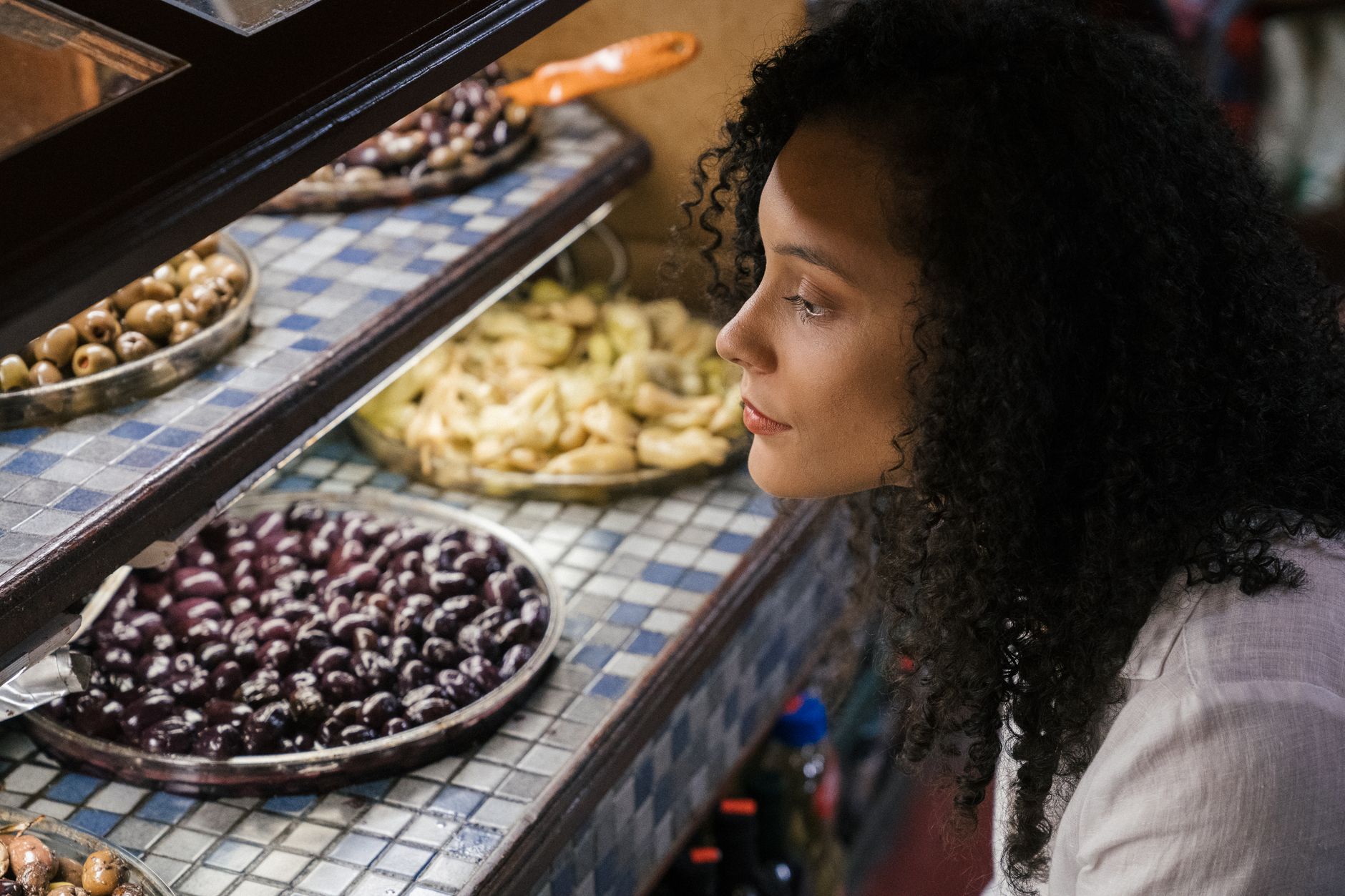
He looked over my shoulder at Patty, who was suddenly extremely interested in rearranging a tray of olives, and I watched him understand, in real time, exactly how much I had just been told. His ears went red, actually red, the way I imagine they must have gone red in front of a classroom full of teenagers a hundred times over thirty-one years, caught out in something he had not meant anyone to see.
“She talks too much,” he said.
“She loves you,” I said. “The whole store does.”
He did not answer that directly. That is not how Gene operates, and I have made my peace with it. Instead he reached into his coat pocket, the same battered canvas coat he wears every Tuesday regardless of the weather, and pulled out a folded piece of paper, soft at the creases like it had been folded and unfolded a good many times, and held it out to me without quite meeting my eyes.
I unfolded it right there in front of the deli case. It was a get well card, the kind you’d buy off a rack at the drugstore, a plain, sensible card with a picture of a fishing boat on the front, nothing sentimental about it at all. Inside, in handwriting I recognized from thirty-one years of grading shop tests, it said, “Turkey’s still a lesser meat. Hurry up and get back here so I can tell you so properly. G.”
He told me he’d bought it the first week I was gone, sat with it on his kitchen table for two days trying to figure out how to get it to me without making a whole production out of it, and finally decided the only honest thing to do was just carry it around in his coat pocket every single day until I showed back up, on the theory, he said, that if he waited long enough it would eventually stop being true that he needed to give it to me, and he’d be able to just quietly throw it away instead, and nobody would ever have to know he’d written it at all.
“That was the plan,” he said. “Didn’t work out.”
I asked him why not. He looked at me for a long moment, the deli counter humming along behind him, Patty pretending very hard not to listen, half the produce section, I am fairly sure, also pretending very hard not to listen, and he said, plain as anything, no jokes left in his voice at all, “Because you weren’t here, and it turns out I don’t much like Tuesdays without you being wrong about turkey at me.”
I laughed, and then I cried a little, standing right there by the olives, and Gene, a man who has never once in eleven years said a kind word to me at that deli counter, stood there and let me, which for Gene is practically a wedding vow.
Then, because he is who he is, and because some things are only ever going to change so much, he cleared his throat, straightened up, and said, loud enough for the whole line to hear, “Well. Get your number and order your turkey. Some of us have places to be.”
I got my number. I ordered my turkey, sliced thin, same as always. And we argued, right there in that line, about ham and Michigan and property taxes and whether Rusty or Sadie had been the better dog, the whole eleven-year catalog dusted off in about four minutes flat, and it was, without a single exception in five hundred and seventy-some Tuesdays, the best argument we have ever had, because for the first time in over a decade I understood exactly what I was actually fighting for.
Patty gave us both extra turkey that day, on the house, and told us if we ever scared her like that again she’d bar us both from the deli counter permanently, which everyone in that store, including Patty, knew was an empty threat the second she said it.
It has been three months now since that Tuesday. Gene and I have not missed a single one since, and we are not planning to start. We still disagree about everything worth disagreeing about. He still wears that ridiculous maize and blue cap into what he calls enemy territory every week on principle. I still tell him turkey is the superior meat, and he still tells me I’m wrong, and Patty still keeps her scorecard, and the new hires still get told about Susan and Gene within their first week on the job like they’re being handed a piece of the town’s own history, which, I suppose, at this point, we actually are.
I keep that card in my kitchen drawer, the one with the fishing boat on the front and Gene’s cramped, thirty-one-years-of-grading-tests handwriting inside. I do not need to take it out and read it very often, because I have it memorized. But every now and then, on a quiet evening, I will open that drawer and look at it anyway, and I will think about a man standing in a grocery store for two full weeks, silent and lost and carrying a folded-up piece of paper in his coat pocket because he could not think of another way to say that a Tuesday afternoon argument about lunch meat had become, somewhere along the way, one of the very best parts of both our lives.
We never did agree on the turkey. I don’t expect we ever will. But we agree on Tuesday, and it turns out that was always the only vote that counted.
This story is a dramatization. Names, characters, and details are invented, and any resemblance to real people or events is coincidental.