
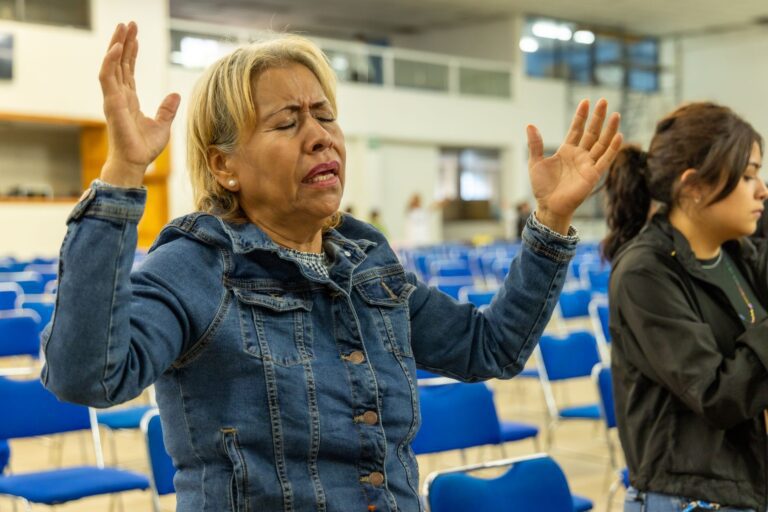
I set the dish down on the serving table at eleven forty in the morning, three hours after they lowered my husband into the ground at Cane Creek Cemetery, and Paulene Yoakum looked at it like it had crawled there on its own.
“We know where that came from,” she said, loud enough that the whole fellowship hall heard her, loud enough that Brother Michael stopped mid-sentence over by the coffee urn, loud enough that my daughter’s hand found my elbow before I even understood what was happening.
I want to tell you what that casserole was. It was Wendell’s favorite dish on this earth, chicken and rice with cream of mushroom and a crust of crushed saltines on top, my grandmother’s recipe, three generations of Sunday tables. I had made it a hundred times for that man. I made it the night we got engaged in 1974 because I did not know how to cook anything fancier and I was scared to death he’d change his mind. I made it the week our daughter Wilda was born. I made it every year on our anniversary because it was cheap and it was ours and it never once let us down.
And on the day I buried him, I stood in a room full of people who had known me for forty-nine years, and the chair of the Bereavement Committee looked at that dish and told the whole room, in five words, that I was not fit to feed them.
I am seventy-three years old. I have never in my life wanted to disappear the way I wanted to disappear in that moment. But I did not disappear, because of what happened next, and I am going to tell you all of it, not just the part that hurt.
Fifty-One Years
Wendell Pruitt and I were married fifty-one years, three months, and eleven days. I know the number exactly because I counted it out on the drive to the funeral home, sitting in the passenger seat of Wilda’s car with his good navy suit folded in a garment bag across my knees, doing arithmetic instead of crying because the arithmetic was the only thing that would hold still.
We met at a tent revival outside of Cane Creek when I was nineteen and he was twenty-two, home from two years in the Army and not saying much about it. He had a Ford truck the color of a robin’s egg and a way of listening to you that made you feel like you were the only conversation he’d had all week. We married the following spring in the same little white church where I buried him, First Baptist of Cane Creek, out on County Road 14 where the blacktop runs out and the gravel starts.
We farmed forty acres of soybeans and raised hogs for twenty years, and when the hogs stopped paying, Wendell went to work at the co-op gin in town and stayed there thirty-one years until his knees gave out. I kept books for the feed store on Tuesdays and Thursdays and raised our three children and, later, watched six grandchildren grow up two counties over and one county south, close enough for Sunday dinners, far enough that the house stayed quiet most days.
We were not rich people. I want to say that plainly, because it matters to what happened later. We were never rich people. We paid our tithe. We paid it faithfully, the same ten percent off whatever we had, even in the years the crop failed and even in the years Wendell’s disability check from the co-op ran two weeks late. We sat in the fourth pew from the back, same side every Sunday, because that’s where Wendell’s mother sat before us and nobody in Cane Creek moves a pew that’s been claimed that long.
What I did not know, what I found out on the worst and best day of my life, was that Wendell had been giving away money we did not exactly have, quietly, for years, to people who needed it worse than we did. He never told me the full extent of it. I do not think he told anyone the full extent of it. That was the kind of man he was.
The Fourteen Months
Wendell was diagnosed with pancreatic cancer in April of last year. Fourteen months, the oncologist in Little Rock told us, if the treatment took the way they hoped, and it did not take the way they hoped, not really, though it bought us time I would not trade for anything.
I am not going to walk you through every appointment and every bad week, because it would take a book and because some of it belongs to Wendell and not to a story. But I will tell you about one night in February, because I think it explains something about who he was that matters later.
He had a bad spell that month, three days in the hospital in Little Rock, an hour and twenty minutes each way on roads I did not like driving after dark. The night before they released him, I sat up in the vinyl recliner beside his bed because the nurses would not let me leave and I would not have left anyway, and somewhere around two in the morning he woke up clear-headed for the first time in two days and asked me, of all things, whether Otis Renfro had gotten his beans planted yet. I told him I did not know, that it was February and nothing was getting planted, and he laughed, a real laugh, the first one in a week, and said, “Just checking you’re still paying attention to the right things, Dovey.” Then he asked me to write him a list of names, six or seven of them, people around Cane Creek he wanted me to check on if anything happened to him. I wrote the list on the back of a hospital menu because it was the only paper I had. I did not think much of it at the time. I thought it was the medicine talking, or a dying man’s version of tidying up his affairs. I put that menu in my purse and forgot about it for months, the way you forget things during a season like that, because there is only room in your head for the next appointment and the next bill.
Get a new story in your inbox every morning.
Facebook doesn’t show you every story we post. Our free newsletter does. Join 2,500+ readers.
I found that menu again the week after the funeral, folded into the lining of my purse, Otis Renfro’s name right at the top of it in Wendell’s shaking hospital handwriting. I did not understand what it meant until the day at the fellowship hall table. He had not been tidying up his affairs. He had been making sure somebody would keep tending the people he’d been tending, in case he ran out of time to do it himself.
But I will tell you what the illness cost us in plain dollars too, because the cost is the reason for what happened at that fellowship hall table, and I think you deserve the honest number and not a vague gesture at hardship.
The hospital bills after Medicare and his supplemental insurance came to just over fifty-eight thousand dollars by the time he passed. His co-op disability had stopped the day he officially retired to go on full-time care, and the Social Security survivor paperwork and the backpay owed to us, twenty-three hundred and forty dollars, was still sitting in a processing queue in Little Rock when he died, tangled up the way government paperwork tangles when a person dies mid-claim. I did not have that money. I had our savings, which had been six thousand dollars in April and was eleven hundred dollars by February, and I had a house that was paid off, thank God, and I had a ’09 Buick with a hundred and ninety thousand miles on it, and that was the whole of my estate.
So starting in October, on Wednesday mornings before the store got busy, I started driving out to the New Hope Food Pantry on Route 9, the one that operates out of the old Assembly of God building, and I got a box of groceries. Canned vegetables, dry beans, a loaf of bread, sometimes a rotisserie chicken they’d gotten donated from the Piggly Wiggly deli when it got close to its sell-by date. I went eleven times over ten months. I always went early, before the church crowd was up and moving, and I always parked around back, and I told myself it was no different than food stamps or Medicare, a thing decent hardworking people are allowed to lean on when the ground gives out from under them.
I was wrong about one thing. I thought nobody saw me.
The Whisper
I found out much later, though I suspected it that very day standing at the serving table, that Paulene Yoakum’s daughter-in-law, Kristi, worked part time at the pharmacy next door to the food pantry and had seen my Buick in that back lot more than once. I do not fault Kristi for seeing a car. I fault what got done with the seeing.
Paulene Yoakum has chaired the Bereavement Committee at First Baptist of Cane Creek for twenty-two years. It is not an elected position, not exactly, more a thing she took hold of after her own husband passed and never let go of, and over two decades she built it into something close to a small kingdom. She decided which casseroles went on the good table, the one closest to the head of the room, reserved unofficially for what she called “our real cooks,” and which went on the folding table by the kitchen door. She decided who got the good coffee urn and who got the percolator that ran bitter. Nobody had ever crossed her on it because crossing Paulene over church food felt like too small a hill to die on, so people just quietly resented her and kept bringing their casseroles and let her sort them.
I did not know, standing there with my Mamaw’s recipe in my hands and my husband three hours in the ground, that Paulene had heard about the food pantry. I did not know that in her mind, my grief casserole was suspect. I did not know that a woman I had sat two pews away from for half a century had decided, without asking me one single question, that whatever I brought to that table must have come from a handout box, and that a handout box was not fit for her fellowship hall.
I bought the chicken for that casserole with nine dollars of my own grocery money at the Piggly Wiggly that Monday. I want that on the record. But even if I had not, even if every can and every noodle in that dish had come straight off the New Hope shelf, it would not have made one particle of difference to what that food meant, or what it cost me to make it with my hands shaking, the morning of my husband’s funeral, because I did not know how else to say goodbye to him except the way I’d always said everything to him, which was to cook.
The Funeral
Brother Michael preached a good funeral. He is young, came to us four years ago from a seminary in Memphis, and he took the time to sit with me twice before the service to ask me real questions about Wendell, not just the resume questions, the real ones. What made him laugh. What he was proudest of. He got some of it right in the eulogy, the part about Wendell teaching half the boys in this county to drive a stick shift in that same blue truck, patient as Sunday, never raising his voice even when they ground the gears down to nothing.
The sanctuary was full. I want to say that plainly too, because Paulene would have you believe, in the way she carried herself, that the Pruitts were nobody much. The sanctuary was full, every pew, people standing at the back, farmers who’d worked beside Wendell for thirty years, men from the VFW post in town who came in their caps because Wendell had done two years in the Army even though he never talked about it, women from three counties who’d known me since Bible school. My son Grover gave the eulogy from the family, and he cried through half of it, and nobody thought less of a forty-nine-year-old man for crying over his father, because that is what a funeral is for.
We buried him at Cane Creek Cemetery at ten-thirty, under the oak tree he’d picked out himself two summers back when we finally sat down and did the plot business neither of us wanted to do. It was a hot morning, the kind of Arkansas June that has weight to it, and by the time the graveside service ended I had sweat and tears both running down into the collar of my good black dress, and my legs did not feel entirely like mine.
Then everyone drove the half mile back to the church for the repast, which is the word we use out here for the meal after, and I drove separately because I had the casserole in the back seat, wrapped in a dish towel, still warm.
The Table
The fellowship hall was already filling when I came in through the side door, the one closest to the kitchen. Somebody had set up the long tables in their usual L shape, white paper cloths, the good table closest to the head where the family would sit, the overflow table by the kitchen door for the rest.
Paulene was standing at the head of the good table the way she always stood there, sort of presiding, moving dishes an inch this way or that, and when I came in with my casserole dish held out in both hands, still in the good glass Pyrex that had been my mother’s, she turned and looked at it, and then she looked at me, and something in her face closed like a door.
“We know where that came from,” she said.
I want you to understand the size of that room, because it matters. There were probably sixty people in that fellowship hall by then, filling their plates, finding seats, and Paulene did not lower her voice one bit to say it. She said it the way you’d announce a hymn number. She said it looking dead at me, and then she looked past me at the room, like she wanted witnesses, like she was doing everyone in that hall a service by warning them off my dish.
For one long second nobody moved. I heard the ice machine in the kitchen cycle. I heard somebody’s baby fuss two tables over. I stood there holding my mother’s Pyrex dish with both hands, and I felt my face go hot, and I felt Wilda’s hand close around my elbow from behind, and I did not have one single word in me. Fifty-one years married to a man, three hours since I watched them close the lid, and I could not find a single word to answer with.
Somebody near the coffee urn laughed, one short ugly laugh, quickly swallowed. A woman I did not know well, one of the newer families, looked down at her plate like she wished the floor would take her instead of me. Brother Michael, God bless him, started to step forward from where he’d been talking with the funeral home director, but he was too far across the room, and before he got two steps, somebody else was already moving.
Otis Renfro
Otis Renfro is sixty-eight years old and farms three hundred acres of rice and soybean out past the old Cane Creek bridge, and he is not, by nature, a man who makes scenes. I had known Otis my whole married life the way you know everybody in a town of eleven hundred people, which is to say well enough to speak to at the feed store and not well enough to call on the phone. His wife Elna died of a stroke six years back, sudden, no warning, and Otis had gone quiet after that in the way some men do, showing up to church and not much else.
Otis stood up from the third table, and he walked the whole length of that fellowship hall in his funeral suit, and he took a plate off the stack, and he walked right up to my mother’s Pyrex dish, the one Paulene had just publicly condemned, and he served himself a heaping spoonful of my chicken and rice, right there in front of everybody, and then he turned around and faced the room.
“I’ve sat at Wendell Pruitt’s table more times than I can count,” he said, and his voice was not loud, not the way Paulene’s had been loud, but it carried anyway, because the whole room had gone dead silent to hear it. “And I’ll tell you where this casserole came from, Paulene, since you seem so sure you already know.”
Paulene’s mouth opened, but nothing came out of it.
“Four years ago, after I lost Elna, I got behind on the note on my combine. Bank was fixing to take it in the spring, right in the middle of planting season, and I did not tell one soul, because a man does not go around a small town announcing he is about to lose his equipment. Wendell Pruitt found out anyway, I never did learn how, and he started dropping four hundred dollars a month into an envelope in my mailbox. No name on it. Took me three months to figure out it was him, and when I finally caught him at it and tried to hand it back, he told me if I ever brought it up again he’d stop talking to me altogether. Fourteen thousand four hundred dollars, over three years, off a man’s co-op wages, while he was raising three kids and never once told his own wife, I’d guess, because she’s standing right here looking as surprised as I was.”
He was right. I had not known. Fifty-one years married to that man and I had not known, and I felt something crack open in my chest right there in that fellowship hall, grief and pride and a strange wild kind of joy all braided together so tight I couldn’t tell one from the other.
“So you can stand there and tell this room you know where that casserole came from,” Otis said, looking straight at Paulene now, “but I promise you, you don’t know the first thing about where anything in this family comes from. It came from a man who fed half this county without asking credit for it. That’s where it came from.”
The Room Turned
I have thought a great deal, in the weeks since, about what it means for a room to turn, and I believe I understand it now in a way I did not before. It is not one dramatic thing. It is a chain of small things, each person deciding, in the space of about four seconds, that they are not going to let the moment stand the way it was.
After Otis sat back down, there was a silence, and then Delia Marsh stood up from the overflow table, the one by the kitchen door where Paulene always put the families she considered lesser cooks or lesser people, though she’d never have said it that way. Delia is thirty-four, married to a man who works the loading dock at the grain elevator, three kids under ten, and she and her husband had a hard winter two years back when he was laid off for eleven weeks.
“Wendell Pruitt paid our light bill in January and February of 2024,” Delia said, her voice shaking some but not stopping. “Anonymous, through the church benevolence fund, except Pastor Michael let it slip by accident once and I never told him I knew. I’m eating this casserole too.”
And then Mavis Odom, eighty-one, widow, stood up slower, with her cane, and said Wendell had rebuilt her porch steps the spring after her husband died and never once mentioned a bill. And then a young man I didn’t know well, one of the Delgado boys, stood and said his family’s truck had gotten a new transmission two winters back, paid for, they’d always assumed, by a church fund, until his mother found out later it had come straight out of Wendell Pruitt’s own pocket.
By the time it was done, eleven people had stood up. Eleven. I counted them the way I’d counted the years in the car that morning, because counting was still the only thing keeping me upright. Eleven families in that room owed something to a man they had just buried, a man who never once told me the size of what he was doing, a man who apparently spent thirty years quietly funneling whatever we could spare, and sometimes I suspect whatever we could not quite spare, into this county, one envelope and one anonymous fund transfer at a time.
Paulene Yoakum stood at the head of that good table the entire time, and I watched the color leave her face piece by piece, watched her go from certain to confused to something that looked, finally, like shame.
What Paulene Said After
She did not apologize in front of the room. I want to be honest about that, because I think a true story does not tidy up the hard parts. She stood there through all eleven testimonies with her hands folded in front of her, and when it was over she turned and walked into the kitchen, and I did not see her again that day.
Brother Michael found me an hour later, after most people had gone through the line and were sitting at the tables eating, my casserole dish two-thirds empty because half the room had come by to spoon some onto their plate, some of them people I am fairly sure did not even care for cream of mushroom, doing it anyway as a kind of silent apology on Paulene’s behalf.
“She’s ashamed,” Brother Michael told me quietly. “I talked to her in the kitchen. I’m not excusing what she said, Dovey, there’s no excusing it, but I don’t think she knew what she was standing next to.”
Three days later, Paulene came to my house. She stood on my front porch in the heat with a jar of her own pear preserves in her hands, the ones she puts up every August and is rightly proud of, and she said, “I was wrong, and I was cruel, and I said it in front of everybody, which makes it worse, not better. I’m sorry, Dovey. I don’t expect you to say it’s all right, because it isn’t.”
I did not say it was all right. I told her I appreciated her coming, and I took the preserves, and I let her go, and that was the whole of it that day. I am seventy-three years old and I have decided that some wounds heal slower than a porch conversation, and that is a fair and true thing to say to a woman’s face.
What Came After
Two weeks later, at the monthly church business meeting, the deacon board voted to restructure the Bereavement Committee. There is no more good table and overflow table. There is one long table now, first come first served, and a rotating chair instead of one woman holding the position for two decades. Paulene stepped down on her own before the vote, before anyone had to ask her to.
The benevolence fund Wendell had been quietly feeding for years, it turns out, was nearly out of money by the time he died, because he had been the one mostly filling it. The church took up a special collection that same month, and between what came in and what people started calling, half joking and half not, “Wendell’s envelope money,” there was enough to set up a small standing pantry shelf in the fellowship hall closet, stocked now, restocked every month, no questions asked, no back parking lot required. They put a little handwritten card on the shelf. It says Wendell’s Kitchen. Take what you need.
I go on Wednesday mornings now, not to take from the shelf but to stock it, canned goods and boxed pasta and whatever’s on sale at the Piggly Wiggly that week, because I would rather be the hand that fills it than let anyone else in this county drive to a back parking lot on Route 9 and park where they hope nobody sees them.
My daughter Wilda sat with me on the porch the Sunday after the business meeting, shelling peas from her own garden into a bowl between us, and asked me if I was angry still, at Paulene, at the whole slow business of it. I thought about it a good while before I answered, because I did not want to give her a Sunday school answer just to have one ready. I told her I was not angry so much as I was tired, tired the particular way grief tires a body, and that anger takes a kind of energy I did not have much of to spare that summer. What I had instead, I told her, was that hospital menu with Wendell’s handwriting on it, and eleven families standing up in a fellowship hall, and I decided I would rather spend what strength I had on the second thing.
I still make the chicken and rice. I made it for the Fourth of July potluck, and I made it for Delia Marsh’s littlest boy’s baptism reception in August, and I set it on whatever table is closest to the door now, because there is only one table, and Otis Renfro is always the first one through the line, spoon in hand, same as that first terrible, holy day.
I do not know if Wendell knew, all those years, what it would come to. I do not think a man does that kind of quiet giving because he is planning for a moment of vindication at his own funeral repast. I think he did it because it was simply who he was, the same man who taught half the boys in this county to drive a stick shift, patient as Sunday, never once raising his voice, never once asking to be thanked.
But I will tell you this. Fifty-one years, three months, and eleven days I was married to that man, and I did not fully understand the size of him until a room full of people stood up, one at a time, to tell me who he had been when I wasn’t looking.
I know where that casserole came from now, Paulene. It came from a marriage. It came from a man who fed a whole county in secret and a wife who is not ashamed, not one bit, of the hands that made it.
This story is a dramatization. Names, characters, and details are invented, and any resemblance to real people or events is coincidental.