The Caregiver Who Blocked My Calls
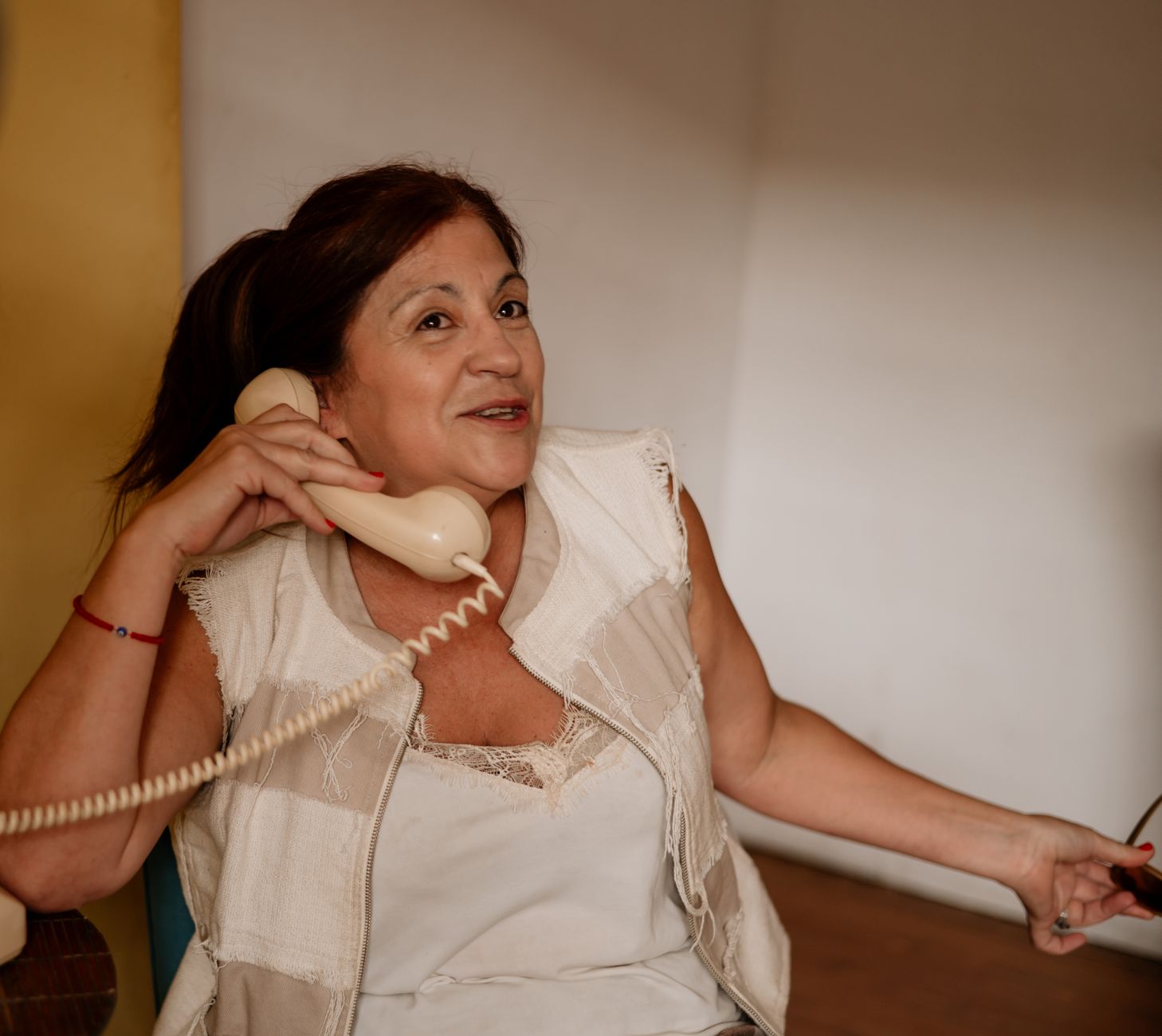
At 2:14 in the afternoon on a Wednesday in April, I let myself into my mother’s house in Birch Hollow, Kentucky, with the spare key hidden inside the fake rock by the porch step, my rental car still ticking in the gravel driveway behind me, and found Shelby Rourke sitting alone at my mother’s kitchen table with my mother’s cell phone in her hand, thumb moving down a list on the screen labeled Blocked Contacts.
My name was on it. Not once. Four times, with four different dates next to it, the most recent one nine days old.
She did not hear me come in over the noise of the window unit rattling in the front room, so I stood there a full three or four seconds longer than I needed to, long enough to watch her tap my name a fifth time, scroll past it, and set the phone face down on the table like she was setting down a fork. Then she looked up and saw me, and to her credit, or maybe just her nerve, she did not flinch.
“You scared me,” she said. “I didn’t hear the car.”
“What are you doing with my mother’s phone?”
“Cleaning up her contacts. She’s got about forty spam numbers in there she doesn’t know how to block herself.” She said it easily, the way you’d explain wiping down a counter.
“My number is on that list. Four times.”
Shelby did not reach for the phone or try to hide it. She folded her hands on the table like she was the one owed an explanation, not the one giving one, and said, “I screen her calls because somebody has to. Your mother’s blood pressure was two forty over one ten the day after the two of you got into it about the Ridgeline house back in February. I’m not going to apologize for keeping her calm. You want to be mad at me, fine, be mad at me. But I’m the one who’s here every single day, and you’re the one who calls and upsets her and then goes back to Denver.”
I want to tell you I had a sharp comeback ready. I did not. I stood in my mother’s kitchen, in the house I grew up in, forty one years old the last time I’d lived under that roof and fifty eight the day I finally walked back into it uninvited, and I could not make a single word come out of my mouth, because somewhere behind that fast, confident sentence of hers was a fact I could not argue with. I had called. For months, I had called, and called, and called, and been sent to voicemail, or told she was napping, or told she’d just stepped out to the garden, and I had believed every single one of those excuses, because why would I not.
I am getting ahead of myself. Let me back up to how we got to that kitchen table, because you cannot understand how much that moment cost me without understanding the fourteen months that led up to it.
My mother, Vivian Tillman, is eighty two years old. She has lived in the same white clapboard house on Featherbed Road in Birch Hollow since 1969, the year she married my father, Garland Tillman, who worked the counter at the feed store on Main for thirty six years before it passed to my brother Holden. Garland died six years ago this coming November, a stroke that took him fast, in his sleep, in the same bed my parents shared for four decades. My mother stayed in that house afterward because she said she would rather be a widow in her own kitchen than a stranger anywhere else, and for five years, that arrangement worked. She drove herself to church at Birch Hollow Baptist every Sunday, kept a garden that put half the county to shame, and called me every Tuesday night at seven, without fail, so reliably that I used to set a timer.
Then, fourteen months before that Wednesday in April, she fell. She was carrying a laundry basket down the back steps in the rain, and her foot caught the edge of a step she had walked down ten thousand times before, and she landed wrong on her left wrist. Holden found her forty minutes later, sitting on the wet ground, refusing to cry, telling him it was nothing while her wrist was already swollen to twice its size. It was broken in two places. She spent three nights in the hospital in Somerset, and when she came home, she came home with a cast to her elbow, a walker she hated, and a hard new fact none of us wanted to say out loud: she could not live entirely alone anymore, not for a while, maybe not ever again the way she had before.
I live two states away, in Denver, where I am the principal of an elementary school, married to a good, steady man named Sawyer who has heard me cry on the phone about my mother more times in the last year than in the twenty before it combined. I could not simply move in. Holden, twenty minutes down the road in Birch Hollow, running the feed store our father built, could not either, not full time, not with three kids still at home and a business that opens at six. So when a woman named Shelby Rourke, forty three years old, recently moved to Birch Hollow from two counties over, put up a flyer at the Piggly Wiggly offering in-home companion care, references available, Holden called the number before he called me.
I want to be honest about my own part in this, because it matters. I was not there. I could not vet her in person, could not sit across from her at that kitchen table and watch her eyes while she talked about my mother, could not check her references myself, and I said so, more than once, in phone calls with Holden that I remember getting sharper each time. He told me I was being difficult from a safe distance, that it was easy to raise objections from Denver when he was the one driving over there every other day checking on things. He was not wrong about that, and it stung enough that I let it quiet me more than it should have. Holden checked two references, both from families Shelby said she had worked for in Pulaski County, both of whom spoke well of her on the phone. He hired her on a private arrangement, cash and a modest weekly rate, five days a week, eight to four, sometimes staying later or overnight if my mother had a doctor’s appointment early the next day. No agency. No background check beyond what those two phone calls turned up. I asked him twice, in the first month, whether he’d run anything more formal. He said Shelby seemed like good people and Mom liked her, and wasn’t that the important thing.
For the first several months, it did seem to be. Shelby was, by every account, competent at the actual work of caregiving. She got my mother to physical therapy for the wrist three times a week without fail. She cooked meals my mother actually ate, which had not always been true of my mother living alone, who tended to survive on toast and coffee when nobody was checking. She weeded the garden. She drove my mother to church. When I called on Tuesdays, my mother sounded, if anything, a little brighter, and she would mention Shelby the way you mention a nice new neighbor, warmly, in passing. I let myself relax. I told Sawyer I thought we’d caught a lucky break.
I flew out for a long weekend that first summer, the one visit in those fourteen months that went exactly the way you’d hope, and I want to describe it, because it is part of why I trusted what came after for as long as I did. Shelby had the guest room made up before I even set my bag down. She had a pitcher of my mother’s own sweet tea recipe sweating on the counter, made from the handwritten card in the kitchen drawer, and she spent that whole Saturday quietly in the background while my mother and I sat on the porch and talked for hours, only stepping in to remind my mother, kindly, when it was time for her afternoon pills. She struck me, that weekend, as exactly the kind of steady, unglamorous, competent woman you hope will end up caring for your parent when you cannot be there yourself. I left that Sunday thinking Holden had done something right, and I called him from the airport in Lexington to tell him so. I bring this up because I think it matters that Shelby was never, in my mind, a stranger I feared. She was someone I had sat across a porch table from and thanked.
The shift was slow enough that I did not name it for a long time. I can see it clearly now, laid out with dates, but living through it, it felt like nothing, like static, like a hundred small reasonable explanations stacked one on top of the other until they made a wall.
It started, as near as I have been able to piece together since, around month five. A Tuesday call went to voicemail for the first time in longer than I could remember. I did not think much of it. My mother called back the next morning, apologetic, said Shelby had taken her to get her hair done and she’d lost track of time. Fine. Normal. People miss calls.
By month seven, missed Tuesdays had become more like missed-every-other-Tuesday. When I did get through, my mother sounded tired in a way that was new, flatter, shorter with her sentences. When I asked if everything was all right, she would say things like, “Oh, I’m just wore out today, Shelby’s been running me all over creation to appointments,” which sounded plausible enough. When I asked to come visit for a weekend in October, my mother said, gently but firmly, that it wasn’t a good time, that Shelby said her schedule needed to stay steady for her blood pressure and a visit might stir things up right before a follow up with her cardiologist. I remember feeling stung by that, feeling like a stranger being managed by an appointment calendar, but I told myself Shelby was the professional and I should trust her judgment over my own instinct, because what did I know, living eleven hundred miles away.
By December, I was leaving voicemails that went unreturned for four, five, six days at a stretch. I sent a Christmas care package that year, a box of things my mother loved, peppermint bark from the shop in Denver she always asked me to bring when I visited, a soft cardigan, photographs of my kids printed and framed, and when I finally got her on the phone the week after Christmas to ask if it had arrived, there was a strange half second of silence before she said, “Oh, yes, it was lovely, thank you, honey,” in a tone that did not sound like my mother describing something she’d actually unwrapped. I told myself I was imagining things. I have thought about that half second more times than I can count since April, because I now believe Shelby had to prompt her, off to the side, out of my hearing, on what the box even was.
I called Holden about the growing distance in January. He told me Mom seemed fine to him when he stopped by the store to see her, a little quieter maybe, but fine, and that I shouldn’t read too much into a slow week of phone tag. I asked him directly, “Does it ever feel to you like Shelby runs interference?” He got defensive, the way people do when you are naming a thing they hired into being and do not want to have been wrong about. “She’s the reason Mom’s not in a facility right now,” he said. “Maybe ease up.”
So I eased up. I want that on the record too, because I think a lot of families will recognize this part of the story more than they will recognize the confrontation at the end of it. I talked myself out of my own instincts for months, because the alternative, that something was actually wrong, was harder to sit with than believing four separate, individually reasonable explanations.
The thing that finally cracked it open was not a big discovery. It was a woman named Marlow Whitaker, my mother’s neighbor across Featherbed Road for going on thirty years, who called me directly on a Sunday night in late March, something she had never once done in all the years I’d known her.
“I don’t want to start trouble,” Marlow said, “and you didn’t hear this from me making a fuss, because it isn’t my place. But your mother hasn’t been to Tuesday coffee at the church in four months, Roxanne, and when I asked her about it, she said Shelby thought the mornings were better spent resting. And last week I waved at her from my porch and she waved back real small, like she wasn’t sure she was allowed to.”
That last sentence is the one that undid me. Like she wasn’t sure she was allowed to.
I booked a flight for the following Wednesday, and I did not tell anyone I was coming. Not Holden, not my mother, not Shelby. I told myself it was because I did not want to make anyone rearrange their schedule for me. The truer answer is that some part of me, the part that had spent a year explaining away static, wanted to see the house on an ordinary Wednesday afternoon exactly as it actually was, not as it would be dressed up to look for a planned visit.
Which brings us back to 2:14 in the afternoon, the fake rock, the kitchen table, and Shelby Rourke’s thumb moving down a list with my name on it four times.
After she said her piece about my mother’s blood pressure and my calls upsetting her, I did not argue with her right there. I picked the phone up off the table, and I asked her to unlock it, and to my surprise, she did, without much fight, like she truly believed there was nothing on it that would look bad once I understood the context. I opened the call log first. Missed calls from me going back eleven months, forty three of them, and next to at least half, a small note in the log that Shelby herself had apparently added using the phone’s memo feature: “handled,” “told her Mom resting,” “explained she’s tired today.” She had been narrating her own gatekeeping in writing, on my mother’s phone, for nearly a year, the way you’d keep a log for a job you took seriously.
I found the voicemail box next. Full. Completely full, the little banner reading Mailbox Full, unable to accept new messages, which meant it had not been checked or cleared in who knows how long, which meant every single voicemail I had left in the last four months, some of them me crying, one of them me singing happy birthday because my mother’s birthday had fallen on a Tuesday and I couldn’t reach her live, had gone nowhere. Had sat in a digital box nobody opened. My mother had never heard a single one.
I found my mother in the sunroom off the back of the house, in the wicker chair she has sat in every afternoon of my life, a mystery novel open on her lap that she was not actually reading. She looked smaller than she had at Christmas, and older, and when she saw me standing in the doorway she made a sound I will hear for the rest of my life, somewhere between a gasp and a sob, and said, “Roxie. I thought you’d finally gotten too busy for me.”
I sat down on the ottoman in front of her and took both her hands, and I asked her, as gently as I knew how, when she had started thinking that.
What came out of her over the next hour, in pieces, some of it through tears, some of it in the flat, careful voice of someone trying not to believe her own memory, was this. Shelby had told her, repeatedly, over months, that I had called and said I was too overwhelmed with work to talk as often. That I had said visits stressed everyone out and it was better for now if things stayed simple. That I had, in Shelby’s words to my own mother, “seemed like she needed a little space, Vivian, and I think we should give it to her.” My mother, eighty two years old, grieving a husband, healing from a broken wrist, dependent for the first time in her adult life on someone else’s version of events, had believed every word of it, because why would her daughter’s caregiver lie to her about her daughter.
She had not been rude to me on the phone, on the rare occasions we did connect, because she had been protecting my feelings, thinking I was drowning under some burden Shelby had described to her. I had not pushed harder, because I thought I was respecting a professional’s judgment about my mother’s blood pressure. We had both, in our own separate rooms, been managed into silence by the same person, and neither of us had known the other was hurting until I walked in at 2:14 on an ordinary Wednesday.
I called Holden from my mother’s driveway that afternoon, and I will tell you, our first conversation was not a good one. He was defensive before I even finished explaining, because I think some part of him already knew, the way Marlow had already known, the way maybe even my mother had already known and hadn’t let herself say. “I hired her to help,” he said, his voice cracking in a way I hadn’t heard from my brother since our father’s funeral. “I didn’t hire her to do this.”
“I know,” I told him. “Nobody’s blaming you for hiring her. I’m asking you to help me end this the right way.”
To his credit, once the shock wore off, Holden showed up within the hour, and he brought with him the one piece of the puzzle I hadn’t had yet, which was our mother’s checking account. He had noticed, months earlier, small cash withdrawals he’d chalked up to groceries and gas money for all the driving Shelby did, but when we sat down together that night at the kitchen table with our mother’s blessing and went through six months of statements online at the Birch Hollow Farmers Bank branch the next morning, the pattern was harder to explain away. Fourteen hundred dollars in April for what Shelby had told my mother was “a car repair emergency.” Twenty six hundred dollars in August, described in a memo line my mother had apparently written herself, at Shelby’s request, as “help for Shelby’s boy, legal trouble, personal loan.” And a standing three hundred dollars in cash, withdrawn nearly every month for almost a year, that Shelby called gas reimbursement for all the driving, though the actual mileage, once we worked it out on a calendar, would not have come close to justifying it. All told, across fourteen months, just over nine thousand eight hundred dollars of my mother’s modest pension and savings had moved toward Shelby Rourke, on top of her regular pay, none of it written down anywhere except in a spiral notebook Shelby kept in her own bag, which she called “just so we don’t lose track.”
We brought in an elder law attorney the following week, a sharp, no nonsense woman named Ilse Granger who works out of an office above the pharmacy in Somerset and has seen more of this than I wish existed. She told us, in that first meeting, that what had happened to my mother had a name in her line of work, financial exploitation compounded by social isolation, and that the two nearly always travel together, because a person who is cutting off your access to money almost always has to cut off your access to the people who would notice the money going missing first. “It is never really about the calls,” Ilse said. “The calls are just the door she needed to keep shut.” Hearing a stranger with a law degree describe, in one sentence, the exact shape of the last fourteen months was its own strange kind of relief. It meant we were not imagining a pattern. It meant other families had walked into this same kitchen, figuratively speaking, and there was a known road out of it. Ilse walked us through what our options were. We could involve the sheriff’s department and pursue this as financial exploitation of an elderly adult, which Kentucky law does recognize and does take seriously. My mother, when we raised that option with her, asked us not to, not because she wanted to protect Shelby, but because she said, plainly, “I don’t have it in me to sit through a trial at my age, and I don’t want the last chapter of this to be a courtroom.” Ilse respected that, and instead helped us draw up a formal agreement: immediate termination, a signed acknowledgment of the funds taken, and a structured repayment plan, with the understanding, in writing, that if Shelby missed a single payment, the family reserved the right to pursue it through the sheriff’s department after all. It was not everything. It was enough for my mother to sleep at night, which mattered more to all three of us than punishment did.
The confrontation itself happened two days later, all of us at that same kitchen table, Ilse present as a witness, Holden across from Shelby, me beside my mother. Shelby’s story shifted three times in the span of twenty minutes. First she said we were misunderstanding a simple system for filtering out spam and stress. Then, when the voicemail box and the memo notes made that impossible to hold, she said she had been trying to protect my mother from what she called “family drama,” as though the drama were mine and Holden’s to begin with, not hers to manufacture. Finally, when Ilse laid the bank statements flat on the table in front of her, Shelby put her face in her hands and told us the truth in pieces, the way people finally do when every softer story has run out.
Her son was in real legal trouble, a repeat offense, a lawyer she could not afford, and she had been terrified of losing this job, the best paying, steadiest work she’d had in years, if the family ever decided they didn’t need her anymore. Somewhere in the middle of that fear, she told us, keeping me at a distance had stopped feeling like protecting my mother’s blood pressure and started feeling like protecting her own position, though she said she had not let herself see the difference at the time. “The more you called,” she told me, not quite meeting my eyes, “the more I felt like I was going to get replaced. So I made it so you wouldn’t have anything to replace me over.” It was not a full confession. It was not even, I think, the whole truth even as she understood it. But it was enough truth to explain fourteen months, and it matched, detail for detail, my mother’s own account of what Shelby had told her, week after week, about a daughter who had supposedly stopped wanting to talk.
Holden asked her the question I think all three of us had been circling without saying out loud. “Did you ever once think about what this was doing to her?” He nodded toward our mother. “Not the money. Not the job. Her. Sitting in that sunroom thinking her own daughter gave up on her.”
Shelby did not have a clean answer for that. What she said, after a long pause, was, “I told myself I was the one actually here. Every day. And she wasn’t.” She looked at me when she said it, and for one strange second I understood, without excusing it, exactly how a lie like that gets built, one small justified omission at a time, each one easier than the last, until eighteen months later you are sitting at a kitchen table with a notebook of loans nobody agreed to and a woman’s whole relationship with her mother rerouted through your own hands. Understanding it did not make it forgivable. It just made it human, which was, in its own way, harder to sit with than if she had simply been a monster.
My mother did not raise her voice once during that whole meeting, though I would have understood if she had. What she said instead, near the end, looking directly at Shelby, was the thing that has stayed with me the longest out of everything from that week. “You were good to me in the mornings and the evenings,” she said. “I want you to know I saw that, and it was real, and I’m grateful for it. But you took my daughter away from me in the afternoons, and there isn’t a repayment plan for that.”
Shelby left that day and did not come back to Birch Hollow, as far as any of us know. She has made three of the six repayment installments on time so far, through Ilse’s office, and missed none yet, though we are watching closely.
The harder work, honestly, was not ending things with Shelby. It was rebuilding what fourteen months of managed silence had worn down between my mother and me. For the first few weeks after that Wednesday, my mother apologized to me constantly, for believing Shelby over her own gut, for not calling Holden or me the moment something felt off, and I had to keep telling her, and mean it, that none of this was her fault. She had been isolated, gradually, by someone whose whole job was to be trusted, in a house where she had nobody else checking in daily to compare notes with. That is not a character flaw. That is exactly how this kind of thing works, and it works on capable, sharp, independent women exactly like my mother, not despite those qualities but sometimes because of them, because nobody expects a woman who ran a household and raised two kids and buried a husband with her chin up to need anyone to double check what she’s being told.
We did not hire another private caregiver. Holden and Ilse both pushed for a licensed, bonded home care agency instead, one that requires background checks that actually mean something and keeps its own supervisory records, and we found one through the Area Agency on Aging that serves Pulaski and the surrounding counties. My mother now has a rotating pair of caregivers from that agency rather than a single person who could ever again become the only conduit between her and the rest of us. We also did something that felt almost silly when Holden first suggested it and turned out to matter more than anything else: we bought my mother a second phone, a simple one, kept charged on her nightstand, the number known only to her, Holden, me, and Ilse’s office, used for nothing but family calls, so that even if something ever again went wrong with the main household line, there would always be one door that stayed open. Holden also started stopping by twice a week instead of once, at no set pattern, and I fly out every six weeks now instead of twice a year, sometimes announced, sometimes not, because I learned the hard way what a difference an unannounced Wednesday can make.
It is October now as I write this, six months out from that afternoon in the kitchen. My mother calls me most Tuesdays at seven, same as always, but she also calls me on random Thursdays now, just to tell me something the new caregiver said that made her laugh, or to ask my opinion on a tomato variety for next year’s garden, the way she used to before any of this started. Last week she called just to read me a card Marlow Whitaker had brought her back from a church craft fair, and at the end of the call she said, out of nowhere, “I’m glad you didn’t stop knocking on that door, Roxie. I don’t think I would have known how to ask you to.”
I flew back for her eighty third birthday in September, and Holden closed the feed store for the afternoon so all three of us could sit on that same porch where Shelby once served sweet tea from my mother’s own recipe card. Marlow came over with a pound cake. The new caregiver, a soft spoken woman named Delaine who works Tuesdays and Fridays through the agency, brought a card the whole visiting team had signed, and left by four so it could just be family, the way my mother said she wanted it. At one point my mother reached over and squeezed my hand and said, apropos of nothing, “I counted. You’ve called me nine times this month.” She had started keeping her own count, I realized, the way you check a scale after you have been sick, not out of suspicion anymore but out of something closer to relief, proof to herself that the door really was staying open this time. I did not tell her I had been counting too.
I think about that sentence often. I think about how close I came, in the months before I flew out uninvited, to letting a stranger’s version of my own mother’s feelings stand in for the truth, simply because it arrived wrapped in the language of care. I have decided, since that Wednesday, that I will never again let distance be an excuse for taking someone else’s word over my mother’s silence. Silence, it turns out, is not the same thing as peace. Sometimes it is just the sound of someone being kept from the door.
This story is a dramatization. Names, characters, and details are invented, and any resemblance to real people or events is coincidental.