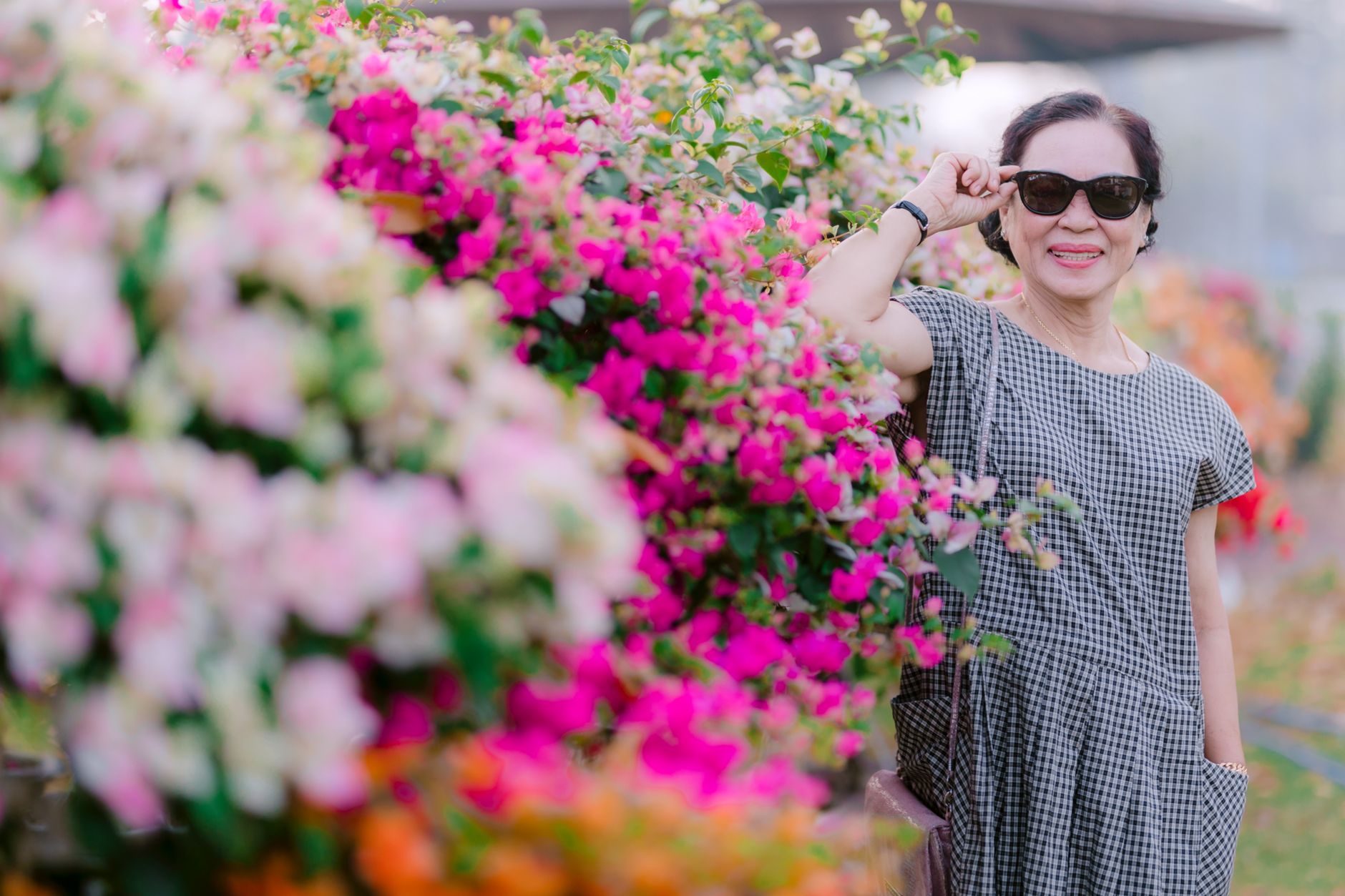
The Rose Garden My Neighbor Destroyed
My name is Cheryl. I am fifty-three years old, and until a Tuesday afternoon in late spring, I would have told you that the worst thing that could happen to me had already happened three years ago, when my husband died in the front bedroom of our house with his hand in mine and the window open so he could smell the roses one last time.
I would have been wrong. There was one more thing the world had saved for me. My neighbor took a machine to that garden and cut it down to bare dirt, and then he stood at the property line and told me it had never really been mine to keep.
I want to tell this whole story from the beginning, because the ending only means something if you understand what came before it.
I met my husband when I was twenty-two, at a county fair two towns over, of all places, standing in line for the same funnel cake stand. He was eight years older than me, quiet in the way that some men are quiet, not because they have nothing to say but because they are always thinking about what is worth saying. We married a year later, and four years after that we bought this house, a modest two-story with a wraparound porch and a side yard that ran the length of the lot between our place and the empty lot next door, which was still empty back then, still just scrub grass and a stand of cottonwoods.
The house itself was nothing special when we bought it, a modest two-story that needed a new roof within the first two years and a furnace not long after that, and we spent the first decade of our marriage doing most of the work ourselves on weekends because that was what we could afford. I remember him up on that roof in July with a bandana tied around his head, and me handing shingles up a ladder, and both of us too tired that night to do anything but eat sandwiches standing at the kitchen counter. We were not a family with much extra. What we had, we built slowly, one paycheck and one Saturday at a time, and I think that is part of why the garden mattered so much once it existed. It was proof that after all those years of fixing what was broken, we had finally gotten to a place where he could build something just because it was beautiful.
He was not a man of many hobbies. He worked forty-one years at the same machine shop, came home tired most days, sat in his recliner and watched the news and fell asleep before the weather. But roses undid him. I never understood it fully, not the way he understood it, but I understood enough to know it was not a passing thing. His grandmother had grown roses on a farm two states over, and when he was a boy he used to help her deadhead the spent blooms in the evenings, and he told me once that the smell of a rose garden in June was the closest thing he had to a memory of being safe.
The spring after we moved in, he came home with the first six bushes wrapped in burlap in the bed of his truck, and he spent an entire Saturday turning over the soil in the side yard by hand, refusing my offer of the tiller because he said roses like to be planted by hands that mean it. That is a strange thing to say about a plant, and I laughed at him for saying it, and he did not laugh back. He was serious. He believed that.
Over the following twenty-six years, that garden became something bigger than either of us planned. He added bushes nearly every spring. He drove forty minutes to a nursery in the next county because they carried a deep red damask rose he wanted for our tenth anniversary, and he planted it dead center in the bed so it would be the first thing I saw from the kitchen window every morning. He kept a little spiral notebook, the kind you buy for a dollar at the drugstore, with a page for every bush, the variety, the year it went in, notes on how it did each season. I still have that notebook. I have read every page of it more times than I can count since he died.
He was out there most Saturday mornings with his coffee in one hand and his pruning shears in the other, and if you drove past our house on a Saturday in May you would very likely see a sixty-something man in a faded ball cap talking quietly to a rose bush like it might answer him back. Our daughter used to tease him about it when she still lived at home. He would just say, “They listen better than most people,” and go back to his pruning.
When his heart started to fail, four years before he died, he slowed down out there but he never stopped. I would find him some mornings sitting on the little wooden bench he had built himself at the edge of the bed, not doing anything, just sitting with his roses because standing and working had gotten too hard. Toward the very end, when he was mostly confined to the bed in the front room, he asked me almost every day whether the roses were doing all right. Not the truck in the driveway that needed a new alternator. Not the tools in his shed that our son-in-law kept offering to sort through. The roses. Three days before he died, I opened the window so the smell of them could reach him, because he asked me to, and he lay there with his eyes closed and a small, tired smile on his face, and he said, “That’s the good stuff, Cheryl.”
He died on a Thursday morning in early June, with the window still open.
I will not pretend the three years since have been easy. Our daughter lives four hours away with her own children now, and she calls every Sunday, but Sunday calls are not the same as a man asleep in the recliner down the hall. The house got very quiet very fast. What kept me upright, more than anything else, was that garden. I am no gardener by nature, not the way he was, but I learned. I bought his kind of pruning shears. I kept his notebook going in my own handwriting after his stopped. Every Saturday morning I went out there with my coffee, the way he used to, and some mornings I talked to the roses too, and I am not ashamed to say it, because it was the only place in my life where I still felt like his wife instead of his widow.
That garden was not decoration to me. It was the last living thing he ever built with his hands, still standing, still blooming every June like clockwork, thirty-one bushes deep and every one of them recorded in a dollar-store notebook in a dead man’s handwriting.
Now I need to tell you about Warren.
Warren bought the empty lot next door about eight years before my husband died, tore out the cottonwoods, and built a big house that was, by any honest measure, too big for that lot. From the start there was a certain friction between us, the kind that exists between two very different sets of people living close together. Warren liked things neat and modern. He complained, gently at first, about the shade our garden’s tallest bushes threw onto the edge of his lawn in the late afternoon. He complained about deer traffic, as if the deer that wandered through belonged more to us than to him. A few years in, there was a dispute over a drainage ditch that ran along the back of both properties, which we settled amicably enough after my husband walked the line with him and showed him where the water actually flowed. I remember thinking, even then, that Warren treated every disagreement as a contest he intended to win, never a conversation, and that my husband’s patience was the only reason those early frictions never became anything worse.
There was one earlier run-in that I did not think much about until much later. A few years after Warren moved in, he mentioned, almost in passing, that he thought the gravel turnaround at the end of our shared drive crept a little onto his side. My husband did not argue with him. He simply walked out one Saturday morning with an old iron corner stake he had found buried in the grass years before, the kind a surveyor drives into the ground and leaves, and showed Warren exactly where it sat, a good three feet inside our own property. Warren looked at it, shrugged, and said something about markers moving over time, frost heave and all that, and dropped the subject. My husband told me about it that night, not angry, almost amused. “Some men have to test the fence at least once,” he said, “just to see if you’re watching.” I did not understand, until years later, that he had meant it as a warning, not a joke.
After my husband died, I noticed a change in Warren that I did not think much of at the time. He stopped waving from his driveway. He started parking his truck at an angle that put a mirror almost over our shared line. Small things. The kind of things a widow tells herself she is imagining because the alternative, that a neighbor is testing what he can get away with once the man of the house is gone, is an ugly thing to consider about someone you have lived beside for years.
I was gone the day it happened, up in the next county for a hair appointment and then lunch with an old friend, home by early afternoon, nothing unusual about the day at all. I turned onto my street the way I have turned onto it ten thousand times, and something in the light looked wrong before I could name what it was. The side yard, which for twenty-six years had been a wall of red and pink and cream running the length of the property line, was gone.
Not trimmed. Not cut back for the season, the way you might tidy an overgrown bed before the heat set in. Gone. Roots and all, down to churned bare dirt and a scatter of wood chips where thirty-one rose bushes had stood that morning.
I sat in the driveway for what felt like a full minute with the engine still running, because my mind simply refused to process what my eyes were reporting. Then I got out of the car and walked across the grass, and I do not fully remember doing it, the way you do not remember climbing stairs you have climbed your whole life. I stood at the edge of the torn-up bed and I could see the stumps of the bushes, cut low and ragged, some of them still oozing sap, the deep red damask he had planted for our tenth anniversary reduced to a splintered stub level with the ground. I put my hand over my mouth and I did not make a sound, because there was no sound big enough.
Warren was standing at the property line with his arms crossed, and it took me a moment to understand that he had been waiting there. Not working. Waiting. Watching for my car so he could watch my face when I saw it.
“Warren,” I said, and my voice came out smaller than I intended, “what happened to my roses.”
He did not look uncomfortable. That is the detail I keep returning to, because I think if he had looked even slightly uncomfortable I might have believed, for one more day, that this was some kind of terrible misunderstanding. Instead he looked almost satisfied, the way a man looks when he has finally finished a chore he has been putting off.
He told me the garden had been “creeping” onto his side of the property line for years, that he had been meaning to deal with it, and that he had finally hired a man with a skid steer to “clean it up properly.” Clean it up. As if thirty-one rose bushes my husband had tended for a quarter of a century were a woodpile somebody forgot to stack, rather than the last living thing he had built with his own hands.
I asked him how he could possibly think that garden was on his land. It had been there since before he ever moved in. And that is when he said the line I do not think I will ever stop hearing, as long as I live.
“They were never really yours to keep anyway.”
I asked him what that was supposed to mean. He told me, flatly, almost bored, that the true property line ran through the middle of that side yard, that it always had, and that I had been “borrowing” his land for thirty years without so much as a thank you. He said he had looked into it. He said he had been patient about it for a long time. He said things a reasonable person says when they have decided in advance that they are right and do not intend to be moved by anything as small as evidence.
From the road, I imagine it looked like an ordinary spat between neighbors over some overgrown bushes.
It was not a spat over bushes. It was a man deciding that a grieving widow was an easy target, and a dead man’s garden was there for the taking.
I do not remember driving myself back into the house. I remember sitting at the kitchen table for a long time without turning on a light, and I remember, eventually, going into the den and sitting down at my husband’s old desk, the one with the bottom file drawer he never once let me organize because he said his system only made sense to him. I had not opened that drawer in three years. I did not know, that afternoon, what I was even looking for. I think some part of me simply needed to sit where he used to sit.
It took me perhaps ten minutes of going through hanging folders in his cramped, careful handwriting before I found it. A plain manila folder, and on the tab, in his block print, three words: THE REAL DEED. Not the county’s official label for it. His own name for it, in case anyone ever came asking. Inside, folded soft at the creases from being handled and refolded many times over many years, was the original recorded plat map from the county surveyor’s office, dated the year we closed on the house.
I remembered, then, something he had told me once and that I had not thought about in twenty years. He said that before he ever put a spade in the ground for that garden, he had walked the property line himself with a surveyor, because he did not intend to plant anything permanent in soil he could not prove was ours. At the time I had thought it was simply his caution, the same caution that made him check the oil in the truck every Sunday whether it needed it or not. Now I understood it as something closer to foresight. He had left me the proof before he ever knew I would need it.
I spread the map out on the kitchen table under the good light and I traced the boundary line with my finger, out from the recorded corner markers, along the full length of the side yard. The garden, every foot of it, sat entirely inside our lot. Not close to the line. Not arguably ours in a generous reading. Ours, clearly, by a margin of several feet, on a document filed with the county before Warren’s house was ever built on the lot next door.
I did not sleep much that night. I sat up with that plat map and my husband’s old rose notebook, and somewhere around two in the morning I stopped crying about the roses and started, very quietly, getting angry.
The next morning I drove to the county recorder’s office myself, because I did not trust my own reading of an old document enough to act on it alone. A clerk pulled the same plat from their archive on a computer screen, confirmed the recording date, and confirmed that it had never been amended, revised, or superseded by any later filing. She told me, kindly, that if I wanted a boundary determination that would hold up against a challenge, I should hire a licensed surveyor to do a fresh survey off that same recorded plat, because a fresh, signed, stamped survey carries weight in a way that an old document alone sometimes does not, especially against someone determined to argue.
I called a surveyor that same afternoon. His name was Eugene, and he had done boundary work in this county for over twenty years, the kind of man who answers his own phone and does not waste words. I did not tell him what Warren had said to me. I did not want his work colored by my anger. I told him only what I wanted: the property line surveyed fresh, working strictly from the county’s own recorded plat, with a written report and stamped markers at the end of it.
Eugene came out two days later with his equipment in the bed of his truck and a folder of his own, considerably thicker than mine. He walked the full length of the property twice, checked his instruments against the recorded plat and against the older corner markers still buried at the edges of the lot, and took his time in a way that made me trust him more with every passing hour, not less. Then, in the early afternoon, he drove the first survey stake into the ground himself, with a small sledge, three careful strikes.
It landed almost four feet onto Warren’s side of where my garden had stood the week before.
Warren came out of his house while Eugene was still crouched over his equipment, writing figures into a small notebook of his own, and I remember thinking, absurdly, that a man who kept notes about the world the way my husband once had should have made Warren pause. It did not. He walked to the edge of his own yard, looked down at the stake, and then looked at the long, empty strip of dirt where thirty-one rose bushes had grown for twenty-six years, entirely inside my property, not his.
“And if that stake proves you wrong?” he asked, in a tone that suggested he still did not believe it could.
Eugene did not answer him. He simply kept writing, because the numbers were going to answer for him soon enough, and numbers do not raise their voice.
Eugene’s written report came two days later, seven pages with a stamped and signed survey drawing, and it said in plain, professional language what the century-old recorded plat had already said. The boundary between our two properties ran a consistent four feet, in places closer to five, onto what Warren had always believed, or claimed to believe, was his own land. My garden had never once crossed onto his property. Not by an inch, in twenty-six years.
I took that report, along with a copy of the original recorded plat, to a young attorney in town who handled property matters, mostly out of a wish to do this properly rather than out of any real doubt about what the documents showed. She read both, set them down on her desk, and told me, in the plain way lawyers sometimes surprise you by talking, that this was about as clean a case as she had ever seen. A man had destroyed thirty-one mature rose bushes belonging to someone else, on land that both the historical record and a fresh licensed survey confirmed was not his, and had told the owner to her face that the loss was hers to bear. She drafted a demand letter that afternoon: full restitution for the destroyed garden, the reasonable cost of a professional survey marker to be permanently set at the confirmed boundary so this could never again be disputed, and a formal acknowledgment, in writing, of the true property line.
Warren’s first response, delivered through his own lawyer a week later, was to dispute the survey. He hired his own surveyor, at his own expense, apparently confident that a second opinion would land somewhere friendlier to him. It did not. His surveyor walked the same recorded plat, checked the same corner markers, and arrived, independently, within two inches of Eugene’s original line. When a man pays for his own expert and that expert hands him back the same answer he was already refusing to accept, there is nowhere left to stand. His lawyer called mine three days after that second survey came back, and the tone of the conversation, I am told, changed considerably.
By then a small-claims hearing had already been scheduled, a date on the courthouse calendar for a Thursday morning six weeks out, and my attorney had begun preparing exhibits, the recorded plat, Eugene’s stamped report, even Warren’s own surveyor’s numbers laid side by side with ours to show how closely they matched. She told me plainly that she thought we would win outright if it came to that, and that a judge tends not to look kindly on a homeowner who destroyed thirty-one mature bushes first and asked questions about the boundary line second. I think it was that hearing date, sitting there in black and white on a court docket with his name on it, that finally moved Warren more than either survey had. Men like Warren can argue with a neighbor for months. Very few of them want to explain themselves to a judge.
It took another six weeks of back and forth, which felt like six years to me, before Warren agreed, in a signed settlement, to pay for the full replacement of the rose garden he had destroyed, priced out at nursery cost for thirty-one mature bushes plus the labor to install them, and to pay separately for a professional survey marker, a permanent stamped monument, to be set at the confirmed boundary at his own expense, so that no future owner of either property could ever again claim confusion about where the line truly ran. He also agreed, in writing, that the garden had at all times sat entirely on my property. I did not ask for an apology in the settlement, because I did not believe a man like Warren was capable of offering one that meant anything, and I did not want his lawyer drafting words for him to say that he did not feel. I wanted the money for the bushes, the marker in the ground, and his name on a document admitting what the land had always known. I got all three.
What I had not expected was the town.
Word travels in a place like this whether you want it to or not, and somewhere in those six weeks, a friend of mine from the garden club, the same club my husband used to grumble about when I dragged him to their spring plant sale every year, heard the whole story secondhand and showed up on my porch one evening with a casserole and a question. Would I let them help replant it, when the time came, rather than hiring it all out to strangers.
I said yes before she had finished asking.
On the Saturday the new bushes arrived, delivered in the same kind of burlap-wrapped bundles my husband used to haul home in the bed of his truck all those years ago, eleven members of the garden club showed up in old jeans and gardening gloves, along with two of my husband’s oldest friends from the machine shop, retired now, who I suspect came more for him than for me. Eugene came too, off the clock, to point out exactly where the new survey marker had been set, a low bronze cap driven flush with the ground right at the true corner of the property, catching the afternoon light when you knew to look for it.
We worked from mid-morning until the sun started going down, following the layout in my husband’s old spiral notebook page by page, planting each variety back in roughly the place he had originally chosen for it, the deep red damask going in dead center in the bed, exactly where it would be the first thing I would see from the kitchen window come morning. Nobody made a speech. Nobody needed to. When the last bush went into the ground, one of the garden club women who had known my husband for thirty years stood up, brushed the dirt off her knees, looked at the fresh bed running the true length of my side yard, and said, “There. Now it’s exactly where it was always supposed to be.”
Somebody had brought a cooler of lemonade and set it on the tailgate of a truck, and we all stood around it in the last of the daylight, dirt under our fingernails, talking the way people talk after a good hard day of work rather than a hard year. The garden club president, a woman who had traded seed catalogs with my husband every winter for two decades, pressed a small folded card into my hand before she left. Inside it she had written down the bloom schedule for every variety we had planted that day, in case my husband’s old notebook ever wore thin from handling, so that his record of that garden would exist in more than one place from now on. I have that card tucked inside his notebook now, two handwritings side by side, keeping the same thing alive.
I stood at the edge of that garden as the light went gold and long across the yard, thirty-one new bushes in the ground, a bronze survey marker set forever at the true corner of my land, and I thought about a folder in my husband’s careful handwriting that said THE REAL DEED, a folder he had kept for thirty years without ever once telling me why it mattered so much, because he had wanted me to know exactly what I owned before I ever had to fight for it.
He was not there to see the new bushes go in. But I like to think he already knew, back when he walked that line with a surveyor decades before any of this happened, that a man ought to leave the truth behind him in writing, because the truth is the one thing that outlasts every neighbor who ever tries to take what was never his.
The roses came back. They always do, if you plant them by hands that mean it. Next June, when they bloom, I will be out there on a Saturday morning with my coffee, talking to them the way he used to, and for the first time in three years, I will not be afraid of what I might find when I come home.
This story is a dramatization. Names, characters, and details are invented, and any resemblance to real people or events is coincidental.