The Neighbors Who Secretly Mowed His Lawn
I want to tell you about the morning I sat on my own front porch in the dark, in a lawn chair I’d dragged out at quarter to five, waiting to catch two strangers who had apparently been taking care of my house for the better part of a year. But before I can tell you about that morning, I have to tell you about the year that came before it, because none of what happened on that porch will make a bit of sense without it.
My name is Melvin. I am seventy four years old, and I have lived in the same house on Larkspur Lane, just off the county road outside a little town called Harlow, for forty one years. My wife and I bought it the spring after we married, back when it was nothing but a brick rancher on a bare lot with a maple sapling out front that’s now taller than the roofline. We raised what family we had here, buried a dog or two in the back corner by the fence, and grew old together in the same four rooms, and I never once imagined I would end up living in this house alone.
But grief doesn’t ask you what you imagined. It just arrives, and you live inside it, and eventually you find out what kind of man you are once nobody is left to see you struggle.
The Year the House Went Quiet
My wife passed the October before last, after a long decline that I won’t dwell on here because it isn’t really the point of this story, except to say that by the end of it I had spent the better part of two years as her caretaker, and by the time she was gone I had forgotten what my own hands were for outside of that. I didn’t know how to be a man with nothing left to tend to.
The house went quiet in a way I still haven’t fully gotten used to. Not just the absence of her voice, though that was the worst of it, but the smaller things. The radio she kept on low in the kitchen all day, gone. The particular rhythm of her footsteps on the hall floor at night when her hip acted up, gone. I’d catch myself listening for sounds that weren’t coming anymore, the way you keep patting your pocket for a wallet you know isn’t there.
That first winter, I did what I imagine a lot of men my age do. I let things slide. Not out of laziness, though I’m sure it looked that way to anyone driving past. It was more that every task around that house used to be something I did for her, or with her watching from the porch with a glass of tea, telling me I’d missed a spot or that I was doing it exactly the way my own father used to. Without her there to see it, half the reason for doing any of it seemed to go missing right along with her.
My knee had been bad for years, arthritis mostly, the kind that makes a ladder feel like a genuine risk instead of a Tuesday chore. I’d always managed anyway, because managing was the job description of being a husband and a homeowner for four decades. But somewhere in that first year alone, managing stopped feeling possible. I’d stand at the bottom of the ladder some mornings, gutter debris raining down from the last storm, and simply decide it could wait. Everything could wait. Nobody was keeping score anymore except me, and I was tired of being the one keeping it.
By the following spring the yard had gotten away from me in a way that embarrassed me every time I backed my car out of the driveway. The grass along the fence line had gone to seed. A board on the side fence had worked loose over the winter and hung crooked, groaning every time the wind came through. I told myself I’d get to it. I told myself that most mornings, standing at the kitchen window with my coffee, looking at a yard my wife would not have recognized as ours.
The First Saturday
The first time I noticed something had changed, it was a Saturday in April, and I remember it clearly because I had just gotten off the phone with my sister-in-law, who lives two states over and calls most weekends to check on me in that particular tone people use when they’re afraid of what they might find if they didn’t call. I hung up, went out to get the mail, and stopped dead in my own driveway.
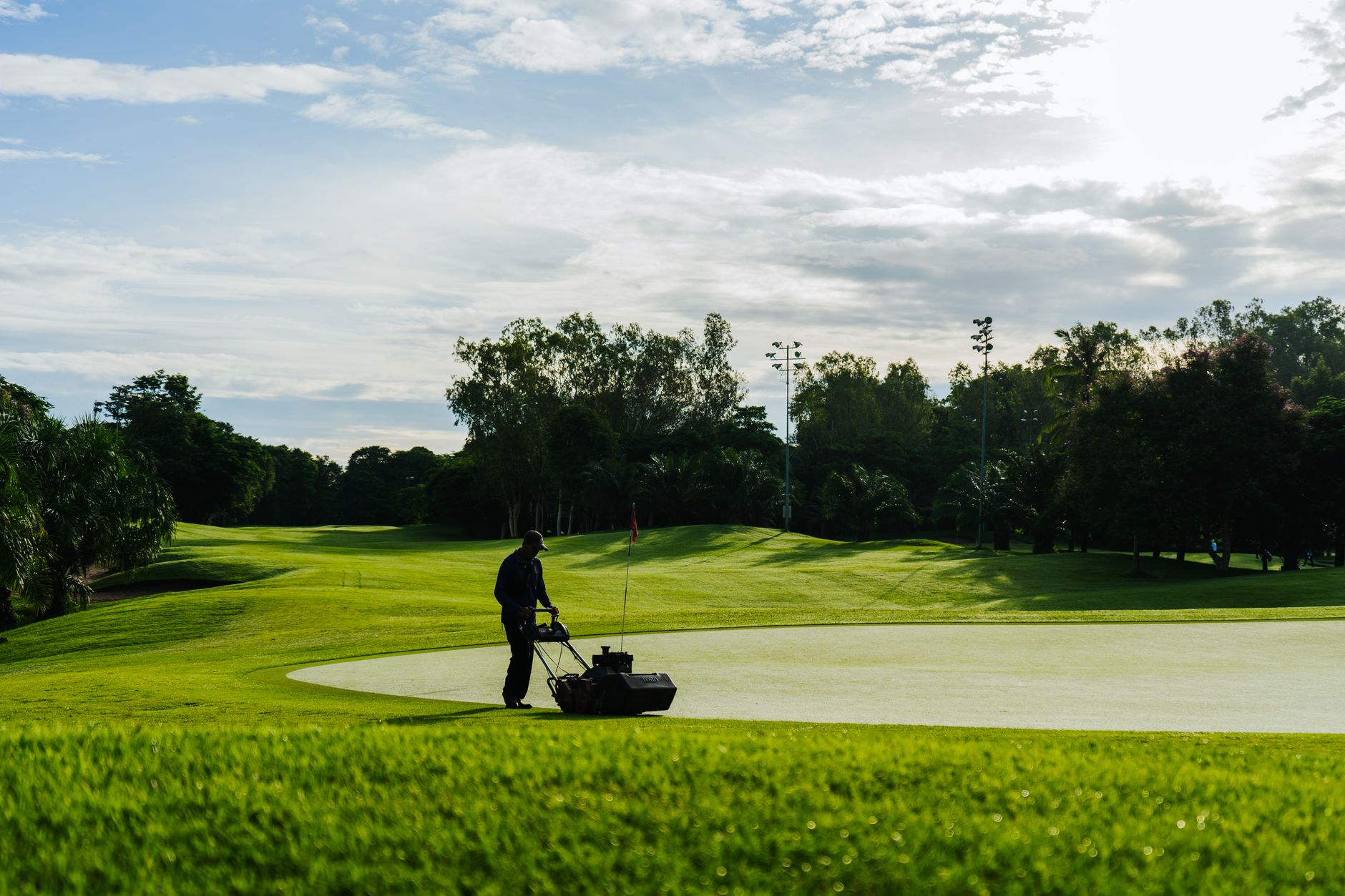
The lawn was cut. Not just cut, but cut properly, in clean even rows the way I used to do it, the edges along the front walk trimmed so sharp it looked like a photograph out of a magazine. I stood there holding a phone bill and a church bulletin, looking at grass I had not touched in three weeks, and felt a strange mix of relief and unease settle into my chest at the same time.
My first thought was that I’d finally lost track of my own days, that I must have done it myself and simply forgotten, the way a man starts to worry about those things once he crosses seventy. I checked the shed. The mower was back in its spot, gas tank low the way it gets after a real cutting, but clean, no fresh grass caked to the deck the way mine always ends up. Somebody had wiped it down before putting it away. I don’t wipe my mower down. My wife used to tease me about that very fact.
My second thought, the one I settled on because it was easier to live with than not knowing, was that one of the neighbor boys had gotten his assignment mixed up. Half the teenagers on Larkspur Lane mow lawns for money in the summer, and I figured some kid had knocked on the wrong door, or misread an address on a list, and would sort out the mistake himself before long. I didn’t think much more about it. I went inside and made myself a sandwich and didn’t think to wonder how a hired boy manages to mow a stranger’s yard without ever once knocking to ask about payment.
A week later, it happened again.
Small Kindnesses I Couldn’t Explain
I want to be honest about how strange those first few weeks were, because I don’t think most people understand what it does to a man to have good things happen to him that he cannot account for. You’d think it would only be a relief. Mostly it was. But there’s a particular kind of unease that comes with benefiting from something you can’t explain, a low hum of worry that maybe you’re about to be asked for something in return, or that you’ve misunderstood a situation that’s actually much simpler and much less kind than it looks.
By June, it wasn’t only the lawn anymore. I came home from the pharmacy one Tuesday to find the storm door, which had been dragging on its bottom hinge since the previous spring, swinging clean and silent, a fresh drop of oil visible in the hinge if you looked closely enough. I hadn’t mentioned that door to a living soul. I’d just been living with the scrape of it every time I came in or out, the way you live with a hundred small failures in a house once there’s nobody left to remind you to fix them.
In July, after a hard summer storm knocked half a tree limb down along the back fence, I woke up the next morning expecting a full day of cleanup ahead of me, the kind of job that would have taken me the better part of a week at my age and with my knee. Instead I found the limb already sectioned into manageable pieces and stacked neatly by the burn pile, the yard swept clear of the smaller debris, like the storm itself had been considerate enough to clean up after its own mess.
By August, the gutters were done. I hadn’t climbed that ladder in over a year, hadn’t so much as looked at it without a small twist of dread in my stomach, and one morning I noticed the downspouts running clear and fast during a rain instead of overflowing the way they’d been overflowing for two summers running. I stood at the window watching that water run clean off my own roof and felt something come up in my throat that I wasn’t prepared for, right there in my kitchen, alone, over a gutter.
I never saw a truck. Never a stranger’s car idling at the curb. Never so much as a business card wedged in my screen door, the kind landscaping outfits leave behind hoping you’ll call them for more work. Whoever was doing this wanted nothing from me. Not a thank you, not a tip, not even the satisfaction of being seen doing it. That, more than anything else, was what kept me up some nights turning the whole mystery over in my head like a stone I couldn’t put down.
I mentioned it once at church, carefully, the way you test the water on something you’re a little embarrassed to admit. I told one of the deacons that somebody had been doing yard work around my place and I couldn’t figure out who to thank. He looked at me like I’d told him I’d found money in the yard, said it wasn’t anything the church had organized, though he’d ask around. Nobody ever came forward. Nobody ever claimed it. I let it go, the way you let go of things that seem impossible to solve and don’t seem to be doing any harm.
What I did not know, standing in my driveway marveling at a lawn I hadn’t touched, was that the answer had been recorded, in full, from the very beginning, by a small black camera bolted above my own front door.
The Camera I Forgot I Had
My wife was the one who understood our phone, our thermostat, the television with all its buttons, every piece of the modern parts of our life that had crept in over the years without my full participation. I am not a man who dislikes machines, exactly. I just never saw the need to learn a thing my wife already knew how to do, back when I assumed I’d have her around to ask.
She’d had a doorbell camera installed the year before she passed, mostly because her hip had gotten bad enough that getting up to answer a knock had become its own small ordeal, and she liked being able to see who was at the door from her chair without having to move. I remember the day the fellow from the security company came out to install it, remember her sitting at the kitchen table afterward showing me on her phone how the little app worked, the two of us laughing about how it looked like she was spying on our own front porch.
After she was gone, I never once thought to open that app. It sat there on my phone the way a hundred other things sat there, untouched, part of a life she had managed that I simply let go quiet once she wasn’t there to manage it anymore. I’m not sure I could have told you, if you’d asked me directly, whether the camera was even still working. I assumed the subscription had lapsed, or the battery had died, the way things tend to fail quietly once nobody’s paying attention to them.
What finally nudged me toward the truth was nothing more than a conversation over the fence with my neighbor, a retired schoolteacher who has lived two doors down longer than I have. She mentioned, offhand, that her own doorbell camera had caught the same raccoon getting into her garbage cans three nights running, and she’d finally trapped the thing after watching its whole route on her phone. Something about the way she said it, so simple, like checking her camera was as ordinary as checking her mailbox, needled at the back of my mind for the rest of that afternoon.
That night I sat down at the kitchen table with my reading glasses and my late wife’s old phone habits and opened the app myself for the first time in over a year. It still worked. The subscription, it turned out, renewed itself automatically every year against a card I’d forgotten was even attached to it, one more quiet thing she’d set up to keep running long after she wasn’t there to watch it run.
There, waiting for me, was more footage than I knew what to do with. Weeks of it. Months of it, actually, once I scrolled back far enough, more than I could watch in one sitting, though I tried.
What the Footage Showed Me
I want to describe watching that first clip carefully, because it is one of the strangest experiences I have had in seventy four years of living, sitting at my own kitchen table at nearly midnight, watching my own front yard on a small screen, from an angle I’d never once thought to consider, and seeing two shapes come up my driveway in the gray light just before dawn.
They moved like people who had done this so many times they no longer needed to think about where anything was kept. The smaller of the two, a girl by the look of her build and the ponytail swinging under her cap, went straight to the shed, and I watched her work the tricky latch I’d meant to fix for years, the one that sticks unless you lift and pull at the same time, without a moment’s hesitation. She wheeled my own mower out into the yard while the taller one, clearly her brother from the same build and the same easy way of moving, set up my ladder against the gutter line and climbed it without a second glance down, the way you only climb a ladder when you’ve climbed that particular one plenty of times before.
Neither of them said much to each other. This wasn’t the first time, I could tell that immediately, not from anything dramatic but from the total absence of anything dramatic, the practiced quiet of two people running through a routine they’d worn smooth through repetition. But my camera, cheap as it was, had a microphone sensitive enough to pick up scraps of their voices carried on the still morning air, and in that first clip I caught the girl saying something to her brother that I have not been able to shake since, quiet, almost to herself, the kind of thing you say when you don’t think anyone will ever hear it played back.
She said she hoped he never had to find out how bad it had gotten before they started.
I sat with that sentence for a long while before I made myself keep watching. I did not know, that night, who “he” was supposed to be, or what “how bad it had gotten” was meant to describe, though some part of me already suspected the answer had my own name attached to it.
I watched clip after clip after that, working my way back through the months. The pattern held steady the whole way through. Always before dawn, usually a Saturday, sometimes a weekday if a storm had left extra work behind. Always the same two, the girl and her older brother, moving through my yard like they had every right to be there, doing work that would have cost me real money to hire out, and never once looking toward the camera, never once acting like people who expected to be seen. When they finished, they put everything back exactly where they’d found it, latched the shed, and walked back down the driveway together in the growing light, disappearing toward the far end of Larkspur Lane before I was ever awake enough to hear the first mower stroke.
I sat at that table until nearly two in the morning, going through the whole record of it, watching two teenagers I did not recognize give up their Saturday mornings, month after month, for a man they apparently knew a great deal about, while I hadn’t so much as learned their names.
The Morning I Waited
I did not sleep much that week. I kept turning the footage over in my mind, replaying the girl’s voice, trying to place the shape of her face, the set of her brother’s shoulders, against every family I could think of on our street, and coming up with nothing certain. I could have simply waited for the next Saturday and watched it unfold live on my phone from the comfort of my own recliner. Something in me refused to let it happen that way.
I wanted to see them with my own two eyes, not through a screen, the way my wife would have insisted on doing it herself if she’d been the one to find out. So on Friday night I set my alarm for four forty five in the morning, and when it went off in the dark I got up, made a pot of coffee I didn’t drink much of, and carried a folding lawn chair out onto my own front porch to wait.
It was cold enough that early, even in that part of the year, that I sat there in my coat with my hands wrapped around a mug just for the warmth of it, watching the street go from black to gray, listening to nothing but the occasional truck passing on the county road a half mile off. I won’t pretend I wasn’t nervous. There is something unsettling about waiting in the dark for two strangers you have watched, uninvited, on camera, not knowing what you’ll say to them once they finally show up, or whether they’ll simply see an old man sitting in the dark and turn around and walk away before you ever get the chance.
They came right on schedule, just past five fifteen, two shapes turning the corner from the far end of the street exactly the way they had every Saturday for the better part of a year. I watched them come up my driveway, saw the girl reach for the shed latch out of what was clearly long habit, and it was only when she pulled the door open and looked up that she saw me sitting there in the porch light, coffee mug in my lap, watching her the whole time.
She froze with her hand still on the latch. Her brother, a step behind her, stopped so fast he nearly walked into her, and for a long moment none of the three of us said anything at all, the whole yard gone silent except for a bird starting up somewhere in the maple tree out front.
Corey and Bree
I’m not going to draw this part out longer than it deserves, because what happened next mattered more than the shock of it. The girl’s name was Bree. She was fourteen, a freshman at the high school, and her older brother, sixteen and about to get his license that fall, was named Corey. They lived four houses down and around the corner, in a house I had passed a thousand times without ever once learning who lived inside it, with their mother, whose name I would learn soon enough was Bridget.
Bree found her voice first, though it came out smaller than I imagine she wanted it to. She said they were sorry, that they hadn’t meant for me to find out this way, that they’d tried very hard for almost a year to make sure I never had to.
I asked her, as gently as I knew how, why on earth two kids who didn’t know me from the next man on the street had been giving up their Saturday mornings to take care of my yard.
What she told me, standing there in my driveway with the sun just starting to come up behind her, is the part of this story I’ve thought about more than any other part since, and I want to get it right, because it deserves to be gotten right.
Bree walked past my house every morning on her way to the bus stop the fall after my wife passed, and she remembered, clear as anything, the week she started noticing the yard slipping. Not all at once, she said, but the way you notice a thing getting worse in small pieces, a little more each week, the grass a little longer, the hedge a little more ragged, until one morning in early spring she walked past and saw me out on that same ladder I’d been avoiding, alone, trying to clear a gutter with a knee that clearly wasn’t up to the job, wobbling in a way that frightened her badly enough that she stood at the end of my driveway for a full minute deciding whether to say something before I finally climbed back down on my own.
She told her brother about it that same afternoon. Corey, it turned out, had lost his own grandfather three years earlier, a man who had lived alone the last stretch of his life after Corey’s grandmother passed, and who nobody in the family had realized was struggling until it was very nearly too late to help him the way he’d needed help. Corey said he’d carried a particular kind of guilt about that ever since, the sense that his own family hadn’t seen what was right in front of them until it had already gone too far, and when Bree told him about the old man down the street wobbling on a ladder alone, something in him refused to let that same story happen twice.
They didn’t ask permission from anyone. They certainly didn’t ask me. Corey had mowed enough lawns for money around the neighborhood to know his way around most of the equipment a man my age would have in a shed, and the two of them simply decided, between themselves, one Saturday in April, that they were going to start taking care of my yard before I ever woke up to see them doing it.
I asked her, since I couldn’t quite let it go, why before dawn. Why the secrecy at all, when most people would have simply knocked on the door and offered.
Bree looked at her brother for a second before she answered that one, and I understood, watching the two of them, that they had talked this over between themselves plenty of times already. She said they were afraid that if they showed up and offered outright, I might feel too proud to accept it, or too embarrassed to have two teenagers see an old man who couldn’t keep up his own yard anymore. She said it felt kinder, somehow, to just do the work and let it look like nothing in particular had happened, rather than make me sit with the fact of needing help at all.
Corey added something to that I have thought about more than almost anything else in this whole story. He said that if they’d asked, and I’d said yes, it would have felt like a favor I owed them for. Doing it quietly, he said, meant I never had to feel like I owed anybody anything. It was just supposed to be the yard, taking care of itself, the way it seemed like it ought to, the way maybe it would have if things had gone differently for me.
What I Understood, Standing There
I stood in my own driveway that morning holding a cup of coffee gone stone cold, looking at two teenagers who had been quietly carrying a piece of my grief for the better part of a year without asking for a single thing in return, and I felt something break open in my chest that I hadn’t let break open since the week of the funeral.
I want to be honest about what that yard meant, because it wasn’t only grass and gutters. My wife had spent thirty years out in that yard with me, planting the rose bushes along the east fence, telling me exactly where the tomatoes needed to go every spring, standing on the porch some evenings just watching the light come down through the maple tree the two of us had planted as a sapling the year we bought the place. Letting that yard go to seed after she died had felt, in some way I couldn’t have explained to anyone, like letting go of the last piece of a life we’d built together, one weed and one overgrown hedge at a time.
And here were two kids, strangers to me until that very morning, who had somehow understood without anybody telling them that the yard mattered more than it looked like it should, who had decided on their own that an old man they barely knew was worth getting up before dawn for, week after week, with nothing to gain from it and every reason in the world to simply mind their own business instead.
I did not know, standing there, exactly what to say to two teenagers who had done more for me in eight months than I had managed to ask of anyone since my wife passed. I settled, in the end, on the only thing that felt true. I told them thank you did not begin to cover it, and that I intended to find a way to make it cover more, whether they wanted me to or not.
The Dinner
I invited them, and their mother, to dinner the following Sunday. I want to say I did this gracefully, but the truth is I fumbled the invitation the way a man does when he hasn’t had many people at his table in a while, standing in my own kitchen holding the phone their mother had given me, trying to find the right words for something I’d never had to ask for before.
Bridget came to the door that Sunday looking every bit as uncertain as her children had looked in my driveway, and I understood within the first few minutes why. She works long shifts at the hospital two towns over, raising Corey and Bree largely on her own since their father took a job that keeps him traveling more months than not, and she admitted, sitting at my kitchen table that evening, that she hadn’t known the full extent of what her kids had been doing until Bree finally told her the whole story earlier that week. She’d known they left early some Saturday mornings. She hadn’t known where, or why, or for how long.
I cooked what I could manage, which admittedly wasn’t much of a spread by my late wife’s standards, but it was a real meal at a real table, the first one I’d made for anyone other than myself in over a year. We sat together longer than I expected to, Bridget asking careful questions about my wife, about the house, about the years I’d spent on that street, and me asking just as many questions back about her own two kids, about school, about the father who traveled, about a family I realized I had lived four houses away from for years without ever once really knowing.
Before they left that night, I told all three of them the same thing I’d told Bree and Corey in the driveway that morning, though I meant it more fully by then than I had the first time I said it. I told them I didn’t want the debt paid quietly anymore. I wanted it paid out loud, in whatever way made sense to all of us, for as long as we were willing to keep at it.
What Grew From It
That was the better part of a year ago now, and I want to tell you honestly that what came after has turned out to matter to me more than the yard work ever did, though I still think about that yard work plenty.
Corey got his license that fall, and not long after, I started teaching him the parts of engine work my own father taught me, out in my garage on Saturday afternoons after the yard work was long since done and no longer any kind of secret at all. He’d never had a man in his life steady enough to teach him that kind of thing, not since his grandfather passed, and I hadn’t had anybody to teach it to in longer than I care to admit. We’ve replaced a water pump together, rebuilt a carburetor on an old mower engine just for the practice of it, and some Saturdays we don’t get much done at all beyond standing around the garage talking, which I’ve come to understand is really the whole point.
Bree, it turned out, had been quietly working on a science project about erosion and drainage, the very same subject that had gotten her thinking about my gutters in the first place, and I spent more evenings than I can count that spring at my own kitchen table helping her build a poster board model, the two of us arguing cheerfully about slope angles the way I used to argue with my wife about tomato spacing. She took second place in the county fair that year, and she made a point of telling the judges, unprompted, that the idea started with an old man’s gutters down the street, which is a sentence I did not expect to hear about myself in this lifetime and one I have not stopped smiling about since.
Bridget and I have gotten into the habit of Sunday dinners now, the four of us most weeks, sometimes with her own mother joining when she’s in town. I’ve started going to Bree’s track meets on the Saturdays there isn’t yard work to be done, and Corey’s taken to stopping by some weeknights just to sit on the porch for a while, the way a grandson might, though we’ve never once used that word out loud between us and don’t need to.
The yard still gets mowed most Saturdays. I do a good deal of it myself again now, my knee having decided, somewhere in all of this, that it had a bit more give in it than I’d been giving it credit for. But Corey still comes by most weeks anyway, not before dawn anymore, not in secret anymore, just because it’s become something we do together instead of something one of us does for the other. Bree still checks the gutters every fall, standing at the bottom of the ladder now instead of climbing it herself, because I’ve made her promise she’ll let me hold it steady while she does, which she still finds fairly funny given how the whole thing started.
I think about that first night at the kitchen table often, sitting there at nearly two in the morning watching my own porch on a small screen, hearing a girl I’d never met say she hoped I never had to find out how bad things had gotten. I know now exactly how bad it had gotten, and I know now, too, that I did not have to carry it alone nearly as long as I thought I did. I just didn’t know, for the better part of a year, that somebody down the street had already decided I was worth carrying.
My wife would have liked them both enormously. I tell them that sometimes, out on the porch on a Sunday evening, and Bree always says she wishes she’d gotten the chance to meet her. I tell her, honestly, that in a way, through that yard she loved so much, I think she already had.
This story is a dramatization. Names, characters, and details are invented, and any resemblance to real people or events is coincidental.