The Will That Exposed My Mother’s Lies
Three hours before my grandmother’s will was read, my mother leaned across a polished oak table, dug her nails into my wrist, and whispered, “If you get a single penny, I will make your life a living hell.” She said it like she’d rehearsed it in the car on the way over, which, knowing my mother, she probably had.
My name is Grace Meyers. I’m twenty eight years old, I teach second grade at Milbrook Elementary, and up until that afternoon in Howard Callahan’s office above the hardware store on Main Street, I would have told you the worst thing my mother ever did to me was miss my college graduation because a sale at the outlet mall ran through Sunday. I had no idea what she was actually capable of. I found out in stages, over six months, the way you find out a house has termites, a little sagging here, a little give there, until the day the whole floor drops out from under you.
This is the story of those six months, and of the afternoon they finally caught up with her.
I need to start with my grandmother, because none of what my mother did makes sense unless you understand what Elaine Whitfield meant to me.
My grandmother raised me more than my own mother ever did. That’s not a dramatic thing to say, it’s just true, and everyone in our family knew it, even if nobody said it out loud at Thanksgiving. My mother had me young and never quite forgave the world for it. She worked, she dated, she moved twice before I was in third grade, and through all of it, Grandma Elaine was the fixed point. Her house on Maple Street, white with green shutters and a porch swing that needed oil, was the only place that ever felt like it belonged to me too.
She taught me how to make a pie crust from scratch, cold butter cut in with two knives, never overwork the dough. She taught me how to sew a button back onto a coat so it would never fall off again, how to write a thank you note within three days, how to plant tomatoes deep so the stem grows extra roots. And when my mother said something cutting to me, which was often, Grandma Elaine would find me later, sitting on that porch swing usually, and she would say the same thing every single time.
“You have more spine than you think, Gracie.”
I held onto that sentence the way other people hold onto scripture.
Grandma Elaine was eighty one and had a bad hip and a heart that the doctors said was “doing fine, all things considered,” which is the kind of thing doctors say about elderly people they don’t want to alarm. She still drove herself to the Piggly Wiggly on Tuesdays. She still hosted the church potluck committee meetings in her kitchen, with the good coffee cups out, the ones with the gold rims that only came down from the cabinet for company. She still kept her porch light on every single night until ten o’clock, like a lighthouse, because she said a dark porch made a house look like nobody loved it.
Six months before the will was read, on a Tuesday night, she called me while I was grading spelling tests at my kitchen table. I remember the assignment. Third row down was a boy named Tyler who had spelled “necessary” with two c’s and one s, and I was in the middle of writing a note in red pen when my phone lit up with her name.
Her voice was thin. Shaky. Off in a way I couldn’t place.
“Gracie,” she said, “no matter what happens, I’ve taken care of it.”
I put my pen down. I asked her what she meant. She wouldn’t answer, not directly. She changed the subject the way she always did when she didn’t want to worry me, asked about my students, asked if I was eating enough, asked about the little boy in my class who drew horses on every single worksheet regardless of the subject, math, reading, didn’t matter, there’d be a horse somewhere on the page. I told her about him. She laughed, a real laugh, and for a minute I forgot the strange thing she’d said at the start of the call.
I should not have let myself forget it.
The next morning I called her back to check in, and my mother answered.
“Mom’s resting,” she snapped. “Don’t call this number again.”
Then she hung up on me. Not goodbye, not talk to you later, just the flat click of a call ending.
I want to be honest about what I did next, because I’ve thought about it a thousand times since, replayed it, wondered if there was a version of those weeks where I fought harder, faster, smarter. I called eleven times over the following week. I know it was eleven because I kept tally marks on a yellow sticky note next to my phone charger, like some pathetic little scoreboard nobody else was ever going to see. Three calls went straight to voicemail. Two were answered and cut off within seconds. The rest just rang and rang until my chest physically ached, a real ache, the kind you feel in your sternum when you’re scared and you don’t have anywhere to put the fear.
On day eight I drove to Maple Street myself.
The porch light was off. That detail bothered me more than almost anything else that happened in those six months, because Grandma Elaine kept that light on every night until ten o’clock like clockwork, rain or shine, and it being dark at four in the afternoon told me something was deeply wrong before I even got out of the car.
I knocked. Nothing. I knocked harder. And when the door finally opened, it wasn’t my grandmother standing there. It was Rick, my stepfather, filling the doorway in work boots that Grandma would never in a hundred years have allowed past her entry rug. She had a rule about that rug. Everyone in town knew Elaine Whitfield’s rug rule.
“Your mother said no visitors,” Rick told me, arms crossed, blocking the frame with his whole body like I was a salesman. “Elaine needs rest, not trouble.”
I tried to look past him into the hallway. I couldn’t see anything but the edge of the hall table and Grandma’s church calendar hanging crooked on the wall, which was its own small wrongness, because that calendar was never crooked.
The next day I called Mrs. Patterson, who’d lived next door to my grandmother for almost thirty years and used to bring over rhubarb from her garden every June. That’s when I heard the lie my mother had already started spreading around the neighborhood. Mrs. Patterson told me, gently, like she was breaking bad news, that Diane had told everyone Grandma had been moved to a care facility over in Ridgewood, twenty five minutes away, because she needed round the clock supervision now.
But that night I drove back to Maple Street and sat in my car across the street with the engine off, and the yellow shaded lamp in Grandma’s bedroom window was glowing warm through the curtain, right where it always glowed when she was reading before bed.
She was still in that house. My mother was lying to an entire town about where her own mother was, and doing it well enough that nobody questioned it, because who questions a devoted daughter caring for her dying mom.
Three months went by like that. Three long, humiliating, powerless months where I was locked out of the last chapter of the person who raised me. Every single Sunday I sat down and wrote Grandma a card. Nothing dramatic, just little pieces of my ordinary life, the weather, a peach cobbler I’d burned so badly the smoke alarm went off twice, a funny thing one of my second graders said about the moon. I mailed every one of those cards to the Maple Street address, not knowing if they’d ever reach her hands or end up in a trash bin at the end of my mother’s driveway.
The only call my mother gave me in that entire stretch wasn’t about Grandma’s health at all. It was about the estate.
“Mom’s changing her paperwork,” she said, flat, businesslike, like she was reading off a grocery list. “Focus on your little teaching job and let the adults handle this.”
My little teaching job.
That sentence sat in my chest like a swallowed stone for weeks afterward, because I understood exactly what she meant by it. Stay small. Stay quiet. Stay exactly where I’ve always put you, Grace, in the corner, useful for holiday photos and not much else.
I looked into hiring an elder law attorney of my own that month. I sat in a waiting room in the county seat with a legal pad and a list of questions, and the retainer the receptionist quoted me was more than three months of my take home pay. I taught second grade in a town where the school district hadn’t given a real raise in four years. I had a car with a hundred and thirty thousand miles on it and a savings account that existed mostly in theory. All I had, walking out of that office, was instinct, a locked front door on Maple Street, and a feeling in my gut that something wrong was happening on the other side of it that I had no legal standing to stop.
Then, in late November, on a Wednesday I remember because it was the day before we did our classroom Thanksgiving feast with the paper pilgrim hats, an unknown number texted me.
Your grandmother is in hospice now. She asks about you every day. I’m sorry. I can’t say more. Please don’t give up on her.
I read that message so many times that week I could have recited it in my sleep. I took a screenshot of it, actually, the way you’d photograph evidence at a crime scene, some instinct in me already understanding that I might need proof of things later, proof that I never gave up, proof that somebody on the inside knew I was being kept away.
The next morning I tracked down the hospice facility through an old insurance contact my grandmother had once made me copy onto an index card, years earlier, back when she was the one worrying about me and not the other way around. When I got there, dressed in the nicest thing I owned because some part of me thought looking presentable might matter, I learned my name wasn’t on the visitor list.
My mother had built a list of people permitted to see her own dying mother, and she had left me off of it. Not accidentally. Deliberately. I stood at that front desk while a kind receptionist apologized and told me there was nothing she could do, hospital policy, family designated contact, and I felt something in me go very still and very cold.
I sat in the parking lot afterward and shook, actually shook, both hands on the steering wheel, until I saw a tired looking woman in blue scrubs come out through the side entrance. She looked straight at me through my windshield. Held my gaze for three, maybe four seconds. Then she got into her own car and drove away without a word.
At the time I had no idea who she was. I would see her again, and it would matter more than I could have guessed sitting in that parking lot.
Grandma Elaine died two weeks later, on a Sunday morning, quietly, in the house on Maple Street. I found out from a text message from my Aunt Linda, my mother’s older sister, sent at 9:14 in the morning. It said, simply, Mom passed. Funeral details to follow. Nothing else. No call. I read it standing in my classroom doorway, twenty minutes before my students arrived for the day, and I had to go into the supply closet and put my hand over my mouth so the custodian setting up the gym next door wouldn’t hear me.
Then came the funeral.
My mother wore black, cried on cue at exactly the right moments, hugged every single neighbor and church member in the receiving line, and told anyone who would listen, in a voice pitched just loud enough to carry, “I was with her every single day until the end.” She said it like performance and truth were interchangeable, like saying a thing convincingly made it so.
I stood in the back pew of First Lutheran in a navy dress that used to belong to Grandma, and I could feel the whole room looking at me the way you look at the granddaughter who never showed up. Two women from the quilting circle actually turned in their seats to glance back at me and then quickly away, the way people do when they’ve already decided what kind of person you are.
Then a hand touched my shoulder from behind.
I turned around and it was her. The tired woman from the hospice parking lot.
“She talked about you every day,” the woman whispered, close to my ear, so no one else could hear it. Then, before I could get a single word out, before I could even ask her name, she was gone, slipping out a side door of the sanctuary like she’d never been there at all.
I didn’t know it yet, but that woman’s name was Carol Jennings, and she was about to become the single most important person in this story besides my grandmother herself.
A week after the funeral, the law office emailed me the time for the will reading. Before I’d even finished reading the email all the way through, my phone rang. My mother.
“You got the email?” she asked, no hello.
“Yes.”
“Then show up and keep quiet.”
I asked her why I needed to keep quiet at my own grandmother’s will reading. There was a silence on the line, maybe half a beat, and then she said six words that I understood, even in the moment, would mean something much bigger than they sounded.
“Because I made sure of it.”
The night before the reading I sat cross legged on my bed with a shoebox of old photographs spread out across the quilt, the good quilt, the one Grandma had made me for my sixteenth birthday out of scraps from every dress she’d ever sewn for me as a kid. Grandma with her hands on my shoulders at the county fair, both of us squinting into the sun in front of the Ferris wheel. Grandma standing beside me at my high school graduation in a hat that was, frankly, too big for the occasion, and she didn’t care one bit. Grandma on that porch swing, the paint peeling on the armrest, telling me the same thing she’d told me my whole life whenever my mother tried to make me feel smaller than I was.
You have more spine than you think, Gracie.
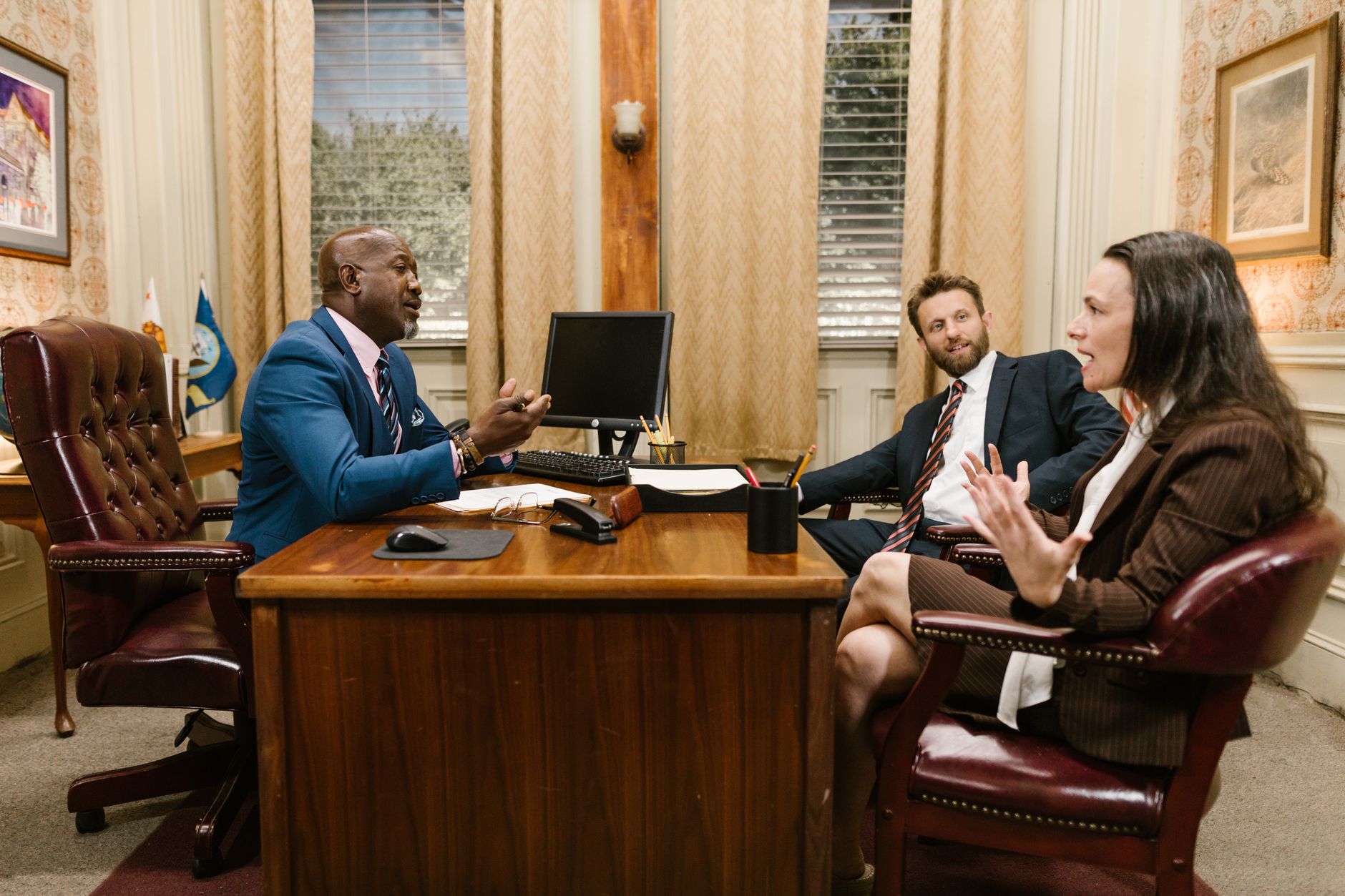
I put on a navy dress the next afternoon, a different one, my own this time, and I climbed the narrow, creaking stairs up to Howard Callahan’s office above Meyers Hardware on Main Street. My mother was already there when I arrived, hair professionally done, black dress pressed to a knife’s edge, and Grandma’s pearl earrings hanging from her ears like she’d already claimed the role of grieving matriarch before the room had even finished settling into its chairs. Rick sat beside her, arms folded across his chest. My Aunt Linda sat a little apart from them both, staring hard at the clasp of her purse like it held the answers to something. Two women from Grandma’s church committee sat by the window, ostensibly there to support the family, mostly there, I suspected, to see how it would all shake out.
At the head of the table sat Mr. Callahan, silver haired, unhurried, with two neat stacks of paper in front of him.
Not one stack. Two.
The first was bound with a plain blue clip. The second was bound with a red one.
That detail shouldn’t have mattered to me the way it did, but I noticed it immediately, the way you notice one wrong note in a song you’ve known your whole life. I took the empty chair at the far end of the table, tried to keep my hands still in my lap, and mostly failed.
That was when my mother leaned over and grabbed my wrist. Not my hand. My wrist, the way you’d grab a child who was about to run into traffic, hard enough that I felt her nails through the sleeve of my dress.
Her perfume hit me first. Then her voice, low, meant only for me.
“If you get a single penny, I will make your life a living hell.”
I didn’t pull away from her. For the first time in my entire life, I just looked back at her, straight on, and didn’t flinch. And in that half second I caught Mr. Callahan’s eyes flick toward us, then drop, briefly, to the white pressure marks her fingers had left on my skin.
Then he cleared his throat and began to read.
The first stack, the blue clipped one, moved through the estate the way I’d expected it might, given everything my mother had spent six months engineering. Page one: the house on Maple Street, to Diane Meyers. Page two: the savings accounts, to Diane Meyers. Page three: the jewelry, including a strand of pearls that were, at that exact moment, hanging from my mother’s ears, also to Diane Meyers. Page four: all remaining personal property, distributed at Diane’s sole discretion.
By the time Mr. Callahan finished reading that first stack, my mother looked almost peaceful. Victorious, even. Her jaw had unclenched. Her shoulders had dropped an inch.
Then she stood up and delivered what I can only describe as her final, best performance of the entire six months.
“I gave up everything to care for Mom,” she said, dabbing carefully at the corner of one eye with a folded tissue she had, I noticed, already had ready in her hand. “Grace couldn’t even be bothered to visit once in those last three months.”
Rick nodded along, arms still crossed, backing her up without saying a word, which somehow made it worse.
The two women from church looked down at their laps.
And for one terrible, suspended second, I could feel the whole room starting to believe her. Starting to slot me neatly into the story she had been telling for six months straight: the selfish granddaughter who vanished when it mattered, the devoted daughter who sacrificed everything, the sad old woman who died wondering why the granddaughter she’d raised had simply stopped showing up.
My hands were shaking so hard by then that I had to press them flat against the table just to keep them still.
Then I looked up, and I saw that Mr. Callahan had not closed his folder.
The blue clip had been set aside, finished, done. But the second stack, the one bound with the red clip, was still sitting squarely in front of him, untouched.
My mother saw it too.
Her expression changed first. Just a flicker, there and gone, but I’d spent twenty eight years learning to read every micro expression that woman’s face was capable of making, and I knew fear when I saw it cross her features, even for a quarter of a second.
Howard Callahan removed the red clip. He looked directly at my mother, not at me, and said, “There is an amendment to this will. It was filed three days before Elaine Whitfield died.”
For the first time all afternoon, my mother forgot to breathe.
I want to slow down here, because everything that happened in the next twenty minutes changed the rest of my life, and I’ve told this part of the story so many times since that I know exactly which details matter.
Mr. Callahan explained that three days before she passed, my grandmother had asked for him personally, not a paralegal, not a notary sent over by the hospice, Howard Callahan himself, a man who had handled Whitfield family legal matters since before I was born. He drove out to the hospice facility on a Thursday afternoon with a notary he trusted, a woman named Ruth Ann Voss who had worked in his office for eleven years, and together they sat at my grandmother’s bedside while she dictated, clear headed and lucid, an amendment to her will.
She told him, he said, that she had understood for months that her daughter was keeping her granddaughter away from her, and that she wanted the record to reflect exactly what had happened, so that no one could ever stand in a room and rewrite the truth of her final months.
The amendment stated, in plain legal language that Mr. Callahan read aloud slowly enough that every word landed, that any beneficiary named in the will who was found to have knowingly restricted Grace Elaine Meyers’s access to Elaine Whitfield during the final year of her life would forfeit their bequest under the will entirely, and that the forfeited share would pass, in full, to Grace Elaine Meyers.
Then he laid out, one by one, the evidence Grandma Elaine had asked him to gather and attach to that amendment, because she had known, somehow, lying in that hospice bed, that her daughter would try to talk her way out of it in a room full of witnesses.
There was a signed statement from Mrs. Patterson, describing the lie about the Ridgewood care facility that Diane had spread through the neighborhood while Elaine was still, in fact, living at home.
There was a printed log from the hospice facility documenting that a visitor named Grace Meyers had been denied entry on the date I’d sat in that parking lot, and that the visitor restriction list had been submitted and signed by Diane Meyers alone.
There was a sworn statement from Carol Jennings, the hospice nurse, the woman from the parking lot, the woman who’d touched my shoulder at the funeral, describing how Elaine had asked her, repeatedly, over her final weeks, whether Gracie had called, whether Gracie knew where she was, and how Carol had eventually broken protocol and sent me that anonymous text herself because she couldn’t stand to watch an old woman die asking for someone who never learned she was allowed to come.
And there, in a small clear bag clipped to the back of the folder, were my Sunday cards. Every single one of them. Grandma Elaine had kept every card I mailed to Maple Street in the drawer of her nightstand, and Carol Jennings had found them there after she passed and brought them straight to Mr. Callahan, because Carol said Elaine used to read them out loud to herself in the evenings when nobody else was in the room.
I sat in that chair and listened to a room full of people I’d known my whole life learn, in real time, exactly what my mother had spent six months doing to me, and to her own dying mother.
My mother’s face went through something I can only describe as a slow collapse. The composure she’d walked in wearing, the pressed black dress, the borrowed pearls, the rehearsed tears, none of it held. Rick’s arms came uncrossed. Aunt Linda’s hand froze on the clasp of her purse.
“That’s not, she wasn’t of sound mind, she was on medication,” my mother started, her voice climbing.
Mr. Callahan didn’t raise his voice at all, which somehow made his answer land harder than shouting would have. “Ruth Ann and I both certified her competency in writing at the time of dictation, Diane. She recited her granddaughter’s full name, her middle name, her birthdate, and the name of the school where Grace teaches, all from memory, without prompting. I have never in thirty four years of practicing law watched anyone perform incompetence that convincingly while displaying none of it.”
Nobody in that room said anything for a long moment.
Then my mother turned on me, one last time, her voice cracking with something that had stopped being grief and had become, plainly, panic. “You did this. You turned her against me.”
I found my voice then, the same voice Grandma had spent twenty eight years telling me I had more of than I thought.
“I called eleven times in one week and wrote it on a sticky note because I didn’t know what else to do with how scared I was,” I said. “I drove to a hospice and got turned away at the front desk because my own name wasn’t on a list you made. I mailed her a card every single Sunday for three months and I never knew if a single one made it to her hands. I didn’t turn her against you, Mom. You did that yourself, one locked door at a time.”
The house on Maple Street, the savings, and the jewelry, everything my mother had claimed in that first stack of papers, passed to me under the terms of the amendment. So did something Diane hadn’t even known existed, a small lake cottage two counties over that Grandma had quietly bought with her late husband decades earlier and kept off the family’s radar entirely, using the rental income to fund a scholarship at Milbrook Elementary that, it turned out, had been paying for classroom supplies in my own building for six years without me ever knowing my grandmother was behind it.
Mr. Callahan also informed my mother, gently but without apology, that the pearl earrings currently in her ears were part of the jewelry named in the forfeited bequest, and that she was welcome to remove them before she left the office or have them collected from her at a later date. She took them out right there at the table, her hands trembling, and set them on the oak surface between us like they’d burned her.
I didn’t gloat. I want to be honest about that, because it would have been easy to, and some small, wounded part of me wanted to. But watching my mother sit there, stripped in front of the same neighbors and church women she’d performed her grief for an hour earlier, wasn’t satisfying the way I thought justice might feel. It was just sad. She had spent six months building an elaborate, exhausting lie to keep a dying woman from her own granddaughter, and in the end the only person that lie ever really worked on was herself.
Rick left the office first, without a word, and I heard later that he’d moved out of the house they shared within the month. My Aunt Linda stayed behind after everyone else filed out, and she found me on the narrow stairwell down to Main Street, put a hand on my arm, and told me she’d suspected something was wrong for months but had been too afraid of Diane to say anything. I didn’t blame her for that. My mother had a way of making everyone around her afraid of the wrong things.
I found out later, from Carol Jennings, who I now call every few weeks just to check in, that Grandma had asked her, in one of her last clear afternoons, to make sure I knew one specific thing if it ever came to this. Carol drove out to Milbrook two weeks after the will reading, sat across from me at my own kitchen table, the same table where I’d been grading spelling tests the night Grandma made that strange, unfinished phone call, and told me the last thing my grandmother ever said about me.
“She said you were the only person in this family who never once asked her for a single thing,” Carol told me. “She said that’s how she knew who to trust with the rest.”
I sold the house on Maple Street eventually, not because I didn’t love it, but because walking through those rooms without her in them was more than I could carry most days. I kept the porch swing, though. I had it moved, board by board, out to the lake cottage, and I put it back together myself with a set of instructions I found taped underneath one of the seat slats in my grandmother’s handwriting, because of course she’d thought of that too.
I light the porch light out there every evening now, right at dusk, and I let it burn until ten o’clock, the same way she always did, because a dark porch, she used to say, makes a house look like nobody loved it.
Mine never will.
I used part of the scholarship fund she’d quietly built to start a small classroom library at Milbrook Elementary in her name, the Elaine Whitfield Reading Corner, with a hand lettered sign that one of my students, the boy who draws horses on everything, insisted on decorating with a horse in the corner. I let him. Grandma would have loved that particular detail more than almost anything else that came out of that whole terrible, redemptive year.
I don’t talk to my mother anymore. I’ve made peace with that in the way you make peace with weather, not because I chose it exactly, but because fighting it stopped being worth what it cost me. Every so often I hear through Aunt Linda that Diane tells a new version of the story to whoever will still listen, that the will was unfair, that I manipulated a sick old woman, that she was the one who sacrificed everything. I don’t correct it anymore. I don’t need to. There’s a folder in Howard Callahan’s office, signed, witnessed, and true, that already did that work for me.
What I keep instead is the sound of that porch swing creaking the same way it always did, and a light that stays on until ten o’clock every single night, and the sure, steady knowledge that I have exactly as much spine as she always told me I did.