
I was standing at my own bathroom mirror at four thirty in the afternoon, clipping in the pearl earrings Richard gave me on our twentieth anniversary, when his text came through. Something at the plant. Supplier problem, could be hours. So sorry, Barb. Let’s do the dinner this weekend instead. I set the earrings back in their velvet box, one at a time, and told myself the same thing I had told myself a hundred times in thirty years of marriage to a man whose job occasionally ate a Friday night. Things happen. A marriage that cannot bend around one missed dinner was never going to make it thirty years in the first place.
I did not know yet that the bending had already happened, three weeks earlier, without me.
I am forty five years old, and I have lived my whole life in Harmony, Indiana, a town of just under three thousand people tucked into the flat cornfield country of the eastern part of the state, close enough to the Ohio line that half our high school football rivalries are technically interstate. Harmony is the kind of place where the woman who rings up your groceries at the IGA also taught your daughter’s Sunday school class, where the volunteer fire department runs the fish fry every Friday during Lent, and where a restaurant can hold a reservation under the same two names for thirty years running because nobody ever thinks to change it. We have one stoplight, one funeral home, and one restaurant anybody drives more than ten miles for, an old grain mill on the river called The Millstone, all exposed beams and a water wheel still turning behind glass at the back of the dining room, more for the sound of it than for any work it still does.
Richard and I had our first anniversary dinner at The Millstone thirty years ago, in the corner booth by the water wheel window, back when we were twenty two and twenty three years old and counted cash out of an envelope in the parking lot before we ever walked inside, because neither one of us trusted ourselves not to overspend if we looked at the check first. We were newly married, living in a rented duplex on the edge of town, Richard just starting out at Larsen RV Supply as a parts counter clerk, me finishing my associate’s degree at the community college forty minutes away. That first dinner cost us eighteen dollars and change, and I remember Richard reaching across the table afterward and saying, only half joking, that he intended for us to eat in that same booth every single anniversary until one of us couldn’t make the trip anymore.
We kept that promise for twenty nine years. Every October, the same booth, the same seven o’clock reservation, the same bottle of Riesling the restaurant has kept in stock, I am fairly sure, for no other reason than us. The waitstaff changed over the decades, but somebody always remembered. Somebody always brought the bread basket without being asked, because they knew Richard liked the pretzel rolls and I liked the plain. It became, without either one of us planning it that way, the single fixed point in a marriage that otherwise moved through every ordinary shape a thirty year marriage moves through. Two kids raised and mostly grown. A mortgage paid off six years ago. A husband who worked his way up from the parts counter to regional sales manager, and a wife who took a part time job at Harmony Elementary the year our youngest started kindergarten and never quite left, because I turned out to be the kind of person a school office runs better with in it. Twenty two years now at that front desk, keeping the enrollment records straight, keeping the substitute list current, knowing every parent in town by their child’s face before I ever learn the parent’s name.
I tell you all of this because I want you to understand what kind of woman I was on the afternoon Richard texted me about the supplier emergency. Not naive, exactly. Just thirty years deep into a marriage I had never once had a real reason to audit.
The signs, when I look back now, were never hidden as carefully as Richard probably believed. Six months before that October, Larsen RV Supply hired a new events and marketing coordinator named Christine, mid thirties, recently transferred up from a dealership in Ohio, sharp and well liked from what Richard mentioned at the dinner table, mostly in the context of a trade show she had organized well or a supplier presentation she had put together on short notice. I have turned those dinner table mentions over so many times since that I could probably recite them in order. Christine thought of something clever for the spring expo. Christine caught a pricing error nobody else had. Christine again, and then again, until her name had worked itself so thoroughly into the ordinary texture of Richard’s workday that I stopped registering it as a name at all, the way you stop noticing the hum of your own refrigerator.
Richard started driving to the regional office in Fort Wayne more often that summer, trips that used to happen once a month and had crept, gradually, toward every other week. He came home from those trips in an unusually good mood, humming along to the radio while he carried in his overnight bag, energized in a way that harvest season and thirty years of parts inventory rarely leave a man. I remember being glad of it. I remember thinking, more than once, how nice it was to see him animated about work again after a stretch of years that had felt, if I am honest, a little flat for both of us. I did not once think to ask what, exactly, had put the color back in his face.
About six weeks before our anniversary, Richard grew secretive in a different register, the kind of secretive I recognized, wrongly, as a man planning a surprise. He took phone calls out on the back porch instead of at the kitchen table where he has always taken them. He started humming over the bank statement instead of frowning at it, the way he usually does the month our anniversary falls, when a dinner at The Millstone plus whatever gift he had settled on always ran tighter than either one of us liked to say out loud. Once, catching me watching him a beat too long, he grinned the same easy grin he wore the night we met at a county fair dance, and said, “You’ll see, Barb. Thirty years deserves something good.” I remember the small, hopeful lift in my own chest that night, the particular relief of believing your marriage still has surprises left in it worth waiting for.
I had no idea I was watching a man rehearse a lie he had already started living.
The afternoon of our anniversary went exactly the way thirty years of anniversaries had trained me to expect it would, right up until four forty seven, when Richard’s text landed on my phone while I was clipping in my earrings. I answered him the way I have always answered him, gracious and unbothered, because a wife who has been married thirty years to a decent, hardworking man does not make a production out of one postponed dinner. I put my earrings back in their box. I changed out of the blue dress I had laid across the bed that morning and back into an ordinary Tuesday outfit. I made myself a small supper I did not much want, and I sat at my kitchen table with a book I could not focus on, feeling, underneath a disappointment I told myself was reasonable and small, an odd, low static I could not yet name.
Get a new story in your inbox every morning.
Facebook doesn’t show you every story we post. Our free newsletter does. Join 2,500+ readers.
My sister Donna called a little after eight thirty. Donna is four years younger than me, married to a man who farms two hundred acres just outside town, and she had swung by The Millstone on her way home from her own errands to pick up a to go order, a habit of hers most Tuesday nights when her husband is out late with the cattle. She called me from the parking lot, and her voice had a careful, testing quality I heard immediately, before she said a single real word.
“Is Richard’s work thing still going?” she asked. “The supplier emergency?”
I told her yes, as far as I knew, he was still at the plant.
There was a pause on the line long enough that I heard the restaurant’s front door open and close somewhere behind her, a burst of dining room noise, then quiet again.
“Barb,” she said. “I think I just saw the back of his head at a table by the water wheel window.”
I told her that was impossible, and I believed it as I said it. Richard was at the plant. Richard had texted me at four forty seven. I had no reason in the world, after thirty years, to doubt a man over his own sister in law’s glimpse of the back of a head through a restaurant window.
Donna went back inside, she told me later, on the pretense of asking the hostess about a to go bag mix up, and walked close enough past that table to be certain. Not the back of a stranger’s head. Richard, in the blue button down shirt I had ironed for him myself two days earlier, sitting in our booth, across from a woman with dark hair pulled back neatly, laughing at something he had just said. Donna did not recognize Christine by sight that night. She only knew, with the plain certainty of a sister who has known me my whole life, that the woman across from my husband in our anniversary booth was not me.
I want to tell you honestly about the four hours between that phone call and midnight, because I have thought about them more than almost any other stretch of my life, and they did not go the way I imagine most people picture. I did not scream into a pillow. I did not call Richard’s phone twelve times in a row or drive to The Millstone myself to make a scene in the parking lot. Some old, steady part of me, the same part that has kept a school office running smoothly for twenty two years, took over instead, and it told me one thing clearly. Get the facts before you say one single word you cannot take back.
I sat at my own kitchen table with Donna on speakerphone, and we talked through it slowly, carefully, the way you talk through anything you are not yet ready to believe. Donna offered to drive back over. I told her no, not yet. What I wanted first was proof solid enough that Richard could not talk his way around it with the same easy charm that had gotten him out of smaller scrapes for thirty years. I wanted a receipt.
It occurred to me around ten o’clock, sitting there with a cup of tea gone cold, that there was a very specific place a receipt for that exact reservation would live. Years ago, back when our children were small and money was tighter than either of us liked to admit, Richard and I ran a modest weekend photography business together, shooting family portraits and small local weddings out of a rented studio space above the hardware store. We called it Two Hearts Photography, a name we picked together one evening at this same kitchen table, half embarrassed by how sentimental it sounded. We shut the business down eleven years ago, once both kids were in school full time and Richard’s promotion at Larsen RV Supply made the extra income unnecessary, but the email account we opened for it, twoheartsphotography, was never deleted. It became, almost by accident, the account tied to The Millstone’s loyalty club, the one that tracks our wine club points and holds our standing reservation, because it was the address on file the very first year we started going and neither of us ever thought to change it once the photography business folded. Neither of us had logged into it in years except once a season, around our anniversary, to check the wine club balance on the old desktop computer that still sits in our den, more out of habit than need.
I told Donna I was going to check the reservation itself, just to see the deposit and make sure the four hundred dollars we always put down came back to me and not toward whatever Richard had actually ordered that night. I expected, at most, to find a confirmation email and maybe a cancellation notice with someone else’s name attached to it. I did not expect what I actually found.
The account opened the way it always does, slow and a little clunky, an interface that has not been updated since we stopped using it for anything but wine club points. I clicked into the inbox to find the reservation confirmation, and instead I found a folder Richard had created and labeled, with what strikes me now as almost unbearable carelessness, Fall Plans.
It held eleven messages between Richard and Christine, sent over three weeks, none of them routed through his Larsen RV Supply email, none of them through his personal phone number, all of them through an account he must have believed I would never think to open again in this lifetime.
The first message was dated three weeks and two days before our anniversary. Christine had written, casually, asking if he had booked anything yet for the date they had talked about. Richard replied the same afternoon that he had, the usual spot, same booth, seven o’clock, and that it was, quote, the easiest reservation he had ever made, since the account already had every detail on file and nobody would ever think to check it.
I read that line four times before it fully landed. Nobody would ever think to check it. He did not mean the restaurant. He meant me.
The messages that followed filled in a picture I was still, even then, trying not to let myself see whole. References to a work trip to Fort Wayne two months earlier that had apparently been the real beginning of things, not a supplier meeting at all. A joke from Christine about how convenient it was that his wife, quote, never really asks questions about the account with the wine points, she just likes getting the little card in the mail. A note from Richard, ten days before our anniversary, saying he had already told me the date might need to move for a supplier issue, planting the excuse in advance so that when the night came, quote, it wouldn’t even be a surprise. And then, four days before the dinner, one line from Christine that I have still only said out loud twice since, once to Donna and once to a lawyer in the county seat, because it is the line that turned this from a betrayal I might have eventually found a way to survive into something I knew, reading it at my own kitchen table at eleven fifteen at night, I would not spend one more year of my life inside.
Christine had written, lightly, almost fondly, that she could not wait to finally sit in the booth Richard always talked about, the one his wife thought was theirs.
Thought. Past tense. Already decided, three weeks in advance, by two people who had never once asked me.
I did not sleep that night, and I did not confront Richard when he finally came home a little after eleven, smelling faintly of a restaurant I would have recognized blind, full of some story about the supplier crisis running longer than expected. I let him tell it. I nodded in what I hope looked like the right places. I have never in my life been more grateful for twenty two years of practice keeping my face steady in a school office where you cannot let every parent see exactly what you think of them.
The next morning, once Richard left for the plant, I printed every one of those eleven emails on the old printer in the den, and I called Donna, and then I called a lawyer in the county seat, a woman named Whitmore whom half of Harmony has used at one time or another for a will or a land dispute, and who agreed to see me that same afternoon.
She read through the printed pages slowly, without much visible reaction, until she reached the line about the booth I thought was ours. She set the pages down flat on her desk for a moment, took off her glasses, and said, quietly, that in twenty years of family law she did not see premeditation laid out quite this cleanly very often. Most affairs, she told me, leave you guessing at timelines and intentions. This one had dated itself.
She walked me through what filing would mean. Indiana is a no fault state, so I would not need to prove anything beyond the marriage being irretrievably broken, though she noted, almost as an aside, that a paper trail this specific rarely hurt a spouse’s position on the practical questions that come later. The house, paid off six years ago and titled in both our names, would likely be split or bought out. My twenty two years at the school system had its own modest pension building quietly in the background the whole time, which she said mattered more than I had ever given it credit for. I left her office with a folder of my own now, papers I was not yet ready to read twice, and a plan Donna and I built together in her truck in the parking lot before either of us said another word about it out loud.
We were not going to corner Richard at home, where he would have every advantage of familiar ground and thirty years of practice talking his way out of smaller messes than this one. We were going to let him walk, unknowing, into the one room in Harmony where he could not control the room at all.
Four days after our anniversary, Richard’s mother hosted what she believed was a make good family dinner, Richard’s idea entirely, a Sunday gathering at his parents’ farmhouse meant to celebrate the thirtieth anniversary properly, quote, once work finally let up. His parents were there, both in their late seventies and sharp as ever. Our son drove down from Indianapolis. Our daughter joined by video call from her posting overseas. Donna came too, at my invitation, sitting quietly at the far end of the table with her hands folded the way she does when she is bracing for something.
Richard stood at the head of the table before dessert and made a small toast, thanking everyone for coming together to celebrate thirty years, and thanking me, specifically, for being, quote, the most patient woman he had ever known.
I let him finish the sentence. Then I set the folder on the table in front of his mother, opened to the page with the line about the booth I thought was ours, and I asked her to read it out loud herself, because I did not trust my own voice to get through it without breaking, and because I wanted the first person in that room to hear it in Richard’s own mother’s voice, not mine.
She read it twice, the second time slower than the first, her reading glasses sliding down her nose, and when she finished she looked up at her son with an expression I will remember for the rest of my life. Not anger, not yet. Something closer to the particular disappointment only a mother can produce, the kind that has thirty years of pride sitting right underneath it and has just watched every bit of that pride crack down the middle.
Richard tried three different versions of an explanation in the space of about ninety seconds. It was not what it looked like. Christine was only a friend going through a hard time. The dinner had been meant as a surprise for both of us eventually, and I was reading three weeks of ordinary planning as something far darker than it actually was.
I told him, in a voice I did not entirely recognize as my own but was grateful for regardless, that I had already spoken to Whitmore, that the folder in front of his mother was one copy of several, and that whatever he wanted to call those eleven emails, a jury of anyone in this county would call them exactly what they plainly were. Premeditated. Planned three weeks in advance, in the one account he assumed I would never open again, at the one table in this entire town that had never once, in thirty years, belonged to anybody but the two of us.
His father did not say much of anything that evening, which from a man of few words in the first place told me everything I needed to know about where he stood. Our son left the table without finishing his dessert. Our daughter, still on the video call, went quiet in a way that carried clear across an ocean.
Word travels fast in a town of three thousand people, and it did not take more than a week for most of Harmony to know some version of what had happened, filtered, as these things always are, through the particular mix of sympathy and steel a small town reserves for one of its own who has been wronged plainly and publicly. I did not tell the story to anyone beyond my own family and my lawyer. I did not have to.
The Millstone’s manager, a woman named Priscilla who has run that dining room for close to fifteen years and who has poured me exactly the same glass of Riesling every October for most of them, called me herself the following week, unprompted, to say that the deposit on the canceled reservation, the reservation that was never actually canceled at all, had been refunded in full to my card, not Richard’s, and that our booth by the water wheel window would be held under my name alone going forward, for as long as I wanted it. She did not need to explain why. I understood exactly what she was telling me, in the careful, generous language small towns use when they want you to know precisely whose side they have quietly already taken.
At Larsen RV Supply, the story moved through the plant floor within days, the way these things do in a place where half the workforce has known Richard, and known me by extension, for twenty years or more. His standing there, from what our son later heard secondhand from an old high school friend still working the parts counter, cooled considerably. Christine requested a transfer to the Ohio dealership within the month and left before the transfer even fully cleared, which told its own quiet story to anyone paying attention.
Neighbors I had known my whole life started showing up at my door with the specific, unhurried kindness Harmony reserves for a genuine hardship, casseroles and offers to help with the yard work Richard used to handle, and more than one woman at the school where I work pulled me aside, over the following weeks, to say some version of the same thing. That she had noticed something similar once, a Fort Wayne trip that ran long, a phone taken out onto a porch, and had never quite trusted her own read on it until she heard mine.
I filed for divorce eleven days after that dinner at Richard’s mother’s table, at the same county courthouse where my own parents recorded the deed to this house sixty years ago, and I had him served at his temporary apartment on a Wednesday evening. He did not contest much of anything. I think, by then, some part of him understood there was nothing left worth arguing over, not with a paper trail that specific sitting in Whitmore’s file.
The settlement, finalized four months later, kept the house on Maple Street in my name outright, along with half of what remained of our joint savings and a share of Richard’s pension built up over thirty years at Larsen RV Supply. It was not, Whitmore told me plainly, a hard case to argue. Some cases never are, once the other side has already written their own confession down and left it sitting in an account nobody thought a wife would ever bother to check.
It has been eight months now since that October evening, and I would like to tell you the hardest part is behind me, though I am honest enough to say some days it still is not. What I did not expect, in the middle of all of it, is how much of myself I have found standing back up. I sat down with Donna and an old contact from the photography business three months ago and we talked seriously, for the first time in over a decade, about reopening Two Hearts Photography, just me this time, under my own name, out of the same little studio space above the hardware store. I have three weddings booked for next spring already, mostly through word of mouth around town, women who heard the story one way or another and wanted, in their own small way, to hand a little business to a woman Harmony had decided to look after.
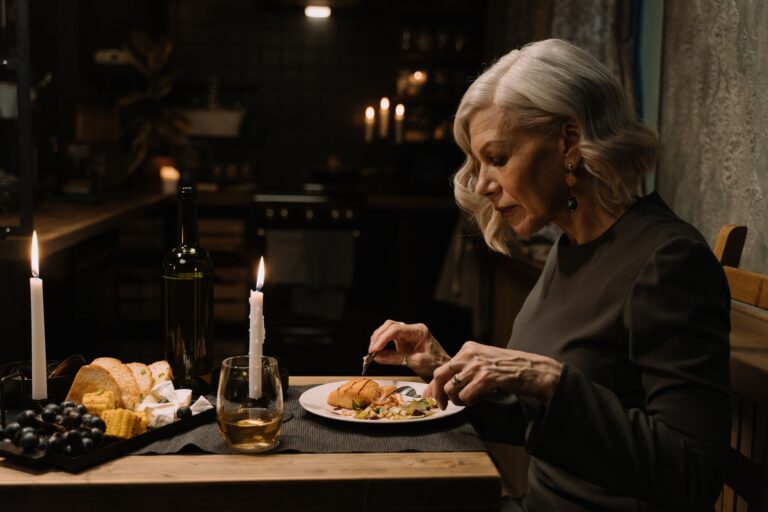
Last month I ate dinner at The Millstone with Donna, in the corner booth by the water wheel window, the same booth Richard and I sat in thirty years ago with cash counted out of an envelope in the parking lot. Priscilla brought the bread basket without being asked, pretzel rolls and plain, out of old habit neither of us bothered to correct. I ordered the same bottle of Riesling this restaurant has kept in stock, I am fairly certain, for no other reason than a marriage that no longer exists.
I sat in that booth and understood, clearly, for the first time in a long while, that the table itself was never the thing worth saving. It was never the wine, or the water wheel turning behind the glass, or even the thirty years of habit that had made it feel permanent. What mattered was being the kind of woman who checks the receipt when something stops adding up, who reads the whole account instead of trusting the summary she has been handed, and who is still, all these months later, sitting upright in her own name, at her own table, in the one town that never once stopped being hers.
This story is a dramatization. Names, characters, and details are invented, and any resemblance to real people or events is coincidental.