The Beach House That Was Mine
I want you to understand something before I tell you what happened on that driveway in Southport, because if you don’t understand this part, the rest of it won’t make sense. That beach house was never about the ocean. It was about the first thing in seventy years of living that nobody could take from me, sell out from under me, or tell me I didn’t deserve.
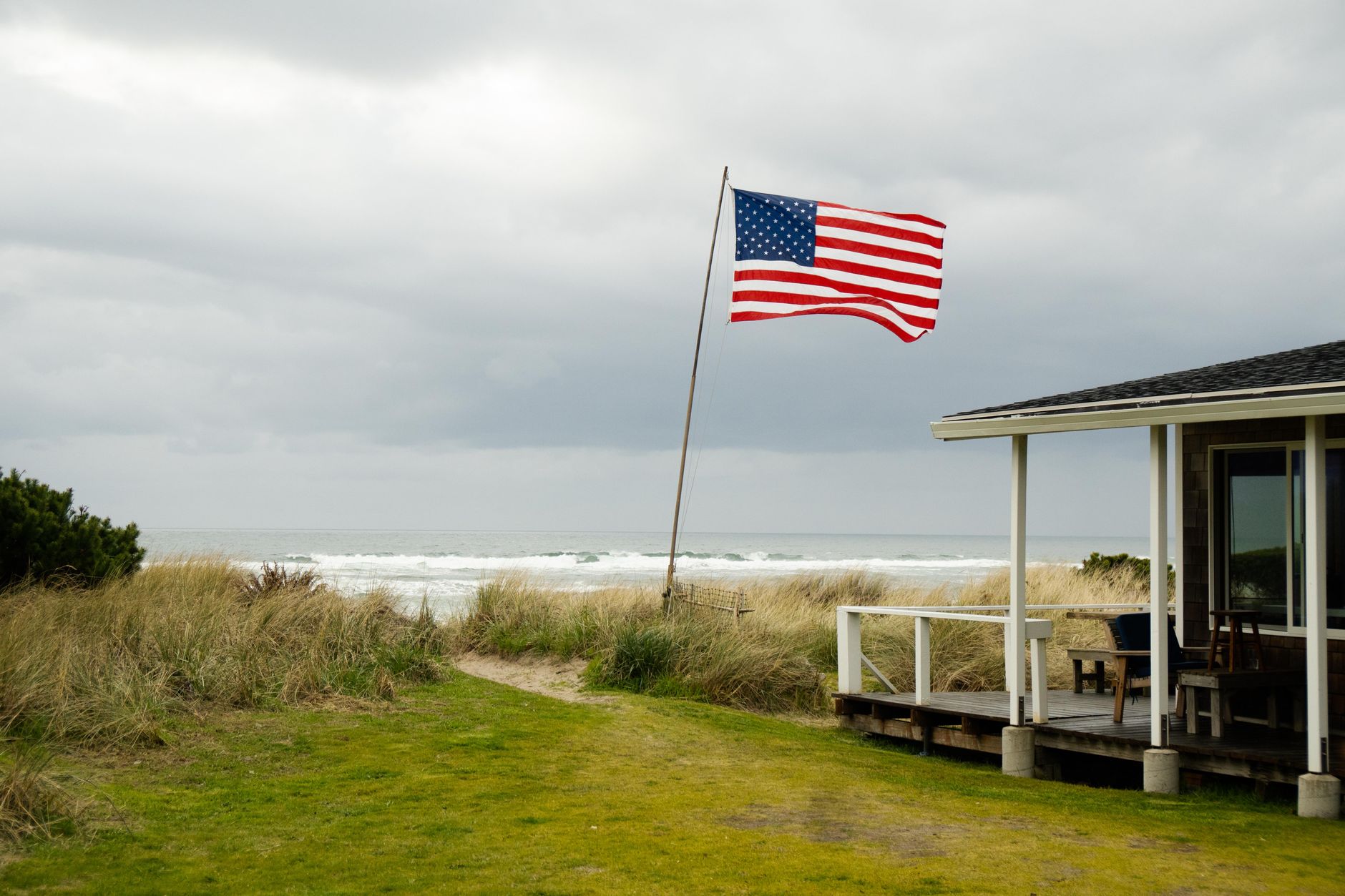
I bought it four years after my husband Frank died, and I paid for it the way I paid for everything in my life, one careful stitch at a time. I’ve been a seamstress since I was seventeen years old. Hemming dresses for the Baptist church ladies, altering wedding gowns for brides who cried in my fitting room, patching Carhartt jackets for men who worked the shrimp boats down at the docks and couldn’t afford a new one. I said yes to every job. I said yes when my back ached and yes when my eyes were too tired to thread a needle straight and yes on Christmas Eve because a woman needed her daughter’s dress hemmed by morning. Forty years of yeses added up to a little cedar-shake cottage three blocks off the water, with a wraparound porch and faded blue ceramic pots I filled with geraniums every spring.
I remember signing the papers at the title company, my hands shaking so bad the notary asked if I was feeling all right. I told her I was fine. What I didn’t tell her was that in seventy years, nothing had ever had my name on it and only my name. Not the house Frank and I raised Robert in, that was both our names, and rightfully so. Not the sewing shop, which I rented for thirty-one years and never owned a square inch of. This was different. This was mine.
Every corner of that cottage held a piece of my life. The chairs Frank refinished the summer before the cancer took him. The seashell lamp he bought me at a flea market in Wilmington because he said it looked like something I’d pick out myself, and he was right. The quilt on the guest room bed, stitched from forty years of scrap fabric, wedding gown lace next to flannel shirt next to a swatch of the dress I wore to Robert’s college graduation. That quilt was practically a diary. It was the only place left on this earth where nobody expected one more thing from me.
So when I turned off the county road that Friday afternoon in June, tired from the four-hour drive, looking forward to nothing more complicated than tea in my chipped mug and the sound of the tide, and saw the driveway, something in my stomach dropped before I even understood what I was looking at.
Cars. Not one, not two. An entire row of them, some nosed up onto the grass, one parked half in the sand like whoever drove it didn’t think the rules applied to them. Music thumped out through the open windows loud enough to rattle the porch chimes Frank had hung the summer before he passed. Children I had never laid eyes on were tearing through my flower beds, the same beds I had spent all of April on my knees bringing back from a hard winter. The air smelled like charcoal smoke, sunscreen, and something burning that I would later learn was a pan of hush puppies nobody was watching.
And there, up on my deck, wearing my apron, the one with the faded rooster print that I’d had since 1994, stood my daughter-in-law Megan. A drink in her hand. Chin up like she was posing for a magazine spread titled “Woman Who Belongs Here.”
She saw me get out of the car. She did not look surprised. She did not look embarrassed. She looked at me the way you’d look at a delivery truck blocking your driveway, an inconvenience, nothing more, and then she turned to the crowd of people on my deck, people I had never met in my life, and she laughed.
“Why is she here? There’s no room for her!”
For one full second I thought I had misheard her over the music. My fingers tightened around my car keys hard enough to leave marks in my palm. Then I looked around at the faces on my deck and in my yard, and I realized every single one of them was looking back at me like I was the intruder. Like I was the one who didn’t belong on a piece of property that had my name, and only my name, on the deed sitting in a fireproof box in my hallway closet three hundred miles away.
Behind Megan, her mother had claimed my porch rocker, feet up on the railing Frank had sanded and repainted twice. Her sister had her sandy feet propped on my coffee table. Two men I’d never seen were hauling coolers through my front door like movers. Someone had set a baby down on my good couch, the one with the hand-embroidered throw pillows. Beach towels, grocery bags, and half-eaten plates of food were scattered across a porch I had swept clean not three weeks earlier.
My refuge had been occupied like a hostile army had rolled through it. And I hadn’t even set my suitcase down yet.
“Megan,” I said, and I made myself keep my voice level, “this is my house.”
She laughed again, sharper this time, the kind of laugh that isn’t really a laugh at all.
“Robert said we could stay,” she said. “You’re barely ever here anyway. And honestly, you’d probably just complain the whole time and ruin everybody’s mood.”
She called it family time. She said the word family like it was a wall she could hide behind, and maybe in her mind it was. I stood there on my own front walk holding a suitcase while a yard full of strangers looked through me like I was a stain on the welcome mat.
A boy, maybe eight or nine, ran straight through the middle of my newly planted zinnias, snapping two of them clean at the stem. Somebody on the balcony lit a cigarette and flicked the ash onto the deck I’d had refinished the year before. Inside, that burning smell got stronger, drifting out through my own screen door from my own kitchen, the same kitchen where I had once stood alone at two in the morning after Frank’s funeral, learning what it felt like to be the only person left in a silent house.
“Where’s Robert?” I asked.
She rolled her eyes like the question bored her.
“At work,” she said. “Unlike some people, he actually has responsibilities.”
Then she smiled. It wasn’t a warm smile. It was cold, and it was deliberate, and I understood in that moment she had rehearsed this. Maybe not the exact words, but the posture of it, the certainty that she could stand on my deck and make me feel like a trespasser on my own land.
“Every room’s taken,” she said. “So maybe you should just go find yourself a hotel.”
My own daughter-in-law was throwing me out of my own home, in front of a driveway full of people who didn’t know my name.
A teenage boy leaning against the railing muttered, not quietly enough, “Why doesn’t she just get a hotel,” and a couple of the adults around him actually laughed. Actually laughed, at a seventy-year-old woman standing in her own driveway with a suitcase.
That was the moment something in me went still. Not angry, not yet. Still. The kind of still you learn after you’ve buried a husband and rebuilt a life out of thread and stubbornness. I had a choice in that second. I could have argued. I could have pulled the folder of paperwork from my glove box, the deed with my name typed clean across the top, and made a scene that would have given every person on that deck a story to tell for years. Some petty part of me wanted exactly that.
Instead, I smiled. A small, quiet smile, the kind you give a customer who’s about to get a very expensive surprise when the bill comes due.
“I understand,” I said, calm as still water.
Megan’s whole face lit up with satisfaction. She thought she had won. She thought my quiet meant I was folding, the way she probably assumed I folded every time Robert didn’t stand up for me, every holiday I let a slight go so we could keep the peace. What she didn’t understand, what none of them understood, is that a woman who survives losing her husband and rebuilding a life stitch by stitch does not confuse quiet with weak. Loss teaches you plenty of things. Mostly it teaches you patience, and it teaches you exactly how long you’re willing to wait for the right moment.
I turned around, walked my suitcase back to the car, and drove away without another word.
In the rearview mirror I watched her lift her drink toward the crowd like she’d just closed a business deal. She thought she’d won the whole thing in under two minutes.
I wasn’t driving away defeated. I was driving away to make one call. The kind of call that brings paperwork, and authority, and consequences crashing down on a person all at once, quietly, the way a tide comes in without anybody noticing until their sandcastle is gone.
I didn’t get far. Half a mile down, past the boat ramp, there’s a little marina café called The Reel Deal, where I’ve been getting a decaf and a slice of key lime pie every visit since I bought the cottage. And sitting at his usual table on the porch, same as every Friday afternoon of his retired life, was Hollis Pruitt.
Hollis had been a Brunswick County sheriff’s deputy for twenty-six years before he retired, and he’d lived two doors down from my cottage even longer than that. He’d kept an eye on the place whenever I was back home dealing with the shop, brought my trash cans up from the curb, mowed a strip of my yard along with his own because he said an uneven line “offended him personally.” He was the closest thing to family I had in that town who wasn’t blood.
He took one look at my face when I sat down across from him and set his coffee cup down slow.
“What happened.”
I told him. All of it, the cars, the music, the apron, Megan’s laugh, the boy’s comment, the whole ugly scene. My voice shook once, right around the part where she told me to get a hotel, and then it steadied right back out, because Hollis has a way of listening that makes you feel like whatever’s coming next is going to be handled properly.
“That’s your house,” he said. It wasn’t a question. “Deed’s in your name alone?”
“Since the day I bought it. Frank’s been gone nine years, and it was never his to begin with.”
Hollis nodded slowly, the way a man nods when he’s already three steps down a road you haven’t gotten to yet.
“Then legally, every person on that property right now, other than you, is there without the owner’s consent. That’s trespassing, plain and simple, no matter what your son told his wife on the phone. Robert doesn’t own that house. He’s not on the deed. He doesn’t get to grant permission for a single soul to be there, let alone a couple dozen strangers.”
“I don’t want to send my own family to jail, Hollis.”
“Nobody said jail. What you want,” he said, tapping the table for emphasis, “is a documented trespass notice. You call the non-emergency line, you tell dispatch you’re the sole owner of the property, you did not authorize any occupants, and you’d like a welfare check and a trespass advisory issued. A deputy shows up, checks names against the deed, and every person in that house who isn’t you gets asked to leave the premises, on paper, on record. It’s not dramatic. It’s quiet. It’s exactly the kind of quiet you just told me you’re good at.”
He also mentioned something I hadn’t even thought of. Brunswick County had passed a short-term-gathering ordinance two years back, after a rash of rowdy rental parties along the coast, requiring any residence hosting more than fifteen non-resident guests overnight to have a permit on file with the county. My little three-bedroom cottage, built for two people and a guest, currently had what looked like twenty or more people crammed inside it, none of them permitted, none of them residents, and the homeowner, me, hadn’t authorized a single one of them to set foot past the porch steps.
“That’s not even about Megan being rude,” Hollis said. “That’s a county code violation sitting on your property with your name attached to the deed. If a neighbor complains about the noise, and somebody surely will before dark, code enforcement gets involved whether you call anybody or not. Might as well be the one steering the ship instead of getting run over by it.”
I sat on that porch with my pie going soft in the heat and I thought about the deputy who would knock on my own front door, and about my son finding out his wife had been playing hostess to a party our own family wasn’t invited to, at a house Robert had no right to lend out in the first place. I thought about Frank, and how he used to say the quietest people in a room usually had the sharpest knives, they just didn’t feel the need to show them off.
I made the call.
Dispatch was calm, businesslike, took down my information, the address, my full name matching the deed, confirmed I was requesting a welfare and trespass check and not an emergency response. She told me a deputy would be out within the hour, likely less on a Friday before the dinner rush of calls started.
Then I called my homeowner’s insurance agent, a woman named Patrice I’d worked with for six years, and told her what was happening. Patrice went quiet for a second and then explained, gently but plainly, that my policy explicitly excluded coverage for injuries or property damage caused by unauthorized occupants, meaning if that cigarette on my balcony started a fire, if a child fell off my dock, if anything at all went wrong with two dozen uninsured strangers in my home, I could be looking at real liability with zero coverage behind me. She said she’d note the incident on file, effective that afternoon, in case anything happened before those people left.
Paperwork. Authority. Consequences, quietly, all at once. Exactly like I’d told myself in the car.
I stayed at The Reel Deal with Hollis for the better part of two hours, nursing a second cup of decaf, watching boats come in off the water while my phone sat face up on the table between us. Around five thirty, it lit up. A text from a neighbor down the street, a woman named Sherry Ann who I’d waved to a hundred times over the years but never gotten to know well, until that day.
“Sheriff’s car just pulled up at your place. Wanted you to know.”
Ten minutes later, another text, this one longer, because Sherry Ann had wandered out to her own mailbox to get a better look, the way small towns do.
“Deputy’s talking to a woman on the porch. Looks like a lot of arguing. Some folks are already loading coolers back into cars.”
I found out the rest later, pieced together from Hollis, from Sherry Ann, and eventually from Robert himself. The deputy who responded, a young man named Officer Daniel Cruz, had knocked and asked to speak with the homeowner. Megan told him she was the homeowner’s daughter-in-law and that everything was fine. Officer Cruz asked to see identification for the property owner. Megan did not have any, because the property owner was forty minutes away eating pie with a retired deputy.
Cruz explained, calmly and by the book, that per the registered owner’s statement, none of the current occupants had authorization to be on the premises, and per county code, any gathering of this size required a permit that had not been filed. He advised everyone that they had until eight o’clock that evening to vacate voluntarily, or the matter would proceed as a formal trespass, which could result in citations. He also noted, out loud, in front of Megan’s mother and sister and God knows who else, that the homeowner’s insurance did not currently extend to any of them, meaning if anyone got hurt on the property between now and eight, they’d be doing it entirely at their own risk and expense.
That’s when, according to Sherry Ann, the mood on my deck changed rather quickly from a beach party to something considerably less festive.
Megan called Robert. I know this because Robert called me forty minutes later, and I could hear in his voice that whatever Megan told him had scared him a good deal more than it had informed him.
“Mom, what is going on, Megan’s saying the police showed up and now everyone has to leave, is everything okay, are you okay?”
I told him I was fine. I told him I was sitting at The Reel Deal with Hollis, having a very pleasant afternoon, actually, and that everything happening at the house was simply the natural result of my daughter-in-law inviting a party of strangers into a home she does not own, without asking the one person whose name is on the deed.
The line went quiet for a long moment.
“She told me you knew,” he said finally, and his voice had gone smaller. “She told me you’d already said it was fine, that you weren’t planning to come down this weekend anyway.”
“Robert, I told you two weeks ago at Sunday dinner that I was driving down Friday. You were sitting right across the table.”
Another silence, longer this time. I let it sit there. I have found, in seventy years, that silence does more honest work than accusation ever does. Robert has always been a good boy underneath, a good man, but he has never once in his marriage told his wife no when telling her no would have cost him a difficult evening. He’d rather smooth a thing over than stand on it, and I raised him better than that, though clearly not well enough.
“I’m leaving work right now,” he said. “I’m driving down. Mom, I am so sorry, I didn’t know, I swear to you I didn’t know it had gotten like this.”
“I believe you didn’t know how bad it got,” I said. “I’m less sure you didn’t know it was happening at all.”
He didn’t argue with that. That told me more than anything he could have said.
By the time Robert made the four-hour drive from Charlotte, it was well past nine at night. Hollis and I had long since finished our pie, and I’d taken up a spot on Hollis’s own porch a few doors down from my cottage, watching from a comfortable distance as the driveway I’d pulled into that afternoon slowly, grudgingly, emptied itself of cars.
Megan’s mother left first, I’m told, muttering something about how she’d never been treated so rudely in her life, apparently unaware of the irony sitting right on top of that statement. Megan’s sister followed not long after, hauling a cooler that clanked with more bottles going out than groceries had gone in. The teenager who’d made the hotel comment left with his family sometime around seven, sullen and sunburned. By eight fifteen, the only car left in my driveway besides Megan’s own was hers.
Robert pulled in at a quarter past nine, and even from Hollis’s porch I could see the way he sat in his car for a full minute before getting out, the way a man sits when he’s steeling himself for a conversation he already knows he’s going to lose.
I let him find me instead of the other way around. He walked the two doors down to Hollis’s porch with his shoulders hunched like the ocean air itself had gotten heavier, and when he saw me sitting there in the porch swing, a blanket over my knees despite the June warmth because I still get cold in the evenings the way you do at seventy, his face just broke.
“Mom.” That was all he said at first. Just that.
I patted the swing beside me, and he sat down heavy, like his legs had finally given out from carrying something all afternoon.
“I should have told her no,” he said. “Weeks ago, when she first brought up wanting to bring her whole family down for the weekend. I should have told her the house is yours, that she needed to ask you directly, that it wasn’t mine to offer. I just, I didn’t want the fight it would have caused at home. It felt easier to let her think it was settled and figure it out later.”
“And here we are,” I said. “Later.”
He put his face in his hands for a second, and when he looked back up, his eyes were wet in the porch light. “She called me while I was driving. She’s furious. She’s saying I need to fix this, that you overreacted, that calling the police on your own family was, her words, unhinged.”
I felt that word land the way it was meant to, like a slap. I didn’t flinch, though. I’ve been called worse by better people.
“Robert, I want you to listen to me carefully, because I am only going to say this once. I did not call the police on my family. I called the police on twenty strangers who were occupying my private residence without my knowledge or consent, while your wife stood on my deck, in my apron, and told a crowd of people there was no room in my own house for me. She laughed while she said it. A teenage boy told me to get a hotel, and people laughed at that too. Nobody in that crowd defended me. Not one person said, wait, isn’t this her house.”
“I know,” he said, and his voice cracked. “I know, Mom, I’m not defending what she did, I promise you I’m not. I just don’t know how to fix this without it blowing our whole marriage apart.”
“That,” I said gently, “is not actually my problem to solve for you. It’s hers to answer for, and yours to decide what you’re willing to accept in a wife going forward. What I will tell you is this. I am seventy years old. I buried your father. I built that little house with forty years of other people’s wedding dresses and Sunday suits, one stitch at a time, because it was the one thing in this world nobody could take a share of just by being loud enough or entitled enough to claim it. I will not spend whatever years I have left being told there’s no room for me in the one place that is entirely, legally, and completely mine.”
Robert didn’t say anything for a long moment. Down the street, Megan’s silhouette moved past the lit windows of my own cottage, pacing, phone pressed to her ear, probably still recruiting sympathy from her mother or her sister. Robert watched her too, and something in his face changed while he watched, some final piece of denial finally giving way.
“I’m going to go talk to her,” he said, standing up slow. “And Mom, I want you to hear me say it plain. You’re not staying anywhere else tonight. That’s your house. If anyone’s leaving that cottage tonight, it isn’t going to be you.”
I watched my son walk down the road toward my own front porch light, and for the first time all day, something in my chest loosened.
What happened between Robert and Megan that night, the particulars of it, are theirs to carry, not mine to spread around. I will tell you that it was a long, quiet conversation on my own front steps, one that went on well past eleven, with the tide coming in steady in the background the whole time, indifferent to all of it the way the ocean always is to whatever mess we humans make of an afternoon. I sat on Hollis’s porch with a fresh cup of decaf and let them have it.
Around midnight, Robert came to get me. He walked me the two doors down himself, carried my suitcase without being asked, and when we got to the porch, Megan was standing there, arms wrapped around herself, looking smaller than she had all day. The apron was gone. The drink was gone. What was left was a woman who had spent the last several hours learning that a quiet seventy-year-old widow with a deed in a fireproof box is not, in fact, someone without power.
“I’m sorry,” she said, and I’ll give her this much, she looked me in the eye when she said it, which is more than she’d managed all afternoon. “I don’t have an excuse. I thought, I don’t know what I thought. I thought it was Robert’s house too, and that made it fair game, and I didn’t think about what it would look like to actually stand here and say what I said to you. I heard myself say it back, on the recording.”
I raised an eyebrow at that. Robert had the good sense to look sheepish. “Officer Cruz’s body camera,” he explained. “Megan asked the department for a copy of the incident report this evening. It’s, well. It’s all on there.”
There is a particular kind of humbling that comes from hearing your own cruelty played back to you in an officer’s monotone voice, timestamped and official, filed away in a county database forever. I didn’t say anything to that. I let the silence sit there and do its work again.
“I’d like to help you clean up,” Megan said. “Tonight, if that’s all right. And I understand if you don’t want us back here, not this summer, maybe not for a long while. I just wanted you to know I’m not going to pretend today didn’t happen.”
I looked past her, through my own screen door, at the kitchen where the smell of burnt hush puppies still hung faint in the air, at my grandmother’s, no, my own dining table pushed crooked against the wall, at towels and cans and the debris of a party I never agreed to host. I thought about the quilt in the guest room, the one made of forty years of scraps, and whether strangers had slept under it.
“You can help me clean tonight,” I said. “That’s a start. It isn’t the whole thing, but it’s a start.”
We worked past two in the morning, the three of us, Robert hauling trash bags to the curb, Megan on her hands and knees scrubbing a wine stain out of my rug while I straightened the porch rocker back where it belonged and gathered the scattered towels into a basket. Nobody said much. There wasn’t much left to say that hadn’t already been said on those front steps. But something in the working together, the plain physical labor of putting a home back the way it was supposed to be, said more than another apology could have.
The guest room quilt, it turned out, hadn’t been touched. Nobody had slept in there. Small mercy, but I’ll take the ones I’m given.
I did not let Megan’s family come back to the beach house that summer, or the one after. That boundary held, and Robert, to his credit, held it with me rather than against me, which told me something had truly shifted in him and not just in the moment of getting caught. He started calling me before any plan involving my house got made, every single time, no exceptions, and when Megan’s mother apparently suggested a repeat visit the following June, Robert told her, in Megan’s retelling of it to me later, that the beach house belonged to his mother and that his mother’s answer was the only one that mattered.
I still make the drive down to Southport every few weeks. Hollis still keeps his eye on the place and still mows that uneven strip of my yard he says offends him. The geraniums came back the following spring, a little worse for the trampling, but they came back, because most living things do if you give them enough patience and enough water.
I sit on that porch most evenings now with my chipped mug of tea, and I think about the woman who stood there in June and told a crowd of strangers there was no room for me. I think about how certain she was that quiet meant defeated. I think about Frank, who used to tell me that the people who mistake gentleness for weakness are always the ones most surprised when the bill finally comes due.
There was room for me. There was always room for me. It just took one quiet phone call, and an afternoon of paperwork, and the truth catching up to everyone who’d chosen not to look at it, for the rest of the world to remember whose name was on the deed.
That house is still mine. Every board, every chair, every stitch of that guest room quilt. And these days, when I turn onto that county road and see my own cottage waiting at the end of it, porch light on, geraniums blooming in their faded blue pots, nobody has to tell me I belong there.
I already know.