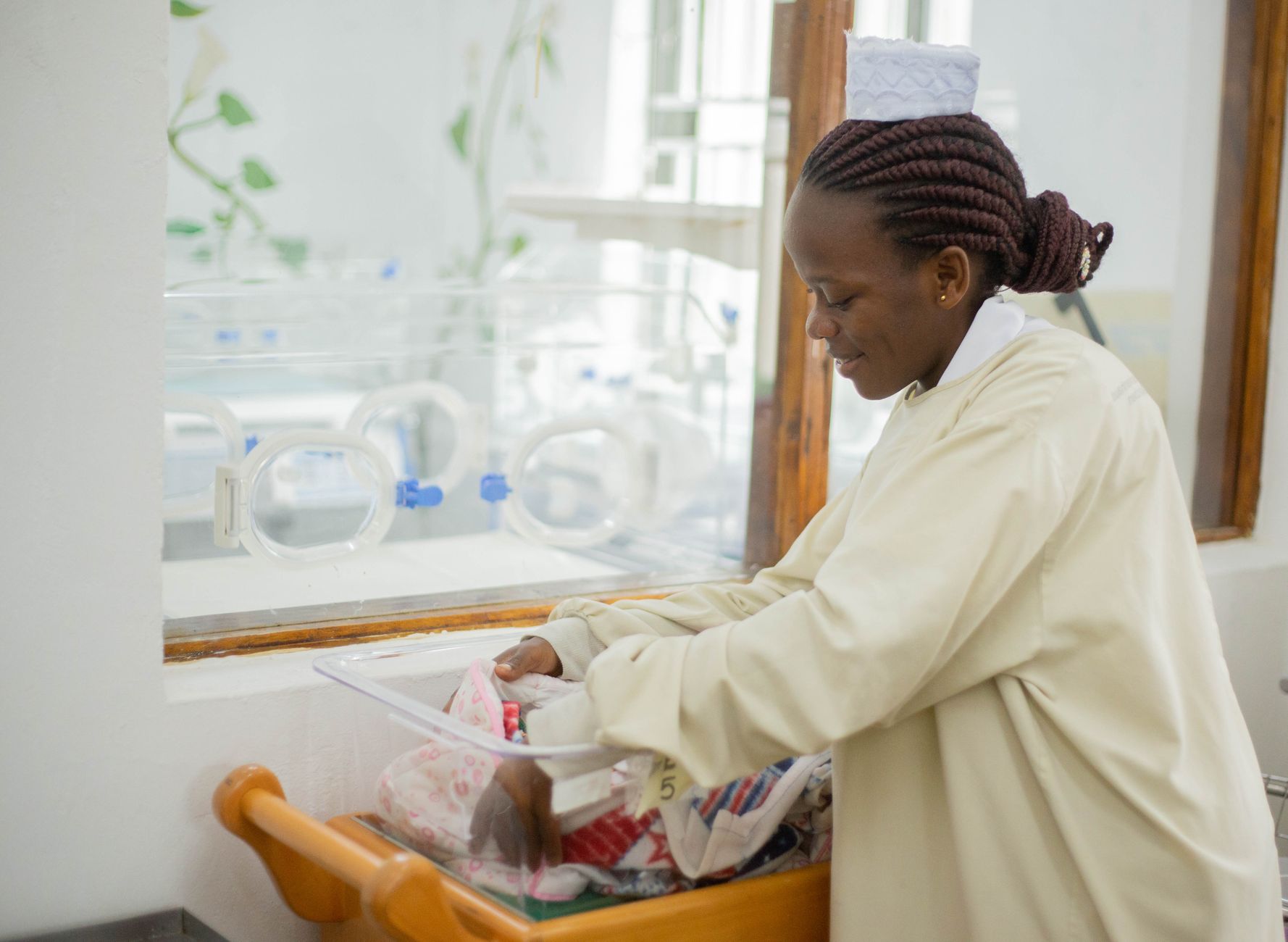
The Girl Who Whispered My Old Name
A terrified girl gripped my hand at two in the morning and gasped a name I hadn’t heard in twenty years.
Mrs. Renfro.
For one full second I thought I had misheard her through the noise of the monitors and her own ragged breathing. Nobody has called me that since I hung up my teaching badge and walked out of a classroom for the last time. Not my ex husband, not my grown son, not one of the thousand patients who have passed through Labor and Delivery at Millbrook Regional since I traded a red pen for a stethoscope. I almost let it go. Women in hard labor say all kinds of things. They call out for their mothers, for God, for men who left them years ago. I have heard a woman recite the Pledge of Allegiance through a contraction. Strange words are just the sound pain makes sometimes.
Then I looked down and actually saw her face, pale and slick under the delivery room lights, dark hair stuck to her forehead, and the floor seemed to tilt under my shoes.
Ashley.
Not a patient chart. Not a stranger having a bad night. Ashley, from the third row of second period English, twenty years and a lifetime ago, back when I was still Mrs. Renfro and she was thirteen years old with a coat two sizes too big and a pencil chewed down to a nub because she was too proud to ask for a new one.
I taught eighth grade English for eleven years before I became a nurse. Ashley never raised her hand in my class. She was the kind of quiet that isn’t shyness, it’s vigilance, the quiet of a kid who has learned that being noticed is not always safe. But she wrote the truest essays I ever graded in my career, and then she’d hand them to me and immediately act like she hadn’t meant a single word of them, like she could take it back just by looking bored.
There was a Tuesday in September, weeks before any of this, when a cold snap caught the whole school off guard and half the kids showed up without proper coats. Ashley wore the same too big coat every single day regardless of weather, but that Tuesday I noticed her sleeves were pushed hard past her wrists even though the room was warm, and when I set a granola bar on her desk on my way past, the kind of small thing I did for kids who looked hungry without ever making a production of it, she flinched like I’d raised my hand instead of just setting something down. She ate it anyway, in three fast bites, and would not meet my eyes for the rest of the period. I started letting her eat lunch in my room after that, officially because she was “helping me grade quizzes,” unofficially because I had noticed she sat alone at the very end of a long cafeteria table, and because the twenty five minutes she spent stapling papers and not talking much was, I suspected, the calmest quarter hour of her whole day. She never explained the wrists. I never asked. That is the particular helplessness of teaching: you collect information one small unexplained thing at a time, and you are never handed enough of it to be certain, only enough to be worried.
That October, partway through the semester, she stopped coming to school. The office told me she’d transferred, no forwarding address on file. I wrote her a letter anyway, because I couldn’t stand the thought of her just vanishing without one more person telling her she mattered, and I mailed it to the only address the school had for her. It came back three weeks later, stamped in red ink. Undeliverable.
I kept that letter in my desk drawer through two more school years before I finally threw it away and told myself, in the flat, tired way you tell yourself the worst things, that I had failed her. I told myself that every single September when a new crop of thirteen year olds filed into my room and none of them, not one, was ever going to be her.
Twenty years later she was on my delivery table. Thirty three years old now, no ring on her hand, nobody pacing the hallway outside, nobody at all. Just her, a hospital gown, and a grip on my fingers that could have cracked a walnut.
“You’re not going anywhere,” I told her, the same voice I would have used on any patient, except my own heart was slamming against my ribs. “I’ve got you. I’m right here.”
I recognized the particular fear on her face. I’d seen a thinner version of it before, across a classroom, in a girl who flinched when the door slammed and always sat closest to the exit. It’s the fear of somebody who learned early that people leave, that nobody actually stays. So I stayed. Four hours of it, through every contraction, counting her breaths out loud, holding the sides of her face when she said she couldn’t do this anymore. Somewhere around one in the morning she stopped calling me nurse altogether and went back to calling me by a name that belonged to a classroom that hadn’t existed in fifteen years, back when I still had a rubber name stamp and a bulletin board of book reports and absolutely no idea how much a person could carry and still show up for something.
By midnight she was fully dilated and pushing, and by then I had stopped even pretending, to myself, that this was routine. Every time she caught her breath between contractions she looked straight at me instead of at the ceiling or her own knees the way most patients do, like she needed to keep confirming I had not left the room. Her blood pressure crept during one long push, and for about ninety seconds the two of us and the doctor moved fast and wordless the way you do when you have run a drill enough times that your hands know it before your brain catches up. It settled. Ashley never knew how close that moment came to being a harder night, and I did not tell her, not then. I just leaned down close to her ear and said the only thing that mattered, that she was doing exactly right, that her baby was almost here, and she nodded like she believed me completely, the same way I remembered her nodding at thirteen years old whenever I told her an essay was good enough to read out loud, needing the reassurance and flinching from it in the very same breath.
My charge nurse, Debbie, caught my eye over Ashley’s shoulder and mouthed the words, do you know her. I just nodded. I couldn’t say the rest of it out loud with a woman in transition three feet away, gripping my hand like it was the only solid thing left in the room.
At 2:14 in the morning, Ashley had a daughter.
The room went from chaos to something closer to church in about four seconds flat, the way it always does. Debbie laid the baby on Ashley’s chest, still wet, wrapped loose in a blanket so pink it looked lit from the inside, and Ashley made a sound I have heard a hundred times in that room and never once gotten used to, something between a sob and a laugh that comes straight out of the middle of a person.
Then she looked up at me. Really looked, the way you look at someone once you’re finally done being afraid of them leaving.
“I knew it was you,” she said, her voice wrecked and quiet. “The second I heard your voice out in the hallway, before you even walked in. I knew.”
I laughed, mostly because I didn’t know what else to do with my face. “Ashley, honey, I haven’t taught in fifteen years. How would you even know I worked here.”
She didn’t answer that. Not yet. She just held onto my hand, her daughter asleep on her chest, and looked at me with an expression I hadn’t seen since she used to hand me those essays like she was passing me a live grenade, half proud, half terrified I would actually read them.
Debbie was still standing at the foot of the bed with her hand pressed flat against her own chest, like she was trying to keep something in.
For twenty years I believed I had lost that girl completely, that whatever happened in her house that October, I never found out in time to do a single thing about it, and that not knowing was going to sit inside me forever like a stone I’d swallowed and could never quite cough back up. I was wrong about the losing part. I just didn’t know it yet, standing there at two in the morning with her hand in mine and her daughter’s first cry still hanging in the air over both of us.
But to understand what she told me next, once the room finally emptied out and it was only the two of us and the baby left, you have to go back to that classroom. Because I did not save her by accident, and I did not fail her the way I spent twenty years believing I did. I just did not learn the truth of either thing until she was thirty three years old and squeezing the life out of my hand.
I remember the exact week I started worrying about Ashley for real. We were three weeks into a personal narrative unit, and I’d given the class a prompt I’d used a dozen times before without a second thought: write about the place where you feel safest.
Most thirteen year olds wrote about their bedrooms, or their grandma’s kitchen, or a tree fort, or a dog. Ashley turned in two handwritten pages about my classroom.
She wrote about the smell of dry erase markers and the hum of the ancient window unit, about how second period was the only fifty minutes of her day when nobody needed anything from her, when nobody’s mood could turn on a dime and take the whole house down with it. She never named a name. She never said a single explicit thing a mandated reporter could have taken straight to a caseworker and called it proof. That’s the cruelty of how kids like her write it, careful and coded, testing the water with one toe before deciding whether it’s safe to put a whole foot in. But I had read enough of those essays over eleven years to know the shape of a house I was never going to be invited inside of. Long sleeves in September that never once came off, not even during the gym unit when the room hit ninety degrees. A wince if I came up behind her desk too quickly. An apology reflex so fast and so automatic that she’d say sorry before I’d even finished a sentence, like she was bracing for it to be about her.
I did not do nothing. I want that said plainly, because for twenty years the guilt convinced me I had, and guilt is a liar that only tells you the parts of the story that hurt.
I went to our school counselor, a steady, no nonsense woman named Sandra Alvey, and I laid out everything I had. Not enough for handcuffs, we both agreed on that. But enough to be worth a call. Sandra made it that same afternoon, to the state child welfare hotline, the kind of call that goes into a system and mostly just sits there, waiting its turn behind a hundred other calls just like it. I remember asking her three separate times over the following two weeks whether anyone had followed up. She kept telling me these things take time. I remember hating that answer with my whole chest and having absolutely nothing better to offer in its place.
Ten days after that phone call, Ashley stopped coming to school.
The office called it a transfer. No forwarding address, no paperwork request from a new district, nothing. Just gone, the way water goes when you pull the plug, all at once and then completely silent. I told myself every possible story to make that silence survivable. Maybe the family moved for a job. Maybe it had nothing to do with Sandra’s call at all. But underneath every one of those stories sat the same ugly certainty I could never quite talk myself out of: that a thirteen year old girl had trusted me enough to write two pages about the one place in her life that felt safe, and less than two weeks after I acted on what she’d handed me, she disappeared off the face of the earth and I never heard another word.
I left teaching five years after that, and Ashley wasn’t the only reason, but she was the reason underneath all the other reasons. I had two more cases like hers in those final years, kids I worried over and reported and then simply lost track of forever, because that is how the system so often works when you are standing outside it. A teacher plants a seed and then the door closes and you never get to see whether anything grew. I wanted, more than I have ever wanted anything in my working life, to be able to stay in the room. To see the outcome. To hold a hand all the way through instead of handing a worry off to a hotline and hoping. Nursing school felt less like a career change and more like an apology I was making to a version of myself who couldn’t stand not knowing anymore. I picked Labor and Delivery on purpose, out of every specialty they offered. It is the one place in a hospital where you get to stay with a person through the absolute worst and the absolute best of a single night, and then you get to watch, with your own eyes, exactly how the story ends. At least for that one night, nobody I am holding onto just vanishes on me again.
Which is, I understand now, the exact reason God or fate or plain dumb coincidence put me in that delivery room at one in the morning with Ashley’s fingers laced through mine.
She told me the rest of it in pieces, some of it before the sun came up and some of it two days later when I came by her recovery room on my day off just to sit with her a while, because once I found her again I was not about to let her walk back out of my life a second time without a fight.
The essay had not been wrong. I’ll say that first, because some part of me needed to hear it confirmed even though I’d have bet my life on it twenty years earlier. Her mother, Denise, had been with a man named Curt for about two years by then, and Curt was the kind of man who was fine, even charming, right up until he wasn’t, and the wasn’t had been getting worse and closer together all that fall. Ashley never used the word abuse to me, not at thirteen and not now. She used smaller, more precise words, the kind a person only reaches for when they’ve lived the exact texture of the thing. Careful. Quiet on his bad nights. Good at making it her mother’s fault, and eventually, good at making it feel like it was Ashley’s fault too, for existing loudly enough to be noticed.
She told me about one particular evening, the week before Sandra made that call, when Curt had come home late and short tempered over something that had nothing to do with either girl, and how she and her sister had learned to read the sound of his key in the door the way sailors read weather, and to disappear into their room without needing to be told twice. She said the worst part was never really about what happened on the bad nights. It was the guessing, every single day, which version of him was going to walk through that door, and organizing her whole thirteen year old self around being small enough and quiet enough not to be the thing that tipped the scale.
Sandra’s call did exactly what a call like that is supposed to do, even though I spent twenty years assuming it had done nothing at all. A caseworker showed up at the house about a week and a half after Sandra made the report, unannounced, the way those visits work. Curt was furious and terrified in equal measure, certain someone at the school had talked, and he spent the next several days needling Denise about who could have said something, which side of her family, which neighbor, which teacher. Denise had been quietly planning to leave for months by then, squirreling away twenty dollars here and there in an envelope taped behind the dryer, too scared to actually go. The caseworker’s visit didn’t just frighten Curt, it terrified Denise into finally believing her daughters were in real, immediate danger and that waiting for the perfect moment to leave was itself the danger. Eight days after that visit, on a night Curt was working a late shift at the plant, Denise put both girls and four garbage bags of clothes into a fifteen year old Buick and drove three counties over to a domestic violence shelter that didn’t ask questions and didn’t keep a public record of who came through the door.
Ashley told me the actual leaving in her own words, two days later, staring somewhere past my shoulder the way people do when a memory is thirty years old and five minutes old at the exact same time. “My sister and I thought we were in trouble,” she said. “Mom woke us up and just kept saying pack a bag, quiet, quiet, don’t turn on the light. I remember the car wouldn’t start on the first try and I thought, this is it, this is the night it all falls apart for real. And then it caught, and we just drove. Nobody said anything for almost an hour. I watched our street go by out the back window and I kept thinking about your classroom, actually, of all things, wondering if I’d ever get to sit in a room like that again.” She told me the shelter gave her sister a stuffed rabbit with one chewed ear that first night, and that she has no idea to this day what happened to that rabbit, and that some nights, even at thirty three, she catches herself wanting to cry over a missing stuffed animal instead of everything else, because the everything else is still too big to hold straight on.
That is why my letter came back stamped undeliverable. There was no address to deliver it to. Denise had pulled the girls from the district by phone from a pay phone outside a gas station, giving the office nothing, on the direct instruction of a shelter advocate who told her that any paper trail, any forwarding address at all, was a thread Curt could pull on to find them. It was never about me, or the school, or anything I had or hadn’t done well enough. It was survival, executed exactly the way it needed to be executed to work.
They ended up four states away within the year, with Denise’s older sister in a town Ashley had never heard of before that spring, in a spare bedroom that smelled like cedar and felt, Ashley told me, like breathing for the first time in longer than she could remember. It was not an easy road after that. Money was thin for years. There was a second marriage of Denise’s that didn’t work out either, though nothing like Curt, and three more moves before Ashley finished high school in a town so small it didn’t have a stoplight. But they were safe. That’s the word Ashley used, sitting up in that hospital bed with her daughter asleep in the little clear bassinet beside her. Safe the whole time, starting the night that caseworker knocked on Denise’s door.
She only found out, years later, that a teacher was the reason that caseworker ever came at all. Denise told her the summer Ashley turned nineteen, packing up to move into her first apartment, going through an old shoebox of report cards and school photos that had somehow survived four moves. Denise had never known my name. The county doesn’t hand that information to a parent, not even a parent trying to get her kids out of a bad house. All Denise had ever been told, back in that first terrifying conversation with the caseworker, was that the report had come from the school, from a teacher who was worried.
But Ashley knew my name, because she still had the essay.
She’d kept it folded into eighths in the bottom of a keepsake box through six moves and two states, the pages gone soft as cloth at the creases, my handwriting in red pen still legible in the margin where I’d written what I wrote to every kid whose essay scared me a little: This is beautifully, painfully honest. You are safe here anytime you need to be, Ashley. My door is always open. Mrs. Renfro. She’d read those two sentences more times than she could count over the years that followed, she told me, on nights when nothing else in her life felt like it was holding still. She said she used to trace my handwriting with her finger the way some people trace a Bible verse.
The summer she turned nineteen and put the essay and the shoebox together with what her mother had just told her, she did what any determined nineteen year old with a library card does. She looked me up. It didn’t take long. Millbrook Regional had done a little community feature on new nursing school graduates the year I finished my clinical hours, a half page in the county paper with photographs, and my married name was right there under my picture. Cheryl Renfro, R.N., Labor and Delivery.
She never called. She never wrote. She told me she thought about it more times than she could count and always talked herself out of it, certain I wouldn’t remember one quiet girl from one classroom fifteen years gone, or worse, certain that showing back up would only drag me into whatever mess her life still was. But she kept the clipping. She kept the name. She told herself, in the same flat, private way I had once told myself I’d failed her, that if she ever truly had nobody else in the world, that was the one place she would go.
Fourteen years passed. She built a life that mostly worked, a job at a credit union, an apartment with actual furniture, a relationship that felt steady enough right up until the week she told him she was pregnant and watched him pack a bag before she’d even finished the sentence. She had no one to call that night. Not her mother, three states away and dealing with her own health scare that spring. Not a sister close enough to lean on. Just an empty apartment and a positive test and, somewhere in the back of a closet, a shoebox she hadn’t opened in years.
She drove to Millbrook alone six weeks before her due date, took a room at a motel two miles from the hospital, and told herself she was just being cautious, just wanted a familiar town nearby in case anything went wrong. It wasn’t caution. She admitted that to me with her daughter asleep against her chest. It was the thirteen year old in her, still looking for the one place that had ever felt unconditionally safe, driving three hours to sit within reach of it and wait.
The night her water broke, alone in that motel room with a hospital bag she’d packed a month early, she called a cab instead of an ambulance because she couldn’t afford the ambulance, and on the ride over she asked the driver to pull up at the emergency entrance instead of Labor and Delivery, because she needed one extra minute to work up the nerve to ask the question she’d been carrying around in her chest for fourteen years. At the registration desk, doubled over through a contraction, she asked the clerk one thing before she’d even give her own name.
Is there a nurse here named Cheryl Renfro.
There was. I was three hours into a night shift I very nearly hadn’t picked up, having swapped with another nurse who needed the evening off for her son’s ballgame. Debbie pulled the assignment and walked Ashley back to my room without either of us having the first idea what was about to happen, and forty minutes later I walked in, said my name to introduce myself the way I do with every patient, and heard a girl I hadn’t seen in twenty years whisper the only name she had left to call me by.
I sat with her a long time after the room went quiet that first night, and longer still two days later. I told her the truth, that I had spent twenty years believing that essay had been the thing that got her taken away from everything safe, instead of the thing that got her taken to safety. She told me the truth right back, that the two sentences I’d written in the margin of a school assignment had outlasted every bad year that came after them, that she had built her whole definition of what safe was supposed to feel like around eleven words scrawled in red pen by a woman who had no idea, for two decades, that any of it had mattered at all.
She named her daughter Nora Cheryl. She told me the first name just felt right the way names sometimes do, but the middle name was never a question, not once, not from the moment she found out she was having a girl. She wanted her daughter to grow up carrying the name of the one person who had proven to her, at thirteen and again at thirty three, that showing up for someone is never wasted, even when you don’t live to see where it lands.
I retired the shoebox theory of grief that week, the one where you throw away the evidence of the thing you couldn’t fix, because you can’t stand looking at it anymore. I kept my copy of that essay for two more classrooms and then I threw it out, certain it was proof of my own failure. Ashley kept hers for twenty years and it turned out to be the opposite, a map back to the one door in her whole life that had never once closed on her.
She and Nora live twenty minutes from me now. Denise came out for a visit the month after the baby was born, and the two of us sat on my back porch for three hours while the baby slept between us in a bassinet Ashley refused to leave in the car for even a few minutes. Denise cried twice that afternoon, once when she thanked me in that halting, over careful way people thank you for something enormous, and once when she admitted she had spent years almost afraid to find out who had made that call, worried it would turn out to be someone whose life she had upended for nothing, someone she would owe an apology she would not know how to give. “You didn’t upend anything,” I told her. “You saved two girls in a Buick that wouldn’t start on the first try.” She laughed at that, wetly, and asked how on earth I knew about the car. I told her Ashley had told me everything, every last piece of it, and that none of it was hers to apologize for, not one single mile of that drive. I am, by Ashley’s own insistence, on the very short list of people who get to babysit, and I have already started angling for the good weekend spots.
For twenty years I believed the worst thing about that October was the not knowing. I have learned since that the not knowing was actually a mercy, because it meant I never had to carry the truth of exactly how bad those two weeks in Denise’s house had gotten before that caseworker knocked. What I carry instead is smaller and stranger and so much easier to hold: eleven words in the margin of a middle school essay, still doing their work two decades and one delivery room later, long after the woman who wrote them had given up on ever finding out whether they’d landed anywhere at all.
They landed. It just took twenty years and one two in the morning phone call from a front desk clerk asking if a nurse named Cheryl Renfro was working that night for me to finally find out.
This story is a dramatization. Names, characters, and details are invented, and any resemblance to real people or events is coincidental.