The Boy Who Rebuilt Our Fence
The siren out at the fire hall started up a little after nine thirty, and by the time Bill got the television turned to the weather man, the radar had already gone the color of a fresh bruise right over our end of the county. We have lived on this road forty one years. You learn the difference between a siren that means take cover and one that means somebody left it running by mistake, and this was not a mistake.
We went down to the cellar the way we have a dozen times before, Bill carrying the transistor radio and a jar of dill pickles for no reason I have ever been able to explain except that it is what his hands reach for, and I carried the quilt my mother made me for my wedding because some things you do not leave upstairs if you can help it. We sat on the two folding chairs down there and listened to the weather man’s voice go tight and fast, and then we heard it. People who have never heard a tornado up close want you to tell them it sounds like a train, and it does, but that is not the part that gets you. The part that gets you is how long it lasts. A train passes. This did not pass. It sat on top of us, or near enough, for what the radio later said was forty seconds and what felt to me like the length of a church service.
Then it was gone, off toward the Whitfield place and beyond, and the quiet after it was its own kind of loud.
We came up the cellar steps into a house that still had its roof, still had its windows, still had the porch light burning like nothing at all had happened, and I have never in my life been so grateful and so unsettled at the same time. Bill went out first with the big flashlight, and I heard him stop walking before I heard him say anything.
“Marge,” he said. “Come look at the fence.”
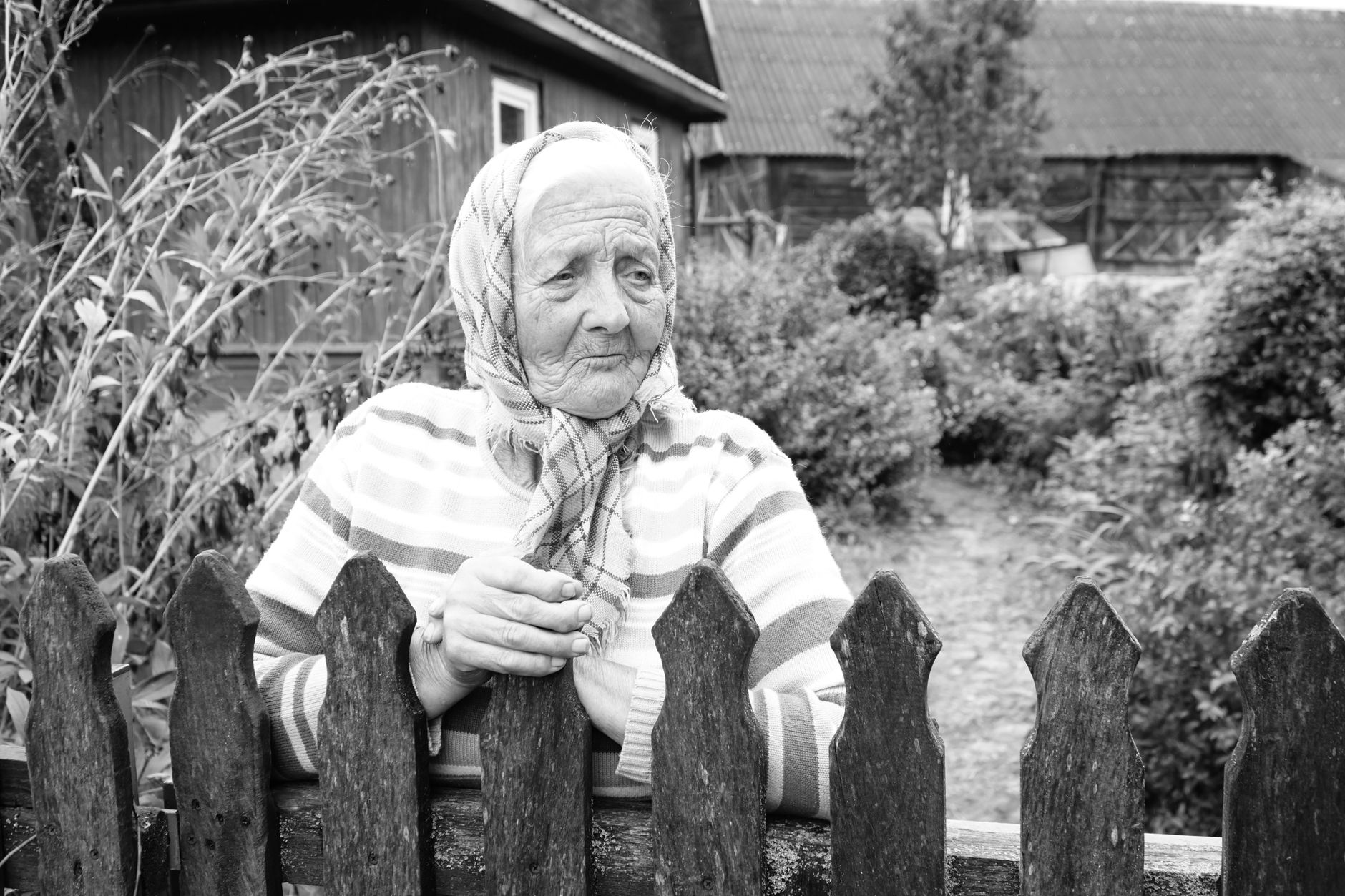
I want you to understand what that fence meant to us before I tell you what we found. There was an older line there before it, wire and cedar Bill’s father had put up, but the fence the tornado took was the one Bill and I set with our own hands the first summer after we married, forty years of cedar posts we had reset and replaced piece by piece ever since, mending it after ice storms and a bull that came through in 1994 and simple old age, the wood going gray and soft with the decades. It was not a fancy fence. It was not even, some places, a straight one. But it was the line that told you where our life started and where the ditch and the county road began, and it had stood for as long as either of us could remember standing on this land.
That night it did not stand. The tornado had walked the entire length of it like it had picked our fence out on purpose and left the house alone as an afterthought. Posts we had sunk three feet into caliche clay were snapped off at the ground or pulled whole out of the earth and flung two hundred feet into the bar ditch. Rails were splintered like kindling. In some stretches there was nothing left at all, not even a stub, just a bare scar in the grass where a fence used to run.
We stood there in our robes, the flashlight beam shaking a little in Bill’s hand, and neither one of us said the thing we were both thinking, which was that we did not have it in us anymore. Bill is seventy three. His knees have not let him kneel in a garden row in three years, let alone tamp a post. I am seventy, and my hands shake now when I try to hold a level steady. We had the money for maybe a third of what that fence would cost to replace, and neither one of us had the back for the labor even if we found the rest.
“I guess we’ll just let it lay there a while,” I said out loud, to nobody, because saying it to Bill would have made it a decision and I was not ready to decide anything that night.
We went to bed defeated. I do not use that word lightly. I have buried a mother, a father, and a baby sister, and I do not think I went to bed feeling more purely defeated than I did that night, looking at four decades of fence line lying in pieces in a ditch that neither of us could lift.
I was up at five thirty the next morning because I have been up at five thirty every morning of my adult life, storm or no storm. I put the coffee on. I stood at the kitchen sink the way I have stood there every single morning for forty one years, looking out over the yard while the pot filled, and for one long moment I could not make my eyes tell my brain what they were seeing, because it did not match anything that was supposed to be there.
There was a fence.
Not the wreckage we had left in the ditch the night before. A whole new fence, post to post, running the entire length of where ours had stood, pale new cedar catching the first gray light of morning, so fresh I could smell the sawdust through the closed window. I set the coffee pot down without turning it on and walked outside in my nightgown and house shoes, across grass still wet from the storm, and I put my hand flat on a rail that had not existed twelve hours earlier.
It was real. It was solid. Every post was set deep and plumb. Every gate hung true on its hinges, swinging without a catch or a scrape. Whoever had built it had not thrown up something quick and rough to be neighborly. They had built a fence the way Bill’s own father would have built one, if his father had been forty years younger and had all the daylight in the world instead of four hours of a stranger’s night.
I stood there so long my coffee would have gone cold if I had ever made it, and then I did the only thing that made sense to me, which was to go wake my husband up hollering like the house was on fire.
Bill came out onto the porch in his undershirt and long johns, squinting against the light, and he did not say good morning. He looked at that fence for a long moment, the way a man looks at something he is trying to decide whether to believe, and then he said, “Marge. Who did this.”
I did not have an answer. I still do not think, standing here now with the whole truth of it in my hands, that either one of us could have guessed at an answer that would have come anywhere close to the real one.
We spent that whole morning trying to run it down like two amateur detectives who had wandered into the wrong kind of story. I called Doris before seven, because Doris and her husband Frank go to First Baptist and I thought maybe the church men had organized something in the night, the way they will sometimes for a widow’s roof or a young family’s barn. Doris had not heard a word of it. Their own fence had come through the storm without so much as a leaning post, she said, so there would have been no reason for Frank or anyone from the men’s group to be out working ours in the dark, and if there had been a reason, she would have known, because in this part of the county Doris knows everything before it happens.
I called the feed store, thinking maybe some crew had mistaken our address for a paying job. Nothing. I called both fencing outfits that work this end of the county, the Hendersons out of Lexington and the younger crew that runs out of Purcell, and neither one had a work order anywhere near our name. Nobody would take a dollar of credit for it, which in a county this size is its own kind of strange, because usually if you do a man a good turn you want him to know it was you.
By nine o’clock, word had gotten around the way word does out here, over fence lines and party lines that do not technically exist anymore but might as well, and half the road had found a reason to drive slow past our place and stop to look. Every single one of them stood at that new fence shaking their head the exact same way I had at five thirty that morning, hand on a rail, looking for an explanation the wood was not going to give them.
It was Bill who remembered the camera.
We had put a little security light and a camera up over the shop door two summers back, after somebody kept helping themselves to propane out of our tank in the night, cheap enough off the internet that Bill’s grandson had talked him into it during a visit and set the whole thing up on his phone before he drove back to Tulsa. Bill does not touch that app more than once a month, mostly by accident, but that morning he went straight out to the shop and pulled up the footage before I had even managed to make a fresh pot of coffee.
We sat at the kitchen table and watched it together, the two of us leaning into one phone screen like teenagers, and what we saw took the floor out from under both of us in a different way than the fence itself had.
It was a boy. Alone. He came into the frame a little after midnight, working by a headlamp strapped over a ball cap and whatever spill of light reached him from our shop floodlight, and there was no truck in our driveway that either one of us recognized, no second person helping him, though setting rails properly is a job that wants two sets of hands and he did not have them. He worked like somebody who had done this exact task a hundred times before. Steady. Unhurried. He checked every single post with a level before he moved down the line to the next one, the way you only do if somebody taught you right and you never let the habit go. Twice he stopped. Once to drink from a plastic water jug he had carried in with him, and once, near the very end, right around three in the morning, he stood at the fence line and looked up at our dark house for what the timestamp said was a full minute and eleven seconds, not moving, before he turned back and finished the last of it and was gone from the frame by ten to four.
I want to say plainly, because it would make for a gentler kind of story if it were true, that when Bill ran that footage back a third time looking for a face he knew, he found one. He did not. We did not recognize that boy. We had never, so far as either one of us could reconstruct, exchanged so much as a wave with him in our lives.
It took the better part of two more days, and finally a phone call to our own pastor over at First Baptist, who knew a youth leader, who knew a mother, before we had a name to put to the headlamp and the level and the patient, careful hands. Caleb. Sixteen years old. Lived clear on the other side of Purcell, a good twenty five minutes from our place by the state highway, a boy neither one of us, in all our years on this road, had ever spoken ten words to.
We drove over that Thursday evening. I brought a pound cake, because that is simply what you do in this part of the world when somebody has done something too large for a thank you card, and because I needed my hands busy with something on the drive over or I believe I would have talked myself out of going altogether.
Their place was small and neat, a rented house with a good garden and a truck up on blocks in the side yard that somebody clearly meant to get running again someday. Caleb came to the door in sock feet, and the first thing I noticed, before he had said a single word, was that he would not look either one of us in the eye. He was polite. He was even, in his awkward sixteen-year-old way, friendly. But he tried three separate times to steer the conversation toward the weather, toward whether our garden had come through the storm, toward anything at all that was not the fence standing new and pale not thirty miles from where we stood.
Bill does not let a thing go unasked once he has decided to ask it. He let the boy dodge twice, out of manners, and then on the third try he set his hat down on the porch rail, which is a thing Bill does when he means business, and he said it plain.
“Son, I want to know why. Out of every fence that storm tore up in this county, and there were plenty, why ours. In the middle of the night. Alone. Never meaning to be found out doing it.”
Caleb went quiet.
It was not the quiet of a boy who had not thought about the question. It was the quiet of a boy who had been waiting, maybe for years, for somebody to finally ask it, and now that the moment had come he did not know which end of the story to start pulling from. He looked down at his sock feet on the porch boards for what felt like a very long time, long enough that I honestly thought he might simply say he did not know and shut the door on us gently, and I would not have blamed him for it.
Then he looked up, and not at Bill. He looked at me.
“You had a quilt,” he said. “Green and white. You had it wrapped around a kid on the tailgate of a gray truck, out on the county road, in the sleet, about four years back. You kept saying, it’s okay, you’re okay, I’ve got you, over and over, until the ambulance came.”
I felt the porch tilt under me the way it had not tilted even in the tornado.
Because I remembered that quilt. I remembered that tailgate. I remembered a night in February, four winters gone, that I had thought about more times than I could count in the years since, without ever once knowing the name of the child I had held.
Bill’s older sister, Vera, has lived alone up the road from us for going on fifteen years, a widow since her Harold passed, and every other Wednesday evening Bill and I drive up after supper to sit with her and watch her television programs because the silence in that house gets to her worse in the evenings. We had left her place a little before eight that February night, ice already starting to skin over on the blacktop, headlights cutting a narrow tunnel through sleet that had turned the whole world the color of dishwater. We came around the bend just past the Colson turnoff, maybe a mile and a half from our own driveway, and Bill’s headlights caught the taillights of a gray pickup sitting crossways in our lane with its nose down in the bar ditch and its back end still half up on the shoulder, steam or smoke rising off the hood into the sleet.
Bill had that truck stopped and his flashers going before I even had my seatbelt off. There was a woman behind the wheel, conscious but bleeding from somewhere on her scalp, pinned some by the door where it had buckled against the ditch bank, moaning that her boy, her boy, get her boy. And there in the passenger seat, twelve years old and shaking so hard his teeth were audible, was a child I had never laid eyes on before in my life.
I do not carry a cell phone that gets good signal out on that stretch, but Bill’s does, mostly, and he had 911 on the line inside of a minute while I worked that boy’s door handle, frozen stiff, until it finally gave. I could not get his mother free. The door on her side was crumpled too badly and Bill would not let me try, afraid of what moving her wrong might do, but I could get the boy, and once I had him out and standing in the sleet on legs that did not want to hold him, I did the only thing I knew to do. I wrapped him in the quilt off our back seat, the green and white one my mother made me, the one I keep folded there for reasons I could not have told you before that night and understand completely now. I walked him to the tailgate of a stranger’s truck and I sat him down and I held onto him with both arms while Bill stood in the road flagging with the flashlight so nobody else would come around that bend blind and add a second wreck to the first.
I kept talking. I do not remember most of what I said. I remember it’s okay, you’re okay, I’ve got you, because a body says that on instinct to a frightened child the same way it breathes, and I remember him shaking less, by degrees, the longer I held on, until the sirens finally came up the road and the paramedics took over and everything after that happened fast, in the particular blur that emergencies happen in, strangers in uniforms moving with purpose while the rest of us stand back out of the way.
I never got that boy’s name. In all the commotion, the ambulance doors closing, a second ambulance for his mother, a deputy taking down Bill’s account of what he’d seen, nobody thought to make the introductions that would ordinarily come first in any other kind of meeting. By the time it occurred to me to ask, they were already gone, taillights receding toward the hospital in Purcell, and Bill and I drove the rest of the way home in a kind of stunned quiet, my quilt gone with them in the ambulance, never to be seen again, and I remember telling Bill that night that I hoped somebody found that boy and told him he was safe, because I never would get the chance to.
Standing on that porch four years later, looking at a sixteen year old boy who would not quite meet Bill’s eyes but had looked straight into mine, I understood all at once that I had gotten the chance after all. I had simply not known it was still coming.
“That was you,” I said, and it was not really a question.
Caleb nodded. His eyes had gone wet and he was fighting it the exact way a sixteen year old boy fights it, jaw tight, blinking hard, trying to will it back down.
“That was my mom driving,” he said. “Diane. She still limps some, on the cold days. I never forgot the quilt. I never forgot your voice, saying it’s okay, over and over. I didn’t know your name for years. I didn’t know where you lived. I was twelve and half in shock myself and by the time anybody thought to ask me anything useful I couldn’t have told a deputy what either one of you looked like, let alone your address.”
He told us the rest of it standing right there on the porch, and later, after Bill finally convinced him to let us come inside and sit at the kitchen table, in more pieces, with his mother Diane joining partway through, wiping her own eyes on a dish towel while she listened, because some of it Caleb had never once said out loud to her either.
His mother had spent six weeks in the hospital and rehab in Oklahoma City after that wreck, a broken pelvis and a badly torn shoulder that never did heal all the way right, which is the limp Caleb mentioned. His father had not been in the picture even before that, gone two states away with a new family of his own, so for those six weeks and the long, slow months after, it had fallen to Diane’s father, a widower named Roy who had farmed and run cattle and built fence on a piece of ground not two miles up our own county road for going on fifty years, to take Caleb in and raise him day to day.
Roy did not have a great deal of patience for talking a scared boy through his feelings. What Roy had was work, and he handed Caleb a level and a post hole digger and put him to setting fence along his own line that whole first summer, not because the fence needed it particularly, but because Roy understood, the way men of his generation sometimes understand a thing without ever having the words to explain it, that a boy who has just watched his mother nearly die needs his hands full of something solid and honest more than he needs to be asked how he is feeling about it. Caleb learned to read a level and set a post plumb and check every single one before he moved to the next, because that is how Roy had always done it and Roy did not believe in shortcuts.
And here is the piece neither Bill nor I had ever put together in four years of driving that same stretch of road to see Vera. Roy’s land started less than two miles past our own fence line. Caleb had spent the better part of his thirteenth, fourteenth, and fifteenth summers riding out with his grandfather along that exact county road, past our exact mailbox, more times than either one of us could begin to count, a boy in the passenger seat of an old farm truck who never once said a word about it, because a twelve year old who has just lived through the worst night of his life does not generally go around introducing himself to the people who happened to save him. He half recognized the place, he told us. He was never sure enough to say anything. What twelve, thirteen, fourteen year old boy walks up to a stranger’s porch and says, were you the ones.
Roy passed away last spring. Heart, sudden, in his own barn, the way men like that sometimes go, still working right up until the moment they aren’t. Caleb inherited his grandfather’s tools, his levels, his post pounder, and an old flatbed truck that still needs a clutch before it will reliably start, which is why there had been no vehicle in our driveway that anyone recognized on the security footage. He had walked the two miles from Roy’s old place, now standing empty and for sale, carrying what he needed in a pack on his back.
The night of the tornado, Caleb told us, he could not sleep. He never can, in a bad storm, not since that February. He got up before dawn the next morning and drove Diane’s car out along the county road because it was the only thing that settled him after a storm anymore, checking on the stretch his grandfather used to check, the way Roy always had after weather, out of a habit that had become Caleb’s own without either of them ever discussing it. And there, in the gray half light, he came around the same bend past the Colson turnoff and saw our fence lying in the ditch.
He said he sat in that car on the shoulder of the road for a long time before he understood what he was looking at. Not just storm damage. This fence, on this stretch, belonging to the people who had wrapped him in a quilt and would not let go of him until help came, and who he had never in four years found the courage to walk up to and thank.
He went home. He got his grandfather’s tools out of the shed. He came back that same night, alone, and he did the only thing he knew how to do with the size of what he was carrying, which was not a conversation he felt he could manage face to face. He built.
“I didn’t want you to see me,” he said, when we finally asked him straight out why he had worked in the dark and left before sunrise instead of simply knocking on our door in daylight with a borrowed post hole digger and an offer to help. “I didn’t know how to say thank you for something that big. Saying it out loud felt too small. I thought if I just fixed it, and you never had to know it was me, that would be enough. That would be me paying it back without making you sit there and watch me try to find the words and fail.”
Bill, who is not a man given to much display, reached across that kitchen table and put his big weathered hand over Caleb’s and did not say anything for a moment, because I think he understood, better than I did in that instant, exactly what kind of currency that fence had been built out of. Not sawdust and cedar. Four years of a boy carrying something he had no name to put to and no address to send it to, until a tornado handed him both.
I am not ashamed to tell you I cried at that table, and so did Diane, and so, by the end, did Caleb, sixteen years old and still trying so hard to be the steady one that it nearly broke my heart worse than the crying itself would have.
We stayed at that little house a long while past when the pound cake had been cut and passed around twice. Diane told us things about that hospital stay we had never known to wonder about, the surgeries, the months of not being able to lift her own son, the fear that had lived in that house long after the physical mending was done. I told her about the quilt, about how I had thought of that boy on and off for four years without ever having a name to attach the worry to, and how strange and good it felt, finally, to attach one.
Before we left that night, Bill asked Caleb to come by our place on Saturday, not to work, just to sit on the porch he had rebuilt and let us feed him a proper dinner. Caleb has been out to see us three Saturdays running since. Diane came the second time, and stayed the whole evening, and cried again looking at that fence in the daylight, running her hand along a rail her son had set true in the dark.
Bill has already told Caleb, more than once, that when that old truck of Roy’s gets its clutch fixed, there is a standing invitation to help finish squaring off the last stretch of fence along our back forty, the piece that runs down toward the creek and has needed replacing longer than the storm ever asked of it. Not because we cannot manage it ourselves now, with a strong young back willing to lend itself. Because Bill wants the excuse to have that boy out here regular, working a level down a fence line the way Roy taught him, the way Bill’s own father taught Bill seventy years ago on that same ground, and because some threads, once you find out they were tied all along, you do not let go of again.
We still do not fully understand, and I do not think we ever entirely will, how a boy can carry a debt that heavy in complete silence for four years and never once let on. But I understand this much clearly now, standing at my kitchen window most mornings with my coffee, looking out at a fence that is straighter and truer than the one that stood there before the storm ever touched it. Some nights the sky takes something from you that feels impossible to replace. And once in a great while, if you are fortunate the way Bill and I have been fortunate, it sends back, in the dark, on legs you never expected, exactly the hands that can put it right.
This story is a dramatization. Names, characters, and details are invented, and any resemblance to real people or events is coincidental.