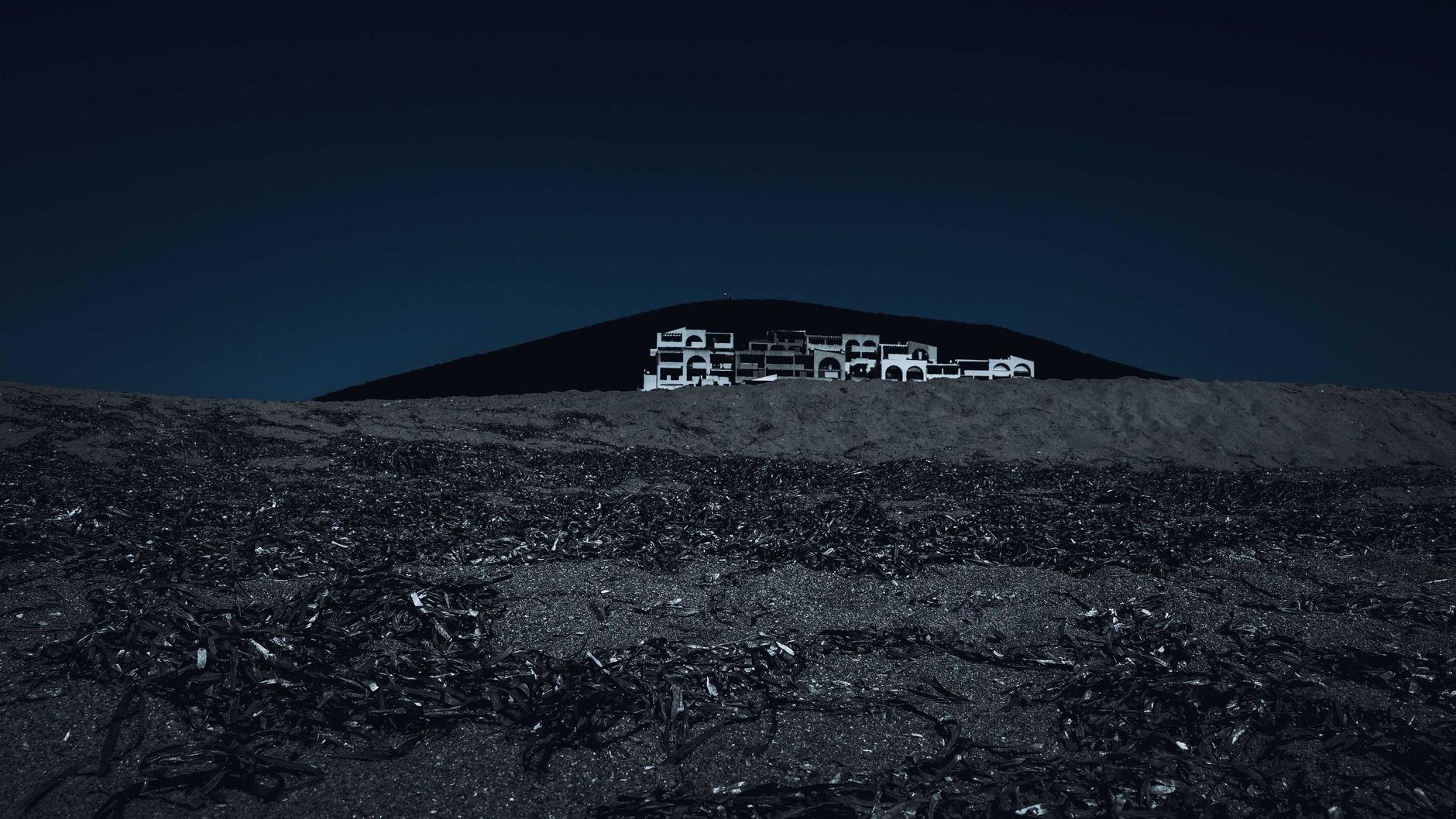
The Beach House They Didn’t Know Was Mine
The first SUV came around the bend on Dune Grass Lane too fast, throwing up a spray of crushed shell from the driveway I’d had regraded myself two summers back. Then the second. Then the third, which is the one that made me sit up straight in the rental sedan I’d parked four houses down under a live oak, my laptop bag on the passenger seat, a mug of gas station coffee gone cold in the cupholder.
Three vehicles. For a reunion my mother had told me, gently, warmly, in that voice she saves for the worst news, that I should “sit out.”
I watched my mother, Linda, step out of the lead SUV first, already directing everyone like a woman who had built the house with her own two hands instead of a woman who had never once asked who actually owned it. She clapped twice, the way she used to clap at church potlucks in Bellhaven to get the kids to line up for the buffet. My sister Bridget climbed out behind her, phone already up, already filming, narrating to nobody in particular. Bridget’s fiancé, Dylan Harper, popped the back hatch and started hauling coolers. My father came last, the way he always does, adjusting his glasses, looking at everything except me, even though there was no way he could have seen me yet.
I had cameras on all of it. I’d activated them that morning.
My name is Skyla Morales. I’m thirty-nine years old. I grew up two hours inland from that beach house, in a town called Bellhaven, Georgia, population a little under four thousand, the kind of place with one blinking light downtown, a Baptist church with a gravel lot, a VFW hall that still hosts the fish fry every third Friday, and a feed store where the men stand around the counter arguing about rain. I left for college and never quite went back, not the way you’re supposed to. I live in Atlanta now and I work in cybersecurity, which is a fact my family has never once asked me a real question about, but which matters to this story more than anything else about me, because when something doesn’t add up, I don’t argue about it. I log it. I timestamp it. I build a case, quietly, the same way you’d patch a vulnerability before anyone notices the system was ever exposed.
I had been patching this particular vulnerability, the one named my family, for about six weeks.
The check-in
It started with what my mother called a “family check-in,” scheduled on a video call like she was running a quarterly review instead of talking to her own daughter. She appeared on screen from the sunroom of the house she and my father still keep in Bellhaven, wearing a crisp blouse she doesn’t wear for anything less than an audience, her expression arranged into the calm, collaborative mask she puts on right before she says something designed to end an argument before it starts.
“We’ve talked things through,” she said, folding her hands. “This reunion needs to stay peaceful.”
Bridget was beside her on the porch swing, wine glass tilted at the exact angle that photographs well, even though nobody was photographing her. Dylan sat somewhere off camera, visibly bored, the way a man gets when he’s been dragged into a conversation that isn’t his. My father hovered at the edge of the frame, glasses catching the light, looking anywhere but at the camera, a habit I clocked when I was maybe nine years old and have never once seen him break.
I told them I could take the time off. That I’d already checked with my team, that I could disconnect completely for the weekend, no laptop, nothing.
My mother’s smile tightened by exactly one degree.
“You hear that?” she said, to the room, not to me. “Defensive already. That’s exactly the energy we’re trying to avoid.”
I didn’t argue. Arguing with my mother is like arguing with a closed system: there’s no input port. I already knew the real reason for the check-in, because two weeks earlier Bridget had called me crying, asking me to co-sign, to guarantee, a fifty-thousand-dollar loan for what she called her “business launch,” which as far as I could tell from the deck she sent me was three slides of stock photography and a spreadsheet with no formulas in it. I said no. I said it kindly. I said it the way you’re supposed to say no to family, with reasons, with an offer to help her find a real lender, with love still in my voice.
In my family, saying no isn’t treated like a boundary. It’s treated like betrayal, filed and cross-referenced against every other no I’ve ever said, going back to childhood, when I was the one who didn’t cry easily, didn’t need much, didn’t cost anyone anything, and somehow that made me the one who owed everyone.
“This is really for your own good,” my mother continued on the call, her voice gone warm and reasonable, the tone she uses right before the door closes. “You should probably sit this one out. We’ll send pictures.”
“Next year,” my father added, like attendance to my own family’s vacation was a privilege that got granted from a waiting list, and he was the one holding the clipboard.
The call ended fast after that. Faster than any of our calls ever end. And within a couple of minutes, before I’d even set my phone down, I watched myself get quietly removed from the family reunion group chat. No announcement. No explanation. Just gone, the thread simply not there anymore when I tapped on it.
They wanted me erased. Cleanly, efficiently, the way you delete a line from a spreadsheet you don’t want anyone to audit later.
But they moved too fast, the way people always do when they think no one’s checking their work.
For a second and a half, maybe two, before the chat fully disappeared from my phone, a notification banner had flashed across the top of my screen. A message preview. An address everyone had apparently been told to save for the weekend.
Seabrook Cove. Dune Grass Lane.
My house.
What they didn’t know
I need to back up, because none of what happened on that driveway makes sense unless you understand what that house actually was to me, and why none of them knew it existed.
Six years ago, after my grandmother died and left me a little money nobody else in the family thought was worth fighting over (my parents were far more interested in her wedding ring, which went to Bridget, and the good china, which also went to Bridget), I did something I’d never told a single person in Bellhaven or Atlanta. I formed an LLC, a small holding company with a name so boring nobody would ever think to look twice at it, and I used that money, plus three more years of saving every bonus and skipping every family vacation I wasn’t invited to anyway, to buy a run-down cottage on a barrier island two hours south of Savannah. Seabrook Cove. A town so small it doesn’t have its own zip code, just borrows one from the next town over.
The house was a wreck when I bought it. Salt-rotted porch boards, a roof that had been patched with the wrong shingles twice, wiring from an era when nobody thought twice about running it through a marsh house. I hired a contractor I trusted, a good man named Reuben who’d built half the porches on that stretch of coast, and I paid for the renovation slowly, in cash, over four years, the same way you rebuild a life once you finally stop asking anyone’s permission to have one.
I never told my family. Not because I was hiding something shameful, but because I had learned, the hard way, more than once, that my family treats any boundary I draw as an invitation to walk straight through it. If they’d known about a beach house, they would have had opinions about the beach house. They would have had requests for the beach house. Bridget would have wanted to host her bachelorette there. My mother would have wanted to redecorate the sunroom “as a gift.” My father would have found a reason it needed a second mortgage he could “help” me manage. I had watched them do this to every good thing I ever built, quietly, patiently, like water finding a crack, until the thing that was mine stopped feeling like mine at all.
So I kept it. Quiet. Locked. Under a name that wasn’t mine on any document a casual search would turn up. And I visited it maybe six times a year, alone, and it was the only place on earth where nobody needed anything from me.
Which is exactly why, when that notification flashed across my screen, my stomach dropped in a way it hadn’t dropped in years.
The reservation
I sat with it for maybe ten minutes before I did what I always do when someone assumes I won’t notice something. I logged in. Not to snoop, at first, just to confirm what I was already afraid of.
I manage the property through a small vacation-rental platform, the kind that lets an owner list under a management entity and stay invisible to guests unless they go digging, which nobody ever does. I keep the calendar mostly blocked off for myself, but I leave a handful of weekends open every year and let it rent, mostly to cover taxes and keep the pipes exercised. I pulled up the calendar.
There it was. A four-night reservation. Confirmed. Paid in full.
Booked under the name Dylan Harper.
My sister’s fiancé had rented my house from me without either of us knowing it. My own family, the same family that had just spent a video call explaining, gently, warmly, why I needed to sit this reunion out, was about to spend four nights inside a home I had built board by board, and they had paid a stranger’s LLC for the privilege, never once suspecting the stranger was me.
I sat in my kitchen in Atlanta and I laughed, once, short and not entirely happy, and then I closed the laptop and I organized. That’s what I do. I don’t scream. I don’t call and demand answers. I build the file.
A few minutes later, before I’d even decided what my next move would be, my mother sent a message to my phone directly, outside the group chat she’d already scrubbed me from.
“It’s only fair you send $500 since you’re not coming.”
I stared at that message for a long time. Five hundred dollars, toward a rental fee that was, in fact, going to land in an account I controlled. My own mother, asking me to subsidize my own exclusion, using money that would eventually come back to me anyway, except she didn’t know that, and the not knowing was the entire point.
Bridget followed up an hour later with a phone call, her voice bright and easy, the tone she’s used on me since we were kids whenever she wanted something and had already decided I’d give it to her.
“Just send it, Sky,” she said. “Don’t ruin the vibe.”
Don’t ruin the vibe. As if the vibe hadn’t already been ruined the moment they removed me from a chat about a house I’d renovated with my own hands, a house none of them had ever set foot in, a house they were now treating as a group expense I owed a contribution to for the crime of not being invited.
I didn’t correct them. I didn’t send a cent, and I didn’t explain why. Instead, I saved every message, screenshotted the reservation confirmation, and drove down to Bellhaven that weekend for what I told my mother, without lying, was “some property business on the coast.” She didn’t ask a single follow-up question. She never does when the subject isn’t Bridget.
Getting ready
I want to be honest about what I did next, because there’s a version of this story where I could have handled it differently, softer, and I chose not to, and I don’t regret it.
The morning of the reunion, I drove south alone in a plain rental sedan, gray, nothing about it memorable enough for anyone to clock twice. Two hours out of Bellhaven the pines gave way to scrub oak, then to marsh grass, then the air itself changed, that particular mix of salt and pluff mud that I associate with the only peace I’ve ever built for myself. By the time I crossed the causeway onto the island, my nerves, which had been humming since the group chat disappeared, had settled into something colder and steadier. Not anger anymore. Clarity.
I let myself into the house through the side entrance a full three hours before my family’s check-in window and I did four things, methodically, the way I’d walk a security audit.
I activated the exterior cameras, which I keep for insurance purposes and had, until that day, never once needed for anything more dramatic than raccoons on the porch. I checked every angle, confirmed the feed on my phone, confirmed audio was live in the main rooms.
I walked the house and made sure nothing personal was left visible. Photographs of me as a girl, my grandmother’s things, the deed folder, the LLC paperwork, all of it already lived in one room anyway: what I call the owner’s closet, a converted linen room off the back hallway with its own keyed lock, where I keep the things that make the house mine and not just a rental listing.
I locked that door and taped a plain printed sign to it, nothing dramatic, nothing that would read as a taunt to anyone who hadn’t already decided to be suspicious of a locked door in a rental house.
Private Property. Authorized Access Only.
And then I called Reuben, the contractor who’d rebuilt the place, and asked if he could swing by that afternoon, no rush, to look at a porch board that had started to lift near the north rail, work I’d actually been meaning to get done. I wasn’t setting a trap. I was living my life, in my house, on a day I happened to know my family would also be there, uninvited to know it was mine.
No threats. No hidden intent to humiliate anyone. Just facts, laid out in order, the way I’ve always preferred them.
Then I drove back down the lane, parked under the live oak, and waited.
What the cameras caught
They arrived a little after two, three SUVs crunching over the shell driveway like a parade that had never once checked the guest list, which, in a sense, it hadn’t. My mother directed the unloading. Bridget filmed. My father carried in a cooler and set it down exactly where my mother told him to, the way he’s carried in coolers and set them down exactly where she told him to for as long as I’ve been alive.
Linda walked straight up to the keypad beside the front door, the confirmation email open on her phone, and without any hesitation at all, punched in the entry code.
One. Nine. Eight. Five. Zero. Seven.
My birthday. May 7th, 1985, entered the way the booking platform’s automated check-in instructions had listed it, six digits, no dashes, no name attached, nothing that would have told her what she was typing. I’d set that code myself, years ago, half as a joke to no one but me, a small private signature on a house nobody in my family knew existed. My own mother let herself into it using the one date she has never once, in thirty-nine years, remembered to call me about.
The lock flashed green. The door swung open. Cheers went up, the kind of easy family joy I used to want so badly to be inside of, and for one strange second, watching it on my phone from four houses down, some old part of me still did.
Then it passed.
Coolers went in. Bottles opened on the back porch I’d rebuilt board by board. Somebody put on music. Bridget swept through the living room with her phone held high, spinning slowly to capture the ocean view through the windows I’d had custom-cut to catch the sunset.
“Our beach house!” she sang, to her followers, to nobody, to a story that had never once been true.
Then she kept walking, phone still up, narrating her way down the back hallway, toward the one door in the house that didn’t open for her.
She stopped. Tried the handle once. Tried it again, harder, rattling it the way people rattle things when they’ve decided a locked door in a house they’re renting for four nights is somehow a personal insult directed at them specifically.
Her smile dropped off her face on camera, permanently, for the rest of that video, if she ever posted it, which I doubt.
“Call someone,” she snapped, at nobody, at everybody. “Now.”
I watched Reuben’s van pull into the driveway a few minutes later, right on schedule, there for a porch board, and I listened through the audio feed as somebody, I think it was my father, flagged him down in the yard and started asking about the locked door instead, assuming, the way people do when they’ve already decided they’re owed an explanation, that the contractor working on the house must have a key, must know something, must be able to fix this small emergency of their own making.
Reuben, God bless him, told them the truth as he understood it. That door wasn’t his to open. That belonged to the owner.
My mother’s voice drifted down the hallway after that, still trying to sound confident, still trying to run the room the way she runs every room she’s ever stood in.
And that’s when the reflection of red and blue lights swept across the front windows.
A car door shut outside. A radio crackled. And through the audio feed on my phone, I heard an officer say a name into his radio that didn’t belong to anyone standing in that living room.
Mine.
My phone buzzed in the cupholder of the rental sedan. The alarm company, the one I pay a monthly fee to and had, until that afternoon, considered mostly a formality, a motion sensor on the owner’s closet had tripped when Bridget rattled that handle hard enough, and it had done exactly what I’d set it up to do six years ago: called the monitoring center, who called the local department, who ran the property address and pulled up the LLC’s registered contact, who happened to be sitting in a gray sedan four houses down, watching the whole thing unfold on a five-inch screen.
That was the moment I opened my car door.
The driveway
I want to tell you I walked up that shell driveway feeling triumphant, but that’s not honest. I felt sick, the particular kind of sick you feel right before you do something you can’t take back, even when the something is simply telling the truth. I’d rehearsed nothing. I didn’t need to.
The officer, a young guy, maybe thirty, was standing at the base of the porch steps talking calmly to my mother, who had arranged her face into the same collaborative expression she wears for church committee meetings, explaining that they were renting the house, that there must be some misunderstanding, that surely this was a simple case of an overprotective neighbor calling in something that wasn’t there.
“Ma’am,” he was saying, “I just need to confirm the property owner or an authorized contact, and then we can clear this up.”
“We booked it,” Bridget cut in, phone finally lowered, her voice climbing the way it does when she senses ground shifting under her. “We have a confirmation. Dylan has it right here.”
I came up the driveway slow, past the third SUV, and I watched my whole family turn toward me the way people turn toward a sound they can’t immediately place. My father’s mouth actually fell open. My mother’s collaborative expression didn’t so much crack as simply stop, the way a program stops when it hits an input it was never written to handle.
“Skyla?” my mother said. “What are you doing here?”
“I’m the owner,” I said. To the officer, not to her. “This is my property. I can show you the deed and the LLC registration on my phone right now, and the reservation confirmation for the booking, which is under my sister’s fiancé’s name, Dylan Harper, if that helps clear up the alarm.”
The silence that followed was the longest silence I have ever stood inside of in my entire life.
The officer looked between me and my mother for a second, then nodded, businesslike, and asked me to pull up what I had. I did, right there on the porch, the LLC filing with my name on the registered agent line, the deed transfer from six years back, the property management dashboard with Dylan’s reservation glowing on the screen, dates and dollar amount and all. He looked it over, looked at Dylan, who had gone the color of drywall, looked at my mother, who had started talking again, fast, about how this was clearly just a misunderstanding, a family thing, nothing that needed police involvement at all, officer, really, we’re so sorry for the trouble.
He was kind about it, more patient than I think I would have been in his shoes. Since I was the confirmed owner and no one was pressing any complaint against the guests, and nothing had actually been broken, just a locked door and a tripped sensor, he told us this was a civil matter between family, closed the incident out, reminded everyone to have a good rest of their day the way officers do when they very badly want to be somewhere else, and left.
Which meant the driveway, and the silence, belonged to us.
What I said
My father spoke first, which almost never happens.
“Sky, honey, why didn’t you tell us you bought a place down here? We could have all come together, we could have helped you fix it up.”
I let that sit for a second, because it was, in its own way, the most honest thing any of them had said to me in months, even if he didn’t understand why.
“You couldn’t have helped me fix it up, Dad,” I said. “The last time I mentioned wanting to buy anything, a car, a condo, it turned into a family discussion about whether I could really afford it and whether Bridget needed it more. I didn’t tell you about this house because I wanted one thing in my life that stayed mine. And I was right to.”
My mother had recovered enough by then to try a different angle, the one she always tries when facts have stopped cooperating with her, which is to make the facts about feelings instead.
“So this was a setup,” she said. “You let us drive all the way down here, you let us think we’d rented some stranger’s house, just so you could humiliate us in front of a police officer.”
“No,” I said. “I let you keep the plans you made without me. I didn’t set anything up. You excluded me from a reunion at a house I own, you asked me to pay five hundred dollars toward a reservation that was already paying me, and you did all of it without once asking a single question about where the money you were spending was actually going. I didn’t humiliate you. You did that yourselves, the second you decided it was safer to lock me out of a group chat than to have an honest conversation with me about a loan I already said no to.”
Bridget, to her credit or maybe just her instinct for self-preservation, had gone quiet, standing a little apart from Dylan, who looked like a man doing rapid math on how many of his own dollars had just been handed, unknowingly, to his future sister-in-law.
“I’m not going to make anyone leave,” I said, and I meant it, though it cost me something to say it calmly instead of the way some smaller, angrier part of me wanted to say it. “The reservation is paid through Sunday. You can stay. But I need you to understand that this is my house, under my rules, starting now. The locked room stays locked. Nobody films inside without asking me first. And Bridget, I need you to hear this clearly, because I think some part of you has been waiting for me to say it directly instead of just quietly not sending money: I am never going to guarantee that loan. Not this year. Not next year. Not because I don’t love you, but because loving you has never once meant being the emergency fund nobody has to ask permission to use.”
Nobody said anything for a long moment. Somewhere behind us, the tide was coming in, the sound of it steady and indifferent to all of it, the way the ocean is indifferent to every family argument that has ever happened on its shoreline.
“We just wanted a nice weekend,” my mother finally said, quieter now, some of the performance gone out of her voice for maybe the first time all day. “We didn’t think it would turn into this.”
“I know,” I said. “I don’t think you ever think it will. That’s kind of the problem.”
The rest of that weekend
I didn’t leave. That surprised even me. I got a bag from my trunk, the one I always keep packed for the coast out of habit, and I walked into my own house and I claimed the small back bedroom that has always been mine when I visit, the one with the window that catches the morning light off the marsh, and I stayed.
It was not a warm weekend. Nobody suddenly hugged it out on the porch the way it might go in a story that wanted to wrap itself up neatly. My mother mostly kept to herself, quiet in a way I had never once seen from her, running back through the last six weeks in her head, I imagine, cataloguing every message she’d sent me and what it must have looked like from the other side of my knowing what she didn’t. My father tried, in his limited way, twice, to start real conversations with me on the porch in the evenings, actual questions about my work, about my life in Atlanta, and both times I let him, because I could tell it cost him something to ask, and I’ve decided that counting effort matters, even late, even imperfect.
Bridget and I talked once, alone, the second night, out on the dock as the sun went down over the marsh. She cried, and some of it I believed and some of it I didn’t, the way you learn to sort a sister’s tears after enough years of watching which ones come with an ask attached and which ones don’t. She told me she’d known, some part of her had always known, that asking me for fifty thousand dollars while excluding me from the family that was supposed to make that kind of ask feel safe was its own kind of contradiction, and she just hadn’t wanted to look at it straight on. I told her I believed she could build something real without me co-signing her risk, and that I’d help her find an actual small business lender if she wanted it, the kind of help that didn’t require me to hand over my financial future to make her feel supported. She said she’d think about it. I don’t know yet if she will. That part of the story isn’t finished, and I’ve stopped needing every part of my life to finish on a schedule that suits everyone else.
Dylan, for what it’s worth, was decent about the whole thing once the shock wore off. He found me on the porch that last morning and apologized, awkwardly, for booking a house that turned out to belong to his own fiancée’s sister, as if that part had been his fault at all, which it wasn’t. I told him it wasn’t his mess to carry. He seemed relieved to hear it.
What I kept
They left Sunday morning, three SUVs pulling back out over the shell driveway, quieter this time, no cheering. I stood on the porch and watched them go, and I want to tell you I felt vindicated, triumphant, some clean satisfying click of a story resolving itself. Mostly what I felt was tired, the specific tiredness that comes after you’ve finally said, out loud, the thing you’ve been filing away in silence for years.
I stayed on another two days by myself. I sat on the back steps in the evenings and watched the light change over the marsh grass the way I always have, alone, the way I built this place to let me be. I walked the beach at low tide and let the cold water numb my feet the way it did when I first bought this house and would come down here just to remember what it felt like to want nothing from anyone.
I never sent that five hundred dollars, and nobody has asked me for it since.
I didn’t press charges, didn’t file a complaint, didn’t turn the alarm footage into anything more than what it already was, proof I’d kept quietly for myself in case I ever needed it, which, in the end, I didn’t. I’m not interested in punishing my family into loving me correctly. I’ve watched that experiment fail in other people’s families my whole life. What I wanted was simpler and, it turns out, harder: I wanted them to finally see me as someone who builds things, who owns things, who says no and means it, instead of the quiet daughter who could always be counted on to sit this one out and send pictures.
I changed the keypad code before I left. Something new, something none of them will ever accidentally stumble into typing again. I had Reuben come finish that porch board while I was there, the actual reason I’d called him in the first place, before any of it turned into anything else. And I sat in the owner’s closet one last time before I locked up, going through my grandmother’s old things, the ones nobody else in my family had ever thought to ask about, and I understood, maybe for the first time all the way down, that the house had never really been about the house.
It was about having one room, one door, one corner of my own life that nobody could walk into just because they’d decided, somewhere along the way, that everything I built was theirs to enter whenever it suited them.
They know better now. It cost them a police visit and a very long, very quiet drive home to learn it, and I won’t pretend I’m sorry it happened exactly the way it did. Some boundaries only get respected once they’ve been tested in front of a witness in uniform. Mine finally were.
I still go down to Seabrook Cove most months, alone, sometimes with a couple of friends from Atlanta who know exactly whose name is on the deed and have never once asked to borrow it. The porch board Reuben fixed hasn’t lifted since. The locked door stays locked, mostly out of habit now instead of necessity. And every time I punch in the new code at the front door, I think, just for a second, about the old one, about my own mother’s fingers moving over those six digits without a flicker of recognition, unlocking a house built entirely out of the years she spent not paying enough attention to notice it was mine.
She knows now. That’s enough. It has to be, because it’s the only apology I ever actually got, and I’ve learned, the hard way, at that door, on that porch, in that driveway full of shells, that sometimes the truth arriving late is still worth more than a warmer version of it arriving on time.