The Master Chief They Mocked in the Chow Line
I have eaten a lot of chili in a lot of mess halls over the better part of seventy years, and I can tell you the chili at Naval Amphibious Base Coronado has not improved one bit since 1961. Too much cumin. Not enough time on the stove. I was thinking exactly that, working my way through a bowl of it at a square table bolted to the deck, when the boy with the neck like poured concrete decided I was more interesting than his lunch.
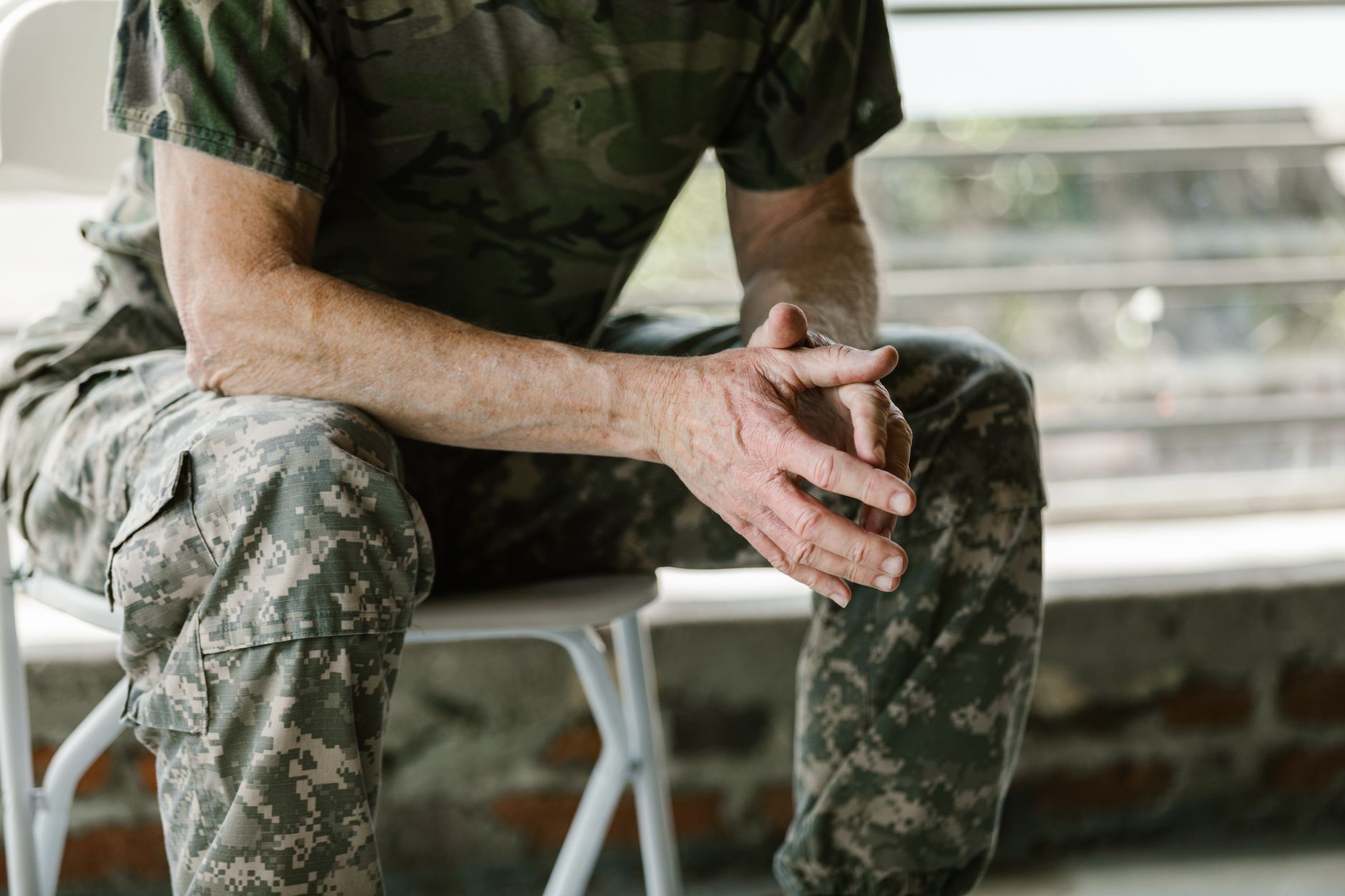
My name is George Stanton. I am eighty seven years old. On the day this happened I was wearing my good tweed jacket, the one my late wife Helen always said made me look like a professor who’d wandered off his campus, and a white shirt that had gone a little yellow with age the way white shirts do when a man outlives most of the people who used to tell him to buy a new one. I looked exactly like what I was that afternoon: an old civilian sitting alone in a room full of young men who did not know my name and had no particular reason to.
I was there because Command Master Chief Ray Delgado had asked me to come.
Ray runs the enlisted side of the Naval Special Warfare Center now, which is a fancier way of saying he keeps several hundred of the hardest young men in the United States military moving in the same direction at the same time, which is its own kind of miracle. Twice a year he invites a handful of us, old frogmen, older SEALs, a couple of Vietnam era UDT men like myself who are still upright and still willing to talk, to come sit with the new BUD/S class the week before their Hell Week and tell them what the Trident actually costs. Not the physical part. They already know about the physical part, or think they do. I mean the part that comes after, the part that stays with a man for the rest of his life whether he wants it to or not.
I was supposed to speak to that class the next morning. Ray had told me to get some rest, get some chow, and he’d walk me through in the evening. So there I was, alone at my little table, spooning up cumin flavored chili and watching a room full of digital camouflage and shaved heads and command patches move around me like I was a piece of furniture nobody remembered putting there. That suited me fine. At eighty seven, invisibility is not the insult younger people think it is. It is a gift. It lets you watch.
I did not get to watch for long.
“Hey, Pop,” a voice said above me, “what was your rank back in the stone age?”
I did not look up right away. I finished my spoonful first. My mother raised me to finish what was in my mouth before I answered a question, and eighty years of United States Navy discipline had done nothing to improve on that lesson.
“Mess cook, third class,” I said.
It was not a lie. I want to be clear about that from the start, because a great deal of what happened that afternoon turned on whether people believed I was lying. I was not. Mess cook, third class, was in fact the very first rating I held in the United States Navy, stamped on paperwork in Great Lakes, Illinois in the spring of 1958, when I was nineteen years old and had never been more than forty miles from the Nebraska farm where I grew up. I simply did not mention what came after it. I have found, over the decades, that a joke told at your own expense buys you a great deal more peace than a joke told at someone else’s, and peace was all I wanted that day.
The three of them laughed like I’d handed them exactly the punch line they were hoping for.
The loudest was a broad shouldered young man with a neck like poured concrete, the kind of build that comes from being younger and stronger and faster than nearly every other person in every room he walks into, and knowing it. His tray sagged under enough food to fuel a small engine. A gold trident, the Navy SEAL pin, sat on his chest and caught the fluorescent light in a way that seemed almost designed to be noticed. I did not know his name yet. I would learn it soon enough. Petty Officer Miller.
“I’m talking to you, old timer,” he said, once his friends had finished laughing. “This is a military installation. You got a pass to be here? Or did you just wander in from the retirement home because you smelled free lunch?”
I want to say something plainly here, because I think it matters more than the insult itself. The mess hall did not go silent all at once. It happened the way these things always happen, in pieces. A laugh at a nearby table stopped halfway out of somebody’s mouth. A fork touched a plate too loud. Conversations thinned into nothing the way water thins into steam, so gradually you cannot point to the exact moment it happened. People started noticing, all around us, at roughly the same time, that this had stopped being harmless teasing. It had become a performance, and the old man at the center of it was not playing his assigned part.
I finished my chili. I set the spoon down soft, no rattle, no wasted motion. Sixty nine years of practice will do that to a man’s hands even when the rest of him has gone soft and slow. I still had not looked at Miller. I think that unsettled him more than anything I could have said. Young men who are used to being the most dangerous person in a room do not know what to do with someone who refuses to notice them.
He leaned in. His tattooed forearms pressed against the edge of the table. The table did not move. It is bolted to the deck, after all, and has weathered worse than one angry sailor. But the invasion of my space was plain to everyone watching, and I could smell the detergent on his uniform and the sharp bite of pre workout still on his breath.
“Look at me when I’m talking to you,” he said, and this time the mockery had drained out of his voice entirely. What was left underneath it was uglier.
A few young sailors at the tables nearby shifted in their seats and found their green beans suddenly fascinating. I understood why. I had heard Miller’s name before that afternoon, in passing, from Ray. He was, by every account, excellent at his job. One of the operators other men pointed to when they talked about what the standard was supposed to look like. But excellence and decency are not the same coin, and I have met a great many men over the years who mistook one for the other. Miller wore his status like a deed to the room, and to everyone standing in it who did not share his insignia.
I turned my head and looked at him properly for the first time.
My eyes are watery now. Age does that to a man, no matter how sharp he stays underneath it. But watery is not the same as weak, and I have been told, by people whose opinions I trust, that there is a particular kind of stillness that settles into the eyes of a man who has done violence and lived a long life afterward learning how to carry it. I looked at Miller’s face. Then at the trident on his chest. Then back to his eyes. I was not measuring him the way a frightened man measures a threat. I was measuring him the way a much younger version of me, a version Miller would never meet, used to measure distance across open water in the dark, back when getting that measurement wrong meant somebody’s son did not come home.
His friend stepped in closer, emboldened by all the people around us pretending not to watch.
“What, you deaf?” he said. “He asked you a question.”
Miller straightened up and put out one impatient hand.
“Let me see some ID. Now.”
It was a plain overstep, and every person in that mess hall knew it, including, I suspect, Miller himself. A petty officer has no lawful authority to demand identification from a civilian guest in a common dining facility. That belongs to base security, full stop, and nothing else. But nobody said a word. The cost of correcting a Navy SEAL in front of an audience was written all over the lowered eyes at every surrounding table. I do not blame those young sailors for their silence. I remember what it is like to be twenty two years old and outranked by reputation if not by rate. I was that young sailor once, a long time ago, in a mess hall not so different from this one.
I did not reach for a wallet. I reached for my cup of water instead, took a slow sip, and set it back down in the exact center of the little paper napkin beneath it. I do not know why that particular gesture seemed to tighten the air in the room the way it did, but it did. Miller’s face had begun to color. Public mockery is supposed to end in laughter. It is not supposed to end with an old man answering a threat by simply refusing to bend.
“That’s it,” he snapped. “You and me are taking a walk to the MA. Get up. Now.”
He jabbed a finger toward the lapel of my tweed jacket, toward a small pin no bigger than a thumbnail, tarnished bronze, shaped like a narrow spearhead, worn nearly smooth by seventy years of being handled by a man who could not bring himself to leave it in a drawer.
“And what the hell is that supposed to be?”
Something changed in my face then. I know it did, because I felt it happen, a heaviness settling into my jaw that had nothing to do with fear and nothing to do with anger either. It was closer to sorrow. I want you to understand that I was not offended on my own behalf. At eighty seven, very little that a stranger says can wound a man the way it could when he was twenty. I was grieving something else entirely. I was watching a talented young man, a man who would one day be responsible for the lives of other young men in places darker and wetter and more dangerous than this dining facility, put his hand on a piece of history he did not know he was touching, and step across a line he did not even know existed.
That pin was not government issue. It never had been. In the spring of 1966, a chief named Delgado, Ray’s grandfather as it happens, though neither Ray nor Miller knew that yet, had a machinist buddy in San Diego stamp out two dozen of them by hand for the men in our UDT platoon, because the official insignia did not exist yet and we wanted something small and private to mark what we had survived together. Twenty two men wore that pin. Nineteen of them are gone now. I am the last one who still puts it on every morning, out of a promise I made a long time ago to a man who did not live to grow old enough to break his own promises.
I opened my mouth to explain none of this, because explaining it to Miller in that moment felt like handing a pearl to someone who had already decided it was a pebble.
Then a chair scraped hard against the deck somewhere behind him, and a voice cut through the whole room like a blade through canvas.
“Petty Officer,” it said, “take your hand away from that man.”
Miller started to turn, more annoyed than afraid, the way a man turns when he expects to find someone junior to himself standing there. But the moment he saw who filled the doorway, the color drained out of his face entirely, and I watched twenty years of hard won confidence collapse into something much smaller and much younger in the space of about two seconds.
Because Ray Delgado was not looking at a disruptive old civilian who had wandered in off the street.
Ray was looking at me the way a man looks at a photograph that has somehow stepped down off the wall and started breathing.
I should back up, because the reveal itself will not mean much to you without the thirty years I left out of my joke at that table.
I grew up on a wheat farm outside a town in Nebraska so small it did not have a stoplight until I was in high school, the kind of place this whole country still runs on even when it forgets to say so. My father farmed the way his father had farmed, and I would have farmed the way he did if the United States Navy recruiter had not set up a folding table outside the feed store the autumn I turned nineteen. I do not know exactly what made me sign that paper. I have thought about it for almost seventy years and I still could not tell you with certainty. I think some part of me simply wanted to see water that did not have a fence around it.
I went to Great Lakes for boot camp, and because I could cook a passable breakfast for two hundred men on four hours of sleep, a skill I had learned the hard way helping my mother feed harvest crews every August, the Navy made me a mess cook, third class. I peeled potatoes and flipped eggs and swabbed a galley deck for the better part of a year, and I was, by any reasonable measure, good at it and entirely unremarkable.
Then one afternoon a chief with a chest full of ribbons and a voice like a gravel truck came through our galley looking for volunteers for something he would not name. He said it would be cold, wet, miserable, and that most of the men who raised their hands would quit inside the first week, and that he did not want to hear a single complaint from any man who did. I do not know what possessed me. I set down a spatula, wiped my hands on my apron, and raised my hand along with about forty other fool nineteen and twenty year olds.
Thirty five of us washed out. I did not.
Underwater Demolition Team training in 1959 did not look much like what young men like Miller go through today, but it shared the same bones. Cold water. No sleep. Instructors whose entire purpose seemed to be finding the exact moment a man’s will broke and then leaning on it a little harder to see if it would hold. I remember one January morning, chest deep in the surf off this very base, so cold my hands had stopped registering as my own, thinking that farming wheat back home had never once tried to kill me, and here I was volunteering for something that seemed determined to.
I stayed anyway. I could not have told you why then. I can tell you now. Somewhere in that freezing surf I stopped being a farm boy who had wandered off looking for water without a fence, and I became part of something. The other men who stayed became my brothers in every sense that word has ever meant to anyone. Twenty two of us made it all the way through and got sent overseas together as a platoon. We had that bronze pin made the week before we shipped out, because the Trident did not exist yet, and a man likes to have something to look down at that proves he belongs to the people he belongs to.
We went to Vietnam in 1966.
I am not going to describe every mission we ran, partly because most of them are still the kind of thing a man does not put into words easily even sixty years later, and partly because this story is not really about me. It is about one afternoon in September of 1968, on a river whose name would mean nothing to you now, when two Navy pilots went down under fire and our platoon was the closest thing to a rescue that existed within reach.
I will tell you what I can. The current was faster than anyone briefed us it would be. The far bank was held by people who very much did not want those pilots reaching our side of the water. My best friend in that platoon, a wiry kid from South Boston named Danny Ferris who could hold his breath longer than any man I have ever met before or since, went in first. I went in behind him. We got both pilots. We did not get Danny back the way we got him in.
I carried Danny’s body across two hundred yards of open water while rounds stitched the surface around us, because I had made him a promise on a troop ship eighteen months earlier that neither one of us would ever leave the other one behind, and I intended to keep it even though he was no longer there to know whether I did. I do not remember most of that swim. I remember the weight of him. I remember reaching the far bank and refusing to let go of his gear until a corpsman physically pried my fingers open.
I was awarded the Navy Cross for that afternoon. I have it in a drawer at home, in the same drawer where I keep Danny’s dog tags, which his mother mailed to me eleven months later with a letter I still cannot read all the way through without stopping.
I finished my enlistment. I extended it twice more. By the time I finally hung up my flippers in 1979, I had made it all the way to Master Chief Petty Officer, the highest enlisted rank the Navy has, and I had spent more nights on or under the water than most men spend nights in their own beds. I came home to Nebraska for a while, married Helen, the girl who had written me a letter every single week I was overseas without once asking me what I had seen, because she understood, better than I did at the time, that some things are not improved by being said out loud too early. We raised two children who both, mercifully, chose careers that never once required a helicopter.
Helen passed six years ago. I still talk to her most mornings, out loud, in the kitchen, over coffee. I am not embarrassed to tell you that. A man my age has buried enough people that talking to the ones he loved does not feel strange anymore. It feels like the only sensible thing left to do.
I never told most people about the Navy Cross. I never told anyone at all about Danny unless they had earned the right to hear it. I did not stay quiet out of modesty exactly. I stayed quiet because the men I served with earned that silence the same day they earned everything else, and speaking their names carelessly to strangers has always felt to me like spending money that was never mine to spend.
But every year or two, Ray Delgado calls, and I put on my good tweed jacket, and I go sit with young men on the edge of the hardest thing they will ever volunteer for, and I tell them exactly one thing that Danny Ferris taught me on a river I will remember until the day I stop remembering anything at all: the trident does not make you dangerous. It makes you responsible for people, including people who will never wear one themselves. Miller had gotten the first half of that lesson down cold. Nobody, it seemed, had yet gotten around to teaching him the second.
Ray crossed the mess hall in maybe six strides, and every conversation that had thinned into silence went the rest of the way to dead quiet.
“Master Chief Stanton,” he said, and I watched Miller’s understanding of the last ten minutes rearrange itself in real time behind his eyes.
Ray did not raise his voice. He did not need to. Command Master Chiefs rarely do, in my experience, because the volume of the room does the raising for them.
“Petty Officer Miller,” Ray said, “do you have any idea who you are standing in front of?”
Miller’s jaw worked. Nothing came out.
“This is Master Chief George Stanton, United States Navy, retired. UDT platoon, 1966 to 1968, Vietnam. He is the reason the class you are about to graduate into exists in the form it exists in. Half the drown proofing standards you were tested on your first week here trace straight back to a report he helped write in 1971. He is also a Navy Cross recipient, which I would tell you to go look up, except I suspect you are about to have the whole story told to your face, which is a far worse punishment than any research project I could assign you.”
I want to be honest with you. I did not enjoy that moment as much as you might expect. There is a particular kind of shame that crosses a young man’s face when the ground he has been standing on turns out not to be the ground he thought it was, and I have never once, in eighty seven years, taken pleasure in watching a person’s certainty collapse, even when that person had it coming.
Miller’s hand, still hovering near my lapel, dropped to his side like it had suddenly gained fifty pounds.
“Master Chief, I,” he started, and then stopped, because there is no good way to finish that sentence and he knew it.
“Sit down, Petty Officer,” Ray said, not unkindly, but with the particular flatness of a man who has already decided how the rest of this conversation is going to go and is simply walking everyone else through the steps of it. “You too,” he said to Miller’s two friends, who had gone very still and very interested in the middle distance.
The whole mess hall was watching now, openly, the way people watch when they sense a story is about to resolve itself in front of them instead of trailing off unfinished the way most public embarrassments do. I appreciated that Ray did not perform for them. He simply pulled out the chair across from me, the one Miller had been looming over a moment before, and sat down in it himself, which had the effect of making the whole confrontation feel suddenly very small and very finished.
“George,” he said, quieter now, just for me, “I am sorry. I should have walked you in myself.”
“You have four hundred men to run, Ray,” I told him. “I have been handling myself in mess halls since before your grandfather had all his teeth.”
That got the ghost of a laugh out of him, and out of a few of the sailors close enough to overhear, and I felt the tension in the room ease down a notch, the way it does when everyone realizes the story is not going to end in a way that leaves them uncomfortable for the rest of the afternoon.
Ray turned back to Miller.
“Petty Officer, I am not going to write you up. I thought about it walking over here, and I decided against it, and I want you to understand why, because the reason matters more than the paperwork would. Master Chief Stanton did not come here today to watch a young sailor’s career get flushed over one bad ten minutes in a chow line. He came here to teach a lesson to the next class, and you just handed him a better one than anything he had prepared. I would hate to waste that.”
Miller looked at me for the first time since Ray had walked in, and it was a different kind of looking than before. Not the flat, appraising look of a man deciding whether an old civilian was worth his attention. Something closer to what I imagine a much younger version of me looked like, chest deep in freezing surf, realizing for the first time exactly how much bigger the ocean was than he had understood it to be.
“Master Chief,” he said, and his voice had lost every bit of the concrete in it, “I am sorry. That was, I don’t have an excuse. That was wrong, what I did.”
I have had a great many apologies offered to me over the decades, some of them sincere and some of them merely convenient, and I have gotten fairly good at telling the difference. This one was sincere. I could see it costing him something to say it in front of his friends, and I have always believed an apology that costs a man nothing is not worth very much.
“Sit down, son,” I told him, and after a moment he did, in the chair beside Ray’s, looking about twelve years old despite the trident on his chest and the muscle stacked on his frame.
I told him about the pin. Not all of it, not Danny’s name or the river or the exact weight of a friend’s body in moving water, because some things I have only ever told to men who had already earned the right to carry them. But I told him it was not government issue, that it had been hand cut by a machinist in San Diego in 1966 for twenty two men who wanted proof of what they had already survived together before they had proof of anything else. I told him nineteen of those men were gone. I told him I put it on every morning not because I needed reminding of who I had been, but because I needed reminding of who they had been, and that the day I stopped wearing it would be the day I let them start disappearing twice.
I watched something shift in his face while I talked. I have seen that particular shift in young men before, the moment a trident stops being a piece of jewelry that announces how dangerous they are and starts becoming a debt they are going to spend the rest of their career trying to repay. Some men never make that shift at all. They wear the pin their whole career and never once understand what it actually costs the men who came before them to earn the right to wear it. I did not think Miller was going to be one of those men. Not after that afternoon.
“Master Chief,” he said, “would you let me walk you to wherever you’re headed next? It’s the least I can do.”
I told him it was, in fact, not the least he could do, and that the least he could do would have been to leave an old man alone with his chili in the first place, but that I would accept the offer anyway, because a debt repaid late is still worth more than a debt never acknowledged.
Ray excused himself to go deal with whatever four hundred sailors require a Command Master Chief to deal with on any given Tuesday, and Miller walked me across the base to the little guest quarters where I was staying that night, apologizing about four more times along the way in ways that started to feel less like penance and more like a young man actually working something out inside himself. I let him. Sometimes the most useful thing an old man can do for a young one is simply stand still long enough to let him talk his own way to the right conclusion.
He asked me, right before he left me at the door, whether I would mind if he came to hear me speak to the BUD/S class the next morning, even though he had already been through that phase himself and technically had no reason to sit through it again.
I told him I thought that was exactly the right instinct, and that I would be disappointed if he did not show up.
He showed up.
I stood in front of forty two exhausted, half frozen young men the next morning, the ones who would be running into Hell Week in a matter of days, and I told them the story I have told a hundred classes before them. I told them about a wheat farm in Nebraska and a folding table outside a feed store. I told them about failing potatoes and passing surf. I told them, carefully, in the shorthand I have built over sixty years for telling it without breaking myself open in front of strangers, about a river in September of 1968 and a promise I kept even after there was no longer anyone left alive to know whether I had.
And I told them, at the end, what I had told Miller in the mess hall the day before. That the trident does not make a man dangerous. Any sufficiently trained young man can be made dangerous; the Navy is quite good at that particular manufacturing process, and always has been. What the trident is supposed to mean, what it has always been supposed to mean since a chief and a machinist in San Diego cut twenty two crude bronze spearheads by hand because the real insignia did not exist yet, is that you have accepted responsibility for people. All people. The ones who wear it beside you, and the ones who never will, including an old man in a tweed jacket eating bad chili alone at a bolted down table, who might be exactly what he appears to be, or might be carrying something inside that tweed jacket heavier than anything you have ever been asked to carry yourself.
Miller sat in the back row the whole time, and when I finished, he was the first one on his feet.
I retired that pin’s twin brothers into the ground a long time ago, one funeral at a time, until I was the only man left who still had the right to wear it. I do not know how many more years I have left to put it on every morning and think of Danny Ferris and the twenty other men who made it home from that war only to run out of road later, in quieter ways, the way so many of us eventually do. But I know that for one more year, at least, there will be a young man at Naval Amphibious Base Coronado who understands exactly what he is looking at the next time he sees an old man sitting alone in a mess hall, wearing a jacket that does not fit the room, with a small tarnished pin on his lapel that has survived seventy years and is still, somehow, not done teaching anybody anything.
Helen used to tell me that the Lord has a way of putting the right lesson in front of the right person at exactly the moment they are most certain they do not need one. I have stopped arguing with her about that, even six years after she is not around anymore to hear me concede the point. I think she was right about Miller. I think she was right about most things. I generally find it is a poor use of a man’s remaining years to keep arguing with a wife who has already been proven correct for sixty odd years running, and I do not intend to start now, wherever she is currently keeping score.