The Generator the Officer Asked to Borrow
The power cut out at 2:00 a.m. sharp, and the quiet that followed felt almost violent, like the neighborhood had taken a breath and forgotten to let it go.
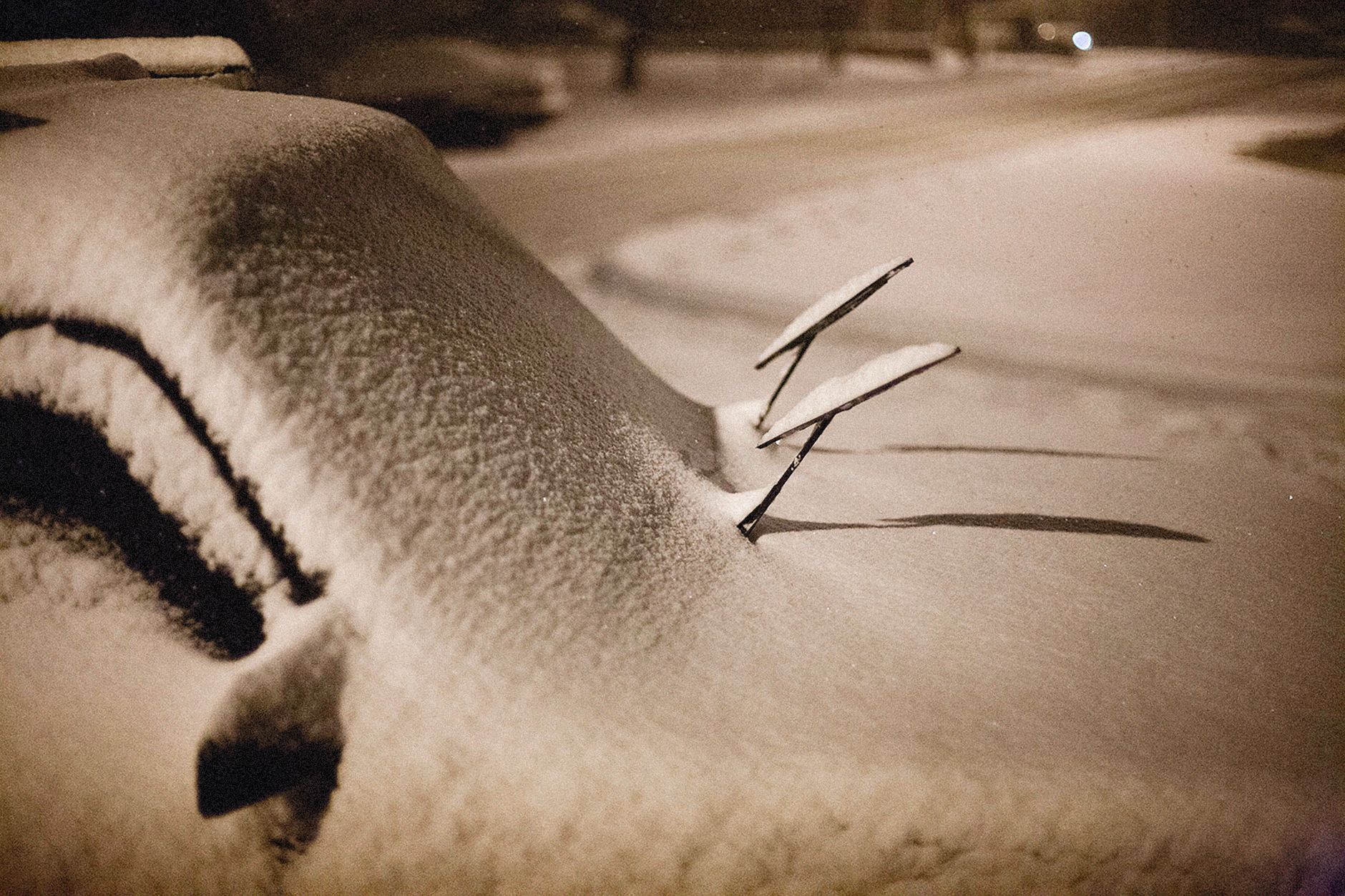
One moment the furnace was cycling the way it always does, the house wrapped in that background comfort you stop noticing until it disappears. The next, the lights flickered and died. The refrigerator stopped mid hum. The stove clock blinked out. Even the streetlamp outside my bedroom window went dark, and all that was left was the sound of wind dragging snow across the siding, over and over, like something scraping to get in.
I lay there a second in the dark, waiting for my eyes to adjust, listening to a house that had gone completely silent for the first time in eleven years.
Outside, Minnesota was reminding everyone who runs the place.
The storm had been building all week. Every forecast got a little more serious, every meteorologist a little more apologetic, the kind of tone that tells you they know something they aren’t fully saying. Meadowbrook Heights is the sort of development where people argue over fence lines and paint shades and whether a mailbox post can be black or has to be “colonial bronze,” but even the HOA’s emails had turned cautious that week. Secure outdoor items. Stock your essentials. Stay off the roads. You could feel the anxiety hiding underneath all that careful, polite wording, like they were scared and didn’t want to say it in writing.
I checked my phone. One bar. Alert after alert stacked on the lock screen from the National Weather Service.
Temperature: negative twelve and falling.
Wind chill already flirting with negative thirty.
I swung my legs out of bed and put my feet on a floor that was already colder than it should have been, colder than it had any right to be after only a few minutes without heat. It is startling how fast a house starts giving up on you once the electricity is gone. Like the walls were only ever borrowing warmth, not making it.
My first thought wasn’t my pipes.
It wasn’t my pantry, and it wasn’t the extra blankets folded in the hall closet.
It was Mrs. Patterson, next door.
I spent twenty two years as a hospice and home health nurse before I cut back to part time a few years ago, and there’s a particular kind of alarm that goes off in you when you’ve spent that long walking into houses where someone elderly is alone and something has gone wrong. It doesn’t turn off just because you’re not on shift. If anything it gets louder at two in the morning, in a blizzard, when you know exactly who’s sleeping seventy feet from your bedroom wall with no one checking on her.
Mrs. Patterson was seventy eight. She’d lived alone since her husband, Earl, passed six years back, and she carried the particular stubborn pride of someone raised in a generation where you didn’t ask for help unless you had absolutely nowhere else to turn. She’d lived through blizzards before, real ones, the kind that used to shut down the whole county for a week. But she always said those winters were different, not because the cold itself was different, but because people were. Back then, she told me once over coffee, the cold was just cold. Neighbors made it bearable by looking out for each other, walking food over, checking chimneys, sitting up with each other’s kids.
In Meadowbrook Heights, in the year we were living in, people mostly “checked in” online. There was a neighborhood app for it. Somebody would post a little digital thumbs up emoji under a message that said “everyone doing okay out there?” and thirty people would like it and nobody would put boots on.
I pulled my focus back to my own house first, because I had actually prepared for a night like this, and not because I’m the anxious type. Two summers earlier, a line of storms had knocked out power across the whole township for four days straight. Four days in July heat with a freezer full of food and an elderly neighbor and no way to run so much as a fan. It scared me more than I let on at the time. After that, I decided I was never going to be caught helpless again, storm or outage or anything else.
So I bought a Honda EU7000iS.
It’s a quiet, dependable, expensive piece of machinery, the kind that costs more than some people’s first car, and I did not do it halfway. I hired a licensed electrician to install a proper transfer switch. I filed the permits with the township. I had every circuit labeled by hand so there’d be no confusion in an emergency, and the whole system was built with zero backfeed risk, meaning there was no chance of it sending power backward into the grid and hurting a lineman working to restore service somewhere else. I read the manual front to back. I followed every rule that existed.
The HOA hated it anyway. Not because it was unsafe. Because it was something they couldn’t control.
They mailed me an actual letter about it, the kind with the HOA’s little pine tree logo at the top and a case number typed into the corner like I’d committed a misdemeanor. It complained about “visual impact” and “excessive mechanical noise,” as if a seven thousand watt emergency generator were a lawn gnome I’d set out to be decorative. The letter, signed by the board, insisted it stay covered and out of sight in the garage unless it was actively running during a declared utility outage, and even then I was supposed to notify the board in advance if at all possible.
Notify the board. During a blackout. With no internet and one bar of signal.
The man behind most of that language, I happened to know, was our HOA board president, Gary Prentiss. Gary lived four houses down, drove a truck that never once had a speck of mud on it, and had appointed himself the unofficial sheriff of Meadowbrook Heights’ aesthetic standards. He’d sent people warnings over garden gnomes, over a basketball hoop left in a driveway a day past the “guest usage” window, over a wind chime he decided was “audibly disruptive to the common enjoyment of the neighborhood.” He had, according to another neighbor, once measured the height of somebody’s grass with an actual tape measure.
So the generator stayed in the garage, tarped, quiet, resentful, like a dog kept on a short chain.
I’d tried reasoning with Gary once, early on, catching him at the mailbox kiosk on a Saturday and asking, as calmly as I could manage, what exactly the board thought was going to happen during a real emergency if nobody was allowed to run backup power without a phone call to a committee that met once a month. He’d folded his arms and told me covenants exist precisely so that one homeowner’s idea of an emergency doesn’t become everyone else’s noise problem. I asked him what he thought people were supposed to do instead, freeze politely. He didn’t have an answer for that, just repeated the phrase “community standards” twice and walked off toward his truck like the conversation was over because he’d said it was. After that I stopped trying to talk sense into him and just kept the tarp on, kept my paperwork filed, and told myself that someday, if it ever actually mattered, I’d deal with the consequences after the fact rather than ask permission I wasn’t going to get in time.
Until that night.
I layered up in the dark, thermals first, then wool socks, snow pants, my heaviest coat, grabbed my headlamp off its hook by the back door and pulled on gloves that still smelled faintly of gasoline from the last time I’d topped off the generator’s tank. Without power, even the rooms I’ve walked through ten thousand times feel wrong. Shadows stretch longer than they should. Corners you know by heart start to feel unfamiliar, like the house itself doesn’t trust you in the dark either.
The garage was brutal. My breath fogged the second I opened the door between the mudroom and the garage, a visible cloud hanging in my headlamp beam. The generator sat exactly where it always sat, compact, solid, patient, like it had been waiting years for someone to finally need it the way it was built to be needed.
I rolled it into position near the vented exhaust clearance we’d built the whole setup around, checked the fuel valve, flipped the choke, and pulled the starter cord.
Nothing.
Second pull, just a rough cough of an engine that wanted to argue about the temperature.
Third pull, it caught, and that low steady mechanical hum filled the garage, more comforting in that moment than almost any sound I can remember. I went inside and threw the transfer switch. Within seconds the furnace roared back to life somewhere down in the basement. The lights blinked on, dim at first, then steady. The refrigerator resumed its quiet electric buzz like nothing had happened.
Relief went through me in a wave, the kind that makes your knees a little weak after you didn’t realize how braced you’d been.
Then my mind went straight back to Mrs. Patterson.
I could have told myself she’d be fine. That she had quilts and grit and seventy eight years of experience getting through hard winters. That she’d light a candle, put on Earl’s old flannel robe, and wait it out like she always insisted she could.
But the temperature was still dropping, the wind chill already deep into dangerous territory, and “probably fine” is not a standard I was ever willing to bet an elderly woman’s life on. Not after two decades of watching what cold does to a body that age. Hypothermia doesn’t announce itself. It creeps in polite and quiet, the same way this whole storm had, and by the time you notice, it’s already had hours to work.
I grabbed two heavy duty extension cords off the pegboard and stepped back out into the storm.
Snow was already knee deep in the yard, drifting higher against the fence line. The wind hit me sideways the moment I cleared the garage, stinging every inch of exposed skin around my scarf, and every step toward her house felt like wading through something with actual resistance, like the storm had weight and didn’t want me crossing it.
Her house was dark. No porch light. No glow behind any window.
I knocked hard, the kind of knock meant to be heard through a storm and a hearing aid both.
Nothing.
I knocked again, louder, and called her name into the wind. This was not a night for polite little taps against a door.
A weak beam of light finally moved behind the curtain. The door cracked open an inch, chain still latched, and Mrs. Patterson’s face appeared in the gap, pale, hair loose from its usual pin, a flashlight clenched tight in one shaking hand.
“What in the world are you doing out there?” she rasped, her voice thin from cold and sleep both.
“The power’s out,” I shouted over the wind. “I’ve got my generator running at my place. Let me get you some heat and some light, okay? Just let me in.”
Her eyes filled, not with the dramatic kind of tears, but the quiet kind that come from someone who’s been holding herself together a little too long and finally doesn’t have to.
“They said it might be days,” she whispered, undoing the chain.
Days.
In that cold, days wasn’t an inconvenience. It was a countdown.
I ran both extension cords from my garage across the narrow gap between our houses, careful to keep the path clear of the worst drifts so I wouldn’t trip carrying anything heavy later. I plugged in a small space heater in her living room and two lamps, one by her recliner and one in the hallway so she wouldn’t have to navigate in the dark if she got up in the night. When the lights flicked on, she pressed a hand flat against her chest like she could finally take a full breath for the first time in an hour.
I ran a third line to her refrigerator so she wouldn’t lose the insulin she kept in the door, and a short one for her phone charger, propped on the kitchen counter so she’d have a way to call for help if anything else went wrong.
She insisted on making tea on her old gas stove, the burner clicking twice before it caught, blue flame steady in a kitchen lit only by a single lamp’s glow through the doorway. I sat at her table in my snow soaked coat while she poured hot water with hands that trembled, whether from cold or nerves or both I couldn’t say.
“You didn’t have to do this,” she said softly, sliding a chipped mug across the table toward me.
“I wanted to,” I told her, and I meant it in a way that went further back than that night. Meant it the way you mean things about people you’ve decided, somewhere along the way, you’re not willing to lose.
Before I could say anything else, headlights swept across her front window, cutting long shadows across the wall behind her.
Red and blue lights followed a second later, flashing silent and steady through the snow.
The HOA had called the police.
I want to tell you my stomach didn’t drop, but it did. Two decades of nursing, thirty years of being a careful, rule following person, and one letter from an HOA board is apparently all it takes to make you feel like a criminal standing in your own neighbor’s kitchen holding a mug of tea.
I told Mrs. Patterson to stay inside where it was warm and went back out into the wind to meet whoever had come.
The cruiser sat at the curb between our two houses, engine running, lights still turning slow circles across the snow. A single officer climbed out, tall, younger than I expected, maybe mid thirties, moving with the kind of urgency that didn’t match a routine noise complaint. He wasn’t strolling up the way officers do when they’re delivering a mild scolding about a barking dog. He was almost jogging.
“Ma’am, sorry to bother you this late,” he said, breath fogging hard, badge catching a flash of red light. “Officer Halloran, Willow Falls PD. Is that your generator running?”
“It is,” I said, bracing for the rest of it. “It’s fully permitted. Licensed electrician did the transfer switch install, no backfeed risk, I’ve got the paperwork inside if you need to see it.”
He held up a gloved hand, not unkindly. “I believe you. That’s not really why I’m here, or, it is, technically, dispatch got a call about unauthorized generator noise in the neighborhood, complaint came in from a Gary Prentiss over on Larchwood, said it violated some kind of community covenant.” He said the word covenant like it tasted strange in his mouth in the middle of a night like this. “But that’s not actually why I drove out here myself instead of just having someone call it in later. I’ve got kind of a situation, and when the call came through with your street name on it, I thought maybe, maybe you could help me out with something else entirely.”
I blinked at him, snow collecting on my eyelashes. “What kind of situation?”
He rubbed a hand down his face, and for a second the professional composure cracked and I saw something closer to panic underneath it.
“My dad’s on a home oxygen concentrator,” he said. “COPD, bad enough that a portable tank only buys him so long before he needs the machine running steady. He’s staying with my sister right now, other side of Willow Falls, and their power’s been out since about one thirty. County’s saying restoration could be two, three days out with how many lines are down. My sister called me an hour ago, said his oxygen levels were dropping and he was getting confused, which is exactly what happens when he doesn’t get enough air for too long. I called every rental place in three counties, everybody’s sold out or closed for the storm, ambulance and EMS are tied up on actual medical emergencies and rightly so, roads out that direction are barely passable. I’ve been driving around for forty minutes hoping to find literally anybody with a generator they might let me borrow for just a few hours, and then this call comes across the radio about unauthorized generator use two streets from where I already was.”
He looked at me, and there wasn’t a trace of the badge in his eyes anymore, just a scared son standing in a blizzard.
“I know I’m supposed to be here to write you up,” he said. “I’m not going to do that. I’m asking you, as one person to another, is there any way I could borrow that thing for a few hours? I’ll bring it back the second the roads let me, I swear it. I know I have no right to ask you this in the middle of the night.”
For a second I just stood there in the wind, feeling the whole shape of the evening rearrange itself. The letter, the fine I’d been braced for, Gary Prentiss and his tape measure and his pine tree letterhead, none of it mattered anymore standing in front of a man whose father was struggling to breathe seventeen minutes away.
“You don’t have to bring that one back tonight,” I said. “That one’s running my house and my neighbor’s, and I’m not about to shut either of those down in this wind chill. But I’ve got another one. Older, smaller, used to be my main backup before I upgraded. It’s a four thousand watt Champion, enough to run a concentrator, some lights, maybe a space heater on low. It’s yours as long as you need it.”
His whole face changed. “You’re serious.”
“Come on,” I said, already turning back toward my garage. “Help me load it. And I’m coming with you.”
He tried to argue with me about that part, standing in my driveway with snow blowing sideways between us, saying it wasn’t necessary, that he could handle hooking it up himself. I told him that a home oxygen concentrator has a specific startup surge and a specific running wattage, and that I’d spent twenty two years around exactly this kind of equipment in exactly this kind of emergency, and that if his father’s levels were already dropping I wasn’t going to risk him losing more time to trial and error with an unfamiliar generator in a dark house. He stopped arguing after that.
We loaded the Champion into the back of the cruiser together, along with a spare extension cord and a can of fuel from my shed, and I climbed into the passenger seat of a police car for the first time in my life, heart pounding in a way that had nothing to do with the law and everything to do with a stranger’s father I hadn’t met yet.
The roads out toward the other side of Willow Falls were worse than I expected, drifts crossing the pavement in long white ridges that the cruiser’s headlights barely cut through, wipers slapping uselessly against snow that kept coming sideways. Officer Halloran drove with both hands locked on the wheel and his jaw set tight, and somewhere in that fifteen minute drive he told me his father’s name was Walt, that Walt had done two tours in Vietnam, that he’d come home and spent thirty years running the parts counter at the John Deere dealership in town before his lungs finally started giving out on him a few years back, worse some winters than others. He told me his dad still went to the Willow Falls VFW post every Thursday for coffee with the other old timers, even hauling his portable tank along with him, because he said a man who’d earned his seat at that table wasn’t about to give it up over a little bad breathing.
He told me his dad used to say the two tours never really left him, not the way people think, not nightmares so much as a permanent low hum of watchfulness that never fully switched off, and that the lungs going bad on him now felt like one more thing that war had reached forward across fifty years to take. He told me Walt had refused a wheelchair for as long as anyone could remember, refused a cane even after two falls, and only agreed to the portable oxygen tank because his cardiologist told him straight out that the alternative was staying home permanently, and Walt had said he’d rather drag a tank behind him to his grave than miss another Thursday at the post. Somewhere around the third mile he admitted, quiet enough that I almost lost it under the wind noise, that he’d been half convinced he was going to find his father unconscious by the time we got there, and that he hadn’t let himself say that out loud to his sister on the phone because saying it might make it true.
I understood, listening to him talk, why he’d been willing to knock on strangers’ doors in a blizzard rather than watch that man struggle for air in the dark.
His sister’s house had one porch light burning off a battery lantern when we pulled in, snow already halfway up the front steps. She met us at the door white faced and near tears, said their father had gotten quiet in a way that scared her more than if he’d been agitated. We hauled the Champion around back near a window we could run a cord through safely, and Officer Halloran and I worked together in the dark and the wind, me talking him through the choke and the fuel valve the same way I’d talked a hundred nervous family members through equipment over the years, him following instructions with the kind of focus you only get when it’s someone you love on the other end of the wire.
It caught on the second pull.
We ran the cord inside, plugged in the concentrator, and I will remember the sound of that machine clicking on for the rest of my life, that steady mechanical hiss and hum starting up in a dark living room, and Walt Halloran’s breathing evening out within a few minutes as oxygen started flowing steady again instead of thin and uneven off the last of a portable tank. His sister sat on the arm of his chair and cried without trying to hide it. Officer Halloran knelt down in front of his father, took the old man’s hand, and just sat there a minute not saying anything at all.
Walt opened his eyes eventually, looked at his son, then at me, a stranger in a coat still dripping melted snow onto his sister’s carpet, and rasped out, “Who’s this.”
“Someone who saved your life tonight, Dad,” Officer Halloran said, and his voice cracked in a way I don’t think he expected it to in front of his family.
I didn’t correct him. I just told Walt it was good to meet him, and that I’d heard he held down a table at the VFW every Thursday, and he managed a small, tired smile and said I ought to come by sometime, they always had room for one more.
The storm held on for two more days after that, howling and dumping snow until the plows finally caught up with the county roads and the power company worked their way through the downed lines one grid section at a time. My own house never lost the hum of that Honda the whole time, running steady, sipping fuel, doing exactly what I’d built it to do. Mrs. Patterson stayed warm the entire stretch, and by the second day she’d started walking over to my place in the mornings in her boots and Earl’s old coat just to sit at my kitchen table and talk, something we hadn’t done nearly often enough before that night.
Officer Halloran brought the Champion back himself on the third day, once the plows had finally cleared Larchwood and the side streets, engine of his own truck this time instead of the cruiser, off duty, in jeans and a Willow Falls PD sweatshirt. His sister had sent along a foil wrapped pan of something that turned out to be the best hotdish I’d had in years, and Walt himself had insisted on riding along, wrapped in blankets in the passenger seat with his portable tank at his feet, just to shake my hand and say thank you in person.
“Wanted to see the face that kept me breathing,” he told me, gripping my hand harder than I expected from a man who’d been struggling for air three nights before. “Man doesn’t forget something like that.”
Word travels fast in a small development, faster still when it involves flashing lights at two in the morning, and by the end of that week most of Meadowbrook Heights knew some version of the story, that the HOA had called the police on a resident for running a generator, and the officer who showed up ended up needing to borrow it for his own father’s medical equipment. Mrs. Patterson told the story to her whole Thursday quilting circle at the Lutheran church, embellishing it a little more each telling in the way she does, until in her version I’d apparently walked through a snowdrift up to my chest, which, generously, might have been true by the time I reached her porch.
The Willow Falls Gazette ran a short piece about it the following week, mostly focused on Walt and the VFW, a little human interest item about neighbors and preparedness during the storm. It didn’t name Gary Prentiss, but everyone in Meadowbrook Heights knew exactly whose complaint had started the whole chain of events, and exactly how badly that complaint had aged once people heard how the night actually ended.
Gary didn’t call an emergency board meeting so much as get quietly cornered into one. I heard later that three separate board members had gotten phone calls from residents asking, in various tones of politeness, why exactly the HOA’s policy on emergency generators during declared weather events was written the way it was, and whether it had occurred to anyone drafting it that a properly installed, permitted, professionally wired generator running during a blizzard might be the difference between someone freezing and someone not.
I went to that meeting. I hadn’t planned to speak, but when the floor opened up I found myself standing anyway, telling the room about Mrs. Patterson’s porch light, and about a man named Walt Halloran breathing easy again in his daughter’s living room because a piece of equipment the board had once called a “visual impact” issue was sitting in my garage instead of sold off or shut away for good.
The board revised the covenant inside of a month. Emergency generators, properly permitted and installed, are now explicitly allowed to run without prior notification during any declared weather emergency or utility outage lasting more than two hours, with reasonable screening standards applying only outside of active emergency use. Gary Prentiss voted for the revision along with everyone else. He didn’t look at me while he did it, but he voted for it, and around here, that’s about as close to an apology as some people are built to give.
It’s been months since that storm now, and the strangest part isn’t the new covenant language or the newspaper clipping Mrs. Patterson keeps folded in her Bible. It’s the ordinary things that came out of one bad night.
Mrs. Patterson and I have tea most mornings now, hers black, mine with too much honey, and she’s taught me three things about canning tomatoes I never knew and I’ve fixed her garbage disposal twice, which she insists on calling “a whole production” every time. Officer Halloran stops by every few weeks just to say hello, and Walt made good on his invitation. I’ve been to that VFW post on more Thursday mornings than I can count now, sitting with men who fought wars I only read about, drinking coffee that could probably strip paint, listening to stories nobody else has the patience to hear anymore.
I still keep that Honda EU7000iS in the garage. I still keep the Champion beside it, tuned and ready, tank topped off, because you never know anymore who might need to borrow it next. I bought a third one this spring, smaller still, a little two thousand watt unit that fits in a car trunk, and I mentioned to a few people at church that I’d be glad to lend it out if anyone ever needed it and didn’t want to go through the trouble of asking. Mrs. Patterson thinks I’ve gone a little overboard. I told her overboard is a word people use for things that turn out fine on their own, and I’d rather be the kind of overboard that doesn’t have to find out.
The letter from the HOA is still in a drawer somewhere, case number and all. I keep meaning to throw it away, and I keep not getting around to it, because every time I see that little pine tree logo I remember standing in a blizzard at two in the morning, certain I was about to get fined for doing the right thing, and instead finding out that the right thing, done quietly and stubbornly enough, has a way of finding exactly the person who needs it most.
Some rules exist to keep a neighborhood tidy. Some nights remind you what a neighborhood is actually for.
I know which one I’ll choose again, every single time.