The Server Who Caught The Tip Thief
The wind never really stops in Amarillo. You learn to lean into it a little when you walk from your car to the door, the way you’d lean into a person you trust. I was leaning into it on the Tuesday everything ended, walking across the gravel lot of the Rusty Spur Steakhouse at ten in the morning with a folder under my arm and my apron still folded in my bag, because I hadn’t decided yet whether I’d need it.
Inside, the dining room was empty except for the smell of coffee and griddle grease from the morning prep, and Brill Hasenfuss was standing by the host stand in a golf shirt that was too tight across the shoulders, laughing too loud at something the man next to him hadn’t quite finished saying. The man next to him was maybe fifty, silver at the temples, a lanyard around his neck with a laminated badge that said RUSTY SPUR STEAKHOUSE GROUP, FIELD OPERATIONS. Nash Purviance. I’d never met him. I knew his name because Brill had said it eleven times in the two days since the visit got announced, the way you say a name you’re trying to make yourself believe you’re not afraid of.
I want to tell you how I got to that Tuesday morning, because the folder under my arm didn’t happen by accident. It happened because I’d spent four years learning that restaurant, and eleven weeks learning exactly how Brill had been stealing from every person who worked a shift under that roof.
My name is Xiomara. I’m twenty-six years old. I have worked at the Rusty Spur since I was twenty-two, since before Brill owned it, since it still belonged to a man who used to stand at the register on Friday nights and hand out toothpicks like they were a blessing. This is the story of the eleven weeks that ended with a stranger from Lubbock turning a laptop around on my boss, and it’s the story of everything that had to happen first for that moment to be possible.
—
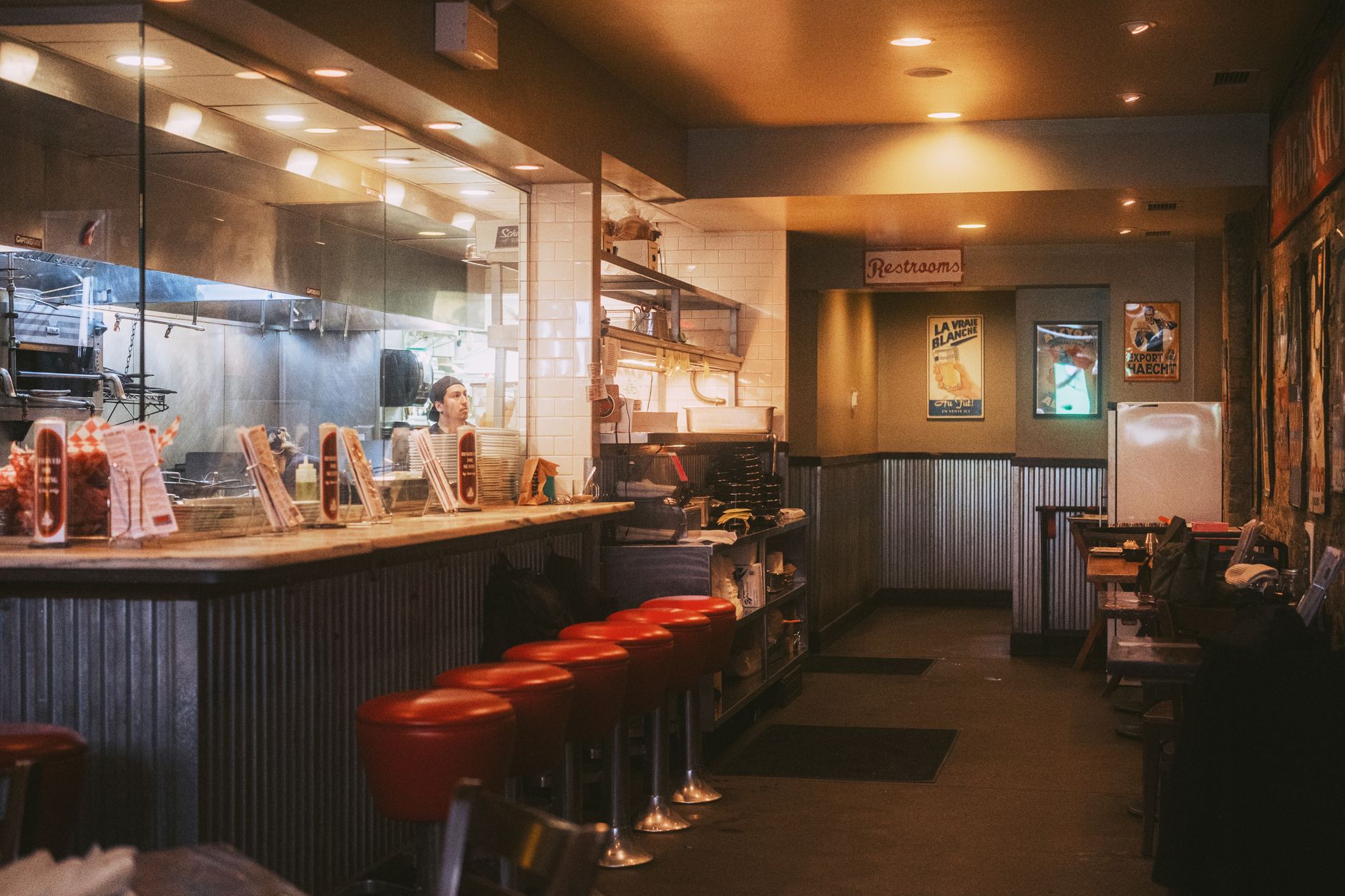
The Rusty Spur sits on the frontage road off I-40 on the east side of Amarillo, close enough to the stockyards that on a still evening, if the wind shifts wrong, you can smell the feedlots on the breeze and the tourists driving through from Oklahoma roll up their windows and the locals don’t even notice anymore. It’s a steakhouse, the kind with a wagon wheel bolted to the wall and a mounted longhorn skull over the bar and a menu that hasn’t changed much in twenty years because nobody’s ever asked it to. Eleven locations across the Panhandle and West Texas, corporate office off I-27 outside Lubbock, family-owned once, now owned by whoever corporate leases the operating rights to next.
I started there as a hostess the summer I turned twenty-two, right after I finished my associate’s, back when my plan was to save enough to finish a bachelor’s somewhere and I still believed that plan had a clean, straight road to it. Four years later I was still there, still in Amarillo, still living in my mother’s house on the north side of town because rent had gone up twice as fast as anybody’s wages had, and my plan had turned into something smaller and more specific: a medical billing and coding certificate through Amarillo College, two night classes a semester, paid for one paycheck at a time. I worked doubles on the weekends and picked up whatever the schedule would give me, because the tip money wasn’t extra to me. The tip money was the whole plan.
My mother cleans houses on the west side, three days a week for the same families she’s cleaned for since I was in middle school, and two more days at a packing plant on the edge of town when the schedule allows it. She raised me and my younger brother alone after my father moved back to Mexico when I was nine, and she has never once, in seventeen years, been late on a bill. I grew up watching her stretch a paycheck the way other people stretch dough, thin and even, no gaps. When I moved my mattress back into her spare room at twenty-two, it wasn’t a step backward. It was two women pooling what they had so both of us could keep our heads above the same water. My tip money paid my share of that water. When it came up short, it wasn’t an inconvenience. It was a hole in the floor of the actual house we lived in.
The man who used to own the Rusty Spur, the one who handed out toothpicks, sold his operating rights back to corporate two years ago when his knees finally told him what the rest of him had known for a while. Corporate ran it themselves for about eight months with a rotating string of interim managers, and then, last September, they leased it out to Brill Hasenfuss.
Brill was not a restaurant man. He said so himself, proudly, in the first staff meeting he ever called, standing at the pass with his arms crossed like a man posing for a photograph nobody had asked to take. “I’m a numbers guy,” he told us. “I’ve flipped storage facilities, I’ve flipped a car wash, and I’m going to run this place lean and get us to a second location inside two years.” He said “lean” a lot that first month. We didn’t understand yet what lean was going to mean for us.
What lean meant, it turned out, was the walk-in got restocked less often and the portions on the value plates got quietly smaller and two of the line cooks who’d been there for years got replaced by kids making a dollar less an hour. And it meant the tip pool started coming up short.
—
Here’s how the tip pool worked at the Rusty Spur, and how it had always worked, going back to the toothpick days. Servers, bussers, and the host split a pool made up of a percentage of every table’s credit card tip, since most of our business ran on cards, plus whatever cash came in. At close, the manager on duty ran the tip report off the point-of-sale terminal, a report that shows, table by table, exactly what every card tipped, subtracted a small percentage for the actual cost of card processing, since that’s legal and every restaurant in the country does it, and then divided the rest by hours worked. It got read out loud at the pass, in front of whoever was closing, the way it had been done for twenty years. You could see the number. You could watch the manager read it off the screen.
Under the old owner, that meant something. Under Brill, the reading stopped happening in front of anybody. Brill started closing out the tip pool himself, in the office, door shut, and what came out was an envelope with your name on it and a number inside it that you had no way to check against anything.
The first few weeks, I told myself I was imagining it. A slow Tuesday feels different from a slammed Saturday, and it’s easy to lose track of what a section actually earned when you’re moving fast and clearing plates and running food for six tables at once. But by October I wasn’t imagining anything. I was coming home from full Friday nights, church potlucks the next morning too tired to notice, with an envelope that didn’t match what I’d watched happen on my own tables. I remembered specific checks. I remembered a birthday party of fourteen that tipped thirty percent on a two-hundred-and-ten-dollar ticket, because the grandmother made a show of it, counting it out loud and telling her grandson that’s what you do for people who work hard. Sixty-three dollars, at least, from that table alone. My envelope that night had forty-one dollars in it, total, for a five-hour shift that should have cleared more than double that between the four of us on the floor.
I mentioned it once to a busser who’d only been there six weeks, a kid still learning where the silverware went, and he just shrugged and said maybe Fridays were like that. He needed the job too much to wonder out loud. Most of the crew did. Brill had already let two people go that fall for what he called “attitude,” which everybody understood to mean asking questions, and a restaurant floor learns that lesson fast. You stop asking. You cash the envelope and you go home and you tell yourself you counted wrong.
—
The person who taught me not to trust that explanation was Teodora.
Teodora had worked the floor at the Rusty Spur for fifteen years, since before I was old enough to carry a tray. She was the one who trained me on my first day as a hostess, the one who taught me how to read a dining room from the door, which four-top was about to ask for the check and which one wanted to be left alone with their coffee for another twenty minutes. She had raised two kids on that job, mostly on her own, and she had a way of moving through a full Saturday night that looked like she wasn’t even trying, which is the tell of someone who has been doing something so long it’s become part of her hands.
Teodora noticed the shortfall before I said a word about it, because Teodora noticed everything. But she didn’t want to talk about it, not really, not at first. One night in November, closing side by side, wiping down the same booth from opposite ends, I finally asked her straight out if her envelopes had felt light lately.
She didn’t answer right away. She kept wiping the same spot on the table longer than it needed.
“They have,” she said finally. “For a while now.”
“Since Brill.”
“Since Brill.” She folded the rag over once, like she was folding something else, something she’d rather not be holding. “Mija, I need this job. I have a granddaughter starting kindergarten in the fall and I am the one buying her shoes. I can’t be the one who makes trouble and gets ‘attitude’ put on my file. I can’t.”
She told me once, back when I was still a hostess learning to carry three plates up one arm, that she’d started at the Rusty Spur the same year her oldest was born, and that the old owner had let her bring the baby in a car seat and set him behind the host stand on slow Tuesday afternoons when she couldn’t find a sitter. That kind of debt doesn’t show up on any ledger, but it sits in a person. It’s part of why she stayed quiet as long as she did. You don’t want to believe the place that once let you keep your baby behind the host stand is the same place quietly taking food off his table fifteen years later.
I understood that. I want to be honest that at the time, I mostly understood it as an ending to the conversation, not a beginning. Teodora had fifteen years of reasons to stay quiet, and I didn’t have the right to ask her to spend those reasons on my suspicion. So for a few more weeks, I let it sit. I kept a mental tally, nothing written down yet, just a private ledger of Fridays that didn’t add up.
What changed my mind about staying quiet wasn’t a single bad night. It was a Sunday morning in December when the tip envelope was so light I did the math out loud in the parking lot, in the cold, with my breath fogging in front of me, and I realized that at the rate I was falling behind, I was not going to make December’s tuition payment. Not because I hadn’t earned it. Because somebody had already spent it before it got to me.
—
I remembered something that week that I hadn’t thought about in over a year, from back when the old owner was still training a new assistant manager and needed a second set of hands who already knew the floor. For about two months, before he sold the place, he’d walked me through the back office system, the point-of-sale terminal that ran everything: orders, checks, closes, and the tip reports. He’d given me a manager-level login so I could close out the register on nights the assistant was off, back when he trusted his people the way you trust family. When he sold to corporate and corporate leased to Brill, nobody had ever gone back through the system and cleaned out the old logins. Mine still worked. I’d never used it for anything since, because there’d never been a reason to.
There was a reason now.
The system kept something called a tip declaration and tender-type export, a report built for tax and labor compliance, not for a manager’s convenience. It pulled straight from the card processor: every dollar a customer’s card tipped, on every table, on every shift, timestamped and dated, a number that lived on the settlement side of the system where a manager closing out envelopes by hand could never touch it. It was the number underneath the number. It was, in other words, the truth, sitting there in a system Brill didn’t know I could still open.
I want to tell you I ran that report once and had my proof in an afternoon. I didn’t. I was scared the whole time, in a low, steady way that never fully let up. I waited until close, after Brill had left for the night, which he almost always did before the last table cashed out, trusting the closing staff to lock up. I’d sit at the terminal in the back office with the door open so I could hear anyone coming, and I’d pull that night’s export, a plain spreadsheet file, and email it to myself from an account with no name on it that meant anything to anyone. Then I’d close the window and go home and lie awake wondering if there was a log somewhere that would tell Brill exactly what I’d done.
I did that eleven weeks running. Not every night. Just the nights I worked, which was most of them, because doubles were how I made rent. Eleven weeks of quiet exports, saved to a folder on my personal laptop that I named after a class I was supposedly taking, a small, stupid piece of camouflage that felt necessary at two in the morning and silly by daylight.
And every week, I set the export next to what actually landed in the envelopes.
—
The gap was not subtle once I could finally see it laid out. Brill was doing two things, and once I understood both of them, the whole scheme sat there plain as a bill on a table.
The first was the processing fee. Card processing on a ticket like ours runs somewhere around two percent, sometimes less depending on the card. It’s legal, and it always has been, for an employer to deduct the actual cost of that processing from a credit card tip before it goes into the pool. Brill was deducting three and a half percent. Not two. Three and a half. On a location doing the volume the Rusty Spur did, that difference alone came to real money every single week, quietly skimmed off the top before anybody ever got a chance to divide anything.
The second was worse, because it wasn’t hidden in a percentage. It was flat theft dressed up as bookkeeping. Some nights the envelope total was just short of even what the inflated fee should have left behind, with a line in Brill’s own handwritten ledger, which I found later, that said things like “till adjustment” or “vendor credit” or, on one memorable night in October, simply “misc.” Money that belonged to servers and bussers and a host who was eighteen years old and saving for her first car, moved sideways into a running total Brill kept for himself.
I built a spreadsheet of my own, eleven weeks of exports against eleven weeks of envelopes, night by night, dollar by dollar. By the second week of my count, the pattern was already impossible to explain away as human error. By the sixth week, I had a number I trusted enough to lose sleep over. By the eleventh week, the number sat at just over fourteen thousand dollars, skimmed from the pool since Brill took over the year before, spread across roughly nine tipped employees who had no way of seeing what I was seeing, because none of them still had a login into a system that told the truth.
Fourteen thousand dollars doesn’t sound like a fortune if you’ve never worked for tips. If you have, you know exactly what it is. It’s Teodora’s granddaughter’s kindergarten shoes and then some. It’s a semester of my classes, twice over. It’s whatever the eighteen-year-old host was saving for that car, gone before she ever got a real look at it.
—
I hadn’t decided yet what to do with any of it when the schedule went up the second week of January with a note stapled to the corner in Brill’s handwriting: FIELD OPS VISIT TUES. ALL HANDS SHARP. He called a staff meeting the next day, and for the first time since he’d taken over, he looked something other than certain of himself.
“Corporate does a quarterly walk,” he told us, standing at the pass the way he had that first day, except the arms weren’t crossed this time. “Brand standards. Nothing to worry about. This one’s got a compliance piece bolted on because some location up in Lubbock got a call on the labor hotline, so they’re doing the whole region this quarter instead of the usual spot checks. Just do your jobs. Nothing’s wrong here.”
He said that last part twice. Nothing’s wrong here. I’d learn later, though not from him, that the hotline call hadn’t come from Lubbock at all. It had come from a server who’d quit the Rusty Spur back in the fall, worn down by envelopes that never added up and too far gone by then to stay and fight about it. She’d called corporate on her way out the door, anonymously, the way the hotline is built to let you. I never learned her name. I don’t need to. I understood her completely.
Nash Purviance was the field operations VP for the whole eleven-location group, based out of the Lubbock office, and the note in the compliance packet, which I only saw later, included a line item under wage and hour review: verify tip pool distribution against POS tender-type reports for the trailing quarter. Standard language. Boilerplate, probably, copied into every location’s packet that quarter because of one phone call from one server two hundred miles away who I will never get to thank.
Brill spent the two days before the visit the way a man spends time when he’s building a story instead of fixing a problem. He printed things. He reorganized the office. He told us all, more than once, to keep our stations tight and our smiles ready and let him handle any questions about the back of house. I watched him rehearse a version of the tip pool math out loud to himself in the office one afternoon when he thought nobody was near the door, practicing a number I already knew was false.
I didn’t sleep much the night before. I sat at my kitchen table with my own spreadsheet open and eleven weeks of exports printed and stapled in a folder, and I thought about Teodora’s granddaughter and the eighteen-year-old host’s car and the version of my own December that never got its tuition payment, and I thought, for a long time, about whether I had the right to walk into that building with proof that could cost a grown man his business.
I decided I did. Not because I wanted to end anything. Because he already had.
—
Nash Purviance walked the floor first, the way I understand these visits usually go, checking plating and ticket times and the state of the walk-in, Brill trailing a half-step behind him with the kind of laugh men use when they’re hoping a stranger won’t ask a harder question next. I watched them from the server station, wiping down silverware I’d already wiped twice, waiting.
It was around ten-thirty, the lull between the breakfast crowd and lunch prep, when Nash asked to see the wage and hour documentation in the office. I found a reason to be near the hallway. Teodora found the same reason, a stack of napkins that needed refolding that didn’t actually need refolding, and for a moment we just looked at each other, the way you look at someone before you both step off the same ledge.
Through the half-open door I heard Nash ask, plainly, for the quarter’s tip declaration and tender-type export, cross-referenced against the pool distribution ledger. I heard Brill’s laugh again, thinner this time, and a line about the printer being finicky lately, and something about needing to pull an updated report because the old one had a formatting glitch.
There is no formatting glitch on that report. I had eleven weeks of it sitting in a folder in my bag.
I knocked on the door frame before I let myself think better of it. “I can pull that,” I said. “I have manager access to the terminal. I used to close out for the previous owner.”
Brill’s face did something I will remember for a long time, a kind of fast recalculation, the look of a man realizing a door he thought was locked had been standing open the whole time. “That’s alright,” he said, too quick. “I’ve got it.”
“It’s no trouble,” I said, and I looked at Nash, not at Brill, when I said it. “Actually, I already have the last eleven weeks pulled, if that’s useful. I noticed some discrepancies between what the export shows and what’s been going into the pool, and I wanted to be able to show my work if anyone ever asked.”
Nash Purviance looked at me for a second too long to be casual. “I’d like to see that,” he said.
—
I set the folder on the desk and opened it to the first week, and I walked him through it the way I’d built it, night by night, the export total next to the pool total next to the difference, the inflated processing percentage circled in red on three separate weeks where I’d pulled the actual statement rate for comparison. Nash didn’t say much while he read. He has the kind of stillness men get when they’re doing math they already suspect the answer to.
Brill tried twice to talk over it. The first time he said something about till shortages that come out of the pool as standard practice, and Nash asked him, without looking up, to point to the till shortage report that corresponded to any of the nights in question. There wasn’t one. There had never been one. The second time Brill reached for the folder itself, and Nash moved it two inches out of his reach without comment, which told me more than anything he said all morning.
“How long has the processing deduction been three and a half percent?” Nash asked Brill directly.
“That’s, uh, that’s within a normal range for card processing costs,” Brill said.
“Our merchant agreement with this processor is public record and it’s one point nine,” Nash said. “I signed it myself eight months ago when we onboarded this location’s new terminal.” He turned back to the folder. “This is going to take a minute.”
He flipped back to the third week, where I’d circled the “misc.” line from Brill’s own handwritten ledger in red. “Walk me through this entry,” he said, turning it toward Brill.
Brill’s jaw worked for a second before anything came out. “Sometimes the register runs short at close. Card skimming errors, refunds that don’t process clean. That comes out of the house account, not the pool, that’s just standard restaurant math.”
“Then it comes out of the house account,” Nash said. “Not the employees’ tips. Those are two different piles of money, Brill, and you know that, because I sat across from you in a training on exactly that distinction fourteen months ago when we onboarded you.” He set the page down. “This entry is dated the same night as a Saturday that cleared better than any Saturday that month, by your own sales numbers. There was no shortage that night. There was a good night, and somebody decided the pool could stand to be lighter anyway.”
Nobody in the room said anything for a moment. Brill looked, for the first time since I’d known him, like a man who understood exactly how small his excuses had become.
That was when Teodora, who had drifted into the doorway with her napkins still in her hands, spoke up without anybody asking her to. Her voice shook at first and then didn’t.
“I want to say something,” she said. “I’ve worked this floor fifteen years. Under the old owner, they read the tip count out loud at the pass so everybody could see it. Since Brill, that stopped. I noticed my envelopes were light back in October and I didn’t say anything because I was scared for my job. I have a granddaughter I’m raising part of. I started keeping my own notes on a legal pad in my purse, just dates and amounts, because I didn’t trust myself, and then I didn’t trust myself to bring it to anyone alone.” She looked at me, not at Brill. “I trust her math. I’ve watched her work a floor for four years and she doesn’t make mistakes like this.”
She pulled a folded, coffee-ringed legal pad page out of her apron pocket and set it on the desk next to my folder. Two independent records, kept in secret, by two people who’d never once compared notes with each other until that morning, and they matched.
Brill started talking about intending to true it all up at year end, about cash flow timing, about a plan he’d apparently had the entire time to make everyone whole eventually, and Nash Purviance held up one hand, not unkindly, and stopped him mid-sentence.
“Brill,” he said. “Federal law doesn’t allow an owner or a manager to keep any part of a tip pool. Not temporarily. Not as a timing issue. Not ever. You know that, or you signed the franchise operating agreement without reading section nine, and either one of those is a serious problem for me right now.” He closed the folder gently, the way you close something you plan to keep. “I need the office for the rest of the day. I’m going to need everyone’s contact information before I leave, starting with these two.”
—
What happened over the following weeks came in pieces, the way these things do when you’re the one who set them in motion but don’t get to control what happens next. Corporate suspended Brill’s operating lease within forty-eight hours, pending what the letter he eventually had to read to us called a formal investigation, though by then everyone on that floor already knew what the investigation was going to find, because I’d handed them the finding myself in a manila folder. Corporate brought in an interim general manager from the Lubbock location, a calm, unhurried woman who did the first thing right that had been done in over a year: she read the tip count out loud at the pass again, every single night, the way it used to be.
Restitution came faster than I expected, honestly, once the number was undeniable. Corporate cut checks to every tipped employee who’d worked under Brill’s lease, back-paying the shortfall the exports proved, plus a penalty percentage corporate’s own lawyers insisted on adding, apparently because a wage claim that reaches the Texas Workforce Commission or the Department of Labor costs a company far more than making it right quietly and fast. Teodora’s check covered more than a season of shoes. The eighteen-year-old host got her car two months earlier than she’d planned.
Brill Hasenfuss lost the lease entirely. What happens to him beyond that isn’t fully mine to know or tell, but I heard, secondhand, that corporate’s attorneys referred the processing fee discrepancy to the labor authorities as a pattern rather than a one-time error, which is a different and much heavier kind of trouble than getting quietly asked to leave. I didn’t feel triumphant when I heard it. I felt something quieter, more like the wind finally dying down after a long day of leaning into it.
Nash Purviance called me himself, two weeks later, not about the investigation, but about a job. Corporate wanted someone to run the Amarillo location on an interim basis while they searched for a permanent operator, and he told me, plainly, that a twenty-six-year-old who still remembered a login nobody else thought to check, and who’d had the patience to build eleven weeks of proof instead of one angry accusation, was exactly the kind of person he wanted managing a kitchen. I said yes before I let myself think of a reason to say no.
The first thing I did as interim manager wasn’t a policy change or a staff meeting. It was smaller than that. I bolted a printed copy of the nightly tip report to a corkboard by the time clock, in plain sight, the way it should have been the whole time, so that anybody closing that night could walk past it on their way out and check the math themselves without having to ask permission or trust a closed office door. Teodora saw it the first night it went up and didn’t say anything. She just touched the corner of the page once, the way you’d touch a photograph, and went to clock out.
My mother cried when I told her about the back pay, not because of the number, though the number mattered, but because for the first time in a long while, somebody with power over our household’s water had looked at what was owed and simply paid it, without a fight, without her having to ask twice. I used part of mine to get her car’s transmission fixed, the one she’d been nursing along for two years because a real repair always lost to a more urgent bill. It was the first time in longer than I can remember that money we’d earned honestly went straight to something that mattered, with nothing skimmed off the top on the way there.
—
I still smell the feedlots some evenings when the wind shifts wrong, and I still lean into it walking across that gravel lot, except now I’m the one who unlocks the door in the morning. I finished my certificate in the spring, on schedule, because the tuition payment that had once felt impossible turned out to be exactly the size of the money that had been mine all along. Teodora still trains every new hire who walks onto that floor, and some evenings, closing side by side the way we always have, she tells them the story of the legal pad in her apron pocket, the one she almost never had the courage to pull out.
I think about that folder a lot, the one I built quietly for eleven weeks with my hands shaking half the time I opened that terminal. I think about how close I came to deciding it wasn’t worth the risk, the way Teodora had decided for over a year, the way that server who called the hotline had decided only after she’d already given up and walked out the door. I understand now why so many people don’t fight it. The fear is real and the job is real and the rent is due on the first no matter what.
But I also know now that the truth doesn’t need you to be loud. It just needs you to keep the receipts, and to be standing in the room when someone finally asks the right question. I was. And when Nash Purviance asked for the report Brill hoped nobody could run, I already had it in my hands.
This story is a dramatization. Names, characters, and details are invented, and any resemblance to real people or events is coincidental.