The Roof Fund He Called Vision Projects
Pastor Delwin Cransley stood at the pulpit of Board Camp Road Baptist Church, folded his hands the way he did before he was about to say something he thought was tender, and told four hundred people that the roof fund, forty one thousand six hundred dollars we had raised nickel by nickel over three years, had been “reallocated toward vision projects.”
I am forty two years old. I have kept the books for that church for nine years, ever since my mother set down the ledger and told me it was mine to carry now. I did not stand up when he said it. I sat in the third pew from the back, in the spot my mother sat in before me, and I felt something go cold and still inside my chest, the particular stillness of a woman doing arithmetic in her head while her face stays calm.
Forty one thousand six hundred dollars. I knew that number the way I know my own children’s birthdays. I had watched it grow a dollar at a time for three years, and in one Sunday morning announcement, wrapped in the softest voice I ever heard a man use, it was gone, and he was already smiling at us like he had done us a kindness.
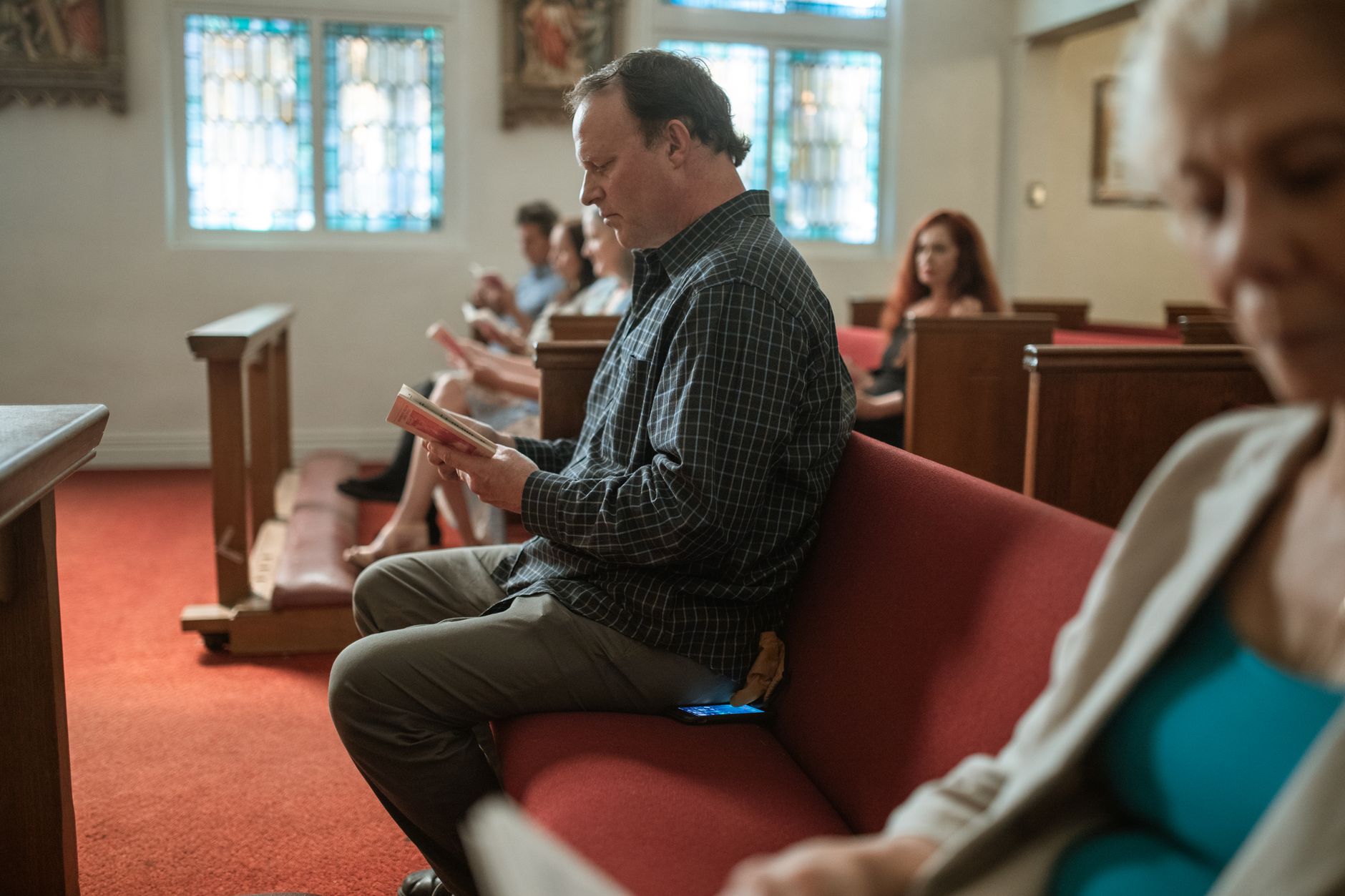
Nobody in that sanctuary said a word. That is the part I still cannot get past. Not one voice. Just Delwin Cransley up front in his gray suit, and behind him the old choir loft with the water stain still faint on the ceiling tile if you knew where to look, and four hundred people staring at their own hands like the carpet had suddenly gotten interesting.
I am going to tell you the whole thing, from the beginning, because a story like this does not make sense in the middle. You have to see what that money was before you can understand what it meant to lose it, and what it cost me to get it back.
The church on Board Camp Road
I was born and raised six miles outside of Mena, Arkansas, in the shadow of Rich Mountain, in a house my daddy built with his own hands off a gravel spur that still floods every spring. Board Camp Road Baptist Church sits at the crossing where the county road meets the old timber road, white clapboard, a steeple you can see from two ridges over, and a fellowship hall out back with a tin roof that rings like a drum every time it rains, which in Polk County is often.
I was baptized in Caney Creek when I was eight years old, in water so cold it stole my breath clean out of my chest, and I came up gasping and grinning while the whole congregation stood on the bank and sang. I have not missed more than a handful of Sundays since. I married my husband in that sanctuary. I buried my husband out of that sanctuary too, four years ago, an aneurysm that took him between breakfast and lunch on an ordinary Tuesday, and the same pews that held our wedding held me up through that too, women I have known my whole life bringing casseroles and sitting with me so I would not have to sit alone.
My mother was the church treasurer for twenty six years before she handed it to me. She taught me the way she was taught, in pencil first, then ink, never erase, cross out clean so anyone auditing the book can see exactly what changed and why. She used to say, “Sela, a church runs on trust, but trust is not a filing system. Keep the paper.” I did not understand what she meant until I was thirty eight years old and needed every word of it.
I keep books for the Polk County Farmers Co-op three days a week, payroll and receivables, the kind of work that trains your eye to notice when a column that should balance does not. I have done the church’s books alongside that for nine years without being paid a dime for it, because it was never work to me. It was care. Every gift that came into that building, a widow’s ten dollars folded twice, a child’s damp dollar bill from a lemonade stand, I entered it by hand into a ledger before I ever touched the software, because my mother’s voice was in my ear the whole time. Keep the paper.
What the roof cost us
Six years ago a spring storm came down off Rich Mountain with hail the size of quarters and stripped half the shingles off our sanctuary roof in about eleven minutes. The water came through above the choir loft first, then along the east wall where the old upright piano sat, the piano Miss Vernell had played every Sunday morning for as long as I had been alive.
I remember standing under that ceiling the Sunday after the storm, looking up at a brown water stain spreading over our heads like a slow bruise, and Miss Vernell sitting at that piano anyway, playing “It Is Well With My Soul” with a bucket catching drips six feet from her elbow, not missing a note. She was seventy nine years old then. She had been widowed thirty one years and lived alone out past the county line on the pension her husband left her and whatever she could make selling quilts and eggs at the Saturday market in town. She told me after service that day, patting my hand with fingers gone soft and spotted with age, “Sela, honey, I want to give something toward fixing that roof, so the rain does not fall on this piano again while I am still alive to play it.”
She meant it. Every single week for three years, Miss Vernell put an envelope in the offering plate with ten dollars in it, sometimes fifteen when the eggs sold well, and in the corner of every envelope in her looping old handwriting she wrote the same two words: “for roof.” I entered every one of those envelopes into the ledger myself. I have the paper. I could show you the date of every single gift that woman ever gave.
She was not the only one. We held pie auctions after the second service every October for three years running, the men standing over smoking grills in the gravel lot while their wives auctioned off dutch apple and buttermilk pie to the highest bidder, sometimes forty dollars for a single pie because Brother So and So wanted to needle his neighbor in front of everybody. The VBS children ran a lemonade stand in the church parking lot every June and brought in their sticky dollar bills still smelling like powdered drink mix. The 4-H kids donated part of their fair winnings two years running. An elderly couple in the congregation sold a piece of hay ground they were not using anymore and gave half the proceeds, eleven thousand dollars in a single gift that made half the church cry in the service where they announced it.
Three years. Forty one thousand six hundred dollars, down to the penny, because I counted every dollar of it myself and wrote it in a ledger with my own hand the way my mother taught me. That money was never just money to us. It was three years of a small country congregation deciding, gift by gift, that the rain was not going to fall on Miss Vernell’s piano anymore.
The new pastor
Our pastor of thirty one years retired the spring after the roof fund reached its goal. He had baptized me, married me, and preached over my husband’s casket, and when he stood up for the last time and told us God was calling him to rest, half the church cried and the other half tried not to. The pulpit committee spent eight months searching before they brought us Delwin Cransley.
He came from a church plant outside Fort Smith, and I will tell you honestly, the man could preach. He had a way of talking about the future that made an old country church feel like it was standing at the edge of something enormous. He talked about “vision” and “kingdom footprint” and “reaching the next generation through media,” phrases none of us had heard from a pulpit before, phrases that sounded, to people who had spent their whole lives worrying about propane bills and hip replacements, like the sound of a door opening.
He was maybe forty five, dressed sharper than anyone in Polk County had ever seen a pastor dress, drove up to his interview in a car so clean it looked like it had never touched gravel. He shook every hand in that fellowship hall like he had known us all for years, remembered names after hearing them once, and by the end of that first Sunday, people who had been suspicious of a stranger from Fort Smith were telling each other God had sent us exactly the man we needed.
Deacon Ostrander led the pulpit search committee, and it was Ostrander who stood up in that same fellowship hall and told the congregation, voice thick with feeling, that in thirty years on that committee he had never felt as certain about a candidate as he did about Delwin Cransley. Ostrander had farmed the same three hundred acres his whole life, chaired the deacon board for a decade, and carried more weight in that church than almost anyone alive. When Ostrander said a thing was so, most people stopped asking questions. I want to say plainly that I do not believe Ostrander meant us any harm. I believe he meant every word. That does not change what came of it.
Within his first four months, Pastor Cransley stood before the deacon board and made a case that the church needed to modernize its financial structure. He said a congregation trying to grow, trying to build a real media ministry, a livestream, a recording setup, needed a pastor with the authority to move quickly, without waiting on committee meetings that in his words “moved at the speed of 1974.” He proposed that signing authority on all major church accounts, including the building and roof fund, be transferred to him alone, with the treasurer’s role becoming advisory, records only, no signature required.
I was at that meeting. I said, as gently as I knew how, that our church had always operated on two signatures for any withdrawal over five hundred dollars, that it was not about trust, it was about the same accountability my mother had taught every treasurer before me to keep. Ostrander looked at me with real kindness in his face and said, “Sela, honey, I know you loved doing the books, and nobody is taking that away from you. But we brought this man here to lead us into something bigger than we have ever done, and we cannot hamstring him with the old way of doing things.” The vote was seven to one. I was the one.
I want you to sit with that for a second, because it is the hinge the whole story turns on. I did not lose control of that money through some elaborate trick. I lost it in a fellowship hall, in a folding chair, by a vote of good, tired, hopeful people who wanted so badly to believe that something wonderful was finally happening to their small church that they voted away the only real safeguard it had.
Vision projects
For the next several months, things at Board Camp Road did feel different, I will not pretend otherwise. Pastor Cransley brought in new sound equipment. He started a livestream that maybe forty people watched on a good Sunday, most of them relatives who had moved away. He talked constantly about “phase one” and “phase two” of something he called the Vision Initiative, though he was always vague, in that particular pastoral way, about exactly what phase two was going to look like.
I kept my ledger the whole time, the way I always had, entering every gift by hand before it ever touched a spreadsheet. What I no longer had was any window into what happened to the money after it went into the account, because Cransley had taken the online banking login for himself and told the board, reasonably enough on its face, that a treasurer with an advisory role did not need transactional access. I still received the church’s paper mail, though, because the post office box had been in my name since my mother’s time and nobody had ever thought to change it. Once a month a plain envelope came from the bank with a summary statement, and for a while I did not even open them. I had been told my job now was recording gifts coming in, not watching money go out. I believed that was true.
Then, about ten months after Cransley arrived, I saw a truck in the gravel lot on a Wednesday night that I did not recognize. A brand new Ford F-250, the kind with the wood-grain trim package, a temporary tag still taped inside the back glass. Pastor Cransley came out of the fellowship hall while I was getting into my car and said, almost too casually, that the church’s new media ministry needed a vehicle capable of hauling equipment to outreach events, and that a family in the congregation, he did not say which one, had blessed the ministry with a generous lease arrangement on the truck. I remember thinking it was a strange way to explain a truck, and then I remember thinking nothing else about it at all, because that is exactly how these things get past good people. Not through some dramatic lie you would catch. Through a small strange thing that does not add up, said quickly, by someone you have already decided to trust.
The paper does not lie
It was Miss Vernell who put the crack in it, though she never knew she had done it.
She came to see me on a Thursday afternoon in March, at my kitchen table, because she wanted to give something extra toward what Pastor Cransley had started calling Vision Phase Two. She had sold her late husband’s coin collection, forty three silver dollars he had kept in a cigar box his whole married life, to a collector in Hot Springs for six hundred and twelve dollars, and she wanted it to go, in her words, “toward the roof, so it stays fixed, and not toward anything with a screen in it.” She wrote “for roof” on the envelope in that same looping hand she always used, and I entered it into my ledger the way I entered every gift she had ever given, six hundred and twelve dollars, March the fourteenth, designated roof maintenance.
Three weeks later, the plain envelope came from the bank, and for reasons I still cannot fully explain except to say that something in me had never stopped being uneasy since that truck showed up in the gravel lot, I opened it. I sat at my kitchen table with my mother’s old ledger open on one side and the bank statement open on the other, and I started matching numbers the way I have matched numbers my whole working life.
On March the seventeenth, three days after Miss Vernell handed me that envelope, a payment of six hundred and twelve dollars had gone out of the church’s building and roof account to an entity called Rich Mountain Ford Finance.
I sat very still for a long time. Six hundred and twelve dollars is not a round number. It is not the kind of number that shows up twice by accident. I pulled the statement from the month before, and the month before that, and there it was every time, the same payment, Rich Mountain Ford Finance, the same amount, the exact monthly note on a new F-250 King Ranch, landing in that account like clockwork on the seventeenth of every month since the week that truck appeared in our gravel lot.
I went back through six months of statements at my kitchen table with a pot of coffee going cold beside me, matching every withdrawal against my own hand written ledger of gifts coming in, and what I found broke something in me that has still not entirely mended. Close to eighteen thousand dollars of that roof fund, money that had come in from pie auctions and lemonade stands and a widow’s egg money and forty three silver dollars, had gone, in pieces, to a truck payment, a country club social membership Pastor Cransley had joined “for outreach relationship building,” and studio equipment that as far as I could tell had never once been used for an actual livestream, since the same camera model had been bought twice, six weeks apart, for reasons no board minutes ever explained.
I am a faithful woman. I want to say that plainly, because what I felt sitting at that table was not doubt in God. It was something closer to grief, the specific grief of watching people you love get quietly robbed by a man they had been taught by their own goodness to trust.
What I did with what I knew
I did not go to Pastor Cransley. I want to be honest about why. I was afraid, plainly afraid, that if I confronted him directly he would simply explain it away in that smooth, reasonable voice of his, the same voice that had explained away a truck in a gravel lot, and that the paper trail I had built so carefully would evaporate into he-said, she-said before it ever reached anyone who could act on it.
Instead, I went to Deacon Ostrander. I brought printed copies, the bank statements and my own ledger pages side by side, the dates lined up in yellow highlighter. I sat across his kitchen table the way Miss Vernell had sat across mine, and I laid it all out as calmly as I could manage, my voice shaking anyway.
Ostrander looked at those papers for a long time. I watched something pass over his face, something that looked, for just a moment, like recognition. Then he set the papers down and said, “Sela, I know this looks bad on paper. But Delwin has explained the vehicle to me already, it is a leased ministry asset, and these things can look strange to somebody who is not used to how a growing ministry finances itself. I would be careful about the position you are putting yourself in here.” He said it kindly. That was somehow the worst part. He was not a cruel man defending a friend out of spite. He was a proud man who had staked his own name on Delwin Cransley in front of the whole church, and he could not yet let himself see what the papers on his own kitchen table were plainly showing him, because seeing it meant admitting he had been the loudest voice in the room that voted away the one safeguard that could have stopped it.
I left that kitchen with my papers back in my folder and a coldness in my chest that had nothing to do with the weather. I understood, driving home past Rich Mountain in the dark, that I had exactly two choices left. I could let it go, the way seven people out of eight in that fellowship hall had already decided, without knowing it, to let it go. Or I could take the paper itself, my mother’s paper, straight to the only place a church cannot look away from it. The whole congregation, in the light, on a Sunday morning, where seven votes in a fellowship hall do not carry the same weight as four hundred people hearing the truth read aloud in their own sanctuary.
I chose the second thing. I want to tell you it was easy. It was the hardest decision of my adult life, harder in its way than the day I buried my husband, because grief asks nothing of you but to survive it, and this asked me to stand up in front of everyone I had ever loved and risk being wrong, or worse, risk being right and losing them anyway.
The Sunday I brought the ledger
I printed six copies of everything. My ledger pages. The bank statements with the Rich Mountain Ford Finance line highlighted in yellow on every single one. I gave one copy to Ostrander the Thursday before, not asking his permission, only telling him what I intended to do, because I owed him that much honesty even after our kitchen table conversation. He did not try to stop me. I think, by then, some part of him already knew what was coming, even if he could not yet say it out loud.
That Sunday, Pastor Cransley stood at the pulpit and opened the floor for what he called a Vision Phase Two commitment moment, the kind of soft altar call designed to get people writing checks before they had time to think too hard about it. He asked if anyone wanted to share what the roof fund, now safely invested, in his words, in the ministry’s future, had meant to them.
I stood up before I had fully decided to. My hands were shaking so badly the papers rattled, and I remember Miss Vernell, three rows up, turning around in her pew with a look of pure confusion, because as far as she knew that morning, her forty three silver dollars were still holding a roof together somewhere above her piano.
I read it plainly, the way my mother taught me to read any set of books, no drama in my voice, just the numbers, because the numbers did not need my help to be devastating. I read the date March the fourteenth, six hundred and twelve dollars, “for roof,” in Miss Vernell’s own handwriting. I read the date March the seventeenth, six hundred and twelve dollars, out to Rich Mountain Ford Finance. I read it again for April. I read it again for May. I read the camera purchased twice. I read the country club dues entered in the ledger as Outreach Relationship Development.
Somewhere around the third month of matched numbers, I heard Miss Vernell make a sound I will never forget as long as I live, a small broken sound, not quite a cry, the sound of an eighty two year old woman understanding in real time that the coins her dead husband had kept in a cigar box for forty years had gone to make a truck payment for a man who had stood in that very pulpit and called himself called by God.
Pastor Cransley did not deny a single number. That is the thing I want you to understand, because it tells you everything about the kind of confidence a man like that carries. He stood up there and, for a moment, actually tried to explain, said something about a leadership housing allowance and ministry vehicle provisions that were, in his phrase, “standard practice at growing churches,” as if the size of the lie could talk its way past the size of the number.
It was Ostrander who stopped him. Ostrander stood up from the third row, the same man who had voted seven to one, the same man who had told me at his kitchen table to be careful about the position I was putting myself in, and said, in a voice I had never heard him use before, “Delwin, I brought you to this church. I vouched for you with my own name in front of every one of these people. Do not stand in this pulpit and tell me a widow’s coin collection was a housing allowance.” The sanctuary was silent in a way I had never once heard it silent, not at any funeral, not at any storm.
After
The deacon board removed Pastor Cransley from the pulpit that same week, and within a month the church had filed a police report and retained an attorney to pursue restitution. I will not pretend the money came back easily or all at once. Some of it never came back at all, the camera equipment sold for a fraction of what it cost, the country club membership simply gone, spent air with nothing left to reclaim. But the truck, it turned out, had never actually been transferred into the church’s name at all, only paid for out of church funds while the title sat in Cransley’s own, and the church’s attorney used that fact, along with my ledger, to force a settlement that returned nearly twenty two thousand dollars to the roof fund over the following year.
Ostrander resigned as chairman of the deacon board, though the congregation, in a vote I will remember for the rest of my life, refused to let him leave the board itself. Half the church stood up that day and said a man who owns his mistake in front of everyone deserves to keep serving, and the other half agreed simply by not standing in objection. He has not missed a Sunday of showing up early to unlock the doors since. He apologized to me directly, in front of the deacon board, and he apologizes to Miss Vernell, in his own quiet way, by driving her to her Saturday market every week now so she never has to sell another thing she loves to give this church what she wants to give it.
Miss Vernell, for her part, forgave Pastor Cransley out loud, in church, the very next Sunday, before anyone asked her to and before I think any of us were ready to hear it. She said she had spent eighty two years learning that holding a wrong in your own two hands only weighs you down, and she was not going to let a man who could not even hold onto a truck teach her how to carry a grudge. Then she sat down at that piano, under a roof that is finally, actually whole, and played “It Is Well With My Soul” without a bucket in sight.
We hired a new pastor last fall, an older man from a small church over in Yell County who has never once used the word footprint from the pulpit. He asked me, in his very first week, to walk him through the books, every ledger page, every gift, from the beginning. I did. I showed him my mother’s handwriting from twenty six years of entries and my own from the nine years after that, and I told him what she told me the day she handed the book over. A church runs on trust, but trust is not a filing system. Keep the paper.
I am still the treasurer of Board Camp Road Baptist Church, both signatures required now on anything over five hundred dollars, no exceptions, written into the bylaws where a vote cannot quietly undo it again. I still enter every gift by hand before it ever touches a screen. I did it again just last Sunday, a ten dollar bill folded twice from a woman I will not name because it is not my story to tell, in an envelope with two words written across the corner in careful, old fashioned handwriting.
For roof.
I wrote the date next to it, the amount, and I put the envelope in the fireproof box where it belongs, the way my mother taught me, the way I will teach whoever comes after me, because the paper is not just numbers. The paper is the only thing standing between a widow’s coin collection and a stranger’s truck payment, and I intend to keep it for as long as God gives me hands to hold a pen.
This story is a dramatization. Names, characters, and details are invented, and any resemblance to real people or events is coincidental.