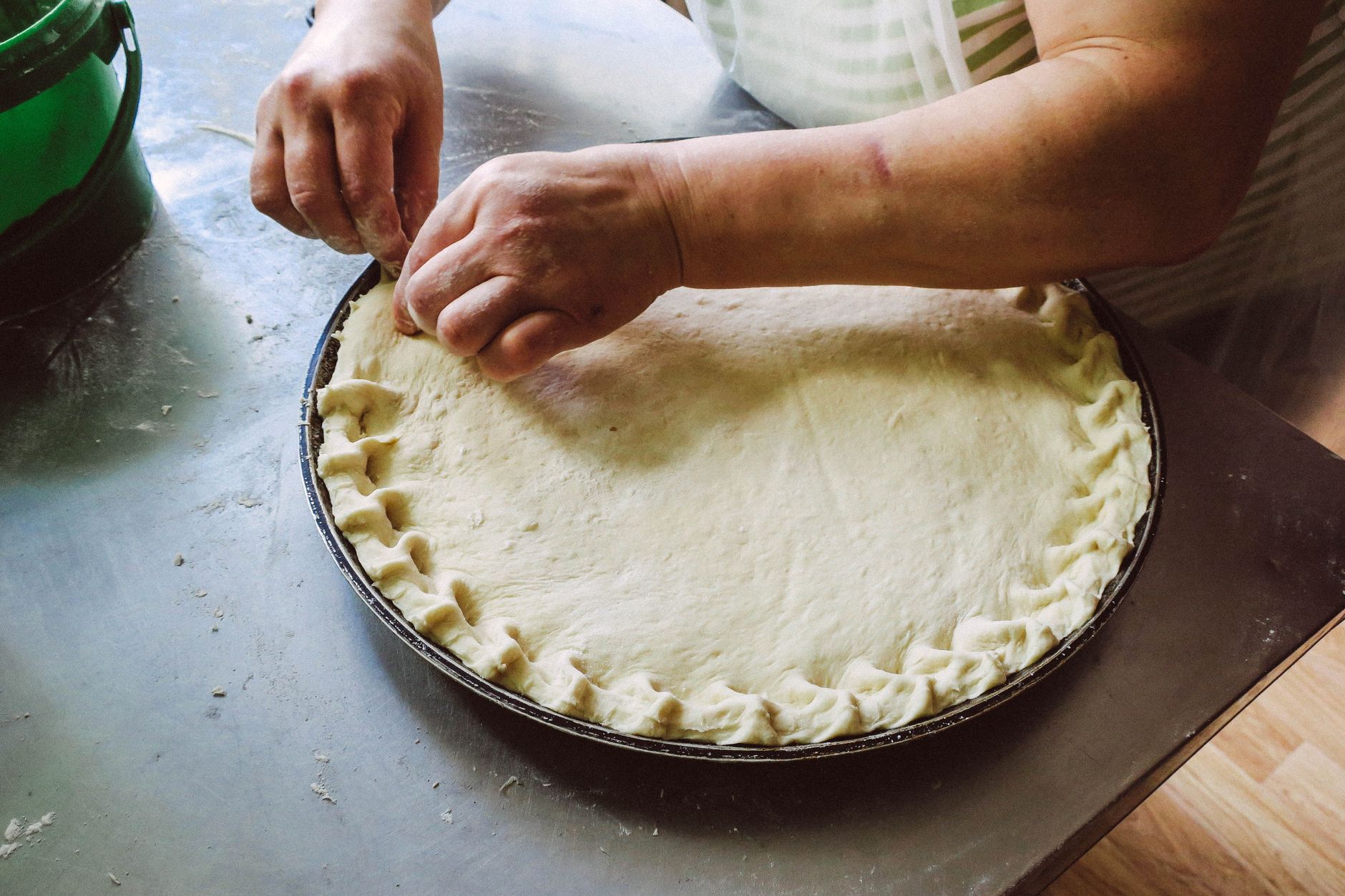
The Pie Ribbon My Husband Nearly Wrecked
I want to tell you about the exact second my name came over the loudspeaker in the exhibit hall at the Clay County Fair, because for about four days that was the best moment of my adult life. I did not know yet that my husband had tried to bribe the judge two hours before they called it.
I am thirty seven years old. I have lived in Spencer, Iowa my whole life except for two years at community college in Storm Lake, which does not really count as leaving. I teach part time as an aide in the second grade classroom at the elementary school, three mornings a week, and the other days I am home doing the things a farmhouse three miles out of town always needs done, which is all of them, all the time. I have been married to my husband for fifteen years. His name is Dusty Quarles, and until the week I am about to tell you about, I would have said the two things I knew most surely about him were that he loved me in a quiet, unshowy, hands-first way, and that he had never once in fifteen years told a lie he didn’t have to.
Both of those things turned out to still be true. It was just that I had never seen what happened when they collided with each other.
Here is the part you need first, because the pie itself is the reason any of this happened at all.
My grandmother made a sour cream raisin pie that people in three counties used to ask after by name. Not her name. The pie’s. “Is your grandmother bringing the pie” was a question I heard at every funeral dinner and church potluck of my childhood, and when people said “the pie,” there was never a second of confusion about which pie they meant. She taught me to make it the summer I was eleven, standing on a step stool at her counter in a kitchen that smelled like scorched sugar and cloves, and she told me two things I have never forgotten. The first was that you temper the eggs slow or you get scrambled eggs in your custard and there is no fixing that, only starting over. The second was that a raisin pie is a plain, homely, unglamorous thing to bring to a contest full of lattice-crust cherry pies and towering meringues, and that if I ever wanted to win anything with it I would have to make it so exactly right that plain stopped being a weakness and became the whole point.
She died when I was twenty four. I inherited the recipe card, stained the color of strong tea, and I inherited the fact that nobody in my family had ever once beaten her at that pie table, not because nobody tried, but because she was simply better, every single year, until she wasn’t in the contest anymore because she was in the ground at Riverside with the rest of us waiting our turn.
I started entering the year after she died. That makes this my eleventh fair. Eleven Augusts. Ten red ribbons, which in the Clay County pie division means second place, which in my own head over ten years came to mean something closer to almost. I want to be honest about how that word sat in me, because it matters for what happened later. It was not devastating. Nobody was crying into their pie pans. It was just a small, private disappointment that showed up dependably every August like a bill you knew was coming, and every year I told myself the same thing on the drive home, which was that it was a plain pie in a fancy contest and I should be proud just to be close.
Dusty never once told me that. I want that on the record early, because it is going to sound, for a while here, like he did something that suggested he did not trust me, and I need you to understand going in that the opposite is true. Every single year, on that same drive home, he would reach over without looking away from the road and squeeze my knee once, and he would say, “It was the best one there.” Not the best one I’ve had. The best one there. He said it every year, the same four words, in the same flat unbothered voice, whether we were carrying a red ribbon or, twice, no ribbon at all because the ribbon had blown off the table in the wind and gotten swept up with the trash. He said it so often and so plainly that I stopped hearing it as anything but a habit, the way you stop hearing a clock ticking in a room you sit in every day.
There was one year, my fourth or fifth, that I still think about more than the others. I had gotten the custard exactly right, no weeping, no graininess, the top set to the precise trembling wobble my grandmother taught me to look for, and I stood in that exhibit hall so certain I finally had it that I let myself imagine, for one reckless afternoon, what it would feel like to hear my own name called. They read the results, and mine took second again, this time to a meringue pie three inches taller than any pie has a right to be, and I remember standing there thinking that maybe a plain pie simply could not compete with a spectacle no matter how correct the custard was underneath it. I did not cry in the exhibit hall. I saved that, like always, for the truck, where Dusty let me get it out without saying a word until I was done, and then he reached over and said his four words, and I remember being irritated by them that particular year, the way you can be irritated by the one true thing someone keeps saying to you when you would rather they said something that fixed it instead.
That is the marriage you need to picture. A man who does not say much, who says the same true thing every year like a man setting a fence post, and a woman who had gotten so used to hearing it that she had quit listening for what it cost him to keep saying it.
Now let me tell you about the judge, because none of this works without Merle Pinnick.
Merle has judged the pie division at the Clay County Fair for something like thirty years. He farmed corn and beans north of town until his knees gave out, and he still keeps a few acres in beans out of what I think is pure stubbornness. He is not a warm man in the way you’d want a favorite uncle to be warm. He is fair, though, in the specific and narrow sense of that word that actually means something, and in a county where half the population is related to the other half by blood or marriage or a shared pew, that is worth more than warmth. The way pie judging works at our fair, and I would guess most fairs, is that every entry gets a number when it’s checked in at the exhibit hall. The baker’s name goes on a card that gets sealed and set aside. The judges taste and score by number alone, and the names don’t get matched back up to the scores until after the ribbons are already decided and pinned. Merle has said publicly, more than once, sitting on a folding chair at the fair board breakfast with a cup of coffee going cold in his hand, that in thirty years of judging he has never once known whose pie he was eating until it no longer mattered. He says it a little like it’s a boast, and a little like it’s a vow he renews every August, and after this year I understood it was both.
I also need to tell you about Bevlyn, because Bevlyn was standing next to me when my name got called, and Bevlyn is the reason I found out what my husband did, though not in the way either of us expected.
Bevlyn and I have been friends since our kindergarten class at the elementary school, which in a town the size of Spencer means we have essentially raised each other. She waits tables at the Sunrise Café on Grand Avenue, the kind of place with a laminated menu and a coffee pot that never goes empty, and she has an opinion about everything and no interest in keeping it to herself, which I have needed more than once in fifteen years of marriage. She waited tables through both of my pregnancies, both of my parents’ funerals, and every single year of the pie contest, and she is the one who taught me, back in eighth grade, that the fastest way to survive a small town is to let one person know the truth about you and stop performing for everyone else. She has never once let me get away with feeling sorry for myself for longer than about a day and a half, and she has never once let anyone else in Spencer talk about me sideways in her hearing without setting them straight, loudly, at full diner volume if the situation called for it. When I say she is the reason I found out what Dusty did, I mean that literally. She drove straight to my house still in her apron the same afternoon, because she has never once in thirty years hidden a hard truth from me, even the ones that were going to hurt going down.
She was at the fair that Sunday morning in a lawn chair she’d hauled into the exhibit hall against the rules, fanning herself with a fair schedule, when the woman from the extension office picked up the microphone to read the pie division results.
I had dropped the pie off myself at seven that morning, the way I always do, standing in the check-in line behind a woman with a seven layer cake balanced on both palms like it might detonate. A volunteer from the extension office wrote a number on a slip of paper, pinned an identical number to a card with my name on it, folded the card twice, and dropped it into a metal box that would not get opened again until the scoring was finished. I watched her do it the way I watch it every single year, half superstition and half genuine interest in the mechanics of the thing, because it has always mattered to me, more than I think I ever said out loud, that nobody tasting my grandmother’s pie that day would know it was mine. I wanted whatever happened to happen to the pie alone, standing on its own legs, the way it had every year before. I went home for three hours after that, unable to sit still, and came back at ten with Dusty and Bevlyn, and the three of us stood around the exhibit hall pretending to look at the quilts.
I remember the particular quality of the quiet in that tent right before they read Best of Show. Rows of pies under the fluorescent lights, some frosted, some lattice-topped, some so tall with meringue they looked structurally unwise, and mine sitting there looking exactly like what it was, a plain brown pie in a tin, humble as a church hymn next to all that architecture.
“And this year’s Best of Show in the pie division,” the woman said, and then she said my name.
I have replayed the next ten seconds of my life more times than I can count. Bevlyn came up out of that lawn chair so fast it tipped over behind her. Dusty, who had been standing at the back of the tent with his cap in his hands because he always takes his cap off indoors even when the building in question is a metal pole barn full of livestock ribbons, made a sound I had never once heard him make before in fifteen years, something between a laugh and a shout, and he crossed that tent in about four steps and picked me straight up off the ground in front of the sour cream raisin pie that had just beaten every fancy pie in three counties. Somebody’s kid was crying about a ribbon he didn’t win in the vegetable division two tables over and I did not care even a little. I had waited eleven years for that sentence, and I stood there in my husband’s arms getting my picture taken for the paper with blue ribbon in hand, and it was, without one particle of exaggeration, the best morning I’d had since our wedding day.
The Spencer paper ran the photograph on the front of the local section that Wednesday, me holding the ribbon with the pie tin balanced on my hip like an infant, and I bought four copies at the gas station and cut one out for my kitchen wall, right next to my grandmother’s recipe card, so the two of them could hang there together. At church that Sunday, a whole line of women I had known my entire life stopped me in the fellowship hall to say some version of the same thing, that they always knew that pie would win someday, that it was about time, that my grandmother would have been fit to burst. I stood there in my good dress soaking up every word of it like a plant that had been waiting eleven years for rain. I want you to understand that feeling clearly, the size and the warmth of it, because I am about to tell you how close I came to never having it at all, and I did not find that out until it was already too late to feel anything but grateful the whole thing had turned out the way it did.
I tell you all of that so you understand what got put at risk three days later, and how completely I did not see it coming.
The trouble, it turned out, started the Thursday before the fair, four days before any of the good part happened, in the gravel lot behind Merle Pinnick’s machine shed.
Dusty is a diesel mechanic. He works the service bay at the implement dealership on the highway during the week, and on weekends and evenings half the county’s pickup trucks find their way into our machine shed at home, because Dusty Quarles can diagnose an engine problem by ear the way some men can tell you what’s wrong with a car just by how it sounds pulling into the driveway. He does not charge most people what he’s worth. He especially does not charge older farmers what he’s worth, on the theory, which he has never once explained to me in so many words but which I have pieced together over fifteen years, that his own father went without help he needed because he was too proud to ask and too poor to pay, and Dusty has spent his whole adult life quietly making sure that does not happen to anyone else in a fifteen mile radius if he can help it.
Merle Pinnick’s truck, a diesel three-quarter ton he has driven since before I knew Dusty, had been running rough for two months. Merle had mentioned it to Dusty at the co-op in July, the way men here mention things, sideways and unhurried, and Dusty had told him to bring it by sometime and he’d have a look.
What Dusty did, on that Thursday before the fair, was drive over to Merle’s place instead of waiting for Merle to come to him. I did not know he had gone. I was home grading spelling tests for my classroom, or at least pretending to, mostly running through what I was going to do differently with the crust that year, thinking about my grandmother’s hands on that step stool.
Here is what I have pieced together happened in that gravel lot, mostly from Merle himself, weeks later, on a day when he decided he owed it to both of us to lay the whole thing out straight.
Dusty told Merle he’d come to give the truck a look before the weekend, which was true and which he did, forty five minutes flat on his back under that truck in the July heat. And somewhere in the middle of that forty five minutes, wiping his hands on a rag, not quite looking at Merle, my husband said something along the lines of, “Ardeth’s got her pie in again this year. Same one her grandma used to run. I know you can’t play favorites, Merle, I’m not asking you to. I just, I’d take it as a kindness if you gave it a real good look this time. And I’ll tell you what, I’ll do your transmission service free of charge whenever you’re ready to bring it in, no strings, whether you look at that pie twice or not.”
Merle, by his own account, set down his coffee, looked at my husband for a long moment, and said, “Dusty, I have judged that pie division for thirty years and I have never once known a name before the scores are in, and if I did, I wouldn’t tell you, and if you offered me a transmission service to tilt a blind contest I couldn’t tilt if I wanted to, I’d have to think you were either testing my character or you didn’t understand how the thing worked, and I know you well enough to know it’s the second one.”
And then, Merle told me later, he laughed, not unkindly, the way you laugh at a man you like who has just done something a little foolish out of love, and he said, “Bring the truck by Monday. I’ll pay you like I always do. And tell Ardeth good luck, because Lord knows that woman doesn’t need any help from you or me to win that pie division, she’s needed it every year and never had it.”
That should have been the end of it. A well-meaning, tone-deaf gesture from a man who does not always know the right words but always means well with the wrong ones, gently and firmly declined by a judge with thirty years of integrity behind him, and no harm done to anyone, because the contest could not be bought even by a man willing to try.
It would have been the end of it, except that three days after the fair, at the fair board’s traditional wrap-up pancake breakfast in the basement of the Methodist church, somebody asked Merle, in front of a room of about forty people including Bevlyn, whether it was true he’d had “offers” this year.
I do not think Merle meant any harm by answering honestly. I think, in fact, he thought he was telling a funny story on my husband, a story that made Dusty look sweet and a little silly and made the integrity of the pie division look, if anything, stronger for having survived temptation. He told the whole table, laughing, about the transmission service and the gravel lot and the blind judging, and how he’d told Dusty the pie girl didn’t need his help.
Bevlyn came to my house that same afternoon, and she did not know how to tell me, and she told me anyway, because that is what a real friend does, even when the news is going to land like a dropped plate.
I want to be honest about what I felt sitting at my own kitchen table hearing that story, because it was not simple, and I do not think it should have been simple.
The first thing I felt was a hot, immediate, ears-ringing embarrassment, the kind that starts in your chest and climbs your neck. My mind went straight to the worst version of the next several weeks: people at the co-op elbowing each other, people at church exchanging a look, somebody’s cousin posting on the community Facebook group that “some folks heard Ardeth Quarles’s husband tried to buy her that blue ribbon,” and every single person in Clay County quietly wondering, even for one uncharitable second, whether the best morning of my adult life had an asterisk on it that I did not put there and could not erase.
The second thing I felt, right behind the first and considerably hotter, was fury at Dusty. Not because I thought, even for a second, that my pie had not won on its own. I knew that pie. I had stood in that hall and tasted it myself before it went in, the way I always do, checking the custard for the exact wobble my grandmother taught me to look for. I knew what that pie was worth with my own tongue before any judge ever touched it. What made me furious was that my husband, a grown man of forty one years old, had gone behind my back to a man with the power to hand out the one thing I had wanted for eleven straight Augusts, and offered him a bribe, an actual bribe, gravel-lot handshake and all, as though the thing I had built with my own two hands and my grandmother’s recipe card needed a man’s negotiating on the side to get across the finish line. As though I could not be trusted to win my own contest.
I drove to the implement dealership still in my church clothes and I made him come out to the parking lot, because I did not trust myself not to say something in front of his coworkers that I would regret. I remember exactly what I said to him, standing between his truck and mine in that gravel lot, because I have turned it over so many times since. I said, “You didn’t think I could do it on my own.”
And Dusty, who does not cry, who I had seen cry exactly twice in fifteen years of marriage, both times at funerals, stood there in his work coveralls with grease on his forearms and his eyes went red and wet, and he said the thing that changed how I have understood every quiet year of our marriage since.
He said, “I have watched you cry in that truck ten Augusts in a row, Ardeth. Ten. You think I don’t notice because I don’t say anything, but I notice everything. Every single year you tell yourself it’s fine, it’s a plain pie, you should just be glad to place, and every single year I watch you believe your own lie a little more, and I sit there next to you not knowing how to say the thing I actually think, which is that you are the best baker I have ever known in my whole life and the fact that you have to convince yourself of it every August about kills me. I’m not a man who’s good with words, Ardeth. You know that better than anybody. I don’t know how to stand up in that hall and tell forty people what I think of you. I know how to fix a rough-running truck. That’s the only language I’ve got that I trust myself in. So when Merle mentioned that truck at the co-op, some fool part of my brain that wasn’t thinking straight decided I finally had something to trade that might tip the scales in your favor for once, because I could not stand the idea of watching you cry in that truck an eleventh time. It wasn’t about whether you were good enough. It was never about that. It was about me not being able to sit still and do nothing while you doubted yourself one more year. I did something stupid. I know that now. But I didn’t do it because I doubted you. I did it because I couldn’t stand watching you doubt yourself.”
I did not say anything back to him for a long moment. I just stood there in that parking lot in my church clothes, and I thought about ten Augusts of him reaching over on the drive home without looking away from the road, saying the same four words in the same flat unbothered voice. It was the best one there. I had heard that sentence a hundred times and never once understood that it was the only sentence my husband had, the only one he trusted himself to say out loud, and that everything he could not say was folded up inside it like a letter he’d never worked up the nerve to unfold.
I was still angry. I want to say that clearly, because I do not think the anger and the understanding cancel each other out, and I think stories that pretend they do are lying to you a little. What he did was a plainly foolish thing to do, the kind of thing that could have cost me something real if Merle had been a different kind of man, or if the story had traveled through town in a less forgiving shape than it did. I told him that, standing in that parking lot, and I told him he did not get to fix things for me that were not his to fix, that my pie and my eleven years of trying belonged to me and always had, win or lose, and that the next time he wanted to tell me I was the best baker he’d ever known, he needed to say it to my face at the kitchen table and not to a judge in a gravel lot with a free transmission service attached.
He said okay. He has, since then, said it to my face more times than he said it in the previous fifteen years combined, which I recognize is not a high bar, but it is his bar, and he has been clearing it steadily ever since.
The town, for its part, decided almost immediately that the whole thing was the funniest and sweetest story anybody had heard all fair season, and I have Merle Pinnick to thank for that more than anyone. The Monday after the pancake breakfast, Merle stood up unprompted at the fair board’s regular meeting, the one where they hash out combine parades and grandstand budgets, and asked for two minutes to say something on the record. Bevlyn was there because Bevlyn goes to those meetings for the gossip, and she told me Merle said, more or less, that he wanted it stated plainly and permanently in the minutes that the sour cream raisin pie that won Best of Show that year was scored blind, by number, same as every pie in thirty years of his judging, and that the only thing Dusty Quarles had succeeded in bribing him with was a free transmission service that Merle fully intended to redeem, because Dusty does good work and a man ought to get paid for good work even when the bribe attached to it was entirely unnecessary and, in Merle’s words, “about the dumbest thing I ever watched a smart man do for a reason I understood completely.”
That, it turned out, was the sentence that mattered. Not the bribe. The reason. By the time the story had gone around the co-op and the Sunday school hallway and the Sunrise Café counter a few dozen times, it had stopped being a scandal about a rigged pie contest and turned into something closer to the county’s favorite love story that fall, the tale of the mechanic who tried to buy his wife a ribbon she’d already won fair and square because he could not bear to watch her doubt herself one more year. Women I barely knew stopped me at the grocery store to tell me their husbands ought to try being that foolish. One of the men from Dusty’s church softball team started calling him “the Godfather” and Dusty, who does not find much of anything funny out loud, actually laughed at that one.
Merle brought his truck by that Monday, like he said he would, and Dusty serviced the transmission free of charge, exactly as promised, because a Quarles handshake is a Quarles handshake whether or not the deal that started it made a lick of sense. Merle tried three times to pay him anyway. Dusty would not take it. I think that, more than anything, is what finally convinced the last few doubters in town that nothing crooked had happened in that pie division. A man trying that hard to give away free work is not a man trying to buy anything. He is just a man who does not know any other way to say I love you loud enough for the people around him to hear it.
I still have the ribbon. It hangs on a nail in the kitchen next to my grandmother’s stained recipe card, and every August since, when I set that pie back on the table at the fair, Dusty stands at the back of the tent with his cap off, and on the drive home, win or lose, he still reaches over without looking away from the road and says the same four words he has said for fifteen years. It was the best one there. Except now I hear the whole letter folded up inside it, and I do not need him to say anything else, though these days, more often than not, he does anyway. Last August, standing in that gravel lot watching him wave off Merle’s truck one more time, free of charge, over some new noise in the transmission Merle swears is nothing, I understood something I wish I had understood eleven years earlier, back when I was still telling myself a plain pie in a fancy contest should just be glad to place. Some men say I believe in you with a speech. Mine says it with a torque wrench and a gravel lot and one spectacularly ill-advised offer to a pie judge who could not be bought, and if that is not love, dressed up in the only clothes my husband owns, I do not know what is.
This story is a dramatization. Names, characters, and details are invented, and any resemblance to real people or events is coincidental.