The Orders Packet He Buried
The filing cabinet in my father in law’s tack room has three drawers, and I had walked past it a hundred times in four months without once thinking to open the bottom one. It sticks. You have to lift the handle and pull at the same time, a trick only Lindell Crabtree seemed to know, which should have told me something the first time I watched him do it without even glancing down. On a Tuesday afternoon in September, with three days left on a clock only I seemed to be counting, I finally lifted and pulled, and there it was, sitting flat under a stack of last year’s seed catalogs like it had always belonged there. A manila envelope with my name on it, in a hand I recognized from a hundred personnel files. A green certified mail card stapled to the corner, signed for, dated, in ink that was already nineteen days old.
I want to tell you what it took to get to that drawer, because the drawer isn’t really the story. The story is nine years of my life, and a marriage I was not willing to let one man’s pride dismantle, and a family farm outside Junction City, Kansas, that had decided, without asking me, what the rest of my life was going to look like.
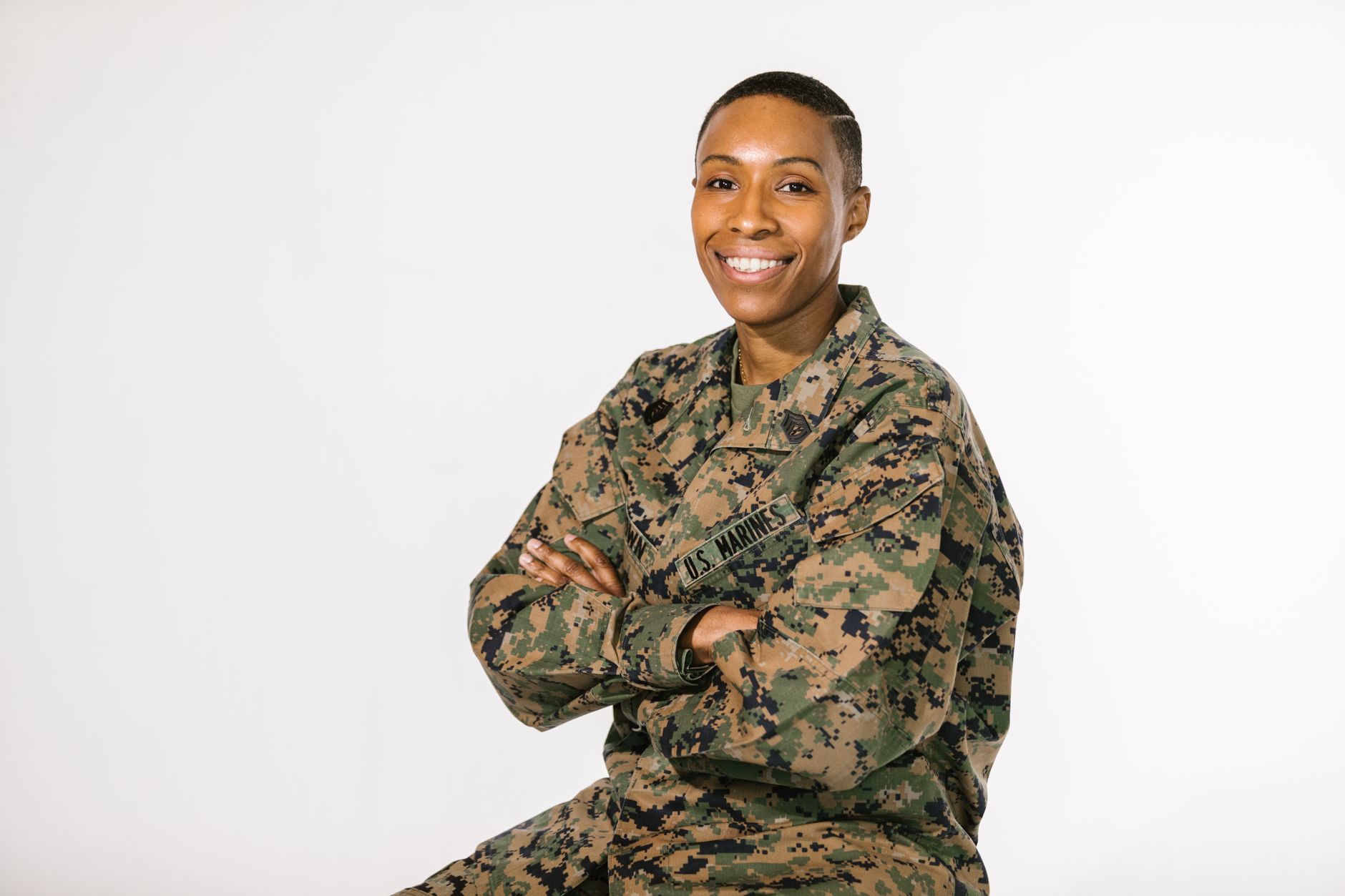
My name is Sable. I’m twenty eight years old, and for nine years the United States Army has been the steadiest thing I have ever built, steadier than the house I grew up in, steadier, if I am honest, than some of the people who raised me in it. I enlisted at nineteen out of Salina, six months after my mother died of a stroke in our kitchen while I was at work, because I needed something with a structure I couldn’t argue my way out of and a paycheck that didn’t depend on anyone else’s mood. I trained as a Human Resources Specialist, 42 Alpha in the Army’s language, which means I spend my days managing the paperwork that decides whether a soldier gets paid on time, whether a promotion goes through, whether a reenlistment packet clears before a deadline that does not care how good your intentions were. I am good at my job. I am careful with other people’s paperwork in a way that, until that September, I never imagined I would need to be careful with my own.
My first duty station was Fort Hood. Three years ago the Army sent me to Fort Riley, home of the 1st Infantry Division, and Junction City is the town that grew up right outside its gate, wheat country and cattle country both, flat gold fields running out to a horizon you can see the curve of the earth in if the light is right. I met Fenn at the Geary County Fair the second September I was there, in the line for a fried pie, of all places, and it embarrasses me a little to admit that the first thing I noticed about him was how still he stood in a crowd of people who were all talking at once. He’d grown up on his family’s place off Clarks Creek Road, wheat and cattle, the same ground his grandfather had broken, and there was something about a man who could tell you the moisture content of soil by feel that felt like an anchor to a girl who had spent her whole life moving.
We married two years ago in the little stone church on the edge of town, my dress uniform in the closet at home because Fenn wanted a suit and I wanted, just that once, to not be the soldier in the room. His mother, Marva Crabtree, cried through the whole ceremony in a way that seemed genuine at the time, and mostly still does. His father, Lindell, gave a toast about family and land and the kind of roots that don’t uproot, and I remember thinking it was sentimental, not strategic. I did not yet understand that for Lindell Crabtree, those were often the same thing.
Here is what you need to understand about the Crabtree operation before I go any further, because none of what happened makes sense without it. Fenn has an older brother who left for an accounting job in Kansas City eleven years ago and comes back for Christmas and not much else, and Lindell has never once said his older son’s name without a flatness in his voice that told you exactly how that leaving had landed. The farm is eight hundred acres of wheat, a cow-calf operation on the pasture ground along the creek, and a debt load Lindell has never once discussed honestly with anyone, including, I would come to learn, his own wife. Fenn is the only child left who still comes when the tractor breaks at midnight during harvest. Fenn is the only future the operation has. And I think Lindell decided, somewhere in the two years of our marriage, that the surest way to lock that future in place was to make sure nothing else was pulling at it. Nothing else being me, and the nine years I already had invested in a career that could, at any point, hand the Army the right to move my husband’s wife three states away.
He never said it that plainly. Lindell is not a stupid man, and stupid men are easy to see coming. What he did instead was smaller and steadier, a low current running under two years of Sunday dinners. Little questions about when my contract was up. Little comments about how a woman ought to be able to put down real roots by thirty, not chase orders around the country like a stray dog chasing a truck. Once, at Thanksgiving, in front of his brother visiting from Kansas City, he asked Fenn straight out whether the Army was going to let him “keep his wife much longer, or if they’d be shipping her off to Georgia one of these years the way they do.” I laughed it off at the table because that is what you do at Thanksgiving. I did not laugh it off in the truck on the way home.
There was another comment, smaller, that I think back on more than the Thanksgiving one, because it was aimed so precisely. Lindell asked me once, not unkindly on the surface, what it was exactly that I did all day at the S1 office, since I wasn’t out on a range or in a motor pool, and when I told him, human resources, personnel actions, the paperwork that keeps a battalion of soldiers paid and promoted on schedule, he nodded slowly and said that sounded more like a government desk job than soldiering, the kind of work a person could do anywhere, for anybody, which was a strange thing to say to a woman in uniform and an even stranger thing to hear from a man who had never once served himself. I understood, later, that he wasn’t dismissing my job by accident. He was laying groundwork, quietly, for the argument he would eventually need to make: that what I did wasn’t really the Army, not the kind worth fighting to keep, and so giving it up shouldn’t really count as giving up much of anything at all.
The thing that pulled us onto the farm full time was not politics, though. It was a bad fall. Lindell went down off the back of a hay trailer in April, hit his head, and spent two nights in the hospital in Manhattan while doctors ruled out a bleed and Marva sat in a plastic chair not eating. He came home slower than he left, favoring his left side, and for the first time in his life, unwilling to say out loud that he needed help. Fenn didn’t ask me. He didn’t have to. We packed up our rental in town and moved into the farmhouse’s spare bedroom that same week, meaning to stay through his recovery, through planting, through however long it took for an old man’s pride to let him hand off a few chores. I want to be honest that I said yes to that easily and gladly. I loved Lindell’s stubborn, difficult self enough by then to want to help him heal. I did not understand yet that I was walking into the one stretch of ground where he believed he still had the power to decide who stayed and who left.
My reenlistment window opened that June. Nine years in means I am past the point where leaving the Army is a shrug and a shift to something else. Nine years in means four more and I’ve got a decade, and a decade means retirement isn’t a rumor anymore, it’s arithmetic I can actually do on a legal pad. It means the difference between walking away from federal service with nothing and walking away, eventually, with a pension that would let Fenn and me build something on our own terms instead of whatever terms his father was willing to hand us. I wanted to reenlist the way you want anything that is both your career and your spine. Not because I couldn’t imagine another life. Because I had already built this one, carefully, on purpose, and I was not finished.
The process is not glamorous. My retention NCO ran my eligibility, my chain signed off, and what came back was a physical packet, the kind that still needs a wet signature and a witness, because my unit’s card reader for the digital version had been down for six weeks and nobody wanted to bet a soldier’s career window on a fix that kept getting pushed to next Tuesday. Normally I’d have signed it in the orderly room in twenty minutes. That summer, with Lindell laid up and harvest bearing down and half my week spent driving back and forth between the farmhouse and post, my retention NCO offered to mail the packet straight to my listed address so I could sign it at home on an evening I actually had free, then drop it back in the mail certified, tracked, done. My listed address, that summer, was the farmhouse on Clarks Creek Road. It seemed like the easiest, kindest option anybody had offered me in weeks.
The packet had a suspense date on it. Not a soft one. My retention NCO had circled it in red ink and told me flatly that missing it wouldn’t be the end of the world, but it would mean redoing the whole eligibility review from scratch during a fiscal year when my career field’s reenlistment quota was already tight, which was a polite Army way of saying I might not get another shot on this timeline at all. I marked the date on the calendar in the farmhouse kitchen, the one Marva keeps by the phone with the church potluck schedule and the vet’s number for the cattle. I told Fenn. I mentioned it, more than once, over supper, the way you mention a thing you assume everyone in the room understood the weight of.
The packet never came.
I want to be fair here and tell you that for the first week, I truly thought it was the mail. Rural delivery out past the highway is not fast, and I’d had a check take nine days to travel eleven miles before. But a week became two, and two became the point where I called my retention NCO from the porch step, trying to keep my voice light, asking her to just double check it had actually gone out. She pulled the tracking number while I waited. Delivered, she told me. Signed for. Eleven days ago, at an address on Clarks Creek Road.
I remember standing very still on that porch step, because eleven days ago I had been home. I had checked the mailbox myself, more than once, the way you do when you’re waiting on something. I had never once seen that envelope.
I asked her who signed for it. She read me the name off the digital return receipt, and I already knew what she was going to say before the letters left her mouth, the way you know a storm is close by the exact color the sky goes. L. Crabtree.
Lindell collects the mail. It’s one of the small rituals of his recovery, one of the few chores his doctor cleared him for early, walking the quarter mile down the gravel drive to the box and back most afternoons while his hip still complained about the hay trailer. I had thought it was sweet. I had thought, watching him limp down that drive with his cane and his stubborn refusal to let anyone drive him, that it was a good sign, a man easing himself back into a life that still had small purposes in it.
I asked Lindell about it that evening, straightforward, no accusation in my voice yet because I still believed there had to be an explanation that didn’t require one. Maybe he’d set it aside for me and forgotten. Maybe it had gotten mixed in with seed catalogs and bills and simply not surfaced. He was at the kitchen table, working a crossword he wasn’t really working, and he told me, without looking up, that he didn’t recall any certified envelope, that the mail carrier out here loses things half the time anyway, that I ought to call the post office and stop worrying Marva over it before supper got cold.
It was a good performance. It would have worked on someone who hadn’t spent nine years reading other people’s paperwork for a living, learning exactly what a signature looks like when someone is telling the truth about not remembering it and what it looks like when they are not.
The days after that, I started noticing things I had let myself not notice before. How Lindell had started walking to the mailbox earlier in the afternoon, before I finished my shift at the S1 office and got home, when he used to wait until closer to five so we’d walk down together. How he’d stopped mentioning the mail at supper at all, when for two years he’d made a running joke out of whatever seed catalog or auction flyer had come that day. How Marva, normally the one who filled every silence in that kitchen with something, had gone quiet in a specific, careful way whenever the subject of my Army contract came up, the way a person goes quiet when they know something and have decided, for reasons of their own, not to be the one who says it.
I confronted her directly on a Thursday, the two of us alone shelling black-eyed peas on the back porch, because I had run out of gentler approaches and I had eight days left on a suspense date nobody but me seemed to be counting down. I asked her, plainly, if she knew anything about where my reenlistment packet had gone. Marva Crabtree has been married to Lindell for thirty six years, and in every one of those years, by her own account, she has learned exactly how far his temper will go before it stops being worth the fight. She didn’t answer me for a long moment. Then she said, so quietly I almost missed it under the sound of peas hitting the bowl, that Lindell had told her not to worry about it, that he had it handled, that this was between him and me and not something a mother needed to get in the middle of.
That was the moment I stopped believing it was a lost envelope.
I drove onto post the next morning before my shift and found my First Sergeant in her office with the door open, the way she keeps it most mornings for exactly this kind of conversation. I’ve worked for a lot of senior NCOs in nine years, but she is the rare kind who treats a soldier’s personal chaos as seriously as she treats a training deficiency, on the theory, she has told me more than once, that a soldier who is losing a battle at home is not going to win one anywhere else. I laid it out for her. The suspense date. The tracking number. The name on the return receipt. She listened without interrupting, the way she does when she’s already three steps ahead of you and deciding how hard she’s going to have to fight on your behalf.
She told me two things that morning that I have not forgotten since. The first was that the delivery date on that green card was the date that mattered to the Army, not the date I personally laid eyes on the envelope, which meant that whatever Lindell Crabtree had done to that packet, he had not actually stopped my clock, he had only hidden it from me. The window the Army cared about was still technically open. The second thing she told me was that I had eight days to get that packet signed, witnessed, and back through her hands to the retention NCO, and that if I could not physically locate it, she would personally walk me through requesting an emergency replacement, but that a replacement packet meant restarting a review that might not clear before the fiscal year quota closed, and she was not going to sugarcoat which path was better if it existed. Find the original.
I drove back to the farmhouse that afternoon with three days of the eight already gone to the requesting and the paperwork triage, and I did not tell Lindell what I now knew. I wanted to see, one more time, whether he would tell me the truth if I gave him a clean opening. I asked him at supper again, gently, whether he was certain nothing unusual had come in the mail these past weeks. He told me, looking me dead in the eye this time, that he was sure. That I ought to let it go. That maybe, he said, this was the Army’s way of telling me something I hadn’t been ready to hear on my own, that a person can only chase two things at once for so long before one of them slips, and maybe it was time the thing that slipped was the uniform, not the farm, not the family, not this life we’d already half built without me fully in it.
I have replayed that sentence more times than I can count. A person can only chase two things at once for so long before one of them slips. He said it like wisdom. It took me until I was back on the porch, alone, furious, sorting through what I actually knew instead of what I’d been told, to understand it for what it actually was: a man narrating the outcome he had already engineered, dressed up as concern.
Fenn was three states over that week, at an equipment dealer’s training course in Nebraska he’d committed to months earlier, learning the new combine electronics before harvest, reachable mostly by text and the occasional bad-signal phone call from a motel parking lot. I told him everything over one of those calls, standing in the yard so his mother wouldn’t hear me shaking. There was a long silence on the line, longer than the signal delay accounted for, and then Fenn said his father’s name in a voice I had never heard him use before, low and flat and done. He told me he was driving home that night, training be damned. I told him not to, that I needed one more day to find the packet myself before this turned into something between him and his father that couldn’t be walked back, and he agreed, barely, and told me to call him the second I found it, day or night.
I searched that farmhouse for two days in every spare hour I had. The desk in the office Lindell rarely used since his hip went bad. The drawer under the landline where old bills piled up. The truck’s glove box, twice. Nothing. It was Marva, in the end, who cracked the search open, not with a confession exactly, but with a small, sideways comment while we were folding laundry that Lindell had been spending an unusual amount of time out in the tack room since his fall, more than his hip should reasonably allow, tinkering with a filing cabinet he’d hauled out there years ago and never used for anything but old cattle records. She said it like an observation about nothing. I don’t think she meant it as anything but that. But I was already halfway to the barn before she finished the sentence.
Which brings me back to that Tuesday, three days left, the sticking bottom drawer, the lift and pull, the envelope sitting flat under last year’s seed catalogs with my name on it in a hand I recognized and a green certified mail card stapled to the corner, signed for, dated, in ink already nineteen days old.
I did not open it there in the tack room. I carried it into the kitchen, where Lindell was sitting at the table with his crossword, and I set it down in front of him without a word. I watched every ounce of color leave his face, and then, because he is not a man built for retreat, I watched him decide to stand his ground anyway.
He didn’t deny it. That surprised me more than the discovery itself. He sat back in his chair, arms crossed the way he does when he’s bracing for an argument he’s already decided he’s going to win, and he told me that he’d taken the envelope off the porch the day it came, that he’d meant to give it back to me eventually, that he’d just wanted a little more time, a little more room, before I signed away another four years of chasing orders around the country when there was a whole life sitting right here waiting for me to choose it. He said the farm needed Fenn permanently now, not part time, not on weekends between deployments and duty stations, and that Fenn would never fully commit to that as long as he thought his wife’s career might drag him off to Georgia or Colorado or Germany the second she reenlisted. He said he was doing what a father does, protecting the only future the operation had left, and that someday, he truly believed, I would thank him for making a decision I hadn’t been strong enough to make myself.
I told him I did not need him to make my decisions for me, strong or otherwise, and that hiding a federal document from a service member was not fatherly protection, it was theft, and that if I had missed my window because of what he’d done, I would have gone to the inspector general with that green card and let the consequences land wherever they landed, family or no family. I told him that nine years in the Army had taught me exactly one thing that applied directly to this kitchen table: paperwork does not lie, even when the man holding it does.
He tried one more angle, quieter than the rest. He said that he’d watched two years of duty stations and deployments wear thin on marriages up and down this county, that he’d buried a nephew’s marriage and watched a neighbor’s daughter raise three kids nearly alone while her husband chased rank across three continents, and that all he’d wanted was to spare Fenn and me that particular grief before it had the chance to take root. I believe that part was almost true. I told him that the grief he was so determined to spare us from was never going to be solved by deciding, in secret, which parts of me got to survive the marriage and which parts didn’t. A father who wanted to spare his son heartbreak would have sat down at this same table and said so, out loud, to both of us, months ago. A father who wanted control took an envelope off the porch instead and hid it under his seed catalogs. Those are not the same man, even if they share a face.
Marva stood in the doorway through all of it, and when Lindell finally stopped talking, she said something I don’t think either of us expected from her. She told him, in a voice with thirty six years of swallowed opinions finally cracking through it, that he’d had no right, that she had known something was wrong for weeks and had been too much of a coward to say so out loud, and that if he thought either of his sons was going to forgive him for this, he had badly misjudged both of them. Then she picked up the envelope, walked it across the kitchen, and put it in my hands herself.
I drove onto post that same night, packet in hand, and found my First Sergeant still there past her shift because she’d told me that morning she would be. She walked the envelope over to the retention NCO’s office herself, verified the delivery date against the tracking record one more time to make absolutely certain the clock the Army cared about still worked in my favor, and got a witnessed signature scheduled for first thing the next morning instead of waiting on the normal routing queue. I signed my reenlistment packet on a Wednesday morning with two days to spare, in a small office with a flag in the corner and a career counselor who had clearly been briefed enough to know not to ask too many questions about why a document mailed three weeks earlier was only now getting signed.
The formal reenlistment ceremony happened eleven days later, on a Friday afternoon on the parade field, under the flag, my battalion commander administering the oath with my First Sergeant standing just off his shoulder the way she stands at every one of these that matters to her. Fenn was there, in from the field still smelling faintly of diesel because he’d come straight off the tractor rather than lose the twenty minutes to change. Marva was there too, in a blue dress I’d never seen before, sitting in the second row of folding chairs she’d driven onto post to occupy without telling her husband where she was going. Lindell was not there. Nobody expected him to be, least of all Fenn, who has not, as of this writing, fully forgiven his father, and has told him plainly that he won’t be moving permanently onto the home place on anybody’s timeline but his and mine, together, decided out loud instead of engineered in silence from a tack room.
I raised my right hand that afternoon and said the words I’ve said twice before in my life, and they did not feel any less mine for having nearly been taken from me by a man who thought a hidden envelope could out-argue a federal suspense date. I am still a Specialist in the United States Army. I still work in that S1 office managing paperwork that decides other people’s futures, more careful with it now, if that’s possible, than I already was. Fenn and I moved out of the farmhouse two weeks after that ceremony, into a small rental in town we’re slowly making our own, close enough to still help with harvest on our own terms, far enough that nobody can hide my mail again. Marva calls me most Sundays now, sometimes just to talk, sometimes to tell me, in her careful way, that she’s proud of me, a sentence I don’t think she’d ever quite found the nerve to say to me directly before that kitchen.
Marva and I have a standing Saturday morning now, a booth at the Wagon Wheel Diner off the old highway, coffee and a plate of biscuits between us, and the first time we sat there together after the ceremony, two women from the VFW auxiliary stopped by our table just to shake my hand, because word travels fast in a town this size, and one of them, a widow of a Vietnam-era sergeant, told me she’d had a version of this fight with her own in-laws in 1974, minus the certified mail, and that some things about marrying into a farm and a uniform at the same time apparently never change. Marva laughed at that harder than I’d heard her laugh in months. It was the first time since the tack room that either of us seemed to exhale all the way.
Lindell and I have not really talked it through, not the way people talk things through in stories that wrap up neat. He still believes, I think, somewhere underneath the parts of him that have gone quieter since that night, that he was protecting something worth protecting. Maybe he was. I’ve never doubted that he loves that ground, and loves his son, in whatever complicated shape his love tends to take. What he never understood, and what I hope he’s starting to, slowly, watching Fenn set boundaries with a firmness that surprised even me, is that you cannot build a lasting future for your family by erasing a piece of the person your son chose to build it with. You can only build it by making room for her, whole, orders and all.
I kept the green card. It’s in a frame now, next to my reenlistment certificate, on the wall of the little house in town. Not as a trophy over Lindell, though I’d be lying if I said that thought never crossed my mind. As a reminder, on the days the job gets hard, on the days I miss the flat gold fields I grew up chasing horizons away from, that I fought for this life on purpose, in writing, with a date stamp to prove it, and that nobody, not even family, gets to decide for me where the road stops.
This story is a dramatization. Names, characters, and details are invented, and any resemblance to real people or events is coincidental.