The Name They Left Off The Bronze
Clell Kittredge stood at the podium on the courthouse lawn in Nacogdoches, Texas, last Veterans Day, in front of maybe four hundred people, three flags snapping in a hard morning wind, a high school color guard, and a bronze wall that had been wrapped in canvas for six weeks so nobody would see it before the ceremony. When the canvas came down and I made my way to the row of names where my husband’s should have been, and it was not there, I walked straight up to that podium in front of every one of those four hundred people and asked Clell Kittredge where Corporal Delroy Halbrook’s name had gone. He looked down at his program instead of at me and told me it had come down to a spacing decision.
I am forty six years old. I buried my husband a year and a half ago after fourteen years of marriage that started when I was his home health aide and ended with me holding his hand in a hospital bed we had set up in our own front room, a machine somewhere behind me counting down the last of his heartbeats. I have signed forms, filed paperwork, and sat through more committee meetings than I care to count trying to get this county to put a dead man’s name on a piece of bronze that cost forty one thousand dollars to cast, and I am telling you plainly, before I tell you anything else about this day: there was room. I stood in front of that wall myself two hours later with a tape measure I borrowed off a rack in the hardware store on the square, and there was a gap of raw granite eleven inches wide at the bottom of the fourth column, exactly the size of every other name cut into that wall.
I want to tell you who my husband was before I tell you the rest of what happened on that lawn, because Clell Kittredge got to stand at a microphone for eleven minutes and reduce a man’s whole life to a line item, and I am not going to let a spacing decision be the last word on Delroy Halbrook.
Delroy was born in 1949 on a farm off a county road east of town, the kind of place where the mailbox sits a mile from the porch and the dog knows the mail carrier’s truck before it turns off the highway. He was nineteen, working the green chain at a sawmill and engaged to a girl he never ended up marrying, when his draft notice came in the fall of 1968. He did not run to Canada and he did not have anybody’s father make a phone call to the draft board, though I have since learned half the young men his age in this county did one or the other. He told me once, sitting on our back porch with a glass of tea he had long since stopped needing to spike, that his own father had gone to Korea and his grandfather had gone to France, and it never once occurred to him that a Halbrook man had another option on the table. He trained at Fort Polk, made Corporal before he ever set foot in country because he could read a map in the dark and keep his head when the boys around him couldn’t, and shipped out to Vietnam in the early spring of 1969, twenty years old, a rank on his collar he would carry, one way or another, for the rest of his life.
He did not talk about the valley often, and when he did, it was never in front of anyone but me, and never in the order you would expect a war story to come in. He told me about the sound of that place before he ever told me what happened in it, how the monsoon turned the whole valley green and loud and swallowed noise whole, so a man could not always tell which direction gunfire was coming from until it had already found him or somebody near him. He told me his platoon walked into an ambush on high ground they had been told, the day before, was clear. He told me a boy went down about fifteen feet from him, and that he went to get that boy, and that something hit him in the back before he made it, and that the rest of it, whatever the rest of it was, belonged to other men, men who came and got both of them off that hillside while Delroy was mostly somewhere else in his own head by then, gray at the edges, holding on to consciousness the way you hold a rope you know is fraying. That was as far as Delroy Halbrook ever carried that story in fourteen years of marriage to me. He never once said the boy’s name. I did not learn it until last Veterans Day, standing on a courthouse lawn in front of four hundred of my neighbors, and I will get to that.
He came home in the fall of 1969 with a Purple Heart, a piece of shrapnel the Army surgeons decided was safer left where it sat than dug back out, and nothing else you could hang on a wall. What people who have not lived beside a man like Delroy do not always understand is that the war does not end when the airplane lands. He spent the better part of the next fifteen years drifting, and I use his own word for it because it is the truest one. He worked refineries down around Port Arthur and Beaumont, roughnecked a rig out past Odessa two hard winters, married a woman in Longview for four years that ended about the way most of those marriages ended in that decade, and spent more nights than he ever fully told me about sleeping sitting up in a truck cab rather than come inside anywhere he’d have to explain why he couldn’t sleep with a door shut. He cycled in and out of VA hospitals in Waco and later Temple. He did not come back to Nacogdoches, the town he had been born fifteen miles from, until 2008, when he was fifty nine years old and his kidneys and his heart had started sending him bills his body could no longer afford to keep ignoring.
That is where I come into this story. I was twenty nine, three years into a career as a home health aide, when the VA contracted my agency to send someone out twice a week to a small rented house on the edge of town, to check blood sugar, change a dressing, and make sure a stubborn old veteran with a bad habit of skipping his insulin was still upright and eating something besides black coffee. I will tell you honestly that the first four months of knowing Delroy Halbrook, I did not much care for him. He was short with me. He called me “ma’am” in a tone that meant get out of my kitchen. It took him until the fifth month to tell me a joke, and it took me until the eighth to understand that the gruffness was never about me at all. It was a door he kept shut the same stubborn way he kept his bedroom door open at night, because a closed door, on either one, had cost him something once that he was not ready to say out loud.
We married in 2010, in the fellowship hall of a little Baptist church out past the loop, maybe thirty people there and a cake my mother baked because Delroy said he did not want a fuss and I did not have the heart to tell him I wanted exactly one fuss in my whole life and this was it. I was thirty one. He was sixty one. I know what that gap looked like to some people in this town, and I heard about it plenty, in grocery aisles and at more than one Sunday dinner that was not mine to be discussed at. I will also tell you that I never once, not for a single day of fourteen years, wondered if I had married the wrong man. Delroy Halbrook fixed my truck before I ever asked him to, learned my grandmother’s cornbread dressing recipe so I would not have to cook on the one day of the year I wanted to sit down, and stood up, every single time, when a flag passed him, in a parade or off the corner of a television screen, right up until the last year of his life when standing had become a thing his own body would no longer negotiate with him.
For fourteen years I got to be Mrs. Delroy Halbrook in a town that had, by the time I married him, mostly forgotten he had ever existed. He worked out the rest of his years as a groundskeeper for the county, which he liked because it kept him outside with his own thoughts, thoughts he had by then made a real peace with. His diabetes and the old shrapnel and thirty hard years on a body that had never once been gentle with itself caught up to him in the winter before last. He had a stroke that January that took the strength out of his whole left side, and he spent the last four months of his life in that hospital bed we set up in our own front room, where he could see the county road out one window and, out the other, the flag he insisted we fly on a pole in the yard, the same one he had raised every single morning for fourteen years, rain or shine, until his hands finally stopped being able to work the clips and I started raising it for him, and telling him, every morning, that it was up.
Delroy Halbrook died on the ninth of April, with my hand in his and that flag visible through the window, going soft and orange in the evening light the way it does out here in spring. He knew, in that last year, that the county was building a veterans memorial on the courthouse lawn, because Clell Kittredge himself had come around collecting names for it eighteen months before that, clipboard in hand and a fountain pen he clicked open and shut the whole time he talked, and Delroy had filled out the form at our own kitchen table in his careful, deliberate handwriting, the same handwriting I later found filling forty little notebooks in his footlocker, notebooks he had kept his whole life without telling me why. Name. Branch. Rank. Dates of service. He asked me once, near the very end, half joking and half not, whether I thought they would spell it right. I told him I would make sure of it myself. I did not know, sitting in a chair beside that hospital bed, what I would actually end up having to make sure of, or how far I would have to go to do it.
The memorial took another year and a half to finish, longer than the committee first promised, mostly on account of fundraising delays and a foundry backlog Clell Kittredge complained about at every single meeting I sat through, as if the rest of us in that room had personally caused it. I want to be fair here, because fairness is the only thing I have left to give Delroy now, and I will not let anger cost me that. For most of that year and a half, nothing about the process gave me any real reason to worry. I got two separate letters confirming his information had been received and logged. I got a phone call in the spring of last year from a woman on the committee, not Kittredge, congratulating me warmly and letting me know the final casting had gone off to the foundry. The only strange note, and I did not understand it as strange until months later, came in July, when Kittredge himself called, almost offhand, to ask how long Delroy had “made Nacogdoches home” before he passed. I told him the plain truth, sixteen years, and he made a small sound on the other end of that line that I mistook, at the time, for nothing more than a cough.
The committee, at Kittredge’s own insistence, kept the finished wall under that canvas for six full weeks before the dedication. He called it “the reveal” in every interview he gave the local radio station, said it like it was his personal invention, a gift he alone was giving the whole county, rather than a sheet of painter’s tarp and four bricks holding down the corners. That meant nobody, not one family, not one veteran in this county, not me, had laid eyes on a single finished name before last Veterans Day. We had all trusted the forms we filled out and the phone calls we got, and we all stood on that lawn at eleven o’clock in the morning carrying the same particular kind of faith, the faith of people who have already given their government the hardest thing they had to give, trusting it, this one last time, to spell the name right on the way back to them.
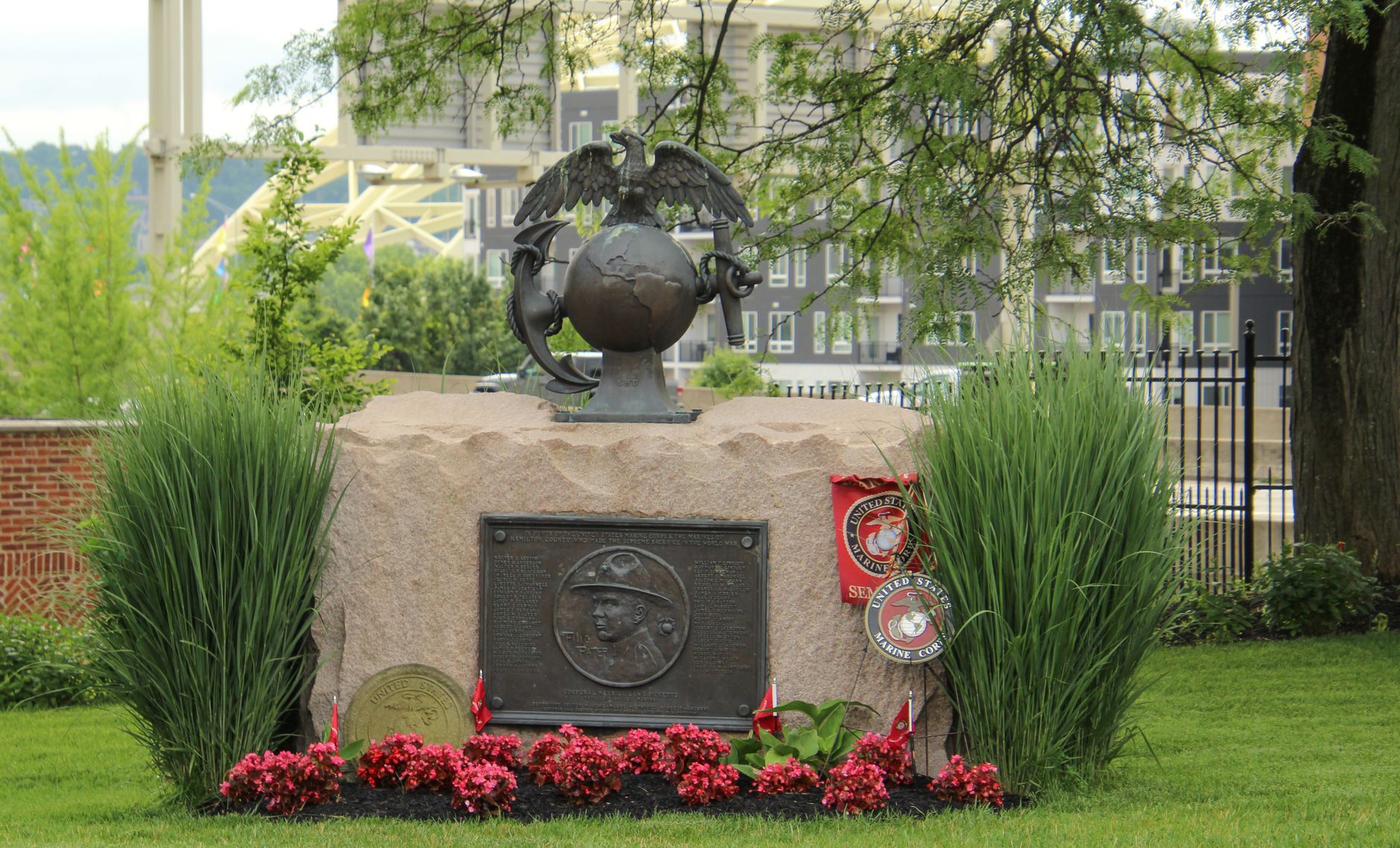
The Nacogdoches High School band played, a little off key in that wind the way school bands always are and somehow better for it. The VFW post brought a color guard, five old men who could still hold a rifle salute straighter than most of the young men standing behind them watching. The county judge spoke for about six minutes about sacrifice, in the general and comfortable way county judges always manage to. Clell Kittredge spoke for eleven, mostly about himself, about the nights he had personally spent raising forty one thousand dollars, about his own father’s service in Korea, about what an honor it had been to chair this committee for going on three years now. Then four Boy Scouts pulled the canvas down on a signal they had clearly rehearsed, and the whole crowd made the sound a crowd makes when something goes from a rendering on a poster board to a physical fact in front of them all at once. A hundred and eighty names in six columns, alphabetical, cut clean into bronze on a low granite wall built the exact height of a kitchen counter, so a person could put her whole hand flat on it if she needed to.
I had practiced, the night before, exactly where to look. Halbrook would fall near the bottom of the fourth column, after Prather and before Purvis, the plain arithmetic of an alphabet arranging a man’s whole life into a filing system. I walked to that spot alone, because the two people who would have stood there with me, my husband and my mother, were both already gone, and I put two fingers against the space where his name should have been, between two names I had never in my life heard before, and there was nothing there. Not a misspelling I could squint past. Not a wrong middle initial some clerk had fumbled. Nothing at all. A gap of raw granite eleven inches wide where a name should have been cut, smooth and blank as a held breath.
I did not cry first. I want that understood, because grief keeps its own order, and mine started as a plain disbelief I had to walk off before it turned into anything sharper. I walked that whole wall twice, thinking I had miscounted, thinking maybe one section ran by rank instead of alphabet, thinking any explanation on this earth that was not the true one. Then I walked up to the small stage where Clell Kittredge stood shaking hands, working the rope line the way he worked every room in this county, and I asked him, in front of the county judge, in front of the VFW color guard, in front of however many people stood close enough to hear a widow’s voice go thin, where my husband’s name had gone.
He looked at the program in his hand instead of at me. “We had a hundred and eighty names on a wall with room for a hundred and seventy nine, Lurleen,” he said. “Hard choices had to get made somewhere. It came down to a spacing decision.” I asked him how, exactly, a name gets chosen to be the one that does not fit. He said something about criteria the committee had agreed on. When I asked what criteria, he told me, not unkindly, in the flat voice of a man saying something he had rehearsed more than once in a bathroom mirror, that the committee had decided to prioritize veterans who had “called this county home for the majority of their years,” and that Delroy, God rest him, had “been away a long stretch before he came back.”
I want you to sit with that sentence the way I had to sit with it in real time, in front of four hundred people, with a bronze wall between us that had my husband’s Purple Heart citation framed at home not thirty feet, in spirit, from where his empty gap now sat cut into granite. Sixteen years back in this county was apparently not enough, in Clell Kittredge’s private arithmetic, to earn a place on a wall that had somehow found ample room for a man’s second cousin who had moved to Nacogdoches from Shreveport eleven years back and never once served a day in his life, a name I would find later, over in the second column, listed underneath the words “in support of the memorial fund.” I did not know that yet, standing at that stage. I only knew that a man who had never worn a uniform in his life was telling me, calmly, in public, that my husband had not been home long enough to count.
A murmur had already started behind me by then, the low kind that moves through a crowd the way weather moves across a field before you feel the first drop. I did not understand, in that moment, that it was not sympathy building for me. It was recognition of something else entirely, coming off an old man in a faded green ballcap I had never met in my life, sitting in a folding chair in the third row with a cane hooked over one knee.
He stood up slowly, the deliberate way a man stands when his knees hold their own opinions about the decision, and he did not raise his voice, which somehow silenced that lawn faster than shouting ever could have. He said his name was Odell Fennimore, that he had driven up that morning from Center expecting to see an old friend’s name on that wall for the first time since the friend had died, and that he had walked those six columns himself twenty minutes before I ever got there and found the same blank gap I found. Then he said, in a voice pitched to carry clean across a silent lawn without ever climbing into a shout, “I carried Delroy Halbrook out of a valley in Vietnam in nineteen sixty nine on my own back, the better part of four hundred yards, and I did not do that so a committee chairman who was seventeen years old and safe at home could decide, fifty six years later, that his name didn’t fit.”
Nobody on that lawn moved. Even the wind seemed to hold itself still, the particular stillness a Texas sky gets right before it decides which way a storm is going to break.
Fennimore told the crowd he had been Delroy’s squad leader, a buck sergeant twenty two years old commanding boys who were mostly nineteen and twenty, and that on a wet morning in that valley in 1969, his squad had walked into fire from high ground they had been told, the day before, was clear. He said a corporal named Delroy Halbrook had gone for a boy who went down first, under fire, without waiting to be ordered to. And he said that boy was Clell Kittredge’s own older brother. Then he turned, not fast, not for show, just certain the way a man is certain about something he has waited half a lifetime to say out loud, and looked straight at Clell Kittredge standing on that little stage with the hand-shaking smile gone flat off his face. “Your brother, Clell,” Fennimore said. “I have known for fifty six years exactly what happened to your brother in that valley, and so has your mother, because I wrote to her myself in nineteen sixty nine, in my own hand, and I have wondered every one of those fifty six years why the story that got told around this town was never the one I put down on that paper.”
What Odell Fennimore told that crowd next, in a voice that did not rise once, was this. Kittredge’s brother went down first, hit twice, in the open, on ground with no cover for thirty yards in any direction. Corporal Delroy Halbrook was fifteen feet away and did not wait for anybody’s order. He crawled to him under fire that Fennimore called, in his own plain words, some of the worst incoming he saw in a full tour, got a hand under him, and had him halfway moving toward a rock outcrop when a round caught Delroy square in the back and put both men down again, twenty feet short of any cover at all. Fennimore and one other soldier, a man since passed whose name Fennimore did not give that morning, went out under that same fire and dragged both of them the rest of the way. Kittredge’s brother died of his wounds on the medevac helicopter, eleven minutes out from the aid station. Delroy Halbrook lived, carried the last stretch partly on Fennimore’s own back, and never once spoke that boy’s name to another living soul outside that platoon for the rest of his life, not because he had anything to hide, but because he carried, until the day he died in our front room, a private and entirely unearned guilt that he had lived and Kittredge’s brother had not.
Somewhere between that helicopter and a telegram delivered to a farmhouse outside Nacogdoches, the true story, a corporal who tried and very nearly died trying, became a different story in the mouths of people who were never there to see any of it. Fennimore said he heard the twisted version secondhand, years later, filtered through a chaplain’s assistant who had not been present for a minute of it and who told the Kittredge family only that “the man next to him didn’t reach him in time.” Not reaching in time and never trying to reach him are two very different facts, and in a family’s grief, given enough years to sit untended, they can fold together into a single wound. Clell Kittredge was seventeen years old when his brother’s flag-draped casket came home to this county, and he grew into a man who carried a story that had never been true, about a corporal who lived while his own brother did not, and in fifty six years he never once asked the man standing forty feet from him on that lawn what had actually happened on that hillside.
I watched Clell Kittredge’s face the entire time Fennimore said all of this, and I will tell you honestly, because I promised you honesty at the start of this story, that I did not see triumph on it, and I did not want to. I saw a seventeen year old boy’s face still living somewhere underneath a seventy three year old man’s, hearing for the first time, in front of the whole county, that the grievance he had built a career and a memorial committee seat around had never once been the true version. He did not say a single word for what felt like a full minute. Then he sat down on the small stage step, not the folding chair behind him, the step itself, the way a much younger man sits down when his legs give out before his knees ever get the chance to.
It was the VFW post commander who moved first, walking to the microphone Kittredge had left standing empty, and saying, plainly, that the committee would correct the wall, that the foundry that cast it would get a phone call first thing Monday morning, and that Corporal Delroy Halbrook’s name would be added to that granite before any future dedication this county ever held again, whatever the cost, and that the cost, whatever it turned out to be, would not come out of a single dollar families like mine had already given. The crowd on that lawn did something I have never once seen a crowd do at any ceremony before or since. They did not clap. All four hundred of them stood, the way you stand for a flag, in complete silence, for what the printed program the next week described, dryly, as “a moment of unscheduled reflection,” which has to be the driest possible description ever written down for the truest thing I have watched a room full of strangers decide to do together.
Clell Kittredge resigned as committee chairman eleven days later. I did not ask for that, and I want that understood plainly, because this story was never really about him, no matter how large he stood on that stage for one long autumn morning. I heard, through the same slow channel that carries everything eventually in a county this size, that he drove out to Odell Fennimore’s place in Center twice that November. Whatever was said inside that living room is not mine to tell, because Fennimore has never told me either, and some conversations belong only to the men who finally have them, fifty six years late or not. I know only that the committee’s spring newsletter listed Clell Kittredge as a “founding member, emeritus,” which is the soft way a small town lets a man step back off a stage without making him walk out the door backward in front of everybody who watched him climb up onto it.
The foundry finished the supplemental bronze plate in eight weeks. On a cold, bright Saturday in January, the county held a second, much smaller ceremony, no band this time, no county judge, just the VFW color guard, Odell Fennimore in a folding chair he insisted on carrying up from his own truck himself, and maybe sixty people who had heard what happened back in November and wanted to see the rest of it settled with their own eyes. A committee member, the same woman who had called me last spring to tell me the original casting was on its way, set that supplemental plate herself with a level and a torque wrench, because she told me she wanted her own two hands on this particular one. When she finally stepped back, I walked up in front of those sixty people and put my whole hand flat against my husband’s name, cut clean into bronze between Prather and Purvis, precisely where the alphabet had always intended to put him.
Corporal Delroy Halbrook. United States Army. 1968 to 1970. I traced the letters slow with two fingers, the way you trace a signature on a document you have waited a long, long time to finally receive, and Odell Fennimore, eighty years old and steady on that cane, pushed himself up out of his folding chair without anybody asking him to, the same way, I have to believe, he pushed himself up off that hillside in 1969, and saluted a name instead of a man, because the man himself had been fourteen years mine and was, by then, a year and a half gone, and some debts, it turns out, get paid a long time after the men who are owed them have stopped being able to collect in person.
I think about spacing sometimes now, the actual physical measurement of it, eleven inches of blank granite that once held more of this county’s true history inside it than any speech given from that podium that whole morning. I think about a seventeen year old boy who grew into a man who spent fifty six years angry at the wrong version of the truth, angry in the particular quiet way that turns into committee rules and phone calls about residency years and a sentence like “it came down to a spacing decision.” I think about how much of what passes for cruelty in a small town is really just old grief that never once got corrected, because nobody who actually knew better ever said so out loud, in front of anybody, until they finally had to.
Odell Fennimore said so out loud. It took him fifty six years and one folding chair on a courthouse lawn to do it, but he said it, and my husband’s name is on that wall now, not because a committee finally found the space, but because a man who carried him out of a valley once was not about to let him get left behind a second time.
This story is a dramatization. Names, characters, and details are invented, and any resemblance to real people or events is coincidental.