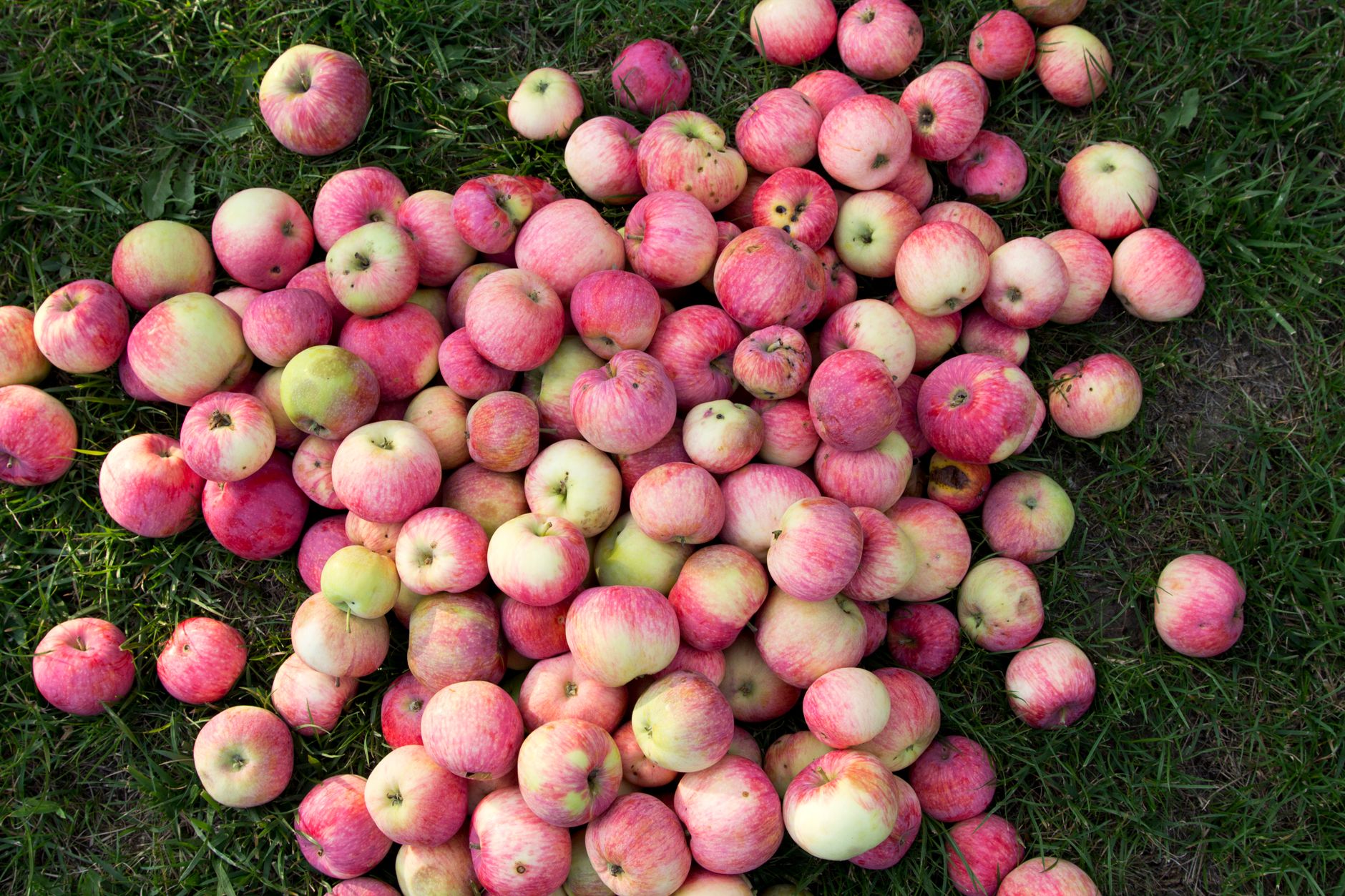
The Orchard My Son-in-Law Optioned
The morning it started, I was up before the sun the way I have been up before the sun for fifty years, standing in the kitchen with a cup of coffee that had gone lukewarm in my hand, looking out the window at the orchard rows just starting to gray into shape in the early light. Forty acres of apple trees along the Kettle River, planted first by my grandfather in 1951, kept alive by my father through two droughts and a flood that took out the lower bridge, and kept alive by me for the last fifty years, the final three of them without my wife Louise beside me.
I want to tell you what happened in my own orchard on a Tuesday morning in June, because I have learned that people need to hear how these things end, not just how they start. They need to know that an old man alone on a piece of family ground is not as alone or as finished as some people would like to believe. But I am not going to skip to the end. I am going to tell you the whole thing, in order, because the order is what makes it make sense, and because some of what happened I did not understand myself until I sat with it a long while.
My name is Warren Tate. I am seventy-two years old. I served two years in the Army, the tail end of it in Vietnam, came home in 1974 with a Bronze Star I don’t talk about and a bad knee I complain about plenty, and I have belonged to the VFW post on Route 9 in Locust Fork ever since, though these days I mostly go for the Friday fish fry and to sit with men who remember what I remember. I married Louise Ferris in 1976 in the same little Methodist church where, forty-nine years later, our daughter Denise would marry a man named Dale Corbin. Louise and I raised Denise in the farmhouse my father built, and Louise and I ran this orchard together for forty-seven years, until the cancer took her three summers ago and I buried what she asked me to bury, a little cedar box of her ashes, under the Jonathan trees at the north end, because she always said the Jonathans were the honest apple, tart enough to tell you the truth and sweet enough that you forgave it.
I tell you all that so you understand what this land is. It is not an investment. It is not forty acres of river frontage with development potential, which is the phrase I would come to hear more times than I care to remember. It is my grandfather’s hands and my father’s hands and my hands and my wife’s ashes and fifty years of Tuesday mornings, and on one particular Tuesday morning in June, a man in a polo shirt walked onto it like he already owned it, escorted by my daughter’s husband.
The Man in the Polo Shirt
I saw the survey stakes before I saw the men. Pink ribbon fluttering along the fence line that runs beside the river, the same fence my father built with cedar posts the summer before he shipped out to Korea in 1951, the summer before my grandfather put the first trees in the ground to give my father something to come home to. I counted eleven stakes before I got close enough to see who had put them there.
Two men in orange safety vests were running a surveyor’s level near the old bridge crossing. A third man stood back near my equipment shed, wearing a pale blue polo shirt tucked into pressed khakis, holding a tablet computer instead of a clipboard, and talking to my son-in-law.
I want to be precise here, because precision matters in a story like this one. Dale Corbin is my daughter Denise’s husband. They married nine years ago in the church on Route 9, and I never loved him the way you are supposed to love the man who marries your only child, but I gave him the benefit of the doubt for a long time because Denise loved him, and because a father learns to keep his opinions about his son-in-law mostly to himself if he wants to keep his daughter close. Dale sold insurance for a while. Then he did not sell insurance for a while, after some trouble at the agency I never got the full story on. Last year he started calling himself a real estate consultant, and as far as I could tell that meant a lot of time on his phone in the driveway and not much money to show for it, and a wife, my Denise, who had started looking tired in a way I didn’t like.
I came up on them from behind the shed, quiet, the way you learn to move on a farm without meaning to sneak, just habit. I heard the man in the polo shirt before I saw his face clearly. He was saying something about setback requirements and a rezoning variance, and Dale was nodding along like a man who understood every word, which I would later learn he did not, not really, not the parts that mattered.
Then I heard Dale say the sentence I will carry to my grave.
“The old man’s done farming. This land’s worth more as lots.”
He said it easy. He said it the way you’d mention the weather. He was not whispering it behind my back, because as far as he knew, my back was exactly where it was supposed to be, seventy feet away and out of earshot, tending to whatever an old man tends to on a Tuesday morning. He did not know I had come up along the tree line instead of the drive. He did not know I was standing close enough to hear the words land clean and whole, the way a cruel thing lands when there is no static in the line.
I stepped out from behind the shed.
Dale saw me first, and something moved across his face, fast, gone before I could be sure I’d seen it. Not shame. I want to be fair to what I saw, because I have thought about it a hundred times since, turning it over the way you turn over a stone to see what’s under it, and shame was not what was under it. It was calculation. A man doing quick math on whether the last thirty seconds could be walked back.
“Warren,” he said. “This is Grant Ostrander, with Meridian Land Partners. We were just talking through some options for the property.”
Grant Ostrander put his hand out to shake mine, the confident, practiced grip of a man who does this for a living, closing deals with strangers in the field before the paperwork ever gets read closely. I looked at his hand and I did not take it.
I asked Dale, in a voice I kept as level as I could manage, whose property he thought Grant Ostrander was standing on.
Dale’s answer came smooth, the way a man’s answer comes when he has rehearsed it, maybe in the truck on the drive over, maybe in the mirror that morning. He said Denise had signing authority on part of the acreage. He said everything was above board, that lawyers had looked at it, that nobody was trying to pull anything over on me. And then, gentler, the way you’d break bad news to someone you believed was too fragile to take it straight, he said that at seventy-two I couldn’t keep running forty acres alone forever, and somebody in this family needed to think ahead, and he was sorry it had to be him, but he loved me enough to be the one to say it.
I want you to sit with that phrase a moment, because I have sat with it for weeks now. He loved me enough to be the one to say it. As if selling my orchard out from under me was an act of family devotion. As if the cruelest thing he had ever said to me was a gift he was giving me, and I was supposed to thank him for the honesty.
I did not argue with him in the orchard that day, in front of the man in the polo shirt and the two surveyors with their pink ribbon. I have learned a few things in seventy-two years, and one of them is that the man who argues first, loud, out in the open, is usually the man who ends up looking unstable, and there is nothing a family will use against an old man faster than the words he got worked up, he got confused, he’s not himself anymore. I had heard those exact words used against my own father in his last years, used by well-meaning cousins who wanted his farm equipment more than they wanted him, and I was not going to hand Dale Corbin the chance to say them about me.
So I told them, calm as I could make my voice, that the survey crew needed to pack up their stakes and be off my land inside the hour, and that Dale and I would talk at the house. Grant Ostrander looked at Dale like he was checking whether this was a problem, and Dale, to his credit or maybe just his cowardice, told him it would sort itself out, family stuff, and walked him back toward the road.
I stood alone in the orchard a long while after they left. I looked down the row toward the Jonathan trees at the north end, where Louise is, and I said something out loud to her that I won’t repeat here, because it was not fit for company, and because it was between the two of us.
Then I walked back to the house and I called my grandson.
What the Trail Camera Saw
My grandson Cody is nineteen. He is Denise and Dale’s boy, and he is the only person under thirty I know who still wants to spend his Saturday mornings walking a fence line with his grandfather instead of staring at a screen, although the truth of what happened next is that a screen is exactly what saved this orchard, so I have had to revise my opinion of screens somewhat.
Cody runs trail cameras on the property, has since he was fourteen, mostly to scout deer and turkey for the fall, but he’d set two of them along the river access road that spring because he’d been seeing coyote sign and wanted to know what was moving through at night. I did not think much about those cameras. They were his hobby, not mine.
Two weeks before the morning with the man in the polo shirt, Cody had come to me looking unsettled, his phone in his hand, and asked if I knew his father had been out at the orchard with some men back in April, weeks before, walking the river access road and the lower fields, talking and pointing at things like they were planning something.
I told him no, I did not know that.
He showed me the footage. The camera Cody had mounted on the old fence post by the bridge crossing does not just take stills, it records short video clips with audio when it triggers, and it had triggered on an April afternoon when Dale walked Grant Ostrander and another man I did not recognize down the river road, the three of them stopping at intervals while Ostrander gestured at the water and made notes on a tablet. The audio was thin, wind-scratched, but you could hear enough. You could hear Dale telling them the acreage was clean, no encumbrances he knew of, that his wife’s name was on part of the deed from an estate matter years back, and that he expected, quote, no resistance from the old man once he understood the numbers.
The timestamp on that clip read six weeks before the day Dale stood in my orchard and told Grant Ostrander to his face that I was done farming. Six weeks. Which meant the option agreement, whatever it said, whatever Dale had signed, had not come from some sudden practical concern about my age or my health. It had been in motion since April, quiet, careful, built on a piece of paperwork from years back that Dale had apparently decided meant more than it actually did.
I did not tell Cody everything I was thinking that day. He is nineteen, and the man in that footage is his father, and I was not going to make my grandson carry more of this than he already was carrying by showing me the tape in the first place. I thanked him. I told him he had done the right thing bringing it to me instead of sitting on it. And then I bought a small voice recorder at the hardware store in town, the kind that clips inside a coat pocket, because I had a feeling, an old soldier’s feeling, that I was going to need my own record of whatever came next, and a trail camera two weeks old was not going to be enough by itself.
I was right to buy it. I wore it in my barn coat pocket for the two weeks between that conversation with Cody and the morning Dale walked Grant Ostrander through my orchard, and it was running, quietly, in my pocket, when Dale said the sentence about the old man being done farming. I had not planned it that way exactly. I had simply gotten into the habit of carrying it any time Dale came around, because by then I had stopped trusting what he might say when he thought I wasn’t listening closely, and it turned out I was right not to trust it.
What My Daughter Did Not Know
The hardest conversation of this whole ordeal was not with Dale. It was with my daughter.
I called Denise that same afternoon and asked her to come to the house without Dale. She came alone, the way I asked, and she looked at me across the kitchen table, the same table her mother used to sit at shelling peas, and she looked scared in a way that told me she already suspected something was wrong, even if she did not know what.
I asked her directly whether she had signed anything giving Dale, or anyone, authority over the orchard.
She said no, absolutely not, and then her face changed, the way a face changes when a memory that seemed small at the time suddenly seems large. She told me that about a year ago, Dale had asked her to sign some papers related to her mother’s estate, cleanup paperwork, he’d called it, tidying up the deed language on the old town lot Louise had inherited from her aunt decades back, the little half-acre property near the Methodist church that has nothing to do with the orchard at all. Denise had signed without reading closely, because Dale handled most of their paperwork and she trusted him, and because grief still had its hand around her throat that year and she did not have the strength to scrutinize every document put in front of her.
I want to be careful here, because I do not believe my daughter did anything wrong, and I do not want anyone reading this to think less of her for trusting her husband with a stack of papers during the worst year of her life. What I believe happened, and what came out clearly enough later, is that Dale had taken a document meant to clean up a small unrelated town lot and had, in his conversations with Grant Ostrander, either deliberately blurred or truly convinced himself it extended to Denise having a claim on the orchard acreage itself. Whether that was a lie he told the developer on purpose, or a lie he had first told himself because he needed it to be true, I still do not fully know, and I am not sure it matters as much as what came next.
Denise sat at that table and cried, and told me she had no idea Dale had shown anyone an option to buy the orchard, no idea he had walked a developer through the property in April, no idea any of it existed until I told her what I had heard with my own ears and what Cody had shown me on the trail camera. I believed her. I still believe her. A father knows his daughter’s face when she is lying to protect someone, and I know my daughter’s face when she has just found out the man she married did something behind her back, and those two faces do not look the same, not even close.
What Denise did not know, and what I did not fully know myself until three days later when I sat in the office of my old friend and attorney Milt Sorenson, was that none of it, not one word of Dale’s paperwork, not one signature on that option agreement, had ever had the legal power to touch my orchard at all.
What the Trust Protected
Louise and I made a decision back in 2009 that neither of us talked about much, not because it was a secret exactly, but because it felt like the kind of thing you do quietly, out of love for a piece of ground rather than distrust of your own family. We had watched two other farms in this county get carved up and sold off in pieces after the old folks passed, watched children who had never planted a tree in their lives argue over acreage until lawyers took half the value in fees, and we did not want that for the orchard. So we sat down with Milt, who was a young attorney then and is a gray one now, and we put the orchard and the river bottom acres into a trust, the Tate Family Land Trust, with the two of us as trustees during our lifetimes and clear instructions for what happened to the land after we were gone. It was meant to protect the orchard from exactly the kind of piecemeal selling off that Dale, without knowing it, had tried to arrange.
Louise passed three years ago, which left me as sole trustee, holding legal title to every acre of that orchard in a form that no outside signature, not Denise’s, not Dale’s, not anyone’s, could touch without my consent as trustee. The little town lot with Louise’s aunt’s old house on it, the one Dale had gotten Denise to sign cleanup paperwork on, had never been part of the trust at all. It had passed to Denise outright years before Louise and I ever set foot in Milt’s office, a separate half-acre in town that had nothing whatsoever to do with the forty acres along the river.
Dale had built an entire option agreement, weeks of quiet meetings, a rezoning strategy with Meridian Land Partners, on a document that referenced land he did not understand the actual boundaries of, representing an authority his wife had never actually held over the property he was trying to sell. When Milt pulled the trust documents and the town lot deed side by side on his desk and laid them out for me, plain as day, he told me something I will remember the rest of my life. He said, “Warren, this option is not just weak. It’s void. It never attached to a single blade of grass on your land.”
I sat in that office and felt something I had not expected to feel, which was not triumph, not yet, but a kind of quiet, bottomless relief, the relief of a man who finds out the ground really is as solid under his feet as it always felt.
The Meeting
Here is the part I almost did not tell, because for a while I considered simply handling it quietly, calling Dale into the kitchen, showing him the trust papers, and letting the whole thing die there, a private family shame nobody outside these walls would ever hear about. I might have done exactly that, if Dale had not, in the two weeks after our confrontation in the orchard, gone and done something that took the choice out of my hands.
He had scheduled himself to speak at the Harmon County Planning Commission meeting, the second Thursday of that month, in support of a rezoning petition Meridian Land Partners had filed to convert the riverfront agricultural parcels, my parcels, from farmland to residential development. He told the co-op crowd at the feed store, casual as anything over coffee, that the Tate family was ready to sell and move forward, that it was time, that even old Warren understood it was the smart thing. Word travels fast in a town the size of Locust Fork. By the time I heard about it secondhand from a neighbor at the diner on Route 9, half the county believed I had already agreed to sell my grandfather’s orchard for a subdivision.
That is when quiet was no longer an option. A man can forgive a private betrayal and keep it private. He cannot let a lie about him stand uncorrected in front of the whole county, not at seventy-two, not with his name on that land for three more generations to inherit honestly.
I went to that planning commission meeting. The room at the county building was fuller than I had seen it in years, farmers and neighbors and a few Meridian representatives in the same pale polo shirts, Grant Ostrander among them with his tablet. Dale sat near the front with Denise beside him, and I saw her shoulders when she spotted me walk in, the way they dropped, because I do not think she knew yet exactly what I intended to do, only that I intended to do something.
When the chairman called for public comment on the Meridian rezoning petition, Dale stood first. He spoke well, I will give him that, about growth and opportunity and a family ready to move into a new chapter. He said the Tate family supported the petition. He used the word family the way a man uses a word he has stopped believing means anything, just a tool now, a lever.
I stood when he sat down.
I told the commission my name, and that I had farmed that riverfront ground for fifty years, and that I had a few things the room needed to hear before anyone voted on rezoning land that was never, at any point, actually for sale. I set my late wife’s old cassette recorder, wired now into a small speaker Cody had rigged for me the night before, on the podium, and I played eleven seconds of trail camera audio from an April afternoon, my son-in-law’s voice telling a developer that the old man would offer no resistance once he understood the numbers, and then I played the recording from my barn coat pocket, Dale’s voice in my own orchard telling Grant Ostrander, plain as anything, that the old man was done farming and the land was worth more as lots.
The room went dead quiet in the way a room goes quiet when it has just watched something true land in front of it. Then I laid the trust documents on the podium, and Milt Sorenson, who had come with me and stood at the back of the room in case anyone doubted an old farmer’s word over a lawyer’s paper, confirmed for the commission in plain language that the option agreement Meridian had filed in support of its petition had never attached to a single acre it claimed to cover, because the man who signed on behalf of the family had no authority to sign anything at all.
Grant Ostrander’s face, when the chairman asked him directly whether Meridian had verified title before filing, told the room everything it needed to know. He asked for a continuance. The chairman denied the petition instead, on the spot, citing defective title, and thanked me, an old farmer in a barn coat, for saving the commission a great deal of trouble it would otherwise have discovered too late.
I did not look at Dale as I gathered my papers and walked out. I did not need to. I could feel the whole room’s eyes doing that for me.
After
Denise left Dale six weeks after that meeting. I want to be honest and say it was not because I demanded it, and not only because of the orchard, though the orchard was the thing that finally showed her, in a way nothing else had, exactly what kind of man she had married and exactly how little he had thought of either of us while he built his quiet plan. There were other things that came out in the weeks after, smaller cruelties, older lies, the kind of pattern a person cannot keep seeing once one piece of it has been dragged into the light. She moved back into her old room in the farmhouse for a time, with Cody, and we spent that summer the way I had not spent a summer in three years, three generations under one roof, working the orchard together in the mornings and sitting on the porch together in the evenings, and slowly I watched my daughter’s shoulders come back up to where they belonged.
Grant Ostrander’s company withdrew its rezoning petition entirely rather than face a second hearing, and word around the county is that Meridian Land Partners has stopped calling on riverfront ag parcels in Harmon County altogether, at least for now, which I consider a small mercy for whichever farmer might have been next.
Cody spent that fall learning to run the tractor the way his great-great-grandfather taught his great-grandfather, the way I taught his mother, and I have started, slowly, teaching him the grafting work too, the part of orchard keeping that takes the longest to learn and matters the most, because an orchard is not a crop you plant once. It is a hundred small decisions made every single year by someone willing to still be standing there the next year to see how they turned out.
Last month Milt Sorenson and I sat down again, and I amended the trust, not out of fear this time but out of hope, naming Denise and Cody together as the next trustees when my time comes, with clear language that no acre of that river bottom is ever to be sold off in pieces to a stranger in a polo shirt, not by them and not by anyone who marries into this family after me. I told Milt I wanted it airtight enough that nobody, ever again, would be able to stand in my orchard and tell a stranger the old man was finished, because as it turns out, I was never finished. I had simply been underestimated by a man who mistook my quiet for weakness, and did not understand, until a room full of his own neighbors watched him find out, that quiet and finished are not the same thing at all.
This past harvest, the first since all of it, Denise and Cody and I picked the Jonathans together at the north end, near the cottonwood, near Louise. Cody bit into one right off the tree, the way his mother used to when she was his age, and made the face everybody makes at a Jonathan, that first tart shock before the sweetness comes in behind it. I told him that was the honest apple, same as his grandmother always said, tart enough to tell you the truth and sweet enough that you forgive it. He laughed, and for the first time in three years, so did I, standing in ground that was always mine, that will be his, and that no stranger in a polo shirt is ever going to walk through uninvited again.
This story is a dramatization. Names, characters, and details are invented, and any resemblance to real people or events is coincidental.