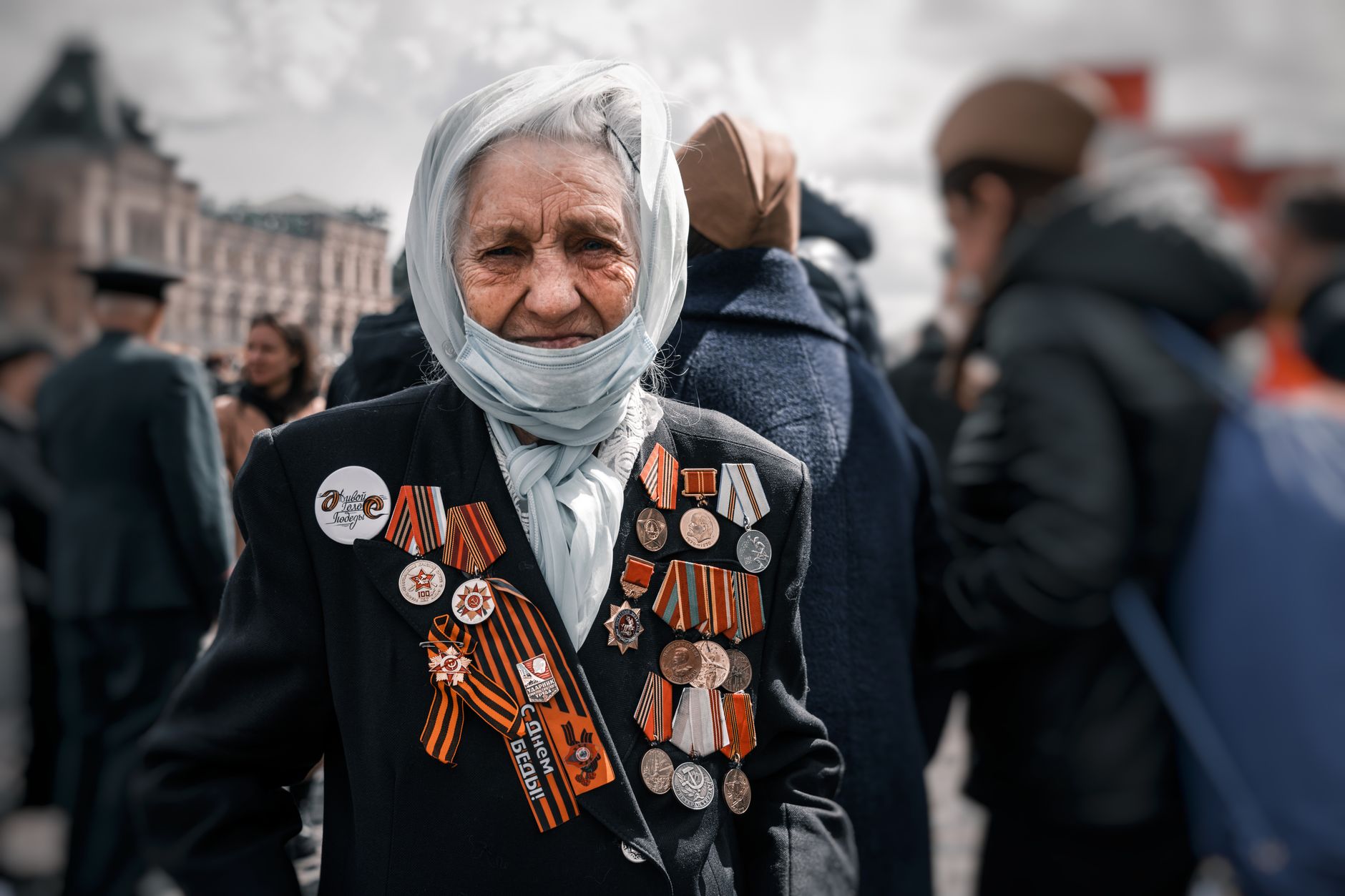
They Called Her Just a Nurse
I was already half out of my chair when Greg said it, microphone in his hand, the whole VFW hall watching, and he smiled at me the way he always smiled, like he was doing me a kindness. “Why don’t you take a seat, Ruth,” he said. “Let’s let a real soldier have the floor tonight.” And the room laughed, soft and easy, the way a room laughs when it thinks no harm is being done. I sat back down. I am seventy-eight years old, and I have learned that the worst things are almost never shouted. They are said gently, into a microphone, by a man who thinks he is being generous.
Let me start at the beginning, because the beginning is the part Greg never bothered to learn.
My name is Ruth Davenport now. In 1969 it was Ruth Calloway, and I was a twenty-one-year-old First Lieutenant in the Army Nurse Corps, and I spent thirteen months at an evacuation hospital outside Cu Chi, in the part of Vietnam where the war did not stop to ask whether you had finished your shift. I want to be precise about that word, evacuation, because people hear it and picture a clean white tent far from anything. It was not far from anything. The wounded came to us straight off the dustoff helicopters, sometimes within twenty minutes of being hit, and when they came they came all at once, and what we did with them in the next hour decided whether their mothers got a letter or a flag.
I did not tell that story at dinners. I want to be honest about that, because some of what happened that night was my own doing. I had spent fifty years not telling it. When you come home from a thing like that and nobody asks, you learn that nobody wants the long version, and after a while you stop offering even the short one. My late husband, Frank, knew. Frank had been a Marine in Korea, and Frank never made me explain. We understood each other in the way two people understand each other when they have both seen the inside of something and decided, separately, to keep living anyway. Frank passed two years ago this spring. After that, there was no one left in the family who knew what I had been before I was somebody’s grandmother.
Except, of course, that I did tell Greg. Once. Early on.
Greg married my daughter Karen in 1986. He was twenty-eight, a good-looking man with a firm handshake and an opinion about everything, and at their wedding rehearsal he asked me, in the polite way men ask when they have already decided the answer is boring, what I had done before I had Karen. And I told him. I told him I had been an Army nurse in Vietnam. And I watched something flicker across his face, some small recalculation, and he said, “Oh, so you weren’t really in the war. You were behind the lines.” He said it kindly. He patted my arm. And I, who had carried men’s insides in my two hands at two in the morning, said nothing, because it was a wedding and Karen was happy and I did not want to be the mother-in-law who made a scene.
That was the first time. It was not the last.
Over forty years, Greg built a whole little story about me, and he told it so often that the family started telling it back to him. Ruth, the nurse who never saw combat. Ruth, who changed sheets in a safe hospital while the real soldiers fought. At Thanksgiving, if the subject of service came up, Greg would say, “Now my dad, he was at the Chosin Reservoir, that was war,” and then he would turn to me and add, generously, “No offense to Ruth, she did her part too, handing out aspirin.” And everyone would chuckle, and I would pass the potatoes. My own grandchildren grew up believing it. My grandson Tyler once told a teacher, when she asked if anyone in his family had been in the military, that his great-grandfather was a Marine and his grandmother “worked in a hospital.” Worked in a hospital. As if I had been a candy striper at the county general.
You are going to ask me why I let it stand. I have asked myself the same thing, many nights, in the recliner where Frank used to sit. The truth is complicated and I am too old now to make it sound noble. Part of it was that the men I served with did the same thing. We did not talk. The whole generation of us came home to a country that did not want to hear it, and we folded the war up small and put it somewhere and got on with the business of living. Part of it was that I did not have the words to fight Greg without sounding like I was bragging, and a woman of my upbringing would rather be misunderstood for fifty years than be caught bragging once. And part of it, the deepest part, was that I had stopped believing it mattered whether anyone knew. Frank knew. That had been enough. And then Frank was gone, and it turned out it was not enough anymore, and I did not realize how much it was not enough until the night Greg handed himself a microphone.
The dinner was the VFW Post 4471 Veterans Day supper, the second one since Frank died. The post had been Frank’s for thirty years, and they kept inviting me because Frank’s widow is still Frank’s widow, and I kept going because the alternative was a frozen dinner alone. Greg came because Greg had recently discovered the VFW. After his father passed, Greg had taken up his father’s Korea service the way some men take up a hobby, telling the stories at every gathering as if he had been there himself, wearing his father’s old unit cap. He had appointed himself, somewhere along the way, the family’s keeper of military honor. And that night the post had asked if anyone wanted to say a few words about what service meant to them, and Greg had practically run to the front.
He talked for ten minutes about his father at the Chosin Reservoir. It was a fine story and most of it was even true. And then, winding down, feeling the warmth of the room, he looked over at me sitting at the end of the long table, and he must have thought he was including me, because he said it. “We’ve even got a veteran of sorts right here, my mother-in-law Ruth. She was a nurse over in Vietnam, weren’t you, Ruth, way back in the rear.” And then, when I started to stand, because some old reflex told me that if I was named I should rise, he laughed and waved me down with the microphone. “Why don’t you take a seat, Ruth. Let’s let a real soldier have the floor tonight.”
I sat. The room laughed its soft, harmless laugh. And I felt, at seventy-eight, the same thing I had felt at thirty-eight at that wedding rehearsal, the hot quiet shame of being made small in public by a man too sure of himself to know what he was doing. I looked down at the paper tablecloth and I thought, not for the first time, that I would carry this all the way to the grave and never set it down.
And then a chair scraped, somewhere near the back of the hall.
I did not look up right away. I assumed it was someone going for coffee. But the scraping turned into footsteps, slow and uneven, the particular rhythm of a man who walks on something that is not the leg God gave him, and the footsteps came up the center aisle toward the front, and the room went from laughing to quiet to that specific held-breath silence that tells you something is about to happen before you know what it is. I looked up.
He was a big man gone old, seventy-seven, with a full head of white hair and a build that had once been powerful and was now just large. He wore a windbreaker with a unit patch I could not read from where I sat. He walked with a cane and the hitch in his stride that I knew, that I will always know, the walk of a man who lost part of a leg a long time ago and made his peace with the rest. He went to Greg and he held out his hand, and Greg, confused but still smiling, gave him the microphone, because that is what you do when a large old veteran walks to the front of a VFW hall and puts out his hand.
The man stood there a moment. He looked at me. And then he said, into the microphone, in a voice that filled that whole hall:
“Fifty-seven years ago at the Twelfth Evac Hospital, a nurse named Lieutenant Ruth Calloway kept her hand inside my chest for six hours so I wouldn’t bleed out. I’d like to know who in this room just told her to sit down.”
I want to tell you that I remembered him the instant he said it. I did not. I had held too many of them. That is the thing nobody understands about what we did. The faces blur because there were so many, and the only mercy is that they blur. But when he said the Twelfth Evac, and when he said six hours, something in me went very still, because I did remember the night. I remembered it the way you remember the worst night of your life, which it was.
He told the room the story, and I am going to tell it to you the way I lived it, because he only knew his half.
It was the spring of 1969 and we had taken a mass casualty event, which is the clean phrase we used for the thing where the helicopters do not stop coming. A unit had been hit hard somewhere out in the dark, and they brought us more wounded in one night than we had beds for, and we triaged them on the floor, on litters, in the hallway, anywhere there was a flat surface and light. I had been on shift for eighteen hours already when they brought in the big one, a sergeant, chest wound, the kind of wound where you can see that the next few minutes are the whole argument. The surgeon was already elbow-deep in someone who could be saved faster. He looked at the sergeant and he looked at me and he said the thing surgeons say when there are too many and not enough, which is, “Keep him alive until I can get to him.” And then he turned back around.
So I did. There was a tear in a vessel that I could reach with my hand, and pressure on it was the only thing between that man and the end, and so I put my hand where it needed to be and I kept it there. For six hours. I knelt on a concrete floor in a hallway in the dark with my hand inside a stranger’s chest and I held a torn vessel closed with my fingers while the helicopters kept coming and the night kept not ending. I talked to him the whole time. I do not remember what I said. You say anything. You say their name over and over if you know it, and I knew his because it was stenciled on his fatigues, and so for six hours I said, “Stay with me, Petrowski. Stay with me. You’re not done.” When my arm cramped so badly I could not feel it, I did not move my hand. When the surgeon finally got to him near dawn and took over and told me I could let go, my fingers had locked into the shape of that wound and another nurse had to help me straighten them.
I never knew if he lived. That was the other mercy and the other curse. They went up the chain to the bigger hospitals and then home or into the ground and you almost never found out. I had assumed, the way you assume about all of them after enough years, that he had died somewhere I never saw. You assume that because it is easier than hope.
His name was Sam Petrowski. He had been twenty years old that night. He stood at the front of the VFW hall at seventy-seven, leaning on his cane, and he finished the story for the room, and then he turned to Greg, who had gone the color of the paper tablecloth, and he said, “I walked out of the Army on one and a half legs, sir, and I have walked on them for fifty-seven years, and every single step has been on top of six hours this woman gave me. So you will forgive me if I take exception to a man who never served calling her not a real soldier.” And then, to the whole room, quieter: “There were a lot of us who came home because of nurses like her. We don’t say it enough. I drove four hours tonight to say it once.”
I do not remember standing up. They tell me I stood up. I remember Sam Petrowski crossing that floor and taking both of my hands in both of his, the same hands, his enormous and spotted with age, mine small and gnarled now with arthritis, and I remember him bending down because he was still so much taller than me, and saying, just to me, not into any microphone, “I named my daughter Ruth. I have wanted to tell you that for fifty years.” And then I was crying in a way I had not cried since Frank’s funeral, and the whole hall was on its feet, and somewhere in the noise of it I lost track of Greg entirely.
I want to be careful about how I describe what happened to Greg, because I am not a cruel woman and I did not enjoy it as much as you might think.
He found me afterward, by the coat rack, while I was waiting for Karen to bring the car around. He had been crying too, which surprised me. He said, “Ruth, I never knew.” And that, right there, was the whole of it, was it not. He never knew because he never asked. For forty years it was easier to make me small than to spend ten minutes finding out who I was. He said he was sorry. He said it over and over, and I could see that he meant it, that something had broken open in him that night that was not going to close back up the same way. And I looked at this man who had married my daughter and dismissed me at every holiday for four decades, and I found that I did not have a speech ready. I had imagined this moment, the moment Greg finally understood, more times than I will admit. And now that it was here, all I felt was tired, and underneath the tired, something lighter that I had not felt in years.
I said, “No. You never knew. But you could have, Greg. That’s the part I want you to sit with. Not that you were wrong. That you never once thought to ask.”
He nodded. He did not try to defend himself, which was new. And then Karen pulled up, and I went home.
Here is what changed, and what did not.
Greg is a different man now, in the small ways that matter. The next Thanksgiving, when service came up, he did not tell his father’s story. He asked me to tell mine. The whole table, the grandchildren and their spouses and the great-grandchildren now too, sat quiet while I told them about the Twelfth Evac and the night with the helicopters, and Tyler, my grandson, the one who had once said I “worked in a hospital,” asked me to come to his daughter’s school on Veterans Day and tell it again, in front of the class, in front of the flag. I did. I wore Frank’s old service pin on my collar, next to a small one of my own that I dug out of a box I had not opened in thirty years.
Sam Petrowski and I write letters. He is not well, his heart is going, but we write, and twice a year his daughter Ruth drives him the four hours to visit, and we sit on my porch and do not say very much, because there is not very much that needs saying between two people who already know. He brought me a photograph once, of himself in 1970, standing on his new metal leg, grinning like a fool, twenty-one years old and alive. On the back, in a younger man’s handwriting, it says, “For the lieutenant, whoever and wherever she is. You were right. I wasn’t done.”
I am seventy-eight years old. For most of my life I believed that the things you do in the dark, with no one watching, when no one will ever know, simply disappear, that they go into the night and are gone. I believed my six hours on that concrete floor had vanished the way the helicopters vanished, into a war the country decided to forget. I was wrong. Nothing you do for another person disappears. It walks around on a metal leg for fifty-seven years. It names its daughter after you. It drives four hours to a VFW supper on a rumor that you might be there, and it stands up when a foolish man tells you to sit down, and it says your name into a microphone so that finally, finally, the room goes quiet and turns to look at you, and for one moment everybody in it understands exactly who you have been the whole time.
I did not need the room to know. I had made my peace with the dark a long time ago. But I will not pretend, on the far end of a long life, that it did not mean something to hear my own name said out loud like that, by a man I kept alive, in a room full of people who had been told for forty years that I was nobody. I was somebody once, on the worst night of a young man’s life. It turns out I was somebody the whole time. It just took the one person who knew it walking back through the door to say so.
Frank would have liked Sam. That is the thought I keep coming back to. Frank would have shaken his hand and the two of them would have said almost nothing to each other and understood everything. I think about that, and I think about all the years I sat quiet passing the potatoes, and I find I cannot be angry about them anymore. Some things take fifty years to come back around. The only thing required of you is that you still be sitting at the table when they do.
This story is a dramatization. Names, characters, and details are invented, and any resemblance to real people or events is coincidental.