The Tip Jar He Skimmed Every Week
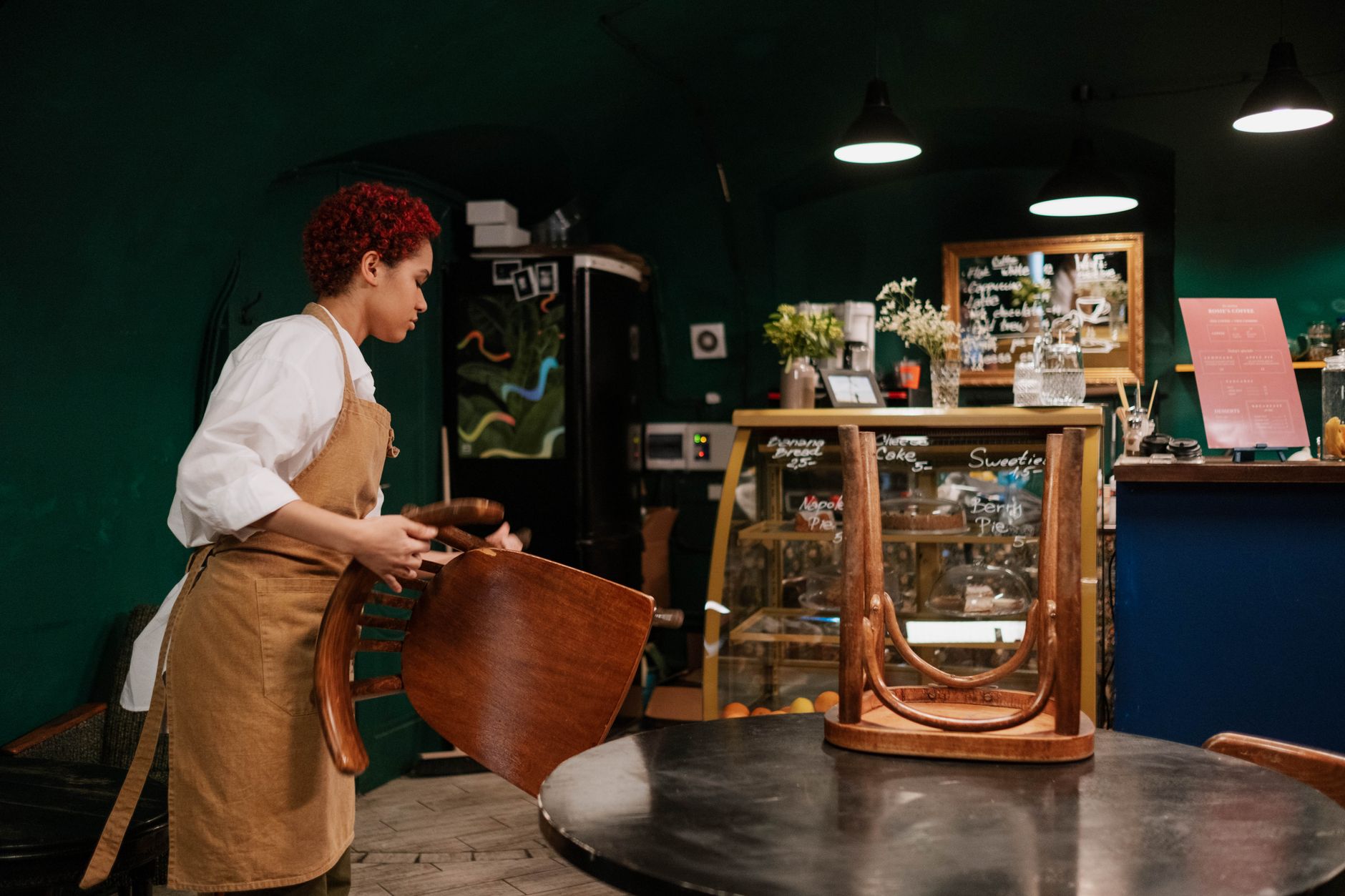
The diner smelled like bacon grease and burnt coffee before seven in the morning, and I loved it. I had worked the breakfast and lunch shift at Nell’s Corner since I was twenty-two, and by the time I was twenty-six I knew every creak in the floorboards, every booth that wobbled, every customer who liked their eggs runny and their coffee strong. I knew which regulars tipped well and which ones left pocket change, and I knew that at the end of every shift, Derrick counted out the tip pool in the back office with the door half-shut.
What I did not know, for longer than I want to admit, was that Derrick was keeping a cut for himself.
This is the story of how I figured it out, how I proved it, and what happened when I brought the proof to the people who deserved to see it most.
—
Nell’s Corner sits on the main drag of a town that I will leave nameless for reasons that will become clear. It is the kind of town where everybody knows everybody, where the high school football games draw the whole county on Friday nights, and where the same families have been coming in for eggs and pie for three generations. Nels, the owner, had run the place for twenty years. He was sixty-something, white-haired, with a big laugh and a habit of refilling your coffee before you asked. Everybody in town liked Nels.
Nels did not work the morning shifts anymore. He came in for the lunch rush a few days a week, kept the books at home, and trusted Derrick to manage the floor.
Derrick had been shift manager for four years when I started noticing something was off. He was thirty-eight, stocky, with close-cut hair and a gold-plated class ring he wore even when he was wiping down tables. He was not unkind exactly. He was more the type who was just nice enough to stay invisible. He told corny jokes. He remembered your name. He brought donuts on Thursdays. If you had asked me on a random Tuesday whether I liked Derrick, I probably would have said sure, he was fine.
But the numbers did not add up.
—
The tip pool at Nell’s Corner worked like this: every server dropped their cash tips into a communal jar at the end of their section’s shift, Derrick counted it, and then he divvied it up based on hours worked. Front of house split the pool equally. It was a fair system, or it was supposed to be.
I had started keeping rough notes in my head the way you do when something does not sit right but you cannot name it yet. A Saturday in March, full house, two birthday parties, every table leaving twenty percent. I went home with forty-two dollars in pool tips. It felt low. I did not say anything because I did not have anything to say, just a feeling.
A Friday in April, a bus tour came through, forty-three people, cheerful retirees from a church group two counties over, and they tipped well. I know because I cleared the tables myself. I counted the bills in my head as I collected them. Something close to three hundred dollars from that one tour, spread across three servers including me. When Derrick counted out at the end, I walked away with twenty-eight dollars.
I mentioned it to Faye that night in the parking lot. Faye was the kind of woman you trusted immediately. She was fifty-one, had been waitressing since she was seventeen, and she had a memory for numbers that would have made her a formidable accountant if life had dealt different cards. She was quiet a moment when I told her what I had counted.
“I thought it was just me,” she said.
She had not been counting tables the way I had. But she had noticed the same low feeling after big Saturdays. She had assumed it was her math, or the card tips she did not see, or something she was missing. She had not said anything because she did not want to make trouble.
That conversation in the parking lot changed everything.
—
I went home that night and I did not sleep well. I lay in the dark and I thought about all the Saturdays and Fridays and holiday mornings where the diner had been packed and the payout had felt wrong. I thought about Faye, who had been on her feet for thirty-some years and was still working split shifts to make rent. I thought about Josie, who was twenty-three and saving for a car so she could take night classes at the community college forty minutes away.
Derrick was stealing from all of us. I did not know how much yet. But I was going to find out.
I bought a small notebook at the dollar store the next morning, the kind with a spiral binding and a blue cover. I started writing down everything I could observe and document. Date. Shift. Rough customer count. Tables I personally cleared and what I saw on them. What I estimated in tips from my own section. What the payout was at the end of the shift.
I was careful not to make it obvious. I did not count bills in front of Derrick. I kept the notebook in my apron pocket and wrote in it on my breaks. I was not trying to do anything dramatic. I was just trying to know if I was imagining things.
By the end of three weeks I was not imagining things.
The pattern was consistent: on slow weekdays, the payout felt about right. On busy weekend shifts, holiday weekends, tour group days, any shift where the tip pool was likely to be large and harder for anyone to estimate, the payout was short. Not always by a lot. Sometimes ten or fifteen dollars. But on the two biggest Saturdays in that stretch, I estimated the shortfall at sixty dollars one day and close to ninety the other.
Ninety dollars. Split across three servers. Thirty dollars each from one shift. It sounds like small money until you multiply it by fifty-two weeks a year and realize Derrick might have been doing this for years.
I sat with that number for a long time.
I thought about what three years of big Saturdays would add up to. I thought about the holiday weekends, the summer when the highway was under construction and traffic got rerouted through the middle of town and the diner ran double volume for six weeks, the Valentine’s Day when Nels did a special prix fixe dinner and the place was packed three seatings deep. Every high-volume event was a bigger skimming opportunity. Every one was a day when the pool was fat and the math was hard to check.
I drove to the diner on my day off and sat in my car for twenty minutes before I went inside. I did not go inside. I drove back home and sat at my kitchen table with the notebook open in front of me and I made myself look at every page. Every date. Every number. Every time the payout was low against what I had seen on the tables.
Fifteen entries over three weeks. Twelve of them showed a discrepancy. Two showed nothing unusual. One I could not call because it had been a weird shift with a large party that paid mostly by card and I had no way to estimate what cash had gone into the pool from other sections.
Twelve out of fifteen.
That was not bad math. That was a pattern.
—
I needed to tell Nels. I knew that. But I also knew that I needed more than a notebook full of my own estimates, because my estimates were exactly that: estimates. I had not seen the tip pool. I had not counted it with Derrick in the room. I had reconstructed the cash from memory and what I had seen on cleared tables, and a good lawyer, or even just a confident man, could pick that apart in about thirty seconds.
I needed something undeniable.
I went to Nels on a Thursday morning before the lunch rush, when I knew Derrick was not in yet. I asked Nels if I could talk to him privately, and he sat across from me in the corner booth with his coffee and listened to everything I said. I showed him the notebook. I told him what I had observed over three weeks. I told him I thought Derrick was skimming the tip pool on busy shifts.
Nels did not get angry. He got very still, and his face did something I had not seen before, a kind of quiet weight settling in. He asked me if I was sure, and I told him I was not entirely sure, that I had estimates not proof, and that was why I was coming to him.
“What do you need?” he asked.
“I’d like to put a camera in the back office,” I said. “Pointed at the counting area. With your permission.”
He was quiet for a long moment. Then he said yes.
He ordered a small camera online, a simple one with a memory card, and he installed it himself on a Saturday when Derrick was off. It sat on a shelf above the desk in the back office, angled down toward the table where the tip pool got counted. Nels knew it was there. I knew it was there. Derrick did not.
I want to be clear about this because it matters: we checked. Nels had a right to install cameras in his own business. We were not doing anything illegal. We were not doing anything sneaky in a way that violated anyone’s rights. We were just creating a record of what happened in a room that Nels owned, during business operations that Nels ran. His business, his room, his right.
—
The first shift after the camera went up was a slow Tuesday, and nothing happened that Tuesday worth examining. I tried not to check the footage right away. I tried to be patient. But I will tell you honestly that I thought about that camera approximately every twenty minutes for three days.
Saturday came.
It was a big one, the kind of Saturday that happens in early May in small towns when the weather finally breaks and everybody who has been cooped up all winter comes out at once. We had a line out the door by eight-thirty. Faye and Josie and I were all on, and we ran the floor hard for four hours straight, refilling coffee, calling back orders, splitting biscuits and gravy and the weekend special, which was a ham and egg scramble that always pushed our biggest tips.
I cleared tables that morning that made me certain. A four-top left forty dollars on a forty-dollar ticket. Two older couples at separate tables each left close to thirty percent. The church crowd that came in after the early service was generous almost to a fault, the way they always were in May when the collection plate had done well.
I kept my notebook. I kept my estimates.
When Derrick counted out at the end of the shift, I took my envelope and went to my car and sat there for a minute before I opened it. Fifty-one dollars. On a shift where I estimated at minimum two hundred and forty dollars in the shared pool, across the three of us working. That should have been eighty dollars each, minimum. Maybe more.
I went home and I did not look at the footage until Nels called me.
“Come in Monday morning,” he said. “Before we open.”
—
I drove to the diner at six-thirty on Monday. Nels had a laptop open on the counter and his reading glasses pushed up on his forehead. He looked like he had not slept well. He had already pulled the footage.
He turned the laptop so I could see.
I watched Derrick come into the back office. I watched him set the tip jar on the table. I watched him count out the bills, sorting them into piles with the efficiency of a man who had done this many times. And then I watched him peel bills from the stacks, not nervously, not with any visible guilt, just steadily, the way you might peel a label off a bottle, and tuck them into his shirt pocket.
He did it twice during the count. The whole thing took maybe six minutes. Then he sorted the rest into the envelopes, wrote our names on them, and walked out.
I had to watch it twice before I could speak.
“He’s done this before,” I said. It was not a question.
Nels nodded. “I went back and pulled the other recent shifts,” he said. “I’ve got three more on here.”
Four shifts of footage. Derrick skimming from the tip pool on four separate busy shifts, caught on camera, in Nels’s own diner, with timestamps.
Nels already had a number for a labor attorney. He had called on Sunday.
—
I want to tell you what I felt sitting there watching that footage, because it was not simple. I expected to feel satisfaction, the clean cold click of being right. And there was some of that. But there was also something heavier. Anger, yes. And a strange kind of grief, the loss of the version of things where Derrick was just a corny, donut-bringing shift manager and everything at Nell’s Corner was as good as it seemed on the surface.
I thought about Faye.
Faye had been working at that diner, or places like it, for her entire adult life. She had raised two kids mostly on her own after her husband left. She had worked doubles when she needed to, declined raises she was owed because she did not want to make waves, and she had quietly absorbed years of payout numbers that felt low and told herself she was probably miscounting. She was not miscounting. She was being robbed.
And Josie, who was twenty-three and working every shift she could get, and whose savings account for those night classes was growing slower than it should have been for reasons she could not identify.
I asked Nels if I could be there when he told them.
He thought about it for a moment. Then he said yes.
—
We called Faye and Josie in together on a Tuesday morning, early, before Derrick’s shift started. Nels sat at the end of the counter. I sat next to Faye. We did not tell them over the phone what it was about. We just asked them to come in.
Faye arrived first. She was in her regular work clothes even though she was not on the schedule, and she had a travel mug of coffee she set on the counter without drinking from it. She looked at me and then she looked at Nels and she said, “Is somebody fired?” She said it calmly, the way you say something you are already half-prepared for.
“No,” Nels said. “Sit down, Faye.”
Josie came in three minutes later, still pulling her jacket on. She was surprised to see Faye and me already there. She looked around the empty diner and then she looked at Nels with the nervous energy of someone who has spent their whole working life worried about saying the wrong thing to the wrong person at the wrong moment.
“Is everything okay?” she said.
“Sit down,” Nels said again. “I want to show you something.”
I watched Faye’s face when Nels started talking. She kept very still, the way she had in the parking lot that night when I first mentioned the numbers. She did not react visibly at first. She just listened.
Then Nels turned the laptop around.
Josie’s hand went to her mouth. Faye watched the screen without blinking, and I saw something change in her expression, something that was not quite anger and not quite relief but had elements of both. The look of a person who has been carrying a suspicion for so long that having it confirmed feels both like a wound and like putting down a weight.
“I thought I was bad at math,” Faye said, very quietly, when the clip ended.
“You’re not bad at math,” I said.
She looked at me for a long time. Then she looked at Nels. “How long?” she asked.
Nels said he did not know exactly. The camera had only been up for one week. But based on the pattern and the consistency of it, his guess was longer than any of them wanted to think about.
Josie was crying quietly. Not dramatic, heaving sobs, just the kind of tears that come when you find out that something unfair was being done to you and you had no idea. “All that time,” she said. “I kept thinking I was doing something wrong. Like I wasn’t charming enough or I was losing tips somehow.”
“You weren’t doing anything wrong,” I said. “Neither were you,” I said to Faye.
Nels told them the attorney was involved. He told them he was going to pursue recovery of the stolen wages. He told them Derrick would not be coming in for another shift.
The room was very quiet for a moment.
Josie wiped her face with the back of her hand and looked at the ceiling the way you do when you are trying to pull yourself together in a place where you do not want to fully fall apart. Faye was watching the laptop screen even though the clip had ended, as if she was still processing the geometry of what she had seen, the easy way Derrick’s hand had moved, the absence of any hesitation.
“He never even looked over his shoulder,” Faye said.
She was right. He had not. He had counted and skimmed and packaged the rest as if it were a completely ordinary task. Maybe by then it was.
Then Faye reached over and put her hand on top of mine on the counter, and she left it there.
—
I want to tell you what happened next, not in dramatic terms but in practical ones, because the practical part mattered.
Nels terminated Derrick that Tuesday. He did it with the attorney on the phone and the footage documented and saved. Derrick denied it for approximately the length of time it took Nels to describe what the camera had captured, and then he stopped denying it. He did not apologize. He did not say much of anything. He cleaned out his locker and left.
The attorney sent a demand letter. Between what the footage documented and what Nels could estimate based on the pattern across previous shifts, there was a negotiation. I will not give you every detail of the legal process because it was not dramatic, it was just slow and paperwork-heavy the way these things are. But there was a settlement. Nels made the three of us whole out of his own pocket first, because he felt responsible for having trusted someone he should have been watching more closely, and then the attorney pursued the rest from Derrick.
Faye got more than she expected. She was quiet when Nels handed her the check, and she looked at it for a long time without saying anything.
“That’s a lot of breakfasts,” she finally said.
Nels laughed, and it broke the tension in the room, and for a moment the four of us were just four people standing in the kitchen of a diner that smelled like coffee and grease, and it felt almost normal.
Almost.
—
Nell’s Corner is still running. Nels hired a new shift manager, a woman named Pat who came over from a breakfast place one town west and who counts out the tip pool with the door open and lets anyone who wants to watch do so. I watched the first three times. Then I stopped watching, because I trusted what I saw.
Faye is still there. She took one week off after everything happened and then came back, because she said she had been coming in six days a week for so long she did not know what to do with herself at home. She is a little different since everything came out. Not harder, but clearer. She stands a little taller at the counter. She does not apologize when she notices something wrong.
Josie got her car. It is a 2019 Civic with a dent in the rear bumper that she says she is getting fixed when she has time, which she does not have yet because she started her first class at the community college in September. She is taking accounting, which made me laugh when she told me, in the best way.
I kept the notebook. It is in a drawer in my kitchen now. Every so often I open it and look at the pages, the dates and the tables and the estimates I scratched out in my apron on my breaks, and I think about all the times I almost talked myself out of trusting what I saw.
I did not talk myself out of it.
That is maybe the part I am most proud of. Not the camera, not the footage, not even the moment we sat Faye and Josie down and told them the truth. The part I am most proud of is the Tuesday morning in late April when I could have put the notebook away and told myself I was just bad at math, and I did not.
—
People ask me sometimes what made me start writing things down instead of just letting it go. I tell them the honest answer, which is that I kept thinking about Faye.
I had not known Faye for very long at that point. We were coworkers, friendly, the kind of friendship you build in a kitchen over shared chaos and inside jokes about the regulars. But I had watched her work. I knew what she put into every shift. I knew that she stayed late when someone called out and came in early when the breakfast rush was worse than expected. I knew she wore the same pair of non-slip shoes for two years because she was saving money, and I knew she never complained about it.
When you watch someone work that hard and then you start to suspect that someone is helping themselves to the fruits of that work, something in you does not allow you to look away.
I did not want to make trouble. I want to be honest about that. The last thing I was looking for when I took the job at Nell’s Corner was a confrontation with my shift manager. I was looking for a steady paycheck and decent tips and maybe a few regular customers who liked me. I got all of that. But I also got a front-row seat to something that was not right, and once you see something like that, you cannot unsee it.
Some people would have gone straight to Nels the moment they had a bad feeling. Some people would have confronted Derrick directly. I chose to document first because I knew that feelings and estimates were not going to be enough. I needed something that could not be argued with.
The camera was Nels’s idea in the end, or rather it was something Nels was willing to say yes to when I proposed it. That matters. I did not sneak around behind anyone’s back. I went to the person who had the authority to act and I asked him to give me the tools to prove what I suspected. He trusted me enough to say yes, and what we found on that footage proved we were both right to take it seriously.
—
I have thought a lot, in the months since, about why Derrick did it.
I do not know the answer. I do not think the answer would make it better or worse, exactly. He had a decent job in a town where decent jobs were not always easy to come by. He was trusted. He was liked. He had enough status in that diner that nobody questioned what came out of the back office. Maybe that was it, the unchecked authority that comes with being the person everyone trusts to be fair, and the slow discovery that nobody was watching.
People do things when nobody is watching that they would not do otherwise. That is not a cynical observation; it is just the truth. The structures that stop that from happening matter. The open door, the second pair of eyes, the person in the parking lot who says I thought it was just me. Those things matter.
Faye had not told anyone what she had noticed because she did not want to be the difficult one. Josie had not said anything because she was twenty-three and new and did not feel like she had the standing. I almost did not say anything because I did not have proof.
But here is what I know now: the difficulty was already there. The unfairness was already happening. The question was only whether someone was going to name it.
I was glad I named it.
—
Last November, the diner did its first real Thanksgiving event, a community dinner where Nels opened the place up for people who did not have somewhere to go. It was Pat’s idea, and Nels said yes, and the three of us, Faye and Josie and I, all came in on our day off to help run it.
It was a full house by noon. Retired farmers and widowers and a couple of young families who were going through hard things. The kind of mix you see in small towns when the community actually shows up for itself. We cooked and served and refilled coffee all afternoon, and when it was over and we were cleaning up, the four of us sat down in a booth and ate whatever was left.
Nobody talked about Derrick. Nobody talked about the notebook or the camera or the footage. We just ate, and Faye told a story about a Thanksgiving shift she worked in 1998 where the turkey fryer caught fire and she had to explain to the fire department why the diner smelled like burnt bird, and we laughed until Josie had to put her fork down.
It was one of the best evenings I had in a long time.
On my way out, I stopped at the shelf in the back office where the camera had been. Nels had taken it down after everything wrapped up. The shelf was empty. I stood there for a second, just looking at the empty spot, and then I turned off the light and went home.
Some things are done. Some things deserve to stay done.
I am twenty-six years old. I work the breakfast and lunch shift at Nell’s Corner. I know every creak in the floorboards and every booth that wobbles, and I know that at the end of every shift, the tip pool gets counted with the door open.
And I know that if something ever looks wrong again, I am going to write it down.
This story is a dramatization. Names, characters, and details are invented, and any resemblance to real people or events is coincidental.