The Night Shift Years He Never Explained
By Nadia Cross
—
The boots were at the very back of the closet, behind the winter coats and a box of Mira’s old scarves that nobody had touched since she passed. I wasn’t looking for them. I wasn’t looking for anything in particular. My father had been in the hospital for four days with what the cardiologist called “a significant cardiac event,” which is the kind of phrase that sounds clinical and controlled right up until you’re standing alone in your father’s bedroom at eleven o’clock at night, trying to figure out where he kept his insurance card, and the world just stops holding still.
I found the boots by accident. My hand caught the lace when I was pushing aside a stack of folded blankets, and the whole pair came tumbling out onto the floor with a thud that felt too heavy for the size of the room. I stood there for a long moment looking down at them. They were steel-toed work boots, the kind with the thick rubber soles and the reinforced toe caps, the brand I couldn’t even read anymore because the logo had worn completely smooth. The leather was cracked in a thousand places, darkened by years of oil and sweat and the kind of grime that does not wash out. The laces had been replaced at least twice, maybe more, with mismatched pairs that didn’t quite match the original color. The left heel had a chunk missing from it, worn down at an angle that told you something about how my father carried his weight when he was tired, which was always.
I sat down on the edge of his bed with those boots in my hands and I did not find the insurance card for another hour.
—
My father’s name is Sang. Sang Yoon. He came to this country from Incheon in 1983 with my mother Mira and exactly four hundred dollars in an envelope that his uncle had pressed into his hands at the airport. He was twenty-two years old. He spoke almost no English. He had a degree in mechanical engineering from a university back home that no American employer would credit without additional certification he could not afford to pursue while also paying rent and feeding a family.
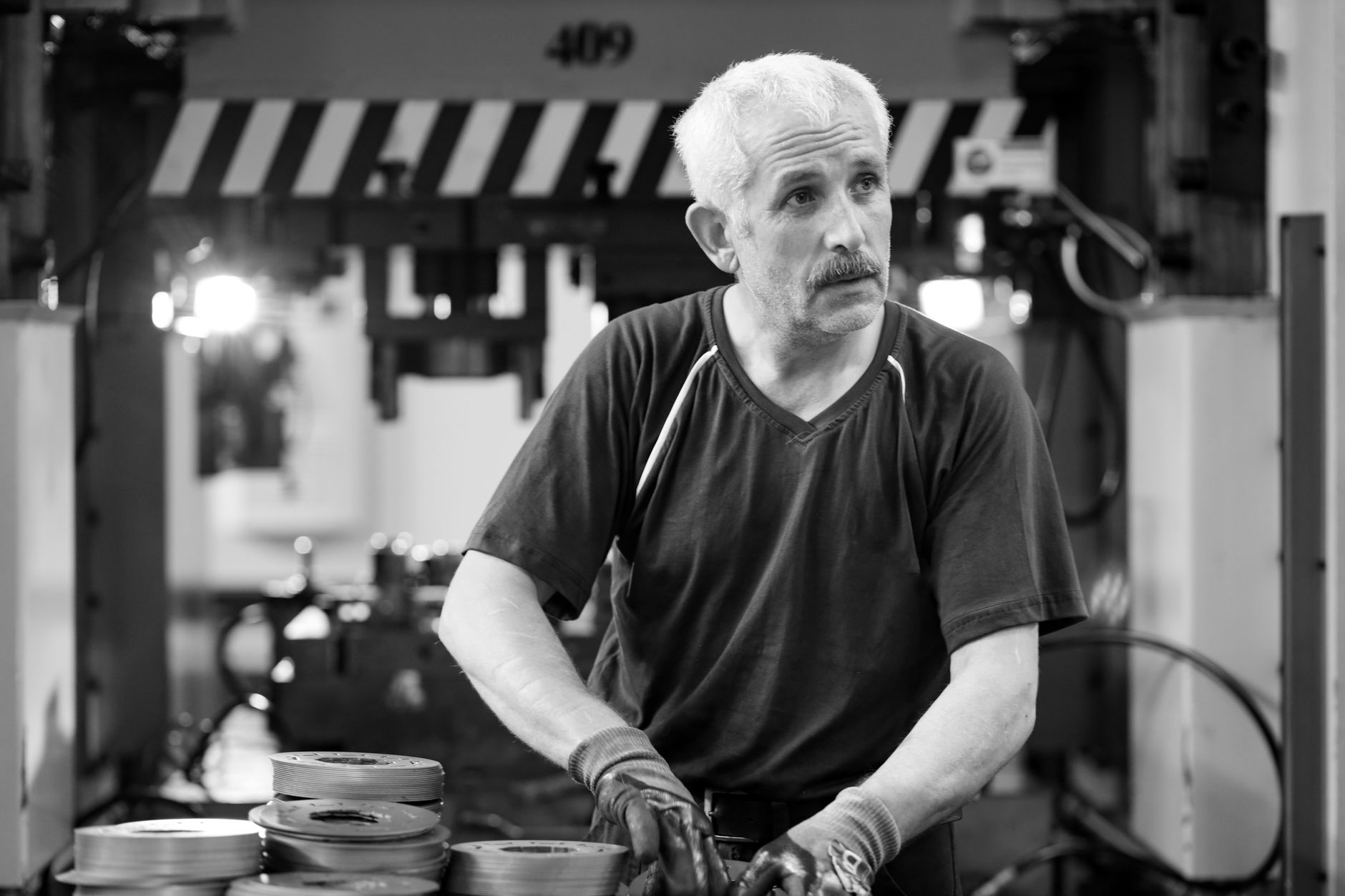
He took the first job he could find, which was a line position at a small parts manufacturing plant about thirty miles outside of Glenbrook, the town in central Ohio where he and my mother had settled because they knew a family there, a couple named the Kwons who had come over a few years before and knew where the Korean grocery was and which landlords would actually rent to them. The plant made metal components for farm equipment, nothing glamorous, the kind of place that smelled like machine oil and burnt metal shavings and where the men ate their lunch standing up because the break room only had four chairs.
He started on days. He worked days for about a year, maybe a little more. Then, sometime in 1986 or so, the plant manager offered a premium on the overnight shift because nobody wanted it. My father wanted it. He came home and told my mother and she didn’t argue, because they needed the premium, and because my father had already decided. That is how he was. He decided things quietly and then they were done.
I was born in 1988. My sister Jin came along in 1990. By the time I was old enough to understand anything about how our house worked, my father was already a night-shift man. He slept during the day, from roughly seven in the morning until three in the afternoon. He was awake in the evenings. He left for work at ten-thirty every night, seven nights on and seven nights off in rotating blocks, and he drove that thirty-mile stretch of state route in the dark for twenty-two years.
We grew up around his sleep schedule the way you grow up around a river. You don’t think about the river. You just know which routes to take.
—
The plant was called Meridian Components, and Curtis was the man my father worked beside for most of those years. Curtis Bellamy, a guy from Harlan County, Kentucky who had come north for the same reason everyone came north, which was work. Curtis was tall and thin and had a laugh that you could hear from two machine bays over. He and my father had almost nothing in common except the overnight shift and a mutual tolerance for silence, which turned out to be enough to build a friendship on.
I only met Curtis twice while I was growing up. Once at a company picnic when I was maybe eight, and once when he came to my father’s house to drop off some tools he had borrowed. Both times he shook my hand very seriously, the way adults do when they’re treating a child like a person, and said something complimentary about how big I was getting. He called my father “Sang” in a way that sounded like he’d been saying it for years, which he had.
I thought about Curtis a lot when I was sitting on my father’s bed holding those boots. I wondered if he had known things about my father that I didn’t. Night-shift men, I imagined, developed a certain kind of intimacy just by proximity and darkness, by being the only ones awake while the rest of the world slept.
The overnight shift at Meridian had its own rhythms, its own texture, its own community of men who were by definition apart from the daylight world. You ate your meals at two and five in the morning. You drove home when the sky was just starting to go gray and the farmers were pulling out of their driveways. You slept while the rest of the town was at the diner and the post office and the school pickup line. You existed in a parallel time. My father lived in that parallel time for twenty-two years.
What did he think about, driving those thirty miles home at seven in the morning with the sun coming up over the flat Ohio fields? I used to imagine it was the radio. He liked country music in a way that seemed incongruous, a Korean-American man in a small Ohio town who could tell you the difference between Merle Haggard and Hank Williams Jr. and had opinions about it. He told me once that he learned a lot of his English from country songs, the plain words and the direct feelings. I thought he was joking. He wasn’t.
He would come home, take off those boots at the door, and go to bed. That was the routine. We learned early not to run in the mornings, not to let the screen door slam. We whispered in the kitchen over breakfast cereal. We were careful with him in that way, the way you’re careful with something precious and fragile, even if none of us would have used those words at the time.
—
There is a particular memory I have from when I was about ten that I have never been able to shake. It was a Saturday in October, a football Saturday, and there was a county fair running in the next town over. Some of my friends were going with their families. I wanted to go. My father was on a sleep stretch, which meant he had worked all week and was off for the weekend, and I thought maybe he would take me.
I remember going into the hallway outside his bedroom door and stopping there for a long time. I could hear him breathing in the dark behind the door. He was asleep. He had been at the plant all night and he had driven home in the early morning and he was asleep, and I stood there in the hallway wanting to knock.
I didn’t knock. I went back to the kitchen and poured myself another bowl of cereal and ate it alone at the kitchen table. I didn’t tell my father, later, that I had wanted to go to the fair. I didn’t want him to feel bad. I understood, even at ten, that his sleep was something we protected.
I have thought about that moment many times since then. About the ten-year-old version of me standing outside his door and choosing not to knock. And about the fact that my father, on the other side of that door, would have woken up and taken me to the fair without complaint if I had knocked. I know that about him now. He would have gotten up, put on his coat, and driven me to the next town over, tired as he was, because that was the kind of father he was. But I didn’t knock. I was protecting his sleep, and his sleep was the cost of the overnight premium, and the premium was the cost of everything we had.
We were all in it together, in other words, even if none of us said so.
—
My mother Mira died when I was seventeen and Jin was fifteen. It was a brain aneurysm, very fast, the kind that gives no warning. She was here and then she was not. My father took three days off work for the funeral arrangements and then went back. He never explained that to us either. He just went back.
In the years since, I have come to understand that going back was the only thing he knew how to do with grief. He could not sit still with it. Sitting still with grief requires a kind of internal wealth, a surplus of stability elsewhere in your life, that my father had never accumulated. So he went back to the plant, and he worked, and he grieved in whatever way a man grieves alone in the dark at three in the morning with the machines going.
Jin and I held the house together in the way kids do when a parent checks out a little. We were good at it, which is a kind of success I look back on with a complicated feeling. We cooked dinner. We did homework. We reminded my father to eat. He thanked us without making much of it, because making much of things was not his way.
There was a period of maybe six months after my mother died when I resented him for going back to work so fast. I was seventeen and I wanted him home, present, grieving with us instead of in the dark at the factory. I wanted him to feel it visibly, so that I knew I was not feeling it alone. He felt it, I know that now. He felt it the way everything hit him, which was in a place I did not have access to. The dark was where he processed things. The overnight shift was where he put what he could not say.
He kept working nights.
—
What I did not understand, not then and not for a long time afterward, was the arithmetic of it.
My father made a choice in 1986 that he never revisited and never complained about and never, not once in my entire childhood, presented to us as a sacrifice. He worked from eleven at night until seven in the morning, five nights a week with rotating days off, for twenty-two years. He slept while we were at school. He was awake when we got home. He was there for dinner. He helped with homework. He drove us to school plays and soccer games and, once, a very bad middle school production of Oklahoma that lasted two and a half hours and he sat through all of it with his hands folded in his lap and applauded at the end like it had been Carnegie Hall.
He slept from seven to three and then he was our father until ten-thirty at night when he drove away in the dark.
He did this so we could sleep in a warm house. He did it so the electric bill was always paid and there was always food. He did it because the night-shift premium was enough to mean the difference between managing and not managing, between Jin’s braces getting done and not done, between the car getting fixed and not fixed.
I did not understand what that premium represented until I was in college, working a part-time job at a campus bookstore and trying to make my scholarship money stretch. I called my father one night to tell him I was worried about money and he said, very matter-of-factly, that he would send something at the end of the month. He did. He always did. I thanked him and hung up and did not think about where it came from.
He did it and he never said a word about it. Not in pride and not in bitterness and not in any kind of inventory of what he had given.
I found out, years later, that he had been offered a day-shift supervisor position in 2001. The pay would have been roughly equivalent when you factored in the loss of the premium. He turned it down. He told the plant manager he preferred nights. That was all he said.
I only found this out because Curtis told me, the third time I met him, which was at the hospital.
—
Curtis showed up on the second day of my father’s hospitalization. He walked in wearing a clean flannel shirt and holding a paper bag with a container of soup from a diner down the road, the kind of thing you bring because you don’t know what else to bring and you need to bring something. He was seventy-two years old and his hair had gone completely white and he moved a little slowly but he still had the laugh, the big one, and it surprised me when it came out in a hospital room.
He sat down across from me and we talked for about an hour. He told me things about my father that I had not known. Small things, mostly. That my father had kept a photograph of me and Jin on his machine for years, the one from Jin’s high school graduation where we’re standing in front of the school in the sun. That my father had once organized a collection when a coworker’s house burned down, going person to person on the line during break, and had contributed a larger share than he told anyone. That my father had been learning English idioms from a paperback book he kept in his locker, cross-referencing phrases he heard on the overnight radio program.
Curtis told me that my father used to talk about us during the slow stretches, the two, three in the morning hours when the machines were running steady and there was nothing to do but watch and wait. He talked about Jin’s grades, about a paper she had written that had gotten an award. He talked about my Little League games, which I had mostly forgotten about. He talked about what we wanted to do when we grew up, which changed frequently, the way it does when you’re twelve and then fourteen and then sixteen and the world keeps opening new doors.
“He was proud of you both,” Curtis said. “He never said it like that, not in those exact words, because that wasn’t his style. But you could hear it. Every time he talked about you kids, you could just hear it underneath.”
I had to look away for a moment after Curtis said that.
And that he had turned down the supervisor position.
“He told me why,” Curtis said. “This was years later, one of those nights when we had some downtime and we were just talking. He said he didn’t want to switch to days because of the kids. Said you two were in school and he was home when you got back, and he didn’t want to change that. Said the nights were worth it.”
I didn’t say anything for a moment.
“He never told us that,” I said finally.
Curtis smiled a little. “No,” he said. “I don’t expect he would have.”
—
There is a particular silence my father occupied that I spent a lot of my childhood misreading. I thought it was reserve. I thought it was the particular emotional style of Korean men of his generation, the ones who had come up in a time and place where demonstrating feeling was not considered something men did. And maybe it was that too. But sitting in his bedroom with those boots in my lap, I started to understand that it was also something else.
He did not tell us about the sacrifice because he did not want us to carry it. He did not want Jin and me to grow up under the weight of knowing what it had cost him. He wanted us to take the warm house and the paid electric bill and the food in the refrigerator as though they were simply the nature of things, as though warmth and security were just the air we breathed, because he thought that was what children deserved to believe.
He carried it alone. He carried it in the dark, literally, in the overnight hours when we were sleeping in the warm house he was paying for.
The boots were the physical record of all of it. Every cracked seam, every worn-through patch on the insole, every scuff mark on the steel toe cap. Twenty-two years of night shifts, of thirty-mile drives in the dark, of standing at a machine in a factory that smelled like metal shavings, of choosing not to sleep when we were awake so that he could be our father, of refusing a promotion that would have changed our days because our days mattered more to him than his did.
He had kept the boots. They were at the back of his closet, behind the winter coats. He had not thrown them away.
I sat with that fact for a long time, there on the edge of his bed. He was not a man who kept things. The house was spare, clean, the way my mother had kept it and the way he had maintained it after she was gone, because letting it go would have felt like a second loss. He did not keep mementos. He did not have a shelf of trophies or a drawer full of old photographs. He had a few pictures on the wall, my mother’s, mostly, and the graduation photo that Curtis mentioned, the one of me and Jin in the sun. That was about it.
But he had kept the boots.
—
I called Jin from my father’s bedroom that night. It was after midnight. She answered on the second ring, the way she always did when she knew something was happening, because Jin has always been better at being awake for the hard things than I am.
I told her about the boots. I described them to her, the cracked leather and the worn heel and the mismatched laces. I heard her go quiet on the other end of the line.
“I didn’t know he kept them,” she said.
“Neither did I.”
We were both quiet for a while. Outside the window I could hear the sound of a truck going past on the county road, the low rumble of it fading into the dark.
“Do you remember,” Jin said finally, “how he was always there when we got home from school?”
I did remember. I remembered it as a fact of life, as the simple way things were. My father was there. He was always there.
“I thought it was just,” I said, and stopped. “I thought that was just what fathers did.”
“Me too,” Jin said.
What fathers did. As though it cost nothing. As though it did not require twenty-two years of overnight shifts and a worn-out pair of steel-toed boots in the back of a closet that he kept because he could not bring himself to throw them away, or maybe because he knew they were the only record of what he had done, the only evidence that survived.
Jin was quiet for a while. Then she said something that surprised me.
“He used to help me with math after dinner,” she said. “Do you remember that? He would sit at the kitchen table with me and we would go through it problem by problem. He never seemed impatient.”
I did remember. I remembered him at the table with Jin’s textbook, that same posture he always had, very still, reading carefully, asking her to show him what she had tried before he offered anything.
“He was good at math,” I said.
“He was good at everything that required patience,” Jin said.
We stayed on the phone for a long time that night, past two in the morning, going through memories the way you go through a box you haven’t opened in years, not sure what you’ll find. My father walking us to the bus stop in the cold and waiting until the bus actually came. My father at the kitchen table on a Sunday with the newspaper folded to the crossword, working through it in pencil. My father at my mother’s grave on the anniversary, every year, with a small bundle of flowers, the yellow kind she had liked.
Everything we had always known about him was the same. But the meaning of it had shifted, because now we knew what it cost.
—
My father’s name is Sang, and he is sixty years old, and he spent twenty-two years working the overnight shift at a parts manufacturing plant in central Ohio so that his children could sleep in a warm house and go to college. He did not tell us this was what he was doing. He never framed it as sacrifice. He just did it and let us believe it was the nature of things.
My wife Lena came to the hospital the next morning with Jin and Jin’s husband, and we sat together in the waiting area while my father was being evaluated. Lena held my hand and I told her about the boots, trying to explain what I had understood sitting on the edge of my father’s bed the night before. She listened the way she listens, which is completely, and when I finished she was quiet for a moment.
“You should tell him,” she said. “When he’s better. You should tell him that you understand.”
I thought about that for a long time. Whether my father would want to hear it. Whether it would feel, to him, like I was making too much of something he had decided long ago not to make much of. He was not a man who needed acknowledgment. He had never sought it. The whole structure of what he had done was built on not seeking it, on doing the thing and letting the thing be what it was.
But I thought about those boots. I thought about how he had kept them. Not displayed anywhere, not in a place anyone would see them, but kept. At the back of the closet, behind the winter coats.
You don’t keep something like that unless it means something. Unless you want some record to exist, even if only for yourself, of what it cost and what you did.
Maybe that was all it was. Maybe the boots were just something he couldn’t let go of, for reasons he couldn’t have fully articulated himself. But I think, sitting there with them in my lap in the dark of his bedroom, that on some level they were the one thing he let himself keep. The one acknowledgment, private and tucked away, that those years had happened and that they had meant something.
If he couldn’t say it out loud, maybe the boots were the way he said it to himself.
—
He came home from the hospital on a Thursday. The cardiologist had adjusted his medications and given him a list of dietary changes and a walking regimen, and had told him firmly that the stress of overnight work was behind him now, which my father received with a nod that could have meant anything.
Lena and Jin and I had cleaned the house and stocked the refrigerator and made up the bed with fresh sheets. Jin had put a vase of flowers on the kitchen table, yellow ones, because those had been Mira’s favorite color. My father noticed them the moment he walked in and he stopped for a second. Just a second. Then he set down his bag and said the flowers were nice.
I waited a week. I waited until he was settled back into his routines, until the house felt like his again and not like a place we were managing on his behalf. Then one evening after dinner, when Lena had gone to help Jin with something in the kitchen and it was just the two of us sitting in the living room with the television on low, I told him I had found the boots.
He looked at me. He didn’t say anything at first.
“I was looking for your insurance card,” I said. “The night you were admitted. I was going through the closet.”
He nodded slowly.
“Curtis told me about the supervisor position,” I said. “The one you turned down in 2001.”
He looked at the television for a moment. An old Western was playing, the kind he liked, with a lot of landscape and not much talking.
“The days were better for you and Jin,” he said finally. “For school.”
“I know,” I said. “That’s what Curtis said. That you said the nights were worth it.”
He didn’t answer that. He watched the Western. A man on horseback was crossing a long flat plain with the sun going down behind him.
“I understand now,” I said. “I didn’t when I was a kid. I thought it was just how things were. But I understand now what you were doing.”
My father looked at me. It was the kind of look I did not have a name for when I was young, but I have a name for it now. It is the look of a person who has been seen, who has been actually seen, after a long time of not being.
He did not say you’re welcome. He did not say it was nothing, the way people sometimes do when they are trying to diminish what they gave. He just looked at me for a moment, and then he looked back at the television.
But his hand found my arm and rested there for just a moment. A brief weight, warm and deliberate. And then he let go.
—
I took the boots home with me. I asked him if I could and he said yes with a small shrug, as though it didn’t matter, although I noticed he didn’t say to just throw them away.
They sit on the shelf in my office now, the left one and the right one, side by side. The cracked leather and the worn heel and the mismatched laces. Lena dusts around them. She has never asked me to move them.
Some mornings I look at them before I start work and I think about my father in the dark, driving thirty miles down a state route at ten-thirty at night, year after year, while Jin and I were asleep in the house behind us. I think about him standing at the machine with Curtis in the overnight quiet, the two of them keeping the same watch while the rest of the town slept. I think about him at two in the morning with a paperback book of English idioms in his locker, working through the language of a country that had given him hard work and cold winters and had not made anything easy.
I think about him refusing the day-shift promotion, quietly, without telling us why, because we were the reason and the reason was not something he felt the need to announce.
I think about the boy version of myself standing outside his bedroom door on a football Saturday in October, listening to him breathe in the dark, and choosing not to knock. And I think about how my father would have gotten up and taken me to that fair without a word of complaint. Because that was who he was. That was always who he was. I just didn’t understand, at ten, what it cost him to be that person.
I think about all the things my father never said, and how many of them I now know.
He is doing better. He walks every morning, the way the cardiologist told him to, out to the end of the county road and back. Sometimes I call him on the walk and we talk, which is new for both of us, that kind of talking. He tells me about the birds he sees and the weather. I tell him about work and what Lena is doing. Last week he told me a story about Curtis, something funny that happened at the plant years ago that I had never heard, and he laughed telling it, that quiet laugh of his that sounds like it surprised him.
I laughed too. I did not know, until recently, how much I had wanted that. Just my father’s voice on the phone on a Tuesday morning, telling me something I didn’t already know about him.
I think about what those twenty-two years cost him, the sleep he gave away, the mornings he missed, the toll of living in the dark half of the world while we lived in the light. And I think about what he bought with that cost. A warm house. Two kids who slept well and ate and went to school and went to college. A daughter who became an engineer, which is what he had wanted to be and never got to be, and a son who is sitting here now writing this because he needs somewhere to put what he found in a closet at eleven o’clock at night with the world not holding still.
He kept the boots.
That is the whole story, I think. He kept them because they were the record of what he had done, the proof that it happened, the evidence that twenty-two years of dark and cold and worn leather meant something. He carried the years in silence and he kept the proof in the back of a closet behind his dead wife’s scarves and he never said a word about it to anybody except, once, a man named Curtis in the slow hours of a long overnight shift, when the machines were running steady and there was nothing to do but tell the truth.
The nights were worth it.
That is what my father said. Three words, just that, and he never said them to us. But he kept the boots, and now I know.
I have a pair of worn-out work boots on a shelf in my office that tell me everything he never said.
I look at them every morning.
I know now.
This story is a dramatization. Names, characters, and details are invented, and any resemblance to real people or events is coincidental.