The Grain Check They Cashed First
I have told this story slow in my own head for three weeks now, turning it over the way you turn a scale ticket in your hand to check you copied the number down right the first time. So let me tell it to you the way it actually happened, starting on the Tuesday morning I walked into the co-op office in Bogue, Kansas, expecting to pick up a settlement check for a wheat crop I had grown, cut, and hauled myself at seventy one years old, and instead found out that somebody in my own family had already spent my money.
The girl behind the counter, a young woman named Priscilla who had only worked there since spring, would not look at me straight when I gave her my name. She went and got Ottway Price instead, the elevator manager, a man who had known my husband since they were both boys running barefoot along the Solomon River, and Ottway came out from the back office with a look on his face I had only seen on him once before, the morning he came to tell us the price of wheat had dropped eighty cents a bushel two days before we cut. He asked me to sit down. I did not sit down. I have found, at my age, that bad news lands easier standing up, where you can feel your own two feet holding you.
“Cordelia,” he said, “that check went out nine days ago. Isham came in and picked it up.”
I want you to understand what that sentence did to the room, because I need you to understand what it did to me. My name is Cordelia Odom. I am seventy one years old. I have lived my whole life in Nicodemus, Kansas, four miles up the road from that elevator, in the oldest town west of the Mississippi settled, built, and still held onto by Black families who came up out of Kentucky in 1877 with almost nothing but a promise of land and the nerve to believe it. My husband Ezell farmed two hundred and forty acres of hard red winter wheat that his own grandfather broke out of raw prairie sod with a mule team, and when Ezell died two years ago, everybody in three counties had an opinion about whether I could keep that ground producing on my own. I had spent two years proving every one of them wrong, one harvest at a time. And now Ottway Price was standing in front of me telling me that my brother in law, Ezell’s own younger brother, had walked into that office and walked out with fifty seven thousand, four hundred and twelve dollars that belonged to me, and that nobody there had thought twice about handing it to him.
I need to back up, because you cannot understand what Isham did to me in that co-op office without understanding what Nicodemus is, and what it means to be a woman still working land here at my age with your name still on the deed.
Nicodemus is not a big place. You could drive through it in under a minute and not know you had passed through a town at all if you were not looking. What we are is old, and what we are is ours. My great grandmother came up from Kentucky as a girl of nine with her own mother and father, walking part of the way, riding a rail car the rest, following word that a man was selling homestead claims to colored families willing to break prairie sod nobody else wanted badly enough to fight the wind and the winters for. They came here with almost nothing and they built a town, a church, a school, a post office, out of dugouts cut into the creek bank the first hard winter because there was no lumber for a hundred miles and no time to wait for it. Every year at the end of July, families who left for Kansas City or Denver or Los Angeles two and three generations back drive back here for the Emancipation Celebration, the oldest one still held anywhere in the country, and for one long weekend this little bend in the Solomon River fills up with more people than it has seen since the last homecoming, and every one of them is proud, in a way that does not need explaining to anybody who was raised here, of what their people managed to hold onto when the whole rest of the country was betting they wouldn’t.
That is the town I was standing in when Ottway told me what my brother in law had done. And I want to tell you plainly, because it matters to everything that came after, that owning land here, keeping it in the family, keeping the name on the deed and the operation running, is not just money to people like me. It is the one thing this country could not manage to take from my family the way it took so much else. Losing that check was never only about fifty seven thousand dollars. It was about whether an old woman was strong enough to keep holding onto what four generations of Odoms had already fought too hard to lose.
Ezell and I married when I was nineteen. I had grown up two farms over, the daughter of a man who ran cattle and put up alfalfa, and I did not marry a farmer because I did not know any better. I married one because I had grown up loving the particular kind of quiet that settles over wheat country in June, right before harvest, when the whole world turns the color of a lion’s back and holds its breath. Ezell had that same quiet in him. He was not a man who talked a lot, but he showed you what he thought of you in the way he handed you things, careful, both hands, like whatever he was passing you mattered. He handed me the books the second year we were married, because his own father had never trusted a woman with the checkbook and Ezell had decided, out loud, at his own kitchen table, that his father had been wrong about a great many things and he did not intend to repeat the list.
Isham was four years younger than Ezell, and from the time I first met him he wore his resentment the way some men wear a good hat, adjusted just so, always visible from a certain angle. Their father had left the home quarter, the two hundred and forty acres, to Ezell outright, because Ezell was the one who had stayed and worked it every summer of his life while Isham went off to Wichita chasing factory wages and came home only when it suited him. Isham never forgave his own father for that decision, and somewhere along the way, without my ever quite being able to point to the day it happened, he stopped being angry at his father, who was dead and past caring, and started being angry at me instead, the outsider woman who had married into the good half of the inheritance.
For thirty some years that resentment stayed mostly quiet, a low current under the surface of holiday dinners and funerals, the kind of thing you learn to step around in a family the way you learn to step around a low spot in a familiar field. It surfaced hard the year Ezell got sick.
He was diagnosed with pancreatic cancer in the spring of what would be his second to last harvest, and from the day the doctor in Hays said the word out loud, everything in our life narrowed down to keeping him comfortable and keeping two hundred and forty acres of wheat from going to ruin while I did it. That was the year Ezell and I went into the co-op office together, before he got too weak to make the drive, and signed a card authorizing Isham to pick up grain checks and sign for deliveries on our behalf if either one of us could not make it in ourselves. Ezell’s exact words to Ottway that day, and I remember them because I was standing right there holding my husband’s arm to keep him steady, were, “Just in case Cordelia’s tied up at the hospital and I can’t get in here myself. Family ought to be able to help family.”
Ezell died in October of that year, three weeks after the wheat was already in the ground for the following spring, planted by his own hand on a morning he had no business being out of bed for. Isham came to the funeral. He sat with the family. He said all the things a brother is supposed to say over a casket, and I believed every one of them, because grief makes you generous with people you have no particular reason to trust.
What none of us thought to do, in the fog of that October, was go back to the co-op and tell them that the authorization card naming Isham no longer meant anything, because the man who had signed it giving him that authority was gone, and the law is very plain, plainer than most families ever bother to learn, that any power one person grants another to act on their behalf dies the same day the person who granted it does. Ezell’s signature on that card had authority only as long as Ezell was alive to stand behind it. The day he died, whatever it had once meant died with him. Nobody at the co-op remembered to pull the card. I did not think to ask them to, because it had never once occurred to me that anybody in this family would use it against me instead of for me.
I kept the farm going that first year on grief and stubbornness in roughly equal measure, and by the second year I had found something closer to a rhythm, hiring Bethel Rowe’s grandson Toby, a steady seventeen year old with a good set of hands, to help me haul during the two weeks of cutting when one person driving both the combine and the grain truck simply is not possible no matter how determined she is. I planted the same two hundred and forty acres Ezell’s grandfather broke, I watched the markets the way Ezell had taught me, and every single load of wheat that left our field for the elevator in Bogue, I made sure got its own ticket, torn off clean, folded once, and dropped into the same scarred tin recipe box that had sat on top of our refrigerator for forty years.
That habit, the ticket in the tin, was not mine originally. It was Ezell’s, and before him his father’s, and he had explained it to me the same week he handed me the books, standing in the kitchen with a ticket from that morning’s first load still creased where the scale operator had folded it. “Never trust a number you didn’t watch get written down,” he told me. “Co-op’s honest as any co-op I’ve known, but paper doesn’t argue with you later, and memory does whatever it wants.” I thought, for thirty years, that he was talking about protecting us from the elevator. It never once crossed my mind, until the summer I am telling you about now, that the day would come when I needed that box of paper to protect me from my own husband’s brother.
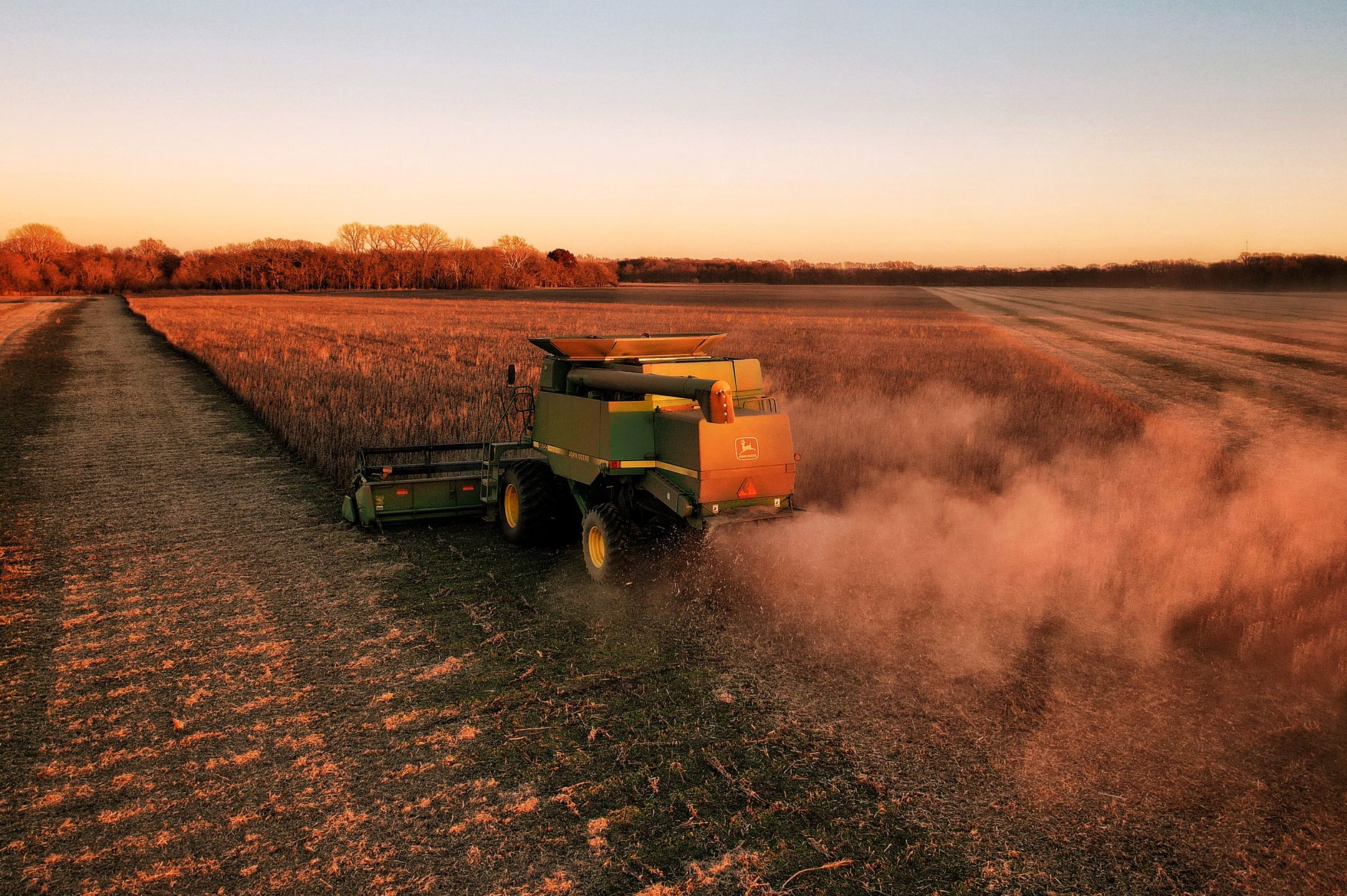
This year’s harvest ran eight days, the last week of June into the first days of July, hot and dry and perfect, the kind of stretch a wheat farmer prays for and rarely gets two years running. Toby and I hauled forty two loads to the co-op in Bogue over those eight days, eight thousand four hundred and sixty bushels total once the final tally came through, testing clean, low moisture, good test weight, the best crop I had put up since Ezell died. Every single load got weighed in, weighed out, graded, and ticketed, and every single ticket came home with me and went into the tin, the way it always had. I remember standing in the kitchen the night we finished hauling, tired down to the bone in a way that felt earned rather than defeating, counting the tickets by hand at the table the way I always did, forty two of them, matching my own tally sheet number for number, and thinking, with a satisfaction I am not ashamed to admit, that Ezell would have been proud of the crop and prouder still that his wife had kept every scrap of paper exactly the way he taught her.
I expected the settlement check within two weeks, which had been the co-op’s ordinary practice for as long as I had been keeping our books. When two weeks came and went with no check and no phone call, I did not panic. I called the office, and Priscilla told me, a little too quickly, that everything had already been “taken care of.” I asked her what that meant. She said she would have Ottway call me back. Ottway did not call me back that day, or the next, and on the third day I drove myself into Bogue, because I have never in my life been a woman who waits comfortably for someone else to explain something that concerns my own money.
That is how I came to be standing in that co-op office, refusing to sit down, listening to Ottway Price tell me that my brother in law had walked in nine days earlier, presented the old authorization card from the year Ezell was dying, and walked out with a check made out to Ezell C. Odom, in the full amount, fifty seven thousand four hundred twelve dollars, which he had then endorsed himself, in Ezell’s name, and deposited at Farmers State Bank in Hill City into an account of his own.
“He told us he was managing things for the family since your husband passed,” Ottway said, and I could hear how sick it made him to say it out loud. “I should have pulled that card two years ago, Cordelia. That’s on me and I know it. But I need you to know, the co-op’s going to make this right.”
I drove straight from the elevator to Isham’s place, a rented house on the edge of Hill City he had lived in since his second divorce, and I did not knock. I have known that man for over forty years and I was done extending him the courtesy of a knock. He came to the door in his undershirt with a can of beer already in his hand at eleven in the morning, and when I told him what I had just learned, he did not deny a single word of it. He did not even have the decency to look uncomfortable.
“Family looks out for family, Cordelia,” he said, leaning against his own doorframe like a man settling in for a conversation he had already decided he was going to win. “You’re seventy one years old running two hundred and forty acres by yourself with a teenager driving your truck. Somebody in this family needed to start thinking ahead before you run that place into the ground and there’s nothing left for anybody.”
“That’s my money, Isham. That’s my crop.”
“Is it.” He took a pull off the beer, unhurried, and smiled at me in a way I have not been able to fully wash out of my memory since. “You got a piece of paper says different? Because I got a bank account and a co-op that handed a check straight to my hand without blinking. You want to go tell a judge that a seventy one year old woman with a cigar box full of receipts outweighs a bank record and a signature card with my name right there on it, plain as day? Go on and try it. See how far that gets you.”
I did not answer him. I have found, over seven decades on this earth, that the most dangerous thing you can do to a certain kind of man is give him silence instead of an argument, because an argument tells him you are still fighting on ground he chose, and silence tells him nothing at all, which he cannot stand. I turned around, got back in my truck, and drove home to Nicodemus with my hands so tight on the wheel that my knuckles ached for an hour afterward.
I will admit to you that I cried once I got inside my own kitchen, the same kitchen Ezell had handed me the books in forty some years before, and that I let myself, for about twenty minutes, feel every bit as small and as old and as easily dismissed as Isham had just told me I was. Seventy one years old. A cigar box full of receipts. A teenager driving my truck. He had reached, with real precision, for the exact fears that keep a woman my age up at night, the fear that everyone quietly agrees you have finally gotten too old for the life you built, and are simply too polite, or too far away, to say so to your face.
But I want to tell you what I did after those twenty minutes, because it is the part of this story I am proudest of. I got up from the kitchen table, I washed my face, and I took that scarred tin recipe box down off the top of the refrigerator, and I sat back down and I went to work.
Forty two tickets, in order by date, June twenty third through July second. Each one listing the truck’s gross weight coming in, the tare weight going back out, the net bushels, the moisture reading, the test weight, and the grade, initialed at the bottom by whichever scale operator had been on duty that load, Ottway’s own initials on eleven of them himself. I laid every ticket out across my kitchen table in two long rows, and I added the bushels by hand with a pencil the way Ezell taught me, then checked my own arithmetic twice more, and arrived at eight thousand four hundred sixty bushels, to the bushel, matching exactly what the co-op’s own scale records would show if anybody bothered to pull them. At the price the co-op had posted the week of settlement, six dollars and seventy nine cents a bushel, that came to fifty seven thousand four hundred twelve dollars and forty cents, matching the check Isham had cashed almost to the penny.
Isham had bet, standing in his own doorway with a beer in his hand at eleven in the morning, that an old woman’s box of paper could not stand up against a bank’s signature card. What he did not understand, because he had never once in his life been the person responsible for proving anything to anybody, was that I did not need my box of paper to outweigh the bank’s signature card. I needed it to prove that the signature card itself had been worthless the moment my husband died, and that every dollar on that check belonged to nobody but me.
The next morning I called Bethel Rowe before I called anybody else, because Bethel has been my closest friend in this town since we were both new brides sharing a clothesline, and because Bethel, more than almost anybody in Nicodemus, understands exactly how fast a story about a woman “losing her grip” can travel through a small town once somebody with a motive starts telling it first. I told her everything, sitting at her kitchen table with two cups of coffee going cold between us, and when I finished, Bethel did not say a single comforting word about how sorry she was. She said, “Who all has Isham been talking to?”
That question turned out to matter more than I understood at the time. Bethel spent that whole afternoon on her own telephone, and what she learned was that Isham had, in fact, been telling a version of this story around Hill City and Bogue for weeks before I ever knew a check had gone missing, a story in which he was the responsible Odom quietly stepping in to manage a family operation before his poor sister in law, bless her heart, ran it into the ground trying to do a young man’s job at her age. He had been laying the groundwork for exactly this moment, in exactly the way a man does when he has already decided he is going to take something and wants the town’s sympathy waiting on his side of the ledger before anybody asks a hard question.
Bethel’s answer to that groundwork was simple and, I think, exactly right. She did not argue with anybody who repeated Isham’s story to her. She only asked each one of them the same question I had asked myself at my kitchen table the night before: has anybody actually seen Cordelia’s books? Has anybody asked her a single question before deciding what kind of trouble she’s in? By the end of that week, the story moving through Nicodemus was not Isham’s story anymore. It was a question, and questions are a great deal harder to control than a rumor, because a question makes people wait for an answer instead of settling comfortably into a conclusion somebody handed them.
I went to Ottway next, not as a woman asking for sympathy but as a customer of that co-op asking to see her own records, and Ottway, to his lasting credit, did not make me ask twice. He pulled every scale ticket the elevator’s own system had on file for those eight days and laid them side by side with the forty two tickets from my tin, and they matched, ticket for ticket, down to the scale operator’s initials. He pulled the authorization card from the file, the one Isham had waved around at Priscilla nine days before I ever walked in the door, and we sat together and read the exact language on it, plain typed print that said the authorization was granted by Ezell C. Odom, and remained in effect, in the co-op’s own standard wording, only for the duration of the account holder’s life. Ezell had been dead two years. The card had been dead two years right along with him, and Isham had known it, or should have, because he had stood in that same office the day it was signed and heard his own brother explain exactly why it existed.
Ottway brought the matter to the co-op’s board the following Monday, and I asked to be there myself rather than let anybody else tell my story for me. I laid all forty two tickets out on the conference table in the same two rows I had laid them out on my own kitchen table, and I walked that board through every load, every date, every scale operator’s initials, and I finished by reading the exact wording off the dead authorization card, and by the time I finished, there was not one person in that room, including the co-op’s own attorney who had been called in special for the meeting, who had a single question left to ask me.
What happened after that moved faster than I expected. The co-op’s attorney confirmed in writing what Ottway and I had already worked out ourselves, that the authorization had lapsed at Ezell’s death and that Isham had presented an invalid document to obtain funds he had no legal claim to, which is forgery under Kansas law whether or not a person believes in his own head that he had some family right to do it. Farmers State Bank froze the account Isham had deposited the check into once the co-op’s attorney contacted them, and the branch manager, a woman named Delacroix I had never met before that week, told me over the phone in a voice that did not waste a single unnecessary word that the bank took a very dim view of anyone presenting an outdated authorization to obtain funds under a deceased account holder’s signature. The county attorney’s office in Hill City opened an inquiry. Isham, faced with the choice between repaying every dollar within thirty days or having that inquiry proceed toward formal charges, repaid every dollar within eleven.
I will not pretend to you that Isham showed up at my door with an apology that changed anything between us. He did not. What he did was send a certified check through his own attorney, without a note, without a phone call, and I have not spoken to him since, and I find, turning that fact over the way I turn over most things now, that I am at peace with it. Some relationships end not with reconciliation but with a clear, final accounting, and there is a kind of honesty in that too, the same honesty Ezell taught me to look for in a set of numbers that either balance or they don’t.
The co-op barred Isham from picking up or endorsing any check on any account other than his own, a decision Ottway told me the board reached without a single dissenting vote. And the story that moved through Nicodemus after that was no longer a question. Bethel made sure of that too, in her own quiet way, mentioning at church, at the feed store, at the little grocery on the corner, exactly how the whole matter had actually been settled, ticket by ticket, at a table where an old woman’s paperwork had turned out to be more airtight than her own brother in law’s bank account.
The last weekend of July, Nicodemus filled up the way it does every year for the Emancipation Celebration, cars from six states parked two deep along the road into town, folding chairs set up under the same old cottonwoods that have shaded this homecoming for a hundred and forty nine years, and I spent that Saturday afternoon at the community building doing what I have done every year of my adult life, setting out food on long tables for people who trace their family back to the same nine families who broke this ground with nothing but faith and a mule team and the nerve to believe a promise a stranger made them. Ottway found me there, between the potato salad and the sweet tea, and told me, in front of anybody close enough to hear, that the co-op’s board had voted the week before to name their annual grain quality award, given each year to the operation that delivers the cleanest, best graded crop of the season, after Ezell, and that this year’s first recipient, on the strength of eight thousand four hundred sixty bushels that tested as clean as anything the elevator had weighed in a decade, was going to be me.
I stood at that table with a serving spoon still in my hand and I thought about Ezell, handing me the checkbook forty some years ago with both hands, careful, like it mattered. I thought about the tin recipe box, still sitting on top of my refrigerator right now with this year’s forty two tickets back inside it, waiting for next June the way it always has. I thought about Isham, standing in his own doorway with a beer in his hand, telling me an old woman’s paperwork would never outweigh a bank’s signature card, and I thought about how wrong a person can be about exactly the thing they are most certain of.
I am seventy one years old, and I still farm two hundred and forty acres of wheat on ground my husband’s grandfather broke with a mule team in a town my own great grandmother helped build out of a dugout cut into a creek bank because there was no lumber and no time to wait for any. Nobody hands a woman like me anything in this life without her first proving, over and over, that she has earned it, and I stopped resenting that fact somewhere around the time I turned sixty, because I came to understand it is also exactly what has kept this town standing for a hundred and forty nine years. You keep your proof. You keep it clean, and dated, and initialed, and you keep every single scrap of it, not because you expect to need it, but because you have lived long enough to know that the day will come when somebody stands in a doorway and bets, out loud, that you never bothered.
I bothered. I have always bothered. And this coming June, when the wheat turns that particular gold color that has not changed one bit since the year my great grandmother first saw it from the seat of a wagon, I will be out in that field again, and I will haul every single load myself if I have to, and every single ticket is going back in that tin, because a ledger, kept honest and kept complete, has never once in my life let me down. My brother in law bet an entire family’s worth of trust on the idea that I had stopped counting. I never stopped counting a single day in my life. That is the whole story, and it is mine, told the way I lived it, and nobody, not a bank, not a co-op, not a man who once thought a cigar box of paper was beneath his notice, gets to tell it any other way now.
This story is a dramatization. Names, characters, and details are invented, and any resemblance to real people or events is coincidental.