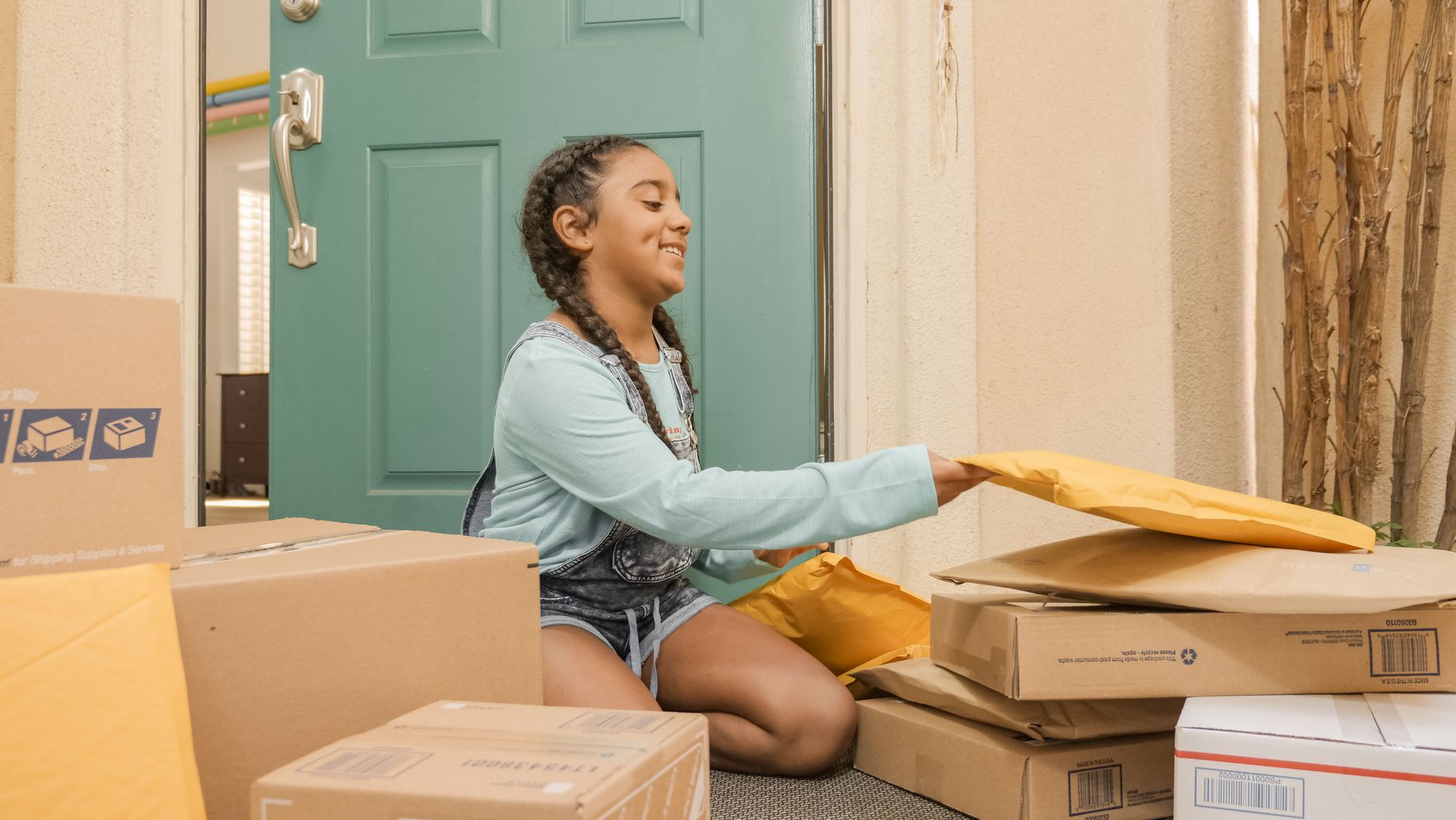
The Box That Finally Made It Home
The box was sitting square in the middle of my top porch step when I came out with my coffee, and for a second I thought somebody had left me a delivery I’d forgotten about, some order of canning lids or a birthday gift from my sister down in Barbourville. Then I saw the handwriting on the front, my own handwriting, gone soft and gray at the edges like a photograph left in a sunny window too long, and I set the coffee down on the rail because my hand had started to shake before my mind had caught all the way up to what I was looking at.
SGT DENVER PRUITT, it said, and then a string of numbers and letters I hadn’t had to remember in over a decade, an APO address that didn’t belong to any place I could point to on a map, only to a version of my son who existed in a tent somewhere in Paktika province eleven years ago, twenty four years old and thinner than I liked and further from Corbin, Kentucky than either of us had ever imagined he’d get.
Across the top, in three different hands and three different colors of ink, somebody had stamped and scrawled UNDELIVERABLE, then RETURN TO SENDER, then, in a fourth hand that looked almost apologetic, a small note in pencil: Recovered, Louisville regional facility, forwarding per address on file. The box itself had been through something. One corner was crushed flat and taped back into a rough shape with packing tape gone yellow and brittle. The Priority Mail stickers I remembered picking out myself, the ones with the eagle on them, had faded to the color of an old dishrag. It had traveled. It had sat somewhere, in some warehouse or bin or forgotten corner of a postal system I did not understand, for longer than I had let myself hope it still could turn up, and now here it was, eleven years after I mailed it, sitting on my porch step like it had walked here on its own two feet.
I did not open it right away. I want to be honest about that, because everything in me wanted to tear into that tape standing right there in my housecoat with my coffee going cold, and instead I picked it up, and it was lighter than I remembered packing it, and I carried it inside and set it on my kitchen table, the same table where I have eaten alone most mornings for longer than I care to count, and I sat down across from it the way you’d sit across from a person you hadn’t seen in a long time and weren’t quite sure yet whether you were glad to see.
I am sixty three years old. I have lived in this house on the edge of Corbin, up off the old Cumberland Falls Highway, for forty one of those years, first with my husband Roper and our boy, and for the last eleven of them alone, though I don’t like to say it that plain to people at church. I raised chickens for a long while and I still keep a garden bigger than any woman my age has business keeping, and I worked thirty one years in the cafeteria line at the elementary school before I retired, feeding other people’s children three hundred and eighty something days out of every year of my working life. I tell you all that so you understand I am not a woman who is easily rattled. I have buried a husband. I have sat up all night with a fevered child. I have watched my own son come home from a war changed into somebody I had to learn how to love all over again, in a different shape than I’d raised him in.
But I sat at that kitchen table for the better part of an hour before I could make myself open that box, because I understood, somewhere underneath all the shaking, that whatever was inside it was going to make me feel something I had spent eleven years arranging my whole life around not feeling.
—
To understand why a cardboard box could do that to a grown woman, you have to go back further, to the spring Denver turned nineteen and came into the kitchen where I was rolling out biscuit dough and told me and his daddy that he’d been down to the recruiter’s office in London the week before and signed his name to four years in the United States Army.
I will tell you the truth. I was not surprised. Denver had been a restless boy his whole life, the kind who couldn’t sit still through a church service without his knee going, who ran track at Corbin High not because he loved to run but because it was the only hour of his day nobody was asking anything of him he hadn’t already decided to give. Corbin is a good town, a town I have loved my whole life, sitting up here where the mountains start to fold in on themselves before you get to Cumberland Falls, a town that still throws the Nibroc Festival every September and still fills the VFW hall on a Friday night and still knows most of its own children by name. But it is also a town a restless boy can outgrow by nineteen, and Denver had outgrown it the way a boy outgrows a coat he loved at twelve.
Roper took it harder than I did, in his own quiet way. Roper was not a man who said much of anything straight out. He’d worked the better part of his life running heavy equipment for a coal contractor out past Barbourville, and then, after the mines slowed, doing small engine repair out of the pole barn behind our house, and he expressed nearly everything he felt through his hands, through what he built or fixed or handed you without a word. The night Denver told us, Roper didn’t say much beyond “well, all right then,” and went out to the barn, and I found him an hour later sitting on an overturned bucket in the dark, not working on anything, just sitting, and when I asked him what was the matter he said, “That boy is going to go somewhere I can’t follow him to fix anything for him anymore,” and that was the most honest thing my husband ever said to me about our son, though it would be years before I understood how true it was.
Denver shipped to basic that August, and came out of it taller in some way that had nothing to do with his actual height, and by the time he’d finished his training he’d landed with the 101st Airborne out of Fort Campbell, which is about as close to home as the Army ever puts a Kentucky boy, close enough that he could get up to Corbin on a long weekend now and then in that first year, still ours in the ways that mattered. He made Specialist quick, and Sergeant not long after that, and I will say, because it is true and because I think mothers of soldiers are allowed to say it plainly, that I was proud of him in a way I didn’t have adequate words for. Not proud the way you’re proud of a report card. Proud in the chest, the kind that catches you off guard doing dishes.
His orders for Afghanistan came down in the early spring of what would turn out to be the hardest year of my whole life, though none of us knew that yet standing in the gravel driveway the morning he left, Roper gripping his son’s hand a beat longer than a handshake usually runs, me trying not to let Denver see me cry because I did not want the last thing he carried overseas to be his mother falling apart in the driveway.
—
I want to tell you about the box, because that box was not the first one I ever sent him, but it was the one I put the most of myself into, and I have had eleven years to turn over exactly why.
Denver’s twenty fifth birthday was going to fall in early October that year, and I had started planning that package back in July, the way I planned most things in my life back then, methodically, a little at a time, so that by the time I needed to seal it up I wouldn’t be scrambling. I made him a batch of his favorite pepper jelly, small jars packed tight in bubble wrap and dish towels so they wouldn’t crack in shipping. I dried three pounds of venison into jerky the way his daddy had taught him to do it as a boy, smoked low and slow out behind the pole barn. I put in a new pair of wool socks, because every soldier’s mother in America has, at some point, mailed her boy a pair of wool socks, and a paperback western he’d mentioned wanting, and a little bag of butterscotch candy because it had been his favorite since he was small enough to sit on the counter and watch me cook.
And I put in a card, and inside the card I put a letter of my own, four pages front and back, the kind of letter a mother writes when she has more to say than a card leaves room for, about how the garden had come in, about how his daddy had gotten a new dog that wouldn’t mind a lick of anything, about how proud we were, about how I prayed for him every single night at nine o’clock, his time, whatever time zone that put me remembering wrong or right, it didn’t matter, the praying was the point.
And there was one more thing in that box, and it is the thing I think about the most, because it was not mine. Two days before I was set to seal the package up and drive it in to the post office on Master Street, Roper came and found me at the kitchen table where I had everything laid out, and he stood there working his hands the way he did when he had something difficult to say, and he asked if there was room for one more thing.
I said there was. He went out to his shop and came back twenty minutes later with a single folded sheet of paper, sealed in its own small envelope with DENVER written on the front in his own blocky, careful hand, a hand that did not write letters, that I had maybe seen write four sentences together in the whole twenty six years I’d been married to him. I did not read it. I want that understood plainly. Whatever my husband wrote to our son in that envelope, I tucked it down into the bottom of that box between two jars of pepper jelly without ever once breaking the seal, because some things between a father and a son are not a mother’s to read first, only to carry.
I sealed the box on a Thursday in late September and drove it to the post office myself and watched the clerk weigh it and stamp it and I stood there a minute after, the way you do, like watching the door a little longer will make the delivery go faster.
—
Three weeks later, on a Tuesday morning I remember the way you remember the worst mornings of your life in pieces, sharp and out of order, Roper had a heart attack in his shop. He was fifty two years old. He had never had a lick of heart trouble that either of us knew about, no warning, no chest pains he’d mentioned, nothing. I found him on the concrete floor of that pole barn with a socket wrench still in his hand, and the ambulance came from Corbin in eleven minutes, which everyone told me afterward was fast, which did not matter at all, because he was already gone before I ever got to him.
I will not walk you through the days after that in detail, because some grief does not need an audience, but I will tell you this. In rural Kentucky, in a family without means to hold a body waiting, a funeral moves fast. We buried Roper five days after he died, at the little cemetery off Highway 25W where his own father and grandfather are laid, with the Baptist church he’d been raised in packed full of people from three counties, and my son was not there.
The Army moved as fast as it could, I understand that now with a clearer head than I had at the time. Denver’s unit was operating out of a remote outpost, and the emergency leave process for a soldier that far forward takes days that nobody sitting at home waiting on a casket can fully account for, ground transport to a larger base, then a flight, then another flight, then the long haul home across an ocean and half a continent. He landed at the Nashville airport nine days after his father died, four days after we put him in the ground, and I drove down to get him myself because I could not stand the thought of him making that drive alone, and I will never forget the look on my son’s face walking off that jet bridge in his uniform, hollowed out, furious in a way that had no direction to point itself, because there was nothing and nobody to be furious at. Not the Army. Not me. Just a heart that stopped on an ordinary Tuesday with nobody able to move fast enough across that much of the earth to get him home in time.
We stood in that airport and held onto each other for a long time, and he did not cry, not there, and I understood even then that something in my son had gone somewhere I could not follow him to fix anymore, exactly the way his own daddy had said it in the dark of that pole barn a year and a half before.
Denver went back to finish out his deployment three weeks later. There was nothing else for him to do. And the box, the one I had mailed three weeks before his father died, the one with the pepper jelly and the jerky and the wool socks and my four page letter and his father’s sealed envelope tucked down at the bottom between the jars, never reached him. His unit’s outpost was one of the ones consolidated and closed that same fall as part of the drawdown, moved to a larger base thirty miles off, and whatever mail hadn’t caught up to him by the time that happened went into a system nobody at that scale was tracking closely for one soldier’s care package. I wrote to the Army post office. I called numbers I found in a booklet the family readiness group had given me. I was told, eventually, gently, that packages do sometimes get lost in a consolidation like that, that it happened more than anyone liked to admit, and that there was nothing further to be done.
I grieved that box the way you grieve a small, specific thing standing in for a much larger loss, because I could not fully let myself grieve Roper standing up straight in front of my son, not that year, not with Denver still finishing a war zone tour four thousand miles from home. So some of what I owed my husband’s memory, I put down instead onto a cardboard box with an eagle sticker on it, gone missing somewhere over an ocean, carrying the last words Roper Pruitt ever wrote to his son.
—
Denver came home for good the following spring, and I want to tell you honestly that the son who got off that plane was not entirely the boy who’d gotten on it two years before, and it took me a long while, longer than I am proud of, to stop grieving that difference and start learning the man standing in front of me instead.
He did not talk about what he’d seen or done over there, not to me, not in any real way, not then and mostly not since. He moved into a small rented house on the other side of Corbin rather than back into his childhood bedroom, which stung me more than I let on, though I understood, even at the time, that a man who has just lost his father while stationed on the far side of the world does not necessarily want to sleep every night in the house where his mother’s grief lives loudest. He took work driving a delivery route for a building supply company out of London, steady, solitary work that suited him, hours behind a wheel with nobody expecting conversation out of him. He would come by on Sundays, mostly, sit on my porch, eat whatever I’d made, and leave before dark, and for a long time that was the whole shape of our relationship, Sunday suppers and short visits and a distance between us that neither of us had the tools to close.
I want to be fair to my son here, because it would be easy to tell this story as though he simply pulled away and left me standing alone in it, and that is not the whole truth. I pulled back too. Grief does strange things to a mother’s instincts. I was so afraid, in those years, of saying the wrong thing to a son I could see was carrying something heavy and unspoken, that I mostly said nothing at all. I did not ask him what happened over there. I did not tell him, not for years, how long I had grieved that lost package, because it felt like such a small thing to set beside whatever he was carrying, a box of jelly and socks against whatever weight a war puts on a twenty five year old man’s shoulders. We both, in our own ways, decided silence was a kindness to offer the other one, and eleven years is a long time to live inside a kindness that is actually just two people scared of each other’s grief.
He never married. He keeps a dog now, a good-natured hound he calls Biscuit, and he coaches a little league team of eight year olds every spring with a patience I do not always see in him elsewhere, and he shows up every single year on the anniversary of his father’s death and mows the whole cemetery section around Roper’s stone without ever being asked, and stands there a long while after, alone, and does not tell me what he says to that stone, and I have never asked.
That is the son I have had for eleven years. A good man. A steady one. A man who loves careful, small, private things, his dog, his little leaguers, a clean cemetery plot, and keeps the largest room of himself closed to everybody, including, I think, himself.
—
The morning the box came back, I sat at my kitchen table staring at it for the better part of an hour, and it was Loyce who finally got me moving, because Loyce is the one who’d carried it up to my porch in the first place instead of leaving it in the mailbox at the road, the way she has carried my mail six days a week for going on thirty years now.
Loyce Hensley has driven the rural route out past Cumberland Falls Highway since before Denver was born, and she knows every family on it the way a good rural carrier does, knows whose grandbaby just came home from the hospital and whose garden came in heavy this year and, in my case, exactly what that box sitting in her delivery car that morning was going to do to me the second she read the return address in my own handwriting. She told me later she’d sat with it in the front seat for a full minute before she ever pulled up my drive, trying to decide whether to just leave it in the box at the road like any other piece of mail or carry it up to the porch herself, and in the end she carried it up, set it square in the middle of the step, and knocked on my door instead of driving on, because, she said, “some deliveries a person needs a witness for, Carlene, whether they know it yet or not.”
She stayed with me a spell that morning, sat across the table while I worked up the nerve, and it was her hand on top of mine that finally got the tape started, because my own hands had gone useless with the shaking.
—
Everything inside had aged the way you would expect eleven years and a botched postal journey to age it. The pepper jelly jars had one broken clean through, its contents dried into a dark amber stain across the bottom of the box, and the other two intact but the jelly inside gone the color of tea, long past anything a person would eat. The jerky had turned to something closer to leather than food, curled and hard in its wrapping. The wool socks had survived nearly whole, just musty, and the paperback western had swollen with old moisture into something twice its original thickness, the pages fused at the edges. The butterscotch candy had melted at some point in some hot cargo hold or warehouse and reset into a solid amber lump at the bottom corner of the box, still faintly sweet smelling when I lifted it out.
And under all of it, flattened at the very bottom where I had tucked it eleven years before, were two envelopes. My own four page letter, the ink gone a little soft but every word still legible. And Roper’s.
I sat with his envelope in my hands for a long time before I opened it, Loyce quiet across the table, not pushing me one way or the other. It still said DENVER on the front in that same blocky careful hand, and the seal was still whole, exactly as it had been the day he handed it to me and asked if there was room in the box for one more thing.
I want to tell you I did not read it first. I want that to be true, because I had made myself a promise eleven years before that whatever was in that envelope belonged to my son before it belonged to me. But sitting there that morning, holding the last thing my husband ever wrote in his own hand, addressed to a boy who never got to read it while his father was still alive to know he’d read it, I could not make myself set it down unopened and simply hand it across a distance that had already cost us so much. So I broke the seal myself, and I read four sentences that undid something in me that I had held together, carefully, for eleven years.
Son, your mother tells me you’ll make Sergeant before this deployment’s through, and I want you to know I am prouder of that than I have ever known how to say to your face. I was hard on you growing up because I was raised hard and didn’t know another way to love a boy, and I have regretted that more than you know. Whatever you see over there, come home and let us help you carry it, that’s what family’s for. I’ll be right here when you get back, son. Your daddy.
I sat at my own kitchen table and cried the kind of crying I had not let myself do at Roper’s funeral, because that funeral had needed a mother holding everything together for a town full of people and a son who wasn’t there yet, and I had done that job well, and paid for it every year since in small, deferred pieces. Loyce did not say a word. She just moved her chair around the table and put her arm around me and let me cry until I was done, the way a friend who has known you thirty years knows exactly when to talk and when to simply sit there.
—
I did not call Denver that day. I want to be honest that some old habit in me almost decided to handle this the way I had handled his father’s death and the lost package and every hard thing since, quietly, alone, protecting my son from one more weight. But I sat with that letter in front of me and I thought about four sentences a hard, quiet man had found the courage to write down and seal in an envelope and hand across a kitchen table, and I understood that if I let this be one more thing I carried alone to spare him, I would be repeating exactly the mistake that had put eleven years of distance between us in the first place.
So the next morning, a Saturday, I drove the box over to his place myself instead of waiting for our usual Sunday supper. He was in the yard with Biscuit when I pulled in, and I think he knew something was different the second he saw my face, because he came straight over to the truck rather than waiting on me to get out.
I did not explain it standing in his driveway. I asked him to sit with me on his own front steps, and I told him the whole thing, start to finish, the way I have told it to you here. The birthday box. His father asking for room for one more thing. The outpost closing. The years I’d spent quietly grieving a lost package I’d never told him mattered so much because I didn’t want to add my grief to his. And then I handed him the envelope, still holding the pepper jelly stain and the smell of eleven years of travel, and I told him his father’s handwriting was on the front of it, and I sat there beside him while he opened it.
I watched my son read four sentences from a father who had been dead eleven years, sentences that had been sitting sealed in a warehouse or a delivery truck or a lost mail bin the entire time Denver carried around whatever unspoken thing he’d carried home from that war, the entire time he’d stood alone at a cemetery every October mowing grass around a stone that couldn’t answer him back. I watched a grown man, a soldier, a steady, careful man who mowed a whole cemetery section without complaint and coached eight year olds with more patience than I’ve ever managed with anybody, come apart on his own front steps in a way I had not seen him come apart since that airport nine days after his father died.
“He never said any of that to me,” Denver finally managed. “Not once. Not out loud.”
“He wasn’t a man who could,” I told him. “But he found a way to say it before he ran out of time to. It just took eleven years and a Louisville postal warehouse to get here.”
We sat on those steps a long while, my son and I, the way I don’t think we had truly sat together in over a decade, not performing steadiness for each other, not protecting each other from the size of what we’d both been carrying. He told me things that morning he had never told me before, not details I need to repeat here, because some of what a soldier carries home belongs to him and stays his, but enough that I understood, finally, the shape of what had put that distance between us. Not that he blamed me, or blamed the Army, or blamed anything as simple as one cause. Only that grief and guilt over not making it home in time had tangled up in him with everything else that deployment had asked of him, until the tangle itself became easier to carry alone in a small rented house than to try and hand any piece of it to a mother he was so afraid of burdening further.
“I kept thinking I had to be steady for you,” he said. “You’d just lost him. I figured the last thing you needed was me falling apart on top of it.”
“I kept thinking the same thing about you,” I told him. “We both spent eleven years protecting each other from something neither one of us actually needed protecting from. We needed each other, Denver. That’s all either of us ever needed.”
—
We drove out to the cemetery together that same afternoon, something we had never once done side by side in eleven years of separate October visits. Denver knelt down at his father’s stone with that envelope in his hand, and read those four sentences out loud, once, to the man who wrote them, and I stood behind him with my hand on his shoulder and let my own tears go where they wanted to go, in front of my son, for the first time since the funeral I’d held together for everyone but myself.
We cleared out the rest of that box together back at my place that evening. The jerky and the jelly went in the trash, eleven years past any use, but I kept the wool socks, mended a small moth hole in one heel, and gave them back to him, and he wears them still, he tells me, on the coldest mornings he coaches little league in the spring. The swollen paperback western sits on my bookshelf now, warped and strange, a shape no book should be, and I would not trade it for a fresh copy for anything in this world. And Roper’s letter, and my own four page one beside it, I had framed together, the two of them, side by side, and they hang now in Denver’s front hall, the first thing you see walking into his house, a father’s four sentences and a mother’s four pages, eleven years late and exactly on time.
Denver comes to Sunday supper still, but he doesn’t leave before dark anymore. Sometimes he stays late enough that we sit on my porch with the porch light on and talk about things we spent a decade too afraid to bring up, what he saw over there, what I felt standing at that airport gate, what his father might have said if a heart attack hadn’t taken the choice away from him. We are not finished, either one of us, with everything that box opened back up. Grief like ours does not close all the way in an afternoon, or a season, no matter how good the reconciling feels. But we are carrying it together now, the way Roper asked his son to let us do in four sentences it took eleven years and a battered cardboard box to deliver, and some mornings, sitting out on that same porch step where I found the box waiting, I think that is the truest kind of homecoming there is. Not the one at the airport. This one, the slow one, the one that finally lets a mother and her son set down what they’d each been carrying alone, and pick it back up together instead.
Loyce still drives this route six days a week, and most Saturdays now she pulls into my drive a few minutes longer than the mail requires, and we sit on the porch and drink coffee, and I tell her, every time, that I don’t know how to properly thank a woman for knowing when a delivery needs a witness. She just tells me that’s thirty years of this route talking, that she has learned there is no such thing as a small delivery in a town like ours, that every box carries more than what’s taped up inside it.
She is right, of course. Mine carried eleven years. It carried a father’s four sentences he never found the nerve to say out loud while he had the chance. It carried a mother’s grief she never let herself set down. And in the end, battered and stamped and returned and finally, finally delivered, it carried my son and me back to each other, which I have come to believe was always the whole point of a mother packing a box for her boy in the first place, whether that box makes it to him in three weeks or eleven years. You are only ever really saying the same thing, no matter how long it takes to arrive. I love you. Come home. I will be right here when you do.
This story is a dramatization. Names, characters, and details are invented, and any resemblance to real people or events is coincidental.