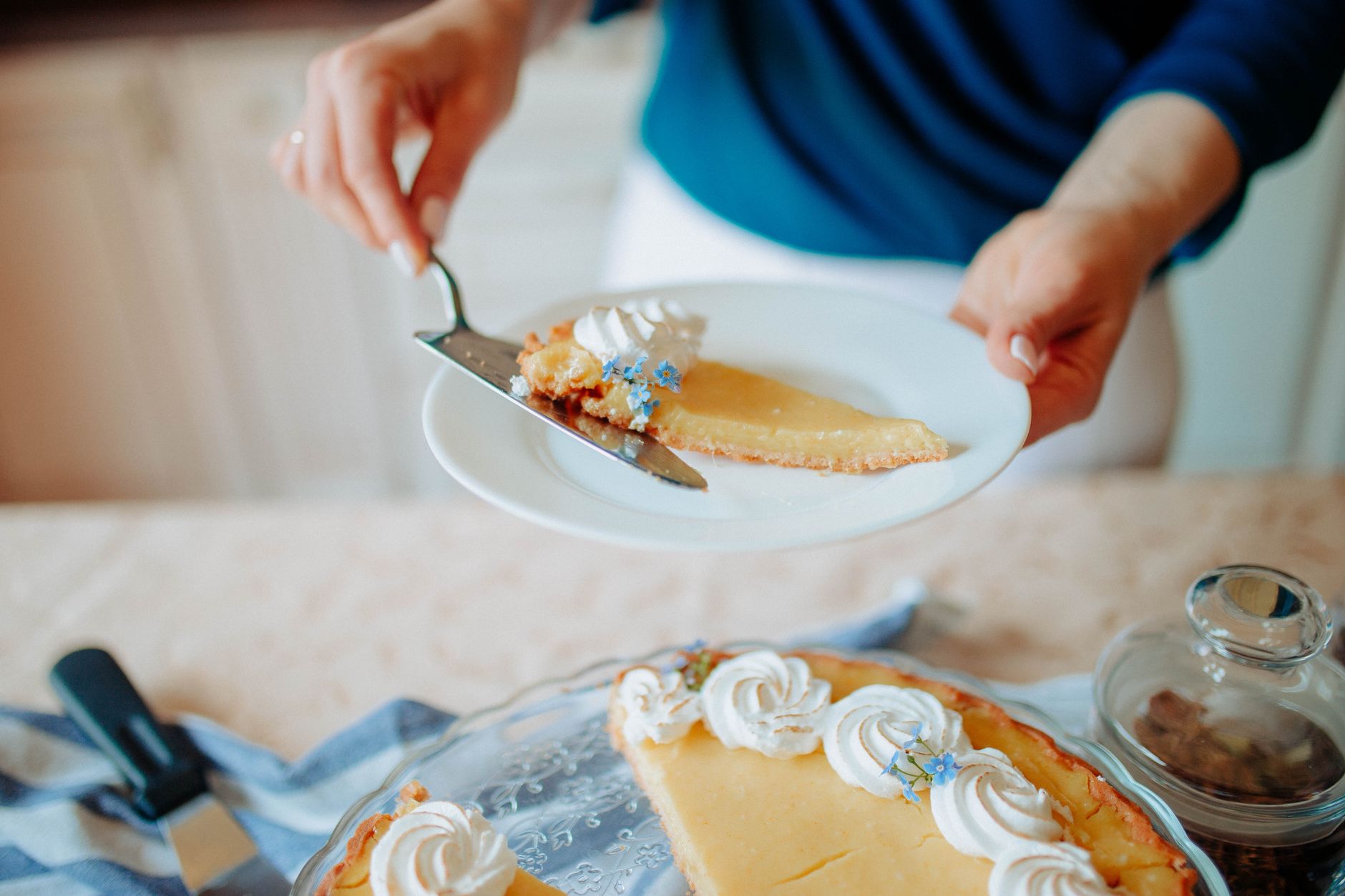
The Crust the Judge Marked Down
My husband has watched me lose the same pie contest to the same woman for twenty-two years, and every single August he tells me the same thing while I’m icing my hands under the kitchen tap after the ribbons are handed out: “Junie, your crust is the best thing I have ever put in my mouth, and I have been putting things in my mouth for seventy-one years.” Hollis Brammont has never once been on the fair’s judging panel, has never once been asked, and has never once let that stop him from being the most opinionated pie critic in Cutler County.
The woman I lose to is Opal Bramgrove, who lives four miles south of us on the Danson road, keeps a Jersey cow named Duchess, and has taken the blue ribbon in the crust-only division of the Ambler Flats Community Fair twenty-one years running. The woman who hands out that ribbon, every single one of those twenty-two years, is Verna Bramshaw, who has judged the pie tent since before my son could walk and whose scorecards read like she is grading a crime scene. “Crust: pale, underworked, structurally optimistic” is an actual sentence Verna Bramshaw wrote about my pie in the year 2011. I know because I kept it. I kept all of them.
This is the story of how a county fair pie judge marked my crust down for twenty-two consecutive years, how the whole town of Ambler Flats took sides on it without ever quite admitting they had, and how it finally got settled, in front of God and the 4-H rabbits, in a blind tasting my sixteen-year-old granddaughter talked the fair board into holding.
The year I decided pie was a competitive sport
I am sixty-seven years old, and I did not grow up baking. My mother could not keep a crust together to save her own life, and she would have told you so, cheerfully, while handing you a slice of pie so tough you could resole a boot with the bottom of it. I learned to bake from my mother-in-law, Dot Brammont, who ran a kitchen like a Marine drill instructor and taught me the two rules she said mattered more than any recipe: keep everything cold, and don’t you dare overwork the dough, Junie, dough is not a grudge, quit kneading it like one.
I entered my first Ambler Flats Community Fair pie in the year I turned forty-five, a peach crust I had practiced eleven times that July until Hollis begged me to let the kitchen cool down. I carried it into the pie tent in a cardboard box lined with a dish towel, set it on Table 4 next to a rhubarb that smelled like it had been baked by somebody’s actual grandmother, and I stood there sweating through my good blouse while Verna Bramshaw walked the row with a clipboard and a fork, tasting, chewing, writing, saying nothing to anybody, her reading glasses down on the end of her nose like a woman appraising a used tractor.
She marked my crust a six out of ten. “Adequate,” the card said. “Filling excellent. Crust underdeveloped.” The blue ribbon that year went to a woman named Opal Bramgrove, whom I had never met, for a peach pie with a crust the color of an old penny and a lattice so tight and even it looked machine-stitched.
I did not know, standing there in my good blouse holding a six out of ten, that I had just met the two women I would spend the next twenty-two years measuring my Augusts against.
The judge everybody loved to fear
Verna Bramshaw has judged the pie tent at the Ambler Flats fair for as long as anybody currently living in this town can remember, and before that, the story goes, her own mother judged it for eighteen years before her, so pie judging in this family runs deeper than most bloodlines run deep. Verna taught eighth grade home economics at Ambler Flats Consolidated for thirty-one years before she retired, and if you ask anybody in this county under the age of sixty what they remember about her class, they will tell you the same thing: she made you take your crust apart with a fork in front of the whole room if it didn’t hold together, and she called it “a teaching moment,” and nobody who went through that ever forgot how to laminate butter into flour again as long as they lived.
She judges the fair the exact same way she used to grade home ec. No smiling while she tastes. No hints, no head shakes, no little pleased noise that gives away a good bite before the scorecard says so. She writes in a flat, blocky hand that looks like it was designed for a jury verdict, and every single year for twenty-two years, my scorecard has said some version of the same thing, and every single year, hers has said some version of magnificent.
Year three: “Crust: soggy bottom. Filling: exceptional. Advise blind baking next season, Mrs. Brammont, and I do mean that kindly.” Year seven: “Crust overbaked at the edge, underbaked at the center. A pie in an identity crisis.” Year twelve: “This crust and I have had this conversation before.” Year fifteen, my personal favorite, because it is the only time in twenty-two years Verna Bramshaw came close to a joke: “Crust: has improved. Slowly. Like erosion.”
I kept every one of those scorecards in a shoebox that used to hold Hollis’s church shoes, and by year twenty the shoebox needed a rubber band around it to stay shut, and Reet Caldbrook, who has sat next to me in the second pew at Ambler Flats Community Church for thirty years and has heard every complaint I have ever had about that woman, told me flat out, “Junie, you have got to be the only person in the history of Cutler County keeping a hate collection of compliments about her own cooking.”
She wasn’t wrong. Because here is the thing nobody outside a pie tent understands: Verna Bramshaw never once said my pie was bad. She said my filling was excellent almost every single year. She said, in year nineteen, that my apple pie “may be the finest filling submitted to this fair in a decade.” What she said, every single year, without fail, without mercy, without one flicker of favoritism that I could ever point to and prove, was that my crust was not as good as Opal Bramgrove’s crust.
And I could not for the life of me understand why, because I had eaten Opal Bramgrove’s crust exactly twice in twenty-two years, at church potlucks where she brought a slice for the dessert table same as everybody else, and I will confess something to you now that took me two decades to admit out loud: it really was better than mine. Not by a landslide. By the width of a playing card. But better.
The woman who always won
Opal Bramgrove is two years older than I am, sharp as a good paring knife, and has never in her entire life said an unnecessary word. Where I will talk your ear off in the feed store line about the weather, my grandkids, and whatever I am currently mad about, Opal says what needs saying and then goes quiet, and the quiet somehow says more than my talking ever manages to.
She has run the same dairy operation with her late husband Denny and then, after Denny passed, by herself, for going on forty years. She milks Duchess by hand every morning at five because she says the machine “makes the cow nervous, and a nervous cow makes thin cream, and thin cream ruins a crust,” which tells you everything you need to know about how seriously that woman takes pastry. Her hands, when you shake them, feel like she has been wringing dish towels since Eisenhower, and in a way she has.
For the first several years of what the town eventually started calling, only half joking, “the Pie Wars,” I truly disliked her, in the small, private, church-appropriate way you are allowed to dislike somebody you have to sit two pews behind every Sunday. I thought she was smug. I thought she knew something about crust that she was never going to share, on purpose, out of spite. I told Hollis, more than once, over the sink, with suds up to my elbows, that Opal Bramgrove probably practiced her lattice work with a protractor.
It took the raccoon summer, year eleven, to change my mind about her, though it did not change the rivalry one bit. Something got into both our pantries that August, hers and mine, four miles apart, in the same three-day stretch, and ruined a fair season’s worth of canned peaches for us both. I ran into her at the Caldmore Diner counter the Tuesday after, both of us nursing coffee and matching bad moods, and for the first time in eleven years of competing against her, Opal Bramgrove looked at me over her coffee cup and said, “Whatever got into your peaches got into mine too. I’d almost call that fair, except nothing about this year has been fair.”
We ended up splitting a slice of Faye Caldmore’s coconut cream pie right there at the counter, the enemy camp and me, and I discovered that Opal Bramgrove, once she has decided you are not a threat to her ribbon that particular Tuesday, is one of the driest, funniest women in Cutler County. She told me a story about Denny trying to teach Duchess to walk on a lead like a show dog that had me laughing so hard Faye came out from behind the counter to check on me. I went home that afternoon still furious that she beat me every August, and completely unable to stay furious at her as a person, and that contradiction rode along with me for the next eleven years like a stone in my shoe I had simply learned to walk around.
Twenty-two scorecards and a town that would not let it go
You have to understand what the pie tent means in a town the size of Ambler Flats. We have one stoplight, a feed store, a Dairy Queen that only opens May through September, a VFW hall that hosts the fish fry every third Friday, and the Ambler Flats Community Fair, which for one week every August turns our sleepy little grid of streets into the center of the known universe. The giant vegetable table gets the ag barn. The livestock gets the arena. But the pie tent, set up under the shade of three enormous cottonwoods behind the grandstand, gets the crowd. Everybody in this county has an opinion about pie, and everybody in this county, eventually, developed an opinion about the Pie Wars.
Wendell Caldstone, who has run the Ambler Flats Gazette out of a storefront on Main Street since before color photography, started covering it seriously around year nine, when he ran a half-page piece titled “The Blue Ribbon That Would Not Change Hands” with a photograph of Opal’s winning lattice next to my scorecard, the underdeveloped one, side by side, like a courtroom exhibit. By year fifteen he had a running feature every fair week called “Pie Tent Report,” and by year eighteen there was an unofficial betting pool at the VFW hall, run out of a coffee can by a retired lineman named Curt Danton, where a man could put two dollars on whether Junie Brammont would finally break through.
I lost that man’s two dollars nineteen times running, and I want it on the record that Curt Danton never once let me forget it.
The theory that would not die, no matter how many times I tried to kill it, was that Verna Bramshaw was rigging the contest for Opal Bramgrove out of some old loyalty. They sang alto together in the church choir. They had both served on the fair board in the seventies. Somebody’s cousin swore up and down that Verna’s late husband and Denny Bramgrove had hunted pheasant together every November for thirty years. None of it added up to proof of anything, and I knew it didn’t, because I had eaten Opal’s crust with my own mouth and I knew, deep down, in the honest place you are only honest with yourself in around eleven at night with the dishes done, that her pie really was that good.
But knowing it in the honest place at eleven at night is different from believing it in a pie tent in front of the whole county with a six scrawled on your card, and for twenty-two years I let the difference eat at me a little more than I ever admitted to Hollis, or to Reet, or to the mirror.
The girl with the debate trophy
My granddaughter Aubree Brammont is sixteen, captain of the Ambler Flats Consolidated debate team, and has never in her life accepted “that’s just how it’s always been done” as a satisfying answer to anything. She spent the spring of this, my twenty-second fair, deep in a unit her civics teacher assigned on procedural fairness, of all the timing in the world, and somewhere around April she showed up at my kitchen table with a folder and an agenda, which is a sentence I never thought I would write about my own granddaughter’s Tuesday afternoon.
“Grandma,” she said, spreading the folder open next to my rolling pin, “I’ve been thinking about your pie thing.”
“It is not a thing, Aubree, it is twenty-two years of documented injustice.”
“Right, that’s my point. You don’t actually know it’s injustice. Nobody does. Not even Mrs. Bramshaw, probably, not for sure, because the whole system is flawed.” She had a chart. My sixteen-year-old granddaughter had made a chart of judging bias in food competitions, sourced from an actual food science journal she found at the county library, explaining a thing called sighted bias, where a judge who knows whose entry she’s tasting can be influenced by everything except the actual food: the exhibitor’s reputation, past winners, even, Aubree informed me with real relish, unconscious loyalty to a friend.
“You’re saying Verna’s not cheating,” I said. “You’re saying her taste buds are cheating.”
“I’m saying nobody will ever know unless the tasting is blind. Truly blind. Numbered entries, no names, judge doesn’t know whose pie is whose until the scores are already locked in.” She tapped the folder. “It’s not hard, Grandma. Restaurants do it. Wine competitions do it. The Ambler Flats Fair has never once done it because nobody’s ever asked, and I would like to ask, for my civics final, if that’s all right with you.”
I sat down at my own kitchen table like my knees had given out, because in twenty-two years of shoebox scorecards and coffee-can betting pools, it had truly never once occurred to me, or to anybody in this town as far as I know, to simply ask the fair to hide the names.
“Aubree Brammont,” I said, “if you can get Sylvia Corfield to agree to that, I will bake you your own pie every week for the rest of the school year.”
“I don’t even like pie that much,” Aubree said, which from a Brammont is close to treason, “but I’m holding you to it anyway.”
The fair board meeting
Sylvia Corfield has run the Ambler Flats fair board for eleven years with the calm authority of a woman who has settled disputes over pig weigh-ins and carnival ride placement and has therefore lost the capacity to be rattled by anything. Aubree presented her civics proposal at the May board meeting in the basement of the Methodist church, folder and all, chart and all, and I sat in a metal folding chair in the back row with Hollis, both of us trying very hard to look like we had not personally coached a single word of it, which was mostly true, Aubree does not take coaching.
“The pie tent’s reputation in this county,” Aubree told the board, “would honestly benefit from being able to say, on the record, that the results are fair. Right now half the town thinks it’s rigged and the other half thinks the half that thinks it’s rigged are just sore losers, and both halves show up to the tent every August a little bit angry, which can’t be good for attendance.”
Sylvia Corfield looked over her glasses at Wendell Caldstone, who was there covering the meeting for the Gazette and grinning like a man who had just been handed a free front page. “Is this a stunt, young lady,” Sylvia asked, “or a genuine civics project.”
“Both, ma’am. I need a grade. The fair needs the tasting. I don’t see why those two things can’t help each other.”
It took the board twenty minutes of discussion, most of it Curt Danton worrying out loud about what would happen to his coffee can if the mystery finally got solved, before Sylvia Corfield put it to a vote. Four in favor, one abstaining because Pastor Dunwood said he “did not feel it was his place to weigh in on a pie dispute from the pulpit or the board table both,” and it passed.
The twenty-second annual Ambler Flats crust-only division would be judged blind. Numbered entries only. Pies dropped off an hour early, tagged by a volunteer who was sworn to secrecy, plated identically on the same white stoneware so no dish or garnish gave anything away, and carried to Verna Bramshaw’s table by somebody other than the baker.
I do not know who was more nervous about that announcement running in the Gazette, me, Opal, or Verna Bramshaw herself, who according to Faye Caldmore came into the diner the following Tuesday, ordered her usual coffee black, and sat with it going cold in front of her for forty-five minutes without drinking it, which anybody who has ever seen Verna Bramshaw at that counter will tell you had never once happened in thirty years.
The week before
I will admit I did not sleep well the week of the fair. Twenty-one years of losing had built a strange kind of comfort into the losing, the comfort of a grudge you know exactly how to carry, and now somebody had gone and offered to maybe take it away from me for good, one way or the other, and I did not know which outcome scared me more: finding out I had been right all along that something was rigged, or finding out I had been wrong all along and my crust just plain was not as good.
I made six practice pies that week. Hollis ate crust for breakfast, lunch, and dinner for four straight days and told me, around Thursday, that he loved me but that a man’s heart can only take so much butter. I called Dot Brammont’s old recipe up in my memory like scripture, kept everything cold, did not overwork the dough, chilled my rolling pin in the freezer between crusts the way she taught me, and on the Friday before the fair I made the pie I was going to enter: peach, same as my very first one twenty-two years back, because if this was going to be settled once and for all, I wanted it settled on the pie that started the whole thing.
Reet Caldbrook came by that Friday evening to taste-test and, more honestly, to keep me company so I would stop pacing my own kitchen like a expectant father. She took one bite, closed her eyes, and said, “Junie Brammont, if that woman marks this crust down again I am starting a betting pool of my own, and it will not be two dollars.”
Four miles south, I found out later, Opal Bramgrove spent that same week doing the exact same thing. Six practice pies. The old recipe, the one her own mother taught her, no shortcuts, no improvements, nothing new. Whatever else was true about the two of us, we had that much in common: when the pressure was on, neither one of us reached for anything except what we already knew was right.
The tent, the tags, and the fork
Fair morning came in hot and bright, the way Cutler County Augusts always do, cicadas going before eight, the smell of fry bread and diesel and cut grass rolling across the grounds. I dropped my pie off at the tent at seven sharp, handed it to a volunteer I recognized as Pastor Dunwood’s wife, watched her write a number on a slip of paper and tuck it under my plate where I could not see it, and then I did the hardest thing I have done at that fair in twenty-two years: I walked away and let it go out of my sight.
By ten o’clock the tent had a crowd three deep, word having gotten around all summer about the blind tasting, and Wendell Caldstone had set up a card table with a hand-lettered sign that said GAZETTE LIVE COVERAGE, which for a man who still uses a typewriter for his obituaries was a genuine act of modernization. Curt Danton’s coffee can, I am told, took in more two-dollar bets that single morning than it had in the previous three Augusts combined.
Verna Bramshaw walked into that tent at eleven o’clock exactly, same as every year, clipboard in hand, reading glasses on a chain, wearing the same navy cardigan she has judged in since I have known her. What was different was the row of six pies in front of her, each one tagged only with a number, plated on identical white stoneware, no names, no handwriting, no history for her to see.
I stood at the back of the crowd with Hollis’s hand around mine, and Opal Bramgrove, I noticed, stood near the front by herself, arms crossed, jaw set, watching Verna’s face the exact same hungry way I was.
Verna tasted Pie Number One. Wrote something. Moved to Two. The tent had gone dead quiet, cicadas the only sound, three hundred people holding their breath over crust. She tasted Three, wrote, moved to Four, and when she got to Five she paused, took a second bite, which she has never once done in twenty-two years of my watching her, wrote something longer than the others, and moved on to Six.
She set her fork down. She added up the numbers in the corner of each card. She stood up straight, in that navy cardigan, in front of the whole county, and read the results the same flat way she reads everything, no drama, no drum roll, thirty-one years of eighth grade home economics in every syllable.
“First place, crust-only division, Ambler Flats Community Fair, twenty-second annual. Entry Number Five.”
Pastor Dunwood’s wife stepped forward with her slip of paper and read the number back against her list, and the tent went so quiet you could have heard a cottonwood leaf land, and then she said the name, and it was mine.
What Verna Bramshaw actually tasted
I do not remember walking to the front of that tent. Hollis tells me I did it in a kind of daze, that I nearly knocked over the lemonade stand doing it, and I believe him, because the next clear memory I have is standing in front of Verna Bramshaw, twenty-two years of shoebox scorecards behind me, and hearing her say, in that same flat voice, the sentence I had waited more than two decades to hear.
“Congratulations, Mrs. Brammont. That is the best crust submitted to this fair since I have been judging it.”
I laughed, because it came out of me before I could stop it, a sound somewhere between a sob and a bark, and half the tent laughed with me, and Wendell Caldstone was scribbling so fast I thought his pencil might catch fire.
But it was what Verna Bramshaw said next, quieter, mostly to me, that finally settled twenty-two years of a question I had never once had the nerve to ask her straight out.
“You want to know why it took blind eyes for me to say that,” she said, “and I owe you the truth, since we went to the trouble.” She folded her reading glasses and set them on the table. “I judged your crust down for years because Opal Bramgrove bakes the way my own mother baked, God rest her, and I have spent thirty years unable to taste a crust like that without hearing my mother’s kitchen in it. That is not a flaw in your pie, Junie. That is a flaw in my palate, and it is the kind of flaw a person can carry around for twenty-two years without ever once catching herself at it, because it never once felt like a choice. It felt like the truth. Today it was just pie.”
I did not know what to say to that, standing in front of the whole county with peach filling still on my fork, so I said the only thing that felt true. “Verna, I have hated you a little every August for over two decades, and I am sorrier about that than I have ever been sorry about anything at this fair.”
“Don’t be sorry,” she said. “Sore losers keep a contest honest. That’s the whole reason we finally did this.” And then, because she is Verna Bramshaw and thirty-one years of home ec does not simply switch off, she added, “Your lattice still wants work, though. We’ll discuss it next August.”
Opal
I found Opal Bramgrove waiting for me outside the tent, arms still crossed, and I braced myself, twenty-one years of habit expecting something sharp. Instead she stuck out her hand, that hand like she’d been wringing dish towels since Eisenhower, and shook mine hard.
“Well,” she said. “Twenty-two years and I finally get to find out what losing tastes like. I don’t much care for it.”
“I could give you some pointers,” I said. “I’ve got a lot of practice.”
Opal almost smiled, which for Opal Bramgrove is a full parade. “My crust that pie was thinner than it should’ve been. Duchess has been off her feed and I was distracted. You didn’t beat rigged judging, Junie. You beat a distracted dairy cow. I want that in the Gazette.”
Wendell Caldstone, six feet away with his notebook out, wrote that down too, and it ran, word for word, in the following Thursday’s paper, under a headline that made half the county laugh out loud over their coffee: “BRAMGROVE BLAMES COW, CONCEDES BLUE RIBBON.”
But here is the part Opal did not put in the paper, the part she told me two weeks later over coffee at Faye Caldmore’s counter, both of us laughing about the whole business by then like old friends, which by then, I finally understood, was exactly what we had become sometime in the last decade without either of us admitting it out loud. She told me she never once minded losing to a distracted cow, because she had spent twenty-one years watching me show up every August with a better crust than the year before, closing the gap a little at a time, and she said the honest truth was she had been waiting for this fair a long time, not dreading it. “A rivalry with no real fight in it isn’t worth having,” she said. “You gave this thing twenty-two years of a real fight, Junie, and today it went the other way, and the sky didn’t fall. That’s the whole secret nobody tells you about losing. It’s survivable. I ought to know, I did it to you twenty-one times running and you kept showing back up.”
Every year since
That was three fairs ago now. The blind tasting stuck. Sylvia Corfield had it written permanently into the fair board’s rules the following spring, over Curt Danton’s mild objection that it was “bad for the coffee can,” and the crust-only division has been judged numbered and nameless every August since, which means, among other things, that Verna Bramshaw has finally, at long last, gotten to taste twenty-two years of my pie the same way she tastes everyone else’s: blind, honest, and one bite at a time.
I have not won again since that first year, if you are wondering, because Opal Bramgrove got her cow’s feed sorted out and came back the next August with a crust so good even I applauded, and I took a very respectable second, and Verna wrote on my card, “Excellent. See you next year,” which from her is practically a hymn. We trade the ribbon now, honestly, the way I understand two old rivals are supposed to, and the shoebox of scorecards sits on my kitchen shelf these days not as a grudge but as a scrapbook, and Aubree got her A on the civics project, and used the pie money I owed her to buy a debate trophy engraving instead, which she says is more her speed, though she has eaten every single one of the pies I baked her that year anyway, one slice at a time, and told me each one was better than the last, which I choose to believe was not just a girl being kind to her grandmother.
Opal and I sit together at the pie tent now, most fair mornings, in two folding chairs Hollis set up for us under the cottonwoods, and we watch Verna Bramshaw work her way down a row of numbered pies with that same flat unreadable face, and neither one of us minds anymore who the numbers turn out to belong to, because we have finally figured out, twenty-two years too late and exactly on time both at once, that the ribbon was never really the thing that kept either one of us baking. It was having somebody four miles down the road who cared enough about the same silly, wonderful, county-fair kind of excellence to spend two decades chasing you for it.
Verna retires from judging next year, she has announced, and has already put in a word with the fair board that she wants Opal and me to co-judge the rookie division together, which Opal says she will only do if I promise not to write anything on a scorecard that says “structurally optimistic,” and I have promised, though I make no guarantees about what I might write instead.
This story is a dramatization. Names, characters, and details are invented, and any resemblance to real people or events is coincidental.