
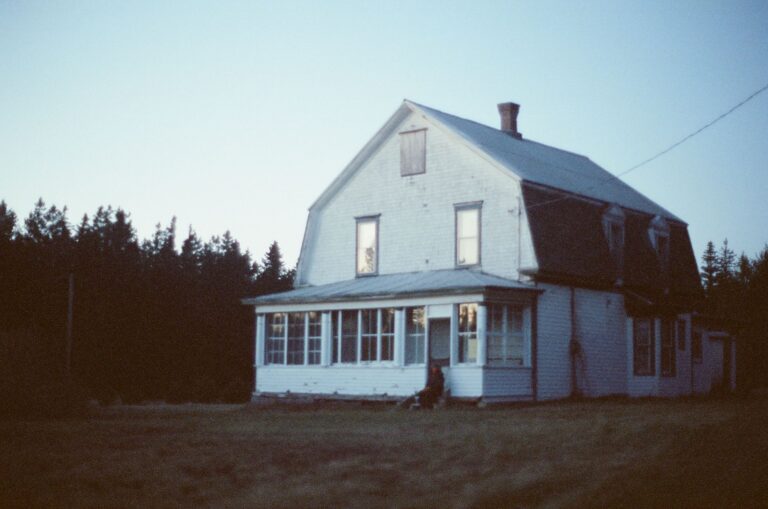
My daughter Zinnia put a six hundred and forty dollar smart lock on the front door of my own house while I was still lying in a hospital bed with a broken hip, and by the time they sent me home three weeks later, I could not walk into my own kitchen without her say-so.
I am sixty-eight years old. I have lived on this farm outside Rooksbury, Kentucky since 1979, when my husband Ridgemont and I bought forty acres of bottomland along Bishop Creek with a loan from the Rooksbury Farmers Bank that took us eleven years to pay off. We raised burley tobacco on it until the buyout program ended that, then we put in an apple orchard that still bears every September, twelve rows of Winesaps and Golden Delicious that Ridgemont planted the year our son Denison was born. Ridgemont died five years ago this coming October, of a heart that finally gave out the way his father’s had, sitting in his recliner with the Reds game on and a cup of coffee going cold on the side table. I buried him in the churchyard at Rooksbury First Baptist, under the same maple where we buried his parents and mine, and I have lived in this house alone ever since, which is exactly the way I wanted it, thank you very much, right up until the afternoon I went out back to chase a stray tomcat off my tomato plants and came down wrong on the porch step.
I broke my hip in two places. I lay in the grass for forty minutes before Petra Ackerly, who has lived across the county road from me for thirty-one years and has a set of eyes on my place better than any camera, saw that my truck hadn’t moved all morning and came to check. She called the ambulance. She rode with me to the hospital in Rooksbury and sat in that waiting room until my daughter could get down from Lexington, which took most of the day because Zinnia had a showing that morning and, in her words, “couldn’t just drop everything.”
I want to say plainly, before I go any further, that I do not blame my children for worrying about me. A woman my age falling alone on her own property is a frightening thing for the people who love her, and I understand that fear better now than I did before it happened to me. What I could not forgive, and what took me the better part of a year to untangle and set right, is what my daughter and her husband did with that fear while I was flat on my back in a hospital bed unable to stop them.
Zinnia is forty-four. She is my only daughter, sharp as a tack since she was a little girl running the multiplication tables faster than her teachers could write them on the board, and she has done well for herself selling real estate in Lexington, well enough that she and her husband Bramble drive nicer trucks than anybody in Rooksbury and send my grandchildren to a private school with a Latin motto on the crest. I was proud of her success for a long time before I understood what it had started to cost the people around her. Success, for Zinnia, had become a kind of proof she needed constantly, and somewhere in the last few years, without my noticing exactly when it happened, I had become one more problem she intended to manage until it looked solved on paper.
While I was in the hospital, groggy on pain medication and terrified about surgery, a nurse brought a clipboard to my bedside with Zinnia standing right behind her, and told me my daughter wanted to “get some home safety updates going” while I recovered, so I wouldn’t have to worry about a thing. I remember signing something. I remember Zinnia’s hand steadying mine on the pen, the way you’d steady a child’s hand learning cursive, and I remember thinking, in the fog of a fresh hip surgery, that it was kind of her to want to help. I did not read what I signed closely. I want to be honest about that, because a woman my age ought to know better, and I have thought about that clipboard more times since than I care to count.
What I had actually agreed to, it turned out later, was a broad authorization letting Zinnia coordinate “home modifications for elder safety,” language vague enough to cover a grab bar in the shower or, as it turned out, an entire smart-home security system installed on my house while I could not leave a hospital bed to object.
By the time I came home three weeks later, weak, using a walker, moving like a woman twice my age, my house had a new front door lock, the kind you work with a phone app instead of a key, and two cameras, one over the porch and one in the kitchen facing the back door, both wired into an account that lived on Zinnia’s phone, not mine. Nobody had asked me if I wanted any of it. Nobody had asked me if I even knew how to use a smartphone app to get into my own kitchen, which, at sixty-eight, coming home from hip surgery, I very much did not.
The first night home, I stood on my own porch at seven in the evening, tired down to my bones, and could not get through my own front door. I had no key. There wasn’t one anymore. I had to call Zinnia’s cell phone and wait eleven minutes, standing in the cold with my walker, while she “buzzed me in” from a real estate open house forty miles away in Lexington. When the lock finally clicked and let me through, I stood in my own front hallway and cried, not from the pain in my hip, which was considerable, but from something I did not yet have a name for. I know the name for it now. It was the first hour of no longer being trusted with my own front door.
I would like to tell you it got better once I healed up. It did not. It got more specific.
Zinnia set what she called “safety hours” on the lock’s app: the door would not open for me between eight at night and six in the morning, not even from the inside, unless I called her first and she remotely released it. She said this was to keep me from “wandering,” a word she used more than once in that first month, though I had never once wandered anywhere in my life except out to my own garden and back. The kitchen camera sent a notification to her phone every time the back door opened, along with a still photograph, so that for a while I truly believed, the way you believe a thing you cannot quite prove, that she was watching a little screen in Lexington every time I stepped out to get eggs from my own henhouse.
Get a new story in your inbox every morning.
Facebook doesn’t show you every story we post. Our free newsletter does. Join 2,500+ readers.
She was.
The cruelest thing she ever said to me, and I remember it word for word because I have replayed it more times than any other sentence in my life, came on a Tuesday afternoon about six weeks after I got home, when I asked her, as gently as I knew how, if we could talk about giving me back a physical key. She was standing in my kitchen with her arms crossed, Bramble out by his truck on a phone call, and she looked at me the way you’d look at a child asking for the car keys after a wreck.
“You gave up your say the day you fell in that yard, Mom,” she said. “This is how it’s going to be now, whether you like it or not.”
I did not say anything back to her that day. I have never in sixty-eight years been a woman who raises her voice in her own kitchen, and I was not about to start with my hip still held together by two steel pins. But I want you to understand what that sentence did to me, standing there in the room where I had made every meal of my married life, where I had rocked both my children as infants, where Ridgemont and I had sat up more nights than I can count over unpaid bills and bad crop years and, eventually, over the quiet comfort of growing old together. My say. As though sixty-eight years of paying that mortgage down, of canning tomatoes and burying a husband and holding this land together through two droughts and one flood, could be revoked over a broken hip like a driver’s license after a bad eye exam.
Petra Ackerly came by two days later with a pot of chicken and dumplings, the way she has come by with something warm at least once a week since Ridgemont died, and the camera over my porch caught her standing at my own front door for nine full minutes because Zinnia had, without telling me, restricted the “approved visitor” list on the app to family only. My own best friend of thirty-one years stood on my porch holding a covered dish while a red light blinked at her, and I had to call my daughter, again, to let my own guest into my own house.
I want you to understand what that sentence did to a woman who has never once in her life needed anybody’s permission to feed herself or open her own door. I did not sleep well that week. I lay awake going over the arithmetic of it, the way you do when something won’t add up no matter how many times you run it. A grab bar in the shower is safety. A ramp off the back step is safety. A daughter who quietly decides who is allowed to knock on your door and when you’re permitted to answer it is something else entirely, and I did not yet have good enough words for what that something else was, only a hollow, humiliated feeling that sat behind my ribs from the moment I woke up until the moment I finally fell asleep.
“I don’t understand why you’re upset,” Zinnia told me on the phone that night, when I finally worked up the nerve to raise it. “We’re trying to protect you. You had a stranger unsupervised on your property while you were still recovering.”
Petra Ackerly is not a stranger. Petra Ackerly taught third grade at Rooksbury Elementary for twenty-six years, sang alto next to me in the church choir for longer than that, and drove me to Lexington and back four different times last spring for follow-up appointments after my surgery because Zinnia was too busy with showings. But somewhere in my daughter’s account of things, a smart lock and two cameras had made her the authority on who counted as safe in my own life, and me the person too impaired to have an opinion about it.
I started to notice other things once I was steady enough on my feet to pay closer attention. Bramble, my son-in-law, had been in and out of the house more than usual that summer, always with a folder of papers he called “just some options to look at down the road,” always steering conversation toward the back forty acres, the section along Bishop Creek that Ridgemont and I never farmed, that had sat wild and pretty as long as I’d owned it, full of sycamores and a good deer trail and the kind of quiet you can’t buy. Bramble works in commercial real estate development on the side of his regular mortgage business, and I am not a foolish woman. I understood, slowly and then all at once, that a widow living alone on forty riverfront acres, freshly recovering from a fall, freshly proven “unsafe” by her own daughter’s account, was exactly the kind of situation a man like Bramble knew how to turn into an opportunity.
The appointment came in September, an email from a doctor’s office in Lexington I had never heard of, copied to Zinnia and not to me directly, scheduling a “cognitive and independent living assessment” for the second Tuesday of October. I only found it because Denison, my son, forwarded it to me by accident, thinking I was already on the thread. Denison lives two hours away in Bowling Green with his wife and works in equipment sales, and he had been kept mostly in the dark about how bad things had actually gotten at the house, because Zinnia had told him, and I heard this straight from his own mouth later, that I was “doing wonderfully, just needed a little extra structure while she got things stabilized.”
An assessment. For a woman who still put up forty quarts of tomatoes that August, who still drove herself to the feed store and back, who still sang alto every Sunday and had never once, not one single time, forgotten a name or a bill or a birthday. I understood, reading that email at my own kitchen table with my reading glasses sliding down my nose, exactly what it was for. It was not a safety check. It was the first document in a file somebody intended to use to prove I could no longer be trusted to make decisions about my own land, so that decisions about my own land could be made for me, and specifically, I suspected, so that a certain forty acres along Bishop Creek could quietly change hands into a shape more useful to Bramble’s business than to my grandchildren’s inheritance.
I had heard talk, the kind that moves through a town the size of Rooksbury the way weather does, that a developer out of Louisville had been quietly asking around the county about creek-frontage parcels, the sort of land you could carve into a dozen lots with a view and a boat ramp if you didn’t much care what it did to the water table or the deer trail or the quiet. I’d heard it at the feed store from a man buying fence posts. I’d heard a version of it at Wednesday bingo down at the VFW hall, two women at the next table over swapping guesses about who on the creek road might sell. I had not once connected it to my own family, because I did not yet know my own family was the reason the guessing had started in the first place.
I sat with that for three days before I told a living soul. Then I drove to Petra’s house on a Thursday morning, and I told her everything, start to finish, and she set down her coffee cup and said the thing that turned the whole year around for me.
“Yarrow,” she said, “you have been letting them tell you the story of what happened to you. It’s time you started keeping your own account of it.”
Petra’s grandson works in security systems installation over in Bowling Green, and when she called him that same afternoon and explained what was going on, he told her something I had not known and Zinnia had certainly never mentioned: that smart lock system Zinnia installed kept a full digital log, every open, every lockout, every remote override, time-stamped down to the minute, stored on a cloud account. It was built to protect a homeowner’s records. Zinnia had simply never imagined I would think to ask for mine.
I called the company myself, gave them my name as the homeowner of record, which I still was no matter whose phone controlled the app, and after some patience and one very firm conversation with a supervisor, I got them to email me my own access history. Forty-one separate nights, over five months, where the record showed the door locked against me between eight in the evening and six in the morning, with no override request logged from me at all, because on most of those nights I simply hadn’t tried the door, having already learned not to. Nine separate instances of a visitor waiting at the porch camera for longer than five minutes without being let in, three of them Petra. And, buried in a settings history I nearly missed, the date the “approved visitor” list had been edited to exclude anyone outside our immediate family, a Tuesday in August, the very week I’d first tried to raise the subject of getting my own key back.
That was the log. That was proof of the lockouts, cold and undeniable, but it wasn’t, by itself, proof of why. A judge or a lawyer looking at that record alone might still believe Zinnia’s story, that it was all for my own good, an overcautious daughter erring on the side of caution with a mother who’d just had a bad fall. I needed something that showed the truth underneath the safety talk, and I got it by accident, the way the truest things in a family often come out.
In late September, Zinnia and Bramble drove down for a Sunday dinner, the kind of visit where Zinnia liked to sit at my table and go over “logistics” while I served the food, as if hosting her own mother in my own dining room were a business meeting she was chairing. I had started, by then, keeping a small digital recorder in my apron pocket, the kind you can buy off a shelf at the hardware store in town for forty dollars, because Ravencroft, who runs Rooksbury Hardware and Lock and has fixed every screen door and dead bolt in this county for three decades, sold it to me himself and told me, without my having to explain much of anything, “Miz Yarrow, a woman’s got a right to know what’s said in her own kitchen.” I had not planned to use it that particular Sunday. I had simply gotten into the habit of carrying it, the way some women carry a rosary.
I stepped into the pantry to fetch a jar of my own canned green beans, and through the thin wall I heard Bramble’s voice, low, the way men get when they think a closed door is the same thing as an empty room.
“Once the assessment comes back the way we need it to,” he said, “we file for the conservatorship before Thanksgiving. Denison won’t fight it if you’re the one asking. He never fights you on anything.”
“He might,” Zinnia said, “if he finds out about the creek acreage before it’s settled. That’s why we keep it simple for now. Mom’s safety, that’s the whole story, until the paperwork’s done and there’s nothing left for him to fight about.”
“And the developer’s still good for the number we talked about?”
“Higher, if we can close before spring. He wants the creek frontage before anybody else in the county figures out what that land’s worth for lots.”
I stood in my own pantry with a jar of green beans getting heavy in my hands, and I let that little recorder in my apron pocket keep doing exactly what I had bought it to do.
I will tell you honestly that I did not go back out into that dining room and confront them that night. I have never once in my life won anything worth winning by losing my temper in the moment it was handed to me, and I was not about to hand my own daughter the chance to say afterward that her mother had “gotten confused” and “made a scene.” I served the pot roast. I asked Bramble about his work, the way I always had. I let Zinnia go over her logistics. And when they drove back to Lexington that night, I sat at my kitchen table and played that recording back four times, and then I called a lawyer.
Cathcart handles elder law out of the county seat, an unhurried, careful woman about my own age who has spent thirty years making sure people like me don’t get quietly signed out of their own lives. I brought her the access logs from the lock company, the recording from my pantry, and the forwarded email about the assessment, and she listened to all of it without once interrupting, the way a good doctor listens before she’ll tell you what’s actually wrong with you.
“Yarrow,” she said, when I’d finished, “there is no diagnosis, no doctor’s report, and no court finding anywhere in this file that says you are anything other than a competent woman who broke her hip and healed from it. What you have is a family that used your recovery as cover to restrict your liberty and move toward taking your land. That is not protection. In this state, that is closer to what the law calls undue influence, and depending on how far they’d gotten with that assessment, it could have been the beginning of exploitation.”
She helped me put together exactly what I needed, in an order that would hold up to more than a family argument: a letter, sent formally, revoking the authorization I’d signed in the hospital and any related account access; a request to the lock company, backed by her letterhead, to restore full administrative control of the system to me alone; and a recommendation, which I did not need much convincing to take, that I have the whole system replaced entirely rather than merely reclaimed. I did not want to spend the rest of my life owning even a corrected version of the thing that had locked me out of my own house.
Ravencroft came out the following week and pulled every camera and every smart lock off my house himself, muttering the whole time about “foolishness” in a way that made me laugh for the first time in months, and put back good old-fashioned deadbolts, the kind that work with a brass key I keep on a ribbon around my own neck now, the way my mother used to keep hers.
Then I called a family meeting. Not a scene, not a public unveiling in front of half the county, just my own kitchen table on a Saturday afternoon, with Cathcart sitting quietly at my right hand and Denison, who I had finally told everything, sitting across from his sister for the first time in his life not entirely on her side.
Zinnia and Bramble arrived expecting, I think, another logistics meeting. I let them sit down. I let Zinnia start in on some update about “next steps for the fall,” and then I set the little recorder on the table between the salt and pepper shakers and played eleven seconds of Bramble’s voice talking about a conservatorship filed before Thanksgiving and a developer good for a higher number if they closed before spring.
I have never in my life seen my daughter’s face go the color it went in that moment.
“Mom, that is completely out of context,” she started, and I let her get exactly that far.
“There is no context that makes that sentence anything other than what it is,” I said. “You scheduled a competency assessment on my behalf without telling me it existed. You restricted who could set foot on my own porch. You locked me out of my own kitchen forty-one nights running and called it my safety. And this whole time, underneath every bit of it, you and Bramble were talking about selling the back forty to a developer before your own brother even knew it was on the table. I am not confused, Zinnia. I have never once been confused. I have the door logs, I have the recording, and I have a lawyer who tells me that what you were building toward has a legal name, and it is not love.”
Denison, to his credit, did not stay quiet. He is not a man who raises his voice easily, took after his father that way, but he looked at his sister across my table and asked her, plain as anything, whether she had ever once intended to tell him about the creek acreage before the papers were signed. She did not have a good answer. Bramble had even less of one, and within a few minutes he had picked up his phone and walked out to sit in the truck, which told me most of what I needed to know about which one of them had built the plan and which one had simply gone along with it because it was easier than saying no to her husband.
I did not throw my daughter out of my house that day, though I understood why some women in my position might have. I told her, as steady as I could manage, that I loved her, that I understood some genuine fear had started this, and that fear does not excuse what it turned into. I told her there would be no conservatorship, no assessment, no sale of any acre of this farm to anyone, ever, without my own signature freely given with my own lawyer beside me. I told her that if she ever again wanted a key to my house, she would earn it back the way anyone earns trust, slowly, and by asking instead of deciding.
It has been ten months now. I will not pretend it has all mended clean, because real families rarely do, no matter what a tidy ending might promise you. Zinnia and I speak most weeks, careful and a little formal still, like two people relearning a dance they used to know by heart. She drove down in the spring, alone, without Bramble, and helped me put in tomato plants along the same fence line where I broke my hip, and we did not talk about any of it while we worked, and that quiet, oddly, felt like more of an apology than words would have. Bramble I have seen twice since that Saturday, both times briefly, both times polite in the careful way of a man who knows exactly how close he came to losing more than a deal. The developer, last I heard from Cathcart, found himself a different stretch of creek frontage two counties over.
Denison calls me every Sunday evening now, a habit that started the week of that kitchen table meeting and has not once lapsed since, and he drove up in June with his two boys to help me pick the first of the Winesaps, both of them barefoot in the orchard grass the way their father was at that age, the way I hope this land still belongs to somebody, generations from now, who never once has to prove her own mind to keep it.
Petra still brings chicken and dumplings on Thursdays, walks right up my own front steps and lets herself in the way she has for thirty-one years, no camera blinking at her, no app standing between an old friend and an open door. Ravencroft still checks my deadbolts every so often when he’s out this way, more out of friendship now than business, and last month he brought his granddaughter along to see the orchard, a shy little girl who picked me the reddest apple on the lowest branch and handed it over like a gift fit for a queen.
Pastor Quimby over at First Baptist asked me, gently, one Sunday after service, whether I’d be willing to say a few words to the seniors’ fellowship about what happened, not the family particulars, just the plain lesson of it. I stood up in that fellowship hall with a cup of weak coffee in my hand and told a room full of widows and widowers, most of them older than me, that safety is not the same thing as control, and that anybody, family included, who wants to manage your comings and goings owes you the plain truth about why, spoken to your face, not slipped into a clipboard while you’re too fogged on pain medication to read it closely. A few of them cried. One older gentleman, Ellsworth, who farms out past the county line, told me afterward that his own son had been making similar noises about a durable power of attorney, and that he was going to go home and ask some harder questions than he’d asked so far. I did not set out to become a cautionary tale for the whole congregation, but I have decided I don’t mind being one, if it means one more Rooksbury family thinks twice before locking somebody out of their own front door and calling it love.
I keep my own key on its ribbon around my neck, and some nights, before bed, I still find myself standing in the front hallway just looking at my own door, plain and solid and mine, no red light, no notification sent to anybody’s phone in Lexington, no permission required from any soul on this earth but me. I think about that first night home from the hospital, standing on my own porch in the cold with a walker and no key, and I think about how close I came to believing that was simply what getting old was supposed to feel like, a slow surrender of your own doorway to whoever loved you loudest.
It is not. I am sixty-eight years old, and I still know my own mind better than anyone who has ever tried to lock me out of it, and I would rather my grandchildren grow up understanding that about their grandmother than grow up believing love is something that gets to hold your key.
This story is a dramatization. Names, characters, and details are invented, and any resemblance to real people or events is coincidental.