The HOA Ticket For My Kids Lemonade Stand
My name is Marco, I am forty-five years old, and I have spent most of my adult life believing that if you keep your head down, mow your lawn on Saturdays, and pay your dues on time, you get to be left alone. That is the deal I thought I had signed when my wife and I moved onto Ashwood Lane eight years ago. A modest four-bedroom on a cul-de-sac in a quiet subdivision in the middle of the country, the kind of street where the sprinklers all click on at the same hour and the flags come out on the Fourth of July. I believed in that deal. I want to tell you how a folding card table, two kids, and a pitcher of lemonade showed me exactly how wrong I was, and how a stack of paper I never thought I would read out loud saved my children’s faith in the idea that grown-ups are supposed to be fair.
It started with little Sam.
Sam is the boy who plays second base on my son’s Little League team, the Ashwood Bandits, a team I have helped coach for three seasons now. Everybody just calls him little Sam because his given name is Ksawery, a beautiful Polish name that none of the other eight-year-olds could get their mouths around, so he became little Sam and he wore it like a badge. He is a scrap of a kid, all elbows and a gap-toothed grin, and he could catch anything you hit at him. In April he started getting tired at practice. Then he started sitting out innings. Then one Tuesday he was not at the field at all, and his father, a soft-spoken man named Piotr who drives a delivery route, stood by the dugout fence and told a few of us dads that Sam was in the hospital. Leukemia. That word. He said it quietly, like saying it too loud would make it more real.
I do not need to walk you through what that did to our little team. My kids, Mateo who is eleven and Lucia who is nine, had grown up with Sam. They ate orange slices with him between innings. They knew his batting stance. When they understood that his family was looking at a mountain of bills, that Piotr had already taken unpaid days to sit at the hospital, that the insurance covered some but not nearly all of it, my two children did what children do when the problem is bigger than they are. They decided to fix it with what they had.
What they had was a lemonade stand.
I want you to picture the moment I came home from work on a Thursday in early May and found them at the kitchen table with a shoebox and a sheet of poster board. Lucia had drawn a baseball on the sign in yellow marker, and under it in careful block letters she had written LEMONADE FOR SAM. Mateo was counting the change from his own piggy bank to see if they had enough to buy cups and lemons. He had four dollars and sixty cents. He looked up at me and asked, dead serious, if that was enough to help. I had to turn around and pretend to look for something in the fridge so they would not see my face.
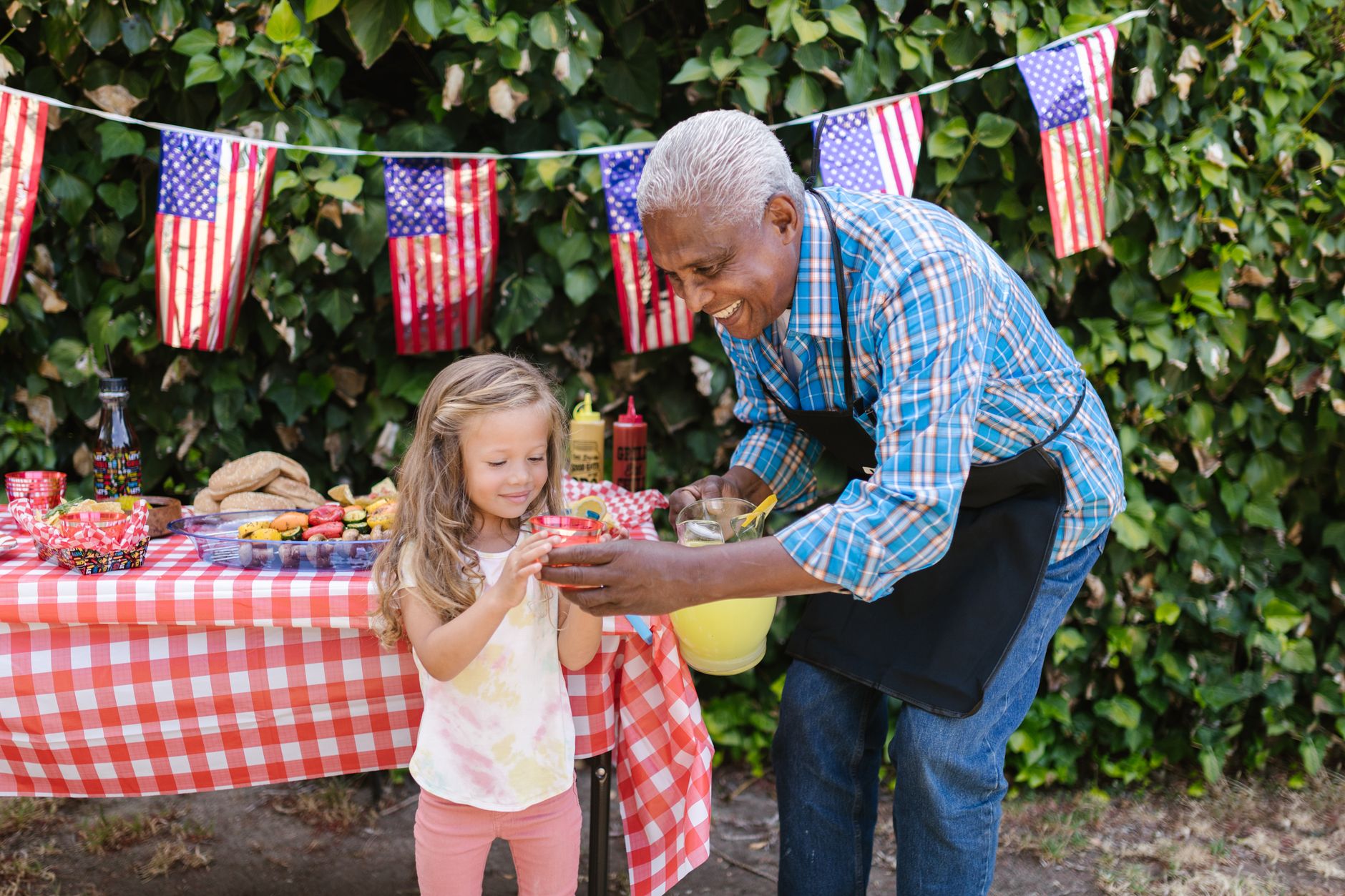
We planned it together over that weekend. I bought the lemons and the sugar and a case of cups myself and told them it was a loan they did not have to pay back. My wife made a second, prettier sign. We set the price at a dollar a cup, and Mateo, who has a head for numbers, worked out that if a hundred people came they would have a hundred dollars, and then he started planning for a thousand people, and I let him dream. We picked the following Saturday. The kids were up before I was, dragging the folding card table out to the end of our driveway, ten feet, and I mean ten literal feet, from our own front door. They set out the pitchers. Lucia made a little tip jar out of an old mason jar with a slit cut in the lid. By nine in the morning they had their first customer, our neighbor Deb from across the street, who bought two cups, told them to keep the change from a five, and stayed to talk. By noon they had made thirty-one dollars and Mateo had a spreadsheet going in his head.
And then Gunderson came.
I need to tell you about Gunderson, because he is the reason this story exists. Ronald Gunderson had been president of the Ashwood Homeowners Association for six years, which in a neighborhood this size meant he had been president for approximately six years too long. He was a tall, heavy man in his late fifties who wore golf polos he never sweated through and drove a spotless white SUV very slowly down the street so he could see into everyone’s yards. He carried a clipboard the way some men carry a gun. He was the kind of man who measured your grass with an actual ruler if he thought you had let it get past the three-inch limit in the covenants. He had fined the Hendersons for a basketball hoop. He had fined old Mrs. Pak for a garden gnome that he decided was a statuary violation. He sent his notices on association letterhead in envelopes marked OFFICIAL, and he signed them all with a fat black signature that took up half the line.
I had tangled with him exactly once, two years earlier, when he tried to fine me for leaving my trash cans out four hours past the collection window. I paid it rather than fight it. That was my mistake, I see now. Men like Gunderson read a paid fine as a confession, and they come back for more.
He rolled up to the end of my driveway in that white SUV at a quarter past twelve on that Saturday, put it in park in the middle of the street, and got out with the clipboard. Mateo, God bless him, thought he was a customer. He held up a cup and said, “Lemonade for Sam, sir, it’s a dollar, or you can give whatever you want.” Gunderson did not take the cup. He looked at the sign, then at the table, then at the tip jar, and then he said the sentence that I have not been able to get out of my head since.
He said, “This is a residential community, not a flea market. I don’t care what sob story is on the sign. You people are running an illegal business, and it stops now.”
You people.
I was coming down the driveway when he said it, and I heard it land on my kids. I watched Lucia’s face fall. I watched Mateo lower the cup he was holding out. There is a specific look a child gets when an adult they do not know is suddenly angry at them and they cannot understand why, a kind of scrambling in the eyes, and both of my children got that look at the same time. Lucia stepped back until she was half behind the table. Mateo, who is older and had been so proud of his numbers all morning, just went still.
I put my hand on Mateo’s shoulder and I asked Gunderson, as evenly as I could manage, what the problem was. He told me the problem was that Section whatever of the covenants prohibited commercial activity, that a lemonade stand was commercial activity, that he had warned other families and he was not going to make an exception for a, and here he actually gestured at the poster board, a “fundraiser.” He said he was issuing a violation and a fine of two hundred and fifty dollars, and that if the table was not gone within the hour he would call the county about an unpermitted vendor. He tore a sheet off his clipboard, a pre-printed HOA violation notice, filled in my address, wrote in the fine amount, and set it on the card table next to the tip jar. Then he got back in his SUV and drove off slow, the way he always did.
Two hundred and fifty dollars. The kids had made thirty-one.
Lucia started to cry. Not loud. She is not a loud crier. She cried the quiet way, wiping it fast with the back of her wrist because she did not want her big brother to see, and Mateo pretended not to. A couple of neighbors who had been walking over for lemonade slowed down and then turned around, because nobody wants to walk into the middle of a scene. Deb came back out onto her porch across the street and stood there with her arms crossed, and I could see even from that distance that she was furious.
I told my kids to leave the table exactly where it was. I told them they had done nothing wrong. And I picked up the violation notice, and I read it, and then I did the thing that I think surprised Gunderson more than any yelling ever could have. I did not argue with him on the street. I went inside, and I opened my filing cabinet, and I found the fat binder of association documents that every homeowner gets at closing and almost nobody ever reads.
I read it.
I read all of it. I sat at my kitchen table that Saturday afternoon while my kids watched cartoons and my wife brought me coffee, and I read the entire Declaration of Covenants, Conditions, and Restrictions for the Ashwood subdivision, all sixty-two pages of it, plus the bylaws, plus the rules and regulations the board had passed over the years. I am not a lawyer. I install and service commercial HVAC systems for a living, which means I read technical manuals and code books all day, and a covenant document is not so different from a code book. You just have to be patient and read every line and not let the man who wrote the citation tell you what it says.
Here is what it actually said.
Section 7 of the covenants, the one Gunderson had cited, prohibited “the operation of any trade, business, or commercial enterprise” from a residential lot. But it went on, and this is the part he did not want anyone to read, it went on to specifically exempt “occasional, temporary, and non-recurring activities of a charitable, personal, or minor nature, including but not limited to garage sales, estate sales, and the customary seasonal activities of resident minors.” Customary seasonal activities of resident minors. A lemonade stand, run by my nine and eleven year old, for one day, for a sick kid, was not a business under the covenants. It was expressly, in writing, allowed. Gunderson had cited the one section that actually protected us.
But that was only the beginning of what I found.
Because I kept reading, and I got into the bylaws, into the section on the powers of the board president, and I learned that a fine could not just be scrawled on a clipboard and left on a card table. The bylaws laid out a process. A violation notice had to be issued in writing with a citation to the specific rule. The homeowner had to be given thirty days to cure or to request a hearing. A fine could only be imposed after a hearing before the full board, not by the president acting alone. And critically, any fine imposed had to be recorded in the minutes and reported at the next open meeting of the association. Gunderson had done none of that. He had invented a two hundred and fifty dollar penalty on the spot, on the street, with no notice period, no hearing, and no board vote. The notice he left on my kids’ table was not a valid fine. It was a piece of paper he made up to scare a couple of children.
And then, because now I was awake, now I was really reading, I started going back through my own records. Eight years of these OFFICIAL envelopes. I keep everything. HVAC guys keep everything, because the one time you throw out a warranty is the time you need it. I had a folder two inches thick of Gunderson’s notices, mine and copies of neighbors’ that people had handed me over the years to ask if I thought they were fair. I laid them all out on the table and I started to see a pattern.
Gunderson enforced the rules on some people and not others. The Hendersons got fined for a basketball hoop over their garage. But the Croftons, who were friends with Gunderson and golfed with him, had a basketball hoop too, permanently mounted, and no notice ever came. Mrs. Pak got a statuary violation for a gnome. Gunderson himself had a three-foot concrete eagle on a pedestal in his own front yard, which is statuary if a gnome is statuary. There were families on our street who had gotten violation after violation, and they were, every one of them, the newer families, the younger families, the families who did not look like the people Gunderson golfed with. The families he called “you people.”
And then I found the big one.
I had, in my folder, a copy of a notice Gunderson had sent to a homeowner named Terrence three years back, fining him for running a business out of his home because Terrence, who did tax prep, had a few clients come to the house during tax season. Meanwhile, I knew for a fact, because I had serviced the man’s air conditioning, that Gunderson ran a small business out of his own garage. He bought and resold golf equipment. He had customers come to the house. He had a sign, a small discreet one, but a sign, in his garage window. He had cars parked at his curb every weekend during the season. By the exact definition he had used against Terrence and against my kids, Ronald Gunderson was in violation of Section 7 of the covenants every single Saturday of the year.
I sat there at my kitchen table until it was dark. My wife came and put her hand on my back and asked me what I was going to do. And I told her the truth, which was that I did not know yet, but that I knew one thing for certain: my kids were not going to grow up thinking a man with a clipboard gets to make them cry in their own driveway and call it the law.
The next association meeting was eleven days away. The quarterly open meeting, held in the clubhouse by the community pool, the one almost nobody ever attends because Gunderson runs them fast and hostile and there is never anything on the agenda but budget line items he has already decided. I marked it on my calendar. And then I did something I had never done in eight years on Ashwood Lane. I started talking to my neighbors.
I want to be careful here, because I do not want to make myself sound like some crusader. I am not. I am a tired man who works long hours and mostly wants to be left alone. But I could not stop seeing Lucia’s face when she stepped behind that table. So I walked the street. I went to Deb first, because Deb had watched the whole thing from her porch, and Deb, it turned out, had been keeping her own quiet grudge against Gunderson for years. She was the one who told me that the association’s own rules required the president to stand for reelection every two years and that Gunderson had simply stopped holding the election three years ago, declaring himself continued by acclamation to meetings of four people. That was in the bylaws too. I went back and checked. She was right.
Deb helped me knock on doors. We talked to the Hendersons, to Mrs. Pak, to Terrence, to a dozen families who had all gotten the OFFICIAL envelopes and all paid rather than fight. Every one of them had a story. Every one of them had thought they were the only one. That is how a man like Gunderson operates. He picks you off one at a time, in the privacy of your own mailbox, and he counts on you being too embarrassed and too busy to compare notes with the family next door. The whole thing runs on isolation.
So we stopped being isolated.
I did not tell anyone to make a scene. I did not organize a mob. I just told each family the same thing: the quarterly meeting is on the twenty-third, it is open to all members, it is at seven at the clubhouse, and I think you should come, and I think you should bring your paperwork. That is all. Come, and bring what you have. Deb printed up little reminder cards. Terrence, who it turned out had wanted to fight Gunderson for years and had just needed one other person to stand with him, took half the street himself.
The kids kept their lemonade stand going, too. That is the part I love most. They did not quit. The Monday after Gunderson’s visit, Lucia asked me if they were allowed to sell lemonade again, and I told her the truth, that yes, they absolutely were, that a man had lied to them and I could prove it. So they set the table back up the next Saturday, and Deb told a few people, and Deb’s people told a few people, and by the third Saturday there was a line down the sidewalk. Word had gotten around about little Sam, and word had gotten around about the HOA president who tried to shut down a fundraiser for a kid with leukemia, and it turns out nothing sells lemonade like a villain. By the time the meeting came, my kids had raised over eight hundred dollars for Sam’s family, in one-dollar cups, on a card table ten feet from our front door.
The night of the twenty-third, I put on a clean shirt. I brought my two-inch folder. I brought the covenants and the bylaws with the pages tabbed in yellow sticky notes. I brought Mateo and Lucia, both scrubbed and nervous in their nicest clothes, because I wanted them to see how this ended. My wife held Lucia’s hand.
We got to the clubhouse at ten till seven, and I will never forget walking up to that door. Gunderson’s white SUV was in its usual spot. Through the glass I could see him setting up his little table at the front, laying out his agenda, expecting the usual four people. And behind me, coming up the walk in the summer dusk, was my street. Deb and her husband. The Hendersons. Mrs. Pak, who is seventy-one and walks with a cane, who had put on her church clothes for this. Terrence with a folder as thick as mine. Family after family after family, some carrying their own OFFICIAL envelopes, some just carrying their kids, coming up the walk toward the clubhouse where the meetings were always empty. I heard Gunderson’s chair scrape as he stood up to see what the noise was.
The clubhouse holds maybe eighty people. It was full. People stood along the back wall. Somebody had to prop the door open because it got warm. Gunderson stood at his little table at the front and watched his neighborhood fill up the room, and I watched his face do the thing that faces do when a man realizes, all at once, that the isolation he has been counting on for six years is gone.
He tried to run the meeting the way he always did. He gaveled it to order, he started reading budget line items in a flat fast voice, and he did not once look at the crowd or ask if there was any other business, because in his world there is never any other business. He got about four minutes in before Deb stood up and said, clear as a bell, “Ron, we have some questions about enforcement, and we’d like them on the record.”
He told her she was out of order. He told her the agenda was set. And then Terrence stood up, and then the Hendersons stood up, and Mrs. Pak stood up on her cane, and the room made it very clear it was not sitting back down. Gunderson looked at me, because he knew, somehow he knew this was mine, and I stood up too, and I asked for the floor. Under the bylaws, I said, holding up the tabbed page, any member in good standing may address the board at an open meeting. Section 4, subsection C. I read it out loud. The room went quiet.
I did not yell. I want you to know that. My father taught me that the man who has the facts does not need to raise his voice, and for once in my life I had all the facts. I stood in the middle of that packed clubhouse with my kids watching, and I laid it out, one piece of paper at a time.
I read Section 7 out loud, the whole thing, including the exemption for the customary seasonal activities of resident minors, and I said that this man had cited that section to shut down a nine-year-old and an eleven-year-old raising money for a teammate with cancer, when the section expressly permitted exactly what they were doing. I held up the fake violation notice he had left on my kids’ table and I read the fine amount, two hundred and fifty dollars, and I walked the room through the bylaws, the required written notice, the thirty-day cure period, the mandatory hearing before the full board, the recording in the minutes, and I asked Gunderson, in front of everyone, to point to which of those steps he had followed. He could not, because he had followed none of them.
Then I laid out the pattern. I did not editorialize. I just read. Basketball hoop, Henderson, fined. Basketball hoop, Crofton, Gunderson’s golf partner, never cited. Garden gnome, Pak, statuary violation. And then I asked him if he would like to describe the three-foot concrete eagle in his own front yard, and the room, which had been dead silent, made a sound, a kind of low collective intake of breath that I felt in my chest.
And then I did the last thing, the thing I had gone back and forth on all week, because it was the cruel card and I do not like playing cruel cards. But he had made my daughter cry in her own driveway and called my family “you people,” so I played it. I read out Terrence’s business-use violation from three years ago, the one that fined him for a few tax clients coming to his home. And then I described, plainly, the golf-equipment resale operation Gunderson ran out of his own garage every weekend of the season, the customers, the sign in the window, the cars at the curb. Same section. Same conduct. One neighbor fined, the president exempt. I set the two notices side by side on his own table where everyone could see them.
I did not have to say what it meant. Everybody in that room could do the arithmetic. The man who had spent six years measuring their grass and fining their gnomes and shutting down their kids’ lemonade stands had been breaking the exact same rule, on purpose, for profit, the entire time, and selectively enforcing it against the neighbors he did not like.
Gunderson tried. I will give him that. He said I was distorting things. He said the eagle was not statuary, it was a fixture. He said his garage sales were personal, not commercial, and even as he said the word “personal” I watched him realize he had just described the exact exemption he had denied my children. He heard it too. His voice ran down like a clock.
It was Mrs. Pak who ended it, actually, not me. She stood up on her cane in her church clothes, seventy-one years old, and she said, in the mildest voice you ever heard, “Ronald, I paid your fine for my gnome. I would like it back. And I would like to see the vote where the board approved it.” And when he could not produce any such vote, because there was none, because he had been inventing fines and pocketing the money into the association account he controlled for years, the room turned. Not into a mob. Into something better. Into a quorum.
Deb had come prepared for this too, because Deb is smarter than all of us. She stood up and moved, under the bylaws, for a special election of the board president, on the grounds that the required biennial election had not been held in three years, which made Gunderson’s continued tenure a violation of the association’s own governing documents. There were more than enough members present to constitute a quorum, more than there had been at any meeting in the history of the neighborhood. The motion was seconded before she finished the sentence. And in the space of about twenty minutes, in a folding-chair clubhouse by a community pool in the middle of the country, my neighbors voted Ronald Gunderson out of the office he had occupied by intimidation for six years, and voted Deb in as interim president.
The new board’s first act, that same night, was to vacate every fine Gunderson had issued without a hearing, which turned out to be nearly all of them, and to send refunds to the families who had paid. Mrs. Pak got her gnome money back. Terrence got his business fine reversed and, I heard later, a private apology that Gunderson delivered through gritted teeth because the new board required it in writing. The association’s books got audited, and let us just say there were some line items that did not add up, and Gunderson resigned his membership on the board committee entirely rather than answer for them.
And the fine on my kids’ lemonade stand? The new board did not just vacate it. Deb, as her first official act as president, entered into the permanent minutes of the Ashwood Homeowners Association a resolution formally recognizing that the sale of lemonade by resident minors for charitable purposes is a protected and welcome activity in the community, and she read the exemption clause out loud into the record so it could never again be twisted. Then she asked Mateo and Lucia to stand up. And in front of the whole packed room, the room that had come out because a man tried to make them small, my two kids stood up, and the neighborhood applauded them. Not politely. Really applauded, the kind that goes on too long and gets loud, the kind that makes a nine-year-old cover her face and a proud eleven-year-old grin like he cannot help it.
Little Sam, I am happy to tell you, is in remission. It was a long year for his family, and it is not fully over, the way these things are never fully over. But the last scan was clean, and he came back to the field this spring, thinner and slower but there, in his cap and his glove, playing second base. The lemonade stand, the one Gunderson tried to shut down, raised, over the course of that summer and into a couple of follow-up weekends the neighbors organized themselves, a little over four thousand dollars for Piotr and Sam’s family. Four thousand dollars, one dollar at a time, out of a card table ten feet from my front door.
I keep the fake violation notice, the one Gunderson scrawled and left by the tip jar, in my two-inch folder. My kids do not need to see it anymore. But I keep it, because sometimes at the end of a long day I take it out and I remember what my daughter’s face looked like when a grown man told her that her sick friend was a sob story, and then I remember what her face looked like when the whole street stood up for her. And I think about the deal I thought I had signed eight years ago, the keep-your-head-down deal, and I understand now that it was never the real deal.
The real deal is this. You do keep your head down, most days. You do mow the lawn and pay the dues and mind your business. But when a man with a clipboard decides that the rules are only for the people he does not like, when he makes your children cry and calls it the law, you do not pay the fine and swallow it the way I did with those trash cans two years ago. You go inside, and you find the binder nobody reads, and you read every single line, because the rules he is hiding behind are almost always the rules that will save you. And then you knock on your neighbors’ doors, because the only thing that keeps a small tyrant in power is the belief that you are all alone.
We were not alone. That was the whole thing. We were never alone.
Mateo asked me, a few weeks after, whether we won because we were right or because we had the papers. It was a smarter question than I was ready for. I told him the truth. I told him we were right the whole time, from the very first cup of lemonade, but that being right is not enough by itself, that the world is full of people who are right and lose anyway. We won, I told him, because we were right and we did the work. Because I read the sixty-two pages. Because Deb printed the cards. Because Mrs. Pak put on her church clothes and stood up on her cane. Being right gets you into the room. Doing the work is what wins the room.
He thought about that for a while, the way he thinks about his batting numbers. Then he asked if he could set up the stand again next Saturday. Not for Sam this time, Sam was okay now, but just because he liked it. Just because it was his.
I told him yes. I told him it was his, and it always had been, ten feet from our own front door, in a neighborhood that finally remembered it belonged to all of us.
This story is a dramatization. Names, characters, and details are invented, and any resemblance to real people or events is coincidental.