The Food Truck They Said Would Fail
My brother laughed at me in my own kitchen, in the same room where our mother taught us both to fold masa, and told me a widow my age had no business playing at anything but grief.
I want you to understand what kind of morning it was. It was a Tuesday in the spring, and the light was coming through the little window over my sink the way it had every morning for thirty years, and I was fifty-seven years old and six months a widow, and my brother Beto was standing there with his coffee in his hand telling me I was a fool.
“You’ll be back begging me for grocery money by winter, Rosa,” he said. “Nobody’s driving to the square for a dead woman’s cooking.”
He said it in front of my daughter, Lupe. He said it easy, the way you say a thing you have already decided is true. He even smiled. That was the part that stayed with me for a long time after, the smiling. My husband was six months in the ground. Our mother, Guadalupe, was two years in the ground before him. And my brother stood in the kitchen she had cooked in her whole life and he laughed at the idea that I might carry any of it forward.
I did not say much back to him. I have never been a woman who fights loud. I dried my hands on the towel and I looked at the forty-one index cards sitting on my counter, my mother’s handwriting on every one of them, soft at the corners from being held, and I thought, we will see.
Lupe waited until he had gone before she came and stood next to me at the sink. She was thirty then, my daughter, and she had her grandmother’s hands, and she put one of them over mine on the counter. “Why do you let him talk to you like that, Mom,” she said. It was not really a question. She had watched me let Beto talk to me like that our whole lives.
I did not have an answer that would have satisfied her. The truth was that I had been letting my brother talk to me like that since we were children, since he was six and I was four and he learned that the fastest way to feel tall was to make me feel small. Our mother would scold him for it and he would stop for a day and then start again, and somewhere along the way I decided it was easier to bend than to break, and I bent for fifty years. That morning was the first morning I did not.
“He’s wrong,” I said to Lupe. That was all. But I had never said it out loud before, not about Beto, not in fifty years, and the two words felt like lifting something heavy off my own chest.
The cards
Let me tell you about the cards, because you cannot understand any of the rest of it without them.
My mother came up from Michoacán when she was nineteen with almost nothing, and the one thing she carried was how to cook. Not restaurant cooking. The real thing, the kind that takes a whole day and both hands and a certain patience most people do not have anymore. Tamales that took her from before dawn to fold. A red chile that she toasted and soaked and blended and strained and would not let you rush. Cinnamon rice pudding she stirred with a wooden spoon worn down on one side from her thumb.
She wrote her recipes on index cards because she could not always trust her English spelling and she wanted her children to have them exactly. She would sit me and Beto at the table when we were small, small enough that we needed a stool to reach the counter, and she would put a ball of masa in front of each of us and a corn husk and she would say, this is not work, this is love you can eat, do not be lazy with it.
I can close my eyes and be back at that table. The steam on the windows. The pot going on the stove all day, the whole house smelling of chile and corn until the smell was the same thing as being home. My mother singing under her breath in Spanish, a song about a river, the only time she ever really sang. She would check our tamales and if the fold was sloppy she would unfold it gently and hand it back and say, again, mija, again, mijo, and she never once got angry about a bad fold, only about a lazy one. She said the difference between a bad fold and a lazy fold was the difference between a person who is learning and a person who does not care, and she could always tell which one you were.
She fed the whole street from that kitchen. When a neighbor lost a husband, my mother cooked. When a girl down the block had a baby, my mother cooked. When the man two doors down came home from the hospital thin and gray, my mother cooked, and she sent me to carry the pot, and she told me, food is how you say the things too big for words. I did not know, folding masa at six years old on a stool, that I was learning the entire business I would build at fifty-seven. I thought I was just being kept busy.
Beto was better at it than me, if I am honest. He had quick hands. But he got older and he decided the kitchen was a woman’s room and beneath him, and by the time he was sixteen he would not fold a tamale to save his life. He wanted to be a man who made deals. He spent his whole life almost making deals. A car lot that closed. A cousin’s trucking thing that closed. He always had a folder under his arm and a big idea and it always came to nothing, and somehow it was always someone else’s fault.
When our mother was dying she called me to her bed and not him. She held my hand and she said, Rosa, the cards are yours. Not because I loved you more, she said, but because you are the one who will actually make them. Your brother will only sell them.
I did not fully understand her then. I would understand her later, in a food truck, in front of the whole town.
The truck
My husband, God rest him, worked forty years for other men. He drove a delivery route and he fixed other people’s machines and he never once in his life owned the thing he was tired at the end of. When he passed, something hardened in me about that. I decided that whatever years I had left, I did not want to be tired for another man’s dream. I wanted to be tired for my mother’s.
So I did a thing that frightened me more than anything I had done since I buried my husband. I went to the bank alone. I sat across from a young man who was kind but doubtful, and I put down what little I had, and I took out a loan. In my name. Only my name. There was no one else to sign, and I did not want anyone else to sign. It was mine to lose.
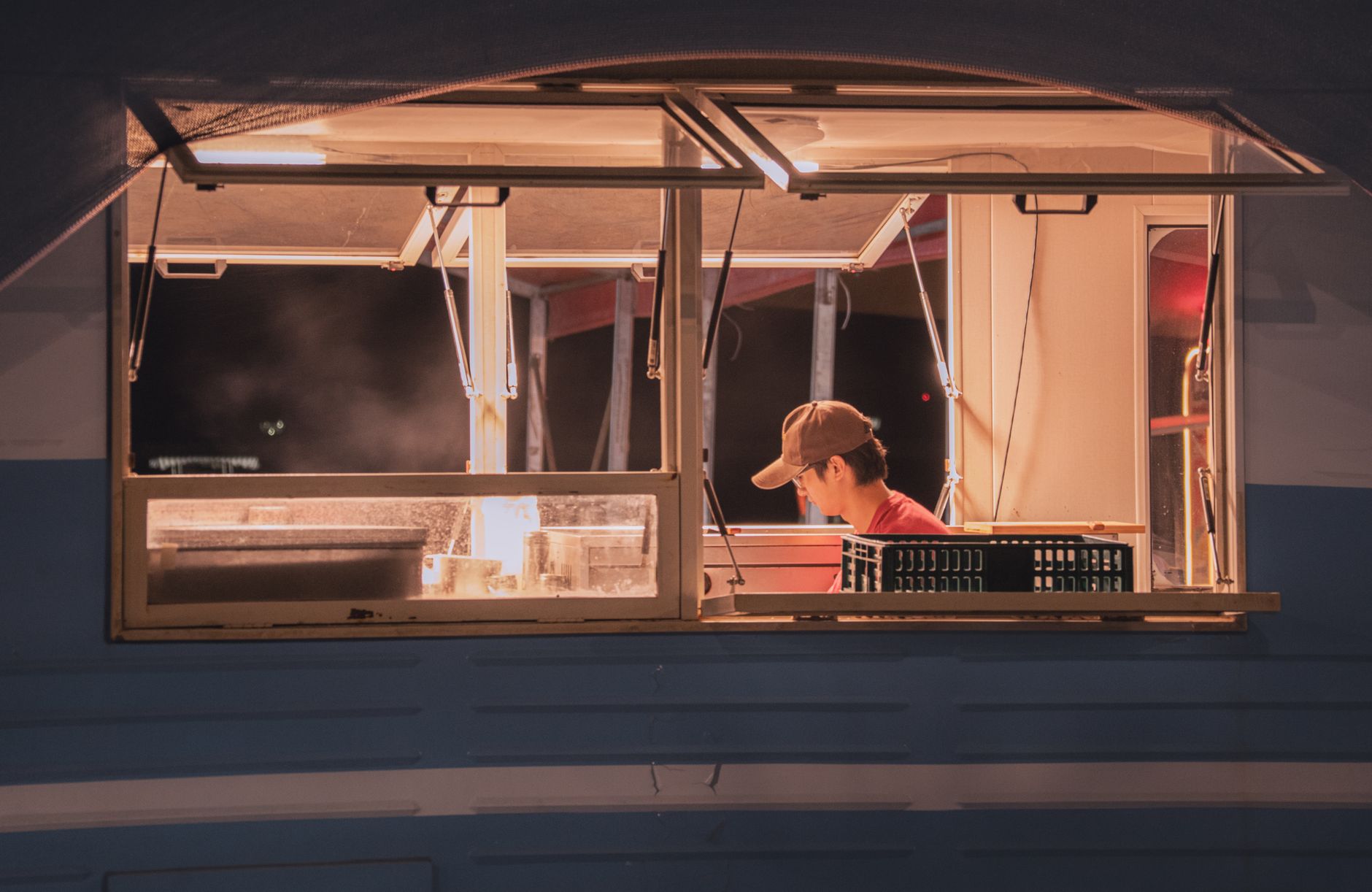
I bought a secondhand food truck with a bad fender and a stove that needed work and a dent in the side that I could not afford to fix. And I paid a boy from the high school forty dollars to paint one word on the side of it in careful blue letters.
Guadalupe’s.
My mother’s name. Rolling through the town on a truck. I sat in the driver’s seat the first morning before I opened and I put my forehead on the wheel and I cried until I did not have any more, and then I dried my face and I opened the window.
The first winter
Beto was almost right, that first stretch. Not about the failing. About the hard.
The first week I sold eleven plates. Eleven, the whole week. I sat in that truck in the cold with a pot of chile going soft on the stove and I did the math on a napkin and the math said I was a fool, and I thought about my brother’s smile, and I nearly drove the truck back to the lot and gave up.
But there was a man.
His name was Hank. A big man, quiet, wore the same canvas coat every day. He came the second day I was open and ordered tamales and a coffee, and he came the third day and did the same, and by the end of that first terrible week he had come every single day and left the same dollar folded in my tip jar every time even when I told him not to.
On the Friday of that week, when I was at my lowest, he sat down on the curb by my truck to eat instead of taking it to go. And he was quiet for a while, and then he said, without looking at me, “My mother made these. Before she passed. I haven’t had one in about thirty years.” And this big man wiped his eyes with the back of his hand and did not say anything else. He just ate.
And I understood something standing in that window watching him. I was not selling food. Every person who came to my window was hungry for something they could not name, and my mother’s cooking was the closest thing to it that money could buy. A grandmother. A kitchen. A time before. I was selling the thing the whole town had lost and did not have words for.
I did not drive the truck back to the lot. I stayed open.
But I want to be honest with you about how hard that winter was, because I think people hear the ending of a story like mine and imagine it was always going to end well, and it was not. There were mornings the truck would not start and I stood in the cold with my hand on the frozen hood and cried before six in the morning where no one could see me. There were weeks I paid the loan and did not pay myself, ate the tamales that did not sell because I could not afford to buy my own groceries and sell my own food both. There was a night I sat at my mother’s table with the loan statement in front of me and a pencil and I could not make the numbers come out no matter how I moved them, and I picked up the phone to call Beto, to tell him he was right, to ask if the offer of grocery money was real.
I dialed four of the numbers. Then I put the phone down. Because I thought about the smile, and I thought about my mother saying your brother will only sell them, and I thought, if I call him now, he owns this. Not the truck. Me. He will own the story of me for the rest of both our lives, the sister who tried and came crawling back. And I would rather lose the truck than give him that. So I did not call. I put the phone in a drawer where I could not reach it easy, and I went back out the next morning and opened the window, and slowly, slowly, the line began.
What she built
It came slow and then it came fast, the way those things do.
Word got around, the way it does in a small heartland town where the square is the whole world and everyone has known everyone since school. Hank told people. The people Hank told told people. By spring there was a small line at lunch. By summer the line went around the corner of the hardware store, and the man who owned the hardware store, instead of being annoyed, put out folding chairs.
The county paper did a little write-up with a picture of the truck, my mother’s name in blue, and I bought ten copies and could not look at it without crying. The church asked me to cook for the harvest festival. The mayor came by himself one Tuesday, stood in line like everyone else, and told me his wife had made him promise to bring her a dozen tamales home. Children in that town knew the name Guadalupe’s the way they knew the name of the ice cream place, and not one of them had ever met the woman it was named for, and every time a child said her name out loud I felt my mother somewhere going, you see, you made them.
Lupe started helping me on weekends. We would prep the night before, the two of us, folding, and I would tell her the same things my mother told me at that same age, this is love you can eat, do not be lazy with it. It was the closest thing to a whole family I had felt since the funerals.
Those prep nights were the best part of all of it, better than the paper write-up, better than the mayor. Lupe and I in my kitchen with the radio low and a mountain of husks between us, folding until our thumbs ached, talking the way you can only talk when your hands are busy and you are not looking at each other. She told me things on those nights she had never told me. About her marriage that was harder than she let on. About how she used to be ashamed, as a girl, of the smell of chile in her clothes at school, and how she would give anything to smell it in her clothes now. And I told her about her grandmother, the river song, the neighbors, the pot that was always going. I was handing my daughter the same thing my mother handed me, one fold at a time, and I understood then that the recipes were never really about the food. They were how the women in my family had always said I love you and I am still here without having to use those exact words, which were words we were not, any of us, very good at saying out loud.
By the second year, Guadalupe’s was not mine anymore, not really. It belonged to the town. And that, I have come to believe, is the exact moment my brother decided he wanted it.
He came back with a folder
I should have known when he started coming around again that spring. Beto, who had not once set foot in my truck in two years, not to buy a plate, not to say he was proud, not to say he was sorry for the kitchen. He started showing up at family things and asking questions that were too specific. How was business. What did I clear in a good month. Did I keep the truck in my name or had I set up a company.
I did not think much of it. He was my brother. Our mother had loved him. I answered him honestly, because it did not occur to me that a person would ask you those questions the way a burglar asks whether you are home.
Then, on a Saturday in June, at the busiest part of the lunch rush, with a line and Hank in it and the mayor’s wife in it and half the square within earshot, Beto walked up to my window and set a folder on the counter and slid it toward me.
He slid it the exact way our mother used to slide a plate toward a hungry man. I have thought about that a thousand times since. He must have known he was doing it.
“Time we honored our arrangement, Rosa,” he said. Loud enough. Loud enough for the line.
I opened the folder.
Inside was a partnership agreement. Typed up clean. It had a notary stamp on it and a notary signature. It had, at the bottom, a signature that looked like mine, that looked so much like mine that for one sick spinning second I doubted my own memory. And it was dated. Dated the very week I bought the truck, two years back. And it said, in plain typed English, that Beto and I had entered into a partnership on that date, that he had contributed to the founding of the business, and that he was entitled to fifty percent of Guadalupe’s. Half the truck. Half the recipes, it actually said the recipes, our mother’s cards, half. And half of every dollar that had come through that window while he was home telling everyone I would fail.
My hands started to shake so badly I had to put them flat on the counter to stop them. I could feel the whole line watching. I could feel my face going hot. And Beto stood there with the same smile he had worn in the kitchen two years before, telling my neighbors, my customers, the town that loved my mother’s name, that he had been my secret partner all along, that the widow they came to see every day had been cheating her own brother out of his share.
“I didn’t want it to come to this,” he said, to the crowd more than to me. “But family’s family. I put myself into this business at the start and I’m owed.”
I did not say anything. I could not. I closed the folder with my shaking hands and I told him I would look at it, and I told the line I was sorry, we were closing early, and I pulled the window shut and I sat down on the floor of my own truck and I could not breathe.
I heard the line break up outside. I heard the murmur of it, that low sound a group of people make when they have just watched something they were not supposed to see. And the worst thought, the one that sat on my chest on that floor, was not about the money. It was that they would believe him. That every one of those neighbors who came to my window because they loved my mother’s name would go home and say, did you hear, Rosa cut her own brother out, and my mother’s name, painted in blue on the side of that truck, would turn into something ugly in the mouths of the whole town. He had not just come for my business. He had come for the one clean thing I had left, which was her name, and he had done it in the middle of the square where the most people could hear.
I sat on that floor until it was dark. Then I drove home and I pulled the shoebox out from under my bed, and I sat on the floor of my bedroom with two years of papers spread around me, and I did not sleep at all.
What he did not know
Here is what my brother did not know.
He did not know because he had never once set foot in my truck to see how I ran it. He thought, I suppose, that a widow with a stove kept nothing, remembered nothing, could be handed a piece of paper with her own name forged at the bottom and would fold because she was tired and grieving and did not want a fight in front of the town.
But my mother did not raise me to keep nothing.
I keep everything. I always have. It is not a talent, it is a fear, but that day it was the only thing standing between me and losing the last thing I loved. Under my bed there was a shoebox, and in that shoebox was every paper that truck had ever generated. The loan documents, in my name, only my name, with the date stamped by the bank. The title to the truck. The receipt from the lot where I bought it. The receipt from the boy who painted my mother’s name on the side. The little spiral notebook where I had written down every single plate I sold, starting from the eleven that first terrible week, in my own hand, dated.
And more than any of that. My mother’s index cards, forty-one of them, in her handwriting, which no forger on earth could reproduce, and which no partnership agreement could touch, because you cannot sell a person half of a dead woman’s handwriting.
But there was one thing about that forged document that mattered more than all the rest. One flaw. One date that could not possibly be true. And I did not even see it myself, not at first, grief and shock make you blind. It took someone with a clear eye to see it.
Delia
There was a woman named Delia who used to come to my window. She worked at the courthouse, a clerk, and she had a lawyer’s training even if she mostly did filings, and she loved my rice pudding and we had become the kind of friends you become across a food truck counter, a little at a time, over two years.
I brought the folder to her the next morning. I put the shoebox on her kitchen table next to it. I told her the whole thing with my hands shaking again just from telling it.
Delia read the partnership agreement slowly. She read it twice. She went very quiet, and then she went to the shoebox, and she started laying my papers out next to his, one at a time, matching dates, and I watched her go stiller and stiller, and then she looked up at me and she said the words I will never forget as long as I live.
“Rosa,” she said. “The notary who supposedly stamped this agreement wasn’t a notary yet on this date. Her commission doesn’t start until eight months after the day your brother says you both signed this. She couldn’t have notarized anything. Not this, not a grocery list. This document is dated on a day this stamp could not legally exist.”
I did not understand at first.
She explained it to me plainly. A notary is commissioned by the state on a certain date, and that date is public record, anyone can look it up. Beto, or whoever he paid, had gotten a real-looking stamp from a real notary, but they had backdated the whole agreement to the week I opened the truck, to make it look like we had been partners from the start. And in their hurry, in their greed, they had dated the forgery to a day that was eight months before that notary was even allowed to hold the stamp. The paper claimed to be notarized on a day the notary did not yet exist as a notary.
“It undoes itself,” Delia said. “The date they needed to steal your business is the exact date that proves the paper is a lie. And that is before we even get to the loan being in your name only, and the title in your name only, and your mother’s cards, which he has no claim to at all. Rosa, he didn’t just forge a document. He forged a document that hangs itself.”
I sat in her kitchen and I cried, and this time it was not from grief.
The reckoning
Delia helped me do it right. That mattered to me. I did not want to shame my brother in the street the way he had tried to shame me at my window, even after everything. My mother would not have wanted that. So we did it quiet, and clean, and undeniable.
We sent Beto a letter, Delia and a real lawyer she knew, laying it all out. The notary’s commission date, public record, attached. The loan in my name, attached. The title, attached. A short line, at the end, that said that presenting a forged notarized instrument was not a family disagreement, it was a crime, and that I did not wish to pursue it as one, provided he withdrew every claim in writing and never made another.
He came to my house. Not to the truck this time. To the house. To the kitchen.
He sat at our mother’s table, the table where she taught us to fold masa, and for the first time in his whole grown life I watched my brother have nothing under his arm. No folder. No big idea. No one else to blame. He was fifty-nine years old and he looked like the boy who used to be better at this than me before he decided it was beneath him.
He did not really apologize. Men like Beto do not know how. But he put his face in his hands and he said, “I thought you’d fail. I needed you to fail, Rosa. Because if you could do it, then I never had any excuse.”
And there it was. The whole truth of my brother in one sentence. He had not laughed at my mother’s recipes because he thought they were worthless. He had laughed at them because he was terrified they were not, because if a grieving widow with a bad-fendered truck and a box of index cards could build something the whole town loved, then all his closed car lots and folded deals had never been the world’s fault, they had been his.
I did not scream at him. I did not throw him out. I have thought about why, and I think it is because our mother was in that room. I made him coffee. I put it in his hands the way she used to. And I told him the one thing I had earned the right to say.
“You will withdraw every claim, in writing, and you will never touch what she left me again,” I said. “And then, if you want, you can come to the truck. Not as an owner. You are not an owner and you never were. But you are her son. And I will teach you to fold a tamale again, because you have forgotten, and she would not want you to have forgotten.”
He signed everything. He withdrew every claim. The forged paper went into a folder of its own, in the shoebox, next to the real ones, where I keep everything.
What I kept
That was three years ago now. I am sixty and Guadalupe’s still rolls through the square with my mother’s name on the side, and the line still goes around the hardware store, and Hank still comes every day and still tries to leave a dollar I still tell him not to.
Beto comes on Saturdays. He is not an owner and he never will be, and we both know it, and there is a strange peace in that, in a thing being finally, permanently true between two people who spent their whole lives lying to each other in small ways. He folds tamales next to Lupe and he is quick at it, quicker than me, the way he was when he was small. Sometimes I catch him telling a customer about our mother. Getting her name right. Getting her story right. And I let him, because it is true, and because a man has to be given some way to become better than he was, or he never will.
People ask me sometimes if I hate him for what he tried to do. I do not. I think about that shoebox under my bed and I think, my mother gave me the cards and not him because she knew. Your brother will only sell them, she said, and you are the one who will actually make them. She knew both her children to the bone. She left the recipes to the one who would keep everything, because keeping everything is the same fear that makes you fold masa slowly and love the people who lie to you anyway.
He tried to steal my mother’s name with a piece of paper. And the very date he needed to steal it was the date that gave it back to me, whole, in front of the town that loves her.
I keep everything. It turned out to be the only thing I ever needed to keep.
This story is a dramatization. Names, characters, and details are invented, and any resemblance to real people or events is coincidental.