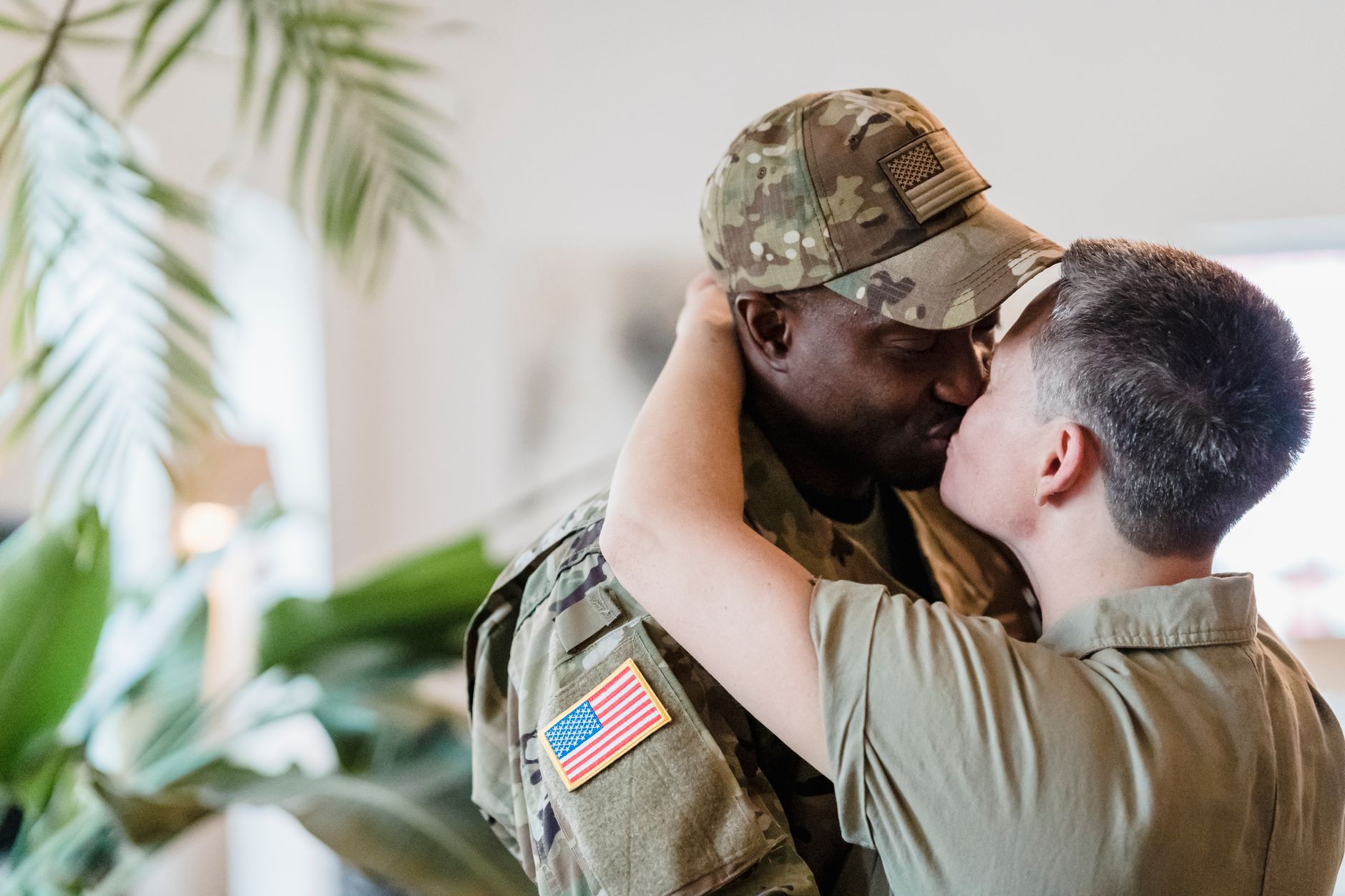
The Clerk My Father Was Ashamed Of
My father has spent nineteen years introducing me to people as the daughter who “never really did anything” in the Army, and on the Saturday before Memorial Day, standing under the pole barn behind VFW Post 3391 in Bracken Mill, Indiana, holding a bowl of my grandmother’s potato salad, I heard him do it one time too many. “This here’s my daughter, Sunniva,” he said to the man beside him, a stranger to me, broad through the shoulders, a Purple Heart pin catching the light on his ball cap. “She’s Army too. Don’t get excited though. She just typed reports back at base. Never fired a shot in her life.” He said it the way he always says it, easy, almost fond, like he was doing me a courtesy by getting the disappointing part out of the way early. The stranger’s smile went thin. Something moved behind his eyes that had nothing to do with politeness. And for the second time in my life, I watched a man go very still in front of me because of something he suddenly remembered.
I want to tell you about that Saturday, because it is the day my father finally found out who his daughter is. But to understand what happened under that pole barn, you have to understand the fifteen years that led up to it, and you have to understand my father, Fenwick Ridgely, who is not a cruel man, whatever it might sound like from that one sentence. He is a man who has spent his whole life measuring soldiering by a single yardstick, the one he was handed in the Kuwaiti desert in February of 1991, and he has never once thought to ask whether the yardstick was wrong.
Let me start at the beginning, because the beginning is the part he has never bothered to learn either.
My name is Sunniva Ridgely. I am forty-one years old. I am a Master Sergeant in the Indiana Army National Guard, nineteen years of service this October, and I have spent almost my entire career doing the job my father calls typing reports. The correct name for it is Human Resources Sergeant, military occupational specialty 42A, and if you have never worn the uniform you would be forgiven for hearing that title and picturing a woman behind a desk stapling forms, which is, to be fair, part of what I do. I process award packets. I manage casualty notification paperwork. I keep the personnel files of four hundred soldiers straight so that when a mother calls the armory asking where her son is, somebody can answer her inside the hour instead of inside a week. My father has never respected that work, not once, not in nineteen years, and the reason is not that he is a fool. The reason is that in February of 1991 he was a twenty-three-year-old Specialist with the Indiana Army National Guard’s 38th Infantry Division, and he spent the hundred-hour ground war of Desert Storm inside a Bradley fighting vehicle watching tracer fire cross the dark, and nothing that happened to him after that ever again looked like real soldiering to him. Everything got measured against those hundred hours. My whole career got measured against those hundred hours. I never had a chance.
He came home from that war and did what a lot of men from Bracken Mill did. He finished out his enlistment, then his reenlistment, then retired a Sergeant First Class after twenty-two years, and he took over his own father’s business, Ridgely Farm and Feed, on the county road just past the grain elevator, and he raised my brother Lindquist and me in the apartment above the store until there was enough money for the house on Millhouse Road. My mother, Dabney, died when I was nineteen, breast cancer, fast the way it sometimes is, and after that it was mostly my father who shaped what I understood about strength and service and what a person owed the people around her. He was, and is, a good father in every way that shows up on a report card. He never missed a game. He paid for community college before I switched over to the Guard’s tuition assistance. He taught me to back a horse trailer down a narrow lane and to shoot a rifle safely and to change the oil in a truck, because those were things a Ridgely needed to know regardless of what was between her legs, he used to say, which he meant as a compliment and which I took as one for a long time.
But when I enlisted, the summer after I turned twenty-two, something in him closed like a door.
I had wanted the infantry, if I am honest with you, or something close to it, military police, maybe, something with an edge to it, but this was 2007 and the combat exclusion policy was still the law of the land. Women could not hold direct ground combat roles, full stop, no exceptions, no matter what you scored on the ASVAB or how many pull-ups you could do. The recruiter at the strip mall outside Kokomo looked at my scores, which were high across the board, and steered me toward the administrative track, told me the Army needed sharp people running personnel just as much as it needed people kicking down doors, that units fall apart without good 42As, that I would see more of the actual Army, more deployments, more responsibility, in that lane than I might in some of the ones open to me. He was right, as it turned out, though it would take my father a decade and a half to believe it. I signed the papers. I went to basic at Fort Jackson and AIT at Fort Jackson too, and I came home a Private First Class with a green folder full of certificates my father barely glanced at.
“Personnel,” he said, when I told him my job title, standing in the store behind the counter with a fifty-pound sack of scratch feed on his shoulder. “So you’ll be in the rear with the gear.” He laughed when he said it. He has always laughed when he says the things that cut the deepest, which I think is its own kind of tell, though I did not understand that about him until much later. I told him it was more than that. I told him personnel soldiers deploy right alongside everyone else, that somebody has to process the casualty reports and the award recommendations and the emergency leave paperwork when a soldier’s father dies back home, and that somebody being competent and fast can be the difference in how a grieving family gets treated at the worst moment of their life. He nodded like he was listening. Then he said, “Well. Somebody’s got to do it,” and went back to the scratch feed, and that was the whole conversation, and it was, more or less, the whole conversation we would keep having for the next eighteen years, just with different words wrapped around the same shrug.
I do not think my father set out to diminish me. I have turned this over more times than I can count, in the cab of my truck driving the two hours down to drill in Indianapolis, in the quiet of my apartment on the nights I could not sleep after I came home from overseas. I believe, now, that some of it was fear dressed up as dismissal. He had watched men he loved go into combat arms and not come all the way home, not physically, sometimes not any other way either, and some small unexamined part of him was relieved that his daughter had landed in the lane he considered safe. But relief is not the same as respect, and he never gave me the second thing, not for years, not even after I gave him every reason to.
The years in between were not dramatic. They were drill weekends and annual training and slow, steady promotions, Specialist to Sergeant to Staff Sergeant, each one earned the unglamorous way, on a study guide and a board appearance and a body of work nobody outside the unit ever saw. I got assigned to the personnel shop of the 1st Battalion, 152nd Infantry Regiment, part of the 76th Infantry Brigade Combat Team, and I got good at the job in the specific, unglamorous way you get good at something that matters more than it looks like it matters. I learned to read a grieving mother’s voice on the phone and know within thirty seconds whether she needed information or just needed someone to stay on the line a while longer. I learned the difference between a Bronze Star packet that would survive review and one that needed to be sent back and rewritten with better detail, because a soldier’s family would someday read that citation at his funeral and it needed to be true and it needed to be worthy. My father knew none of this. He knew I “did the paperwork,” and every Thanksgiving, every county fair, every time one of his Legion buddies asked what his daughter did in the Army, he gave the same three words, said with the same fond, dismissive laugh. Personnel. Paper pusher. Never left the tent.
In 2011, I deployed.
The 76th sent a task force to Regional Command South, Afghanistan, Kandahar Province, and I went with it, attached to a rifle company running out of a combat outpost we called COP Sabre, a scraped-together collection of HESCO barriers and plywood buildings on a stretch of dusty ground that had been an orchard once, before decades of war had killed the trees. I was a Sergeant by then, twenty-six years old, and my job did not change just because the ground under my boots had. I ran the personnel shop out of a sixteen-by-thirty-two tent with a generator that failed twice a week, and I did the same work I had always done, award packets, leave paperwork, the endless quiet bookkeeping of four hundred soldiers’ lives, except now every one of those lives had a live round chambered in it, and the paperwork I processed sometimes included the kind no clerk ever wants to type.
On the ninth of September, a Friday, we took indirect fire a little after four in the afternoon.
I have told this story exactly twice in fifteen years, once to the investigating officer who wrote up the award recommendation, and once, years later, to a counselor at the VA in Indianapolis who I saw for six months after I got back from my second deployment and finally admitted the first one had left something in me that needed looking at. I am going to tell it to you now, because it is the reason a man I had never met stood very still under a pole barn in my hometown, and because I think, after everything, my father finally has a right to hear it whole.
The first round landed somewhere out past the perimeter wire, close enough to feel through the ground, and the second one landed inside it, near the eastern guard position, where two soldiers from the line platoon were pulling watch on the HESCO wall. I was forty yards away in the personnel tent when it hit, going over a leave request with my hands, and the tent walls snapped taut with the pressure wave and every light in the place went out at once. I do not remember deciding to run toward the impact instead of away from it. I have thought about that a great deal since, whether there was a decision at all or whether something underneath decision-making simply took over, the part of you that either has training in it or does not. I had training in it. Every soldier does, whatever their job title says on the roster. Combat lifesaver certification is not optional, personnel clerk or infantryman, and mine happened to be current, and that, along with whatever was underneath the decision-making, is the entire reason I am able to tell you this story at all.
A Specialist named Alcott Wexler was down at the base of the HESCO wall, twenty years old, from a small town in southern Indiana I had never heard of before that day, and he had taken shrapnel low in the leg, a wound that had opened something in him that was bleeding the way you learn, in training, to be afraid of, fast, dark, insistent. There was a second soldier beside him, hit less badly, already crawling for cover, and I remember shouting for him to keep low and stay put, and I remember dropping to my knees in the dirt next to Wexler, and I remember my hands were shaking and then, the moment they touched him, they were not.
I got the tourniquet on high and tight, above the wound, the way I had been trained a hundred times and hoped, the way every soldier hopes, never to actually need. I remember the sound he was making was worse than words, and I remember talking to him anyway, low and steady, the way you talk to a spooked animal or a frightened child, telling him his name, telling him he was not going to die today, telling him to look at me and nowhere else, because if he was looking at me he was not looking at the leg. There was more fire after that, small arms this time, somebody probing the wire, and I stayed where I was because moving him wrong could finish what the shrapnel started, and I kept my hand on that tourniquet and my eyes on his face for what the after-action report says was nineteen minutes, though it did not feel like minutes to me, it felt like one long held breath, until the medevac crew got a bird down in the dust outside the wire and two medics came through the gate at a dead run and took him out of my hands.
I did not know, that afternoon, whether he lived. They flew him to Kandahar Airfield and from there I lost the thread entirely, the way you almost always do, the way I had learned, even by twenty-six, to expect. You do the thing in front of you and then the Army’s enormous machinery carries the wounded soldier somewhere you cannot follow, and you go back to your tent, and eventually somebody hands you a leave request to finish processing, because the war does not stop for you to find out how the story ends. I finished the leave request. My hands were not steady for most of that evening, and nobody in that tent said a word about it, because everybody in that tent had their own version of the same unsteady hands, from the same war, on different days.
Six weeks later my company commander called me into his plywood office and told me I was being recommended for the Bronze Star Medal with Valor device, and an Army Commendation Medal with Valor from the brigade, for my actions that day. I remember being embarrassed more than proud. I told him I had done what anyone with a combat lifesaver card would have done, and he told me, not unkindly, that a lot of people had a card and a lot fewer people had run toward the sound instead of away from it, and that the difference mattered more than I was willing to admit. I let him write it up. I never once, in the fifteen years since, brought it up to my father, because in my family we did not talk about the hard parts of deployment, we talked about care packages and homecoming and how hot it had been, and by the time I was home for good and might have found the right evening to tell him, the moment had closed over the way moments do, and telling him started to feel less like sharing something and more like bragging, and a Ridgely does not brag, my mother used to say, and I suppose I absorbed that the way I absorbed most things she said, without ever questioning it.
My father did learn, eventually, that I had gotten “some medal.” He came to the ceremony when my unit returned, stood in the gymnasium in Kokomo with the rest of the families, and when my name was called for the Army Commendation Medal along with a dozen other soldiers getting routine end-of-tour awards, he clapped along with everyone else and told me afterward he was proud of me, and I believed him, and I still believe him. But the Bronze Star with the Valor device was folded into a stack of paperwork that came home separately, months later, through the same slow channel that everything else came home through, and by the time it arrived he had already built the story he was going to tell for the rest of his life, which was that his daughter had gone to Afghanistan and done paperwork and come home safe, thank God, unlike some men he had known, and the medal sat in a drawer in my apartment, and I let it sit there, because I did not know how to hand a man his own broken yardstick and ask him to build a new one.
I want to be fair to him here, because it would be easy to make him sound like a villain, and he is not one. He drove two hours each way to see me graduate advanced training. He never once tried to talk me out of reenlisting. He is, in every ordinary measure of a father, a good one. But there is a particular kind of blindness that comes from loving someone too specifically, from deciding early what shape their courage is supposed to take and then failing to notice when it takes a different shape right in front of you. My father decided, in a Bradley in the Kuwaiti desert thirty-five years ago, what real soldiering looked like, and he has spent every year since measuring me against a war I was never in, instead of looking at the one I was.
Alcott Wexler, it turned out, lived. I did not know that for a very long time. He recovered at Walter Reed and then at a VA facility closer to home, lost most of the strength in that leg but kept the leg itself, medically retired a Sergeant three years after the attack, and eventually, the way people do, rebuilt an ordinary life a long way from Kandahar Province. He met a woman from Bracken Mill at a veterans’ support meeting in Indianapolis, married her two years later, and moved to her hometown, our hometown, a town he had never heard of before he fell in love with someone who grew up in it, and he took a job at the John Deere dealer out on Route 9, selling parts and running the service counter, and he joined VFW Post 3391 because a man at the dealership told him it was a decent group and the chili at the Friday fish fry was worth the drive. He had been a member for exactly four months by the time of the Memorial Day potluck. He had never once mentioned the specifics of how he was wounded to anyone at that post, because, he told me later, some things you save for people who already understand them, and most rooms are not that room.
My father met him at the post about six weeks before that potluck, struck up the kind of easy friendship men like my father strike up with other veterans, built on shared silences as much as shared stories, and he liked Alcott Wexler enormously, for reasons that will not surprise you if you have been paying attention. Alcott wore a Purple Heart pin on his cap without ever explaining it, which my father found admirable rather than obvious, and Alcott walked with a hitch in his right leg that my father noticed and never asked about, out of the particular respect veterans extend to a wound they recognize without needing details. My father started telling people, around town, that he had a new friend at the post, a young man who had really been in it, in Afghanistan, wounded bad, the real thing. He said it the way he says everything he admires, plainly, without embellishment, and I think, in his own way, he meant it as the highest compliment he had.
So that is where we were, on the Saturday before Memorial Day, under the pole barn behind VFW Post 3391, where the whole town of Bracken Mill turns out every year for a potluck that has run the same way since before I was born, folding tables in two long rows, casserole dishes with masking tape names on the bottom, a coffee urn the size of a fire hydrant, and the flag detail from the high school JROTC standing at careful, self-conscious attention near the pole while old men in caps traded the same stories they trade every year. My father wanted me to meet his new friend. He had told me about Alcott Wexler for weeks, the way he used to tell me about his own war buddies, with a kind of reverence he almost never extended to me, and I had agreed to come to the potluck partly to meet him and partly because I love my father, complicated as that has been, and Memorial Day is the one weekend a year I make sure to be home for.
We found Alcott by the grill, holding a paper plate, and my father put his hand on my shoulder the way he always does when he is about to introduce me, proud and unknowing at the same time, and said the sentence he has said a hundred times in a hundred rooms. “This here’s my daughter, Sunniva. She’s Army too. Don’t get excited though. She just typed reports back at base. Never fired a shot in her life.”
I did not flinch. I want you to understand that by forty-one I have built a kind of scar tissue around that sentence, a way of holding my face still while something old and tired moves through my chest. I have heard it at Christmas and at my grandmother’s funeral and at the county fair in front of men I will see again at the grocery store for the rest of my life. I had every intention of smiling, shaking Alcott Wexler’s hand, and reaching for the potato salad.
But Alcott Wexler was not smiling anymore.
He was looking at me the way you look at a word you cannot quite place, turning it over, testing the shape of it against something buried. “Sunniva,” he said, quiet, almost to himself, like he was checking the name against a file he had not opened in years. “Ridgely.” He said my whole name like a question. And then his eyes went to my hands, which is a strange thing for a man to do at a potluck, except it was not strange at all, not once you knew what his hands remembered about mine.
“COP Sabre,” he said. “September of 2011.” His voice had changed entirely, gone low and careful, the paper plate forgotten at his side. “You were the personnel sergeant. You ran the S1 shop.” He was not asking anymore. My father looked between us, confused in the particular way of a man watching a conversation happen in a language he does not speak. And Alcott Wexler set his plate down on the corner of the grill table, and he rolled up the leg of his jeans, right there under the pole barn, in front of half the folding chairs in Bracken Mill, and showed my father the long silvered scar that ran from just above his knee down toward his ankle, a wound that had been an emergency once and was now just a shape on a man’s leg, the kind of shape you only get one story about.
“Your daughter did this,” he said to my father, and his voice cracked on the word daughter in a way that made the whole nearest table go quiet. “I mean she stopped it. I was bleeding out at the base of a wall and your daughter ran a forty-yard sprint through small arms fire to get to me, and she got a tourniquet on so fast and so tight it hurt worse than the shrapnel, and then she held my leg together with her own two hands and talked to me for nineteen minutes while men were shooting at us, and she never once stopped talking, and I have thought about her voice probably once a week for fifteen years and I never knew her last name because I was twenty years old and half out of my mind and all I could see was her face.” He looked at my father, and something in his own face had gone raw, unguarded, a man handing over the truest thing he owned. “I got a Purple Heart out of that day, sir. Your daughter got a Bronze Star with a V device, for valor, because she ran toward gunfire to save a soldier’s life when her job did not require her to leave that tent. I did not know her name for fifteen years. I did not know I was standing next to her at a potluck until you said it. And I need you to know, right now, in front of whoever’s listening, that this woman you just told me never fired a shot is the reason I have a leg to stand on tonight.”
I do not remember exactly what happened in the next several seconds, because I was watching my father’s face and nothing else in the world existed. I watched something come apart in him, slow, the way a fence post gives after years of frost heave finally finds the weak spot, not all at once but all the way down. His hand was still on my shoulder. I felt it tighten and then go slack, and when he turned to look at me his eyes were wet in a way I had seen exactly twice before in my life, once at my mother’s funeral and once, strangely, at my basic training graduation, though I had never understood that second time until this one. “A Bronze Star,” he said, and his voice did not sound like his voice. “With a V device.” He said it like a man translating a language he had spent his whole life refusing to learn.
“It’s in a drawer at my apartment,” I told him, and I am not ashamed to say my own voice was not steady either. “I never showed you because I didn’t know how.”
The pole barn had gone quiet around us in that particular way a crowd goes quiet when it senses it is standing near something true. Post Commander Middleton, a heavyset man with a voice built for calling bingo numbers over a bad microphone, stepped forward from somewhere near the coffee urn and said, gently, that he thought this was a story the whole post ought to hear properly, if I was willing, and asked if I would come stand by the flag with him for a minute. I looked at my father. He nodded at me, just once, and something passed between us in that nod that fifteen years of Thanksgiving dinners had never managed to say.
So I told it. Standing near the flagpole in the gravel lot behind VFW Post 3391, with my brother Lindquist pushing to the front of the crowd and the JROTC kids standing at a straighter attention than usual and half the town of Bracken Mill holding paper plates of potato salad they had forgotten they were eating, I told the room about COP Sabre and the fourth of September and the tourniquet and the nineteen minutes, the short, plain version, because that is the only version I have ever known how to tell it in. I did not perform it. I have never known how to perform that afternoon, because it does not feel, even now, like a story, it feels like the truest thing I have ever done with my hands, and you do not perform the truest thing you have ever done. When I finished there was a silence that went on a beat too long to be comfortable, and then Alcott Wexler, standing beside me with his jeans still rolled up over that scar, started to clap, slow at first, and the whole pole barn followed him, and I stood there in the gravel with my face doing something I could not entirely control, and I found my father in the crowd, and he was not clapping. He was standing very still with both hands pressed over his mouth, the way you hold your face together when it wants badly to come apart in public.
He found me afterward, by the folding table with the desserts, while I was pretending to look for a fork. He did not say much at first. My father has never been a man of many words in the moments that matter most, which is its own kind of family inheritance I am still working out how I feel about. He put both hands on my shoulders and looked at me for a long moment, and then he said, “Nineteen years,” and I said, “I know,” and he said, “Nineteen years I told people my daughter never did anything,” and his voice broke clean in half on the word anything, and for the first time in my adult life I watched my father cry in front of other people, in front of half the town, in front of a stranger he had introduced me to an hour earlier as somebody who never fired a shot.
“You could have asked,” I said, and I did not say it cruelly, though I had earned the right to. “That’s the part I want you to understand, Dad. Not that you were wrong. You could have asked me, any Thanksgiving, any year, what the job actually was. I would have told you.”
“I know,” he said. “I know that now.”
He asked me, that night, if he could see the medal. I drove the two hours home to my apartment near the armory the next morning and I drove the two hours back with the small blue box in the passenger seat like it was something alive, and I sat with my father at his kitchen table, the same table I had done homework at as a girl, and I opened it and let him hold the Bronze Star Medal with its small bronze V pinned to the ribbon, turning it over in his big, calloused hands the way he turns over a piece of farm equipment he is trying to understand. He asked me questions for two hours that afternoon that he had never once asked me in nineteen years. What the citation said, word for word. What the tent smelled like. Whether I had been afraid. I told him the truth, that I had not had time to be afraid until it was over, and that being afraid afterward, in the quiet, was somehow worse, and he nodded like a man finally being handed the missing piece of a machine he had been trying to fix his whole life.
Things are different now, in the specific, unglamorous ways that matter more than the dramatic ones. My father introduced me at the Fourth of July gathering at the store this year, and he did not say I typed reports. He said, “This is my daughter, Master Sergeant Sunniva Ridgely, Bronze Star with Valor, and if any of you ever tell her job in the Army wasn’t real, you come talk to me first.” He has started keeping a framed copy of my citation on the wall behind the register at Ridgely Farm and Feed, next to his own discharge papers from Desert Storm, side by side, which is the closest thing to an apology my father has ever managed to give, and which I have decided, after nineteen years, is enough.
Alcott Wexler and I have become something like family since that Saturday. He comes by the store some Sundays with his wife, and we do not talk much about that afternoon at COP Sabre, because there is not much left to say about it that the scar and the medal do not already say between us. He did tell me once, sitting on my father’s porch with a glass of sweet tea sweating in his hand, that he had spent fifteen years wondering if the woman who saved him had made it home whole, and that finding out I had, and finding out I was standing three feet from him at a potluck in a town he had moved to for entirely unrelated reasons, felt like the kind of thing you are not supposed to get to ask for twice in one life, being saved and then, so many years later, getting the chance to say so out loud.
I think about the drawer sometimes, the fifteen years that small blue box sat closed in it while my father built and rebuilt the same three sentences about a daughter who never fired a shot. I do not blame him for the years, not anymore. I understand now that he was not being cruel so much as he was being loyal to a yardstick nobody ever thought to hand back to him and ask if it still measured anything true. But I am done keeping medals in drawers. I wear the ribbon on my dress uniform now without folding it under my hand the way I used to, and when someone asks what it is for, I tell them, plainly, the way my father taught me to say true things, without embellishment, without apology.
I did not need the pole barn to know what I had done that day in Afghanistan. I had made my peace with that a long time ago, alone, the way soldiers usually do. But I will not pretend it did not mean something, at forty-one years old, standing in the gravel lot of the post my grandfather helped build, to watch my father’s whole understanding of me come apart and rebuild itself in the space of one evening, brick by brick, until it finally matched the woman standing in front of him. Some things take fifteen years to come home. The only thing required of you, I have learned, is that you still be standing at the table when they finally do.
This story is a dramatization. Names, characters, and details are invented, and any resemblance to real people or events is coincidental.