
My name is Ferdinand Devereaux. I am fifty-eight years old, I have run the feed and hardware store on Route 9 outside Sorrel Creek, Kentucky since I was twenty-eight, and I have spent thirty years believing I could read a man inside of five minutes. Farmers taught me that. You watch how a man treats a dog that is not his, how he counts change he does not need to count, how long he holds eye contact before he looks away. I was proud of that skill. I built a small reputation on it. People in this county have asked me more than once what I thought of somebody before they hired him or loaned him a tractor.
I tell you all of that so you understand how completely I failed the one time it mattered most, and how close that failure came to costing me my daughter.
Sorrel Creek is the kind of town where the diner on Main knows your order before you sit down, where the church potluck after Sunday service runs three tables long, and where the VFW hall still fills up every Fourth of July with folding chairs and sweet tea. My wife, Odilia, teaches second grade at the elementary school. We raised our daughter, Tavia, in a house two miles down the county road from the store, with a dog, a garden, and enough chickens that the eggs outnumbered our needs by a wide margin.
Tavia was the kind of kid who brought home injured barn cats and argued with me at the dinner table about things she had read in the newspaper. She wanted to be a large-animal vet since she was seven years old and found a hurt fawn in the ditch behind our property and refused to let me put it down. She grew into a young woman who spoke her mind, who did not flinch from an argument, who once told a boy at her high school prom that his cologne “smelled like a dare.” I loved that about her. I still do. It is part of why what happened at my dinner table felt so much like watching a stranger wearing my daughter’s face.
The girl who stopped calling
Three years ago Tavia moved to Nashville to finish her veterinary technician certification at a program with a good reputation and a long waiting list. She got in on her second application, and I have never been prouder of anything in my life than the day that acceptance letter came. She worked weekends at a diner near campus to cover rent, called us every Sunday evening, and filled those calls with stories about horse barns, difficult professors, and a roommate who left dishes in the sink for a week at a time.
Somewhere around a year and a half in, the calls started getting shorter. Where she used to talk for forty minutes about a foal she helped deliver, she started saying “it was fine” and changing the subject. Odilia noticed it before I did. She is better than I am at hearing what a person is not saying.
“She sounds tired all the time,” Odilia told me one night, folding laundry at the kitchen table. “Not busy tired. Tired like something’s wearing her down.”
I told her young people get busy, that Tavia was in her last stretch of clinical hours, that we should not read trouble into ordinary exhaustion. I want to be honest here: some of that was me not wanting to look too closely. If I had looked closely and found something wrong, I would have had to do something about it, and I did not know what that something would be from four hundred miles away.
There were smaller signs too, the kind that only add up once you know what you are adding them toward. She stopped posting pictures of herself online, only pictures of horses and barn cats and the occasional sunset with no one in the frame. She missed her cousin’s baby shower over a video call that she never quite explained, saying only that “things came up.” When Odilia asked if she wanted to drive down for a long weekend, Tavia said Weston had already planned something, and when Odilia asked what, she said she was not sure yet, which struck me even then as an odd thing to not be sure about regarding your own plans.
I called her myself, twice, on pretenses. Once to ask about a farrier she had recommended for a neighbor’s horse. Once just to hear her voice, no excuse at all. Both times she sounded like herself for the first two minutes and then flattened out, like a radio station losing signal the longer the call went on. I told myself it was distance. I told myself it was the stress of finals. I have gone back over both of those calls in my memory more times than I can count since, listening for what I missed, and I believe now that what I was hearing was a young woman being careful about what she said because someone else in the room was listening.
In the spring, Tavia called and told us she was seeing someone. His name was Weston, she said, and he ran some kind of consulting and property business out of Nashville, and being with him had made her whole life “finally make sense.” She used that phrase twice in the same conversation. I remember it because it struck me as an odd thing for a twenty-four-year-old to say about a man she had been dating for four months. A life should not need a man to make it make sense. A life should already make sense, and a good man should simply be glad to be part of it.
I did not say that out loud. The last time I had offered an opinion about a boyfriend of hers, back in her junior year of high school, Tavia had not called us for six weeks. I had learned, or thought I had learned, to keep my read of a man to myself until I had actually met him.
She asked, a few weeks later, if she could bring Weston home for Sunday dinner. Odilia and I said of course, and we meant it. Whatever reservations I carried, I wanted to give the man a fair look across my own table, on my own ground, the way my father had done for every young man who ever came calling on my sisters.
The dinner
Odilia made pot roast with carrots from our garden, mashed potatoes, green beans she had put up herself the summer before, and sweet tea in the good pitcher, the cut-glass one that only comes out for company and Easter. I put on my church shirt. I wanted this Weston to understand, without a word being said, that the Devereaux family sets a proper table and expects to be treated like people who do.
He pulled into our drive a little after five in a truck too clean for a county road, wearing a shirt that looked like it cost more than a month of my fuel bill, carrying a bottle of wine we did not open because we do not keep liquor in the house. He shook my hand with the kind of grip that is trying to prove something, held eye contact a half second too long, and called me “sir” in a way that sounded like he had practiced it in the truck mirror on the drive up.
Get a new story in your inbox every morning.
Facebook doesn’t show you every story we post. Our free newsletter does. Join 2,500+ readers.
“Mr. Devereaux,” he said, “your daughter talks about this place like it’s heaven on earth. I can see why.”
Tavia stood behind him in a soft yellow dress, and she was smiling, but it was the kind of smile I recognized from her childhood, the one she used to put on for the dentist. Forced at the edges. Her hair was longer than I remembered, and she had gotten thin, thinner than a girl on her feet all day at clinicals should get. When she hugged me, I noticed she was wearing a long-sleeved cardigan, in July, in a house we keep warm enough in summer that we run two box fans just to move the air.
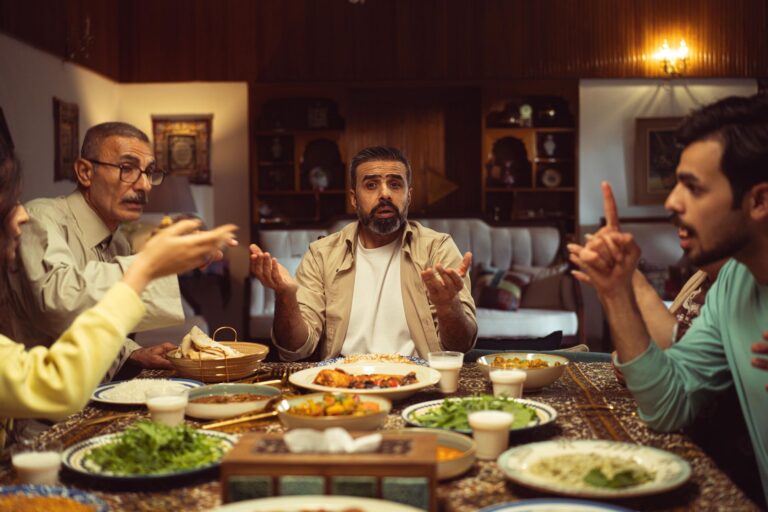
At the table, Weston did most of the talking, and he did it well. He had a story for everything: deals he was closing back in Nashville, a rental duplex he was flipping, a “consulting practice” he described in language so vague I could not have told you what he actually did for a living if you had put a gun to my head. He said he believed a woman does best in life with “a firm hand keeping her steady.” He said it lightly, like a joke, but nobody at that table laughed, and I watched Tavia’s fork stop on its way to her mouth. She set it back down without taking the bite.
Every time Odilia or I turned a question toward Tavia, Weston answered it first.
“How’s the program going, sweetheart?”
“Oh, it’s a lot. She’s pretty worn out most days.” He said it before Tavia had opened her mouth.
“You still working weekends at the diner?”
“We cut that back. Didn’t make sense with her schedule.” Again, before she could speak.
“You want more tea, Tavia?”
“She’s fine with what she’s got.” That one came fastest of all.
I want to tell you I caught it in that moment, that I understood right away what I was watching. I did not, not fully. I felt something crawl up the back of my neck, the same feeling I get when a man at the counter tells me a story about a fence line that does not quite add up. But I told myself it was just a young man being overeager to impress, filling silences the way nervous people do. I have thought about that excuse many times since, and I am not proud of how easily I reached for it.
Odilia noticed too, in her own way. Partway through the meal she asked Tavia to help her carry the pie in from the kitchen, a chore that has never in twenty-four years required two people. Weston started to rise from his chair to help instead, and Odilia put a hand flat on the table and said, pleasant as church, “Oh, sit, Weston, this is mother-daughter business,” and for just a moment, alone with her in the kitchen, Tavia let her shoulders drop and her face do what it had been holding back all evening. Odilia told me later that she had asked, quiet and quick, “Baby, are you okay,” and Tavia had answered with a smile that did not match her eyes and a whispered “I’m fine, Mom, please don’t,” before picking up the pie and walking back into the dining room like nothing had passed between them at all. Odilia did not push. She has told me since that she has never regretted anything the way she regrets not pushing harder in that kitchen, and I have told her the same thing I am telling myself now: we did push, eventually, and it was enough. It has to be enough, or none of us could live with what almost happened instead.
What was under the table
Partway through the meal, Weston’s fork slipped out of his hand and clattered to the floor.
“How embarrassing,” he said, with a soft laugh, and ducked under the table to retrieve it. When he came back up, he was not looking at Tavia. He was looking at me, straight on, in a way that felt less like an accident and more like a test.
A few minutes later it happened again. This time when he bent down, I saw Tavia’s whole body go rigid, her hand gripping the edge of the table, her eyes fixed on her plate like she was waiting for a storm to pass overhead.
“Sweetheart,” I said, careful, “you doing all right?”
“I’m fine, Dad.” The words were right. The voice underneath them was not. It was the voice of someone reciting a line they had been given, not someone answering a question.
The third time his fork went down, it landed close to my own chair, and before Weston could reach for it, I bent down to get it myself.
That is when my whole evening, and in a real way the rest of my life, changed direction.
Under that table, Weston’s dress shoe was pressed down hard on top of Tavia’s foot, pinning it flat against the floor the way you would pin down something you did not want to move. And along her calf, half hidden by the hem of her dress, was a bruise gone yellow and green at the edges, days old, the kind that does not come from bumping a coffee table. She had tried to cover part of it with the hem, and part of it with a bandage that had come loose at one corner.
And taped against the inside of her leg, just above her ankle, folded small enough to hide in a closed fist, was a scrap of paper.
She had put it exactly where a father reaching for a dropped fork would find it, and nowhere Weston, sitting across from her, ever would.
My hand was not steady when I reached for it. Weston ducked down at almost the same moment, saying, “I’ll get that, ma’am, sorry about the mess,” except I was not a ma’am and he knew it, and the slip told me more than anything he had said all night. His mouth was smiling. His eyes were not. They were telling me, plainly, not to touch what was on that floor.
I touched it anyway. I came up with the fork in one hand and the folded paper closed inside the other, and I stood and said, in as ordinary a voice as I could manage, that I was going to fetch more napkins.
I did not run. I have thought about that walk to my own kitchen more times than I can count, twenty feet that felt like a mile, because I understood without being told that if I moved too fast, Weston would know something had changed, and if Tavia panicked, she would pay for it later in a way I could not see and could not stop from that room.
Six words in the kitchen
At the sink, with my back to the doorway, I unfolded the paper. The handwriting was Tavia’s, but shaky, done in a hurry, in what looked like the black eyeliner pencil she keeps in her purse.
Dad, stay calm. There’s a gun in his truck.
I have sold guns and traded guns and grown up around guns my whole life in this county, and I do not scare easy where firearms are concerned. But those seven words in my daughter’s handwriting, folded against her own leg like she had been planning for the day someone finally looked closely enough to find it, took the strength clean out of my knees.
From the dining room, Weston’s voice carried, easy and unbothered. “Everything all right in there, Mr. Devereaux?”
“Just grabbing napkins,” I called back, and I do not know to this day how steady that sounded, because inside my chest my heart was going like a stuck engine.
I opened the drawer where we keep dish towels and old receipts, slid my phone out of my back pocket, and turned the kitchen faucet on, low, to cover the sound of my own breathing. I dialed 911 with my thumb shaking so badly I hit the wrong number twice.
“911, what’s your emergency?”
I kept my voice down near a whisper, my mouth close to the phone, my eyes on the doorway. “My name is Ferdinand Devereaux. I’m at my home on County Road 9 outside Sorrel Creek. My daughter’s boyfriend is here for dinner and I believe he may have a weapon in his vehicle, and I believe he has been hurting her. Please send someone. Please don’t come in loud.”
The dispatcher was calm, professional, asked for the address twice to be sure, told me units were on the way, told me to stay on the line if I safely could. I could not stay on the line. I heard a chair scrape against the dining room floor.
“Ferdinand?” Weston’s voice, closer now, moving toward the kitchen. “Who are you talking to?”
I ended the call, slid the phone into my apron pocket, and turned around just as he filled the kitchen doorway.
The smile was gone from his face entirely now. What was left underneath it was something I recognized from a lifetime of judging men across a store counter, and it was not consulting-business charm. It was the look of a man doing math, calculating exits, calculating what I knew and what I could prove.
“How interesting,” he said, quiet, almost pleasant. “Tavia told me you were the kind of man who listens close. I should’ve believed her.”
Behind him, my daughter appeared in the hallway with tears already running down her face. “Dad,” she whispered, “I’m so sorry. I didn’t know how to tell you. I didn’t know how to tell anybody.”
I looked at her hands. Empty, shaking, but empty. Then I looked at Weston, at the shape under the left side of his untucked shirt that a man who has worn a holster his whole working life does not mistake for anything else.
Before either of us said another word, the doorbell rang. Then it rang again, faster.
Weston’s whole posture changed. For the first time all evening, the man who had spent an hour talking about deals and firm hands and structure looked, plainly and completely, afraid.
What happened at the door
I will tell you plainly, because this story does not need to end on a cliff’s edge the way that evening did in my own chest: I opened that door myself, and it was not a neighbor and it was not a delivery driver. It was Deputy Cole Ruiz of the county sheriff’s office, a man I have sold fence posts to for a decade, standing on my porch with his hand resting easy near his belt and a second cruiser pulling into the drive behind him, lights turning but silent.
“Mr. Devereaux,” he said. “We got a call from this address.”
I stepped back and let him in, and I said, loud enough for the whole house to hear, that the man in my kitchen might be carrying a weapon and that my daughter needed help. Everything after that happened faster than I can fully account for. Deputy Ruiz and his partner moved past me with the kind of calm, practiced urgency I have only ever seen in men trained for exactly this. Weston did not run. There was nowhere in my house to run to. He put his hands up when they told him to, and underneath his untucked shirt they found a handgun in a holster, unregistered to him, loaded.
They walked him out to the porch in cuffs while Odilia held Tavia on the couch, both of them shaking, and I stood in my own doorway watching red and blue light wash across the same gravel drive where, twenty-five years earlier, I had taught my daughter to ride a bicycle.
It would have been enough, that night, to know that my daughter was safe and that a dangerous man was off my property. But the truth, once the deputies started pulling threads, went further than a hidden gun.
A records check on Weston turned up an outstanding warrant out of a county two hours south, tied to a protective order violation against a previous girlfriend. He had never been Nashville’s rising young businessman he described at my table. He had worked, briefly and badly, at a used car lot that let him go after four months. The “consulting business” appeared to exist mostly on a business card and a rented office suite he had stopped paying for.
And when a detective sat down with Tavia two days later, gently, patiently, in our own living room, the full shape of what had been happening finally came into the light. Weston had gotten Tavia to add his name to a small savings account she had inherited from her grandmother, our own mother Odilia had lost the year before, telling her it was “for emergencies, so I can protect you if something happens to me.” Over five months he had moved a little over eleven thousand dollars out of that account in small transfers meant to stay under notice, money my daughter had been saving toward vet school tuition and toward the used truck she needed to get to her clinical rotations on time.
He had not needed to steal it all at once. He had needed her quiet, and he had gotten her quiet the same way men like him always do: piece by piece, with a compliment that turned into a correction, with a joke about her weight that turned into a rule about what she ate, with an apology after the first time he grabbed her wrist too hard that turned, over months, into an unspoken understanding that arguing back had a cost she could not afford.
The bruise I saw under my own dinner table was three days old. It was not the first.
What came after
Weston was charged with unlawful possession of a firearm by a person under an active protective order, theft by deception related to the savings account, and assault, based on Tavia’s statement and the bruising documented by the responding officers and later photographed by a nurse examiner at the county hospital. The warrant from the other county added a second set of charges layered on top of ours. He is, as I write this, still sitting in the county jail two towns over, waiting on a bond hearing that keeps getting pushed, and I am not sorry about a single day of that wait.
Tavia moved back home for a while. Not forever, she is quick to remind me, because she still intends to finish her certification and she still intends to be a large-animal vet, and I believe her completely, because the girl who argued with me about the newspaper at twelve years old is still in there. But for a while she needed her own room, her own dog curled at the foot of her bed, her own mother’s cooking, and a front porch where nobody was keeping score of what she ate or how loud she laughed.
The women at our church found out, the way word travels in a town the size of Sorrel Creek, not through gossip but through the kind of care that shows up on your porch with a casserole and does not ask questions you are not ready to answer. Odilia’s second-grade classroom sent home a card the kids made without fully understanding why, covered in crayon suns, because one of the other teachers had asked them to draw something happy for “Miss Odilia’s family.” The VFW hall passed a hat one Friday night without telling us until after, and handed Odilia an envelope that covered most of what Weston had drained from that savings account, more than we ever would have asked for and more than I know how to properly thank a town for.
Tavia sat down with the county prosecutor’s office twice in the weeks after, and both times I offered to sit in the hallway outside, and both times she told me she needed to do it on her own two feet. I understood that better than I let on. There is a kind of strength a person only finds once, in a hallway like that one, and it is not a strength you can hand to someone else no matter how much you love them. She gave a full statement, walked an investigator through the timeline of the account transfers with bank records she had quietly started pulling together on her own before she ever told us any of it, and agreed to testify if the case went to trial. Her hands did not shake once, the deputy who sat in on it told Odilia afterward, not until she got back out to the truck.
Weston’s attorney has floated a plea arrangement twice now, and the county prosecutor has told us plainly that with the outstanding warrant, the firearm charge, and the financial records Tavia herself helped assemble, they expect a conviction with or without a trial. Tavia says she wants him to plead. She says she does not need him to stand in a courtroom and perform contrition for a jury to know what he is. She has already told the one person whose opinion of her matters most, which is herself, and she believes it now in a way she did not eighteen months ago.
I think about that dinner more than I think about almost anything else in my life. I think about how close I came to letting my own discomfort with confrontation keep me from bending down for a dropped fork a third time. I think about every “she’s just tired” and every “young people get busy” I told myself over eighteen months of shortening phone calls, and I understand now that those were not neutral explanations. They were the sound of a father choosing not to look, because looking would have demanded something of me I was afraid I did not know how to do.
I was wrong about that. When the moment came, I did know what to do. I picked up a fork, and a note, and a phone, and I did the next right thing, then the one after that, one small ordinary motion at a time, the same way you fix a fence line or nurse a sick calf through the night. You do not need to be fearless. You only need to keep moving toward the thing that is true instead of away from it.
Tavia goes back to Nashville in the fall to finish her clinical hours, this time with a roommate her mother has already met twice and approved of, this time with her own name alone on every account that matters. She still flinches sometimes at a raised voice, still checks the locks twice before bed, and I do not expect that to disappear on any schedule I get to set. But she laughs now the way she used to laugh, loud and a little too long at her own jokes, and some nights that sound carries clear across our yard to the store, and I stop whatever I am doing just to listen to it.
We still have the good cut-glass pitcher. We used it again this past Sunday, for a dinner with just the three of us and the dog under the table, no strangers testing my patience, no fork dropped on purpose, no note taped anywhere it should never have had to be. Odilia made pot roast. I wore my church shirt for no reason at all except that it felt like an occasion worth dressing for.
It was the best meal I have eaten at that table in three years, and it did not need a single guest to make it whole.
This story is a dramatization. Names, characters, and details are invented, and any resemblance to real people or events is coincidental.