
My father ended my birthday party at exactly 7:43 in the evening, standing in the middle of my own living room, in front of twenty six relatives who all suddenly found something fascinating to look at on the floor.
“Party’s over,” Prescott Nettlefield said. He didn’t say it to me. He said it to the room, the way he’d said things to rooms my whole life, like the world was a job site and he was still the only man standing on it with a hard hat and the authority to shut things down. “Everybody can head on out. My attorney’s on his way.”
He held his phone up like it was something he’d been keeping loaded in his pocket all night, waiting for the right moment to draw it.
Nobody moved for a second. Then people started moving all at once, the particular scramble of people trying to look like they aren’t fleeing while absolutely fleeing. My uncle set his plate down so fast the fork slid off onto the rug. My cousin’s kids got herded toward the door by three different aunts at the same time. The only people who didn’t move were my sister, my mother, my father, and me.
I want you to see the room the way I saw it, because I’d built every inch of it with my own hands and my own money, and for one long minute my father was trying to take it away from me in front of witnesses.
Plastic cups of champagne going flat on the counter, because I never trust anybody near real glass this close to the water. A sheet cake half cut on the kitchen island, my name still legible in blue icing. My aunt Odalys’s green bean casserole warm on a trivet by the stove. String lights along the porch rail, still glowing gold against a lake that had gone the color of a bruise as the sun dropped behind the tree line.
My sister, Marisole, stood near the fireplace in a champagne colored dress I hadn’t seen before, one she’d clearly bought for this exact occasion, holding her drink like she was still attending a party and not watching our father threaten her own sister with a lawsuit in front of the whole family.
She did not look embarrassed.
She looked like she’d rehearsed this.
“She’ll cave,” Marisole said, loud enough for everyone by the door to hear on their way out. “She always does.”
My father nodded along with the same arrogant certainty he wears whenever he believes the whole world is about to fall in line behind him.
My mother stood near the sofa, doing the thing she does. That soft, anxious face that lets her stand right next to something cruel without ever being the one who says the cruel part out loud. She has spent thirty eight years perfecting that face. It is the only thing in this family she has ever truly mastered.
And me. I nodded.
But not the way I used to.
Not the tired, worn down nod I’d handed this family for years whenever they backed me into a corner. Not the fine, take it, I’ll figure out how to live without it nod they trained into me since I was a girl folding my own birthday money into their business emergencies.
This nod was different, and my father read it wrong. He thought it meant I was folding. That was his first mistake tonight. His second mistake was not knowing about the phone call I’d made twenty minutes before the first guest pulled into my gravel driveway. His third mistake, the one that actually put him in this position, had happened four days earlier, and to explain that one properly, I have to back up.
My name is Castellan Nettlefield. I’m thirty eight years old, and I have spent most of my adult life building things with my own hands, mostly because nobody in my family ever seemed inclined to build anything for me.
I grew up the daughter my father called capable, which sounds like a compliment until you understand what it actually meant in our house. Capable meant Castellan doesn’t need the extra help. Capable meant Castellan can share her room, her clothes, her savings account, her time, because Castellan will be fine, Castellan always lands on her feet. Somewhere along the way, “Denise doesn’t need help” became “Denise gets nothing,” except my name isn’t Denise, it’s mine, and in my family it slowly turned into “whatever Castellan has is available to whoever needs it more.”
So I stopped waiting for anybody to hand me anything and I built something myself.
I started my company, Bluewater Security, out of a rented garage bay behind the old feed store on Route 9 when I was twenty five years old, with a laptop, a soldering iron, and one belief that has served me well ever since: people almost always underestimate what a camera can catch.
We install and monitor security systems for homes, farms, and small businesses across three counties. Camera layouts built around a property’s actual blind spots instead of some catalog template. Motion alerts that learn the difference between a deer crossing a driveway and a person standing in it. Cloud storage with a forensic time stamp on every clip, because a system that can’t hold up in a courtroom isn’t worth the wire it’s strung on. Smart locks with individual access codes tied to a name and a time, so if somebody tells you they were never in your house, the lock itself can tell you they’re lying.
Thirteen years in, I’ve got six technicians, an office manager who keeps me from double booking myself into oblivion, and enough steady work out of Harmon Ridge, Sedalia, and two smaller towns along the county line that I built my cabin on Cutter Lake with cash and never had to ask my father for a dime of it.
He doesn’t know the real number my business turns over in a year. He stopped asking around the time it would have meant admitting he might have to change his opinion of me, and my father has never once in his life changed an opinion he was fond of.
I remember exactly when he stopped asking. It was the year I hired my second technician, a quiet kid named Boone who’d grown up two farms over from ours and could crimp a cable faster than anybody I’d trained since. My father came by the shop, looked at the new van in the lot with my logo on the door, and asked how I was affording it. I told him the truth, a rough number, nothing dramatic, just enough that his eyebrows went up half an inch. He didn’t say congratulations. He said, “Well, don’t let it go to your head,” and changed the subject to whether I’d found a husband yet. That was the last time he asked me a single real question about my work. After that, at every holiday table, he’d talk over me toward whoever was sitting nearest about roofing permits or county commission gossip, and I learned to let him, because arguing with my father in front of an audience never once in my life changed his mind about anything. It only gave him a bigger stage to be right on.
Get a new story in your inbox every morning.
Facebook doesn’t show you every story we post. Our free newsletter does. Join 2,500+ readers.
I wired the cabin myself, the same way I wire every client’s house. Cameras covering the front approach, the dock, the driveway, and every interior common space where I’m legally allowed to record on my own property in this county. Motion sensors on all three floors. Smart locks on the front door, the mudroom, and the workshop out back where I keep spare equipment. Individual access codes stored in the cloud, tied to the handful of people I trust enough to give one.
I believed, long before any of this happened, that documentation is a form of protection. I just never expected to need that protection from my own family.
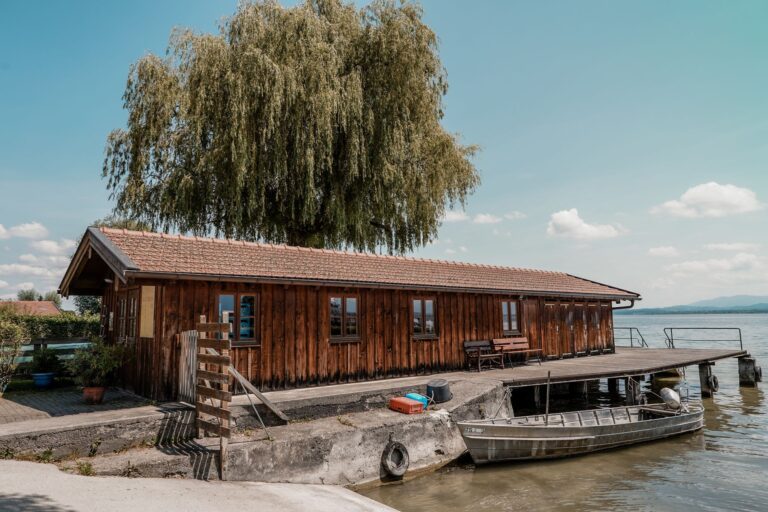
I bought the land on Cutter Lake outside Harmon Ridge in 2019 for a hundred and thirty eight thousand dollars, every cent of it money I’d earned installing other people’s peace of mind. Three bedrooms, two baths, a screened porch that catches the whole width of the lake at sunset, and a little dock I rebuilt myself two summers ago after a bad ice year cracked the old one. I’ve lived there alone for five years.
My family has visited exactly three times before my birthday, and each time they made it clear, in that polite, sideways way families use when they want to insult you without leaving fingerprints, that they thought the place was wasted on me.
My father called it “an awful lot of house for one person.”
My mother said the extra bedroom was “such a shame to sit empty all year.”
Marisole said very little on those visits. She just walked slowly through every room, running her hand along the counters, studying the layout the way a person studies a map before a trip they haven’t told anybody about yet.
I noticed.
I always notice. It’s the whole reason I have a business.
I filed it away in the quiet part of my mind I keep labeled things to watch, and I didn’t think much more about it until four days before my thirty eighth birthday, when I came home from a job two counties over and knew before I even had my key in the door that something was wrong.
There’s a particular stillness a house gets when somebody’s been inside it while you were gone. A shift in the air. A trace of a presence where there shouldn’t be one. I stood in my own mudroom and felt it the second I stepped inside.
I moved through the house slow and careful, the way I’d walk a client’s property after a break in.
In the kitchen, two mugs sat in the sink, rinsed but not washed. A faint ring on the counter by the coffee maker. On the second shelf of my pantry, a box of the specific chamomile tea Marisole drinks.
I don’t buy that tea. I’ve never bought that tea.
In the living room, the quilt from my reading chair had been moved to the couch, folded wrong, the way somebody folds a quilt when they didn’t grow up learning how from the woman who made it. A faint water ring marked the side table where somebody had set a glass down without a coaster, which anybody who’s known me more than a week knows I would never let slide.
In the guest room, I smelled Marisole’s perfume. Not a passing trace from a quick visit. It had settled deep into the pillow the way scent only settles when somebody’s slept there more than once.
Then I went down to the cellar, and that’s when I really understood what I was dealing with.
I keep the last three bottles of the bourbon my grandfather ran off his own still before he passed down there, in a wood crate I built myself, and I know that crate the way some people know their own children. There were only two bottles left.
The dollar value of it wasn’t the point. That bottle wasn’t worth much on paper, maybe eighty dollars if you found the right collector, but it was the last thing left in the world that still smelled like my grandfather’s hands. What made my chest go cold wasn’t the money. It was the empty space in the crate. It was the confidence of whoever reached in there and took it like it belonged to them.
I didn’t call my parents. I didn’t call my sister.
I walked straight to my own security panel, poured a glass of water I never touched, and started watching four days of footage from the beginning.
Day one. My father showed up at my front door at 11:24 in the morning, using a key. Not the spare I’d once given my parents for emergencies, the one I’d changed eight months earlier after Marisole borrowed my truck for a weekend and never gave the key back. This was a fresh copy, cut from a key that shouldn’t have existed anymore. I watched my father let himself into my house like it was still his to walk into, Marisole trailing in behind him, crossing straight to the middle of my living room floor and turning in a slow circle with her arms out, like she was already deciding where her own furniture would go.
Day two. My mother came alone at 2:30 in the afternoon. She let herself into my kitchen, made a cup of that chamomile tea, and sat at my table scrolling her phone for the better part of forty minutes. Then she went upstairs into my bedroom. I watched her open my jewelry drawer and lift out the thin gold bracelet I bought myself in Kansas City the year the business finally turned a real profit, turning it slowly in the light from the window before setting it back down.
That time, she put it back.
Day three. All three of them together, between six and nine at night. That was the night the bourbon disappeared. I watched Marisole walk the cellar shelves with her phone flashlight and lift the bottle off the crate with the calm, easy confidence of somebody who had never once in her life expected a consequence to catch up to her.
I watched all three days twice through, once for the shock of it and once with a legal pad next to my knee, writing down time stamps the way I’d walk a client through evidence after a break in. Entry times. Duration inside the house. Which rooms each of them went into and for how long. By the second pass, my hand had stopped shaking enough to write in a straight line.
There’s a strange kind of grief in watching your own family move through your house like tourists in a museum that doesn’t belong to them yet. My father never once checked to see if anyone was home, never once called out my name the way you would if you actually thought your daughter might be there and just not answering the door. He walked in the way a man walks into a building he’s already decided is his. My sister touched things. Not stole, just touched, ran her fingers along the spines of my cookbooks, opened cabinets and closed them again, picked up a framed photo of the two of us as kids and studied it a long moment before setting it back down slightly crooked. I noticed that too. I notice everything. It’s the whole reason cameras and I have gotten along so well for thirteen years.
By the time I finished watching, I wasn’t angry in the loud way. I was angry in the quiet, organized way that has built my entire career, the way that makes lists and files reports and doesn’t raise its voice until it’s ready.
I drove into Harmon Ridge the next morning and sat down across a desk from a deputy at the sheriff’s department, my laptop open between us, four days of time stamped footage queued up and ready to play. He watched every second of it without interrupting once. When it ended, he sat back and asked me plainly whether I wanted to file a report for unlawful entry.
I told him yes. I told him I wanted it on record, dated, signed, and sitting in a file, whatever happened next.
What I didn’t know yet, sitting in that office three days before my birthday, was exactly how soon “whatever happened next” was going to arrive.
I found out two days later, the night before my party, when my cousin Odella called me from her car in a grocery store parking lot, her voice pitched low like she didn’t want anybody nearby to overhear her own phone call.
She told me my father had spent the last week telling anyone who’d sit still for it that he was done asking nicely, that he’d already spoken to a lawyer about the cabin, and that he planned to “settle it” once and for all, in front of the whole family, on my own birthday, because he believed an audience would finally shame me into signing.
I thanked her. I hung up. I sat on my porch for a long time watching the light change over Cutter Lake, and then I made the second call of that week to the sheriff’s department, this one twenty minutes before my first guest was due to arrive the following evening, letting them know exactly what I expected to happen and exactly when.
My father has spent sixty six years believing he understands how every room he walks into is going to end. He is a retired contractor, a man who built pole barns and poured concrete around this county for four decades and turned a decent living into an ego that needed feeding constantly. For most of my life, his decisions about other people’s lives got dressed up as love.
His logic, when it came to me, never changed. Castellan is strong. Castellan is independent. Castellan can handle giving something up. Castellan doesn’t need it the way her sister does.
Marisole is thirty four, easy to love in a room and exhausting to depend on, the kind of charming that gets you invited back somewhere you already burned down once. She’s spent the last several years living above the hardware store in town in an apartment she considers beneath her, not because she ever earned anything better, but because our parents raised her believing that wanting a thing and deserving it were close enough to the same sentence.
My mother is softer than my father, which somehow makes her more dangerous. She smooths every sharp edge he leaves behind while quietly agreeing with every decision that caused the damage in the first place. In our family, my father hands down the verdict, my mother makes it sound reasonable, and Marisole collects whatever’s left standing.
Those were the three people who walked into my cabin on my thirty eighth birthday and tried to end my party over a house I built with my own two hands.
I expected them to try something. People like my father always try something eventually. I did not expect them to try it in front of twenty six witnesses and a security system that had already been quietly recording their trespassing for the better part of a week.
So there we stood at 7:43, my father with his phone raised like a threat, my sister smiling like she’d already won, my mother wearing her careful, worried face, and me, nodding the new way instead of the old way.
“Party’s over,” my father said again, in case the room hadn’t gotten the message the first time. “Everybody go on home. This is a family matter now.”
“It already was a family matter,” I said. “Four days ago. You just weren’t invited to that part of it.”
He blinked. That threw him, just slightly, a flicker across his face like a man who’d walked confidently onto a job site only to notice the ground wasn’t where the blueprint said it would be.
The gravel outside crunched under tires before he could recover his footing.
A man in a gray suit came through my front door first, a leather folder under one arm, the kind of practiced smile lawyers wear when they’ve been paid to be the calm one in the room. He introduced himself briefly, said he represented my father, and told me, gently but firmly, that he had drawn up a quitclaim deed transferring the cabin into Marisole’s name, and that it would go much easier for everyone if I simply signed it tonight, in front of family, rather than dragging this into a courtroom.
He set the folder on my kitchen island, right next to my half cut birthday cake, and slid a pen across the granite like he was closing a routine sale.
“There’s no verbal agreement,” I told him. “There never was one. This cabin is mine, deeded, paid in full, and I have never once told anyone in this room otherwise.”
“Your father says differently,” the attorney said, glancing toward Prescott for backup.
My father opened his mouth to say something else. That was the exact moment the second set of headlights swung up my driveway, and this time it wasn’t one car.
Two sheriff’s department vehicles pulled in slow behind the attorney’s sedan, and the deputy I’d sat across a desk from three days earlier stepped out first, followed by a second officer I recognized from a job I’d wired at the co op the year before.
The room went from frozen to something else entirely. My father’s face did a thing I had never once seen it do before. It emptied out.
“Evening, folks,” the deputy said, calm as anything, like he was there to check on a noise complaint instead of the middle of a family collapsing in real time. “Ms. Nettlefield, you called us about a follow up to your report from earlier this week.”
“I did,” I said. “I wanted it handled tonight, while everybody who’s been telling a different version of this story happened to be standing in the same room.”
I walked to the counter, pulled up the footage on my tablet, and turned the screen so the deputies, the attorney, and every relative still frozen by my door could see it together. Four days of it. My father letting himself in with a copied key. Marisole spinning through my living room like she already owned the furniture. My mother’s hands in my jewelry drawer. The empty space in the bourbon crate where my grandfather’s last bottle used to sit.
Nobody in that kitchen said a single word while it played.
The attorney closed his leather folder without being asked. I watched him do the math on his own face, the same math anybody does when they realize the story they were hired to tell just got overruled by a camera that doesn’t care whose side you’re supposed to be on.
The deputy asked my father to step outside with him. My father went, because there wasn’t a version of that night left where refusing would have made him look like anything other than exactly what the footage had already shown everyone.
Twenty minutes later, standing on my own gravel driveway under my own porch light, my father was formally cited for unlawful entry. Not the kind of charge that puts a man behind bars for what he did to a locked door with a copied key, but the kind that goes on record, that follows a name through a county clerk’s office, that a family can’t quietly pretend never happened.
Marisole didn’t get cited for anything that night. There’s a difference between what a camera can prove happened and what a prosecutor wants to spend a Tuesday chasing down for one missing bottle of bourbon. But everybody standing in my living room had watched her lift it off that shelf with their own eyes, and there’s no deed, no lawyer, and no rehearsed line about how she always gets her way that puts that bottle back in the crate.
My relatives didn’t leave right after the deputies did. A few of them stayed, the way people stay after a storm passes to make sure the roof held. My aunt Odalys wrapped up her casserole dish, hugged me for a long time without saying anything, and told me on her way out that she’d suspected something for years and never said a word, and that she was sorry for that.
My cousin Odella stayed until nearly midnight, helping me clear plastic cups off the porch rail, telling me quietly that half the family had known Marisole was “borrowing” things from people for years and had simply decided it was easier to look away than to say something.
My mother left with my father that night. She didn’t say much, only that she was sorry it had “gotten this far,” a sentence built entirely out of passive voice, the kind of apology that manages to describe a disaster without ever admitting anybody caused it.
It took her three weeks to call me and actually say the words I’m sorry without wrapping them in something softer. When she finally did, sitting across from me at my own kitchen table over coffee, she told me she’d known for years that my father graded his daughters differently, and that she’d let it happen because challenging him had never once in thirty eight years of marriage gone well for her. I don’t know if I’ve fully forgiven her for that yet. I know I understand it a little better than I did before.
My father has not apologized. I don’t expect he will. Men like my father don’t experience being wrong so much as they experience being inconvenienced by consequences, and the citation on his record is exactly that, an inconvenience he will spend years being quietly furious about rather than a mirror he’s willing to look into. His attorney, for what it’s worth, dropped the quitclaim deed entirely once he understood there had never been anything behind it but my father’s certainty that I’d fold the way I always used to.
Marisole texted me two days after my birthday. Not an apology, just a single line asking if I was “really going to make this weird for the whole family.” I didn’t answer it. Some questions answer themselves the moment somebody’s willing to ask them out loud instead of just being sorry.
I changed every access code on the cabin the following weekend. New locks on the mudroom and the workshop, even though the deadbolts hadn’t actually failed, because the failure was never in the hardware. It was in who I’d handed the old codes to in the first place, and I’ve learned enough in thirteen years of this business to know that trust, once you’ve caught it walking through your house uninvited, doesn’t get restored. It gets rebuilt, slower, and only for people who’ve actually earned the code back.
Three months later, I held a small gathering at the cabin again, just a handful of people this time. My aunt Odalys. My cousin Odella and her husband. Two of my technicians who’d become closer to family than blood ever managed to be. We grilled on the dock, watched the sun drop that same bruised gold over Cutter Lake, and nobody spun through my living room measuring it for themselves, and nobody’s hands went anywhere near my jewelry drawer.
My father wasn’t there. My mother wasn’t either, though she called the next morning just to ask how it went, and for the first time in longer than I can remember, that call didn’t come with an apology attached to somebody else’s behavior. It was just her, asking about my life, the way a mother is supposed to.
I still have that last bottle of my grandfather’s bourbon down in the cellar, sitting alone now in a crate built for three. I haven’t opened it. I don’t know if I ever will. Some things aren’t there to be used up. Some things are there just so you remember exactly what it cost to keep them safe, and exactly who taught you, the hard way, that safekeeping was never going to be optional in this family.
Harmon Ridge is a small enough town that word of what happened on my birthday made its way around before the week was out. I didn’t tell it to anyone myself. I didn’t have to. My aunt Odalys told the ladies at her church circle, and one of them mentioned it to the woman who runs the diner on Main, and by the following Sunday I had three separate people I barely knew stop me outside the hardware store just to say they were glad I’d finally stood my ground. Small towns carry a story the way a creek carries a leaf, fast, and further than you’d expect, and for once I didn’t mind being the one people were talking about. For most of my life the family story about me was that I was the hard one, the cold one, the daughter who didn’t need anybody. Now the story is a little different. Now it’s the daughter who paid attention.
My father still drives past the turnoff for Cutter Lake sometimes. I know because a couple of my neighbors out that way have mentioned seeing his truck slow down at the top of the gravel road before continuing on toward town, like some part of him still can’t quite believe there’s a door out here he doesn’t have a key to anymore. I don’t wave when I see it happen. I don’t need to. He knows exactly what changed, even if he’ll never say it plainly, and there’s a strange, settled kind of peace in not needing him to.
I build security systems for a living because I believe, all the way down, that people underestimate what a camera can catch. What I learned the week of my thirty eighth birthday is that the same is true of a daughter people spent her whole life underestimating. I watched, I documented, and when my father finally raised his voice in my own living room and told a house full of relatives that the party was over, I was the only person in that room who already knew exactly how the night was going to end.
It ended with my name still on the deed. It ended with my father’s signature on a citation instead of mine on a quitclaim. And it ended, finally, with a house that is quiet again, wired the way I built it, locked the way I intended, and mine.
This story is a dramatization. Names, characters, and details are invented, and any resemblance to real people or events is coincidental.