The Night My Grandmother Told The Truth
At 8:16 that evening, thirty eight weeks pregnant, with my ankles pressing against the elastic of shoes I’d bought for a body I didn’t have anymore, I was sitting at a folding table in a hay barn outside Level Fork, Missouri, watching my cousin Shelby feed her new husband a bite of cake, when my aunt Adair picked up a microphone that was never handed to her and said, “Let’s be honest about somebody in this family for once. My niece Marnie decided she knew better than all of us. She called the state on her own grandmother’s daughter. She had our mother dragged out of the only home she’s ever lived in for sixty one years. And she’s sat there all night in that dress looking like butter wouldn’t melt. Selfish. A liar. Honestly? A jerk. That’s who’s really sitting at this wedding tonight.”
A hundred and ten people went quiet at once. I know it was a hundred and ten because I had helped Shelby count the response cards in June, back when Adair still called me twice a week and none of this had happened yet. I felt my husband Silas’s hand find mine under the table before I even registered that my own hand had started shaking. My mother, sitting two seats down, went the particular kind of still that I had only ever seen her go once before, the night the hospital called about her own father.
I did not stand up. I did not defend myself. I sat there with my hands folded over the bottom of my ribs, over the daughter who would not stop kicking through all of it, and I let a barn full of my husband’s family and mine hear my aunt call me a liar and a jerk for the thing that had actually saved my grandmother’s life.
I want to tell you what those eleven weeks between the day I made that call and the night Adair took a microphone at Shelby’s wedding actually contained, because Adair told a version of it that night that left out every single thing that mattered.
My name is Marnie Talsma. I grew up in Level Fork, a town of about nineteen hundred people tucked into the Ozark foothills where the ridge road turns to gravel two miles past the last streetlight. My husband Silas and I run forty two acres of his family’s apple orchard on the other side of the county, the kind of place where the pie safe in our kitchen is older than either of us and half the county still drives out every October for the cider press. I was, on the night of that wedding, thirty two years old, eight days from my due date, and about to become a mother for the first time to a girl we had already started calling Clover before she had a real name, because she moved like she was in a hurry to get here.
My grandmother is Vada Onslow. She is eighty three years old, and until two years ago she lived alone on the homestead her husband Ellis built with his own hands starting in 1968, forty acres of pasture and a farmhouse with a porch that wraps around two sides, a mile and a half down the ridge from where I grew up. Ellis died of a heart attack in that pasture eleven years ago, checking a fence line the week before Christmas, and Vada stayed on alone after that, stubborn as a fence post herself, mowing her own yard until she was eighty one and canning her own tomatoes every August. She raised two daughters on that land. My mother, Reva, who married young and moved into town. And Adair, four years younger, who never married, worked a string of jobs that never quite stuck in Springfield and Rolla, and moved back in with Vada two years ago after a fall in the kitchen left my grandmother with a fractured hip and a fear of living alone that she never fully shook afterward.
I want to be honest that for the first year, I was grateful to Adair in a way I have had to sit with some shame over since. I had a full time job at the time, at the county extension office, and Silas and I were three years into trying for a baby that kept not happening, and having someone in the house with Vada, someone who did not have forty acres of apples to run, felt like a weight lifted off all of us at once. Adair moved into the downstairs bedroom that used to be Ellis’s study. She became my grandmother’s representative payee for her Social Security, and her power of attorney for the checking account, because a lawyer in town told them both it made the most sense given that Adair was the one physically present day to day. My mother signed off on it too. None of us thought twice.
For the better part of that first year, it looked, from the outside, like it was working. Adair drove Vada to her cardiology appointments in Rolla. She kept the porch swept. At Christmas that first year, she’d strung the same lights Ellis used to string, up under the eaves, and I remember standing in the yard with my mother looking up at them and both of us getting a little tearful about it, the first Christmas in a decade the lights had gone up at all.
I should say something about who Vada was to me before any of this, because it matters to what I did later. When I was nine, the summer my parents’ marriage was at its worst and nobody was telling me anything, I spent six weeks living with her on the homestead while things at home got sorted out. She never once explained to me what was happening. She just kept me busy in a way that let me stop thinking about it, teaching me to shell peas on the porch steps, letting me name the barn cats whatever I wanted no matter how ridiculous, waking me at five in the morning twice that summer to watch a doe and her fawn cross the near pasture in the fog. She is the reason I know how to can tomatoes and the reason I know how to sit with someone in silence without needing to fill it. When people asked me, that fall, why I would risk the whole family over a phone call, the honest answer is that I was paying back a debt from being nine years old that I never expected to have the chance to repay.
The first thing that struck me as strange, though I explained it away at the time, was small. It was March of last year, and I’d stopped by on a Tuesday afternoon on my way back from a field visit, and Vada’s usual eleven o’clock heart medication was still sitting untouched in the little plastic organizer on the kitchen counter at three in the afternoon. Adair explained that she’d been running errands in Rolla all day, that Vada could manage her own pills fine, that I was being dramatic. I let it go. I told myself everyone has an off day.
It was the second time I noticed something, in May, that I started keeping what I now think of as a private accounting in my head, even before I understood I was building a case. I stopped by on a Saturday morning, unannounced, because I’d baked too many cinnamon rolls and wanted to drop some off, and Adair’s car was not in the drive. Vada answered the door in her nightgown at half past ten, and when I asked where Adair was, my grandmother, who has never in her life been anything but fiercely private about her own daughters, said, quiet and a little embarrassed, “She went out last night around nine. I don’t know when she came back, honey. I heard the truck sometime after I fell back asleep.” I didn’t push it that day. I told myself Adair was allowed a night out. I told myself a lot of things that spring that I no longer believe.
By July I was seeing Vada roughly once a week, driving out after work with groceries or just to sit with her on the porch, and it was that month I first noticed she had lost weight. Not a little. She had gone, over what I later worked out was about six weeks, from a hundred and thirty four pounds, the number I knew because I’d taken her to a cardiology follow up myself in the spring, down to a hundred and twenty three, according to the scale in her own bathroom, which I checked twice to be sure I wasn’t imagining it. I asked Adair about it in the kitchen while Vada napped, and Adair told me our grandmother’s appetite came and went at her age, that I shouldn’t make a project out of every pound, that I had always been the type to hover.
I want to tell you about the last Saturday in August, because that is the day everything after it became inevitable. I drove out at nine in the morning, earlier than usual because Silas and I were headed to a doctor’s appointment of our own that afternoon and I wanted to see Vada first. Adair’s truck was gone again. I let myself in with my own key, the one Vada had given me years before any of this started, and I found my grandmother in bed, not asleep, just lying there, in a nightgown that smelled like she had not been properly bathed in several days. When I helped her sit up to change her, I found a sore on her right hip, roughly the size of a silver dollar, the skin gone purple black at the edges, angry red in the center. I have some training in first aid through 4-H work over the years, enough to know what an untreated pressure sore from too many hours in one position looks like, and enough to know it does not develop in a single bad night. It develops over weeks.
I called my mother from Vada’s driveway, sitting in my car with my hands shaking too hard to hold my phone steady, and I told her what I’d found. My mother cried on the phone in a way I had rarely heard her cry, and said the thing that has stayed with me since. “I should have moved back in myself two years ago instead of letting her be the one who sacrificed her whole life for this. I thought I was doing right by both of them, staying out of it.”
I did not confront Adair that day in anger. I want that to be clear, because Adair told a very different story about that conversation later. I sat with her at Vada’s kitchen table that same evening, after Vada was asleep, and I told her, as calmly as I could manage with my hands still not fully steady, what I had found, and asked her directly whether she needed help, whether the caregiving had simply become more than one person could carry alone, because I understood, even then, that it might have. Adair’s answer was not to admit that. Her answer was to tell me the sore was new, that I had exaggerated it, that I had always looked for reasons to make her look bad in front of my mother, and that if I mentioned any of this to anyone else in the family she would never forgive me. I left that night having agreed to nothing, and having promised her nothing either. What I remember most from that conversation, more than her denials, was the moment near the end when her voice dropped and she said, “You have no idea what the last two years have cost me, Marnie. You get to drive out here for an hour and play the concerned granddaughter and go home to your husband and your orchard. I live it. Every single day of it is mine.” I told her I believed that part of it was true, that caregiving is a weight I had never carried the way she had, and that I was not there to accuse her of not loving her mother. I was there because a sore the size of a silver dollar does not care how tired the person responsible for preventing it happens to be. She did not have an answer for that. She just told me, again, not to tell my mother, and I told her, for the first time in the conversation, that I could not promise that.
Two days later, on a Monday, our county extension office happened to get a call from the pharmacy in town, a mix up meant for another family with a similar last name, and the woman on the phone mentioned, in passing, that Vada Onslow’s account had two returned checks on it that spring and a habit of paying for prescriptions three or four days late nearly every month. That was not something I had gone looking for. It found me. And it was the piece that made the weight loss and the sore and the missing hours at night stop looking like an unlucky string of coincidences and start looking like a pattern.
I need to tell you about Fritzi Renquist, because without her I might have talked myself out of what I did next. Fritzi has lived across the gravel road from Vada for thirty years, in the house her own parents built. I stopped by to see her that same week, not to gossip, but because I trusted her more than almost anyone else who had eyes on that house day to day. Fritzi told me, gently, that she had been debating for months whether it was her place to say anything. She told me Adair’s truck was gone most nights, sometimes until two or three in the morning, and that twice that summer she had seen the truck still gone at dawn. She told me she had once asked Adair, over the fence, whether everything was all right, and Adair had told her she’d been driving to a casino boat forty minutes east, near the river, to unwind, and had laughed about it like it was nothing.
I am not going to pretend I made the decision I made next easily, or quickly. I was seven months pregnant that September, and every instinct I had left over from thirty two years of being the family’s steady one was telling me to keep handling this quietly, inside the family, the way Onslow women had always handled everything. What changed my mind was a single night, the second week of September, when I could not get Adair to answer her phone for six straight hours while my grandmother, alone in that house, had what I later learned was a fall in the bathroom that left a bruise the size of a dinner plate on her forearm, and no one to help her up off the floor until Adair finally came home at half past four in the morning.
I called the Missouri elder abuse and neglect hotline the following Tuesday morning, from the parking lot of the extension office, on my lunch break, with my hands shaking again the way they had in Vada’s driveway. I gave them everything. The weight loss. The sore. The missed medications. The overnight hours. The fall. I told them I did not know, and did not want to guess, exactly what was happening to my grandmother’s money, only that the pattern of behavior I was describing put her at real physical risk, and that I was scared for her.
The caseworker assigned to the case was a woman named Nedra Combs, out of the regional office in Rolla, and I want to say plainly that she was kind in a way I had not expected from a state hotline. She visited the house twice within the first ten days, once announced and once not, and on the second visit she found Vada alone again, mid afternoon, with the same medication organizer sitting untouched. Nedra told my mother and me, in a phone call the two of us took together at my mother’s kitchen table, that in her professional judgment the safest immediate step was a short term placement at a rehabilitation and skilled nursing facility in town, Fair Haven, while the investigation continued and the family worked out a real, sustainable plan. She was careful to say this was not a punishment and not permanent. It was a pause, to get Vada somewhere safe with round the clock eyes on her while the truth got sorted out.
Vada went to Fair Haven on a Thursday in late September. I drove her there myself, because Adair, when confronted with the visit and the findings, left the house before Nedra arrived and did not answer her phone for two days afterward. My grandmother held my hand the whole ride and said almost nothing, and I remember thinking, watching her look out the window at the ridge she had lived under her entire life, that I had never in my thirty two years seen her look that small.
What happened over the following weeks in Level Fork is the part Adair never mentioned at that microphone. She did not tell people that a caseworker had documented a pressure sore, or missed medication, or an unexplained fall, or six unanswered hours in the middle of the night. What she told people, starting almost immediately, was that her niece Marnie, hormonal and controlling in her third trimester, had called the state on her own family out of some old resentment, and had our mother “dragged out of her own home” so that Marnie and my mother could get their hands on the land sooner rather than later. She told this story at the diner. She told it at church. She told a version of it to Shelby, her own daughter, who was three weeks from her wedding and did not have the emotional room that fall to interrogate it the way she might have at any other time in her life.
I did not fight the rumor in real time. I was eight months pregnant, exhausted, and trying to hold together an orchard’s fall harvest with Silas while driving to Fair Haven three times a week to sit with my grandmother, who cried nearly every visit, not from anger at me, but from grief at being away from her own porch, her own bed, the smell of her own kitchen. I decided, that fall, that I would rather be quietly misunderstood by a town than loudly right in a way that made my grandmother’s situation the subject of gossip at the feed store. I have thought since that this was probably the wrong instinct, or at least an incomplete one, because silence let Adair’s version travel six weeks unanswered before Shelby’s wedding, the same way, I have come to understand since, silence had let it travel before.
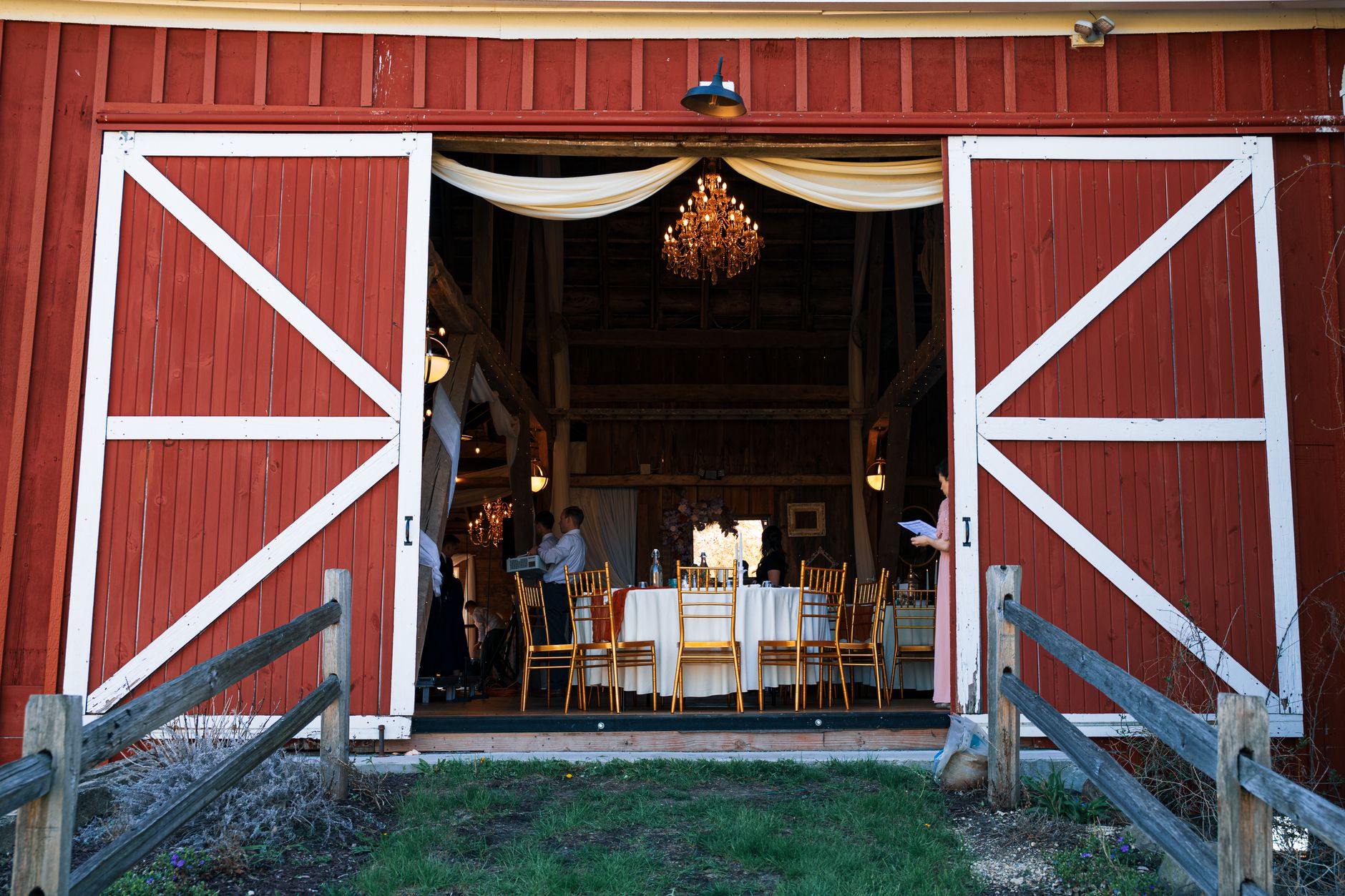
I want to describe the barn itself for a moment, because I think it matters that the ambush happened somewhere that should have been safe. Shelby and Roan had rented the old Delacroix hay barn on the county road for the reception, the same barn where half the graduating classes of Level Fork High School had held prom for twenty years running, strung that night with white lights and mason jars of black eyed Susans down the length of every table. My mother had helped Shelby run string lights the week before. I had helped her practice her vows in that same barn on a Tuesday afternoon, both of us laughing so hard at one particularly earnest line that she had to start over three times. It was not a stranger’s barn. It was ours, in the way small towns make almost every building somebody’s, and that is part of why what happened in it landed the way it did.
I want to walk through the toast itself in more detail than I could bring myself to the night it happened, because I have replayed it enough times since that I remember it in pieces I did not fully register in the moment. Roan’s father had spoken first, a short, warm toast about welcoming Shelby into their family. Then my mother, as the bride’s aunt and closest surviving elder besides Vada herself, had started to rise with a small card in her hand, the toast she and Shelby had planned together weeks earlier. It was at that exact moment, before my mother’s chair had fully cleared the table, that Adair stood, reached across her own plate, and took the microphone from the deejay’s stand instead, saying, loud enough to carry, “I’ll go first, since I’m her mother.” Nobody stopped her. Nobody had any reason yet to think they should.
The first thirty seconds of what she said were, I will admit, almost sweet, the kind of mother of the bride toast anyone would expect, a line about Shelby learning to ride a bike on the same gravel road she’d be driving home from her honeymoon on, a joke about Roan finally teaching her to parallel park. It was the pivot after that, so smooth I think most of the room did not register it happening until the word selfish had already landed, that turned the whole toast sideways. I watched my uncle Dutch, my mother’s cousin and one of the few people in that barn who already knew the fuller version of the story from Fritzi, half rise out of his chair as if he meant to interrupt, and then sit back down when his wife put a hand on his arm, because there is no clean way to interrupt a toast at somebody else’s wedding without making the wedding itself the story. I watched Shelby’s face go from confused to horrified in the space of about four seconds, her hand tightening around Roan’s on the head table until her knuckles went pale.
Which brings me back to that hay barn, and the microphone, and the word jerk hanging over a hundred and ten people at the happiest night of my cousin’s life.
I left the reception twenty minutes after Adair put the microphone down, not in a rage, but because I could feel my own body telling me it had absorbed enough for one night. Silas walked me to the truck with his arm around my back the whole way, and I sat in the passenger seat with the windows down, breathing through the same kind of tightening I had felt twice before that week and dismissed as practice contractions, and by the time we were fifteen minutes from home I understood they were not practice anymore. Clover was born at 4:52 the following morning, eight days early, six pounds eleven ounces, in a hospital forty minutes from the barn where my aunt had called me a liar less than nine hours before. I have never told anyone outside my own house how much I believe that night had to do with why she came early. I only know that I have never in my life felt more relieved to hear a sound than I did hearing my daughter cry for the first time, in a room where nobody was calling me anything at all.
The truth about Adair came out in full over the six weeks after my daughter was born, and it came out slowly, the way these things almost always do, one honest conversation at a time rather than one dramatic reveal. Nedra Combs closed her investigation in early November and, with Vada’s written consent, sat down with my mother, Silas, and me at my mother’s kitchen table to explain what the state had ultimately confirmed. Over the fourteen months Adair had managed Vada’s Social Security and small pension as her representative payee, more than eleven thousand dollars could not be accounted for against any bill, any grocery receipt, any expense connected to my grandmother’s actual care. Nedra was careful, professional, and precise in the way she said it. She did not use the word gambling. She did not have to. Fritzi’s account of the casino boat and the overnight hours, combined with the missing money and the neglect Nedra had documented with her own eyes, told the same story from three separate directions that had never once compared notes with each other.
What finally broke Adair’s version of events open in front of the whole family was not the caseworker’s report, and it was not me. It was my grandmother.
Vada came home from Fair Haven the first week of December, not to the old homestead alone, but to a new arrangement my mother and I had spent that fall building for her, a small addition off the back of my mother’s own house in town, with a home health aide, a soft spoken woman named Fenna Dietrich, coming by four mornings a week to help with meals and medication and the ordinary care an eighty three year old deserves and had not been getting. Vada asked, that first week home, whether the whole family could come for Sunday dinner before Christmas, all of us, including Adair, because she said there was something she needed to say once, in her own words, at her own table.
Twenty two of us crowded into my mother’s dining room and kitchen on that Sunday. Vada sat at the head of the table in the wheelchair she still needed some days, with a shawl Ellis had bought her thirty years earlier around her shoulders, and she waited until the plates were mostly cleared before she asked for quiet.
“I have let people talk about this family all fall without saying my own piece,” she said, “and I am eighty three years old, and I am done being talked about instead of talked to.” She looked at Adair, not unkindly, but without flinching either. “You left me alone at night more times than I can count, and more than once you left before I’d taken my evening pills and weren’t home to see I’d taken my morning ones either. I fell in my own bathroom and lay on that floor for the better part of two hours because there was no one in the house to hear me. I did not want to believe where you were going those nights, so for a long time I told myself I didn’t know. I know now. Fritzi told me the same thing she told Marnie, and so did Nedra herself, sitting across from me at Fair Haven, plain and gentle, the way you tell somebody something you wish you didn’t have to.”
She turned then to me, and to my mother, and her voice, which had been steady through all of that, caught for the first time. “Marnie is the reason I am alive to say any of this at your table tonight instead of in a hospital, or worse. She did not call that hotline to punish anybody. She called it because a girl eight months pregnant with her first child looked at her grandmother and could not stand what she saw anymore, and did the hard thing instead of the easy thing. I have thought about the word Adair used at Shelby’s wedding every single day since I heard about it from your cousin Rhonda, who called me crying the next morning. Selfish. A liar. A jerk. I want it said plainly, at this table, in front of everyone who was in that barn or heard about it after. The only person in this family who lied to anyone this year was not the one who made that call.”
I will not pretend the table erupted into some clean, triumphant scene. It didn’t. Adair put her fork down and did not speak for a long time, and when she finally did, her voice had none of the certainty it carried at that microphone in October. She said she didn’t remember some of it the way Vada did. She said the casino had started as a way to clear her head during the hardest stretch of caregiving and that she hadn’t meant for it to become what it apparently had. She did not, that night, offer the eleven thousand dollars back, and she has not offered it since, though a payment plan through the state is now in place whether she offers it willingly or not. But she also did not, for the first time in three months, call me a liar in front of anyone. She left my mother’s house before dessert, and I have seen her twice since, both times briefly, both times civil, neither time warm.
Shelby called me two days after that Sunday dinner, and cried on the phone for the better part of an hour, apologizing for a wedding toast she had not written and had not known was coming any more than the rest of us had. She told me her mother had asked to say a few words as the toast wound down and Shelby, exhausted and overwhelmed on her own wedding night, had handed over the microphone without a second thought, the same way any daughter would. I told her none of it was hers to carry. She has since started driving out to see Vada on her own, some Sundays without me or my mother along at all, rebuilding something between the two of them that has nothing to do with her mother’s choices.
Adair is, as of this writing, in a court ordered restitution arrangement with the state, seeing a counselor for what her own intake paperwork apparently listed as a gambling disorder, and no longer holds any legal authority over my grandmother’s money or her care. My mother is Vada’s representative payee now, with Nedra’s office checking in twice a year as a condition of the transition. Vada still lives in that small addition off my mother’s kitchen, close enough that Fenna can hear her if she calls out, close enough that my mother hears the radio playing through the wall most mornings and knows her own mother is safe before she has even had her coffee.
My daughter is seven weeks old as I write this, and Vada holds her most Sunday afternoons in a rocking chair by the window, telling her, in the same steady voice she used at that dinner table, about the man who built the porch this whole family used to gather on, and about the granddaughter who would not look away when it counted. I named her Ellis, after my grandfather, though everyone in the family has already started calling her Elly. Vada cried the first time she heard the name out loud, and said it was the kindest thing anyone had done for her all year, which I told her was not true, because the kindest thing anyone did for her that year was call a hotline in a parking lot on a Tuesday, with shaking hands, because I loved her too much to stay quiet.
I think sometimes about that word, jerk, hanging over a hundred and ten people in a barn that used to belong to somebody’s grandfather too. I think about how easily a room will believe the person holding the microphone over the person holding her tongue. I have decided I am not sorry for the eleven weeks of being misunderstood, because being misunderstood for a little while was never going to be the thing that killed my grandmother. Silence would have been. I chose the harder, quieter, less flattering thing, the thing that made me the villain of a wedding toast for exactly as long as it took the truth to catch up to the microphone. It caught up. It always does, if you are willing to wait it out at the right table, with the right people, and let the person who actually lived it say so herself.
This story is a dramatization. Names, characters, and details are invented, and any resemblance to real people or events is coincidental.