
The school district office closed at two that Thursday because the boiler inspector needed the building empty, and I remember thinking of it as a gift. A whole afternoon handed back to me. I had worked at the front counter of the Corwith Unified office for eleven years, long enough that an unplanned early day still felt like something I had gotten away with. I texted Grady that I was heading home, though he didn’t answer, and I didn’t think anything of that either. He never answered on the first try. He liked to make you wait a little, my husband, and he had a talent for making the waiting feel like your own fault.
I stopped at Dell’s Market on the county road almost before I decided to. That is the part I keep coming back to, the part my sister later put words to when I couldn’t. My hands turned the wheel into the lot the way they knew the drive home. It was Friday-eve, close enough, and Friday meant Grady wanted the grill going, so I bought two strip steaks and a dozen ears of sweet corn still in the husk and three good peaches for a cobbler because peaches were finally worth buying again. It was such a small, married thought. Steaks and corn and peaches for a man who liked to be fed the things he liked. I did not know yet that I would spend months turning that little grocery bag over in my mind like a stone I couldn’t stop touching.
From the front the house looked exactly like it was supposed to. That is the cruelty of a house. The sprinklers were going in their lazy back-and-forth over the front lawn, throwing that clean smell up off the grass, and in the driveway sat Grady’s truck. The new one. Seventy-one thousand dollars of it, a big diesel pickup he’d driven home four months earlier with the temporary tag still in the window and a grin he wore like it belonged to somebody more deserving. He called it a reward. He’d say the word out loud at dinner parties, reward, like the truck was a medal the world had finally pinned on him. When I had asked, quietly, only once, whether we ought to talk about the payment first, he’d tipped his head and smiled and said, “You worry so beautifully, Deanna. It’s one of my favorite things about you.” That was Grady’s whole trick, if you want to know it in one sentence. He could take a thing that should have made you angry and hand it back to you as a compliment, and you’d stand there holding it, not sure why your face was hot.
We lived at 118 Meadowlark Crossing, in one of the newer subdivisions that had gone up on what used to be the Hartley soybean ground on the west edge of town. It was the kind of place that sold you privacy and delivered the opposite. The lots were close, the fences tall and new and the color of nothing, and every one of those fences pretended you couldn’t be seen while everyone on the Crossing knew exactly whose truck was new and whose dog wouldn’t quit and whose porch light burned all night. There was a neighborhood app that mostly carried lost-cat posts and complaints about the speed people took the curve on Meadowlark Lane. It was a small world dressed up as a big one, and I had loved it, honestly, for a while.
Bianca lived four doors down and she was the easiest person in the world to like. That was not an accident, I understand now, but at the time it just felt like luck. When I had the flu two winters back she left banana bread wrapped in a dish towel on my step with a note that just said feel human soon. She remembered birthdays, everyone’s, and not the way you remember to be nice but the way a person remembers who you actually are. When Grady and I flew to my mother’s funeral she watered the ferns on the porch and brought the mail in and never once made me thank her too much for it. And because of all of that, because of a hundred small kindnesses stacked up over years, I had given her the gate code to the back fence one summer so she could get to the pool when we traveled and keep the skimmer clear. I want to be honest about that. Nobody took anything from me. I handed it over and called it friendship, and I was right to, I still think I was right to, which is the part that takes the longest to forgive. Betrayal almost never kicks the door down. Sometimes it stands on your welcome mat with an empty measuring cup and waits, patient and smiling, for you to press the key into its hand and thank it for coming.
She had made this place feel like mine when it wasn’t yet. That first week, when the boxes were still taped and I didn’t know which cabinet held what, Bianca had come up the walk with a little potted rosemary and a bottle of wine and said, “You’re going to love it here, I already know it.” A new town is a foreign country when you’re forty-one and starting over in it, and she had made the border feel softer. You don’t forget who did that for you. You just never imagine they’d be the one to burn the flag.
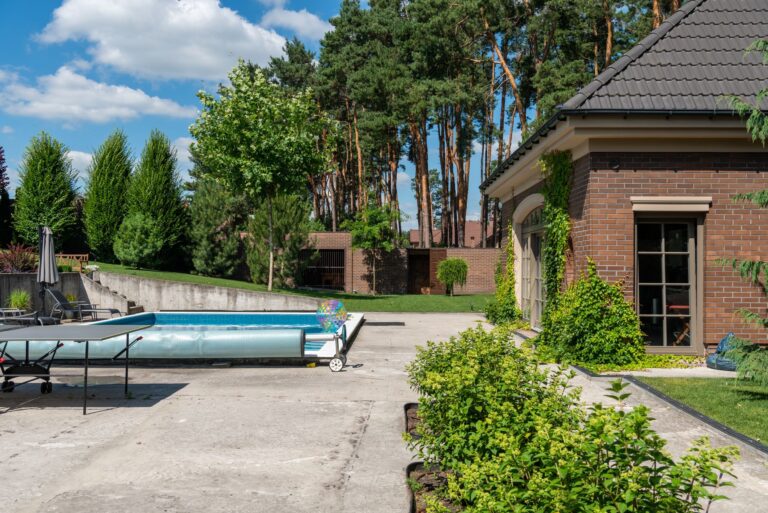
I came in through the kitchen the way I always did, the grocery bag on my hip, my keys already going into the dish by the door out of pure habit. And the house told me before I understood it was telling me anything. The back slider was open a hand’s width and the afternoon was coming in through it, and I could smell the chlorine off the pool and under that the rosemary I’d planted by the grill three summers back, and I could hear water. Not the filter. Not the sprinklers out front. The slow, heavy, unmistakable slap of pool water moving against the tile the way it only moves when something is in it. It is a sound I had heard ten thousand times and never once been afraid of, and I stood in my own kitchen with steaks going warm in my arms and I was afraid of it.
I looked through the glass and there they were.
Grady was in the water at the shallow end, his elbows back on the coping, his head tipped up to the sun like a man on the finest afternoon of his life. And Bianca was with him. There was a bikini top on the back of the patio chair, hooked over the slat by one strap, and his clothes were folded on the little glass table, folded, his shirt squared and his jeans laid over it neat as a store display. That is the detail that told me the truth before my mind would take it. Nobody had been in a hurry. Nobody had been surprised into anything. This was not a wildfire. This was a thing that had a routine, that had learned where the towels were kept.
He saw me first. Through the glass, over Bianca’s shoulder, Grady saw me standing in the kitchen, and I watched his face do the thing it did when a problem walked into a room. Not fear, not yet. Just a kind of managerial tightening, the look of a man deciding how he was going to handle this. He said my name. I couldn’t hear it through the glass but I could read it off his mouth, and he said it the way you’d say the name of an appointment you forgot you had. “Deanna.” Like a problem. Not like a wife.
And then I saw the rest of it, the small things my eyes went hunting for the way eyes do when the big thing is too large to look at directly. Bianca’s mouth was smeared. Her lipstick, that particular deep red, had gone soft and crooked at one corner, and I knew that red. I had washed that red off the rim of a coffee mug in my own kitchen exactly one week before, when she had stood at my island with her hip against the counter and her hands wrapped around my mug and asked me, so lightly, so kindly, “Is Grady still doing all those late nights at the yard? You must be so patient with him.” I had said yes. I had said I was used to it. I had rinsed her lipstick down my own drain and thanked her for stopping by.
Then I saw the footprints. Wet, dark on the warm concrete of the patio, already going pale at the edges as they dried, and they did not come from the side gate. They came from my kitchen door. Two sets, close together, walking in from the very room I was standing in, out across the patio, to the water. She had come in through my house. Not the fence I’d given her the code to. My door. The one I’d just walked through with his supper.
Get a new story in your inbox every morning.
Facebook doesn’t show you every story we post. Our free newsletter does. Join 2,500+ readers.
Grady came up out of the pool then, unhurried, reaching for the towel like a man interrupted at leisure, and the first thing my husband said to me, the very first thing, standing dripping between me and the woman I had trusted with my mail, was this. “Deanna. Don’t make a scene.”
I have thought about that sentence more than any other sentence in my life. People assume the marriage ended when I saw them in the water. It didn’t. I loved him, or I had the muscle memory of loving him, right up until don’t make a scene. Because in those four words I heard the whole architecture of us, laid bare, load-bearing. His first concern was not what he’d done. It was the volume at which I might respond to it. He was already, in the first second, reserving for himself the right to judge my reaction. This was an old machine of his and I knew every gear. If I raised my voice, I was unstable, hysterical, proving something about myself. If I cried, I was falling apart, couldn’t cope, see what she’s like. If I went quiet, I was cold, punishing him, impossible to reach. There was no way to be wronged in Grady’s house that he had not already labeled as my failure. He had spent years teaching me to manage my own face for his comfort, and here, standing wet in front of his mistress, he was still teaching.
So I did not scream. I did not cry. I want you to understand it was not strength, not at first. It was something older and stranger. Part of me, some deep housekeeping part, still refused to make a mess in my own kitchen. I set the grocery bag down on the counter, carefully, the way you set down something you don’t want to spill, and as I did one of the peaches rolled loose out of the top of the bag. It rolled across the counter and dropped the last inch into the basin of the sink and came to rest against the metal with a small, soft, final tap. That sound. In a silent kitchen, in the worst hour of my life, that little tap of a peach against a steel sink. I have never forgotten it. My sister would tell me, weeks after, that the peach was the whole thing. “You didn’t drop the bag, Deanna. You set it down. You bought that man his favorite supper an hour before, and you set it down like a person who deserved a nice life. That peach is proof of who you were walking up that driveway. Not a fool. Not a victim. A woman who came home to make dinner.” I had needed someone to tell me that. It took me a long time to believe her.
Bianca had gone still in the water, only her shoulders above it, the smeared red mouth open. “Deanna, please,” she said, so quietly, “please, let us explain. It isn’t, we can explain.”
I walked out onto the patio in my work shoes and I did not answer her. I went to the glass table and I began to gather their clothes. His folded shirt, his folded jeans, her sundress dropped in a heap by the chair, her sandals, the bikini top off the slat. I folded each piece slowly over my arm the way you’d fold laundry, one item and then the next, and there is a kind of power in slowness that no scream will ever touch, because it says I am not overwhelmed, I have time, I am doing this on purpose. Bianca watched me from the water and said it again, “please, we can explain,” and I looked down at the wet footprints leading from my kitchen door to the deep end where the two of them had wanted to spend an ordinary Thursday, and I said the only true thing there was to say.
“You already did.”
Her phone was on the table under the clothes. It lit up while I stood there, buzzing itself in a slow circle on the glass, and the screen said REID, and then it said Reid again, and then Missed Call (3), and I watched the color go out of Bianca’s face in the water. Her husband. Calling and calling. Wondering, I suppose, where his wife had gotten to on a Thursday afternoon.
And that is when I remembered the button.
Two years earlier there had been a string of break-ins on Sattler Court, two streets over, garages mostly, a couple of houses, somebody’s grandmother tied up in her own laundry room, and I had not been able to sleep for a week. So I’d had a real system put in. Not a doorbell off a website, a full system, professionally installed, and it had cost me twenty-eight hundred dollars of my own money out of the account I kept from the district paycheck. Cameras on the side gate and over the pool and the front door, all of it tied together, all of it wired to dispatch out at the county sheriff, and one feature I’d paid extra for that the salesman called the neighborhood alert: a hard panic function that would set off an exterior siren, ping the sheriff, and push a notice straight into the Meadowlark community app so that on a street like ours, where everybody knows everybody, help would come from the fences before it came from the highway.
Grady had never let it go. For two years it was his favorite joke. He’d paid twenty-eight hundred dollars to marry a woman who thinks the Hartley soybean field is a crime syndicate. He said it at dinner parties. He said it at the Andersons’ cookout with his beer in his hand and everybody laughing, and I laughed too because that was easier. He had, I remembered now, said it to Bianca. To her face, at our own table, my paranoid alarm, and she had smiled at me so warmly and said, “Oh, I think it’s smart, Deanna, a woman can’t be too careful,” and reached over and squeezed my hand.
The panic control was a small pendant on my keyring, and my keys were already in the dish by the door. I went back inside and I picked them up and I came back out onto the patio holding the little button up where he could see it, and I watched Grady’s face change. Not the managerial tightening from before. Real fear, finally, the first real feeling I’d seen out of him all afternoon, because Grady understood exactly what that button did. It did not call me. It called everyone.
“Deanna,” he said, and his voice had dropped all the way out of its smooth register. “No. Deanna, don’t. Whatever you’re thinking, don’t. We can keep this ours.”
I pressed it once.
For a half second the world held its breath, and then the siren went off.
I cannot describe to you what that siren did to a quiet subdivision at a quarter past four on a Thursday. It was not a beep. It was a wall of sound, a rising and falling scream mounted on the eave of my house and aimed at the whole world, the kind of noise your body cannot ignore, cannot think over, cannot pretend it doesn’t hear. And Meadowlark Crossing came apart at the seams. Every dog on the street started at once. Curtains snapped back in the houses across the way. A garage door two doors down went up like a startled eye. Mrs. Kubik, who had been kneeling in her tomato bed on the far side of our fence in her muddy gardening gloves, stood straight up and put her hand on the top rail and looked over into my backyard with her mouth open. An old man came out onto his porch across the street with a coffee mug still in his hand. Three teenagers coasted their bikes to a dead stop in the middle of the road. The brown delivery van that had been rolling up the Crossing braked and just sat there, the driver frozen half out of his seat. The whole subdivision, the entire pretend-private world of it, stopped and turned and looked at my backyard, where a seventy-one-thousand-dollar man stood dripping in a towel next to a neighbor’s bikini top.
“Turn it off,” Grady was shouting over the siren, “Deanna, turn it off, turn it off right now,” and Bianca had gone down into the water to her chin like something trying to disappear into it, and I stood there in my work shoes steadier than I had any right to feel and I said, loud enough to carry, “Why would I? You brought this five feet from my kitchen.”
My phone buzzed in my pocket. I took it out. The security company’s alert filled the screen: Panic activated, 118 Meadowlark Crossing, 4:14 PM, sheriff dispatch notified, confirm safe? And below it, because I’d paid extra for exactly this, the little red badge of the Meadowlark app lit up, and I could see the post go live, plain as a lost-cat notice: Backyard alarm at 118 Meadowlark Crossing, patrol en route. It sat there in the feed the whole street read at supper, timestamped, undeniable, four-fourteen in the afternoon. And I understood, standing there, what I had actually done. Grady’s whole life had been built on the private nature of his lies, on the fact that a thing seen by no one could be shaped into anything he needed it to be. In one press of a button I had turned his private afternoon into a public event. It had a time on it now. It had witnesses. It had a record no charm on earth could talk its way back out of.
He was still saying my name, so I did the last thing. Grady’s jeans were folded over my arm with the rest of their clothes, and I reached into the pocket, and there it was, the fat black key fob to his beloved new truck. I held it up between two fingers so he could see it, the way I’d held up the button, and I said, “This is the last thing of yours that’s going into my pool.” And I flicked it out over the water and it landed in the deep end with a small splash and sank, spinning, down through the blue toward the drain, and it died down there where the water is coldest.
For the first time in the eleven years I’d known him, Grady Vance had nothing to say.
Then a vehicle door slammed out front, hard, and I heard it over the fading siren, and Bianca came up out of the water with her whole body and said one word, barely a breath, “Reid.”
He came around the side of the house on foot and he was not running. I have thought about that too. A running man is a man who still believes he might change what he’s running toward. Reid came around the corner of my house at a walk, slow, deliberate, the walk of a man who has already understood everything and is only coming to see it confirmed, and that walk was worse than any running would have been. He stopped at the edge of the patio and he looked at his wife in my pool, and at my husband in a towel, and at me standing there with an armful of their clothes, and nobody said anything, and the last of the siren wound down into a ringing quiet.
My phone was still in my hand, and I had one more thing to see, and God help me I looked at it right there. The system had saved a doorbell motion clip from twelve minutes before I’d pulled into the driveway. I opened it. It was short. It showed my front walk, and it showed Grady, and it showed Bianca beside him, and it showed my husband’s hand resting low and easy on the small of her back as he guided her not to the front door but around toward the kitchen entrance, comfortable, practiced, and just before they stepped out of frame he leaned in and kissed her, quick and careless, the kiss of a man who has done a thing so many times it has stopped feeling like anything at all. And then, because the system kept a rolling library, there were others under it, saved and waiting, and I scrolled and I could not stop scrolling. A Tuesday from three weeks back: Bianca coming up my walk with an empty measuring cup, and leaving fifty minutes later with her hair different than it went in. A Tuesday before that: my front door opening from the inside, Grady in the frame, and me nowhere, because I’d have been at the district office at that hour, at my counter, being patient with his late nights. The camera had not known what it was saving. It had just watched, faithful and dumb, week after week, and filed it all away for a day nobody thought would come. That is the thing about proof. Not all of it is a lightning bolt. Some of it is a calendar. Some of it ruins you slowly, by pattern, by the sheer accumulation of ordinary Tuesdays, and it is so much worse than a single terrible photograph because a photograph is a moment and a pattern is a life.
Something happened in me while I watched it. Not numbness, people always guess numbness and they’re wrong. It was more like the opposite. It was as if all the pain that had been thrashing loose in my chest suddenly found its shelves. It arranged itself. It got organized. Every cruel little kindness of the last two years slid into its right place, the borrowed sugar and the banana bread and the squeezed hand and is Grady still doing all those late nights, all of it clicking into an order that finally made sense, and the making-sense was its own kind of grief.
Reid’s phone was in his hand now too and he was looking from it to me, and I realized the community app had reached him the way it had reached the street. He didn’t come toward me. He spoke across the patio, over his wife’s crying, and his voice was so level it frightened me a little.
“How long,” he said, “has my wife been letting herself in through your kitchen door?”
I did not have a number to give him. I don’t think he wanted one. I answered the only way I could, which was to turn the phone in my hand so the doorbell clip faced him, and let him watch the hand on the back and the careless kiss for himself. He watched it once. His jaw moved. Then I opened the door and let him onto the patio, and Grady, who had been gathering himself to speak, opened his mouth, and Reid lifted one hand, palm out, without even looking at him, and Grady’s words died in his throat. One raised hand. In two hours my own pain had not been allowed a single raised voice in that yard, and this gutted stranger silenced my husband with a hand he didn’t even turn to aim. I will admit there was something in me that was grateful to Reid for that. Somebody in my backyard was finally allowed to be as hurt as I was.
The deputy came four minutes later. County sheriff’s car, no lights by then, just rolled up the Crossing and parked crooked at the curb because the alarm had dispatched him and dispatch does not care about your feelings. He came around the house the way Reid had, a young deputy, careful, and he took it in slowly, the pool, the folded clothes over my arm, two adults in and around the water with nothing to wear, one man in a towel already reaching for his charm. The deputy took out a notebook. He wrote down the address. He wrote down the time off the alert, four-fourteen. He asked who owned the home and I said I did, my name and Grady’s both but the system was mine, and he wrote that. He noted that two individuals had been found without clothes readily available to them, and that per the homeowner one of them had entered through the interior kitchen door shortly before the alarm, and he wrote all of it in a small neat hand while Grady stood there and worked.
Because Grady worked it. Of course he did. It was the only thing he knew how to do. He tried privacy first, this is a private matter, Officer, there’s no crime here, and the deputy kept writing. He tried misunderstanding, this looks like something it isn’t, and the deputy kept writing. He tried the oldest one, these are marital issues, we don’t need a report, my wife is upset, and the deputy looked up at him and said, evenly, “Ma’am’s the homeowner. She activated a monitored alarm. I have to paper it,” and went back to writing. And I watched something come loose in Grady’s face, because paper is the one thing charm cannot melt. Paper doesn’t laugh at your jokes. Paper doesn’t decide you’re the interesting one at the table. Charm needs an audience with a pulse, and a report is just a record, and it offends a certain kind of man all the way to the bone to meet a thing he cannot flatter.
The neighbors had seen enough by then to talk about it for the rest of their lives, and here is what surprised me: they didn’t enjoy it. I had braced for it to be entertainment, for the phones to come up, and a few did, but mostly the street just stood at its fences and its curbs, quiet, the way people stand at the edge of a car accident. Mrs. Kubik was still at her rail in her muddy gloves, and when Grady finally reached for his folded clothes off my arm and started to dress there on the patio in front of everyone, she looked away. She just turned her head and looked at her tomatoes and gave the man that much, and I understood something watching her do it. Humiliation can be entirely deserved and still be an ugly thing to watch land. I did not need to enjoy Grady’s. I only needed to stop doing the thing I had done for eleven years, which was to stand between him and it.
They wanted to go inside, both of them, Grady especially. He wanted to talk in the house, come inside, Deanna, let’s just talk about this like adults, away from all these people, and I heard the shape of it, the pull back into the private where he did his best work, and I said no. I said, “I’m done discussing my marriage in rooms where you bring other women.” Reid took Bianca by the arm, not roughly, and walked her out to their car and drove her home four doors down in a silence I could feel from my own driveway. And Grady’s truck, that seventy-one-thousand-dollar reward, sat right where he’d parked it, because the fob was on the bottom of the deep end and there was no starting it, and I want to tell you that of everything that happened that afternoon, the detail that traveled Meadowlark Crossing fastest was not the siren and not the deputy. It was the truck. That truck sat dead in my driveway for two days, and everybody on the Crossing knew why, and it said the whole story out loud without a single word.
That night I did the work. I changed the gate code first, sitting on the kitchen floor with my back against the cabinets. Then I opened the app and I downloaded every clip, all of them, the doorbell and the side gate and the pool, the day’s and the Tuesdays’, and I emailed them to myself, and to my sister Renata, and to a divorce attorney out of the county seat whose name I found that night and whose office I called first thing in the morning. Grady slept in the guest room. Around eleven my phone lit with a text from down the hall, and it said, we need to handle this carefully. Carefully. I lay in the dark and I thought about that word, how it had always been his word, how careful had never once meant kind or honest in Grady’s mouth. Careful was the word he used for keeping things quiet. Careful was what you were when you had already been caught and were trying to shrink the damage. He was not asking me to be gentle. He was asking me to help him hide it, one more time, the way I always had, and I put the phone face down and I did not answer.
The pool tech came the next afternoon and fished the fob out of the deep end with a long net, and it came up streaming and dead, and I paid him and I asked for an itemized invoice and I kept it. It was petty. I knew it was petty even as I filed it. It was also, I told myself, documentation, and both of those things were true at once, and I have made my peace with that.
For a week after, Grady cycled through every version of a man there is. First he was in shock, this isn’t like me, I don’t know what happened. Then he was ashamed, sitting at the kitchen table with his head in his hands, I hate myself, Deanna, I hate what I did. Then, when shame didn’t move me, he got underneath it to the real thing: it was Bianca, she pursued him, she was relentless, he was weak but she was the hunter. And when that didn’t move me he blamed stress, the truck payment, the pressure at the yard, and then, at the very bottom of the barrel, he blamed the alarm itself, you didn’t have to do that, you humiliated me in front of the whole street, that was cruel, Deanna, that was the cruelest thing anyone’s ever done to me. And each time, no matter which Grady showed up at the table, I did the same thing. I played the doorbell clip once, the hand on her back, the careless kiss. And then, if he kept talking, I played the Tuesdays. Because a single afternoon he could still, even then, spin into a mistake, a weakness, a one-time madness she’d led him into. But the Tuesdays were not a mistake. The Tuesdays were a habit. And there is no version of I’m so sorry that survives its own calendar.
Three days after, a message came from Reid. It was short. It said, thank you for not letting them turn both of us into fools who didn’t know. And that one broke me when nothing else had, not the pool, not the deputy, not a week of Grady’s faces. I sat on my own patio and cried over a text from a man I barely knew, and it took me a while to understand why. It was not about Reid. It was because Reid had named the injury exactly. The cheating was one wound, and it was a bad one, but it was a wound I could at least fit into the shape of a thing that happens. The other wound was subtler and it was the one that had actually maimed me: that they had done it inside the ordinary fabric of neighborly life, that they had used the sugar and the banana bread and the watered ferns and the mail brought in, that they had taken every real kindness and hollowed it out to hide behind. Reid understood that the staging was its own crime. That you could survive the affair and still not forgive the way it had been dressed up in friendship. Nobody else in my life had put a finger on that, and this gutted stranger four doors down had done it in nineteen words.
The divorce was not clean, because Grady did not do clean. He wanted the house sold immediately, wanted it on the market before the ink dried, and I understood why: an empty sold house has no cameras and no yard and no Meadowlark app, an empty sold house is a place a story can be renegotiated. But my attorney, a calm woman named Pruitt who did not laugh at Grady’s jokes either, had the records. She had the clips, the doorbell library, the deputy’s report, the alarm timestamp, and best of all she had Grady’s own after-the-fact texts, we need to handle this carefully and all the rest, sent from the guest room down the hall, timestamped and stupid. The twenty-eight-hundred-dollar system my husband had mocked at every dinner party for two years became the single cleanest timeline in the entire file. There was no arguing with it. It didn’t get flustered, it didn’t contradict itself, it just told the truth by the clock, over and over, in a voice charm could not touch. The backyard pool he’d been so proud of stopped being a luxury the day I pressed that button and became something else entirely. It became a witness stand.
Grady tried, once, in the mediation room, the last card in his hand. He argued that the footage was a violation of his privacy, that I had recorded him in his own home without consent, that the whole file was poisoned and ought to be thrown out. He sat forward and warmed up and made it sound reasonable, made it sound almost noble, a man’s right to privacy in his own house. And Pruitt let him finish, and then she took it apart so cleanly and so quietly, the consent forms he’d signed at installation, the exterior placement, the law on a homeowner’s own security, that the mediator, a retired county judge with a face like a closed door, very nearly smiled. I saw it. The corner of his mouth. He caught it and put it away, but I saw it.
I got the house. Grady got, at the insistence of his own lawyer that all personal property be returned, one dead truck fob back, sealed in a small plastic evidence bag because that is apparently how these things travel. I mailed it to his new apartment myself, with tracking, and when the little delivery confirmation pinged my phone two days later I let myself, alone in my own kitchen, one small smile. I am not proud of the smile. I am not ashamed of it either.
Bianca and Reid put their house up for sale before the leaves turned and were gone from Meadowlark Crossing by October, quietly, no goodbye notes, a moving truck on a Tuesday of all days. And the street closed around me without ever making a production of it. Mrs. Kubik left a little potted marigold on my porch step one morning with a scrap of paper that said just for the grill, come spring, in her shaky hand, and I understood it was an apology for having looked over the fence at all, and a blessing, both at once, and I planted it. A woman two streets over on Sattler Court, near where the break-ins had been, someone I’ve never actually met, left an unsigned card in my mailbox that had nothing inside it but two words: good for you. And once, weeks later, scrolling the Meadowlark app for something ordinary, I found under a neighborhood-watch thread about a raccoon in somebody’s garage a comment that said, out of nowhere, a good security system pays for itself, folks. I never learned who wrote it. I never tried to find out. I just sat with my coffee and read it twice and put the phone down.
The quiet was the strangest part, after. I kept finding things I’d lost so slowly I’d never noticed them going. The six-o’clock light in the kitchen was mine again, to stand in and do nothing. The refrigerator made a low hum that Grady had complained about for eleven years, and I realized, standing there one night, that I had never actually heard it, not once, because I had spent our whole marriage with my senses tuned past every small comfort of my own and locked onto his. I had been a woman who listened for a truck in the driveway the way you listen for weather. And now the driveway was quiet and the fridge hummed and it was, I found, a good sound. It was the sound of a house that only had to hold one person’s peace.
Renata came in November and stayed a week. We repainted the back bedroom a deep warm green, a color Grady would have called bad for resale in that voice he had, and we laughed about that while we did it, and we drank cheap wine on the patio with our sleeves pushed up because it was warm for November. And it was there, on the second night, that my sister finally told me she had never liked him. Not once, not from the first supper. She’d thought him a man who made you feel small and called it a compliment, and she’d kept it to herself for eleven years because she’d decided it was my life to live, and she’d hated keeping it to herself every single day of it. And then she said the thing about the peach. I’d told her the peach story a dozen times by then, embarrassed by how much it stuck to me, and that night she set down her wine and said, “Deanna, you keep going back to that peach because it’s the proof. Every other thing that happened that day is about them. The peach is about you. You bought a man his favorite supper and you set the bag down instead of dropping it. That’s who was walking up that driveway. That’s who they thought they could make small. They were wrong about the woman, that’s all. They picked the wrong woman.”
In the spring I swam in the pool alone for the first time. I had not been able to before. But one warm evening in May I put on my suit and I got in, and the water moved against the tile and made that same slow slapping sound it had made that Thursday, the sound that had told me the truth before I was ready for it, and I let it. I floated on my back at the shallow end with my elbows on the coping, in the exact place he had been, and I looked up at the same sky, and I thought about standing in that doorway with steaks going warm in my arms, watching two people wait, comfortable, for me to become small. And I thought: I did not become small. I did not scream and I did not cry and I did not shrink into my own kitchen. I pressed one button, and I let the whole world in.
People still ask me sometimes, the ones who know, whether I regret it. Whether I’m sorry I made the whole street look. And I’ve learned that public humiliation is not the same thing as justice, that the two only happened to ride in on the same afternoon, and that being seen does not heal you, only being free does. But I’ve also learned this, and it’s the truest thing I own now: a private lie will swallow you whole if you let it stay private, because privacy is the only air it breathes. Grady brought that lie five feet from my kitchen, into my water, up my own walk in the middle of an ordinary Thursday. I didn’t put it there. I only did the one thing he never believed I’d do. I refused to keep it quiet.
This story is a dramatization. Names, characters, and details are invented, and any resemblance to real people or events is coincidental.