
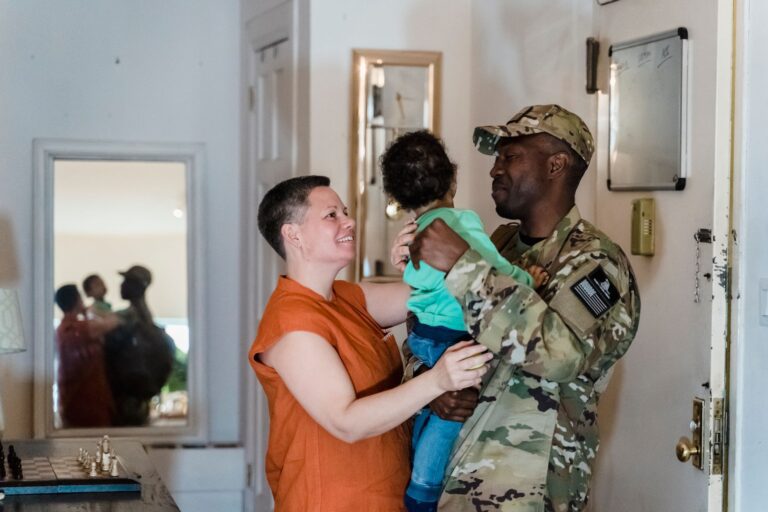
The morning I left for basic training, my grandfather Alden stood on the porch of the farmhouse with his coffee going cold in his hand and told me boys like us did not make it out of Tarbox County. He did not say it to be cruel. He said it the way he said the weather, flat and certain, a man reading clouds he had read his whole life. Then he turned and went inside to start the milking, because the cows did not care that I was leaving, and in his mind neither, by then, did much of anything else.
I was eighteen. I had never been farther east than the grain elevator in Dunmore or farther west than the auction barn off the county road. And I had spent that whole last summer believing that the moment I climbed into Wendell Pruitt’s truck and let him drive me to the recruiter’s office two towns over, I was finally going to prove the old man wrong.
It took me almost four years to do it. This is the story of the morning I came back.
The man who raised me
I should tell you about Alden first, because you cannot understand the homecoming until you understand what we were homecoming to.
My grandfather raised me on a hundred and sixty acres outside a town called Lendholt, Nebraska, population not quite eight hundred if you counted generously and included the dead in the Lutheran cemetery, which my grandfather always said you should, because they paid their taxes longer than most of the living. The farm had been in the family since his own grandfather broke the sod with a team of mules and a moldboard plow, and there was a photograph of that first sod house nailed up in the mudroom, a low brown box of dirt with a stovepipe and a woman in front of it who never once smiled at a camera in her life.
My mother left when I was four. I do not remember her, and I have stopped pretending it is a wound. My father, her husband, lasted two more winters on the farm before a truck took him out on an icy stretch of Route 14 coming back from the co-op with a load of feed. After that it was just me and Alden and his wife, my grandmother Verna, in the white farmhouse with the green tin roof and the cottonwood out front that was older than the state.
Verna died when I was eleven. Cancer, the slow kind, the kind that takes a whole farm season to do its work so that you remember her dying alongside the planting and the cultivating and the harvest, the way you remember a long bad weather pattern. After that it was just the two of us.
So when I say my grandfather raised me, I mean it the way the old timers mean it. He taught me to drive the tractor before I could see over the wheel sitting down, so I learned to stand to plow. He taught me to pull a calf in the freezing dark with my arm in up to the shoulder and the cow screaming and him saying steady, steady, you are not done until it breathes. He taught me to shoot, to weld, to set a fence post so it would not heave in the spring thaw, to read the sky and the soil and the price boards in the co-op and know which of the three was lying to me that week.
What he did not teach me, what he could not, was how to believe that any of it would ever amount to a life worth wanting. Because Alden did not believe that himself.
What the county does to a man
You have to understand what had happened to the men of his generation in our part of the country. My grandfather watched the farm crisis of the 1980s take half the families on our road. He watched the Huhn place go to the bank and the Ostercamp place go to the bank and the big Dietrich operation, the one everybody envied, go to the bank slowest and hardest of all, with the auctioneer’s voice carrying across the section on a still August day while old Reinhold Dietrich sat in his truck and would not come out.
He watched the boys he grew up with go off, some to Vietnam and some just to Omaha or Denver looking for work, and he watched the math of it, how few ever came back as anything other than smaller. He had a brother, a great-uncle I never met named Orrin, who left for the Army in 1969 and came home in a box with a flag on it, and my grandfather had folded that flag and carried it and never, not once in my whole childhood, spoke a single word about it.
That was the thing about Alden. The grief did not make him bitter. It made him quiet, and the quiet hardened into a kind of certainty, and the certainty was this: the county was a thing that took. It took farms and it took sons and it took the bright thing out of a boy’s eye, and the only sane response was to keep your head down, do the work, expect nothing, and you would not be disappointed.
He loved me. I never once doubted it. But he loved me the way you love something on a hard piece of ground, braced for its loss. When I told him at seventeen that I wanted to enlist, that I wanted to be a Marine, he set down his fork at the kitchen table and looked at me for a long time, and then he said, son, the recruiters come through here every spring like the seed dealers, and they sell the same thing, a way out, and I have watched it work on enough boys to know how it ends. You will go, and they will use you up, and you will come back here older and quieter and you will milk these cows until you are me.
I said, maybe I will not come back at all.
And he said, that is the other way it ends.
We did not talk for a week after that. But the spring I turned eighteen, Wendell Pruitt, who was my one real friend and three years older and already failing out of the community college in Hastings, drove me to the recruiter’s office, and I signed the papers, and that was that.
The leaving
The morning I left for basic, I came down the stairs with the one duffel bag they told me to bring and found Alden already up, already dressed, the coffee already made. He poured me a cup without asking and we drank it standing at the counter, not talking, the way we had drunk a thousand cups of coffee.
Then I picked up my bag and he walked me out to the porch, and that was where he said it. Boys like us do not make it out of Tarbox County. The county is Tarbox; the town is Lendholt; he always named the county when he meant the whole hard truth of the place.
Get a new story in your inbox every morning.
Facebook doesn’t show you every story we post. Our free newsletter does. Join 2,500+ readers.
I wanted him to be wrong so badly that I could taste it. I wanted to write him from boot camp and from my first duty station and from wherever they sent me, and I wanted every letter to be a small hammer against that flat certain sentence. But I was a proud, hurt eighteen year old, and what I actually did was leave without saying I love you back, and climb into Wendell’s truck, and not look at the porch in the side mirror because I was afraid the old man would already have gone inside.
He had not. Wendell told me that, years later. Wendell said the old man stood on that porch with his cold coffee and watched the truck all the way down the section line until the dust swallowed it, and then stood there a while longer looking at the empty road.
Four years
I will not give you the whole four years. They are their own story and most of it would not mean much to you, the long grind of training and the duty stations and the deployment that I am not going to dress up, because dressing it up is a lie and my grandfather raised me to hate a lie above almost anything.
I will tell you the parts that matter to this.
I was good at it. That surprised me more than anyone. The farm had made me, without my knowing, into exactly the kind of man the Corps wanted: I could work in the cold and the dark and the wet without complaining because I had been doing it since I was six. I could fix an engine and read a landscape and stay calm when something living was screaming, because I had pulled enough calves. The other recruits, the city boys, struggled with the early mornings and the discomfort and the boredom, and I kept thinking, this is just Tuesday on the farm, this is just the milking, you put your head down and you do the work and you expect nothing and you are not disappointed.
I made it through boot camp at Parris Island. I want you to picture, just for a second, an eighteen year old farm kid from Lendholt, Nebraska, who had never seen the ocean, standing on a parade deck in South Carolina in the heat with the salt smell in the air, becoming a United States Marine. I cried. I am not ashamed to say it. I cried because the first person I thought of was the old man on the porch, and I thought, you are wrong, you stubborn old man, you are finally wrong about something.
I wrote him. Not as often as I should have, the way young men never do, but I wrote. And here is the thing that I did not understand until much later: he wrote back. Alden, who I had never once seen sit down and write anything longer than a check, wrote me back. Short letters in his cramped square hand, the letters of a man who learned to write in a one room school and never wrote for pleasure a day in his life. He wrote about the weather and the prices and the cows and a coyote that was getting into something, and never once, in any letter, did he say he was proud, because that was not a word that lived in his mouth.
But he asked, every single letter, when I was coming home. He framed it as a practical question, fence needs mending, could use the help, but I learned to read what was underneath it the same way he had taught me to read what was underneath the sky.
I got promoted. I made corporal. I was good at the part of the job that involved younger Marines, the eighteen year olds who came in lost and scared, and one of my sergeants told me once that I had a way of steadying men, and I thought, that is just pulling calves, sergeant, you are not done until it breathes.
And the whole time, four years of it, one thing sat in my chest like a stone I was saving. I was going to go home. Not on a leave I told him about in advance, not on a visit he could brace himself for and arrange his face around. I was going to come up that section line in my dress blues, the way no Lendholt boy ever came home, and I was going to stand on that porch and let the old man see, with his own eyes, that he had been wrong.
I planned it for two years. Wendell helped me. I will get to that.
The phone call that almost broke it
Eight months before my discharge, Wendell called me. We did not talk often. Wendell was not a phone person and neither am I. So when I saw his number I knew it was something.
He said the old man had taken a fall. Out by the loafing shed, in the mud, and he had lain there the better part of an hour before the propane delivery driver, a fellow named Doral Fenske, happened to come up the drive and find him. Hip was cracked. They had him in the hospital in Hastings.
I almost broke the whole plan right then. I almost called the Red Cross and started the leave paperwork and flew home that week. But Wendell, who knew the plan, who had been keeping the plan alive on his end for two years, said something to me that I have never forgotten. He said, listen to me. If you come home now, in jeans, scared, you will be coming home the way he always said you would, smaller. You will prove him right. He does not need you to prove him right. He needs you to prove him wrong, and you cannot do that from a hospital chair. He is going to be fine. Mend, you said eight months. Give the man his eight months and come home the right way.
I want to be honest with you, because the women reading this who have sat in a hospital parking lot deciding whether to drop everything will understand: that was the hardest call of my life. Wendell was asking me to gamble my grandfather’s last good years on a piece of theater. And I lay awake a lot of nights wondering if I was a coward dressing up his cowardice as a plan.
But I trusted Wendell. And more than that, I trusted what I knew about the old man, which was that the thing that would heal him fastest was not a grandson at his bedside. It was a reason to get back to the cows. So I called the farm every Sunday from then on, and I let him hear that I was fine and far away and coming home in the spring, and I let that be the medicine, and Doral Fenske and Wendell and a neighbor lady named Loris Quandt who I will tell you about kept the old man alive and walking through that winter without him ever knowing his grandson was eight months out and counting the days.
Loris Quandt and the quiet town
I owe a whole part of this story to people whose names my grandfather would not have wanted said out loud, because he was a man who hated to be a charity case worse than he hated almost anything.
Loris Quandt was a widow who farmed the quarter section to our east with her son after her husband passed. She was somewhere in her sixties, a Lutheran of the serious kind, the sort of heartland woman who shows up at your door with a hot dish and does not leave until she has assessed the whole situation and quietly fixed three things you did not ask her to fix. When the old man cracked his hip, Loris organized the road. That is the only way I can say it. She organized the road the way our part of the country has always done it, without a meeting or an announcement, just a chain of phone calls and casseroles and one man’s pickup followed by another’s.
Doral Fenske, the propane man, started timing his deliveries so he could swing by and help Alden in from the barn. Wendell came out two evenings a week to do the heavy lifting in the chores. A teenager from the next place over, a quiet kid named Sutter Hovland, came after football practice to throw hay. And Loris herself drove a plate of food up our drive most days, and sat with the old man, and told him the news of the road, and never once let him feel that he was being carried, even though he was.
I knew all this because Wendell told me, and because Loris herself, who got my address out of Wendell, started writing me too. Her letters were the opposite of Alden’s. Long, warm, full of the small life of the road, and underneath every one of them the same patient instruction: come home, son, but come home in a way that lets him keep his pride. She understood. She was a heartland woman of a certain age and she understood, in a way I did not have the years to understand yet, that for a man like my grandfather, being seen as weak by the one person he had raised would be a wound worse than the broken hip.
So between Wendell and Loris, the plan took its final shape. It was not just going to be me on the porch. It was going to be the whole road.
The plan
Here is what we built, the three of us, over those last months.
Lendholt has a Memorial Day every year the way every small town in the middle of this country has a Memorial Day, and ours is a real one, not a mattress sale. The VFW post, which is small and getting smaller as the old men of Alden’s brother’s war thin out, puts on a service at the Lutheran cemetery, where my great-uncle Orrin is buried under a government stone, and then everybody walks down to the fire hall for a meal. My grandfather had gone to that service every single year of my life, even the years he could barely stand it, because of Orrin and the flag he had folded and never spoken about.
My discharge date fell two weeks before Memorial Day.
So the plan was this. I would come home, but I would not go to the farm first. I would let the old man go to the Memorial Day service the way he always did, expecting nothing, the way he had taught me to expect nothing. Loris would make sure he got there, in his good shirt, with his cracked hip braced. The VFW commander, a man named Ulrich Stang who had served with my great-uncle Orrin and was in on the whole thing, would run the service exactly as he always did, the reading of the names, the rifle volley, the lone bugle.
And then, at the end, when the bugle had finished and the old men had folded the flag, Ulrich Stang was going to say one more name. He was going to say that the post wanted to recognize a Marine from Lendholt who had completed his service and come home. And I was going to come out from behind the fire hall, in my dress blues, and walk up that cemetery hill to where my grandfather was sitting.
That was the plan. The surprise homecoming, in front of the whole road, at the one place in the county where my grandfather had spent a lifetime grieving the boy who did not make it out.
I want to tell you it went off perfectly. It did not. It went off better than that.
Memorial Day
I flew into Omaha and Wendell picked me up, and I made him drive the long way so I would not risk being seen, and I spent the last night before Memorial Day in Wendell’s apartment in Hastings, not sleeping, pressing my dress blues on Wendell’s mother’s ironing board until they were sharp enough to cut, polishing the brass, going over and over the ribbons to make sure every one of them was correct, because my grandfather, even with everything else he did not know about the modern Corps, would know if a single thing was out of place, the way the old veterans always do. I was not going to let him see one wrong thing on that uniform. I had learned that much. You do not insult a veteran’s eye.
In the morning Loris called Wendell to report. The old man was up, she said. He was dressed in his good shirt and his one tie, the maroon one, and he was in a foul mood the way he always was on Memorial Day because the day cost him something, and she had told him she would drive him to the cemetery because of the hip, and he had complained about that the whole way to the truck, which she said was a good sign, a complaining Alden was a healthy Alden.
I waited behind the fire hall in the late May heat in a wool dress uniform, sweating, listening to the service drift up from the cemetery on the hill. I could hear Ulrich Stang’s voice reading the names of the Lendholt dead, going back through every war, and I heard him read Orrin Hovde, my great-uncle, my grandfather’s brother, and I heard the small silence that the whole town left after that name because everybody on that hill knew the old man was sitting there and knew what the name cost him.
I heard the rifle volley. Three rounds, ragged, the old men’s hands not as steady as they once were. I heard the bugle. And I want to tell the women reading this, the ones who have buried husbands and brothers and sons, that there is no sound in this world like a lone bugle over a country cemetery in the heartland on a still morning, and I stood behind that fire hall and I came apart quietly, by myself, the way the old man had taught me to come apart.
And then I heard Ulrich Stang clear his throat and say, before you all head down to the hall, the post has one more thing this year.
That was my cue.
The walk up the hill
I came around the corner of the fire hall and started up the cemetery road in my dress blues with the brass catching the sun, and the first thing that happened was that the whole town went quiet. Not the polite quiet of a service. The other kind. The kind where two hundred people in folding chairs all turn at once.
I did not look at them. I looked at the old man.
Alden was sitting in a folding chair near the front, near Orrin’s stone, with Loris Quandt beside him. He had his good maroon tie on and his hands folded over the head of the cane they had given him for the hip, and he was looking down the row at me coming up the hill, and I watched it happen on his face. I watched him not understand. I watched a Marine he did not recognize come walking up his brother’s cemetery, and I watched him go through the motions of an old veteran’s respect, straightening a little in the chair the way he would for any Marine.
And then I got close enough.
I will be honest, I do not have good words for the moment he knew me. I have tried to write it for four years now in my own head and I do not have them. His face did a thing I had never seen it do in eighteen years of living in his house. The certainty went out of it. That flat hard reading-the-weather certainty that had been there my whole life, the look of a man braced for loss, it just went, all at once, the way ice goes off a stock tank in one warm afternoon.
He put his hand to his mouth. This man who had folded his brother’s flag and never said a word, who had buried a wife and a son and never let me see him break, put his hand over his mouth and his shoulders went, and Loris Quandt put her arm around him, and I crossed the last few feet and I did not salute him, although I had planned to. I knelt down in the cemetery grass in my dress blues in front of the old man’s chair so that my face was below his, the way you do for a man who cannot easily stand, and I said the only thing I had left.
I said, I made it out, Grandpa. I made it out and I came back. Both ways. You said it ends one way or the other and I went and found a third one.
What he finally said
He could not talk for a while. I knelt there and let him not talk. The whole town let him not talk, two hundred people on a cemetery hill in Lendholt, Nebraska, holding a held breath, because every single one of them knew this old man and knew his brother’s stone and knew, most of them, that he had told the boy on the porch he would never make it out.
When he could talk, he did not say I am proud of you, because that word still did not live in his mouth and I did not need it to. What he said was better. He put his hand, that hand I had watched pull calves and fold flags and go cold around a coffee cup, on the side of my face, and he looked at the uniform, every ribbon of it, that old veteran’s eye going down the front of me and finding nothing wrong, and then he looked at my face and he said:
I was wrong.
Two words. From a man who I had never once in my life heard admit a wrong thing. And then he said, I have been wrong about this county for sixty years, son, and I taught you the wrong thing on that porch, and I have laid awake every night since you left scared I would die having taught you the wrong thing. And you came back here and you stood it up in front of my brother and made me look at it.
I said, you taught me everything that made me good at this. Every bit of it came off this farm. You did not teach me wrong. You just stopped your story too early. You forgot the part where the boy comes home.
The road
I told you the homecoming went off better than the plan, and here is what I meant.
The plan was about the old man and me. But it turned out the plan belonged to the whole road. Because when I knelt there in the cemetery grass, it was not just my grandfather who came apart. Loris Quandt was weeping openly with her arm still around him. Wendell, my one friend, who had carried this plan for two years and lied to my grandfather’s face every week to keep it, stood at the back with his hand over his eyes. Doral Fenske, the propane man who had found the old man in the mud, was crying into his cap. Sutter Hovland, the football kid who threw our hay all winter, stood there not knowing what to do with his big seventeen year old hands. Ulrich Stang, the old VFW commander who had served with my great-uncle Orrin and had buried half the names he read that morning, came down off the little platform and saluted me, an old man’s salute, slow and complete, and I stood up out of the grass and returned it, and the whole town came up out of the folding chairs.
It was not a thing anyone planned. It was the road doing what the road does. They came up out of those chairs and they came up that hill and they put their hands on the old man and on me, and somebody started clapping and then everybody was, and it was not the clapping of a crowd at a show. It was the clapping of eight hundred people, or the two hundred of them who were there, who had watched the county take and take and take for sixty years, getting to watch it give one back.
We did not make it to the fire hall meal on time. The whole town stood in the cemetery for the better part of an hour first, and my grandfather held court from his folding chair the way he never would have let himself before, accepting the thing that I think he had not let himself accept since his brother went into the ground forty feet away: that the road loved him, and had carried him all winter, and was glad, deep down to the soil of it, that his boy had come home in those blues.
The porch, again
That evening I drove the old man home in his own truck, up the section line, the same road Wendell had driven me down four years before. I had not been on that road in uniform and I made myself look at the porch in the mirror as we came up the drive, the porch I had been too proud to look at the morning I left.
I helped him up the steps because of the hip. We stood on the porch in the last light, the cottonwood throwing its long shadow across the yard, the cows lowing down at the loafing shed because it was milking time and they did not care that anything at all had happened, and that made the old man laugh, the first laugh I had heard out of him all day.
He said, they want milking.
I said, I will get it.
He said, in those blues?
And I said, I have pulled calves in worse, and I went and changed out of my dress uniform and into a pair of his coveralls hanging in the mudroom, and I milked the old man’s cows in the dark the way he taught me to before I could see over the wheel, and he sat on a hay bale and watched me and did not help, because the hip, but really because he wanted to watch.
When I was done he said, you do not have to stay. I know you have a life out there now. I am not going to be the thing that pulls you back down into this county. I have watched this place keep too many boys.
And I told him the truth, which I had figured out somewhere over those four years and which I will leave you with, because it is the only thing I really learned worth passing on.
I said, Grandpa, the county did not keep me. You kept thinking the only way to win was to get out and never come back. But getting out was never the prize. The prize was getting to choose. For eighteen years this place had me because I had nowhere else to be. Now I have been everywhere they could send me, and I have stood on parade decks and I have stood in places I will not talk about, and I am choosing this. The cottonwood and the green roof and the cows that want milking and you on that hay bale. That is not the county keeping me. That is a man coming home because he wants to. There is a whole world of difference in that and you taught me every bit of it.
He was quiet a long time. Then he said, in the dark, in that flat voice that I had finally learned all the way down to the bottom of, he said: Your great-uncle Orrin would have liked to see this.
And that was the closest my grandfather ever came, in his whole life, to telling me he was proud. And it was more than enough.
After
He passed two winters later, in his own bed, in the white farmhouse with the green tin roof, with me there, and Loris Quandt there, and the road outside doing what the road does. He went easy, for a man who had not had an easy day in eighty years. The last clear thing he said to me, a few days before, was to remind me where the flag was, his brother Orrin’s flag, the one he had folded in 1969 and carried for fifty years and never spoken of. He wanted me to have it. He wanted me to know its story, finally, all of it, which he told me in pieces over those last days, more words about his brother than he had said in my whole childhood.
I farm the hundred and sixty acres now. I kept the Corps in me, in the early mornings and the way I steady the younger hands who come through to help in the season, but I came home. I chose it. There is a difference and the old man finally got to see it.
I keep two flags in the house now. Orrin’s, folded, on the mantel. And mine, the one they gave me at my discharge, beside it. And every Memorial Day I drive up to the Lutheran cemetery and I sit in a folding chair near my grandfather’s stone and my great-uncle’s stone, and Loris Quandt, who is ancient now and sharper than any of us, sits beside me, and Ulrich Stang reads the names, and when he reads Orrin Hovde I no longer hear only grief in the silence after it.
I hear the whole road, on a still May morning, coming up out of its folding chairs.
I made it out, Grandpa. Both ways. And then I came home, on purpose, for good.
This story is a dramatization. Names, characters, and details are invented, and any resemblance to real people or events is coincidental.