
The attic of the Georgia farmhouse was a place where words once uttered seemed to hang like invisible curtains in the stagnant air. Martha stepped onto the floorboards, her nostrils immediately attacked by a disgusting mix of old fabric, wet dog, and the sharp, chemical lingering of the Aqua Net hairspray she’d used for forty years. The afternoon sun cut through the single window in slivers, sitting in the dust like old fingernail clippings.
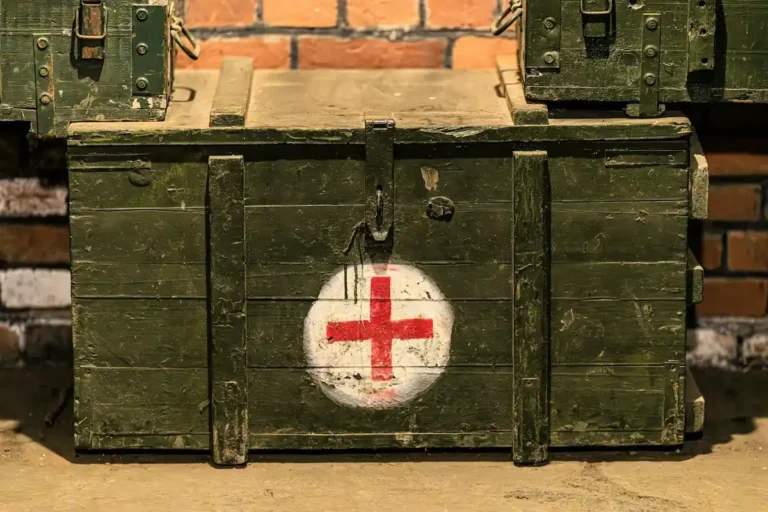
Since Jack had passed, Martha had treated the attic as a forbidden vault. But today, a deep and disorienting silence had filled the house, a silence that demanded she face what Jack had left behind. In the far corner, nestled under a hand-knit wool pillow cover that weighed almost nothing, sat the anchor of Jack’s previous life: his military footlocker.
It was a classic plywood model, metal-skinned and reinforced with straps of rusted metal riveted to the corners. The original olive drab paint was scratched, revealing the raw wood beneath. It was a strongbox that had traveled from the training barracks to the Central Highlands of Vietnam and back. Centered perfectly beneath the latch was Jack’s name, stenciled in white paint that had begun to flake like dead skin.
Martha knelt, her knees popping with a sound like dry twigs. Her hand trembled as she reached for the padlock. This wasn’t just a trunk. It was the record of a man she realized she might not have fully known.
Chapter 2: The Soldier’s Strongbox
The lid creaked open, releasing a scent of cedar and dried ink. Inside, the tray was exactly four inches deep, divided into sections that still held Jack’s careful arrangement of personal items: a 1916 Military Rosary, a 1918 nondenominational prayer book for Soldiers and Sailors, and a Bull Durham tobacco sack with a trench lighter that still gave off a faint whiff of kerosene.
Martha lifted the tray to reveal the heart of Jack’s service. There was his M1917 wool tunic, scratchy and heavy, and a pair of leather marching boots that still carried the red dirt of Georgia and the darker, grittier soil of a foreign land. But it was the envelope tucked inside the prayer book that caught her eye. It was postmarked 1969, addressed to Martha from an APO in the Armed Forces Pacific region.
Get a new story in your inbox every morning.
Facebook doesn’t show you every story we post. Our free newsletter does. Join 2,500+ readers.
Inside was a letter and a small, glittering object that seemed to absorb the attic’s dim light.
“I’m sending this diamond to you tonight,” Jack’s scrawl began, “because in the morning I have to leave on a mission, and I don’t feel right holding on to this. I don’t want to take it with me.”
The letter described a village called Hong Ha in the Central Highlands, a place where the sound of Huey helicopters was the only music and the smell of white phosphorus was the only incense. Jack spoke of a mission that was not a routine patrol. It was a Broken Arrow, the universal code for a unit being overrun, a moment where good men were forced to face the worst with everything they had.
Chapter 3: The Something That Attaches
Martha took the letter to her small-town church the following Sunday. The building was a simple clapboard structure with a pitched tin roof and a modest bell tower that stood as a reminder of a higher moral life. As she sat in the back pew, the smell of old wood offered a temporary sanctuary.
She noticed a man she had never seen before. He was sitting with his hands and head resting on the back of the seat in front of him. When the choir began to sing, he didn’t join in. Instead, Martha heard him sobbing, a sound guttural and full of despair.
After the service, she approached him. He introduced himself as Elias, a veteran and former officer who had served with the 1st Cavalry Division. He looked at Martha with eyes that had seen too much, the kind of tunnel vision that never fully goes away.
“Jack talked about the thing that attaches to you when you respond to a call,” Elias said softly. “That thing then turns into a bourbon, and then a battle for everything.” He explained that Jack hadn’t just been a soldier. He had been someone who tried to hold together a world ripped apart by war.
Chapter 4: The Ghost of Hong Ha
Elias helped Martha piece together the story of Jack’s final mission. They spent weeks reading through after-action reports and intelligence summaries from 1969. They discovered that Jack’s unit, the 1/1st Cavalry, had been involved in Operation PEGASUS, a massive air-mobile operation designed to relieve the besieged Marines at Khe Sanh.
But Jack’s mission to Hong Ha was different. It was a covert reconnaissance task that required precise execution and carried almost no margin for error. The diamond Martha found wasn’t a piece of plunder. It was a token of honor. Jack had saved a village child during a sapper attack, and the child’s father, a local elder, had given him the stone not as a bribe, but as a sacred trust to ensure the boy’s passage to safety.
Jack had been the kind of man who refused to let war take someone who didn’t belong to it. He had carried that secret home, uneasy because the official records had categorized the villagers as Doubtfuls, people who couldn’t be confirmed as friends or foes.
Chapter 5: The Battle for Everything
As Elias and Martha dug deeper, the stakes grew heavier. A local deputy named Miller began asking questions about Jack’s old service records and the disclosure of classified materials. Miller represented the modern, cynical world that saw Jack’s silence as fraud rather than stewardship.
“The law is a fundamental precondition of democratic government,” Miller argued, his voice brisk and impatient. He wanted to know why Jack had looked the other way in Hong Ha.
Martha stood her ground. She realized that Jack’s silence was his quiet sacrifice. He had protected the people of that village, acting as a guardian of faith in a place where faith was the only thing left. He had battled his personal demons, the bourbon and the nightmares, to ensure that the weight he carried didn’t destroy the family he loved.
In a pivotal moment at the church, Martha revealed the diamond. She didn’t sell it. She gave it to the stranger in the pew, who turned out to be the grandson of the man Jack had saved. The act of service was finally complete.
Chapter 6: Fiddler’s Green
The story concluded on a crisp autumn evening at the local cemetery. The community gathered as the sun began to dip, casting long amber shadows across the Georgia pines.
At 1730 hours, the ceremony for Retreat began. The bugler stepped forward, the brass of his instrument catching the last of the evening light. He began the twenty-four notes of Taps, a melody haunting yet beautiful, stirring deep emotion in everyone present.
Elias stood at attention, his gaze fixed on the flag. Martha felt the full weight of the call. It wasn’t just a signal for lights out. It was a tribute to the brave, a promise that no Trooper ever gets to Hell before he’s emptied his canteen and rides back to drink with friends at Fiddler’s Green.
As the final note drifted through the air, Martha whispered the unofficial lyrics: “All is well, safely rest, God is nigh.”
Jack’s legacy was no longer a ghost. He was an unsung hero whose moral compass had remained true. Martha walked back to the farmhouse, her grief finally replaced by a restored faith in honor, duty, and the quiet power of a promise kept.