
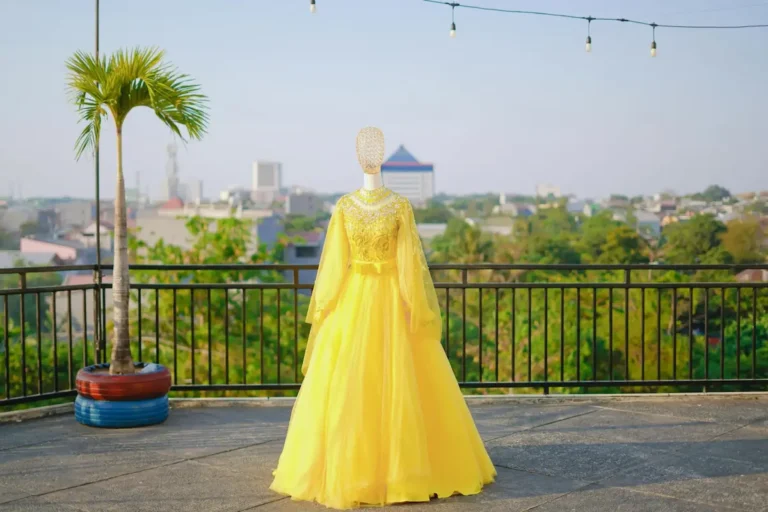
The last Sunday I went to church, I wore a yellow dress.
I remember that detail because I had bought it specifically for that morning. It was late April, and the azaleas outside our house were doing the thing they do in the South where they explode all at once like they have been holding their breath for months. I had stood in the department store the week before, held that dress up in the fluorescent light, and thought: yes, this is the kind of thing a person wears when they are trying to feel hopeful. I bought it in a size smaller than I usually wore because I was still losing the pregnancy weight and I wanted something that would fit me the way I used to fit in things, before.
My son Caleb was eleven months old. He was in the nursery downstairs. I was upstairs in the sanctuary trying to sing a hymn I had known since I was six years old, and I could not get the words out.
The pastor was talking about God’s plan. He was talking about how there is a purpose to everything, how even the hard things are woven into something larger we cannot see yet. He was a good pastor. He meant every word he said. He had sat with me in a hospital waiting room at two in the morning four months earlier and held my hand and prayed out loud in a whisper, and I had been grateful for it.
But that Sunday morning in the yellow dress, listening to him talk about purpose, something in me went very quiet. Not peaceful quiet. The quiet of a phone call that drops in the middle of a sentence. The quiet of a room after a door slams.
I picked up my purse, walked downstairs, signed Caleb out of the nursery, buckled him into his car seat, and drove home. I hung the yellow dress in the back of my closet. I did not go back for four years.
I should tell you about Caleb.
He was born in a snowstorm on a Tuesday in January, which I have always thought was either a sign or just weather, depending on the day you ask me. He was healthy by every measure they had at the time. Seven pounds four ounces. Strong cry. Good color. My husband Derek held him first and made a sound I had never heard him make before, a sound that was too big for a person to hold, and I understood immediately that this was the thing everyone had been trying to describe to me for years and failing at.
We brought him home on a Thursday. We had the bassinet set up next to our bed. We had the mobile with the small wooden animals Derek’s mother had given us at the shower. We had the white noise machine and the blackout curtains and all the things the books said to have, and none of it mattered in the slightest because we had no idea what we were doing and Caleb did not care about any of it. He cared about being held. He cared about eating. He was, in those early weeks, a small and absolute sovereign, and we were his subjects, and that was fine.
At his two-month checkup, the pediatrician noticed something during the developmental screening. She used careful words the way doctors do when they are being honest but trying not to terrify you. She said she wanted to refer us to a specialist. She said it might be nothing. She said the word “might” three times, which I noticed.
The specialist used different words. Words I had to look up in the car afterward, sitting in the parking garage on the fourth floor while Derek drove because I could not. I typed them into my phone one letter at a time like if I went slow enough the definitions might be different than what I expected.
Get a new story in your inbox every morning.
Facebook doesn’t show you every story we post. Our free newsletter does. Join 2,500+ readers.
They were not different.
Caleb had a neurological condition that would affect his development in ways that were, the specialist said, difficult to fully predict. He might walk. He might not. He would likely have cognitive delays, the severity of which they could not determine yet. He would need therapies. He would need monitoring. He would need a version of the world that made room for him in ways the world was not always set up to do.
I asked the specialist if this was something that happened because of something I did. She said no. I asked if it was something that could have been caught earlier. She said it was not that kind of condition. I asked if there was a reason it happened. She paused for just a moment too long and said that sometimes these things simply occurred, that there was no single cause they could identify, that his genetics had simply written themselves this way.
Simply. I thought about that word for a long time afterward.
We prayed. Of course we prayed.
Derek and I prayed together every night for months. My mother prayed. His mother prayed. Our pastor prayed with us and over us and sent us scriptures by text and checked in on Sundays and Wednesdays and random Thursdays when he said he had felt moved to reach out. The women from my Bible study group brought meals. The deacons visited. Everyone who loved us did everything that people who love you do when the thing they feared for you has arrived.
And I was grateful. I want to be clear about that because what came later can make the gratitude sound thin or performed, and it was not. The meals mattered. The texts mattered. The night my friend Renee came over and sat on the kitchen floor with me while I fell apart and did not say a single word for twenty minutes and just let me be in it – that mattered more than she probably knows even now.
But there was a thing underneath the gratitude that I did not know how to name. It was not anger, exactly. It was more like a question that kept getting louder the more I prayed, a question that should not have felt threatening to a faith I had carried my whole life, and yet.
If God was good, and God was powerful, and God knew this was coming, then what exactly was I praying for? Was I asking Him to change His mind? Was He testing me? Was this the plan the pastor kept referencing, and if so, what kind of plan chose an eleven-month-old boy as its subject?
I knew the theological answers. I had heard them all my life. I had given some of them myself, to other people, in other difficult seasons. Free will. The fallen world. Suffering as refining. Romans 8:28. I knew the answers and the answers were not wrong, exactly, but they had a quality that I can only describe as being too smooth. Like a stone worn down by so much handling that you could not quite get a grip on it.
So that Sunday in April, in the yellow dress, listening to a man I respected talk about purpose, something in me simply let go of the rope.
I did not make a decision to leave my faith. It left me, or I left it, or we parted by mutual agreement. What I know is that I drove home, put Caleb down for his nap, sat at the kitchen table, and felt for the first time in months something that was almost like relief. The effort of believing against the evidence of my daily life was exhausting. Putting it down felt, for a season, like rest.
The next four years were not without meaning. I want to say that clearly.
Caleb learned to walk at three and a half, which the therapists said was ahead of where they had expected. He had a particular attachment to two things: ceiling fans and the sound of running water. He would stand under a ceiling fan with his head tilted back and his arms loose at his sides and watch it spin with an expression of pure absorption, like it was saying something in a language he was close to understanding. When we ran a bath, he would come from wherever he was in the house and stand at the edge of the tub and drag his fingers through the water before I could stop him. He was not bothered by the cold.
He started talking later than his therapists had hoped but with a specificity that surprised them. His first real word, past mama and dada, was “again.” He would say it standing under the ceiling fan. He would say it in the bath. He said it the first time I read him the picture book with the bear who goes through the seasons and comes out the other side to spring again, and I held it together until he was asleep and then I went to our bathroom and sat on the edge of the tub and cried in a way I had not let myself cry since the early days.
Derek and I held together, which I know is not always what happens and I do not take it lightly. We fought about money and we fought about who was more tired and once, very badly, we fought about the future and what we were allowed to hope for. But we held. We went to therapy, separately and together. We learned things about how to talk to each other that we should have learned years earlier and might not have without the weight of what we were carrying.
I built a life that did not include God and it was not an empty life. It was just a different life. Quieter in some ways. More reliant on what I could see and touch and measure. Derek had grown up with less faith than I had and he adjusted to my departure from church without much comment, though I caught him once, in Caleb’s room in the early morning, standing over the crib with his eyes closed, and I did not ask him what he was doing.
The Thursday I am referring to in the title of this story was in October, four years after the yellow dress.
Caleb was five. He had started a special education program at a public school twenty minutes from our house, and he had a teacher named Mrs. Patterson who had a quality I have rarely encountered in any person in any context: she made Caleb feel exactly as large as he was. Not larger, in the way that pity makes people larger. Not smaller, in the way that management makes people smaller. Exactly as large as he was. The first time I dropped him off in her classroom, he went straight to the sensory corner and climbed into the swing they had hung from the ceiling beam, and Mrs. Patterson looked at me and said, “He is going to be fine in here.” Not as reassurance. As information.
On that Thursday in October, I was sitting in the waiting room of Caleb’s occupational therapist’s office. It was a small room with chairs along the walls and a table with magazines nobody ever read and a window that looked out at a parking lot. I had been in that room or rooms exactly like it so many times over the past five years that I could reconstruct it from memory: the water cooler that made a gurgling sound every few minutes, the particular smell of industrial carpet cleaner, the slight flicker in the fluorescent tube above the door.
There was one other person in the room. An older man, maybe seventy, sitting two chairs down from me with his hands folded in his lap and his eyes closed. I assumed he was sleeping. I had my phone out and was answering work emails, half-present, the way you learn to be in waiting rooms when you spend a lot of time in them.
He spoke without opening his eyes.
“The ceiling fans,” he said.
I looked up from my phone.
He opened his eyes then, and they were clear and dark and he did not look like someone who had been asleep. He looked like someone who had been somewhere else entirely and had just chosen to come back.
“I’m sorry?” I said.
“Your boy,” he said. “He watches the ceiling fans.”
I stared at him. I had never seen this man before. I had never mentioned Caleb to anyone in that waiting room. There was nothing in the way I was sitting or the things I was carrying or the expression on my face that could have told him anything about my son.
“How do you know that?” I said.
He smiled. It was a small smile, not the kind that asks for anything back. “My grandson is the same way,” he said. “Had a condition like yours. Spent a lot of time in rooms like this one.” He looked around at the waiting room without any bitterness I could detect. “He’s twenty-four now. Lives alone. Holds a job. Calls me on Sundays.”
I did not know what to say, so I did not say anything.
“It is a long road,” the man said, in a tone that did not make the long road sound like a catastrophe. “But it is a road.”
He went quiet after that. His name was called a few minutes later, a woman’s name, his wife presumably, and he stood with some effort and went through the door, and that was all. He did not say anything else. He did not look back.
I sat in that waiting room for another twenty minutes until Caleb came out with his therapist, and I held his hand on the way to the car, and when I buckled him in and he said “again” about something he had done in the session, I put my forehead down against the top of his car seat and stayed there for a moment and felt something I had not felt in four years.
It was not a lightning bolt. It was not a voice. It was more like a piece of furniture that had been moved in the night and you had been stubbing your toe on the empty space for so long that you had stopped noticing, and now it was back in its place.
I did not drive to church that evening. I did not call the pastor. I drove home and made dinner and gave Caleb a bath and watched him drag his fingers through the water, and I said something under my breath that was too small to be a prayer and too directed to be nothing.
I went back to church six weeks later.
Not to my old church, at first. I went to a smaller one, a congregation that met in a converted storefront near our neighborhood, that a coworker had mentioned in passing and that I had filed away without meaning to. The pastor was a woman in her late fifties who preached without notes and who said something in her first sermon I attended that I have thought about almost every day since.
She said: “Faith is not the absence of the question. Faith is the decision to stay in the room with the question.”
I had spent four years leaving the room. I had believed, without quite articulating it, that the honest thing to do when you could not reconcile your experience with your belief was to stop pretending. What I had not understood – what that woman helped me begin to understand – was that staying in the room without the answer was not pretending. It was something closer to the hardest kind of trust. The kind that has no guarantee attached to it.
Caleb is nine now. He loves ceiling fans and running water and the picture book about the bear who goes through all the seasons, which we have read so many times the binding has cracked and been taped back together twice. He loves Mrs. Patterson, who moved up with his class in a way that almost never happens and that I have never been able to fully explain. He says “again” when he wants to hear a song repeated, which means I have heard certain songs more times than I could count, and I do not mind.
He does not pray, or at least not in any form I recognize. But sometimes in the bath, with his fingers trailing through the water and his head tilted like he is listening to something just past the range of my hearing, I think he might be doing something in the neighborhood of it. Something that looks like being very present and very still in a world that is, despite everything, continuing.
I bought a new yellow dress last spring. I wore it to church on Easter and then wore it again the following Sunday because I wanted to, and that felt like something.