Five Thousand Dollars At The Elevator Scale
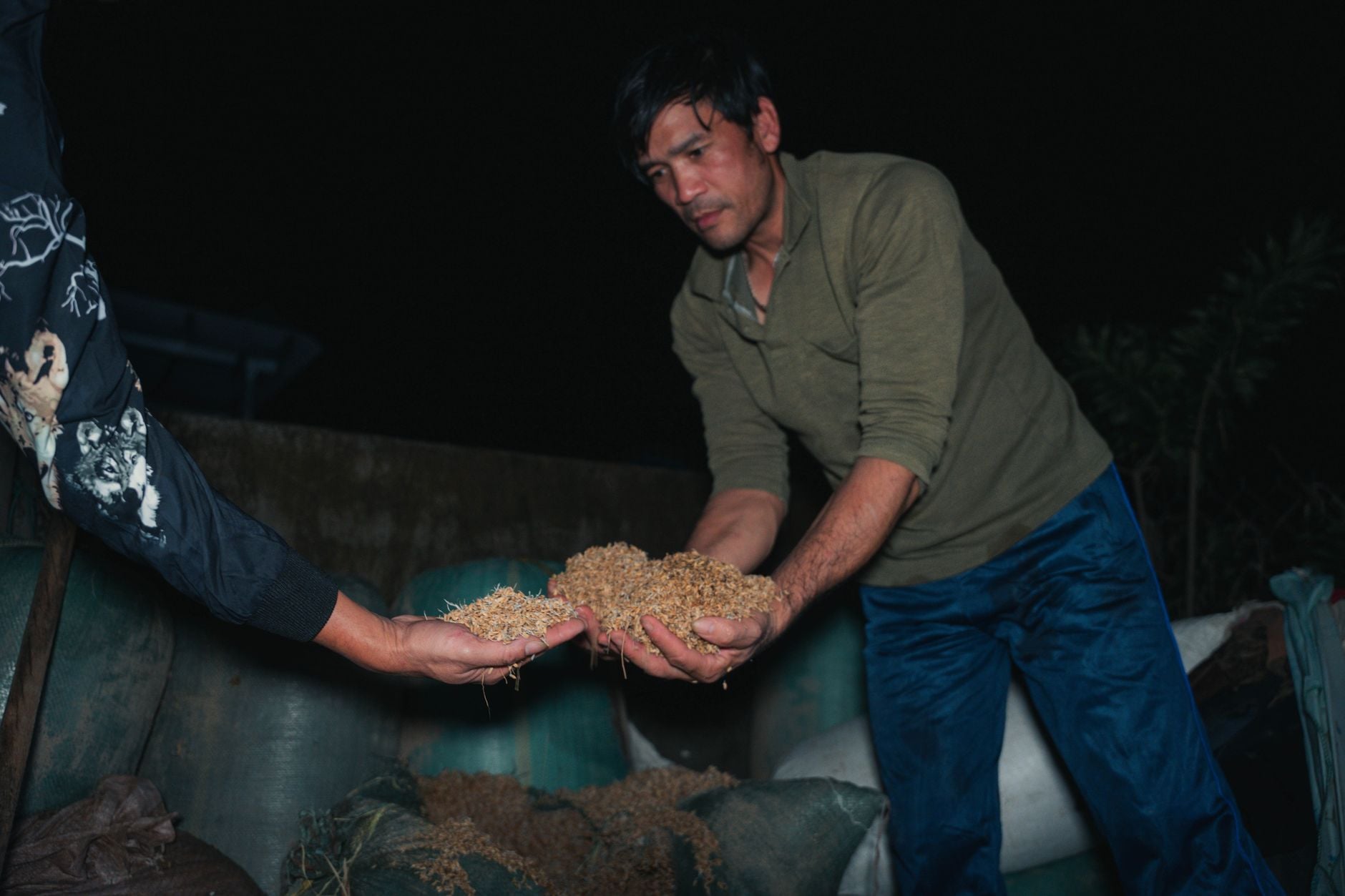
The last load of Curtis’s corn was rattling down the grates at the elevator in Westbrook a little before eleven on a Wednesday night, and I had five thousand dollars folded in the pocket of my black hooded work jacket.
The yard lights were full of grain dust. It hung in the cold air like snow that couldn’t decide to fall, gold under the lamps and gray everywhere else.
The truck sat over the dump pit with its hoist up, and the leg was roaring the way it had roared every night for a month.
Curtis climbed down out of the cab and walked to the scale house door to get his ticket.
He had on the tan coat he’d worn every fall since his dad passed, and the seed cap with the bill curled from years of his hand on it.
He stopped in the doorway and looked back at me, and he smiled the tired smile of a man who has just finished 1,100 acres and still has a note at the bank.
Then he said the thing he’d been saying, one way or another, since August.
“Well, Brett,” he said. “That’s the last of it. Guess that squares us up on the five thousand.”
I’d been waiting for him to say it one more time. I wanted to be sure he still meant it, there in the light, with his own words in his own mouth, before I did what I’d come to do.
“Not quite,” I said.
I took the cash out of my jacket. Fifty hundred dollar bills, folded once. I held it out to him in the yard light.
He didn’t take it. He just stood there by the door and looked at it like I’d handed him a live snake.
To tell why I was holding out money to my wife’s brother at eleven at night, I have to go back two springs, to the water.
We were renting a farmhouse on a gravel road along the Des Moines River, south of Windom.
It was an old square two story with a good porch and a bad furnace, and it was eight hundred dollars a month, which was what we could do.
Jace was two. Jolie was six weeks old. Amber was still home on leave from her job as an aide in the second grade room, and I was working at the truck shop in Windom, doing diesel work on semis and the occasional county plow.
It rained for five days that spring on ground that was already full. The river came up slow at first, and then it didn’t come up slow anymore.
On the fifth night the sheriff’s deputy drove the river road with his lights going and told everybody to get out.
We got out with two kids, a diaper bag, a laundry basket of clothes and the dog.
We spent that night on the floor of Amber’s mother’s living room in Westbrook, all four of us and the dog on the couch cushions, listening to the rain on Gail’s windows.
When the water went down a week later, I drove out to look. The mud line on the living room wall was higher than my belt.
The couch was gone to the porch. Jolie’s crib, the one my grandpa built, was split at the joints and smelled like the river.
Our renter’s policy didn’t cover flood. I’d never known that, and neither had anybody else on that road.