The Name He Wrote on the Line
Brian, who was thirty-eight, set the folder on the rolling tray table, right beside his father’s cup of ice chips, and told the nurse I would be in a home within a year.
He did not say it loud. He said it the way a man reads off a grocery list, as if it were something everybody in the room already knew and had only been too polite to mention.
The nurse was a young woman named Angela with a pink stethoscope around her neck and a clipboard of discharge questions. She had asked a simple thing. Who would be helping Mr. Larkin at home?
“Not her,” Brian said, and tipped his head toward me without turning around. “She had a stroke two years ago. She can’t lift him. Give it a year, she’ll be in a home herself.”
Angela’s pen stopped moving. She looked over at me by the window, and I could see her trying to decide whether she had heard him right, and whether any of it belonged on her form.
I was still in my coat. I had driven in from Vinita in the dark that morning, an hour of turnpike with a north wind shoving my little Buick toward the shoulder the whole way.
My name is Deb Larkin. I was fifty-one that February. I was the secretary at First Baptist, and I had been married to Ron Larkin for nine years, and his son had never once called me by my name.
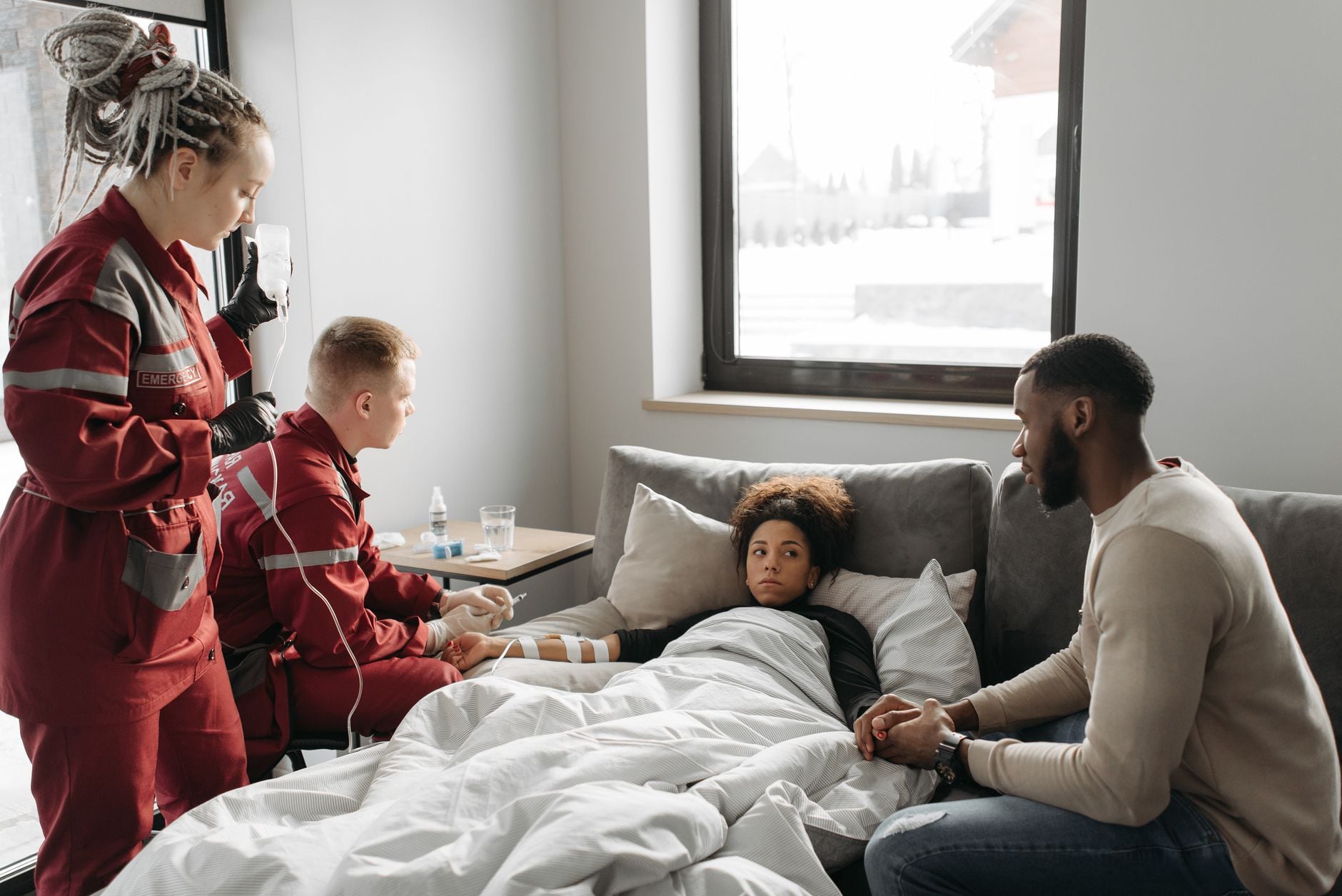
Ron was three days out of a triple bypass. They had opened his chest on Monday morning, kept him two nights in the ICU, and moved him up to the cardiac floor on Wednesday afternoon.
He had a rough night. Around two in the morning his heart slipped into an uneven rhythm, which the doctor said happens to a lot of people after bypass, and they gave him medicine for that and more for the pain.
So at eight o’clock on Thursday he was awake the way a man is awake under water. His eyes would open and find me, then slide shut again, and his hand kept reaching for the blanket and missing it.
That was the hour Brian chose to come.
Angela finished her questions politely. She wrote something down, said she would have the case manager talk with us about home health, and slipped out with her cart. The door sighed shut behind her.
Brian opened the folder. “It’s a durable power of attorney,” he said. “Just in case. If this goes sideways, somebody has to be able to handle his business.”
I stepped close enough to read it. It was printed off the internet, six pages, with a second clean copy behind it in case of mistakes, and on the line for the agent somebody had typed Brian Larkin in capital letters, with his address in Broken Arrow underneath.
It covered everything. Ron’s checking account. His retirement from the electric co-op. His truck. And the house on ten acres east of Vinita that the insurance man had valued at two hundred and ten thousand dollars that fall.
“I’ve got a notary coming at two,” Brian said. “The hospital has one in patient services. It doesn’t cost anything. I already set it up.”
“Your daddy can barely keep his eyes open,” I said.
“He’ll be fine by two.” He closed the folder. “The nurse said the morning is always the worst.”