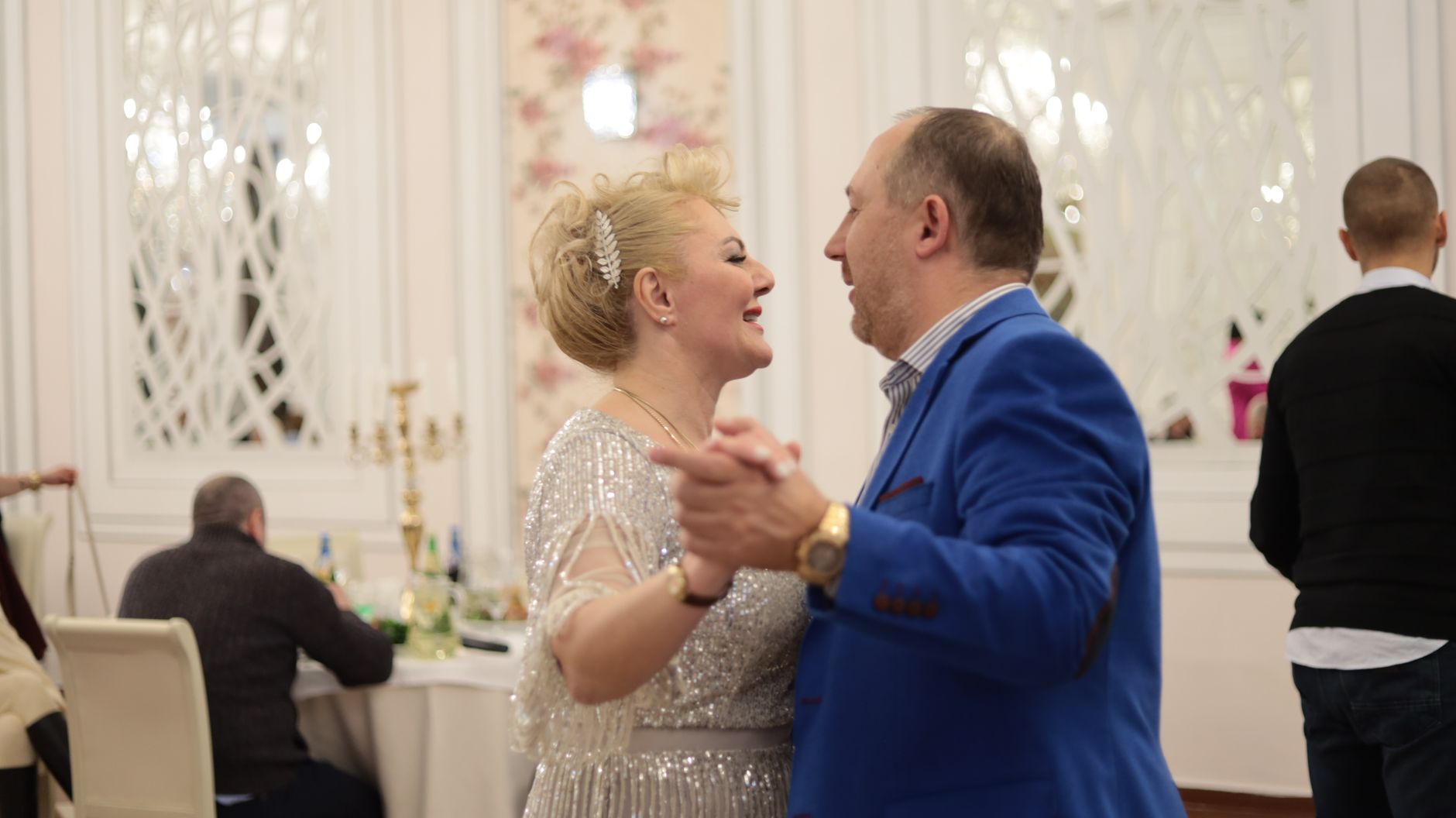
The Red Dress at the VFW Hall
The coffee can was sitting by the toaster with the plastic lid off, and I could see the bottom of it from the doorway.
Not a single bill. Not even the roll of quarters Nick’s Aunt Joyce had dropped in on Labor Day as a joke.
Marlene was wiping down the counter in slow circles with a dishrag, the way she always did after Sunday dinner.
The roast pan was soaking in the sink. The men were in the living room with the Vikings game turned up loud.
“Marlene,” I said, “I think it’s time for the jar. My hair started coming out Thursday. I’d like to order the wig this week, before it gets worse.”
She did not look up. She folded the dishrag in half and wiped the same spot again, right next to the empty can, as if it were not there at all.
“I used it for the hall,” she said.
I stood there holding the Tupperware of leftover potatoes she had sent home with me.
I thought I had heard her wrong. I asked her to say it again, and she did, in the same flat voice.
“The VFW wanted the deposit and the band wanted theirs, and it came to about what was in the can.” She finally looked at me.
“Laura, honestly. A wig is vanity. A scarf does the same job, and nobody in this town is going to judge you for wearing one.”
Then she turned back to the counter and kept wiping. That was the whole conversation. She did not say she was sorry. She did not say she would pay it back.
I set the potatoes down on the table. I picked up my purse.
I said goodnight to Harold and to Nick’s uncles in the living room, and I walked out to our pickup and sat in it until Nick came out.
The Jar
I should tell you how that coffee can got there, because it matters.
I was diagnosed in the middle of August, two weeks before school started. I had worked as a kindergarten aide at our elementary for nine years.
It was a lump I found in the shower. I almost waited. I’m glad I didn’t.
The surgeon in Sioux Falls said it was early enough to treat hard, which meant chemo first, then surgery, then radiation.
The word chemo did something to everybody in the family. Nick’s aunts started bringing casseroles before I had been sick a single day. His cousin Brenda mowed our yard twice without asking.
And Marlene put a Folgers can on her kitchen counter. She wrote “Laura” on a strip of masking tape and stuck it on the front.
She said it was for my wig and whatever extras the insurance would not touch.
I cried when she did it. I want that on the record. I stood in her kitchen and hugged her, and she patted my back twice and told me not to make a fuss.
Our insurance did not cover wigs. Some plans do, if a doctor writes it up as a cranial prosthesis, but ours was through the elevator and it was the cheap one. We had already paid the $3,000 deductible by my second scan.
So the jar mattered. Every Sunday after dinner, somebody put something in. The aunts put in twenties. Harold’s brother put in a fifty once and told everybody he’d been robbed at cards.
The guys at the grain elevator where Nick works passed a hard hat around the scale house and came back with $212.
Nick brought it home in a bank envelope and set it on our table like it was made of glass.
By the end of September, the can had $900 in it. I knew because Marlene counted it out loud one Sunday and wrote the number on the masking tape in pencil.
I had picked the wig out already. There was a shop in Sioux Falls, next to the cancer center, run by a woman who had been through it herself.
A good synthetic one, cut close to my real hair, was $640.
The rest would cover two soft cotton caps for sleeping and a fitting appointment. I had it written on a card in my purse.
I had not spent one dollar of it yet, because it did not feel like mine until I needed it.