The Porch Money at Wednesday Supper
The walk from the serving counter to the Lockwoods’ table was maybe forty steps, and I felt every one of them. I had a paper plate of tater tot hotdish in one hand and a folded contract in the other. My mother walked beside me with her cane.
The basement of Trinity Lutheran smelled the way it has smelled my whole life. Hotdish, burnt coffee from the big steel urn, and the floor wax the custodian puts down every August whether it needs it or not.
People looked up as we passed. A Wednesday supper is not a place where anybody walks anywhere with purpose. You get your plate, you sit where you always sit, and you talk about the weather and the beans.
Brent Lockwood was at the far table under the bulletin board, with the confirmation schedule and the quilt raffle flyer pinned above his head. His wife, Sheila, sat beside him. Their three kids were down at the end, the youngest blowing bubbles in his milk.
I pulled out the folding chair across from Brent. I helped Mom into the one beside it and leaned her cane against the table. Then I sat down, set my plate in front of me, and laid the contract next to it.
Brent’s fork stopped halfway to his mouth.
I had known that man for nine years. I had never once seen his face go the color it went right then, which was about the color of the paper tablecloth.
But I am getting ahead of myself. You have to know how we got to that table, or none of it will make sense.
The leak in Mom’s room
My name is Heather Moe. I am forty-five years old, and I have worked as an aide at the nursing home in town for nineteen years. Mostly evenings. Mostly the long hall, where the folks need the most help.
My husband, Darren, drives truck. He hauls refrigerated loads out to the Dakotas and Montana and back, gone Monday morning, home Friday night. We have been married twenty-two years, and I have gotten used to running the house alone during the week.
We live on four acres a few miles outside a farm town in east-central Minnesota. It is the kind of town with one stoplight, two churches, a co-op elevator, and a café where the same six men have solved the world’s problems every morning since 1985.
Our house is a 1940s farmhouse that Darren’s grandfather built. It has good bones and a bad roof. The shingles had been curling for years, and the spring before last, the flashing around the chimney started to go.
That would have been one thing. But two years ago my mother, Arlene, fell on the ice at her place in town and broke her hip. She is seventy-six. After the surgery and the rehab, she came to live with us, and she took the upstairs room on the south side.
That was the room that leaked.
Every time it rained, I set two ice cream pails under the ceiling stain by her closet. She would lie in bed and listen to the drips. She never once complained, which was worse than if she had.
The other problem was the front steps. They are steep, old concrete, five of them with a pipe railing that wobbles. Since the hip, Mom could not manage them without one of us holding her arm on each side.
So she stopped going outside.
My mother had spent her whole life outside. She grew up on a dairy farm near Pine City. She gardened until the week she fell. And now she sat at the upstairs window and watched the bird feeder from behind glass.
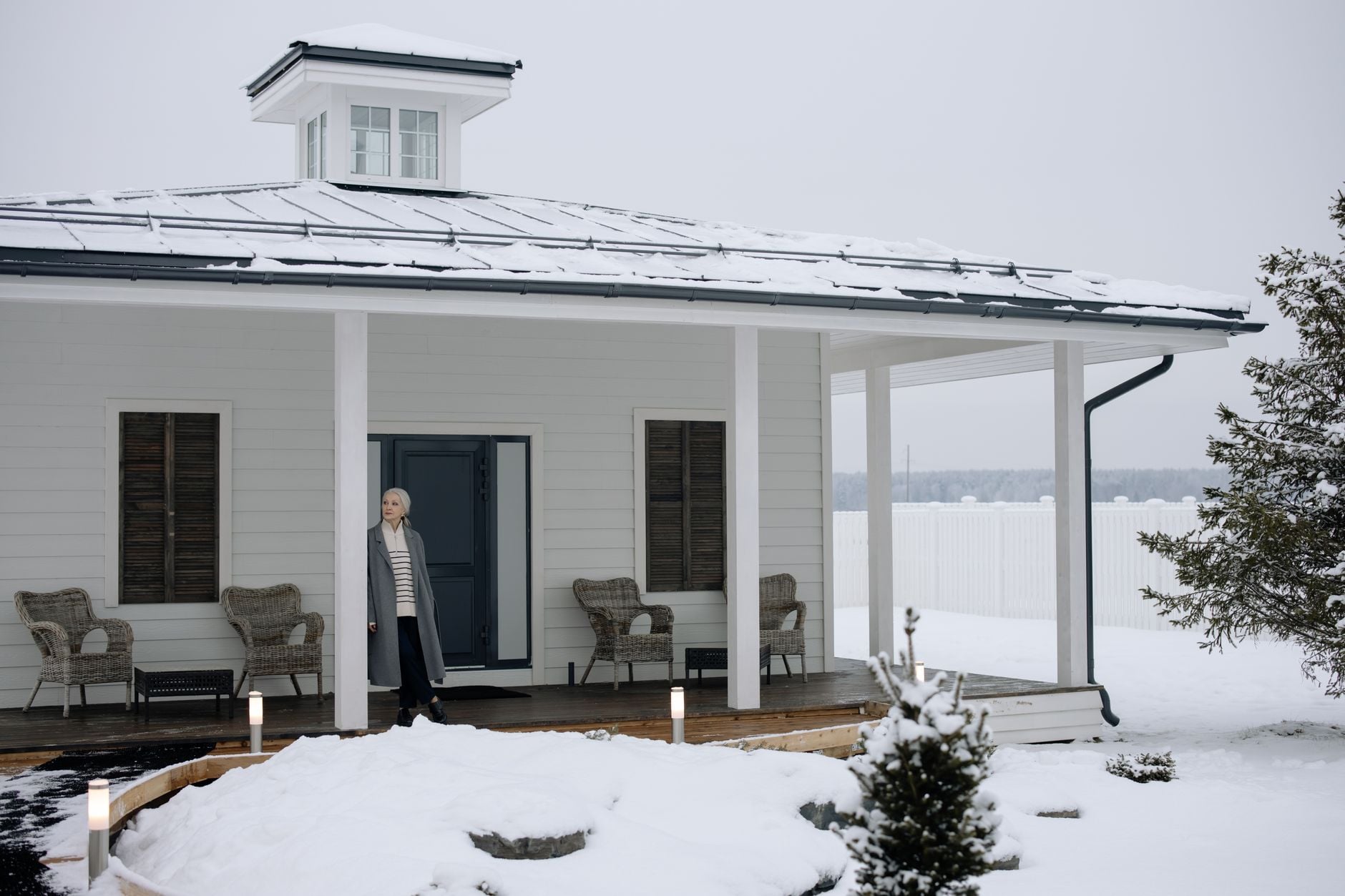
Darren and I talked it over for a whole winter. We decided to do it right. A new roof before the next winter, and a covered front porch with a wide, gentle ramp, so Mom could get out the door and sit in the air whenever she wanted.