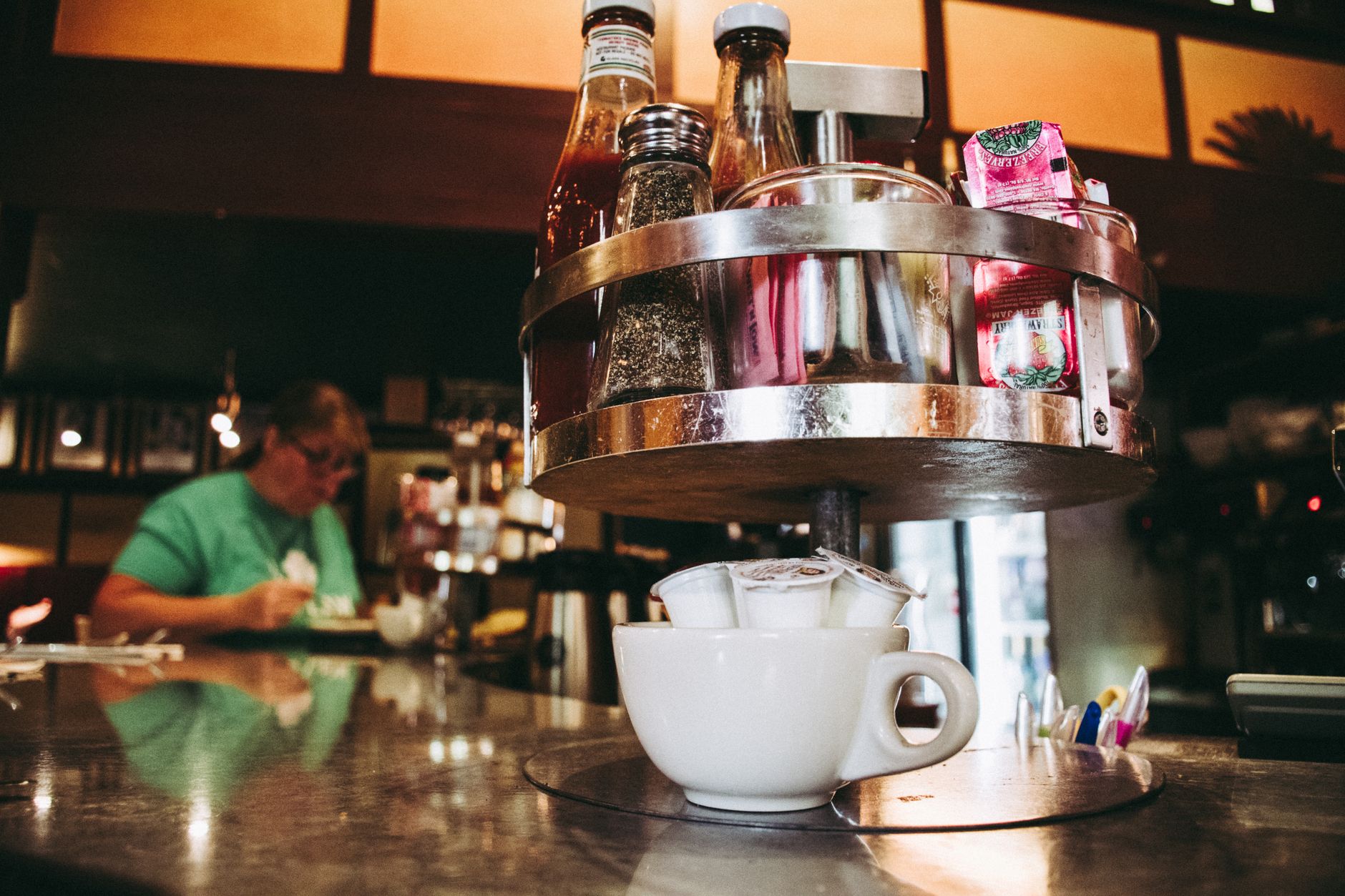
The Waitress Application at Dot’s Cafe
“Nine an hour plus tips,” my brother said. “That’s more than the state makes me pay. You can apply like anybody.”
He slid the application across the table to me with two fingers, the way you slide a check across a desk when you would rather not touch it.
It was one of the blank forms from the pad Mom kept in the drawer under the register, the cheap kind from the office supply store in Columbia.
I was still in my apron. I had flour on my forearms to the elbows and a pan of biscuits in the oven that needed to come out in four minutes. I could smell them starting to go golden.
It was 9:40 on a gray Tuesday morning in early March. Our mother, Dorothy Pruett, had been gone twenty-six days. She was buried at Mount Zion, out past the grain elevator.
The Booth by the Window
Greg had come in through the front door with the bell jangling, still in his tie from his insurance office in Jefferson City. He drove the forty-five minutes up just to do this.
He asked me to sit with him in Mom’s booth by the window, the one with the tear in the red vinyl she always covered with a folded dish towel.
I sat. I thought he wanted to talk about the headstone. We had not settled on the wording yet, and the monument company in Fulton kept calling me, because I was the one who answered the phone.
“I’ve had a few weeks to look at the books,” Greg said. “I’m restructuring.”
That was the word he used. Restructuring. Like the cafe was a policy he was rewriting.
“I can’t carry a kitchen manager’s wage,” he went on. “Eighteen an hour is more than this place can bear.
“I’m going to hire a line cook at fifteen, the state minimum, and do the ordering and the books myself from the office.”
“From Jefferson City,” I said.
“From wherever I am. It’s a laptop, Tammy. It isn’t hard.”
The Opening on the Floor
He tapped the application. “Sherry retired at Christmas, so there’s a waitress opening. I’m not firing you. I want to be clear about that. I’m giving you the first shot at the opening.”
“Nine an hour,” I said.
“Plus tips. The state only says I have to pay seven-fifty if the tips make up the rest.
“I’m paying more than I have to.” He said it like he was being generous, and I think in his head he was.
I did not say anything for a while. The biscuits were going to burn. I could hear the coffee maker gurgling behind the counter and the scrape of a fork from somebody’s plate.
You have to understand how a place like ours sounds at 9:40 in the morning. It is not loud.
It is men in seed caps and Carhartt coats talking about the price of fertilizer and whose heifer calved in the sleet, and a radio on the shelf over the pass-through playing the farm report out of Columbia.
The Counter Goes Quiet
Except right then, it had gone quiet. The counter is about twelve feet from that booth. Greg had not raised his voice, but he had not lowered it either, and every man on those stools had heard every word.
Patty Hollister, who had poured coffee in that cafe for twenty-two years, had stopped wiping the pie case. She stood with the rag in her hand, looking at me through the glass, past the lemon meringue.
I want to tell you I knew right away what to do. I did not. My first thought was that the biscuits were going to burn. My second thought was of my mother.